
If you’ve ever found yourself reading The Very Hungry Caterpillar or The Gruffalo for the fifteenth time in a week, you’re not alone. Many parents and carers will notice that young children latch onto a particular story and insist on hearing it again and again, often word for word, and with little patience for alternatives. It’s a scenario that plays out in homes and nurseries everywhere — a favourite book that’s already been read countless times, yet you hear another heartfelt plea of “Again!”
 At first glance, this devotion to a single story might seem puzzling. As adults, we crave novelty and variation, and it’s tempting to encourage children to explore new titles or gently steer them towards something ‘different’. But this desire for repetition is not only entirely normal for infants, toddlers and preschoolers — it’s actually a sign of healthy development. In fact, there’s a great deal happening beneath the surface every time your child requests a beloved book for the umpteenth time.
In today’s post, we’ll explore why children are drawn to repeated readings, what they gain from the experience, and how supporting this instinct — both at home and in the nursery setting — can help lay the foundation for a lifelong love of language, stories and learning.
Why Repetition Feels Good to Young Children
For very young children, the world is a busy and often unpredictable place. Every day brings something new to see, hear, taste or try. Although that can be exciting, it can also overwhelm little ones. In contrast to all this change, repetition provides a welcome sense of familiarity and control. When a child chooses to hear the same story again and again, they are engaging with something known and reassuring — something where they already understand the pattern, remember the characters, and can predict what happens next. That sense of mastery is deeply comforting to them.
“Repetition provides a welcome sense of familiarity and control.”
From a developmental perspective, repetition plays an important role in helping children make sense of their surroundings. The human brain in the early years is working at an astonishing pace, constantly building connections and absorbing information. Repeated experiences help strengthen those neural pathways. Hearing the same sentences or phrases in a book over and over helps the brain to recognise patterns, anticipate outcomes, and form more lasting memories.
“Hearing the same sentences or phrases in a book over and over helps the brain to recognise patterns, anticipate outcomes, and begin to form more lasting memories.”
 There is also an emotional component to repeated reading. When a child hears a favourite story in the voice of a parent or trusted adult, it creates a strong sense of connection. The warmth, tone and rhythm of familiar words spoken by someone they love reinforce a feeling of safety and belonging. For many children, this shared experience becomes part of their routine, and returning to a much-loved story can offer comfort in moments of transition, tiredness or uncertainty.
Ultimately, repetition isn’t a sign of boredom or a lack of imagination — it’s a powerful tool that children instinctively use to deepen their understanding of language, narrative, and the world around them. While it may test an adult’s patience from time to time, for a young child, there’s real joy in knowing what comes next — and in getting to experience that joy all over again.
“There’s real joy in knowing what comes next — and in getting to experience that joy all over again.”
What Children Are Learning When They Hear the Same Book Over and Over
Although it may seem as though nothing new is happening when a child asks for the same book yet again, each repeated reading is building something important beneath the surface. Young children learn through repetition, and stories are one of the richest and most enjoyable ways to support that process.
 One of the clearest benefits of repeated reading is vocabulary development. Hearing the same words and phrases over time helps children internalise them. This is especially important when books introduce new or more complex language than a child might hear in everyday conversation. By encountering those words again and again in a familiar context, children begin to understand them more deeply and even start to use them in their own speech. The rhythm and rhyme found in many favourite books further support this by making the language more memorable and easier to imitate.
Repetition also supports children’s comprehension skills. Each time a story is heard, a child can focus on different aspects of it. On one occasion, they might be captivated by the pictures; on another, they might notice how a character is feeling, or how the story builds to its conclusion. With each reading, their understanding becomes more layered and nuanced, and their ability to retell or discuss the story improves too. This not only lays the groundwork for future reading comprehension, but also builds important narrative skills that will support them across all areas of communication and learning.
Another key area of development supported by re-reading is, of course, memory. As children hear a story repeatedly, they begin to anticipate what happens next, often joining in with familiar lines or reciting whole sections by heart. This ability to recall and predict is a sign that they are developing strong cognitive skills, including sequencing, attention, and auditory memory. These are all crucial foundations for later literacy.
Stories also offer a window into emotions, relationships, and the wider world. Through characters and plots, children are introduced to a range of feelings and situations, many of which may mirror their own experiences. When a child asks for the same book repeatedly, it may be because the story has resonated with them on a personal level. The more times they hear it, the more opportunities they have to explore those feelings and make sense of them in a safe and supportive way.
In essence, that familiar book on the shelf isn’t just a favourite — it’s a powerful learning tool, offering children the chance to build language, understanding, and confidence each time it’s opened.
“A familiar book is a powerful learning tool, offering children the chance to build language, understanding, and confidence each time it’s opened.”
Supporting This at Home
 At home, parents or carers can support this by continuing to follow a child’s lead. If your child keeps choosing the same book, that’s a good thing — it means they’re connecting with it. You can enhance the experience by reading with enthusiasm, pausing to let your child fill in familiar lines, or asking gentle questions like “What happens next?” or “How do you think they feel here?” If your child wants to tell you the story instead, even better — this kind of role reversal strengthens memory, language, and storytelling abilities.
It’s also important to enjoy the shared experience. Reading the same book again isn’t a task to be ticked off — it’s an opportunity to connect, communicate, and learn together. And, by honouring children’s desire for repetition, we’re showing them that their interests matter to us. We’re also showing that we’re there for them to help nurture their developing minds.
Repetition Is a Sign of Growth
It’s easy to assume that when a child insists on reading the same book for the fifth time in a row, they’re simply stuck in a habit. But in truth, this kind of repetition is often a clear sign of growth. Rather than being a sign that they aren’t moving forward, it shows that they are consolidating what they’ve already learned — laying the groundwork for more complex thinking, communication, and understanding.
“Repetition shows that children are consolidating what they’ve already learned — laying the groundwork for more complex thinking, communication, and understanding.”
Children instinctively return to what feels manageable and rewarding. A book they already know offers them a chance to succeed, to feel confident in their understanding, and to enjoy the predictability of a story they can follow with ease. Each time they hear the same words, they’re not just passively listening — they’re actively building familiarity with language patterns, story structures, and emotional cues.
“A book they already know offers them a chance to succeed, to feel confident in their understanding, and to enjoy the predictability of a story they can follow with ease.”
 Eventually, children do move on. When they’ve had their fill of a particular book, they’re often ready to explore new stories with a richer set of skills in place. The comfort and confidence gained from repeated readings help them approach unfamiliar books with greater interest and less frustration. So rather than seeing repetition as a rut, it’s helpful to view it as a bridge — a way for children to move steadily from the familiar to the new.
So the next time your child runs up to you with that well-worn favourite, eager to hear it “just one more time,” you’ll know it’s a good thing. Repeated reading is doing far more than meets the eye! It’s helping to build language, memory, emotional understanding and connection — all wrapped up within the safe and familiar story they love.
Little Cedars Nursery

 At our childcare nursery in Streatham, we understand how important repeated reading is for young children’s development, embracing it as a valuable part of our daily routine. Story time is a cherished activity, and we know that when a child asks for a favourite book again, it’s because they’re engaging deeply with it. Whether it’s the comforting rhythm of a well-loved picture book or the excitement of anticipating a favourite character’s next adventure, we follow the children’s interests and support their choices — however many times they may request them. After all, we know that every repeated story is a step forward in a child’s learning journey.
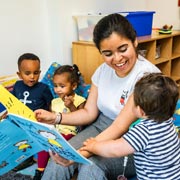 Our practitioners are skilled at making repeated reading feel fresh and interactive, even when the story is already very familiar. By using expressive voices, gestures, and encouraging children to join in with key words or sounds, we help bring the story to life each time. Children are often invited to take on the role of storyteller themselves, turning pages, pointing to pictures, and even “reading” aloud from memory. These small but powerful moments help build confidence and strengthen communication skills in a way that feels natural and joyful.
At Little Cedars Nursery, we also make space for quiet, independent reading. Our book areas are set up with inviting, accessible book choices so that children can freely revisit the stories they love. It’s not uncommon to see a toddler carefully turning the pages of a book they know well, reciting parts of it to themselves or sharing it with a friend! These self-initiated moments show just how much children internalise and treasure the books that matter to them.
Why not explore the possibility of sending your baby, toddler, or preschooler to Little Cedars Nursery in Streatham? We’re rated as a Good Provider by Ofsted and support many Government-funded childcare schemes and vouchers. These include the ’30 Hours’ extension to free childcare for children aged from just 9 months (for eligible working families) that begins in September 2025. Contact us today!
Little Cedars Nursery provides a first-class childcare service to families in Streatham and may also be convenient for families in and around Tooting, Furzedown, Balham, Norbury and Colliers Wood.



 The arrival of October means it’s time for children and families to prepare for Halloween! Arriving on the 31st of the month, it’s a firm favourite for any childhood and gives children the opportunity for uniquely spooky fun, games and dressing up. Indeed, Halloween offers a wonderful variety of activities for children to take part in and that’s exactly what we look at in today’s article. Stand by, then, to prepare the household for some spookylicious Halloween activity ideas for kids!
 Children adore dressing up for Halloween. The spooky nature of Halloween costumes really appeals to them, especially if they get together with friends and compare outfits on Halloween evening.
 Similarly, black sheets are easy to make into witch or wizard outfits. Alternatively, use black clothing and, if it’s no longer being worn for anything else, it can even be given ragged edges for extra effect. Add pointy black hats made of cardboard or paper and the costumes are complete.
 If you want your child’s Halloween experience to be truly spooktacular, encourage them to decorate the house – whether inside or out – with all manner of ghoulish decorations and ghostly paraphernalia. Home-made spider webs can, of course, be made using string, thread or stretched-out cotton wool. However, such decorations can usually be purchased inexpensively from supermarkets, which typically have cheap Halloween decorations around October each year. Spiders can be home-made by children from wool or black pipe cleaners, or similarly bought commercially along with shop-bought decorations depicting skeletons, ghosts, bats and suchlike. You can also buy LED lights, including strings of lights, that look like Halloween pumpkin lanterns. Such lighting is great for extra atmosphere!
 If your household is carving pumpkins for Halloween this year, perhaps save some of the flesh and use it to make a spookylicious pumpkin soup for the family to eat come Halloween evening time. There are plenty of excellent recipes online and children can help make the soup, under supervision for safety purposes.
 Children can combine Halloween fancy dress costumes, spooky decorations, and themed food and drink by hosting a Halloween party for friends and family. Such preparations are sure to set up a wonderfully spooky atmosphere in which children will have immense fun comparing outfits and getting into the spirit of the event. Add Halloween-themed games, play ghostly music and take turns to read ghost stories and the evening is sure to be one to remember! It’s also a great conduit through which children can socialise and perhaps grow stronger bonds.
 Take the Halloween activities to an extra level by arranging a group trick-or-treat session, under adult supervision, for children in your street. They will absolutely love this activity and it’s sure to result in much giggling and laughter if it goes as planned. However, be sure to check with each neighbour before the day. In that way, they can opt out if they prefer not to get involved. For those that do take part, most neighbours usually go the ‘treat’ route but be ready for the possibility that a few may opt for the ‘trick’ option, in which scenario the children under your supervision will need to be ready with a fun but harmless trick. Some forethought and creative thinking may be needed there, with care being taken not to allow children to overstep the mark.
 Pumpkin patches are often wonderful places for children and families to spend a few hours in the run-up to Halloween. In such places, your little one can explore amongst hundreds of pumpkins and other gourds of different sizes and shapes. And, if they find one they take a liking to, they can usually be purchased to take home, or might even be included in the price if the venue has an entrance fee. Pumpkin patches often also have other Halloween-themed activities at this time of year, whether it’s displays where you can take memorable snaps of your child amongst the pumpkins, wheelbarrow rides for children across a pumpkin field, pop-up refreshments with Halloween-themed food and drink or pumpkin-decorating workshops, they’re always great fun for children. They really help to make Halloween the special time of year that it is.
 Once you’ve sourced a suitable pumpkin for your child, it’s time for the really fun part — pumpkin carving and decorating! While the carving part may not be suited to children of a young age (knives are super-dangerous), they can usually help, under supervision, with scooping out the flesh and then, the most fun part of all, decorating. Pumpkins can depict faces, spiders, owls or any spooky imagery you or your little one can imagine. And, even if they may be too young to carve the holes,
 they can still decorate using paint or markers, or simply enjoy Mum or Dad getting creative on their behalves.
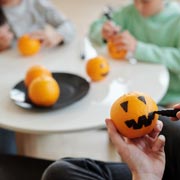 TIP: Kids don’t even really need a pumpkin; the smallest of children can decorate oranges or yellow/orange bell peppers! They look really cute and an added bonus is that they avoid the need for any carving.
 In today’s guide, we outline a simple but powerful nature-based activity that will be both fun and educational for children and under-fives. This one is all about how to sow wildflower seeds. Once growing, these will bring beauty and wonder to any setting. The activity will also complement our recent
  Children benefit very much from spending time in nature, as we outlined in our article entitled
 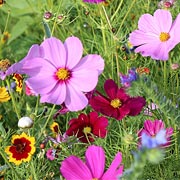 Colour(s) — Children can help decide whether to grow wildflowers of just one colour, a limited 2- or 3-colour palette or perhaps multiple colours. If parents have an existing colour theme in their garden or plant area, they may wish to point children in a particular direction, so as to keep that colour theme going.
 Free wildflower seeds can be harvested from existing wildflowers — either from your own wildflowers if you have them, or from those found in the wild along hedgerows and similar (N.B. only do so in moderation and for personal use). Timing will, of course, be critical because seeds will only be available at certain times of the year, i.e. when the wildflowers have “gone to seed” at the end of their flowering period.
 Sowing seeds on existing lawns that you/your child want as a wildflower meadow is simply a case of scattering seeds on the lawn, ideally spaced out in such a way that they don’t have to compete with each other once they start growing. Then ensure that the area of lawn is kept moist by either rain or, if there is no rain, regular sprinkling from a watering can fitted with a sprinkling head (a.k.a. ‘rose head’). Children may need to remind adults not to cut the lawn thereafter, of course!
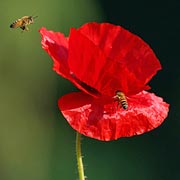
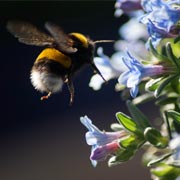 Children will love it once the wildflowers begin to grow and later bloom. They’ll also love seeing bees, butterflies, and other insects visiting and the results of the activity may indeed give them a great sense of accomplishment. The whole process and the results are quite magical when you think about it.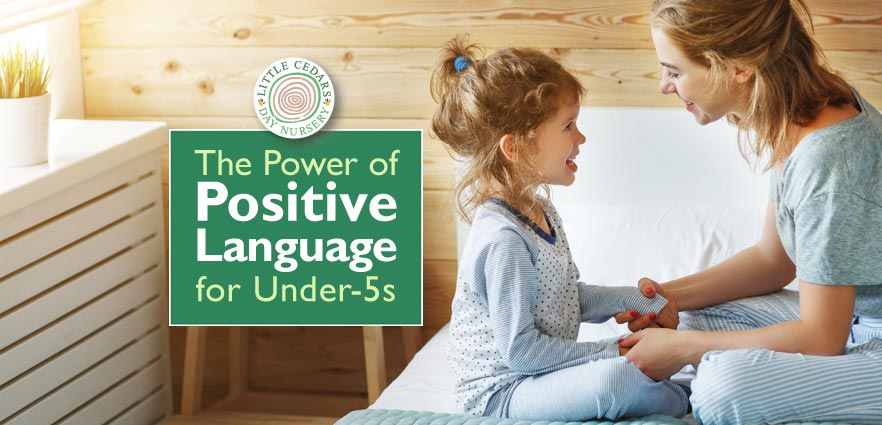
 In today’s post, we explore the benefits of using positive language around under-fives. All too often, it’s tempting to say ‘No!’, ‘Stop that!’ or even ‘Don’t Eat That!’ and similar around little ones. This is particularly true when you want them to cease the offending activity urgently or are simply exhausted if it’s been a challenging day. There are good reasons for such negative commands, of course, not least that of their safety in many cases. However, such commands can sound stern and cause stress for the little ones. What’s more, if a child hears too much negative language and cannot understand why they’re not allowed to do a particular thing, problems can begin to arise and, indeed, the issue can become insidious. It may even result in worsening behaviour. Let’s explore, therefore, the issues around negative language and the simple solution that’s available in the form of positive language.
 Sometimes, though, constantly hearing ‘no’ can spark tantrums, particularly if a child doesn’t understand the reason they are not allowed to do something. They can feel particularly frustrated when they receive a succession of negative commands and, in the end, may feel they simply can’t do anything right. This can lead not only to stress for them, but also to possible low self-esteem. Furthermore, if they hear ‘no’ and other negative language too often, they can begin to ‘tune out’ to it. They could then go on to develop challenging behaviour due to this, their confusion and frustration. Stress levels can then rise for the parent too, the infant can pick up on this and it can become a real vicious circle. It doesn’t have to be that way, though …
 Stop shouting!
 Please use a much softer voice.
 A childcare nursery should not be thought of only as a crèche, playgroup, or simply somewhere that looks after babies and children while parents go to work. Good nurseries and pre-schools like Little Cedars are so much more than that. It’s incredible just how much they benefit under-fives, families and society as a whole once you take a closer look at everything they do — and that’s exactly what we’re doing today…
 What’s more, staff at childcare settings like Little Cedars will form close bonds with little ones. Studies show that
  Good Ofsted-registered nurseries/pre-schools like Little Cedars also give under-fives a full early years education. That’s important to know. Through a learning and development programme that’s customised to each individual child, we ensure they achieve their own personal bests in all areas of the statutory
  Part of children’s personal, social and emotional development comes through active play with other children that they meet and get to know at the nursery. This is firstly great fun, of course, and that’s a hugely important part of any happy childhood. However, they’ll also learn many things through play. Without socialising with others, it would be more difficult to improve social skills, for example. Only by being around other children will they learn to account for the feelings of others, learn to respect one another and ultimately form close bonds, trust and friendships. Many such friendships will indeed continue long afterwards, as children move to schools at the age of five.
 Another key aim of good early years childcare provision is to prepare children thoroughly for school. Why? Because
 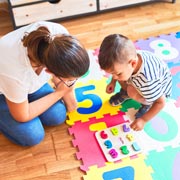 It’s almost as if children are super-charged for success — the benefits of a good early years education are surprisingly long lasting. Some studies even show that the benefits last into people’s working lives, improving salaries (
 Working so closely with babies, toddlers and preschoolers allows us to continually monitor their individual progress. In so doing, we are in a prime position to spot any issues early and to make appropriate arrangements to mitigate them if needed. For example, we may spot that a child is finding reading challenging. If so, we can put extra effort and time into improving the situation for the child. On occasion, that may even include talking to parents about the possible intervention of a specialist of some kind, or it could simply be that they need to practise specific activities to overcome the issue. The earlier challenges or any special educational or developmental needs are spotted, the sooner the child in question can be helped.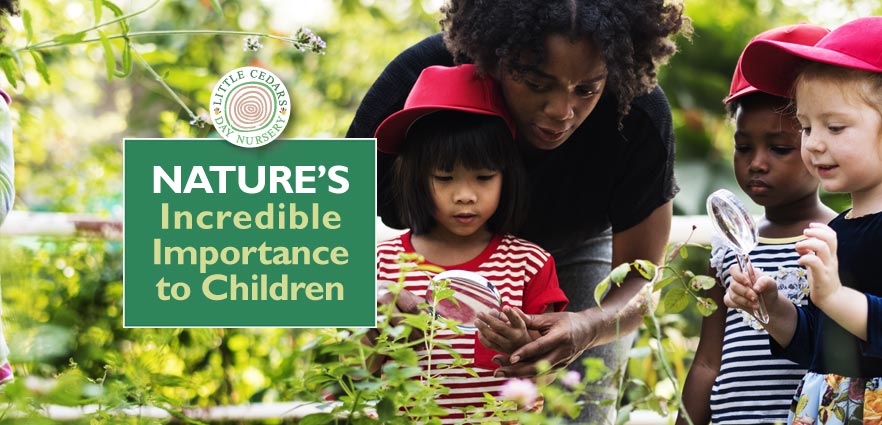
 It’s amazing how much nature benefits children, particularly in their early years when they’re finding out about the world around them — and also learning about themselves. There have been many studies into the importance of nature, to youngsters in particular, and the studies all reach a similar conclusion — nature is incredibly important and beneficial to children. Today we’ll explore the topic and learn why children should regularly access the natural world.
 Stress is also reduced on both a mental and physiological level through exposure to a natural environment. In studies, stress hormone and blood pressure levels both improved after exposure to nature, helping children both physically and emotionally. Nature seems to be a great way to recharge children’s batteries and lower stress and anxiety, as well as improving attention, engagement and academic performance. That includes improvements in important skills like reading, writing and mathematics.
 Improved social skills and even wider circles of friends due to the opportunities offered through outdoor play and adventure.
 The new skills, knowledge and freedom that nature gives children also helps them to become more self-confident and independent individuals.
 Even in built-up cities like London, immersion in nature is possible via gardens, parks, commons or, if you’re lucky to have them near you, nature reserves and nature gardens. There are many of these dotted around London, including
  If you’re searching for
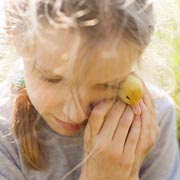 Sooner or later, many parents will consider the possible benefits of pets and whether their child should grow up with one. Mostly, the answer is positive because growing up with a pet can benefit children in many important ways — and really enrich their lives. However, looking after animals is a huge responsibility, not least to the animal itself, so should never be taken on lightly. Today we explore the topic and also outline a couple of animal-related initiatives that we have undertaken at
 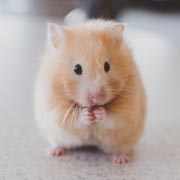 On a simple level, pets are incredibly cute and great fun to be around. As such, most children are naturally drawn to them.
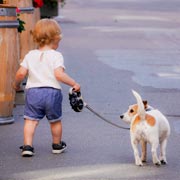 Familiarity with animals and closeness to pets also teaches children respect for other individuals (whether human or non-human), including recognition of the consequences of their actions towards them. It shows them how to care for others too. It can also teach them patience (e.g. when training) and even some of the harder lessons about life cycles.
 Introducing animals like dogs and cats to the household is quite a life-changing thing. After all, they are the kinds of animals that pretty much become one of the family and, as such, require significant time, care and attention for their own wellbeing. They also often live freely within the house and require access to the garden and, for dogs, regular walks outdoors. They are quite an undertaking, so the decision to introduce one needs careful and thorough consideration. Many animals form deep, lifelong bonds and you will become their family just as much as they become yours. So, that lifelong commitment is an important one — they are absolutely not unfeeling objects to be treated like just a toy.
 Pets like hamsters, rabbits, budgies and guinea pigs require less space in the household, of course. Indeed, some types of pets can be housed outdoors in suitable hutches. They’re also small enough to be temporarily moved elsewhere, for example to a friend or neighbour when you go on holiday. However, despite them being small, they too have their own needs and wants, including your care and regular attention. Giving them this, however, will be rewarded and children who spend significant time with any pet will soon begin to pick up on each one’s distinct personality and any likes or dislikes. Treat them well and pets will become trusting and friendly. Dogs, in particular, are incredibly loyal when treated well.
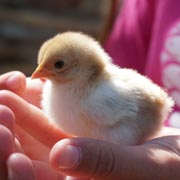 Just like humans, animals need care, proper food, fresh water, friendship, comfort and stimulation. If they don’t get these essentials, they may lead miserable and potentially even foreshortened lives. So, before a family takes on a pet, it’s best to thoroughly research the particular type of animal and exactly what they will require, from food, nutrition and bedding to stimulation (games, exercise etc.), contact with others and medical needs. Families should find out about all these things before taking an animal on. For some types of animal, for example dogs, even the breed and background is important. That’s for the wellbeing of both the pet and the family itself. Remember too that some animals will need training, for example toilet training in the case of cats, dogs and perhaps even ‘house’ rabbits. Some dogs may also require behaviour training. Everything needs factoring in beforehand including things like who will look after the pets while adults are at work, what happens when you go on holiday, who will exercise the dog, clean out the rabbit hutch regularly, feed the rabbit or clean the budgie cage.
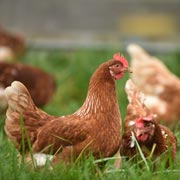
 At Little Cedars Nursery in Streatham, we believe that children will learn a huge amount through contact with animals. For this reason, we have our own chickens and rabbits at the setting — and the children adore them! Our rabbits are named Miffy and Bella and indeed naming them naturally encourages children to treat them like individuals rather than something to play with.
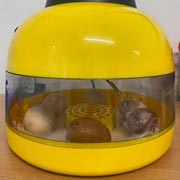 We are also raising some new chickens from fertilised eggs that we currently have in an incubator. We’ll teach children all about the life cycle of chickens with these. Once they hatch, children are sure to love the adorable little chicks that will emerge and they’ll be able to watch them grow up from fluffy chicks to adult chickens. When old enough, the chickens will join our existing, fully-grown chickens that we keep for the children in our animal enclosure outside.
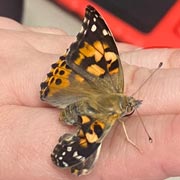 We also have a caterpillar/butterfly enclosure indoors at the setting. Through this, children can follow the incredible life cycle of butterflies, starting off as tiny eggs, hatching into caterpillars, building cocoons and eventually emerging as incredibly beautiful butterflies. This is an amazing metamorphosis for children to witness and teaches them so much about the wonder of the natural world as well as the individual needs of some of its creatures.