
— Experiences They’ll Remember Forever

 Childhood passes so quickly — a blur of breakfast times, nursery drop-offs, and bedtime stories. Yet every so often, something extraordinary happens: a moment that will light up a child’s eyes and linger in their memory for years to come. These are the magical moments that they never forget. They’re also moments that help shape how children see the world, their place within it — and sometimes even themselves.
The moments children remember most aren’t the everyday routines, but events and activities that feel truly magical — experiences that step outside the ordinary and leave a lasting mark on their hearts and imaginations. It might be an unexpected adventure, a quiet night under a starlit sky, or a small moment of wonder that makes them gasp in delight. Such out-of-the-ordinary experiences help children feel part of something special, cherished, and deeply seen. They create memories filled with pure joy, beauty, and sometimes even awe, as well as connections that often last for years.
Today, we explore how some of children’s most treasured memories come from moments of wonder, surprise, beauty, and unexpected connection. We’ll discover simple yet powerful ways to create magical experiences that will make little ones feel seen, loved, and sometimes even awestruck at the wonder of life. This is about how to create lasting memories for little ones that they will cherish for a lifetime.
Why Magical Moments Matter
 Psychologists tell us that children build their sense of self through experiences that stir strong, positive emotions — especially awe, wonder, joy, and belonging. These feelings act as emotional anchors, shaping how safe, capable, and loved a child feels. When parents or caregivers create a moment that makes a child’s heart race or eyes widen with joy or wonder, they’re not just giving them a fun memory — they’re helping to build emotional security that lasts well into adulthood.
Moments of awe also nurture curiosity and imagination. Whether it’s taking the time to look up and watch a night sky glittering with stars, or exploring a particularly magical woodland brimming with lichen and moss during ‘golden hour’, awe reminds children that the world is big, beautiful and full of possibility. In a time when daily life can feel rushed or routine, sprinkling in a little magic helps a child stay open, hopeful, and connected.
Magical Moments Don’t Need to Cost Money
 Magical childhood memories do not require grand holidays or costly toys. They’re far more likely to spring from connection, surprise, wonder, and imagination.
A child remembers how they felt — the warmth of being cuddled under a blanket to watch the stars, the thrill of being let in on a secret plan, or the joy of a parent saying, “Let’s go on an adventure today.”
The magic lies in the moment itself, not the money spent. Breaking the routine, seeing the familiar in a new light, or simply doing something unexpected can be enough to make an ordinary day unforgettable.
Ideas for Creating Magical Moments
Here are some simple yet truly memorable ways to fill your child’s early years with wonder:
Stargazing Together
 On a clear night, gently wake your child and wrap them in a blanket to watch a meteor shower or count shooting stars. Tell them about the Northern Lights, how they can wish on a star, how astronauts are planning to travel vast distances to Mars, and give them inspiration for their dreams. The quiet awe of the night sky will stay with them forever.
A Surprise Family Adventure
Plan a “mystery adventure” and keep the destination secret until you’re on your way. Whether it’s a picnic in a particularly beautiful spot, a ride on a real steam train, or a dawn trip to look for treasure on a beach, the sense of adventure and excitement will make the day feel magical to a child. Make it out-of-the-ordinary and special.
Messages from the Fairies
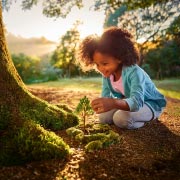 Leave a tiny note or drawing from the “garden fairies” or “forest pixies” thanking your child for something kind they’ve done — perhaps watering houseplants or helping a friend or sibling. It’s a simple act that blends imagination with a message of kindness and care. Perhaps take it a step further and encourage little ones to make mossy beds for the fairies, and a little home-made miniature shelter for them to sleep in. Take photos of them as a memento for your child.
A Garden Camp-Out
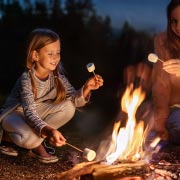
Set up a tent or a blanket fort outdoors. Tell stories by torchlight or LED candlelight, listen for owls, or simply lie together looking at the stars. Even just one night spent “camping” close to home can feel like a grand adventure to a child.
Seasonal Traditions
 Create small rituals that return every year — picking flowers in springtime to display around the home, having a “summer-solstice supper” in the garden, or putting out biscuits and carrots on Christmas Eve for Santa’s reindeer — be sure to show your little one how the carrots have been nibbled on Christmas morning! Such traditions will give children a comforting rhythm and a sense that life’s changes can be filled with fun and joy.
The Power of Yes
Every so often, say yes to your child for something delightfully unexpected: jumping in puddles while still in pyjamas, taking breakfast out in the park, or painting a tree trunk with brightly-coloured poster paints (take a photo of your child’s creations if you do!). A small moment of freedom and shared laughter can be pure magic.
Simple Acts of Wonder
 Pause for half an hour to watch the sunrise or sunset together, make wishes while blowing dandelion seeds into the breeze, or follow a butterfly in the park to see where it leads. These small acts teach children that magic is woven through the everyday world — they just have to stop a while and notice it sometimes.
Magical experiences like these will form lasting memories. They will also stimulate emotions around awe, belonging, beauty, and joy. They will remind children that life is incredible, as well as being full of surprises worth paying attention to.
How Magical Moments Shape Who They Become
When children experience magic through loving connection, they internalise a powerful message: I matter. I’m loved. The world is a good place.
Such memories strengthen self-esteem, nurture creativity, build resilience, and encourage children to always remain curious about the world around them. They remind children that they are part of something bigger — a family, a community, a world rich with wonder.
“I matter. I’m loved. The world is a good place.”
 As adults, those memories often become emotional landmarks: the glow of torchlight in a tent, the spectacle of a meteor streaking across the sky, the distinctive smell of campfire food being carried on the wind, and telling stories beneath a blanket. Such recollections help shape optimism and emotional well-being long after childhood ends. They are also the moments that, years later, children will recall fondly and still talk about.
That said, you don’t need to fill every day with spectacle. Just make space, every so often, to pause, to play, and to do something adventurous and out of the ordinary. Those magical moments of shared joy and wonder will make your little one feel seen, loved, and awed — forming memories they’ll carry with them for a lifetime.
We’re Little Cedars Nursery in Streatham

 If you enjoyed today’s blog post and it’s given you some ideas, be sure to check out our other blog posts, articles, activity ideas, and guides. We’re Little Cedars Nursery in Streatham, a high-quality childcare provider near Streatham Common, Streatham Hill, Streatham Park, Tooting, Furzedown, Balham, Norbury, and Colliers Wood. Ofsted rates the setting as a good provider, and we support free childcare places for eligible children aged from just 9 months.
Why not bring your baby, toddler, or preschooler along for a free guided tour? Or, if you like the look of the nursery and would like a place for your child, get started on your application today:
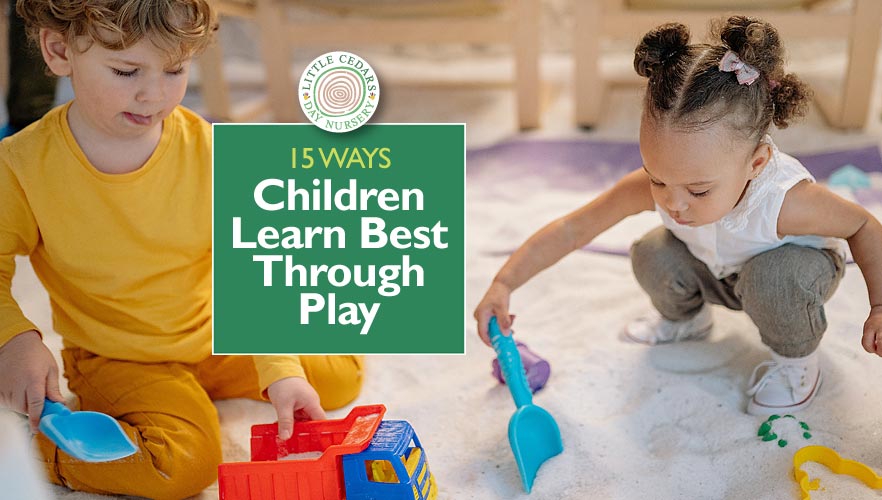
 Watch any infant, toddler or preschooler for just a few minutes and you’ll see that one thing comes naturally to them; play. Indeed, it’s as if they’ve been programmed that way, with the need to play coming instinctively to youngsters, whatever their species. Aside from it simply being great fun, there are a multitude of very good reasons for that — play teaches them an enormous amount about each other, themselves, other living things, cause and effect, and the world around them. It also allows them to learn and fine-tune a whole swathe of new skills as they grow older, play new games, and become more experienced. Add in some careful steering and nurturing during that play from Mum or Dad and they have a real recipe for success. With that in mind, we look today at the key ways in which learning through play profoundly benefits children.
 Play and creativity go hand-in-hand. Whether making up a new game, role-playing, constructing, or playing in a den, children will naturally create both scenarios and physical items as part of their play. Such activities teach them how to use their imaginations and to be creative — in a myriad of ways.
 Different play activities require different types of movement and physical interaction from children. Indeed, this is a fundamental aspect of play. Whether jumping and running with large movements or carefully constructing with small items like building blocks, children will naturally hone both fine and gross motor skills during play. Such physical skills are essential to their ability to navigate and interact with the world around them and, in the most natural of ways, play is at the heart of enhancing those abilities.
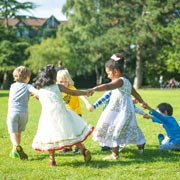 Social skills are also improved through play. Children naturally play with other children and, by so doing, will soon pick up social skills as they begin to better understand social protocols that allow them to succeed both as individuals and in groups. Decent manners, saying please and thank you, cooperation, teamwork and closer bonding are all examples of social skills that can benefit through group play. Other examples include conflict resolution, better sharing, negotiation and communication, which we’ll come to next.
 Through all this play, children will be communicating with each other and with any adults that are supervising. As such, play is a great facilitator of communication. Indeed, good communication is essential to most games and, through it, children can cooperate and achieve in ways that will help them in both the short term and into adulthood. Improving communication skills is also a fundamental way to improve success when you think about it.
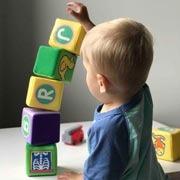 Mathematics is often embedded into games and pastimes. Children can learn, for example, about adding, subtracting, multiplication and division through games. Even dividing group play into teams requires some fundamental maths to ensure teams are equal in size. Building towers out of blocks is another great example where children can count how many blocks they can stack into a tower before it falls over. They can try to beat their own maximum, or even compete against one another to see who can use the most blocks.
 Play comes in a vast array of different forms, shapes, and sizes. Through so doing, it introduces children to countless scenarios, situations, and challenges. By immersing children into such widely differing environments, they learn huge amounts about the world around them, and everything within it. Whether it’s newfound knowledge about a new object, material, place, culture, activity, or something else, play is an amazing conduit to new knowledge and the need to learn new skills. Play is the ultimate educator and the incredible thing is that children may be unaware that they’re learning — they’re having too much fun!
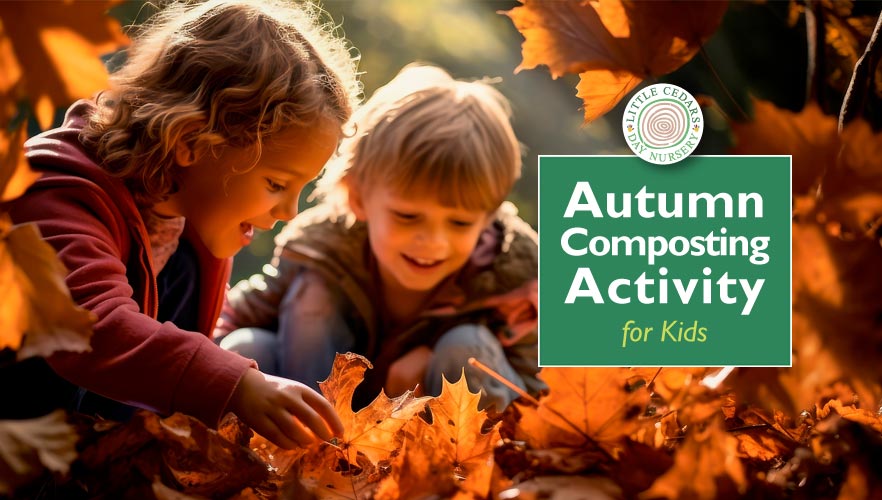
 Autumn is a magical time filled with vibrant colours, falling leaves, and a wonderful quality to the air. With rustling leaves covering the ground in a myriad of hues, it’s the perfect season to engage children with the wonders of a composting activity. Composting is fun, worthwhile, and educational. It not only teaches kids about the importance of recycling and sustainability but also provides an exciting outdoor activity that connects them with nature. In today’s article, we’ll explore the joy of composting with an autumn twist, where children can harness the abundance of fallen leaves to create a rich and fertile compost for the garden. Children of all ages will love this nature-based outdoor activity and it’s a win-win in every sense — for children, nature’s flora and fauna, and the garden itself.
 Autumn leaves are rather like nature’s confetti and they play a crucial role in composting. Perhaps explain to children how leaves provide essential carbon and nutrients that are key ingredients for a successful compost pile. Encourage them to collect a variety of leaves in different colours and shapes, so this activity becomes a stimulating treasure hunt too.
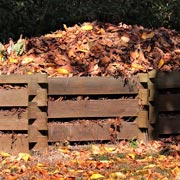 Guide children in setting up a compost bin or, in its most basic form, it could take the form of a simple pile in the garden if you have one. If not, an undisturbed corner somewhere outside will suffice. Emphasise the importance of a balanced mix of green (nitrogen-rich) and brown (carbon-rich) materials. Leaves are a fantastic source of carbon, balancing out the kitchen scraps and other green materials that you and your child may soon start to add.
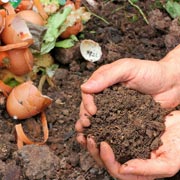 As the compost pile transforms, involve children in observing the changes. Discuss how the compost becomes darker and richer over time. Point out the
  To make composting even more enjoyable, you and the children could incorporate other autumn-themed activities. For example, they could create leaf art while waiting for the compost to develop, they could decorate the compost container through painting, or they could take part in
 The arrival of October means it’s time for children and families to prepare for Halloween! Arriving on the 31st of the month, it’s a firm favourite for any childhood and gives children the opportunity for uniquely spooky fun, games and dressing up. Indeed, Halloween offers a wonderful variety of activities for children to take part in and that’s exactly what we look at in today’s article. Stand by, then, to prepare the household for some spookylicious Halloween activity ideas for kids!
 Children adore dressing up for Halloween. The spooky nature of Halloween costumes really appeals to them, especially if they get together with friends and compare outfits on Halloween evening.
 Similarly, black sheets are easy to make into witch or wizard outfits. Alternatively, use black clothing and, if it’s no longer being worn for anything else, it can even be given ragged edges for extra effect. Add pointy black hats made of cardboard or paper and the costumes are complete.
 If you want your child’s Halloween experience to be truly spooktacular, encourage them to decorate the house – whether inside or out – with all manner of ghoulish decorations and ghostly paraphernalia. Home-made spider webs can, of course, be made using string, thread or stretched-out cotton wool. However, such decorations can usually be purchased inexpensively from supermarkets, which typically have cheap Halloween decorations around October each year. Spiders can be home-made by children from wool or black pipe cleaners, or similarly bought commercially along with shop-bought decorations depicting skeletons, ghosts, bats and suchlike. You can also buy LED lights, including strings of lights, that look like Halloween pumpkin lanterns. Such lighting is great for extra atmosphere!
 If your household is carving pumpkins for Halloween this year, perhaps save some of the flesh and use it to make a spookylicious pumpkin soup for the family to eat come Halloween evening time. There are plenty of excellent recipes online and children can help make the soup, under supervision for safety purposes.
 Children can combine Halloween fancy dress costumes, spooky decorations, and themed food and drink by hosting a Halloween party for friends and family. Such preparations are sure to set up a wonderfully spooky atmosphere in which children will have immense fun comparing outfits and getting into the spirit of the event. Add Halloween-themed games, play ghostly music and take turns to read ghost stories and the evening is sure to be one to remember! It’s also a great conduit through which children can socialise and perhaps grow stronger bonds.
 Take the Halloween activities to an extra level by arranging a group trick-or-treat session, under adult supervision, for children in your street. They will absolutely love this activity and it’s sure to result in much giggling and laughter if it goes as planned. However, be sure to check with each neighbour before the day. In that way, they can opt out if they prefer not to get involved. For those that do take part, most neighbours usually go the ‘treat’ route but be ready for the possibility that a few may opt for the ‘trick’ option, in which scenario the children under your supervision will need to be ready with a fun but harmless trick. Some forethought and creative thinking may be needed there, with care being taken not to allow children to overstep the mark.
 Pumpkin patches are often wonderful places for children and families to spend a few hours in the run-up to Halloween. In such places, your little one can explore amongst hundreds of pumpkins and other gourds of different sizes and shapes. And, if they find one they take a liking to, they can usually be purchased to take home, or might even be included in the price if the venue has an entrance fee. Pumpkin patches often also have other Halloween-themed activities at this time of year, whether it’s displays where you can take memorable snaps of your child amongst the pumpkins, wheelbarrow rides for children across a pumpkin field, pop-up refreshments with Halloween-themed food and drink or pumpkin-decorating workshops, they’re always great fun for children. They really help to make Halloween the special time of year that it is.
 Once you’ve sourced a suitable pumpkin for your child, it’s time for the really fun part — pumpkin carving and decorating! While the carving part may not be suited to children of a young age (knives are super-dangerous), they can usually help, under supervision, with scooping out the flesh and then, the most fun part of all, decorating. Pumpkins can depict faces, spiders, owls or any spooky imagery you or your little one can imagine. And, even if they may be too young to carve the holes,
 they can still decorate using paint or markers, or simply enjoy Mum or Dad getting creative on their behalves.
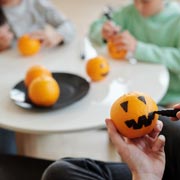 TIP: Kids don’t even really need a pumpkin; the smallest of children can decorate oranges or yellow/orange bell peppers! They look really cute and an added bonus is that they avoid the need for any carving.