A Rough Guide for Parents

Becoming a parent brings a mix of excitement, questions, and, quite often, a level of uncertainty. However, if you’re starting a family, you’re not on your own. One professional you’ll hear from early on is a health visitor. However, many parents aren’t sure exactly what they do or how they can help. The good news is that, essentially, health visitors are there to support you and your child. It’s also important to understand that they are not there to judge you. Instead, health visitors play an important role in helping families feel informed, confident, and well-supported during their child’s early years.
In this guide, we’ll explain exactly what a health visitor does, when families will see them, and how they can support parents and children from birth and throughout the early years.
What Is a Health Visitor?
A health visitor is a qualified nurse or midwife who has completed additional specialist training in child health, development, and family wellbeing. Each family will have a named health visitor allocated to them.
In the UK, health visitors work as part of the NHS and support families from pregnancy through to when their child is around five years old. Their role focuses not just on a child’s physical health, but also on their development, emotional wellbeing, and, just as importantly, the overall health and wellbeing of the family.
What is the Role of the Health Visitor?
Health visitors support families in a wide range of practical and emotional ways. Their role is varied, but at its heart, it’s about the health and wellbeing of the whole family. For the mums and dads they visit at home, they are firstly there to help them adjust to becoming new parents. They will offer guidance, answer questions, and provide support and reassurance, which are so crucial during the early stages of parenthood when everything can feel so new. For babies and young children, they are there to facilitate the best possible start in life.
Health visitors are also well-connected, working closely with other groups, children’s centres, and professionals. As such, they’re well-placed to identify when additional support might be helpful and guide you towards other services and resources that can help families and their little ones.
When Will a Health Visitor Visit?
New parents usually have contact with a health visitor at several key points during their child’s early years. These may include:
- An antenatal visit (before your baby is born)
- A new birth visit (around 10–14 days after birth)
- A 6–8 week review
- A 9–12 month review*
- A 2 to 2½ year review*
* The health visitor, or a member of their support team, will also give families an ‘Ages & Stages Questionnaire’ (‘ASQ-3’) before the two reviews indicated. Usefully, these give families the opportunity to undertake some of the home-based activities referenced in the questionnaire, thereby allowing them to provide appropriate feedback later at the in-person reviews. That said, if there are any areas of the questionnaire that parents are unable to complete confidently, the health visitor can help. For children attending nursery, playgroup, or childcare at the time of the 2 to 2½ year review, it’s also possible that a childminder or childcare keyworker will help with input in addition to the health visitor.
Families are also able to contact their health visiting team at any time, including between scheduled visits, if they have any questions or concerns.
Learn more about what the various health and development reviews entail here.
What Happens During a Health Visitor Appointment?
Health visitor appointments are typically relaxed and informal. They are often carried out in the comfort of the family home, or sometimes at a local clinic, depending on the area and the stage the family/child are at.
During a visit, your health visitor will ask how you and your baby or child are doing. They’ll talk to you and offer advice about your child’s feeding (breastfeeding, bottle feeding, weening, etc.), sleep (including safe sleep positions and common sleep challenges), vaccinations, and daily routines. They’ll observe your child in the home setting and are likely to carry out basic measurements, for example, to record your child’s weight, growth, height, and head circumference. They’ll also check your child’s development, such as movement, communication, and social interaction. They can offer guidance on behaviour as your child grows. They may offer advice on home safety and accident prevention too. For you as parents, they’ll also be there to support your mental health and emotional wellbeing. Importantly, they will, of course, also answer any questions you may have. The aim is to provide tailored support, open conversations and reassurance where families need it.
Will Health Visitors Judge You?
It’s a common worry, but no, health visitors are not there to judge your parenting, and there is no “test” for you to pass during a visit. Their role is not to assess you but instead to support families and help their children thrive. Should you ever be unsure or worried about something, being open with your health visitor will help them support you more effectively. They also understand that every family is different, so there is no single “right” way to do things.
So, while health visitors do have a responsibility to ensure children are safe and well cared for, for the vast majority of families, visits are simply about offering guidance, reassurance, and invaluable, practical help. For many parents, this can make a real difference.
The Red Book
We mentioned earlier that the health visitor is likely to record metrics like your child’s weight and height. Such information is recorded in a little red book. Officially called a Personal Child Health Record (‘PCHR’), this is more commonly referred to as ‘The Red Book’. It’s a useful place to record metrics and milestones in your child’s development. Health visitors and other professionals, like GPs, can write in it — as well as parents. It’s the perfect place to record a child’s milestones, medical history, details of any vaccinations and tests your child has had, and so on. Take it with you whenever you visit a GP, baby clinic, or other healthcare/medical setting with your child.
When Should You Contact a Health Visitor?
You don’t need to wait for your next scheduled visit if something is on your mind. For example, you might want to contact your health visitor if:
- You have concerns about feeding
- Your baby or child is struggling with sleep
- You’re unsure about your child’s development
- You’ve noticed changes in behaviour
- You’re feeling overwhelmed, anxious, or low
Reaching out early can often provide reassurance or help you address small concerns before they become bigger worries.
Supporting Your Child’s Development Together

 Alongside the support of your health visitor, a nurturing nursery environment can play an important role in your child’s development — nurturing new skills and helping them grow in confidence, communication, and independence. If you’d like to learn more about how Little Cedars Day Nursery supports children and families, feel free to get in touch or peruse more of this website. Whether you have a quick question or a more complex concern, we are here to support both you and your child every step of the way.
A Childcare Place at Little Cedars Nursery, Streatham
Little Cedars Nursery, in Streatham, offers a fabulous start for babies and children under five. We provide an all-year-round weekday childcare service in a warm, welcoming environment. At Little Cedars Nursery, every child is valued and nurtured, so they become the very best version of themselves in readiness to begin school. The high-quality childcare setting has a good Ofsted rating and supports free childcare hours for eligible children aged from just 9 months. We’re located in Streatham, near Streatham Common, Streatham Hill, Streatham Park, Tooting, Furzedown, Balham, Norbury, and Colliers Wood.
To get started on a nursery application for your child, or to find out more, please choose an option below:

 Authoritative parenting is often seen as a strong, nurturing foundation for early childhood. It’s balanced somewhere between permissive parenting and authoritarian parenting.
 Authoritarian parenting is a style that’s highly structured, but low in emotional flexibility. With this parenting style, parents expect blind obedience without question, don’t often explain the reasons for rules, and are highly controlling.
 Gentle parenting is rather like a softer variant of authoritative parenting and uses a relationship-led approach that’s rooted in empathy.
 Permissive parenting (sometimes also known as ‘indulgent parenting’) utilises a loving and warm approach towards children, but is often under-structured due to a reluctance to enforce rules.
 Helicopter parenting means that parents are very involved — sometimes too involved — often micromanaging the child’s every move.
 Velcro parenting denotes a strong level of closeness and a slow level of separation — a kind of hyper-involvement.
 Uninvolved parenting (also sometimes known as ‘neglectful parenting’) is evidenced by low engagement, a low level of warmth, and limited support for the child.
 Childhood passes so quickly — a blur of breakfast times, nursery drop-offs, and bedtime stories. Yet every so often, something extraordinary happens: a moment that will light up a child’s eyes and linger in their memory for years to come. These are the magical moments that they never forget. They’re also moments that help shape how children see the world, their place within it — and sometimes even themselves.
 Psychologists tell us that children build their sense of self through experiences that stir strong, positive emotions — especially awe, wonder, joy, and belonging. These feelings act as emotional anchors, shaping how safe, capable, and loved a child feels. When parents or caregivers create a moment that makes a child’s heart race or eyes widen with joy or wonder, they’re not just giving them a fun memory — they’re helping to build emotional security that lasts well into adulthood.
 Magical childhood memories do not require grand holidays or costly toys. They’re far more likely to spring from connection, surprise, wonder, and imagination.
 On a clear night, gently wake your child and wrap them in a blanket to watch a meteor shower or count shooting stars. Tell them about the Northern Lights, how they can wish on a star, how astronauts are planning to travel vast distances to Mars, and give them inspiration for their dreams. The quiet awe of the night sky will stay with them forever.
 Leave a tiny note or drawing from the “garden fairies” or “forest pixies” thanking your child for something kind they’ve done — perhaps watering houseplants or helping a friend or sibling. It’s a simple act that blends imagination with a message of kindness and care. Perhaps take it a step further and encourage little ones to make mossy beds for the fairies, and a little home-made miniature shelter for them to sleep in. Take photos of them as a memento for your child.
 Create small rituals that return every year — picking flowers in springtime to display around the home, having a “summer-solstice supper” in the garden, or putting out biscuits and carrots on Christmas Eve for Santa’s reindeer — be sure to show your little one how the carrots have been nibbled on Christmas morning! Such traditions will give children a comforting rhythm and a sense that life’s changes can be filled with fun and joy.
 Pause for half an hour to watch the sunrise or sunset together, make wishes while blowing dandelion seeds into the breeze, or follow a butterfly in the park to see where it leads. These small acts teach children that magic is woven through the everyday world — they just have to stop a while and notice it sometimes.
 As adults, those memories often become emotional landmarks: the glow of torchlight in a tent, the spectacle of a meteor streaking across the sky, the distinctive smell of campfire food being carried on the wind, and telling stories beneath a blanket. Such recollections help shape optimism and emotional well-being long after childhood ends. They are also the moments that, years later, children will recall fondly and still talk about.
 Tantrums are a common part of life with toddlers and under-fives, but when they happen, they can be very challenging! Whether it’s a meltdown at dinner time or a dramatic on-the-floor outburst in the middle of the supermarket aisle, they can test even the most patient of parents and carers. However, it’s important to understand that tantrums aren’t a sign that something is wrong — they’re actually a normal, healthy stage of child development.
 In their early years, children are still learning how to manage big emotions. There’s a mismatch, though; their brains are developing rapidly, but they haven’t yet mastered language, impulse control, or emotional regulation. So, when they’re tired, hungry, overstimulated, or frustrated, it can all become too much for them.
  When a tantrum starts, staying calm yourself is key. Your child will take emotional cues from you, their trusted adult. If you can remain steady, even if you’re feeling flustered inside, you send the message that you’re in control—and that they’re safe.
 Avoid reasoning or explaining too much during a tantrum. When a child is overwhelmed, they’re unlikely to take much in. It’s often best to wait it out and stay close so they know they’re not alone. For some children, a gentle touch or hug might be helpful. Others may need a bit of space before they’re ready for comfort.
 Offering limited choices — like “Would you like to wear the red jumper or the blue one?” — can also give them a sense of control without overwhelming them.
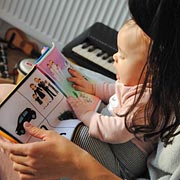 At first glance, this devotion to a single story might seem puzzling. As adults, we crave novelty and variation, and it’s tempting to encourage children to explore new titles or gently steer them towards something ‘different’. But this desire for repetition is not only entirely normal for infants, toddlers and preschoolers — it’s actually a sign of healthy development. In fact, there’s a great deal happening beneath the surface every time your child requests a beloved book for the umpteenth time.
 There is also an emotional component to repeated reading. When a child hears a favourite story in the voice of a parent or trusted adult, it creates a strong sense of connection. The warmth, tone and rhythm of familiar words spoken by someone they love reinforce a feeling of safety and belonging. For many children, this shared experience becomes part of their routine, and returning to a much-loved story can offer comfort in moments of transition, tiredness or uncertainty.
 One of the clearest benefits of repeated reading is vocabulary development. Hearing the same words and phrases over time helps children internalise them. This is especially important when books introduce new or more complex language than a child might hear in everyday conversation. By encountering those words again and again in a familiar context, children begin to understand them more deeply and even start to use them in their own speech. The rhythm and rhyme found in many favourite books further support this by making the language more memorable and easier to imitate.
 At home, parents or carers can support this by continuing to follow a child’s lead. If your child keeps choosing the same book, that’s a good thing — it means they’re connecting with it. You can enhance the experience by reading with enthusiasm, pausing to let your child fill in familiar lines, or asking gentle questions like “What happens next?” or “How do you think they feel here?” If your child wants to tell you the story instead, even better — this kind of role reversal strengthens memory, language, and storytelling abilities.
 Eventually, children do move on. When they’ve had their fill of a particular book, they’re often ready to explore new stories with a richer set of skills in place. The comfort and confidence gained from repeated readings help them approach unfamiliar books with greater interest and less frustration. So rather than seeing repetition as a rut, it’s helpful to view it as a bridge — a way for children to move steadily from the familiar to the new.
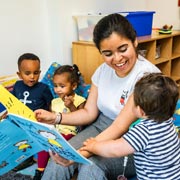 Our practitioners are skilled at making repeated reading feel fresh and interactive, even when the story is already very familiar. By using expressive voices, gestures, and encouraging children to join in with key words or sounds, we help bring the story to life each time. Children are often invited to take on the role of storyteller themselves, turning pages, pointing to pictures, and even “reading” aloud from memory. These small but powerful moments help build confidence and strengthen communication skills in a way that feels natural and joyful.
 With warmer weather and plants and trees flourishing wherever we look, it got us thinking about some creative children’s activities, inspired by nature. One simple starting point is the humble leaf, which can lend itself to a surprisingly wide range of creative activities for children to enjoy. Such activities will not only draw children’s attention to
  The first thing children will need is, of course, a selection of suitable leaves. To give them enough scope for a wide range of creative activities, we suggest families forage a variety of different sizes and shapes. We suggest focusing primarily on tree leaves as these are likely to be fairly robust, come in lots of different forms, and often have well-defined ‘vein’ structures. Oak leaves, sycamore, beech, hawthorn, horse chestnut, lime, sweet chestnut and silver birch would represent a nicely varied selection, for example. Download our
  One of the most straightforward activities using leaves is for children to simply paint them. The youngest will love painting one side of each leaf in a different colour — or even adorn them with patterns like spots, zigzags, hearts, and stripes. Once the paint is dry, the leaves can be used in a variety of different ways. For example, they could be glued into an attractive design on a sheet of paper/card and displayed in a frame, made into a garland for the wall, bunched together to form an attractive hand-held fan, glued to a circle of paper or card to form an attractive crown, or glued to an upturned stick or tree sprig to represent a colourful tree. These are just a few ways they can be used once painted and, indeed, coming up with ideas is all part of the fun and creativity for children!
 Collages made from leaves can also be very easy for children to accomplish; they just need a base card or paper, child-safe glue, some leaves and perhaps some flowers too. Ideally, leaves should be flat and, even better, dried. This can be achieved through pressing, which is explained later. For added beauty, add fresh or pressed flowers of different colours too — perhaps even other items like stars and glitter. Children can then gradually build up an attractive design (rather like organic wallpaper) or a simple picture like our example. It will result in a fascinating piece of leaf and flower art that can be displayed in the home — something for children to be proud of!
 A freshly painted leaf can also be used to make leaf prints. When the paint is still very wet, children should simply turn their leaves over and press all areas of them against a sheet of paper or card. Doing this by hand is OK but if you have a roller, even better! In this way, the paint is transferred to the sheet and will typically show the leaf shape and all the structural veins of the donor leaf. And, by repeating the process with one or more leaves and colours, a design or picture can be gradually built up on the sheet. This might be as simple as a repeat pattern or as complex as a pictorial scene. By adding other media like painted or drawn lines, leaf prints could, for example, represent a forest on a hillside. Add little figures of people and perhaps little dogs underneath each ‘tree’ and it’ll start to come to life!
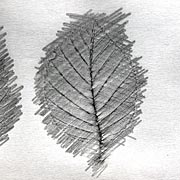
 A leaf-rubbing activity is also fun and intriguing for little ones. Find a flat surface like a table or rigid sketch pad and place a thin sheet of paper over one or more leaves. By rubbing a thick wax crayon, charcoal stick, or soft-leaded pencil repeatedly over the sheet where there is an underlying leaf, the leaf’s form will gradually reveal itself. Children will be able to see the structural veins that form the leaf, along with leaf edges as they scribble. Children can experiment with different media, colours, and types of leaves to get different creative results.
 eaves and small, non-bulky flowers can be dried and flattened through the process of pressing. All that’s needed is the leaves and flowers and a thick book of paper sheets — a large sketch pad is perfect or, alternatively, sheets of unprinted newsprint or blotting paper. Manually place single flowers and leaves between the leaves of the paper and then place something large, flat, and heavy over the entire thing and leave it for anything from a couple of days to a couple of weeks. How long will depend on the type of leaves and flowers involved (and how dry and flat they were to begin with). Once ready, the flowers and leaves will be thin and dry, ready to use. They could, for example, be used individually as mementoes or bookmarks, or assembled with glue into ‘pictures’ via a collage, as explained earlier.
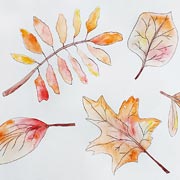
 Another creative activity involving leaves is simply to represent them in pencil, paint, or other media of a child’s choice. Encourage them to look carefully at the leaf’s shape and detail, so they can try to mimic them in drawn or painted form. Drawing and painting are highly useful skills for children to develop and mastering such skills will prove useful throughout their educational years. If you, as a parent, are good at drawing or painting, perhaps join in the activity too. By doing so, you can show your child what is possible with some close attention to detail and carefully placed lines and strokes. As you build up your own picture, perhaps explain how you are achieving the results, so they can learn from your approach. And — who knows — perhaps you’ll discover that you have a budding artist in the family!
 Whether dried, painted, or simply picked as they are, leaves can also be made into other objects, characters, and so on. Some leaves can look like other items, for example, a particular type of tree (the Tulip Tree a.k.a. Yellow-Poplar) has individual leaves shaped rather like t-shirts! Children could look out for these and perhaps paint them in their favourite football team’s colours, draw in legs, arms and a head to make people and — hey presto — they’ve created a person! Similarly, there are several leaves shaped like hearts which, once painted in a suitable colour, can be useful when making greetings cards for birthdays or Valentine’s Day.
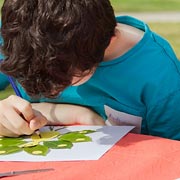 Another example of how leaves can represent other things can be illustrated by simple leaves like beech leaves. Each of these looks rather like the shape of a classic flower petal. So, perhaps a child can be encouraged to fan several around in a circle, almost tip to tip, to look like a big flower head. Children can paint the circle in the middle or glue a circle of coloured paper or wool there to represent the centre of the flower. And, if they start with a paper large enough, they could create several of these and make a picture of multiple flowers made of leaves. Use thin twigs, wool, or drawn crayon lines for stems and perhaps longer, thinner leaves to make the flowers’ leaves.
 The activity ideas above are just a starting point and there are plenty more that are possible with leaves. Whether it’s dried leaves painted, glued and varnished onto pebbles to form paperweights, dried leaves gently sprayed with perfume to form pot-pourri, or suspended leaves that form a mobile, the possibilities for leaf art are almost endless! We hope our ideas today inspire children to use their imaginations and make some beautiful creations — all with simple, humble leaves.
 In addition to being fun and creative, these activities all support the Early Years Foundation Stage curriculum for under-fives. EYFS areas supported by the activities include:

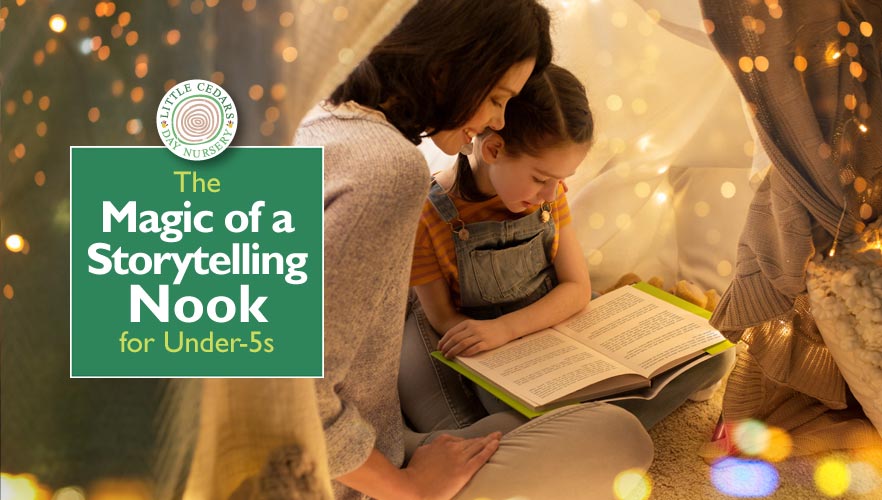
 Any successful storytelling nook needs to be warm, cosy, quiet and comfortable. That means choosing a corner or recess of some kind in the home that’s away from distractions like TVs and game consoles. Somewhere that’s not used as a thoroughfare by other family members will also help. Wherever you choose, it also needs to be warm. Therefore, somewhere away from draughts is required, so avoid being too close to entrances and exits to the outside. A corner of a quiet room or a tranquil alcove are therefore often ideal spots for your child’s storytelling nook.
 Whether reading from a book or creating a new story off the top of one’s head, there’s something that really brings a story to life — being animated and expressive during storytelling, rather like actors might do. That’s true whether it’s the adult or the child telling the story.
 Do consider adding a storytelling nook or reading corner to your child’s home. They’re great vehicles for escapism, are incredibly worthwhile, and offer potentially magical experiences for your child. And, if you go the extra mile to make them cosy, immersive and special, they will encourage your child to love reading and creating new adventures using their imagination. Storytelling nooks and reading corners can open up whole new worlds to your child and be a wonderful antidote to electronic screens, gloomy weather, and more limited daylight during winter months. What’s more, they’re a great way for all parties to grow deeper bonds through shared periods of exquisitely immersive, high-quality time.