
 With all the food and feasting associated with Christmas, it got us thinking about food hygiene and safety for children. Aside from keeping alert to possible allergens, parents need to be careful to ensure families remain safe from illnesses caused by food hygiene mishaps. After all, such illnesses can be particularly dangerous to little ones, who are fragile, but can be largely avoidable when good hygiene measures are taken. With that in mind, today’s post outlines various ways in which parents can stay on top of hygiene around the preparation of food for their children. And, of course, such measures will keep adults safer too.
A Clean Environment for Food Preparation
 Ensuring the food preparation environment is clean and hygienic will reduce the chance of microbes, including germs and viruses, contaminating food. Wiping down with warm, soapy, water on clean dish cloths is ideal for many such tasks. Anti-bacterial sprays are useful but should not be allowed to contaminate food, plates and cutlery etc. directly or indirectly.
- Keep kitchen worktops, sinks, cupboard doors, drawer handles and door knobs clean and hygienic.
- Remember to do likewise for electronic appliance doors, handles, knobs, and buttons. For example, on fridges, freezers, microwaves, air fryers, ovens, and hobs.
- Utensils also need to be clean and hygienic before being used for food preparation.
- Cutlery, plates, food bowls, and serving bowls/utensils also need to be spotlessly clean before food is served on them.
- Tea towels, hand towels and dish cloths should be regularly laundered in hot water to prevent them being contaminated or becoming breeding grounds for bacteria.
- Do not let pets, e.g. cats, access worktops etc. where food is prepared.
Good Personal Hygiene
Those preparing food, whether they are parents, relatives, or children helping, also need to ensure good hygiene protocols are followed.
- Wash hands and fingers thoroughly using warm soapy water, rinse well and dry using a clean towel or equivalent before preparing food.
- Ensure long hair is tied back for both personal safety and food hygiene reasons.
- Food should not be prepared by anyone who is feeling ill or who has any kind of bug.
- Avoid coughing or sneezing near food.
- Avoid smoking near food preparation and eating areas; it’s not good for children – or adults.
Safety & Hygiene Around Food Preparation
In regard to food safety, some key basics are essential to get right.
 Only feed children, especially babies and under-fives, age-appropriate food/meals. This is very important because many foods contain too much salt, sugar and saturated fats for young children. Some other foods can contain dangerous levels of toxins or even heavy metals. Learn more on the NHS website.
- Feed children a healthy, balanced diet with appropriate portion sizes.
- Only use food, that’s been stored correctly, within its ‘use by’ or ‘best before’ dates.
- Read food packaging to ensure you are not using anything containing known allergens that affect your child, or any ingredients they’re intolerant to.
- Prepare food according to instructions on food packets, for example, in regard to cooking times, cooking temperatures and, if appropriate, defrosting times.
- Ensure frozen food is thoroughly defrosted before cooking.
- Always ensure cooked food is fully cooked, including on the inside, before serving.
- Before serving, test the food’s temperature to ensure it’s not too hot for your child. This is especially important for food that is microwaved as it may not cook evenly without stirring/mixing and can also continue cooking once removed from the appliance.
 Only feed children, especially babies and under-fives, age-appropriate food/meals. This is very important because many foods contain too much salt, sugar and saturated fats for young children. Some other foods can contain dangerous levels of toxins or even heavy metals.
 The safe handling and preparation of food itself is also crucial. There are some specifics to be aware of:
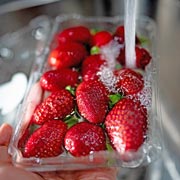
- Always thoroughly wash vegetables, fruit and salads and, when appropriate, peel vegetables before use.
- Rice is a special case to be wary of (see next section for more details).
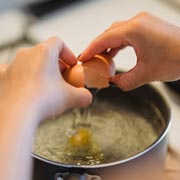
- Never feed eggs to children under 6 months.
- For children over 6 months of age, it’s best to source chicken eggs stamped with the Red Lion (British Lion Mark), particularly if they’re to be only lightly cooked or used raw, for example, in mayonnaise.
- All other types of egg must be thoroughly cooked, so that both yolk and egg white are firm and opaque, before serving to children.
- Always ensure fish, shellfish, prawns, and other seafood is cooked thoroughly.
 Always thoroughly wash vegetables, fruit and salads and, when appropriate, peel vegetables before use.
Safety Around Food Storage
- Ensure your fridge is set to the right temperature and that its door remains fully closed when not being accessed.
- Keep it clean and clear up any spillages right away if they occur.
- Keep foods like meat, fish, and seafood in the fridge until needed (discard if past their ‘use by’ date).
- Raw meat, fish and seafoods should be separated, stowed in individual containers with covers, and stored away from other foods on the bottom shelf of the fridge. By doing so, it will avoid the likelihood of them dripping onto other foods.
- Never be tempted to put pre-cooked food in the fridge or freezer while it is still warm, especially near meat and seafood products.
- Instead, ensure they are rapidly cooled before placing into the fridge/freezer (e.g. by placing in a sealed Tupperware-type container and running under the cold tap).
- Meat and fish/seafood should be rapidly cooled within 1 to 2 hours maximum before placing in the fridge or freezer once fully cold.
- Rice is a special case and must be rapidly cooled within one hour before placing in the fridge. This is so as to avoid the build-up of toxins that are particular to rice.
- For the same reason, rice should only ever be reheated a maximum of once and then only eaten if consumed within 24 hours of being originally cooked.
- Frozen food is best labelled and dated to better ensure that it is consumed within an appropriate time.
Teach Your Child About Food Safety & Hygiene
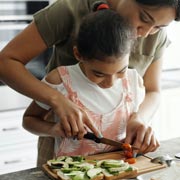 It’s hugely beneficial if children learn about food safety and proper hygiene associated with its preparation. Such things are useful life lessons and will help to keep them more safe and free of illnesses and nasty bugs. Teach them by example whenever possible. A great start is to encourage them to thoroughly wash their hands and fingers with warm, soapy water before preparing or eating food. They should also be encouraged to sit down at the table and be in a calm state before eating. This will help to better ensure food does not become contaminated or knocked onto a dirty floor. It will also reduce the chance of the child choking on food.
Food is one of life’s great pleasures and ensuring good hygiene around its preparation will help to keep it that way. Teaching children good hygiene habits will not only help to keep them safe and well, but will also encourage independence and the development of responsibility. Such things are key skills they’ll need as they grow older, particularly when they start school.
Healthy Eating at Little Cedars Nursery, SW16


At Little Cedars Nursery in Streatham, we recognise how important good food and high-quality meals are to children under five. When it’s right, it boosts cognitive function and energy levels, ensures they receive good nutrition as they grow, and boosts their overall well-being. We therefore employ our own in-house chef who prepares fresh, balanced meals for children every day. The menu is varied, accounts for special diets, and uses only the most fresh, high-quality ingredients. Click the following bold link for our guide to healthy eating for under-fives.
A Nursery Place for Your Child in Streatham
To learn more about Little Cedars Nursery in Streatham and explore a possible place for your child, please get in touch:
Safety Notice
PLEASE NOTE: These are starter guidelines only — parents/guardians should do their own comprehensive risk assessments. Children should only help to prepare food under close adult supervision. Ensure they keep safe from sharp implements like knives and heat sources like stoves, ovens, and even hot food. There are also other potentially harmful things in kitchens such as chillies, which could get into their eyes if handled inappropriately, and harmful chemicals in things like dishwasher tablets. So, check thoroughly, supervise children, and be alert. In case of an emergency, call 999 to seek urgent medical attention.
 Last year,
  As well as helping families financially, the scheme expansion should help children begin their early years education even earlier, for many, which has been shown to be hugely beneficial to them. The free childcare provision will also help many more women back into the workforce. Children, families and the economy should all benefit.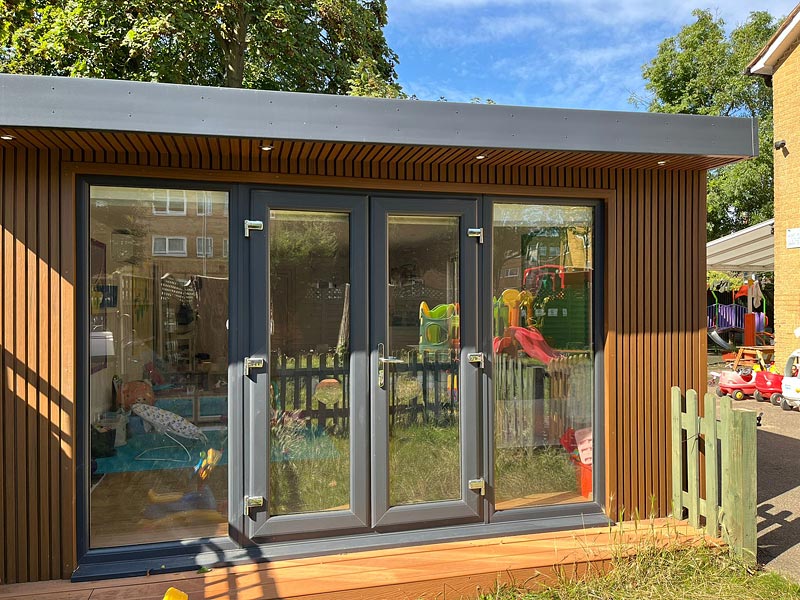
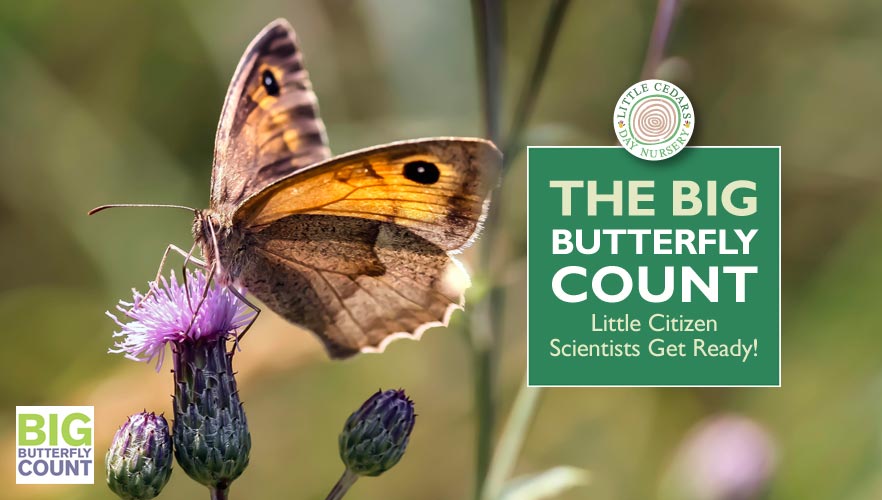

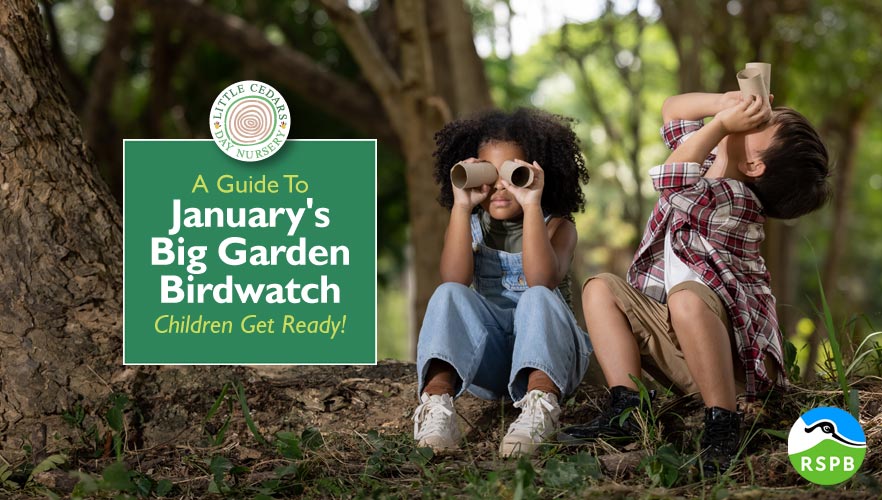
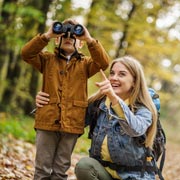 Parents and children, don’t miss this year’s incredibly important birdwatching activity for the RSPB — and the planet — which occurs from Friday 24th to Sunday 26th January. The Big Garden Birdwatch only takes one hour, is free, and is an extremely worthwhile activity for children and families to take part in. It’s a great way to introduce children to the concept of conservation as well as getting them interested in spending time in and around nature. And, as we’ve reported before, nature is extremely good for children! In today’s post, we explain how easy it is to get your little ones involved and why taking part is a win-win-win for families, birds and nature.
 Monitoring populations of bird species every year allows the RSPB and other conservation organisations to see how the various types of garden birds are faring. Whether or not they’re doing well will be a barometer of the state of nature itself as well as that of the individual bird populations. If the RSPB and other conservation organisations can see a problem, they can then mobilise to try to do something about it. Likewise, if they see a particular bird species doing well, they can learn from that and better understand what measures are helping that particular bird population to thrive.
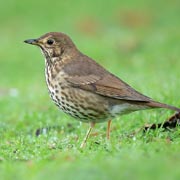 In 2023, the bird species spotted the most was the House Sparrow, followed by the Blue Tit in second place, Starling in third, Wood Pigeon in fourth and Blackbird in fifth.
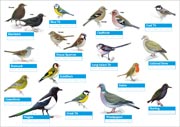 By registering you’ll also get a free guide to taking part in the event, which includes visual reference to the birds to look out for, as well as other perks like a discount on bird food and other bird feeding supplies available from the RSPB’s online shop.
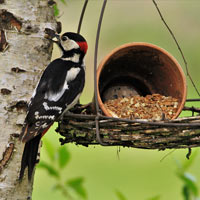 If you’re keen to attract as many birds as possible to your Garden Birdwatch count, the RSPB has you covered. As well as providing useful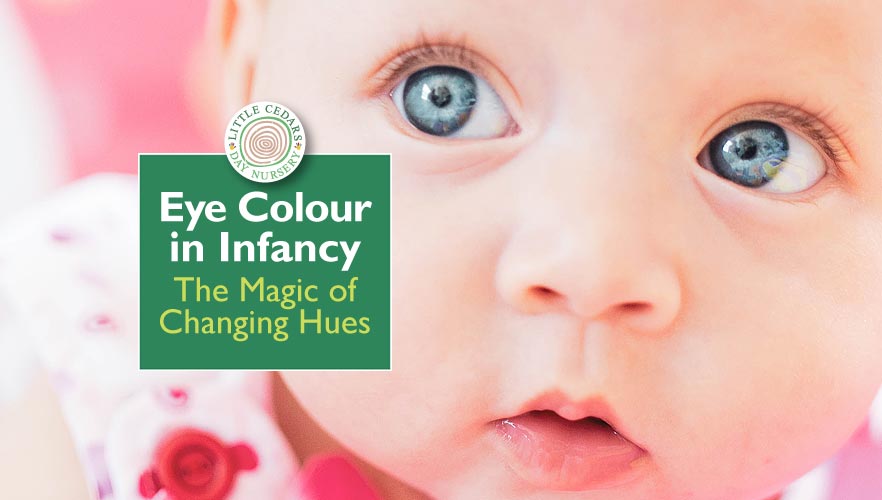
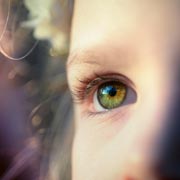 Have you ever noticed that some babies are born with blue or grey eyes that later change to brown, green or hazel? It’s a magical metamorphosis that sometimes occurs in growing infants and it can be quite intriguing. Parents may indeed wonder whether their newborn child’s eyes are going to change or remain the same as they were at birth. The answer comes down to a combination of time, location, genetics and something called Melanin and today’s article explores this captivating phenomenon.
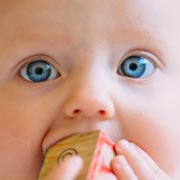 When we talk about eye colour we are, of course, talking primarily about the colour of the irises of a human’s eyes. The iris is the circular muscle around the centre pupil and it is this muscle that governs how much light can pass into the eye by making the pupil larger or smaller. When there is lots of light around, the iris constricts the size of the pupil and, in contrast, makes it big when light levels are low.
 Melanin is a protein that’s secreted by special skin cells called melanocyte cells, which form colouration pigmentation in our bodies, including in the eyes, hair and skin. When it comes to the eyes, a lot of melanin pigment means the eye colour is more likely to be dark, for example brown. In contrast, those without much melanin eye pigmentation will have lighter eyes, for example, grey or blue. It is also those lighter colours that are most affected by the Rayleigh Scattering and Tyndall effects that we discussed in the last section.
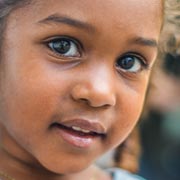 Melanin is a protective protein and, by having more melanin pigmentation, an eye has greater protection against harmful ultraviolet (UV) sun rays. That’s one of the reasons that populations from hot, sunnier countries are more likely to have brown or darker eyes — because those are better protected from the sun’s UV rays. Indeed, brown eyes are the most common eye colour in infancy, despite some common misconceptions. It is true, however, that blue or grey eyes are common in infancy in Northern Europe, where the sunlight is less strong.
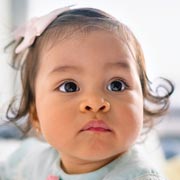 Genetics also play a part in the colour of the eyes and can be helpful when attempting to predict a newborn’s eye colouring. However, correctly predicting the colour of a baby’s eyes based solely on that of parents is not guaranteed. That’s because any inherited colouration may skip one or more generations. And, with a mix of different chromosomes and genes being passed down from parents, grandparents and beyond, skipping generations can sometimes result in completely unexpected eye colouring in infants. Genes will also control how much melanin will initially be present in a newborn’s eyes as well as affecting further production as the child ages and the eyes adjust to conditions.
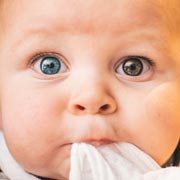 Heterochromia is a condition that affects less than 1% of the world’s population. Those affected may have two different coloured eyes or perhaps two colours present in one eye. The causes of heterochromia include physical injury, disease, genetics or sometimes the use of specific medications.
 Child Benefit is a financial support scheme, provided by the UK Government, that’s there to assist parents and guardians in covering the costs of raising children. It is an essential part of the social safety net in the United Kingdom and aims to help families with the financial responsibilities that come with bringing up children. Eligible families are free to spend Child Benefit however they like, whether that’s on children’s clothes, food, or something else.
 You can claim Child Benefit for all of your children who meet the eligibility criteria. It may surprise some to learn that there are no restrictions on the number of children you can claim for (unlike with some other types of Government child support), so each eligible child in your care can be covered under this benefit.
 Child Benefit can be affected by your or your partner’s individual income if either of you earns over £50,000 annually. In such cases, you may have to pay a ‘High Income Child Benefit Tax Charge’. This charge gradually reduces your Child Benefit entitlement if your income is between £50,000 and £60,000. Indeed, if your income exceeds £60,000, you’ll likely have to repay the entire amount through this tax charge. We’ll cover more of the detail in the next section below…
 Claiming Child Benefit is a straightforward process:
 In today’s guide, we take a close look at the incredible importance of outdoor play for children, including those under five. Outdoor play isn’t just about fun; it’s one of the cornerstones of childhood learning and development and has an immense number of benefits for little ones. So, in this comprehensive article, we’ll explore why outdoor play is so essential for our youngsters and how its effects can be transformative. Let’s take a look…
 For children, the outdoors represents a magical place where fun, exploration and real adventure can take place. Picture a world where a simple stick can become a wizard’s wand, or a puddle can transform into a treasure-filled lagoon, and you’ll soon understand how exciting the outdoors can be for children. Indeed, outdoor play is the realm of limitless imagination. It offers children a vast canvas in which to immerse themselves into adventures, fostering creativity and igniting their instinctive curiosity.
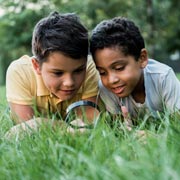 The Great Outdoors serves as a natural classroom, with true hands-on learning experiences that provide numerous opportunities for children to acquire new skills and knowledge. Whether it’s
 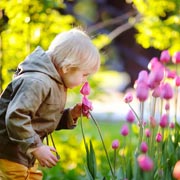 Outdoor play engages all the senses and
 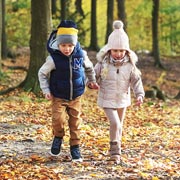 The outdoors serves as an exceptional classroom. When they’re playing outside, children effortlessly absorb knowledge about the world around them. In the open air, they will naturally learn about nature, seasons, different types of flora and fauna, and how the environment functions. It is true learning through discovery.
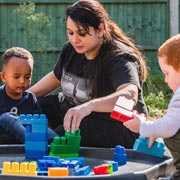 The open spaces of the outdoors also serve as a wonderful canvas for creativity. Children’s imaginations run wild outdoors as they invent games, stories, and art inspired by the natural world. Outdoor play encourages them to think in new, innovative, ways and to truly embrace their creative potential.
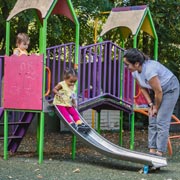 At Little Cedars Nursery, we really understand the profound impact that outdoor play has on early childhood development. With that in mind, our childcare practitioners ensure that children are given every opportunity to immerse themselves in a wide range of outdoor activities that help to nurture every child’s learning, growth, curiosity, and resilience. And let’s not forget one more important factor about outdoor play — it’s simply immense fun for children! As such, it is a perfect way to facilitate learning in the most natural way of all — through play.