
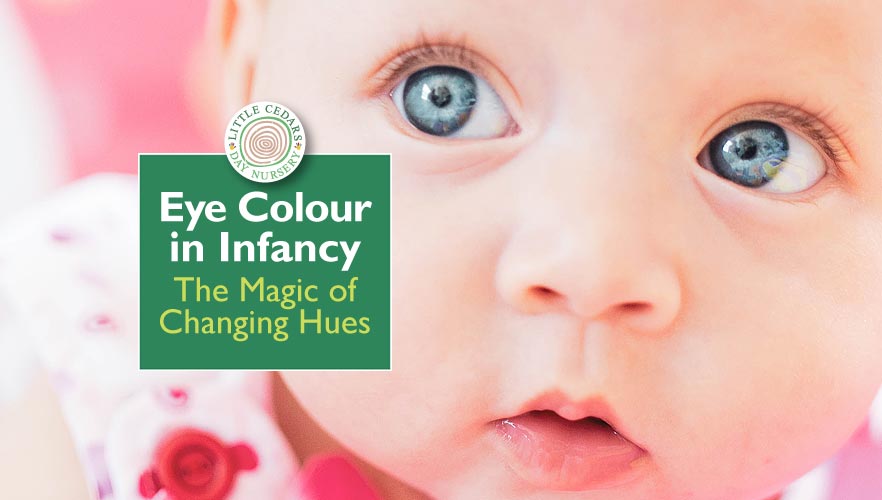
 Have you ever noticed that some babies are born with blue or grey eyes that later change to brown, green or hazel? It’s a magical metamorphosis that sometimes occurs in growing infants and it can be quite intriguing. Parents may indeed wonder whether their newborn child’s eyes are going to change or remain the same as they were at birth. The answer comes down to a combination of time, location, genetics and something called Melanin and today’s article explores this captivating phenomenon.
Eye Colour, the Iris, & Scattering of Light
 When we talk about eye colour we are, of course, talking primarily about the colour of the irises of a human’s eyes. The iris is the circular muscle around the centre pupil and it is this muscle that governs how much light can pass into the eye by making the pupil larger or smaller. When there is lots of light around, the iris constricts the size of the pupil and, in contrast, makes it big when light levels are low.
It is on the surface of the iris muscle that you find the colour pigmentation that most affects eye colour. However, in some cases, the exact hue that an onlooker perceives is also affected by the way light wavelengths are scattered from the surface of the iris and out through the lens. Effects including the ‘Tyndall’ effect and ‘Rayleigh Scattering’ are potentially a part of this and each may be responsible for altering the colour we see when we look at a person’s eyes. In a similar way, the white light coming from the sun is scattered in such a way that makes the sky look blue. However, when it comes to the eyes, this scattering of light wavelengths only really shows when there is very little Melanin in the eyes.
Melanin
 Melanin is a protein that’s secreted by special skin cells called melanocyte cells, which form colouration pigmentation in our bodies, including in the eyes, hair and skin. When it comes to the eyes, a lot of melanin pigment means the eye colour is more likely to be dark, for example brown. In contrast, those without much melanin eye pigmentation will have lighter eyes, for example, grey or blue. It is also those lighter colours that are most affected by the Rayleigh Scattering and Tyndall effects that we discussed in the last section.
Eye Colour & Location
 Melanin is a protective protein and, by having more melanin pigmentation, an eye has greater protection against harmful ultraviolet (UV) sun rays. That’s one of the reasons that populations from hot, sunnier countries are more likely to have brown or darker eyes — because those are better protected from the sun’s UV rays. Indeed, brown eyes are the most common eye colour in infancy, despite some common misconceptions. It is true, however, that blue or grey eyes are common in infancy in Northern Europe, where the sunlight is less strong.
Changing Eye Colour in Infancy
Interestingly, many babies born with grey or blue eyes end up with eyes of a different colour. This is because the protective melanin pigmentation can take time to build up in the irises and it’s this that accounts for many babies starting off with grey or blue eyes and ending up with green, hazel or brown eyes. The metamorphosis may take between 6 and 9 months to begin showing dramatically, with the changes mostly complete by the age of 3 years. That said, subtle eye colour changes can continue right into early adulthood in some cases.
Eye Colour & Genetics
 Genetics also play a part in the colour of the eyes and can be helpful when attempting to predict a newborn’s eye colouring. However, correctly predicting the colour of a baby’s eyes based solely on that of parents is not guaranteed. That’s because any inherited colouration may skip one or more generations. And, with a mix of different chromosomes and genes being passed down from parents, grandparents and beyond, skipping generations can sometimes result in completely unexpected eye colouring in infants. Genes will also control how much melanin will initially be present in a newborn’s eyes as well as affecting further production as the child ages and the eyes adjust to conditions.
What About Heterochromia?
 Heterochromia is a condition that affects less than 1% of the world’s population. Those affected may have two different coloured eyes or perhaps two colours present in one eye. The causes of heterochromia include physical injury, disease, genetics or sometimes the use of specific medications.
The singer David Bowie famously had eyes that appeared to be two different colours. This was the result of a condition called anisocoria, allegedly caused through a scuffle during an argument over a girl. In Bowie’s case, the injury caused one iris to become paralysed and remain permanently larger than the other. It is this difference that makes one eye appear to be darker.
Baby eye colour is a fascinating topic and, as we have seen above, predicting the colour of your newborn baby’s eyes may not be as simple as it may seem. Witnessing a baby’s eyes gradually turn from grey or blue to green, hazel or brown is also quite a magical milestone and we hope today’s guide has gone some way to explaining why such an incredible metamorphosis can sometimes occur.
Your Childcare Nursery in Streatham
Little Cedars provides high-quality childcare for babies, toddlers & preschoolers in Streatham, SW16


Do you have a baby, toddler or preschooler who requires reliable weekday childcare and a high-quality early years education? If you’re living in or around Streatham, Little Cedars Day Nursery may be just what you’re looking for. Our warm, welcoming, home-from-home environment and well-trained staff offer loving care from Monday to Friday and bring out the very best in every child. We are officially a good childcare provider too, and equip little ones with everything they need to thrive. To explore the possibility of a childcare place for your child at Little Cedars Day Nursery in Streatham, please choose an option below and we’ll be delighted to help.
It may help nearby families to know that our Streatham childcare nursery is also close to Streatham Hill, Streatham Common, Streatham Park, Furzedown, Tooting, Balham, Norbury, Colliers Wood, West Norwood, Wandsworth, Clapham and Brixton.
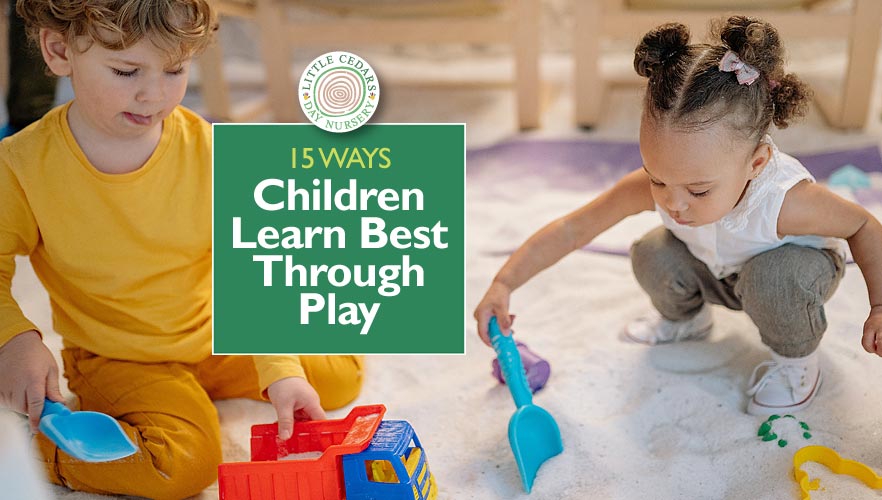
 Watch any infant, toddler or preschooler for just a few minutes and you’ll see that one thing comes naturally to them; play. Indeed, it’s as if they’ve been programmed that way, with the need to play coming instinctively to youngsters, whatever their species. Aside from it simply being great fun, there are a multitude of very good reasons for that — play teaches them an enormous amount about each other, themselves, other living things, cause and effect, and the world around them. It also allows them to learn and fine-tune a whole swathe of new skills as they grow older, play new games, and become more experienced. Add in some careful steering and nurturing during that play from Mum or Dad and they have a real recipe for success. With that in mind, we look today at the key ways in which learning through play profoundly benefits children.
 Play and creativity go hand-in-hand. Whether making up a new game, role-playing, constructing, or playing in a den, children will naturally create both scenarios and physical items as part of their play. Such activities teach them how to use their imaginations and to be creative — in a myriad of ways.
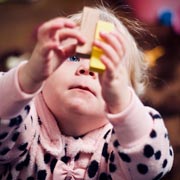 Different play activities require different types of movement and physical interaction from children. Indeed, this is a fundamental aspect of play. Whether jumping and running with large movements or carefully constructing with small items like building blocks, children will naturally hone both fine and gross motor skills during play. Such physical skills are essential to their ability to navigate and interact with the world around them and, in the most natural of ways, play is at the heart of enhancing those abilities.
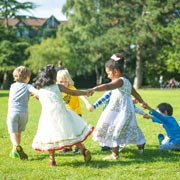 Social skills are also improved through play. Children naturally play with other children and, by so doing, will soon pick up social skills as they begin to better understand social protocols that allow them to succeed both as individuals and in groups. Decent manners, saying please and thank you, cooperation, teamwork and closer bonding are all examples of social skills that can benefit through group play. Other examples include conflict resolution, better sharing, negotiation and communication, which we’ll come to next.
 Through all this play, children will be communicating with each other and with any adults that are supervising. As such, play is a great facilitator of communication. Indeed, good communication is essential to most games and, through it, children can cooperate and achieve in ways that will help them in both the short term and into adulthood. Improving communication skills is also a fundamental way to improve success when you think about it.
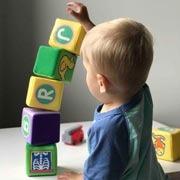 Mathematics is often embedded into games and pastimes. Children can learn, for example, about adding, subtracting, multiplication and division through games. Even dividing group play into teams requires some fundamental maths to ensure teams are equal in size. Building towers out of blocks is another great example where children can count how many blocks they can stack into a tower before it falls over. They can try to beat their own maximum, or even compete against one another to see who can use the most blocks.
 Play comes in a vast array of different forms, shapes, and sizes. Through so doing, it introduces children to countless scenarios, situations, and challenges. By immersing children into such widely differing environments, they learn huge amounts about the world around them, and everything within it. Whether it’s newfound knowledge about a new object, material, place, culture, activity, or something else, play is an amazing conduit to new knowledge and the need to learn new skills. Play is the ultimate educator and the incredible thing is that children may be unaware that they’re learning — they’re having too much fun!
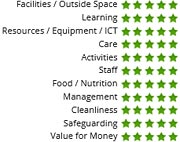 When you’re searching for the best nursery for your baby or toddler, or the perfect preschool for your 3-or-4-year-old, the choice can often be overwhelming.

 Child Benefit is a financial support scheme, provided by the UK Government, that’s there to assist parents and guardians in covering the costs of raising children. It is an essential part of the social safety net in the United Kingdom and aims to help families with the financial responsibilities that come with bringing up children. Eligible families are free to spend Child Benefit however they like, whether that’s on children’s clothes, food, or something else.
 You can claim Child Benefit for all of your children who meet the eligibility criteria. It may surprise some to learn that there are no restrictions on the number of children you can claim for (unlike with some other types of Government child support), so each eligible child in your care can be covered under this benefit.
 Child Benefit can be affected by your or your partner’s individual income if either of you earns over £50,000 annually. In such cases, you may have to pay a ‘High Income Child Benefit Tax Charge’. This charge gradually reduces your Child Benefit entitlement if your income is between £50,000 and £60,000. Indeed, if your income exceeds £60,000, you’ll likely have to repay the entire amount through this tax charge. We’ll cover more of the detail in the next section below…
 Claiming Child Benefit is a straightforward process: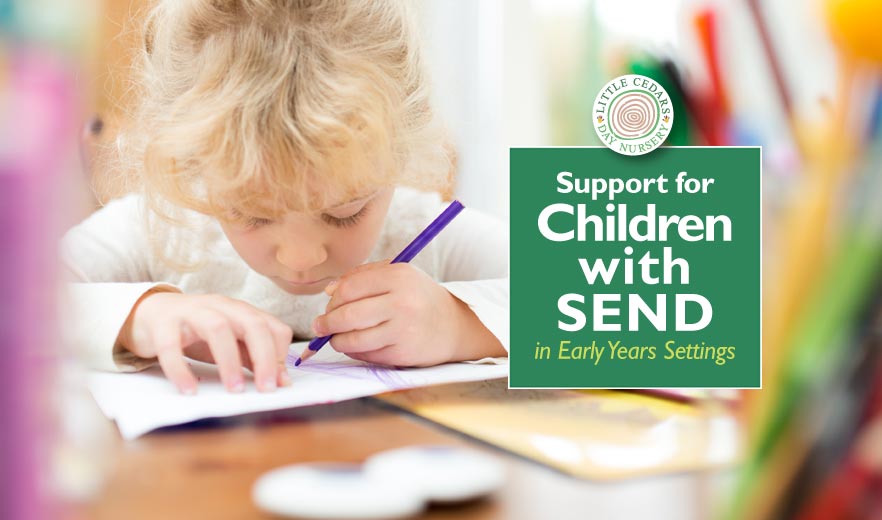
 Identification of a special educational need or disability is, of course, the first step in being able to properly support a child with SEND. For this reason, good early years providers like Little Cedars Nursery will, as a matter of course, watch out for signs of things that might be challenging for children. As prescribed by
  Support plans for suspected or confirmed special needs or disabilities are then discussed and custom-designed for the child. Such plans will be agreed between the child’s parents/caregivers, staff at the early years setting itself and any external specialists or professionals involved in the child’s care. Such programmes will be customised to suit the individual child’s specific needs and may include tailored activities, strategies, resources and so on. Formalisation of the support programme will allow all parties to pull in the same direction, working cooperatively for the benefit of the child.
 In parallel to the SENCo at the child’s early years setting, local authorities also have their own Special Educational Needs Coordinator, known as the Area SENCo. They will also be integral to a child’s SEND support plan, helping with coordination between the local authority, the various parties involved in supporting the child, and in relation to any special funding requirements. If approved, special funding might be required, for example, for an additional member of staff tasked with giving one-to-one support to the child, or to fund extra learning resources and activities for them.
 All 3- and 4-year-olds living in England are eligible for a minimum of 570 hours of free childcare per annum, irrespective of whether or not they have SEND. This is known as Universal Free Childcare or their Free entitlement and is typically taken as 15 hours of childcare each week over 38 weeks of the year, but how it is taken can differ.
 Following on from our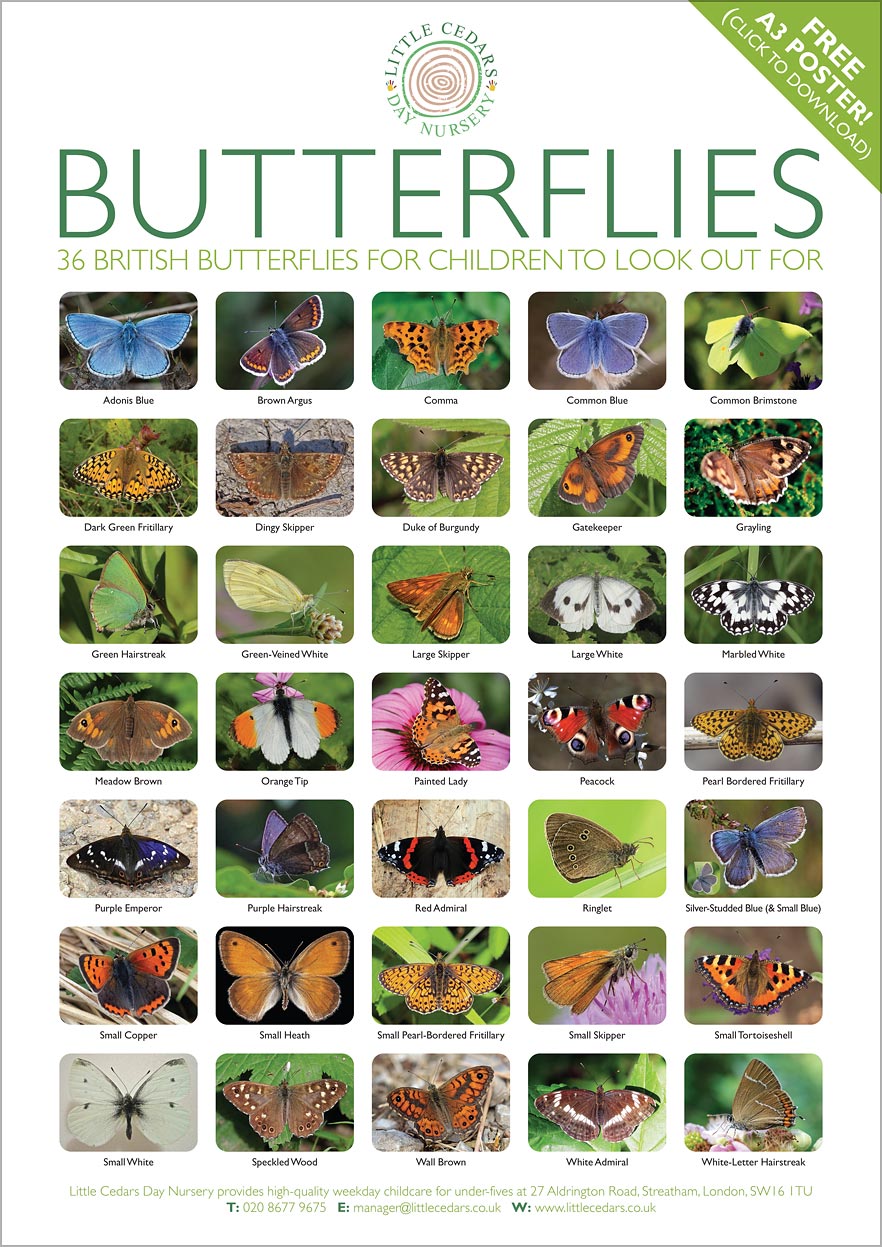
 We must also add that children should be encouraged to ‘look but don’t touch’ as butterflies are very delicate creatures. Children should not try to touch or catch them — they are best left in peace as every one of them is a little individual that simply wants to go about his or her day. They’re wonderful to watch, though, and our free poster should help children and adults identify many of the different types. Perhaps see how many different species can be spotted over the course of a year. Take photos too, and compare them with friends! Some butterflies visit gardens, floral window boxes and parks while others may only be found in wilder locations in the countryside. This activity is therefore a great excuse for families to get out and explore The Great Outdoors! Recording the date and location of each butterfly spotted will also help families work out where the best butterfly-spotting locations are for next time.
 With that in mind, why not take this activity a step further and get involved in the UK’s annual Big Butterfly Count? For 2024, it takes place between Friday the 12th of July and Sunday the 4th of August, which is when most butterflies are at their adult stage. All it takes is 15 minutes and children will love being little ‘citizen scientists’! The activity can be done in gardens, parks, school grounds or out in the countryside. Taking part will give children a real opportunity to help with butterfly conservation.
 Bilingual children have been shown to have better cognitive flexibility, focus and creativity. Studies have shown that this often leads to better decision-making, prioritisation and planning skills too. With such skills in place, bilingual children may also have a better ability to multitask and switch between separate tasks.
 Young bilingual children may sometimes mix their languages or use one language inappropriately in certain contexts. This is a normal part of the language acquisition process but can be a little confusing, at times, for both the child and their caregivers.
 Parents play a crucial role in supporting their bilingual children’s language development. To help your child become proficient in two different languages, it’s important to consistently speak both at home. Doing so can help children develop a particularly strong foundation in both languages.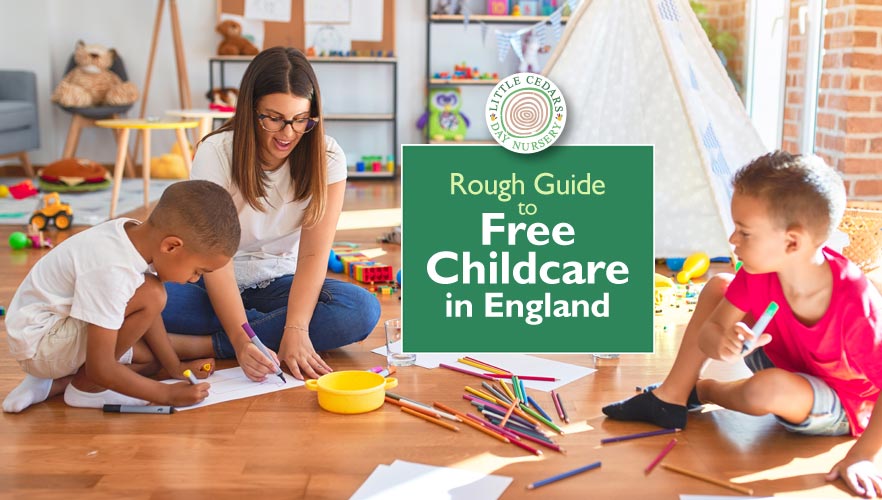
 With Universal Free Childcare, children aged 3 or 4 can receive up to 570 hours of free childcare over the course of the year.
 With Extended Free Childcare, eligible 3- and 4-year-olds can receive up to 1140 hours of free childcare per year instead of only 570.
 Some disadvantaged children aged 2 can also receive up to 570 hours of free childcare over the course of the year.
 For those that are eligible, up to £2,000 in free childcare is available each year to children aged 11 or under* through the Tax-Free Childcare scheme.
 You can sacrifice up to £55 per week of your earnings, which will be free of National Insurance and Income Tax, to fund Childcare Vouchers.
 Following the Spring Budget 2023, childcare funding through Universal Credit is to be improved with nearly 50% more generous funding becoming available from July 2023.
 Those already claiming for childcare costs via Working Tax Credits may be able to obtain up to £122.50 for one or £210.00 for more than one child each week.
 2-year-olds may be eligible for the ’15 Hours’ scheme from April 2024.
 Up to 85% of childcare costs incurred by students may be claimed, up to a maximum of £188.90 per week for 1 child or £323.85 for 2 or more (correct for academic year 2023-2024).
 Up to £160 per child is available each week for those living outside London.
 While it’s not designed to fund childcare, it can be used to do so in some circumstances.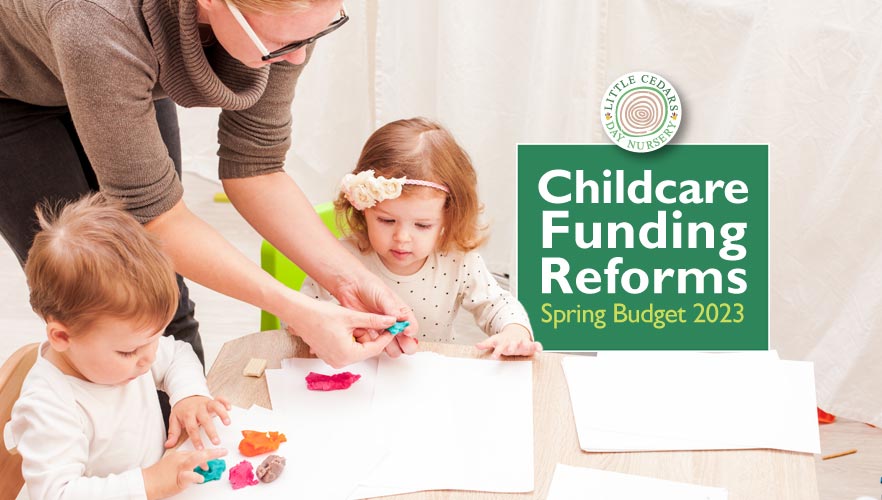
 March 15th 2023 saw the Chancellor of the Exchequer’s Spring Budget announcement, which included news of extra funding to cover costs for childcare. Crucially, the new funding will support childcare for infants as young as 9 months old for the first time, as well as including other positive changes. Although it’ll be introduced in stages, the free funding should be welcome news for those parents who will be eligible. Let’s take a look today at the proposed childcare changes, including which age groups will benefit, what extra funding is promised to support families and when the new help will become available. First, though, we’ll look at the main aims of the new funding.
 The ‘main event’ in the Spring Budget from the perspective of childcare provision is the significant expansion of the ‘free hours’ schemes. Previously, only
  Some struggling parents in receipt of Universal Credit childcare support, who would like to move into work or increase existing working hours, will have subsidised childcare costs paid in advance under the new proposals. This is in contrast to the existing approach where all parents had to pay for the childcare upfront and then reclaim the costs retrospectively. Funding the childcare costs in advance will make the subsidised childcare costs much easier for the lowest-income families to afford from a practical, cash-flow point of view. It will also hopefully improve the situation whereby, currently, only 13% of eligible low-income families actually claim the childcare element of Universal Credit.
 Although this website and our childcare service are geared to the early years age groups, it would be remiss of us not to include a brief overview of the enhancements that are being introduced for children of school age. These are coming in via proposed changes to what is known as ‘Wraparound Care’ as we’ll explain.