
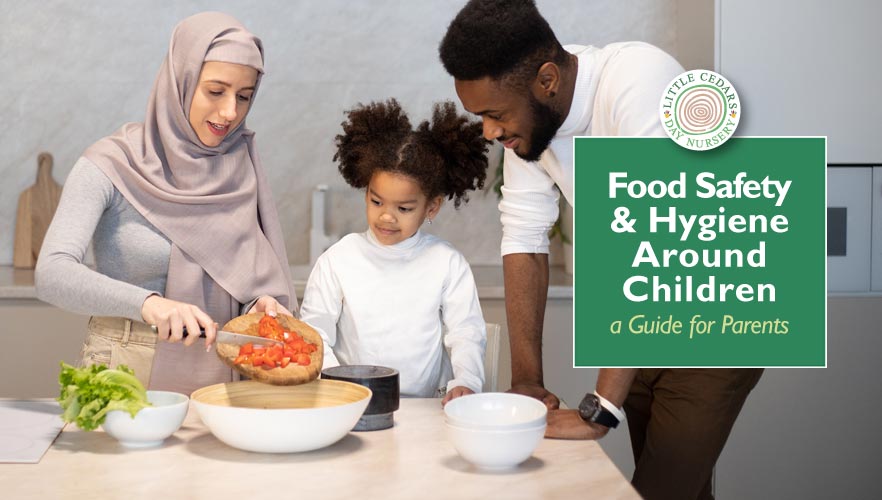
 With all the food and feasting associated with Christmas, it got us thinking about food hygiene and safety for children. Aside from keeping alert to possible allergens, parents need to be careful to ensure families remain safe from illnesses caused by food hygiene mishaps. After all, such illnesses can be particularly dangerous to little ones, who are fragile, but can be largely avoidable when good hygiene measures are taken. With that in mind, today’s post outlines various ways in which parents can stay on top of hygiene around the preparation of food for their children. And, of course, such measures will keep adults safer too.
A Clean Environment for Food Preparation
 Ensuring the food preparation environment is clean and hygienic will reduce the chance of microbes, including germs and viruses, contaminating food. Wiping down with warm, soapy, water on clean dish cloths is ideal for many such tasks. Anti-bacterial sprays are useful but should not be allowed to contaminate food, plates and cutlery etc. directly or indirectly.
- Keep kitchen worktops, sinks, cupboard doors, drawer handles and door knobs clean and hygienic.
- Remember to do likewise for electronic appliance doors, handles, knobs, and buttons. For example, on fridges, freezers, microwaves, air fryers, ovens, and hobs.
- Utensils also need to be clean and hygienic before being used for food preparation.
- Cutlery, plates, food bowls, and serving bowls/utensils also need to be spotlessly clean before food is served on them.
- Tea towels, hand towels and dish cloths should be regularly laundered in hot water to prevent them being contaminated or becoming breeding grounds for bacteria.
- Do not let pets, e.g. cats, access worktops etc. where food is prepared.
Good Personal Hygiene
Those preparing food, whether they are parents, relatives, or children helping, also need to ensure good hygiene protocols are followed.
- Wash hands and fingers thoroughly using warm soapy water, rinse well and dry using a clean towel or equivalent before preparing food.
- Ensure long hair is tied back for both personal safety and food hygiene reasons.
- Food should not be prepared by anyone who is feeling ill or who has any kind of bug.
- Avoid coughing or sneezing near food.
- Avoid smoking near food preparation and eating areas; it’s not good for children – or adults.
Safety & Hygiene Around Food Preparation
In regard to food safety, some key basics are essential to get right.
 Only feed children, especially babies and under-fives, age-appropriate food/meals. This is very important because many foods contain too much salt, sugar and saturated fats for young children. Some other foods can contain dangerous levels of toxins or even heavy metals. Learn more on the NHS website.
- Feed children a healthy, balanced diet with appropriate portion sizes.
- Only use food, that’s been stored correctly, within its ‘use by’ or ‘best before’ dates.
- Read food packaging to ensure you are not using anything containing known allergens that affect your child, or any ingredients they’re intolerant to.
- Prepare food according to instructions on food packets, for example, in regard to cooking times, cooking temperatures and, if appropriate, defrosting times.
- Ensure frozen food is thoroughly defrosted before cooking.
- Always ensure cooked food is fully cooked, including on the inside, before serving.
- Before serving, test the food’s temperature to ensure it’s not too hot for your child. This is especially important for food that is microwaved as it may not cook evenly without stirring/mixing and can also continue cooking once removed from the appliance.
 Only feed children, especially babies and under-fives, age-appropriate food/meals. This is very important because many foods contain too much salt, sugar and saturated fats for young children. Some other foods can contain dangerous levels of toxins or even heavy metals.
 The safe handling and preparation of food itself is also crucial. There are some specifics to be aware of:
- Always thoroughly wash vegetables, fruit and salads and, when appropriate, peel vegetables before use.
- Rice is a special case to be wary of (see next section for more details).
- Never feed eggs to children under 6 months.
- For children over 6 months of age, it’s best to source chicken eggs stamped with the Red Lion (British Lion Mark), particularly if they’re to be only lightly cooked or used raw, for example, in mayonnaise.
- All other types of egg must be thoroughly cooked, so that both yolk and egg white are firm and opaque, before serving to children.
- Always ensure fish, shellfish, prawns, and other seafood is cooked thoroughly.
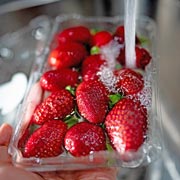 Always thoroughly wash vegetables, fruit and salads and, when appropriate, peel vegetables before use.
Safety Around Food Storage
- Ensure your fridge is set to the right temperature and that its door remains fully closed when not being accessed.
- Keep it clean and clear up any spillages right away if they occur.
- Keep foods like meat, fish, and seafood in the fridge until needed (discard if past their ‘use by’ date).
- Raw meat, fish and seafoods should be separated, stowed in individual containers with covers, and stored away from other foods on the bottom shelf of the fridge. By doing so, it will avoid the likelihood of them dripping onto other foods.
- Never be tempted to put pre-cooked food in the fridge or freezer while it is still warm, especially near meat and seafood products.
- Instead, ensure they are rapidly cooled before placing into the fridge/freezer (e.g. by placing in a sealed Tupperware-type container and running under the cold tap).
- Meat and fish/seafood should be rapidly cooled within 1 to 2 hours maximum before placing in the fridge or freezer once fully cold.
- Rice is a special case and must be rapidly cooled within one hour before placing in the fridge. This is so as to avoid the build-up of toxins that are particular to rice.
- For the same reason, rice should only ever be reheated a maximum of once and then only eaten if consumed within 24 hours of being originally cooked.
- Frozen food is best labelled and dated to better ensure that it is consumed within an appropriate time.
Teach Your Child About Food Safety & Hygiene
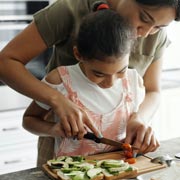 It’s hugely beneficial if children learn about food safety and proper hygiene associated with its preparation. Such things are useful life lessons and will help to keep them more safe and free of illnesses and nasty bugs. Teach them by example whenever possible. A great start is to encourage them to thoroughly wash their hands and fingers with warm, soapy water before preparing or eating food. They should also be encouraged to sit down at the table and be in a calm state before eating. This will help to better ensure food does not become contaminated or knocked onto a dirty floor. It will also reduce the chance of the child choking on food.
Food is one of life’s great pleasures and ensuring good hygiene around its preparation will help to keep it that way. Teaching children good hygiene habits will not only help to keep them safe and well, but will also encourage independence and the development of responsibility. Such things are key skills they’ll need as they grow older, particularly when they start school.
Healthy Eating at Little Cedars Nursery, SW16


At Little Cedars Nursery in Streatham, we recognise how important good food and high-quality meals are to children under five. When it’s right, it boosts cognitive function and energy levels, ensures they receive good nutrition as they grow, and boosts their overall well-being. We therefore employ our own in-house chef who prepares fresh, balanced meals for children every day. The menu is varied, accounts for special diets, and uses only the most fresh, high-quality ingredients. Click the following bold link for our guide to healthy eating for under-fives.
A Nursery Place for Your Child in Streatham
To learn more about Little Cedars Nursery in Streatham and explore a possible place for your child, please get in touch:
Safety Notice
PLEASE NOTE: These are starter guidelines only — parents/guardians should do their own comprehensive risk assessments. Children should only help to prepare food under close adult supervision. Ensure they keep safe from sharp implements like knives and heat sources like stoves, ovens, and even hot food. There are also other potentially harmful things in kitchens such as chillies, which could get into their eyes if handled inappropriately, and harmful chemicals in things like dishwasher tablets. So, check thoroughly, supervise children, and be alert. In case of an emergency, call 999 to seek urgent medical attention.
 The NHS
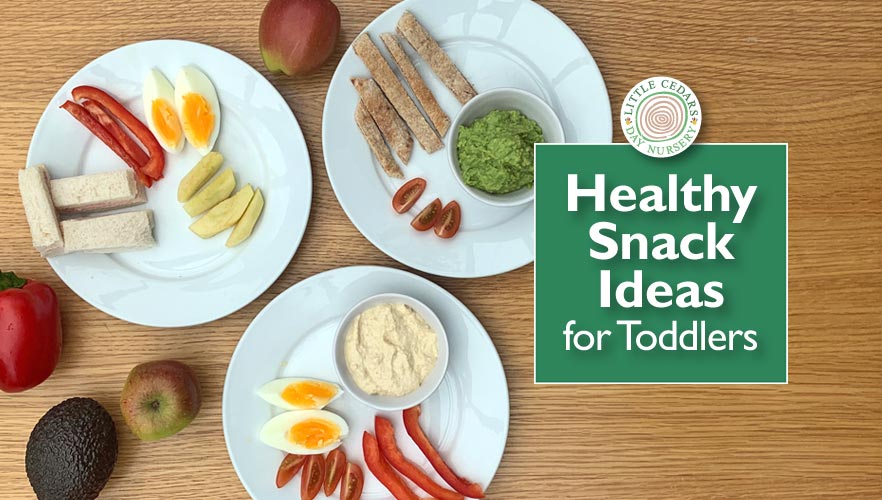
  Try small, finger-sized watermelon sticks; they’re delicious, nutritious and refreshing for your little one.
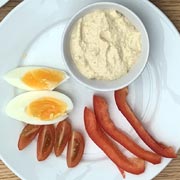 Consider using soft-cooked carrots, peppers, or cauliflower in finger-sized stick form, or even broccoli florets. Cucumber sticks are also an option but don’t require soft-cooking.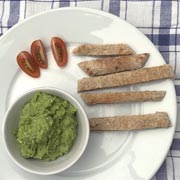
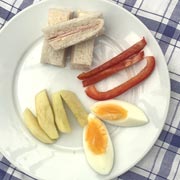 Another firm favourite with toddlers is a hard-boiled egg sliced into holdable fingers. Such slices are rich in protein, vitamins, and minerals.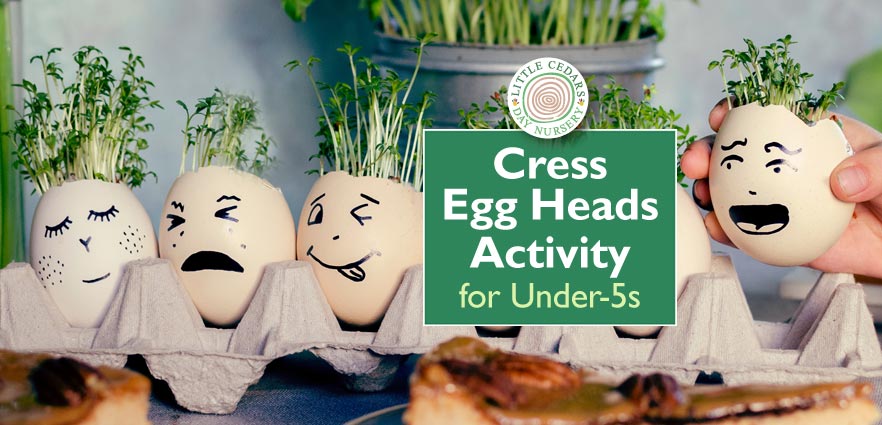
 A nature-based, food-related activity that young children can enjoy indoors at any time of the year is cress growing. Today we outline how it can be made even more fun and creative for kids by growing the cress as little ‘egg heads’. These come complete with comical faces and amusing hairstyles made of green cress shoots! Children will absolutely love it when they end up with little egg faces with spouting hairstyles that each have real character. And, they’ll even be able to eat the results!
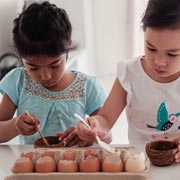 Cress is Easy to Grow, & Tasty!
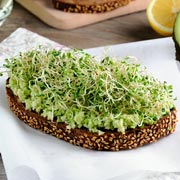 Growing Cress for Small Kids and Big Kids
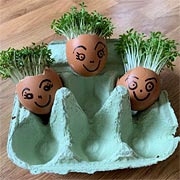
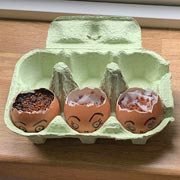 Next, find a vessel to prop the egg shells up in. This could simply be an egg cup or even an egg carton, like that shown in the photo. Then, decide what to fill the empty egg shells with. Children can choose either damp kitchen roll or damp compost/soil to grow the cress seeds on. Carefully fill the empty egg shells almost to the top with the chosen filler. (We tried both and each grew well. Interestingly, the cress seeds grown on kitchen roll tissue paper grew a little faster and therefore taller than those grown on compost. They therefore looked a bit more ‘wild’ — it was quite a surprise and had an amusing impact on the egg-people’s hairstyles).
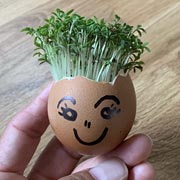 Make sure you or your child add some funny faces on the shells — maybe even give them names. The faces can be drawn simply using a marker pen (Sharpies are ideal) or you can get even more creative using coloured paints. Children may find drawing the faces easier if they are shown some visual reference and perhaps they can practise first on paper. If too young to draw suitable faces, a parent or creative older sibling may be able to help.
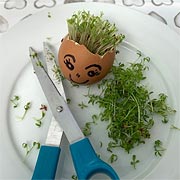 Within a week or so, the little egg heads should begin to sprout green ‘hair’ shoots!
 Independent feedback from other parents is worth its weight in gold. In the last five years, Little Cedars has received only 5-star reviews on Google and Facebook. That’s top marks, consistently for 5 years running.* Comments that accompanied these independent reviews were equally compelling — here are just a few examples:
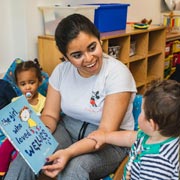 Little Cedars is a warm, welcoming and nurturing environment. To the babies and children, it very much becomes a home-from-home where they feel safe, valued, cared for and all with wonderful, close relationships with both peers and our childcare professionals. It’s also a place of immense fun where little ones are happy, stimulated and nurtured in order to bring out the best in them.
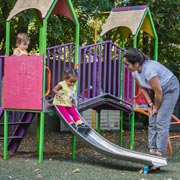 Little Cedars Nursery is extremely well resourced and equipped, both inside and out.
  If your 2-year-old is eligible for the Government’s free childcare scheme for this age group, rest assured that Little Cedars Day Nursery supports them and this can potentially give your little one 15 free hours of childcare per week for as many as 38 weeks of the year. That’s 570 free childcare hours per year for your 2-year-old!
 A Key Person is assigned to each child at Little Cedars Nursery. This is an early years practitioner who ensures that the child’s needs are being catered for and that their care at the setting is tailored to them as an individual. They help children settle in when they first join the nursery and build strong relationships with both the child and the parents. They are therefore usually the natural and key point of contact at the nursery.
 We have a very special team at Little Cedars Nursery. Every one of them has been hand picked to ensure they are the perfect fit for the nursery and for the children therein. They’re warm, natural carers who will form wonderful relationships with children and bring out the very best in them. They become the children’s safe, familiar and friendly faces at the setting as well as facilitating top-notch learning and early years education. They also ensure every child is happy and is having fun whilst under our care.
 At Little Cedars we do so much more than simply look after babies, toddlers and under-fives. We educate and nurture them too. In fact, we ensure that our little ones achieve personal bests in all 7 areas of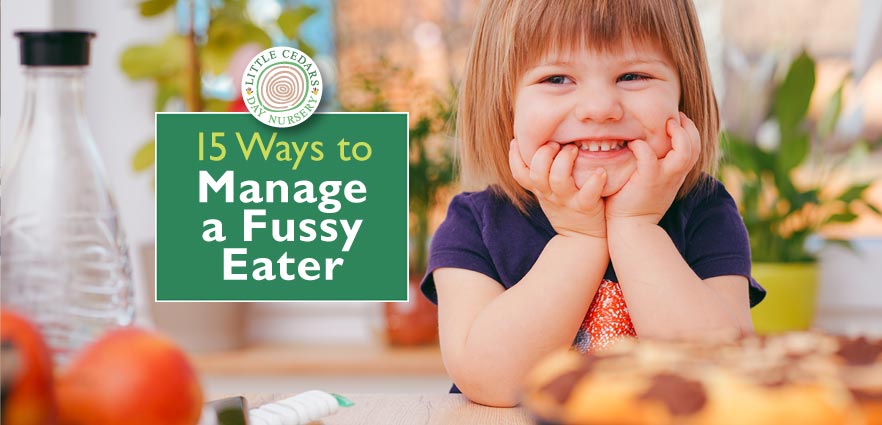
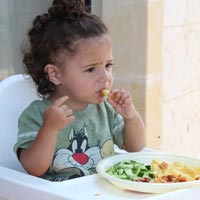 It can be frustrating when children refuse to eat particular foods, often seemingly for no apparent reason. Much of it is new to them, though, if they’ve only recently been weaned off milk. So, firstly don’t get stressed about it. Refusing certain foods initially is quite normal for the very young. Often, all that is needed is a strategy for dealing with finicky eating and a little patience. Let’s take a look, today, at measures parents or carers can take to manage children who are fussy eaters. After all, it’s imperative that they have a healthy, balanced diet.
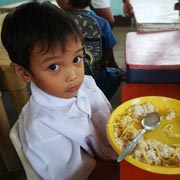 Similarly, some foods are an acquired taste, i.e. one that’s initially not liked, but is later appreciated and enjoyed. Avocados have a taste that’s quite subtle and delicate, for example. Because of that, some youngsters think they are bland — but may well love their subtle flavour and texture once they’re older. That’s an acquired taste. So, again, it’s worth encouraging your child to keep trying foods even if they don’t think they like them in the beginning.
 If your child loves one food but not initially another, try using food bridges. This is when you pair one food with another food that you know they already like. You can start small and gradually increase the amount of the ‘new’ food. Adding cheese to potato or pasta is one example. Adding a small garnish of finely chopped herbs, vegetables or even fruit to pasta, rice, pulses or meat is another. These may slip under the child’s radar and this will help with gradual acceptance.
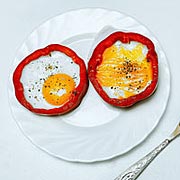 You could even make the food into fun pictures, all entirely made of the food you want them to eat. For example, peas could be made to represent a hill, broccoli could represent a wooded area, the yolk of a fried egg could represent the sun and so on. This approach will help children to see a fun aspect of food, and to engage more directly with it.
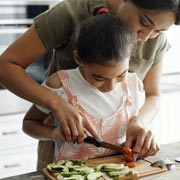 You could even get children involved in the creativity and choices around food. With the requisite care around safety, you could involve them in food preparation, choosing foods, deciding how they are displayed on the plate and so on. This will again get them more engaged around food and make it into a fun, creative activity. Children will love that. Remember, though, that this should only be taken so far. After all, you do not want to encourage them to always ‘play’ with their food.
 When your child eats something that they’ve not been keen on eating before, give them positive feedback as this will encourage them. A well done here and a good job there will sometimes do wonders.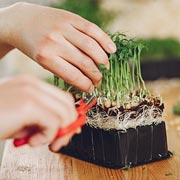
 At Little Cedars Nursery in Streatham we know how finicky young children can sometimes be. So, we too occasionally employ some of the tactics described above. After all, food and a healthy, balanced diet is important and never more so than in children’s formative years. Study after study has shown this to be the case. Read our
 In our last post, we asked
 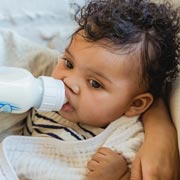 For those on dairy-based formula milk, it’s pretty much plain sailing too. Because vegetarians — as opposed to vegans — are OK eating dairy-based food, formula milk is generally fine for them. The most popular types are based on cows’ milk, although several other animal milks are also available. So long as dairy-based formula milk is high quality, given in the right quantities, consumed at the right intervals and is age appropriate for the child, it contains all the nutrients and vitamins needed. That’s without the need to give additional supplements too.
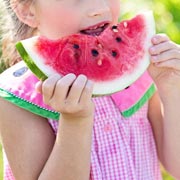 Fruit and vegetables are really a given because they pack so much goodness, including many vitamins, minerals like potassium and also fibre. Fresh vegetables and fruit are ideal but, failing that, frozen, tinned and even dried varieties are also OK.
 Tofu, also known as bean curd, which is made from soy.
 any pulses, seeds or grains should be sprouted, cooked or soaked before consumption (as appropriate);
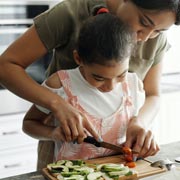 Let’s first take a look at the benefits of vegetarianism …
 is linked to a reduction in symptoms for those with asthma;
 Scientific studies conclude that switching to a vegetarian diet will help the planet enormously. That’s because significantly less greenhouse gas is produced in growing crops compared to raising livestock. What’s more, scientists believe that the necessary reduction in green house gas emissions will be achieved far more swiftly through a widespread switch to vegetarianism than through what’s currently just a gradual shift away from the burning of fossil fuels. Growing crops rather than animals also causes far less pollution in waterways and oceans and also uses significantly less water. The benefits of vegetarianism to the planet are simply enormous.
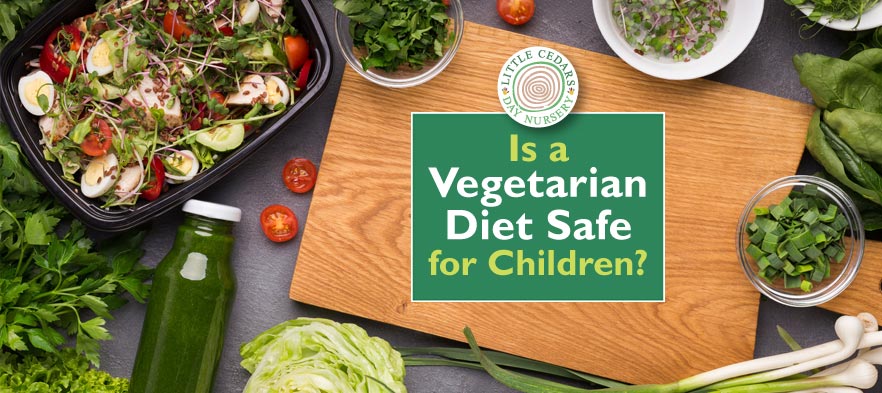
 Is a Vegetarian or Vegan Diet Safe for Children?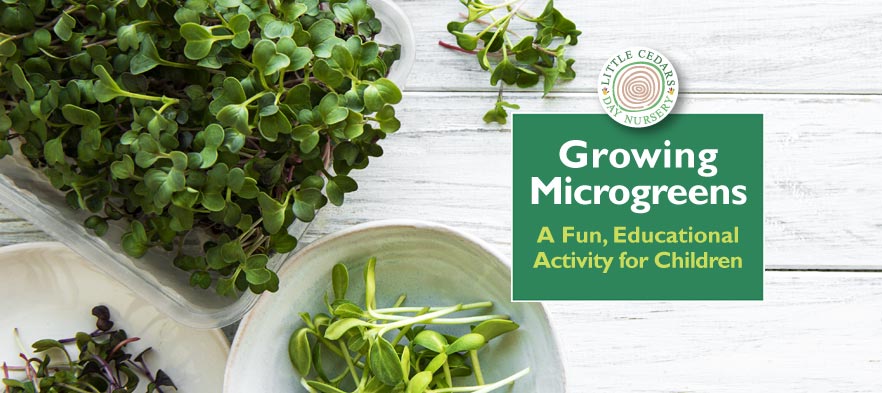
 Back in April last year, we wrote an article about
 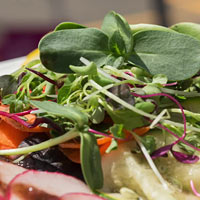 Microgreens are great fun and extremely easy for children to grow. Once ready, they can be used rather like salads and garnishes. They are very tasty and are extremely nutritious.
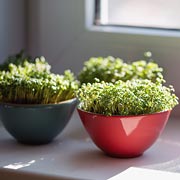 Microgreens are traditionally grown in shallow seed trays, which are inexpensive to buy. However, at home, they can just as easily be grown in flower pots, used yoghurt pots, empty egg cartons, the trays from ready-meals or even cut-down cardboard cores from kitchen rolls. So long as water is allowed to drain from them and they can support at least a shallow depth of compost, these can all be suitable. Plastic cartons will need a few holes punched in the bottom to allow for drainage, so parents might need to organise that in order to avoid their children hurting themselves. Other than that, it’s plain sailing for supervised children to do themselves.
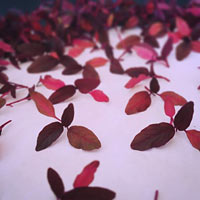 Suitable seeds include: rocket, a type of strongly-flavoured lettuce; beetroot, with their lovely red stems and mild, earthy taste; spinach, which also has a mild flavour and is full of goodness; red cabbage, which is also rich in a variety of vitamins and minerals; fennel, which will have a distinctive aniseed flavour; broccoli, which will grow into sprouts that have a slightly spicy taste; radish seeds, which also grow into leaves that taste a little fiery; and also mustard seeds (for children who are OK with even more hot, spicy flavours).
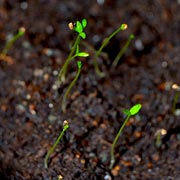 First, your child should fill the seed trays, flower pots or equivalent, almost to the top, with some compost.
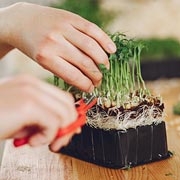 As as shoots begin to appear (usually after just a few days), remove any covering if used and continue to ensure that the compost is always kept moist, but not over-watered.
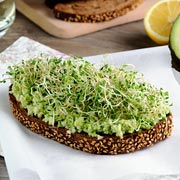 Once harvested, they should be rinsed to get rid of any stray compost. They are delicious to eat and, depending on the seeds grown, have a huge variety of tastes and colours. Children and parents alike can benefit from the nutritious and tasty shoots as part of a variety of meal types. Full of vitamins and minerals, they can be used in salads, as pizza toppings, garnishes, toppings for risottos, soups and pastas, as fillings in sandwiches, sprinkled on top of baked potatoes or into burgers and much more. They’re very adaptable and, with their distinctive tastes and textures, will make any meal really special.
 3. Almost 50% More Bones Than Adults
 6. Not So Hot on Eye Sight
 9. Natural Born Swimmers (… Kind of)
 14. Is Breast Really is Best?
 16. The Only Smiling Primate
 19. Outcomes of Being First Born
 Babies benefit enormously from breast milk; from simple, practical considerations to major health benefits, many of which continue to benefit them into adulthood. Let’s take a look:
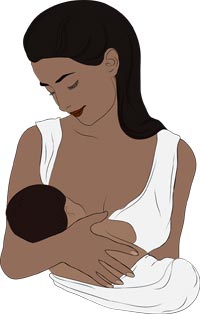 Breastfeeding also has a range of significant health (and other) benefits for mothers. These include:
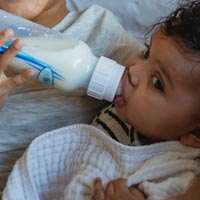 The childcare professionals at Little Cedars Nursery are keen to fall in with the wishes of parents when it comes to baby and infant milk. To that end, parents are free to supply