

A new approach to Ofsted ratings officially launched in November 2025, as part of a new Education Inspection Framework. Parents of children attending early years settings, schools, and further education, will therefore soon begin to see the new-style Ofsted ‘Report Cards’ that will be published following inspections. These are designed to replace — and improve upon — the previous one-word Ofsted rating system, which had become controversial∞. Gone will be what became known as the “single word judgements” on settings (previously a choice between Outstanding, Good, Requires Improvement, or Inadequate). Instead, parents will see a much more detailed ‘Report Card’ that combines at-a-glance headline information with multiple sub-section details. The idea is to give parents a more comprehensive view of how schools and settings measure up across a broad range of performance metrics, as well as providing important context. In essence, parents will be able to easily and quickly identify areas of strength, as well as those that require development. In today’s post, we take a look at Ofsted’s new Report Card and explain how it works.
The New Performance Metrics
The single ‘Overall Effectiveness’ grade has now been retired. Instead, Ofsted will assess settings across a range of key areas and confirm their evaluation of each one separately on the new Report Card. For each, they will use a 5-point scale, with the exception of Safeguarding, which we’ll come to separately in a moment.
The 5-Point Assessment Scale
 Except for Safeguarding, the new Report Card will show Ofsted’s evaluation of each of the assessment areas as one of the following:
- Exceptional — the highest quality provision (indicated in blue);
- Strong standard (indicated in dark green);
- Expected standard (indicated in bright green);
- Needs attention (indicated in orange); or
- Urgent improvement (indicated in red).
The Report Card will use colour-coding, as indicated above in brackets.
Key Areas of Assessment
For Early Years SettingsFor early years settings, Ofsted will evaluate the following areas of provision:
|
For SchoolsFor schools* inspected by Ofsted, they will evaluate a slightly different list of key areas:
|
* Early years and/or sixth form education will also be assessed if schools provide them. In parallel to the above, independent schools will also continue to be assessed against the ‘independent schools standards’.
For Further Education & Skills ProvidersThe list of key areas of assessment for further education settings and skills providers is longer still. As today’s guide pertains to younger children, however, such a list can be viewed separately here. |
Safeguarding
Because the safety and welfare of children is paramount, Ofsted’s assessment of a setting’s Safeguarding features separately in the new Ofsted Report Card. That’s for all types of settings, whether they’re early years providers, schools, further education, or skills providers.
How will that look? The new Report Card will show the result for the assessment of Safeguarding clearly as either Met (with a green tick) or Not Met. More detail will be available by opening a drop-down ‘show/hide’ selector and sub-link (shown below).

More Details on the Ofsted Report Cards
As well as assigning a finding of either Met or Not Met to the Safeguarding element and rating each of the other key areas using the 5-point scale, Ofsted will provide extra narrative to explain each of the findings in more detail. In tandem with this, additional commentary will provide contextual information, such as any relevant SEND, demographic, or other factors that may explain the story behind the grades. Additional narrative providing an overview of what it’s like to attend the setting will also be included. These expandable narrative sections will be displayed below the more prominent colour-coded assessment grid and Safeguarding section.

Final Thoughts
The new Ofsted report cards intend to give families both an at-a-glance snapshot and more comprehensive details that outline strengths — and any areas that require development — for educational settings like nurseries, schools, colleges, etc. By showing their evaluation of a whole raft of key areas in this way, Ofsted is aiming to give parents a clearer picture of each setting. That’s in stark contrast to the historical “single word judgements” that we’ve been used to – until now. It does make sense — after all, no single word can ever tell the whole story or sum up a unique and complex service.
Not everyone is convinced the changes go far enough. However, Sir Martyn Oliver, His Majesty’s Chief Inspector for Education, Children’s Services and Skills, has said that the new system should be fairer and better for parents, while also providing tangible and financial support to any settings in difficulty. The government expects the new system to raise standards for children, which is incredibly important — and what it’s all about at the end of the day. Learn about the new education inspection framework in more detail here.
Little Cedars Nursery – a Good Provider
Looking for a High-Quality Nursery/Preschool in Streatham?

 We haven’t yet been graded using the new Ofsted rating system, so we don’t yet have one of the new-style ‘report cards’. However, Ofsted rated us as a Good Provider in their most recent report, so you know your little one is in safe hands if you send them to Little Cedars Nursery, Streatham. If you’d like to explore a possible nursery or preschool place for your child at this wonderful setting close to Streatham Common, Streatham Hill, Streatham Park, Tooting, Furzedown, Balham, Norbury, and Colliers Wood, get in touch — or start your application today. We’d love to show you and your child around and answer any questions. We also support funded childcare places for eligible families.
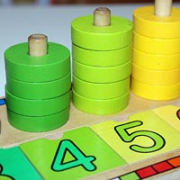
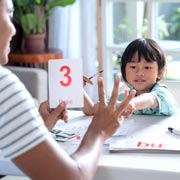 Concepts involving numbers and counting can sometimes be tricky for some preschoolers to grasp. Making sense of such concepts is important, though, because many aspects of children’s day-to-day lives will require an increasing understanding of numbers as time passes. Whether it’s knowing if a quantity of something is more or less than something else, how much of an ingredient is required in a mixture, or what change to expect from a purchase, children will need to grasp number-based concepts — and understand their real-world applications. What’s more, they’ll need to do this sooner rather than later if they’re to thrive, not least when they leave early years settings to begin school.
 Making ‘number cards’ with your child will be a fun and useful first step. These could be as simple as small pieces of paper or card, each having a single large number written clearly on them. Alternatively, your child could take the opportunity to get more creative. For example, you and your child could make the numbers bright and colourful, have patterned in-fills, or even be made to look like animals or number ‘characters’ that have eyes. For the very young, start with numbers up to 5, or go to 10 or even 20 for older and more advanced children. Size-wise, perhaps aim for cards sized at about A6 (a quarter of an A4 sheet) or even A7 (A4 divided into 8).
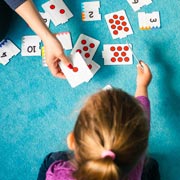 A more advanced form of the number cards could depict the correct number of dots (or other drawn objects) instead of — or as well as — the actual written number. So, for example, the ‘3’ card could show a column or row of 3 round dots or squares or even something like 3 drawn strawberries — whatever your child likes! In a way, it’s a bit like traditional playing cards where each has both a number and the right amount of hearts, diamonds, clubs or spades on it, to match the number.
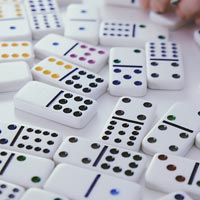 This next game will require a set of dominoes or, if you don’t have a set, they’re also easy enough to make in a similar way to the number cards. As you may know, each half of every domino has a number of dots, most commonly from 1 to 6. So, for example, there might be two dots on one end and five on the other, with the dot formations being rather like those you’d see on dice.
 Understanding whether a quantity of something is more or less than something else is an important concept for children to grasp. Similarly, being able to estimate a quantity is a useful and practical skill for little ones to master. Such concepts can easily be highlighted, and the skills mastered, using simple estimating games. Some examples follow.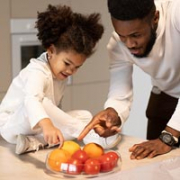
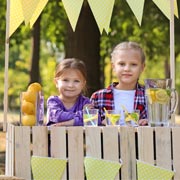 Pretending to be a shopkeeper or a shopper buying from one is a great next step for children. What’s more, they’ll naturally love playing shops having, no doubt, accompanied parents to real shops. This is where they can put all the things they’ve learned from the games above into practice. They can check they have the right quantities, weights or volumes or products, check they’re giving the shopkeeper the right amount of money, ensure that any change is correct — and so on! Playing shops is such a great way to master numbers, counting, estimating, weighing, addition, subtraction and more!
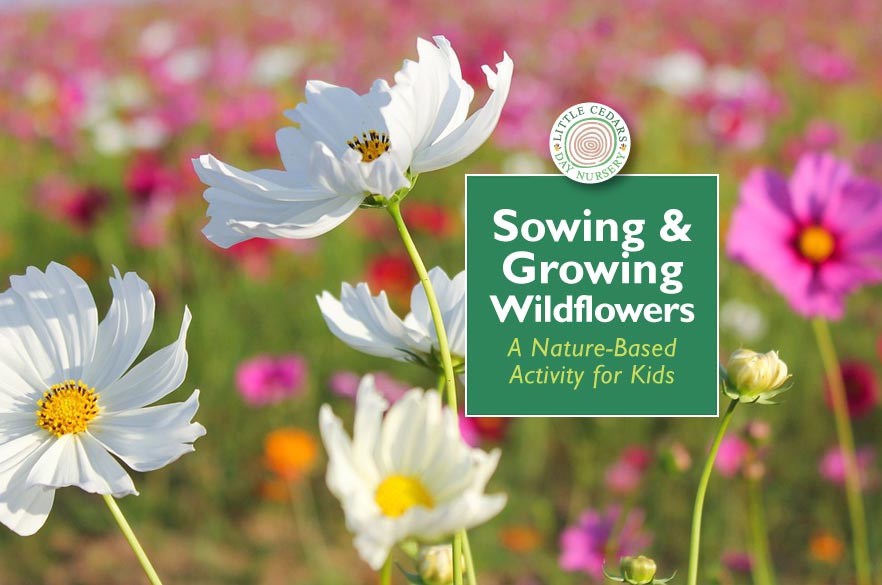
 In today’s guide, we outline a simple but powerful nature-based activity that will be both fun and educational for children and under-fives. This one is all about how to sow wildflower seeds. Once growing, these will bring beauty and wonder to any setting. The activity will also complement our recent
  Children benefit very much from spending time in nature, as we outlined in our article entitled
 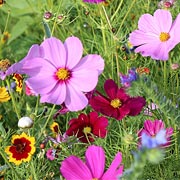 Colour(s) — Children can help decide whether to grow wildflowers of just one colour, a limited 2- or 3-colour palette or perhaps multiple colours. If parents have an existing colour theme in their garden or plant area, they may wish to point children in a particular direction, so as to keep that colour theme going.
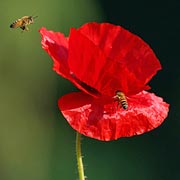 Free wildflower seeds can be harvested from existing wildflowers — either from your own wildflowers if you have them, or from those found in the wild along hedgerows and similar (N.B. only do so in moderation and for personal use). Timing will, of course, be critical because seeds will only be available at certain times of the year, i.e. when the wildflowers have “gone to seed” at the end of their flowering period.
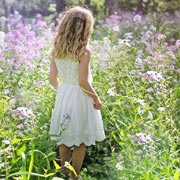 Sowing seeds on existing lawns that you/your child want as a wildflower meadow is simply a case of scattering seeds on the lawn, ideally spaced out in such a way that they don’t have to compete with each other once they start growing. Then ensure that the area of lawn is kept moist by either rain or, if there is no rain, regular sprinkling from a watering can fitted with a sprinkling head (a.k.a. ‘rose head’). Children may need to remind adults not to cut the lawn thereafter, of course!
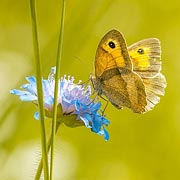
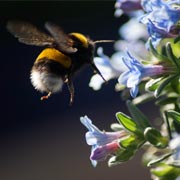 Children will love it once the wildflowers begin to grow and later bloom. They’ll also love seeing bees, butterflies, and other insects visiting and the results of the activity may indeed give them a great sense of accomplishment. The whole process and the results are quite magical when you think about it.
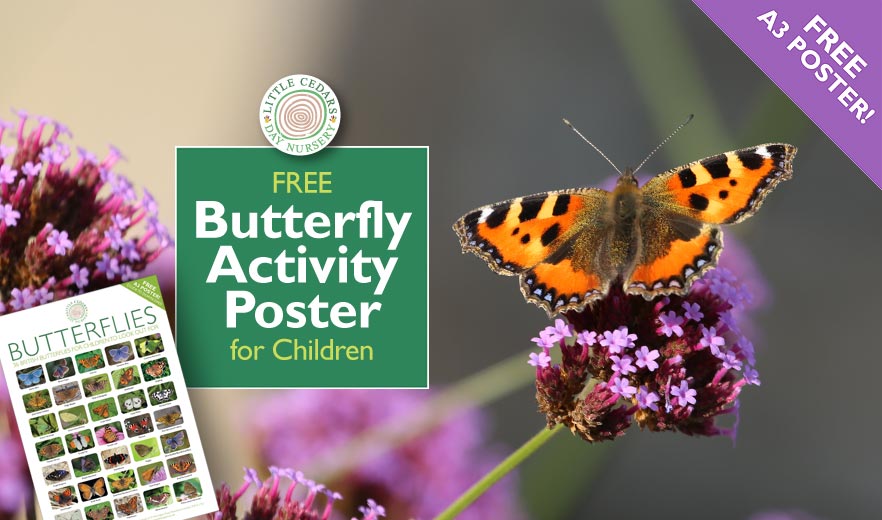
 Following on from our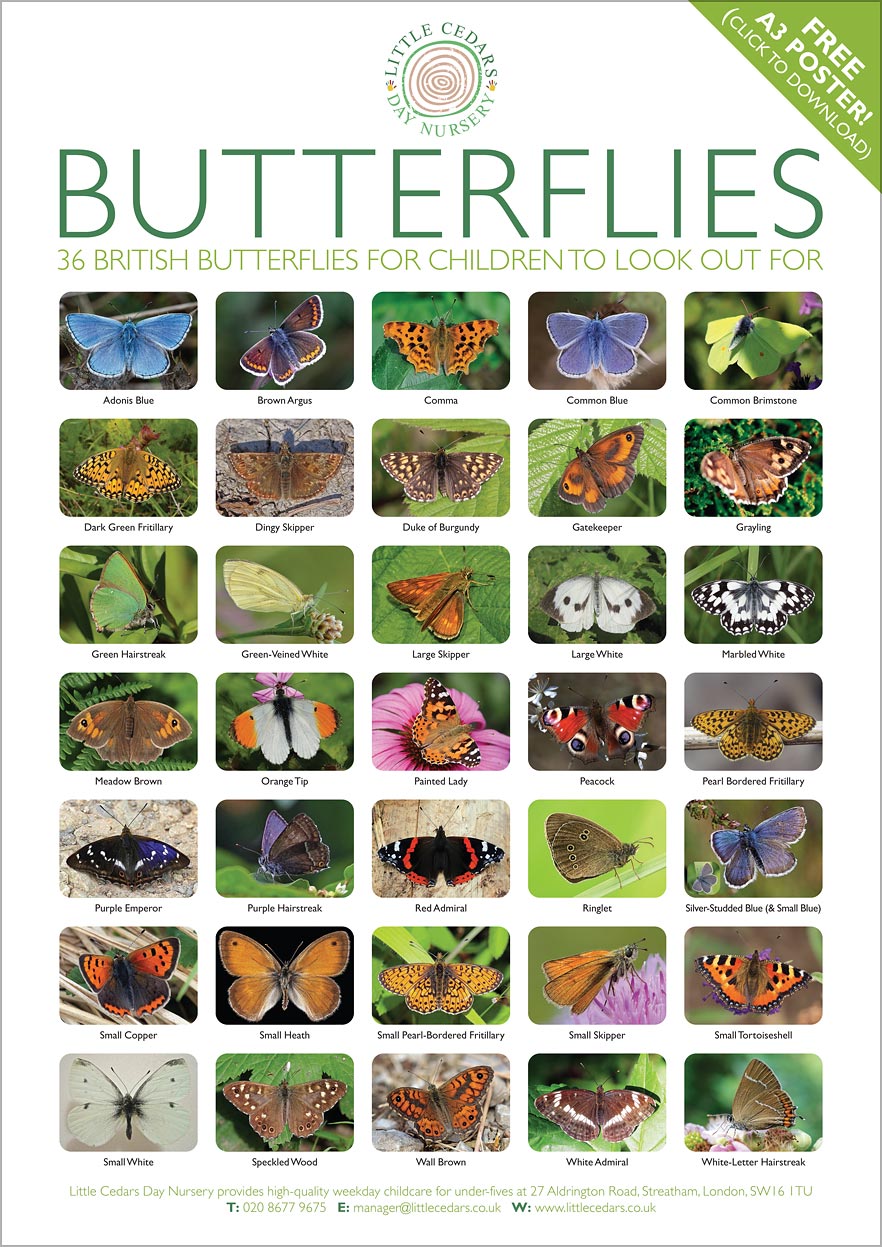
 We must also add that children should be encouraged to ‘look but don’t touch’ as butterflies are very delicate creatures. Children should not try to touch or catch them — they are best left in peace as every one of them is a little individual that simply wants to go about his or her day. They’re wonderful to watch, though, and our free poster should help children and adults identify many of the different types. Perhaps see how many different species can be spotted over the course of a year. Take photos too, and compare them with friends! Some butterflies visit gardens, floral window boxes and parks while others may only be found in wilder locations in the countryside. This activity is therefore a great excuse for families to get out and explore The Great Outdoors! Recording the date and location of each butterfly spotted will also help families work out where the best butterfly-spotting locations are for next time.
 With that in mind, why not take this activity a step further and get involved in the UK’s annual Big Butterfly Count? For 2024, it takes place between Friday the 12th of July and Sunday the 4th of August, which is when most butterflies are at their adult stage. All it takes is 15 minutes and children will love being little ‘citizen scientists’! The activity can be done in gardens, parks, school grounds or out in the countryside. Taking part will give children a real opportunity to help with butterfly conservation.
 Bilingual children have been shown to have better cognitive flexibility, focus and creativity. Studies have shown that this often leads to better decision-making, prioritisation and planning skills too. With such skills in place, bilingual children may also have a better ability to multitask and switch between separate tasks.
 Young bilingual children may sometimes mix their languages or use one language inappropriately in certain contexts. This is a normal part of the language acquisition process but can be a little confusing, at times, for both the child and their caregivers.
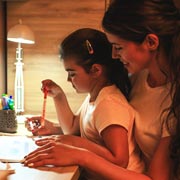 Parents play a crucial role in supporting their bilingual children’s language development. To help your child become proficient in two different languages, it’s important to consistently speak both at home. Doing so can help children develop a particularly strong foundation in both languages.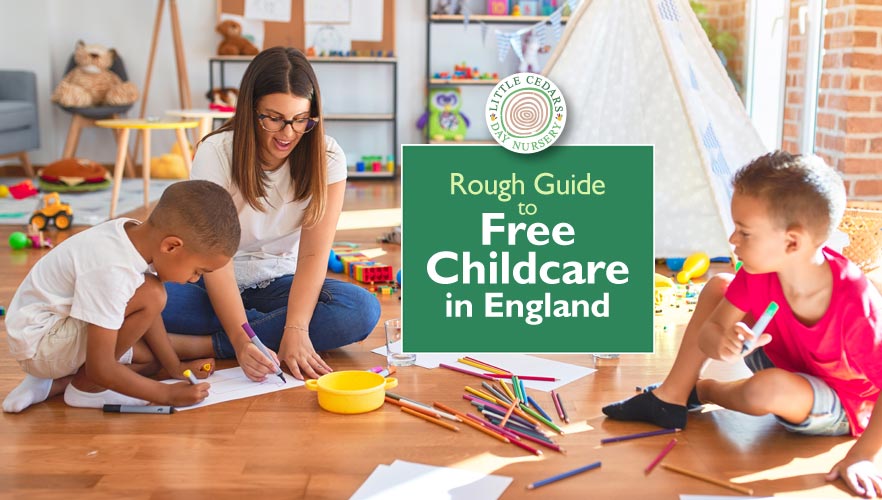
 With Universal Free Childcare, children aged 3 or 4 can receive up to 570 hours of free childcare over the course of the year.
 With Extended Free Childcare, eligible 3- and 4-year-olds can receive up to 1140 hours of free childcare per year instead of only 570.
 Some disadvantaged children aged 2 can also receive up to 570 hours of free childcare over the course of the year.
 For those that are eligible, up to £2,000 in free childcare is available each year to children aged 11 or under* through the Tax-Free Childcare scheme.
 You can sacrifice up to £55 per week of your earnings, which will be free of National Insurance and Income Tax, to fund Childcare Vouchers.
 Following the Spring Budget 2023, childcare funding through Universal Credit is to be improved with nearly 50% more generous funding becoming available from July 2023.
 Those already claiming for childcare costs via Working Tax Credits may be able to obtain up to £122.50 for one or £210.00 for more than one child each week.
 2-year-olds may be eligible for the ’15 Hours’ scheme from April 2024.
 Up to 85% of childcare costs incurred by students may be claimed, up to a maximum of £188.90 per week for 1 child or £323.85 for 2 or more (correct for academic year 2023-2024).
 Up to £160 per child is available each week for those living outside London.
 While it’s not designed to fund childcare, it can be used to do so in some circumstances.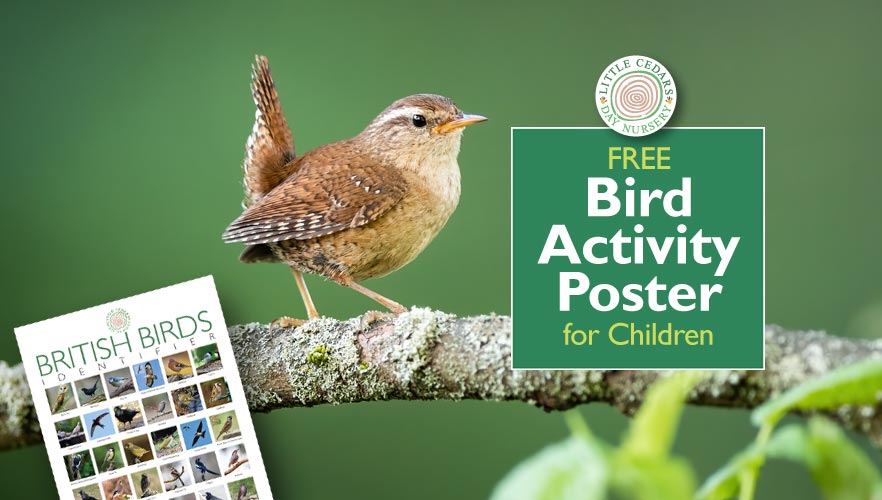
 Spring arrives in the UK on 20th March, according to the meteorological calendar. As well as plants beginning to shoot, daffodils flowering and trees starting to bud, an increased number of wild birds can now be seen too. While a few overwintered here in England, many will have spent winter abroad, where it’s warmer, and only begin to return to the UK once spring begins. So, come springtime, more and more varieties of birds can be spotted — and that’s what today’s post is all about. To encourage children to appreciate, enjoy and learn from nature, we have put together a bird identifier poster that children and parents can download for free, print out to A3 or A4, or view on screen in beautiful high resolution. It highlights 37 species of bird that are popular in England, which children can try to spot as the days and weeks go by. Children can perhaps tick off each type of bird that they spot. With a little help from parents for the youngest children, this activity is a great way to teach them the different bird names and help them to recognise the different types as time goes by. It’s also a great children’s pastime that will encourage them to really appreciate nature. The A3 poster is free to download and share — simply click the preview image below to save or view it in Acrobat PDF format. Enlarge on screen for extra detail or simply print out as large as you can. Children will love this activity and feel a real sense of achievement as they learn more about these wonderful, feathered visitors.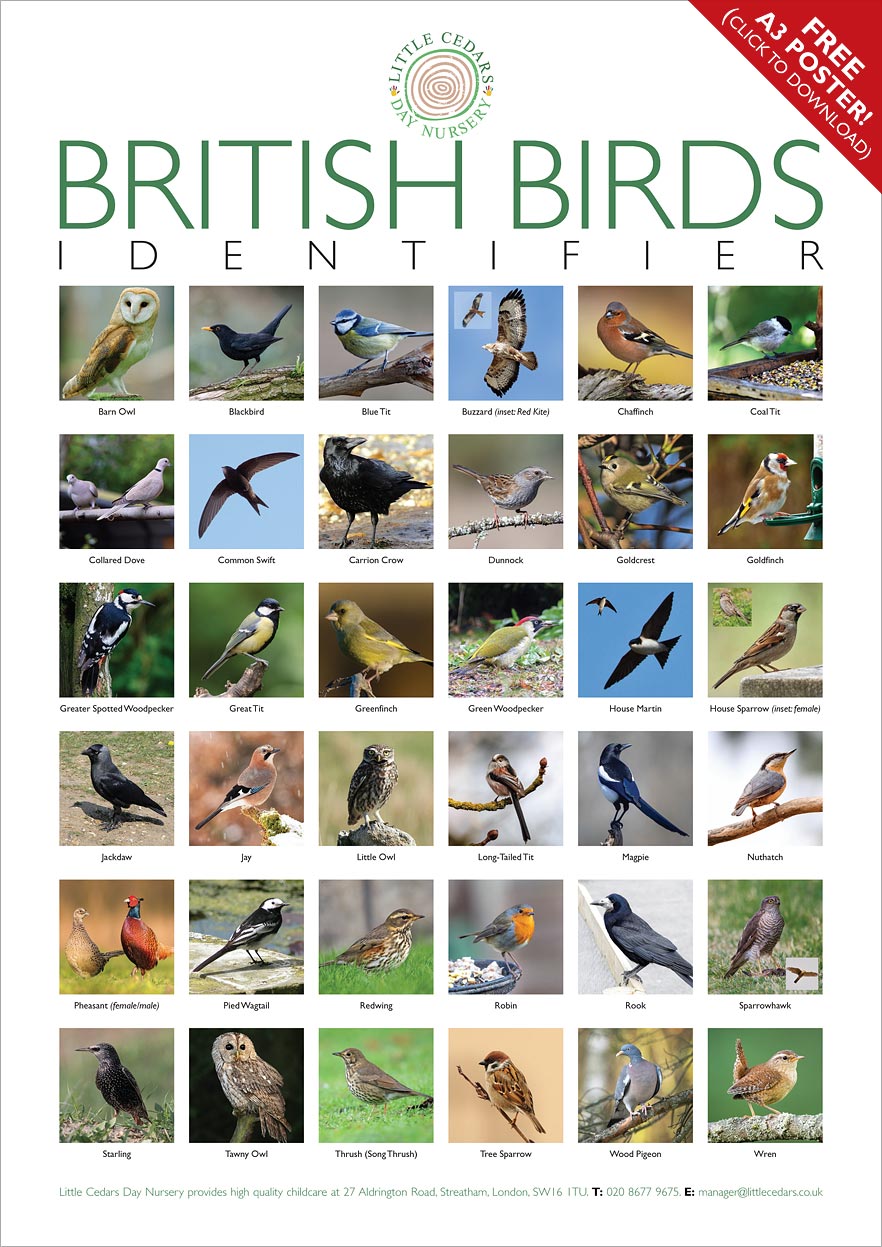
 We’ve selected our favourite birds from the hundreds of species that visit the UK each year. There was no way to fit in all of them, so we’ve picked out the most common visitors to our own gardens and nearby parks. In addition, we also added a few extra birds that would be great for children to keep a lookout for, despite a few being shy. Owls are around, for instance, coming out mostly at night. However, barn owls can be seen before dark if you know where to look (the sound of owls hooting or screeching is a dead giveaway). Buzzards, Red Kites and Sparrowhawks are more likely to be seen in the sky overhead, so we’ve shown images where their distinctive silhouettes can give their species away to the onlooker.