
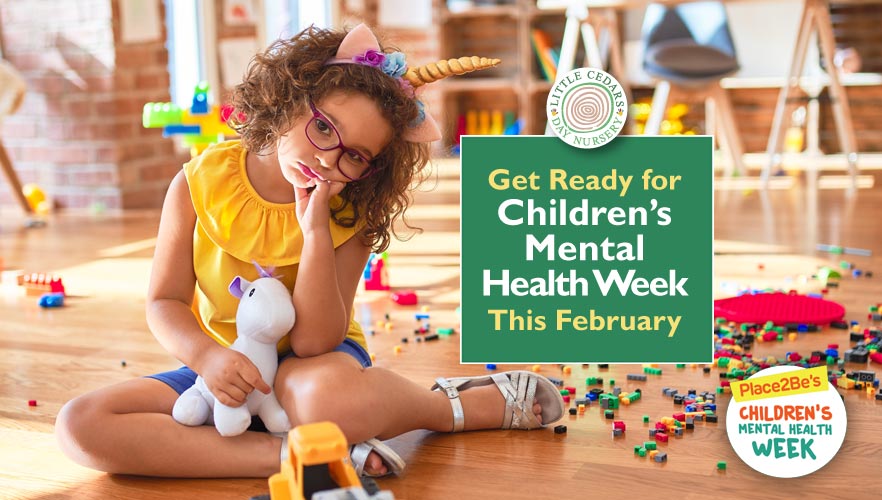
Each year, February marks the date for Children’s Mental Health Week. It is the perfect opportunity to reflect on how we can all contribute to improving children’s mental wellbeing. Often overlooked in favour of a focus on ‘physical’ health, good mental health for children is, of course, profoundly important. This special week occurs every year during February and has done so for over a decade. Let’s take a closer look today and see how the initiative can both inspire and empower parents and families to help children’s mental health thrive.
“Around 50% of mental health conditions are established before age 14.” — Place2Be (Children’s Mental Health Charity).
What & When is Children’s Mental Health Week?
Children’s Mental Health Week is designed to bring greater awareness around the mental health of children. It aims to give children a voice, empower them, and give them the tools to thrive. It is a UK initiative originally launched in 2015 by Place2Be, a charity that focuses on children’s mental health.
In 2026, Children’s Mental Health Week will be from Monday the 9th to Sunday the 15th of February inclusive.
The Theme for 2026
 Each year, the event has a theme. The theme for 2026 is ‘This is My Place’. It brings a focus to the need, by every child, to feel they belong. Whether it’s to a friendship group, peers at their nursery or school, their family, a club, or a team of some kind, it’s incredibly important for every child to feel they belong. Hence, the theme ‘This is My Place’ for 2026. Click the thumbnail image or this link to launch the official video.
“To know our place and really feel part of our environment is a basic human need. It can have powerful and long-lasting impacts in lots of areas of our lives, including our physical and mental health, education, employment and relationships. When we feel that we belong, it empowers us to contribute to the world and make a real difference.” — Place2Be.
By feeling they belong, children will feel that they are connected, accepted, and valued for who they are. That’s important for children of any age and, in turn, will help them feel happy and safe. It will also teach them to be more inclusive and kind towards others, so no child feels alone or an outsider.
“As parents and carers, you play an important role in your child’s wellbeing.” — Place2Be.
Resources for Families of Children — Including Under 5s
Although the charity that founded Children’s Mental Health Week is primarily involved in supporting children in schools, the overall theme applies equally well to pre-school children under five. Indeed, the Place2Be charity has support and resources that fit perfectly with helping good mental health in children in their early years. Families can download free resources here, and useful information for parents and carers here.
How Can Families Help Children?
To facilitate children’s good mental health, parents and carers have a number of ways to help children, including under-fives, to feel that they fit in and are valued. A few examples include:
- Enrolling them in environments like clubs, nurseries, and sports teams, and nurturing their participation in friendship groups.
- Taking an avid interest in the child’s interests — getting involved, asking them questions about what they’re passionate about, and encouraging them in associated activities.
- Taking the time to be present with your child, engaging with them proactively during activities they’re interested in, and avoiding other distractions whilst doing so.
- Encouraging activities that clearly make them happy and feel safe.
- Allowing them to choose and steer activities, while also allowing them to explore other pastimes that may be new to them.
- Listening, allowing them to speak, encouraging and reassuring them at every step.
- Ensuring they have a warm, comfortable space of their own where they can play while feeling safe and nurtured.
- Providing consistency so that bonds with siblings, friends, and peers can grow and flourish.
- Encouraging those relationships that look to be the most healthy for your child, while withdrawing them from toxic environments that don’t look healthy.
- Being your child’s biggest cheerleader — applauding their achievements and boosting their self-worth and confidence.
- Talking with children to explore their feelings around belonging, being included, being important, being liked by peers, being loved by family, and being enormously valued.
“1 in 5 children currently has a probable mental health disorder.” — Place2Be.
With it being likely that 1 in 5 children has a mental health disorder and around half of such disorders being established before the age of 14, it’s never been more important to address the issue. As parents and carers, we need to be conscious of the issues, aware of the possible signs, and equipped with the tools to support our children. Learn more about Children’s Mental Health Week and some of the support available here. A non-profit called MindForward Alliance also has an excellent toolkit for parents whose children are experiencing mental health difficulties. Download the toolkit here.
Little Cedars Nursery, Streatham
A High-Quality Childcare Service for Southwest London

 Do you have a child under five and live in Streatham or close by? Little Cedars Nursery provides high-quality childcare in Streatham, and we’re conveniently close to families in Streatham Common, Streatham Hill, Streatham Park, Tooting, Furzedown, Balham, Norbury, and Colliers Wood. Rated ‘Good’ in all categories by Ofsted, we also support free childcare hours for eligible children from the age of 9 months to 5 years.
Start your childcare application today or contact us to learn more:
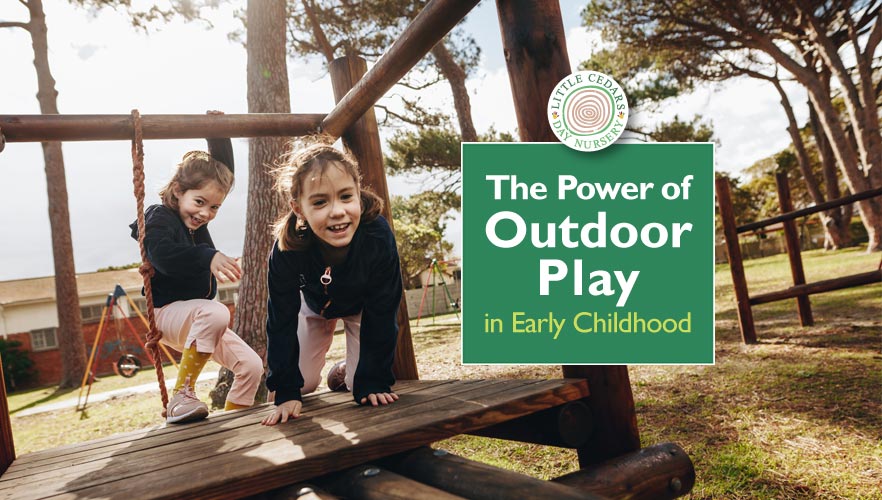
 In today’s guide, we take a close look at the incredible importance of outdoor play for children, including those under five. Outdoor play isn’t just about fun; it’s one of the cornerstones of childhood learning and development and has an immense number of benefits for little ones. So, in this comprehensive article, we’ll explore why outdoor play is so essential for our youngsters and how its effects can be transformative. Let’s take a look…
 For children, the outdoors represents a magical place where fun, exploration and real adventure can take place. Picture a world where a simple stick can become a wizard’s wand, or a puddle can transform into a treasure-filled lagoon, and you’ll soon understand how exciting the outdoors can be for children. Indeed, outdoor play is the realm of limitless imagination. It offers children a vast canvas in which to immerse themselves into adventures, fostering creativity and igniting their instinctive curiosity.
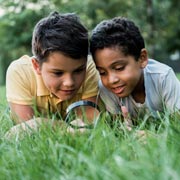 The Great Outdoors serves as a natural classroom, with true hands-on learning experiences that provide numerous opportunities for children to acquire new skills and knowledge. Whether it’s
 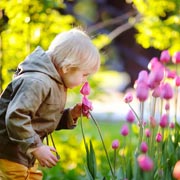 Outdoor play engages all the senses and
  The outdoors serves as an exceptional classroom. When they’re playing outside, children effortlessly absorb knowledge about the world around them. In the open air, they will naturally learn about nature, seasons, different types of flora and fauna, and how the environment functions. It is true learning through discovery.
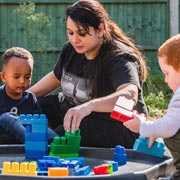 The open spaces of the outdoors also serve as a wonderful canvas for creativity. Children’s imaginations run wild outdoors as they invent games, stories, and art inspired by the natural world. Outdoor play encourages them to think in new, innovative, ways and to truly embrace their creative potential.
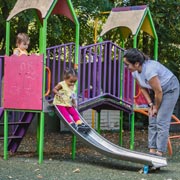 At Little Cedars Nursery, we really understand the profound impact that outdoor play has on early childhood development. With that in mind, our childcare practitioners ensure that children are given every opportunity to immerse themselves in a wide range of outdoor activities that help to nurture every child’s learning, growth, curiosity, and resilience. And let’s not forget one more important factor about outdoor play — it’s simply immense fun for children! As such, it is a perfect way to facilitate learning in the most natural way of all — through play.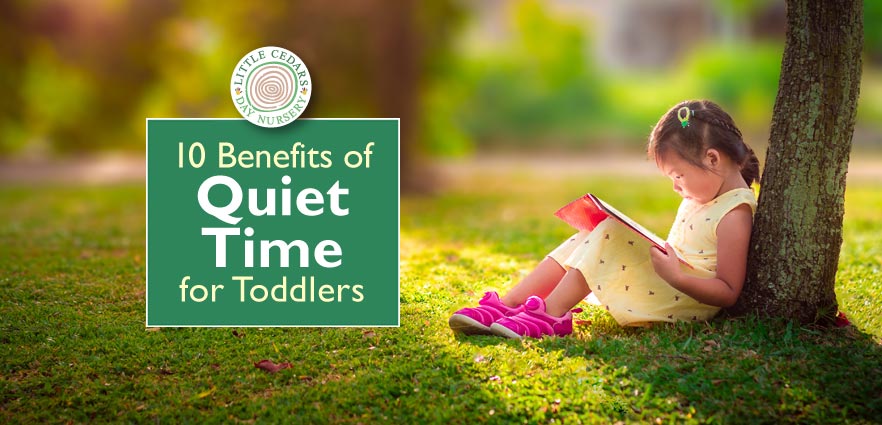
 In today’s post, we look at the importance and benefits of periods of ‘quiet time’ for toddlers and children under five. Toddlers are busy little people, often rushing around, going from one toy or activity to the next. They’re at a stage where they realise the world is an exciting place and often want to experience it all at once. However, when they are so ‘on-the-go’, playing and learning from everything and everyone around them, their brains and body have a lot to take in and process. It can be extremely tiring! So, this is where some much-needed quiet time often comes in, bringing with it a whole range of benefits. Studies also back this up.
 With so much going on around them, children’s young senses of sight, hearing, touch and smell are experiencing a full-on assault. Their minds are also being challenged with learning new skills. This can all be very tiring for our youngsters, so a period of quiet time will give them a break, to allow them to breathe and unwind.
 After prolonged activity or concentration on the part of the child, a well-earned nap may well be on the agenda. As well as giving the toddler a chance to re-charge their batteries,
  Quiet time provides an opportunity for children to develop their own, natural creativity. During quiet time, they have the opportunity to make up a game or activity, without intervention from others. This time is totally unstructured too, so children can be as free as they like to explore and adapt the game or activity. They can create their own little environment and immerse themselves in their own new world. Their imaginations are set free and opportunities to be creative will come naturally.
 As we can see above, during quiet time, children can engage in activities that they have chosen for themselves. This can greatly help them to become more independent and self-reliant. That’s a great skill for them to develop as they approach the time to transition to school. There, they will need to rely much more on such skills.
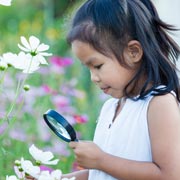 When you first introduce quiet time to your child, start slowly and begin with short periods each day. This can be increased as your little one gets used to it.
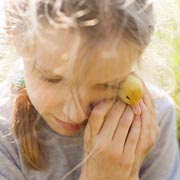 Sooner or later, many parents will consider the possible benefits of pets and whether their child should grow up with one. Mostly, the answer is positive because growing up with a pet can benefit children in many important ways — and really enrich their lives. However, looking after animals is a huge responsibility, not least to the animal itself, so should never be taken on lightly. Today we explore the topic and also outline a couple of animal-related initiatives that we have undertaken at
  On a simple level, pets are incredibly cute and great fun to be around. As such, most children are naturally drawn to them.
 Familiarity with animals and closeness to pets also teaches children respect for other individuals (whether human or non-human), including recognition of the consequences of their actions towards them. It shows them how to care for others too. It can also teach them patience (e.g. when training) and even some of the harder lessons about life cycles.
 Introducing animals like dogs and cats to the household is quite a life-changing thing. After all, they are the kinds of animals that pretty much become one of the family and, as such, require significant time, care and attention for their own wellbeing. They also often live freely within the house and require access to the garden and, for dogs, regular walks outdoors. They are quite an undertaking, so the decision to introduce one needs careful and thorough consideration. Many animals form deep, lifelong bonds and you will become their family just as much as they become yours. So, that lifelong commitment is an important one — they are absolutely not unfeeling objects to be treated like just a toy.
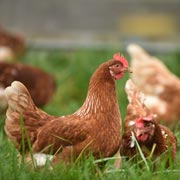 Pets like hamsters, rabbits, budgies and guinea pigs require less space in the household, of course. Indeed, some types of pets can be housed outdoors in suitable hutches. They’re also small enough to be temporarily moved elsewhere, for example to a friend or neighbour when you go on holiday. However, despite them being small, they too have their own needs and wants, including your care and regular attention. Giving them this, however, will be rewarded and children who spend significant time with any pet will soon begin to pick up on each one’s distinct personality and any likes or dislikes. Treat them well and pets will become trusting and friendly. Dogs, in particular, are incredibly loyal when treated well.
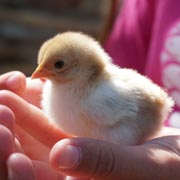 Just like humans, animals need care, proper food, fresh water, friendship, comfort and stimulation. If they don’t get these essentials, they may lead miserable and potentially even foreshortened lives. So, before a family takes on a pet, it’s best to thoroughly research the particular type of animal and exactly what they will require, from food, nutrition and bedding to stimulation (games, exercise etc.), contact with others and medical needs. Families should find out about all these things before taking an animal on. For some types of animal, for example dogs, even the breed and background is important. That’s for the wellbeing of both the pet and the family itself. Remember too that some animals will need training, for example toilet training in the case of cats, dogs and perhaps even ‘house’ rabbits. Some dogs may also require behaviour training. Everything needs factoring in beforehand including things like who will look after the pets while adults are at work, what happens when you go on holiday, who will exercise the dog, clean out the rabbit hutch regularly, feed the rabbit or clean the budgie cage.
 At Little Cedars Nursery in Streatham, we believe that children will learn a huge amount through contact with animals. For this reason, we have our own chickens and rabbits at the setting — and the children adore them! Our rabbits are named Miffy and Bella and indeed naming them naturally encourages children to treat them like individuals rather than something to play with.
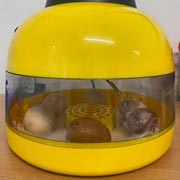 We are also raising some new chickens from fertilised eggs that we currently have in an incubator. We’ll teach children all about the life cycle of chickens with these. Once they hatch, children are sure to love the adorable little chicks that will emerge and they’ll be able to watch them grow up from fluffy chicks to adult chickens. When old enough, the chickens will join our existing, fully-grown chickens that we keep for the children in our animal enclosure outside.
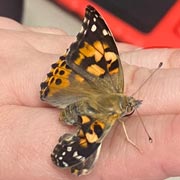 We also have a caterpillar/butterfly enclosure indoors at the setting. Through this, children can follow the incredible life cycle of butterflies, starting off as tiny eggs, hatching into caterpillars, building cocoons and eventually emerging as incredibly beautiful butterflies. This is an amazing metamorphosis for children to witness and teaches them so much about the wonder of the natural world as well as the individual needs of some of its creatures.
 We previously covered
  Motor dysgraphia is primarily the result of poor fine motor skills and poor dexterity, making the control needed for legible writing or drawings difficult. It may also be the result of poor muscle tone. In contrast to dyslexic dysgraphia, motor dysgraphia may result in poor writing legibility even when the words are copied. Spelling, however, is not adversely affected. Short bursts with unusually high concentration levels may result in better letter and word formation, but the level of concentration needed to achieve this is unsustainable over a longer period.
 sgraphic children may also hold their writing instruments in an unusual way or have strange posture when writing;
 Diagnosing Dysgraphia
 At education settings, additional bespoke learning strategies and interventions, that all teaching professionals can employ, may include:
 Childcare/teaching professionals and parents/guardians should always work together and compare notes, so that all parties are fully informed about any challenges the child may have. By doing so, they can share strategies and each work with the child towards the same goals. It’s important to begin such work as early as possible, so that the impact of the disorder on the child’s life is minimised. Early diagnosis is therefore crucial.
 Childcare professionals at Little Cedars Nursery will support children with any learning disorders and disabilities as a matter of course. Although dysgraphia normally only manifests itself once children reach the age of about five, we will nevertheless watch out for possible signs during children’s pre-school years at the setting. If suspected, we’ll put in place a customised learning and development plan that will help them to overcome any challenges they may be facing. Our childcare staff, including our Special Educational Needs Co-ordinator (SENCo) will work with parents/guardians to support their children in the best way possible. Our aim is for each child to achieve personal bests in every area possible, so they’re ready and able for school when they leave us to begin their time in Reception year.
 The Government’s Early Years Foundation Stage (‘EYFS’) framework prescribes how adults should approach the education and development of children under five. As such, it forms the backbone of the curriculum at childcare settings like Little Cedars Nursery in Streatham. The EYFS guidelines were expanded this year (2021) and one aspect of early childhood development discussed therein merits closer exploration: the affect of adult interaction on an infant’s brain development. Here we take a look.
 Their research suggests that constructive experiences will build on and enhance the structure of the brain, whereas “adverse experiences early in life can impair brain architecture, with negative effects lasting into adulthood.”
 The Harvard Center on the Developing Child suggests that parents1 can help babies and toddlers develop their brain architecture in the best way through regular and strategic interaction between adult and infant. They call the process ‘serve and return’. Think of it as a tennis metaphor— we’ll explain. First, the child may indicate an interest in an object or activity. That’s the serve of the tennis ball, if you like. The adult should look out for such indications of interest, recognise them as a kind of invitation from the child and then get involved with that object or activity with the child. Responding in this way is like the ‘return’ of the ball in the tennis metaphor. It’s a great approach because the child is indicating what they are interested in and therefore, when a parent responds through activity involving themselves with the source of interest, the child will naturally get more from the interaction. After all, it was they who first indicated an interest and an adult can now help them to get the most from it.
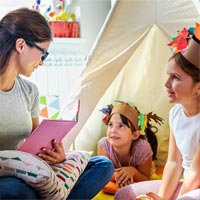 Repetition is also important. This helps to reinforce circuits in the brain. Reminding a child several times about something will naturally help them to understand and remember the point under scrutiny.
 The research, as well as a good dose of common sense, shows the incredible importance of parents interacting well with children from the moment they are born. Their interaction and guidance will help the developing child to understand themselves, the world around them, and their place within it. Millions of brain connections are built with every interaction, building healthy foundations upon which the baby will grow into a well-rounded individual with the requisite cognitive, physical, social and emotional skills to handle life. It all comes down to love, responsive and responsible care, with parents matching the infant’s signals and needs with positive, insightful responses. The reassurance and tools such interactions give the infant will allow them to confidently, safely and comfortably explore and learn about the world and, going forwards, their place within it.
 3. Almost 50% More Bones Than Adults
 6. Not So Hot on Eye Sight
 9. Natural Born Swimmers (… Kind of)
 14. Is Breast Really is Best?
 16. The Only Smiling Primate
 19. Outcomes of Being First Born

 What are the Recommendations for Early Years Exercise?
 What are the Benefits of Early Years Exercise?
 How Parents can Help
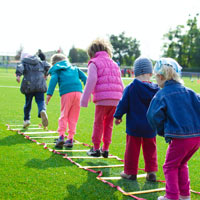 Active Play & Exercise at Little Cedars Day Nursery, Streatham
 Sensory Play Ideas for Babies
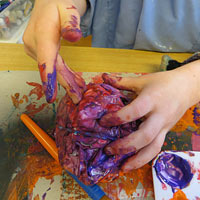 • Paper. Babies will love the feeling of scrunching up paper and will notice the sound as well as the contoured feel of their new creation. They may need a demonstration to get started, though. They’ll start to comprehend the concept that something in one form, like a pristine, wafer-thin sheet of paper, can be made into something completely different — in this case, perhaps a simple ‘ball’ of scrunched-up paper. Even
 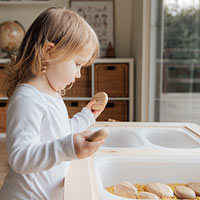 • Different objects & materials: babies will enjoy playing and learning about the properties, touch, feel and sound of different objects and materials. For example, (safe) wooden utensils, water in a closed beaker or bottle or small plastic or card boxes that they tap like a drum, or try to stack into a ‘wall’ — and so on. They’ll learn about physical properties of each along the way, including sounds, textures, touch and, if they include some carefully chosen food items, taste. It’s amazing what fun babies will have with such simple items — often learning far more from these than from purchased toys.
 • The natural world: babies also greatly enjoy the simple pleasures offered by the natural world. A breeze on their faces may greatly intrigue them, even more so when they see leaves rustling and moving a little on the ground. The feel and texture of grass on the lawn or the sight of sunlight dappling through the trees or reflecting off puddles can be wondrous to them. Under close supervision, getting to know the textures, hues and smells of safe, natural objects outdoors can also be a source of sensory discovery.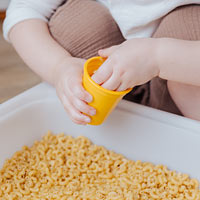
 • Hand & foot prints: preschoolers will never be bored with smothering their hands or feet in coloured paints, then making prints on paper or card. Footprints and handprints can be random or used to make images or patterns. This process is both creative and a sensory experience for them as the cold paint squelches between fingers or toes. They’ll learn so much including about mixing pigments, creating images from simple printed shapes, about the concept of paint eventually drying to form something semi-permanent and about different textures being formed, depending on the consistency of the paint. We take these discoveries for granted as adults, but we would originally have had to learn about them during our early, formative years.
 • Food creativity: toddlers can also take playing with food to the next level by introducing the concept of making images out of things like fruit- or vegetable-based sauces, cream or yogurt. Whole pictures can be made of food, using the hands, for example using broccoli for ‘trees’, peas for grassy areas and so on. The whole thing can smell great and even be tasted! Playing, hands-on, with food in this way can be fun and creative but also help children learn to accept new foods and tastes into their diets. However, care needs to be taken because proper mealtimes require good manners and children need to understand that food is not usually for playing with.
 • Sensory sand: it’s very rare for little ones to dislike playing with sand, which allows youngsters to get hands-on creatively. They can learn about the unique and varying textures, consistencies and properties of sand, depending on how much moisture it contains. Dry sand has its own unique set of properties, acting and feeling almost like a powder. Very runny, wet sand is great fun as it can be used to run through the hands and ‘set’ into pointy mountain shapes that look quite magical. Or, when less water is added, sand can be fashioned into shapes and, of course, “castles”, using the hands or by filling buckets, hollow vessels, or tubs. Children can also press their hands and feet into level, damp sand in a sandpit or tray, to make impressions and patterns. It feels great too and is an almost essential part of childhood. Young children learn so much from this stimulating, multi-sensory type of play.
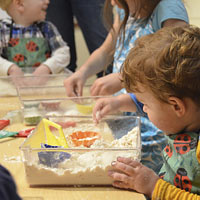 • Playing with dough: whether bought or home-made, dough is always a big hit with young children. It can be fashioned with the hands into shapes, characters, animals and mini-sculptures. Using food colouring in dough also allows children to discover more about mixing pigments. Salt dough can also be baked (under the close supervision of an adult) so that it hardens into more permanent creations. Many types of dough even smell great too! What’s more, it can even lead to a bigger interest in cooking real, edible dough and other baked foods when they’re a little older.
 • A sensory garden. We’ve left perhaps the best until last. Making a sensory garden area with, or for, little ones will give them a magical experience. There are so many materials that can be used in the construction of sensory gardens, including soil, earth, pea shingle, tree bark, moss and so on. Plants themselves will also add to the fascinating mixture of textures, colours and even smells found within a sensory garden. It can be as small or large as you have room for and can even be achieved in containers, pots or on balconies for those who do not have gardens. It can take many forms so it’s design also gives children a wonderful creative opportunity. Sensory gardens are a complete feast for the senses for young children — adults too — encompassing touch (e.g. the textures of materials, moss and plants), smell (why not include some herbs — these smell wonderful and can be tasted too), potentially sound (crunchy gravel, rustling leaves etc.), sight (aesthetics, colour etc.) and will also give children ample opportunity to improve balance and body awareness as they construct and create in this unique space.