

In a follow-up to our Rough Guide to Parenting Styles and subsequent Complete Guide to Authoritative Parenting, we now take a deeper dive into Gentle Parenting. There has been much discussion and debate around this style of parenting in recent times, particularly on social media platforms. The style has experienced great popularity among many parents, but has also drawn criticism from others. There has also been some confusion about where it sits in comparison to other similar styles. Is it the same, or different? Well, one could argue that gentle parenting is somewhere between permissive parenting and ‘pure’ authoritative parenting. It has similarities to both, particularly authoritative parenting, and could be described as a softer version, or even a sub-category, of it. Part of today’s guide will touch on such similarities as well as clear differences between the three styles. We’ll also take a look at any benefits or challenges associated with the gentle parenting style. With all that in mind, welcome to today’s Complete Guide to Gentle Parenting.
What is Gentle Parenting?
 At the heart of Gentle Parenting is empathy, kindness, respect, and a close bond between a parent and child. Such connections are given priority over control and obedience, and there are no punishments as such. Instead, gentle parenting uses a type of “positive discipline” where children’s behaviour is guided softly, in a measured way, without fear, threat, or punishment. ‘Gentle’ parents work with children to solve a problem collaboratively while, of course, acting to keep them and everyone else safe.
Don’t make the mistake of thinking that gentle parenting gives children no discipline and no boundaries. It gives them both, but they are applied in gentle, empathetic, reasoned, and collaborative ways.
That said, it’s important to understand that gentle parenting is not the same as permissive parenting, where it could be argued that anything goes so long as children are happy. In contrast, with gentle parenting, rules and boundaries are imposed — albeit through empathy, explanation, and sympathetic guidance. Respectful communication, the acknowledgement of children’s feelings — even when behaviours are challenging — and an understanding of young children’s developmental limitations are all part of this. After all, under-fives have ‘big’ emotions and don’t always understand why their feelings are as they are, nor why their emotions sometimes reach a tipping point.
“Every single behaviour communicates some sort of unmet need or underdeveloped skill.” — Kelly Medina Enos, Parenting Coach.
So, with gentle parenting, parents very much tune into children’s emotions and listen carefully to their opinions, needs, and perspectives. They then gently reason with children not so much to tell them what they can’t do, but more to explain what they can do. So, for example, rather than saying ‘No!’ to a toddler trying to climb onto a coffee table, they may instead tell them it’s better to keep their feet on the ground so they don’t fall off and hurt themselves. It works many times because young children often switch off to too many negative commands like ‘Stop that!’ and ‘No’. That said, there are, of course, times when such exclamations cannot be avoided, for example, during times of imminent danger when urgency is paramount so as to keep a child from harm.
Key Traits of Gentle Parenting
Gentle parenting typically has the following traits:
- It has a high level of emotional warmth towards the child.
- Its discipline style is very soft and empathetic.
- Rules and boundaries exist, but have a high degree of flexibility.
- Consequences (i.e. threats or imposition of punishments) are usually avoided.
- There is a high level of connection between the parent and the child.
- Parents work with the child through collaboration.
How Does Gentle Parenting Differ From Authoritative Parenting?
Gentle parenting shares most of authoritative parenting’s values — kindness, respect, emotional warmth and deep connections between parent and child — and could even be described as a sub-category or variant of that model. However, there are some subtle traits of gentle parenting that separate it a little from the ‘pure’ authoritative parenting model. With gentle parenting, power struggles and conflict are avoided and therefore parents rarely threaten or apply ‘consequences’. In contrast, the authoritative parenting approach to discipline could be described as more clearly structured and firm, although also remaining empathetic. And, while both styles require parents to listen carefully to children and guide rather than forcefully controlling them, gentle parenting allows comparatively more flexibility in the application of the rules, structure, and boundaries. As the name implies, gentle parenting is exactly that — more gentle in its approach — and treats children in the way that we might perhaps have appreciated ourselves when we were children. It should not, however, be confused with permissive parenting, which we’ll compare below.
How Does Gentle Parenting Compare to Permissive Parenting?
While gentle parenting uses a softer approach to the pure version of authoritative parenting, it is by no means as soft as permissive parenting. While all three value kindness, respect, emotional warmth and deep connections, permissive parenting goes further by reducing boundaries and structure almost completely. Happiness is prioritised at the expense of structure and consistency. Indeed, one could argue that, with permissive parenting, anything goes. That is not the case with gentle parenting, which applies structure, rules, and boundaries, albeit in a softly-softly, collaborative way.
“Gentle parenting does not equate to permissiveness. It involves setting clear and consistent boundaries while offering children age-appropriate choices within those boundaries. This fosters a sense of autonomy and helps children learn to make responsible decisions” — PositivePsychology.com
The Benefits of Gentle Parenting
Because so much focus is given to understanding and validating a child’s perspective and emotions, a child raised through gentle parenting will feel more ‘heard’ than with many other parenting styles. They will also be dealing with a parent who is calm, kind, and respectful to them. That is good role-modelling and, as such, is an approach that a child is more likely to adopt.
Gentle parenting usually also results in deep, loving and healthy connections between parent and child — long-term bonds that form a strong and important backbone to family life.
As with ‘pure’ authoritative parenting, children raised via the gentle parenting variant tend to have healthy levels of resilience, self-esteem, confidence, and emotional intelligence. They will feel heard, respected, and understood by parents, with whom they have secure and trusting bonds. Interestingly, they also tend to become higher academic achievers than those brought up with contrasting parenting models.
Challenges Associated With Gentle Parenting
While gentle parenting has become very popular amongst young families in recent years, being a comparatively new term also means that not much academic research exists about it. So, it’s tricky to scientifically compare it to other parenting styles that may have more evidence attached to them — for example, ‘pure’ authoritative parenting, which has been studied for years and is often cited as the ‘gold standard’ of parenting models.
There is also a danger that, if applied too softly, gentle parenting could drift more towards permissive parenting, an indulgent model where anything goes, and happiness is given priority over the learning of rules, self-discipline, self-control, responsibility, and perhaps even accountability.
Another potential challenge for parents switching for the first time to gentle parenting is the possible need for them to adapt their use of language. Initially, for example, it can be tricky to consistently avoid negative commands (‘No!’, ‘Don’t do that!’, ‘Stop!’, etc.) in favour of explaining what a child can do instead. Likewise, it may be difficult, at first, to remember to listen proactively to the child’s perspective and only then show or explain logically what an appropriate behaviour or action might be. Such things are opportunities for teachable moments, though, and are therefore potentially much more powerful than barking orders without explanation or empathy.
Key Takeaways — Which Parenting Style is Best?
Is there a ‘best’ parenting style? Well, each has its own benefits and challenges, and parents may, by necessity, sometimes need to switch between models depending on the situation. Some, however, are clearly better for children than others. Indeed, as we’ve said before, authoritative parenting has, for some years, been seen as the gold standard of parenting styles. And gentle parenting is often cited as simply a softer version of it. By definition, therefore, gentle parenting has significant and proven merits. It’s therefore not surprising that it’s so popular on parent forums and social media. (That is except, of course, when it’s mistaken for permissive parenting, which it is not).
Weighing up all the pros and cons of the various parenting styles, one could easily argue that the sweet spot is close to authoritative and properly executed gentle parenting — there is little doubt that outcomes are very good with each. However, how styles are best chosen or blended by parents will depend on several things. Factors will include the specific situation, the child’s age, their temperament, and, to an extent, how much time a parent has available in that moment. The best styles take time — but are hugely beneficial to the child. There will be a few times, however, when they just won’t cut it, like when a child is about to do something extremely dangerous — an abrupt and authoritarian ‘Stop!’ will always have its place in such urgent situations. There is no doubt that parenting is hard. It is okay, therefore, that it’s most likely to be a balancing act between styles as situations present themselves. That said, parents could do much worse than choosing gentle or authoritative parenting as their core style.
“There’s no one-size-fits-all, and you don’t have to commit to a label. The best parenting style is the one that helps you build a strong, respectful relationship with your child—while guiding them to thrive in the real world.” — WholeMindPsychology.com
Little Cedars Nursery
Your High-Quality Childcare Service in Streatham

 Little Cedars Nursery provides a high-quality childcare service in Streatham, has a ‘Good’ Ofsted rating, and supports free childcare hours for eligible families. We’re located in Streatham, close to Streatham Common, Streatham Hill, and Streatham Park and also represent a convenient choice for families around Tooting, Furzedown, Balham, Norbury, and Colliers Wood.
Click an option below to get started on your child’s nursery journey today — we look forward to hearing from you!
 Authoritative parenting is often seen as a strong, nurturing foundation for early childhood. It’s balanced somewhere between permissive parenting and authoritarian parenting.
 Authoritarian parenting is a style that’s highly structured, but low in emotional flexibility. With this parenting style, parents expect blind obedience without question, don’t often explain the reasons for rules, and are highly controlling.
 Permissive parenting (sometimes also known as ‘indulgent parenting’) utilises a loving and warm approach towards children, but is often under-structured due to a reluctance to enforce rules.
 Helicopter parenting means that parents are very involved — sometimes too involved — often micromanaging the child’s every move.
 Velcro parenting denotes a strong level of closeness and a slow level of separation — a kind of hyper-involvement.
 Uninvolved parenting (also sometimes known as ‘neglectful parenting’) is evidenced by low engagement, a low level of warmth, and limited support for the child.

 Except for Safeguarding, the new Report Card will show Ofsted’s evaluation of each of the assessment areas as one of the following:

 Sleepless nights are something most parents expect when a new baby arrives. But sometimes those broken nights can stretch on for months, through into toddlerhood, or even beyond. For affected families, bedtime can become a battle every night, and soon the exhaustion can build up and take its toll.
  A sleep consultant works with families to understand a child’s sleep patterns and suggest gentle, practical ways to improve things. They spend time learning about a child’s routine, feeding habits, daily schedule, and sleep environment before creating an improvement plan that feels realistic for the child’s family. The idea isn’t about handing parents a rigid set of rules, but about working together to find an approach that feels the most suitable and fits in with the family’s values.
 Working with a sleep consultant often begins with a thorough conversation about your child’s routine — what time they go to bed, how they fall asleep, how they feed, and what happens during the night. From there, the consultant will create a personalised plan that involves tailored changes. These might be small adjustments, such as introducing a calmer wind-down before bed, or they could involve gradually teaching your child to settle with less help. It may also include strategies for how you respond when your child wakes in the night.
 Costs for hiring a sleep consultant vary. Depending on the consultant contacted, a one-off initial consultation can often be an affordable first step — and one that will allow families to explore the potential of proceeding with a full plan. However, a full package with several weeks of guidance can often be several hundred pounds. In-home, overnight support is potentially at an even higher end of the scale — but, again, it varies from consultant to consultant. Many families find that online or phone-based support from a sleep consultant is more affordable, and sometimes just as effective.
 At Little Cedars Nursery, we understand that sleep — or the lack of it — has a huge impact on family life. Sleep consultants may not be a quick fix, but for families who are reaching their limit, they can offer a real lifeline. Success usually comes from finding someone whose approach aligns with your parenting style, sticking with the plan for long enough to see improvements, and feeling supported along the way.
 Tantrums are a common part of life with toddlers and under-fives, but when they happen, they can be very challenging! Whether it’s a meltdown at dinner time or a dramatic on-the-floor outburst in the middle of the supermarket aisle, they can test even the most patient of parents and carers. However, it’s important to understand that tantrums aren’t a sign that something is wrong — they’re actually a normal, healthy stage of child development.
 In their early years, children are still learning how to manage big emotions. There’s a mismatch, though; their brains are developing rapidly, but they haven’t yet mastered language, impulse control, or emotional regulation. So, when they’re tired, hungry, overstimulated, or frustrated, it can all become too much for them.
  When a tantrum starts, staying calm yourself is key. Your child will take emotional cues from you, their trusted adult. If you can remain steady, even if you’re feeling flustered inside, you send the message that you’re in control—and that they’re safe.
 Avoid reasoning or explaining too much during a tantrum. When a child is overwhelmed, they’re unlikely to take much in. It’s often best to wait it out and stay close so they know they’re not alone. For some children, a gentle touch or hug might be helpful. Others may need a bit of space before they’re ready for comfort.
 Offering limited choices — like “Would you like to wear the red jumper or the blue one?” — can also give them a sense of control without overwhelming them.
 Work at least 16 hours or more per week at the National Minimum Wage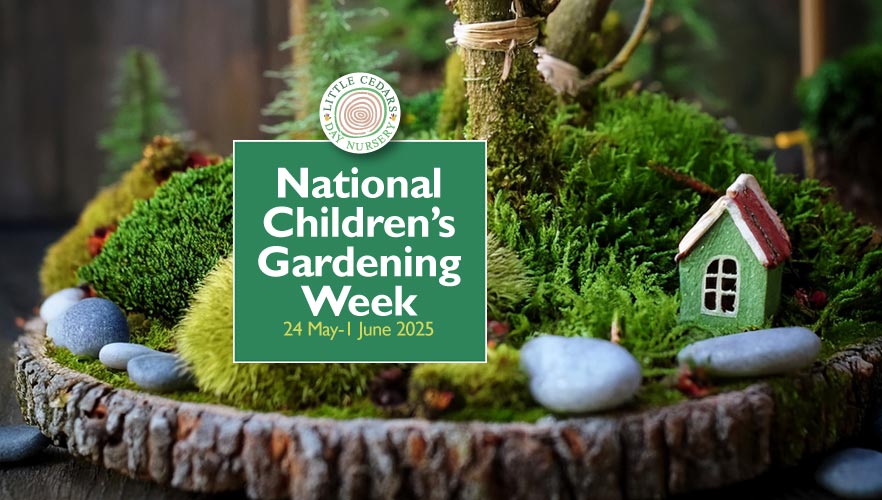
 National Children’s Gardening Week is a wonderful annual event that’s designed to inspire children’s curiosity around growing plants and gardening-related activities. It takes place during what is typically a warm period of the year. That’s important because it means seeds and plants will grow faster and need minimal protective measures from inclement weather. Speedy growing results will appeal to little ones!
 National Children’s Gardening Week coincides perfectly with the Spring Bank Holiday and May half-term school holiday, taking place from the 24th of May to the 1st of June 2025. It’s usually a lovely warm week and is perfect timing for children to make the most of the event and to maximise the many benefits of spending time around nature.
 National Children’s Gardening Week also raises money to support children in hospices through the national charity Greenfingers. They create inspiring gardens and beautiful outdoor spaces where hospice children with life-limiting conditions can play, rest, relax, and spend time with family and friends. Such outdoor spaces allow affected children to spend quality time away from the bedside in well-designed outdoor areas where they can enjoy all the benefits of fresh air and a natural environment.
 Children and families can take part at home as well as in participating schools, childcare settings, community groups, ‘outdoorsy’ retail outlets and even some National Trust properties.
 Sowing Wildflower Seeds
 Herbs and some vegetables can be grown from seeds, cultivated, and harvested from simple flowerpots or yoghurt pots. They can also be ‘re-grown’ through various devious means that will fascinate children including under-fives. We wrote a whole post about that too, so take a look — it’s quite ingenious, is incredibly educational, and results in free food! What’s more, it can be done indoors.
  Another ‘indoor gardening’ activity is growing these comical ‘egg heads’. Grown simply from cress seeds, they can be grown in egg shells as shown, or another alternative would be yoghurt pots. When the cress is ready to be harvested and used in salads or as a garnish, the little characters can have a haircut!
  Another activity that children can get involved in for National Children’s Gardening Week is to create bee-friendly gardens. Our recent post about World Bee Day explains how to make a bee oasis (from where bees and pollinators can get a refreshing drink) and a bee-friendly garden.
  Plants love compost and so do minibeasts. So, another wonderful activity for children in National Children’s Gardening Week is to make homemade compost. Our dedicated
 Once the flowers are blooming outside, children can experiment with pressing flowers. Pressed flowers are a wonderful way for children to save flowers semi-permanently as keepsakes or to use as part of an art activity.
 The youngest children will love this activity! Children will need some scavenged moss, pebbles, sticks, seashells and perhaps small pieces of driftwood from a beach. Children can then use these to transform the soil in a large pot or on top of a log into