

What is National Offer Day in the UK?
National Offer Day is the day that parents receive confirmation of which school their child has been offered for the next academic year. For those with preschoolers who require primary school places starting in the September term, over 92% (2023: 92.5%) will typically get an offer from their first choice and over 98% (2023: 98.6%) usually receive an offer from a school within their top 3 choices. Out of 568,600 primary school applications made last year for the academic year 2023/24, only 8,000 (1.4%) didn’t receive offers for one of their preferred primary schools (statistics are lower for secondary school places).
In today’s guide, we outline how and when parents of under-fives should apply for primary school places, how places are allocated, what to expect on National Offer Day (a.k.a. Primary School Offer Day for preschoolers), and what your options are if you do not receive an offer for your preferred school.
When Will Your Child Receive Their Primary School Offer?
National Offer Day for primary school places falls on the 16th of April (for secondary school places it is the 1st of March). On the ‘offers’ day, those who applied for places online will receive an email* from their local council to confirm the offer. There are lots for the council to send out, so the time of day the email arrives with you will vary from location to location. Also note that, in years when those dates coincide with a Bank Holiday or a weekend, the offers will instead be sent during the next working day.
* Some local authorities also allow parents to view offers through the council’s admissions portal/system.
When is Compulsory School Age?
Although most children begin school in the September following their fourth birthday, they have the option to start a little later if preferred. Compulsory School Age, which is the age they must be when they begin full-time education by law, is whichever comes first of the 31st of December, March or August following their fifth birthday. In practice, though, most children in the UK begin school at the age of four and reach five during their first year at school.
When to Apply for Your Child’s Primary School Place
For primary school places, you must apply in advance when your child is 3 or has just turned 4 at the time of application, even for those wishing to start school later.
Applications for September Reception year primary or infant school places should usually be made no later than 15 January that year but can be made as early as September of the previous year.
Example:
For a child starting primary school at the age of 4 in September 2024, apply any time from 1 September 2023 to 15 January 2024.
‘In-Year’ Applications:
For one reason or another, for example after moving house, some families may have to apply for a primary school place for their child after the school year has started. Such ‘in-year’ applications will obviously not follow the usual dates outlined above and, once an offer has been received, the child will usually begin at the agreed primary school at the start of the next full term.
What If Your Application is Late?
“Your child is less likely to be offered a place at their chosen schools if you miss the deadline for applications.” (Gov.uk)
It’s worth noting that applications may not be processed until some time in May if they are received late. As May is long after the processing of all those that were received on time has occurred, the odds of getting a school place at your first choice are potentially reduced if you’re late. In other words, if you want to stand a better chance of getting your preferred school for your child, don’t be late with your application! Late applications may also require the use of a separate ‘late application’ form.
How & Where to Apply
Families should apply for school places for their children through their local council even if they are applying for a school in a different area. They should also still apply if they are applying for a school that’s linked directly to their child’s existing nursery/setting. When applying, you’ll be able to list your preferred schools in order and, subject to available places, this order will be taken into consideration when your application is being processed.
Applications for primary school places can be made online (start here) or via your council’s paper application form. Note, however, that those applying via a paper form may receive the outcome of their application a little later, probably via 2nd Class post, if they didn’t include an email address as part of their application.
Criteria for School Offers
As well as the timing criteria outlined above, other factors will influence how likely you are to receive an offer for your preferred primary school, although the exact factors vary from school to school. They may include how close your child lives to the preferred school, whether your child has a sibling there already, whether you as a parent have worked at the school for 2 or more years, whether it’s a faith school that matches your faith, plus other potential factors.
Accepting Offers for Primary School Places
Be warned that the offer you receive for your child’s primary school place will include a deadline and you will need to accept the offer by that deadline in order to secure your child’s place. If you do not accept it in time, the primary school place may instead be offered to another child.
What If Your Child Is Not Offered a Place at Your Preferred School?
For one reason or another, a small percentage of families (2023: 1.4%) will not receive an offer from a school within those they selected as ‘preferred’ during their application. If your local council is unable to offer your child a place at any of your preferred schools, the council will need to offer you a place at an alternative primary school. Usually, this will be the nearest primary school that has a place available.
Appealing Your Child’s Primary School Offer
If you do not receive an offer for one of your preferred schools for your child, you can appeal the decision if you so wish. The offer letter will give more details about how to do so. More information about the appeals process can be found here.
Note, however, that it may be wise to first accept the offer your child was originally given so that you have something to fall back on should your appeal be unsuccessful. Doing so does not, apparently, adversely affect your appeal. The same is true if you decide to ask to go on a waiting list for a preferred school, and we’ll come to that next.
Primary School Waiting Lists
In the unlikely event that no primary school place is available, or if you do not receive an offer at your preferred school for your child, you can apply for your child to be put on a waiting list. This would be done through your local council although you can also contact the school itself to enquire. Interestingly, you can also put your child’s name on a preferred school’s waiting list even if you have already received and accepted an offer elsewhere.
Good Luck!
We hope this guide has been useful and wish you good luck with your primary school applications. We hope that you receive the choices you hoped for once the primary school offers day arrives.
Little Cedars Nursery, Streatham
A High-Quality Nursery & Preschool in Streatham, near Tooting, Furzedown, Balham, Norbury & Colliers Wood

 Little Cedars is a high-quality nursery and preschool in Streatham, SW16. Rated by Ofsted as a ‘Good Provider’ of early years childcare and education, children under our care receive a first-class start to life in our warm, loving, home-from-home environment. At Little Cedars, we bring out the best in every child to help them become school-ready by the time they leave us to begin school in their fifth year.
Get in touch today to learn more about a nursery place for your child at Little Cedars:
 Getting children interested in nature, and spending time around it, is extremely good for them as we’ve reported before —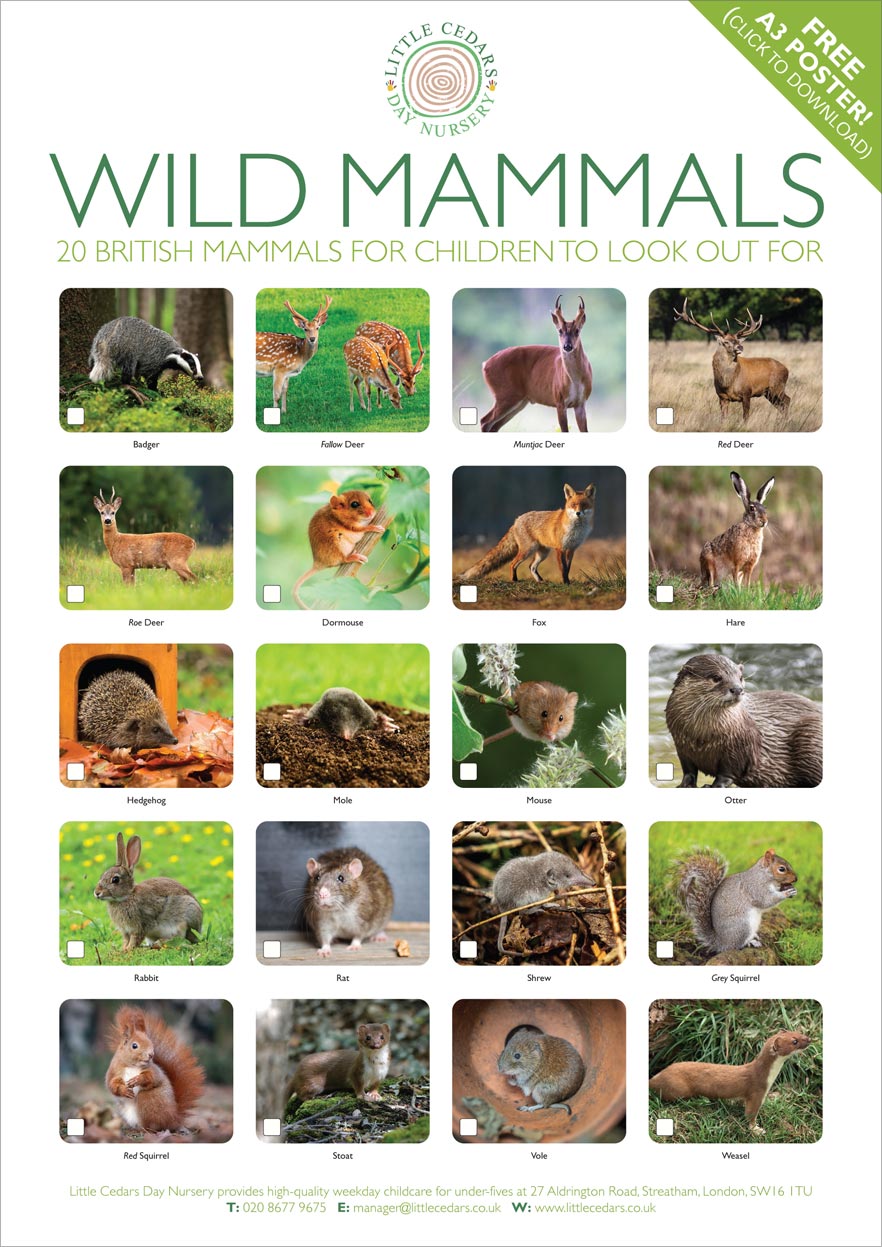
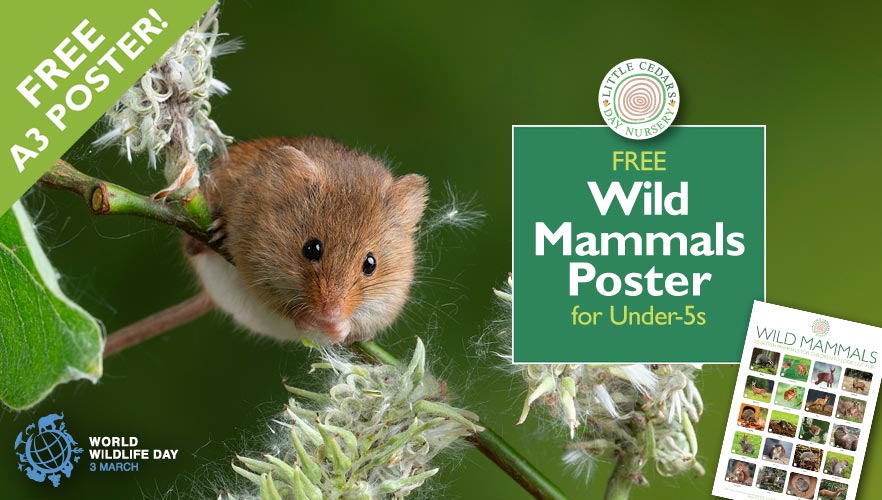
 World Wildlife Day celebrates the world’s flora and fauna. It happens on the 3rd of March each year and is a way to raise awareness of the need to protect nature. That can be achieved by reducing harmful emissions, pollution, habitat loss, and the loss of biodiversity. By introducing children to the beautiful wildlife around them, children will naturally be more empathetic towards other creatures and even progress to learning about conservation matters and the impact of humans on the planet. In this way, little ones can grow into young stewards of the planet and have an active interest in protecting it going forward. Get them started today by downloading our free Wild Mammals poster — who knows where it could lead!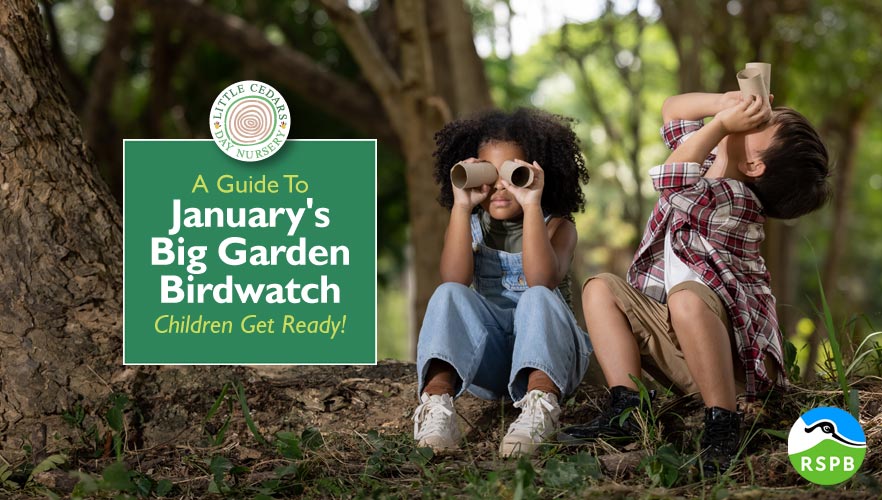
 Parents and children, don’t miss this year’s incredibly important birdwatching activity for the RSPB — and the planet — which occurs from Friday 24th to Sunday 26th January. The Big Garden Birdwatch only takes one hour, is free, and is an extremely worthwhile activity for children and families to take part in. It’s a great way to introduce children to the concept of conservation as well as getting them interested in spending time in and around nature. And, as we’ve reported before, nature is extremely good for children! In today’s post, we explain how easy it is to get your little ones involved and why taking part is a win-win-win for families, birds and nature.
 Monitoring populations of bird species every year allows the RSPB and other conservation organisations to see how the various types of garden birds are faring. Whether or not they’re doing well will be a barometer of the state of nature itself as well as that of the individual bird populations. If the RSPB and other conservation organisations can see a problem, they can then mobilise to try to do something about it. Likewise, if they see a particular bird species doing well, they can learn from that and better understand what measures are helping that particular bird population to thrive.
 In 2023, the bird species spotted the most was the House Sparrow, followed by the Blue Tit in second place, Starling in third, Wood Pigeon in fourth and Blackbird in fifth.
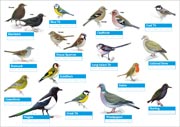 By registering you’ll also get a free guide to taking part in the event, which includes visual reference to the birds to look out for, as well as other perks like a discount on bird food and other bird feeding supplies available from the RSPB’s online shop.
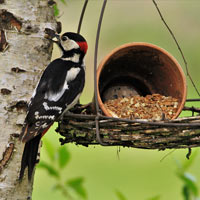 If you’re keen to attract as many birds as possible to your Garden Birdwatch count, the RSPB has you covered. As well as providing useful
 Child Benefit is a financial support scheme, provided by the UK Government, that’s there to assist parents and guardians in covering the costs of raising children. It is an essential part of the social safety net in the United Kingdom and aims to help families with the financial responsibilities that come with bringing up children. Eligible families are free to spend Child Benefit however they like, whether that’s on children’s clothes, food, or something else.
 You can claim Child Benefit for all of your children who meet the eligibility criteria. It may surprise some to learn that there are no restrictions on the number of children you can claim for (unlike with some other types of Government child support), so each eligible child in your care can be covered under this benefit.
 Child Benefit can be affected by your or your partner’s individual income if either of you earns over £50,000 annually. In such cases, you may have to pay a ‘High Income Child Benefit Tax Charge’. This charge gradually reduces your Child Benefit entitlement if your income is between £50,000 and £60,000. Indeed, if your income exceeds £60,000, you’ll likely have to repay the entire amount through this tax charge. We’ll cover more of the detail in the next section below…
 Claiming Child Benefit is a straightforward process:
 Identification of a special educational need or disability is, of course, the first step in being able to properly support a child with SEND. For this reason, good early years providers like Little Cedars Nursery will, as a matter of course, watch out for signs of things that might be challenging for children. As prescribed by
  Support plans for suspected or confirmed special needs or disabilities are then discussed and custom-designed for the child. Such plans will be agreed between the child’s parents/caregivers, staff at the early years setting itself and any external specialists or professionals involved in the child’s care. Such programmes will be customised to suit the individual child’s specific needs and may include tailored activities, strategies, resources and so on. Formalisation of the support programme will allow all parties to pull in the same direction, working cooperatively for the benefit of the child.
 In parallel to the SENCo at the child’s early years setting, local authorities also have their own Special Educational Needs Coordinator, known as the Area SENCo. They will also be integral to a child’s SEND support plan, helping with coordination between the local authority, the various parties involved in supporting the child, and in relation to any special funding requirements. If approved, special funding might be required, for example, for an additional member of staff tasked with giving one-to-one support to the child, or to fund extra learning resources and activities for them.
 All 3- and 4-year-olds living in England are eligible for a minimum of 570 hours of free childcare per annum, irrespective of whether or not they have SEND. This is known as Universal Free Childcare or their Free entitlement and is typically taken as 15 hours of childcare each week over 38 weeks of the year, but how it is taken can differ.
 Following on from our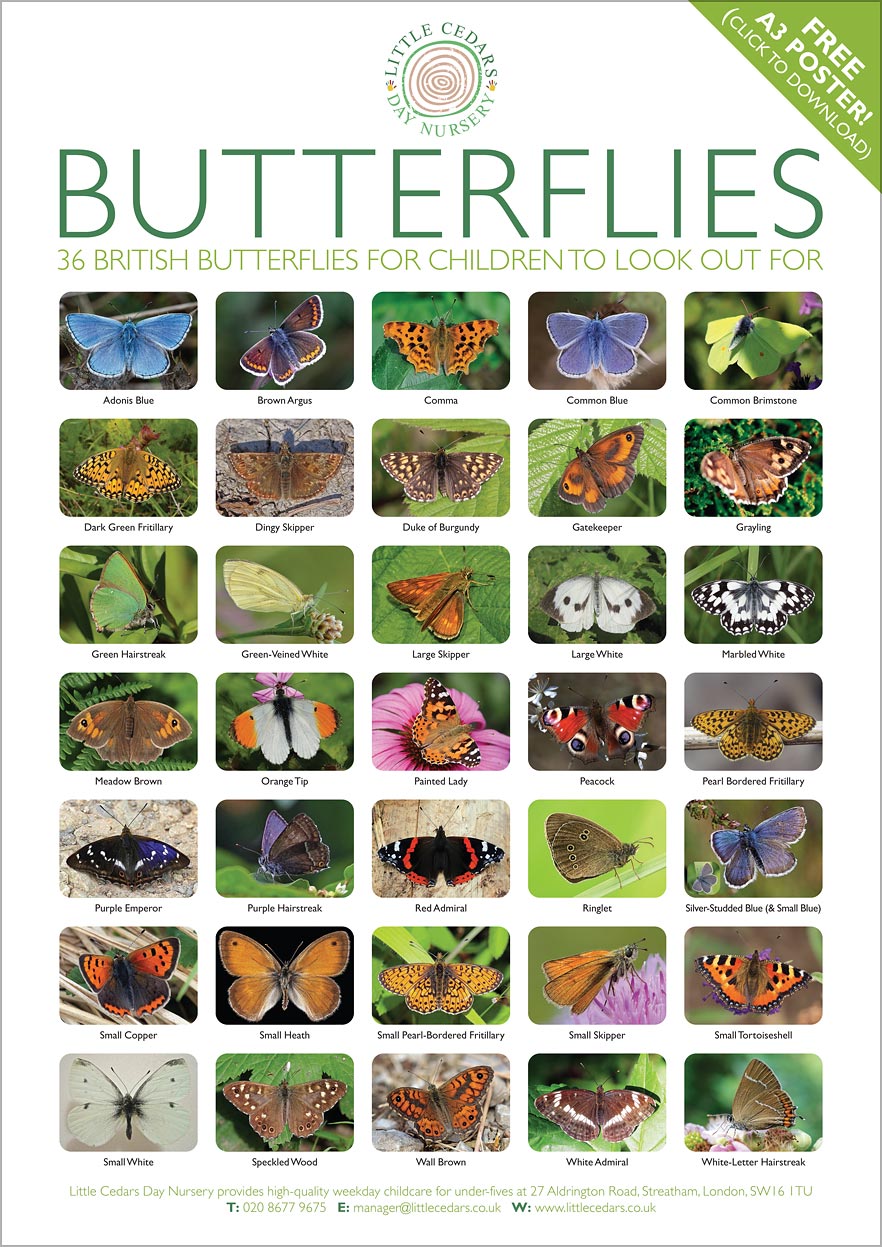
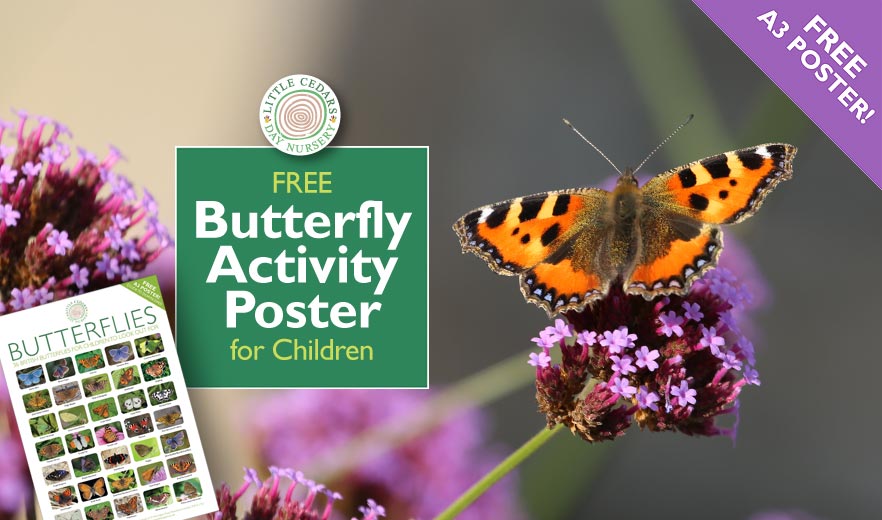
 We must also add that children should be encouraged to ‘look but don’t touch’ as butterflies are very delicate creatures. Children should not try to touch or catch them — they are best left in peace as every one of them is a little individual that simply wants to go about his or her day. They’re wonderful to watch, though, and our free poster should help children and adults identify many of the different types. Perhaps see how many different species can be spotted over the course of a year. Take photos too, and compare them with friends! Some butterflies visit gardens, floral window boxes and parks while others may only be found in wilder locations in the countryside. This activity is therefore a great excuse for families to get out and explore The Great Outdoors! Recording the date and location of each butterfly spotted will also help families work out where the best butterfly-spotting locations are for next time.
 With that in mind, why not take this activity a step further and get involved in the UK’s annual Big Butterfly Count? For 2024, it takes place between Friday the 12th of July and Sunday the 4th of August, which is when most butterflies are at their adult stage. All it takes is 15 minutes and children will love being little ‘citizen scientists’! The activity can be done in gardens, parks, school grounds or out in the countryside. Taking part will give children a real opportunity to help with butterfly conservation.
 With Universal Free Childcare, children aged 3 or 4 can receive up to 570 hours of free childcare over the course of the year.
 With Extended Free Childcare, eligible 3- and 4-year-olds can receive up to 1140 hours of free childcare per year instead of only 570.
 Some disadvantaged children aged 2 can also receive up to 570 hours of free childcare over the course of the year.
 For those that are eligible, up to £2,000 in free childcare is available each year to children aged 11 or under* through the Tax-Free Childcare scheme.
 You can sacrifice up to £55 per week of your earnings, which will be free of National Insurance and Income Tax, to fund Childcare Vouchers.
 Following the Spring Budget 2023, childcare funding through Universal Credit is to be improved with nearly 50% more generous funding becoming available from July 2023.
 Those already claiming for childcare costs via Working Tax Credits may be able to obtain up to £122.50 for one or £210.00 for more than one child each week.
 2-year-olds may be eligible for the ’15 Hours’ scheme from April 2024.
 Up to 85% of childcare costs incurred by students may be claimed, up to a maximum of £188.90 per week for 1 child or £323.85 for 2 or more (correct for academic year 2023-2024).
 Up to £160 per child is available each week for those living outside London.
 While it’s not designed to fund childcare, it can be used to do so in some circumstances.
 Spring arrives in the UK on 20th March, according to the meteorological calendar. As well as plants beginning to shoot, daffodils flowering and trees starting to bud, an increased number of wild birds can now be seen too. While a few overwintered here in England, many will have spent winter abroad, where it’s warmer, and only begin to return to the UK once spring begins. So, come springtime, more and more varieties of birds can be spotted — and that’s what today’s post is all about. To encourage children to appreciate, enjoy and learn from nature, we have put together a bird identifier poster that children and parents can download for free, print out to A3 or A4, or view on screen in beautiful high resolution. It highlights 37 species of bird that are popular in England, which children can try to spot as the days and weeks go by. Children can perhaps tick off each type of bird that they spot. With a little help from parents for the youngest children, this activity is a great way to teach them the different bird names and help them to recognise the different types as time goes by. It’s also a great children’s pastime that will encourage them to really appreciate nature. The A3 poster is free to download and share — simply click the preview image below to save or view it in Acrobat PDF format. Enlarge on screen for extra detail or simply print out as large as you can. Children will love this activity and feel a real sense of achievement as they learn more about these wonderful, feathered visitors.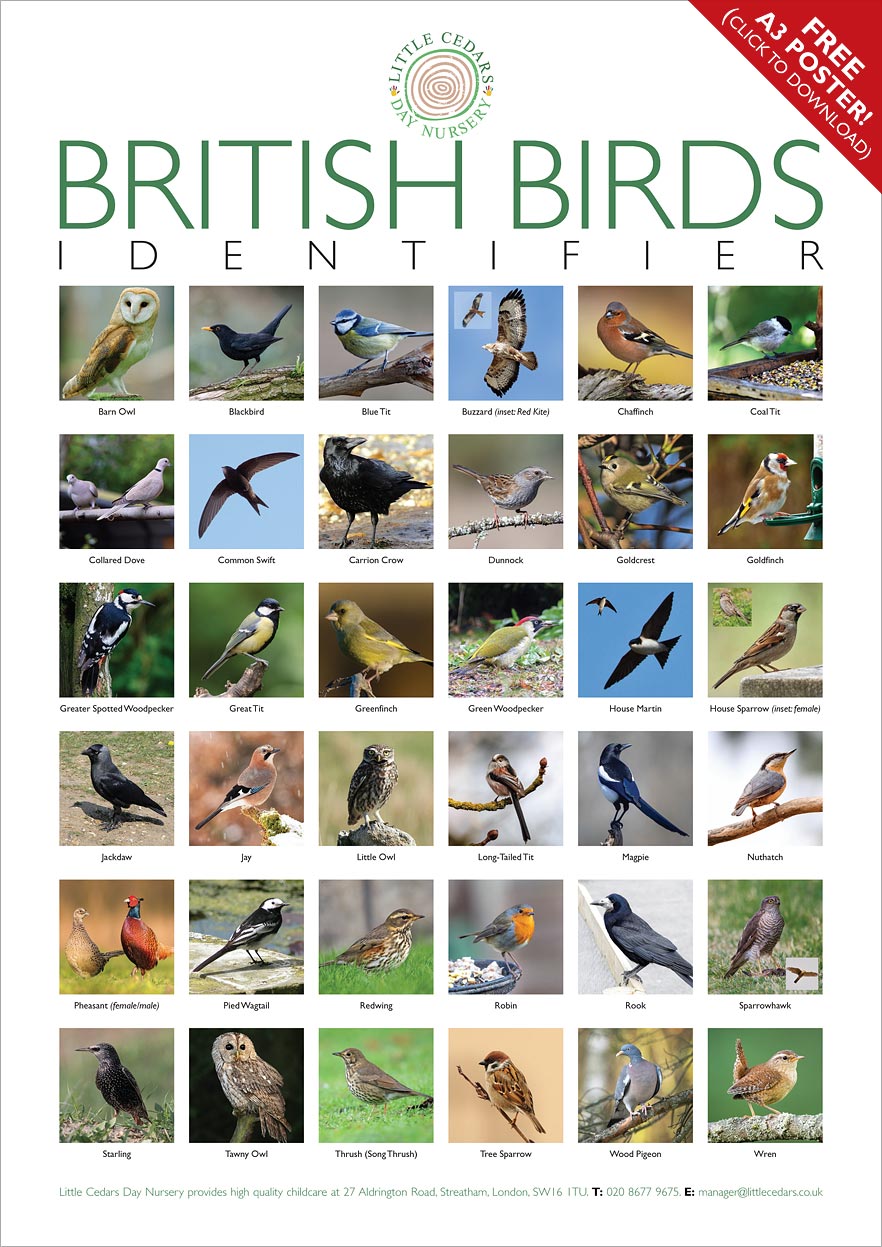
 We’ve selected our favourite birds from the hundreds of species that visit the UK each year. There was no way to fit in all of them, so we’ve picked out the most common visitors to our own gardens and nearby parks. In addition, we also added a few extra birds that would be great for children to keep a lookout for, despite a few being shy. Owls are around, for instance, coming out mostly at night. However, barn owls can be seen before dark if you know where to look (the sound of owls hooting or screeching is a dead giveaway). Buzzards, Red Kites and Sparrowhawks are more likely to be seen in the sky overhead, so we’ve shown images where their distinctive silhouettes can give their species away to the onlooker.
 March 15th 2023 saw the Chancellor of the Exchequer’s Spring Budget announcement, which included news of extra funding to cover costs for childcare. Crucially, the new funding will support childcare for infants as young as 9 months old for the first time, as well as including other positive changes. Although it’ll be introduced in stages, the free funding should be welcome news for those parents who will be eligible. Let’s take a look today at the proposed childcare changes, including which age groups will benefit, what extra funding is promised to support families and when the new help will become available. First, though, we’ll look at the main aims of the new funding.
 The ‘main event’ in the Spring Budget from the perspective of childcare provision is the significant expansion of the ‘free hours’ schemes. Previously, only
  Some struggling parents in receipt of Universal Credit childcare support, who would like to move into work or increase existing working hours, will have subsidised childcare costs paid in advance under the new proposals. This is in contrast to the existing approach where all parents had to pay for the childcare upfront and then reclaim the costs retrospectively. Funding the childcare costs in advance will make the subsidised childcare costs much easier for the lowest-income families to afford from a practical, cash-flow point of view. It will also hopefully improve the situation whereby, currently, only 13% of eligible low-income families actually claim the childcare element of Universal Credit.
 Although this website and our childcare service are geared to the early years age groups, it would be remiss of us not to include a brief overview of the enhancements that are being introduced for children of school age. These are coming in via proposed changes to what is known as ‘Wraparound Care’ as we’ll explain.