Tag Archive for: parents

Number & Counting Games for Preschoolers: Ideas for Under-5s
Early parental help can significantly boost children's understanding of numbers, counting, and maths terminology.Concepts involving numbers and counting can sometimes be tricky for some preschoolers to grasp. Making sense of such concepts is important, though, because many aspects of children’s day-to-day lives will require an increasing understanding of numbers as time passes. Whether it’s knowing if a quantity of something is more or less than something else, how much of an ingredient is required in a mixture, or what change to expect from a purchase, children will need to grasp number-based concepts — and understand their real-world applications. What’s more, they’ll need to do this sooner rather than later if they’re to thrive, not least when they leave early years settings to begin school.

Early parental help can significantly boost children’s understanding of numbers, counting, and maths terminology. One of the key ways to help preschoolers is through number and counting games. What’s more, by using games and playful challenges, learning number and counting concepts will be fun! That fun element will be a key to both success and enjoyment. Indeed, learning through play is, as we know, the very best way for young children to learn. With that said, let’s take a look at some examples of games and fun challenges that under-fives can take part in. With supervision and guidance from adults, these are a great way to boost comprehension of number-based concepts in little ones — and support the EYFS curriculum.

First Create Some Number Cards

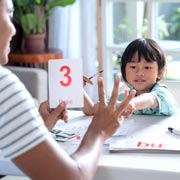
Making ‘number cards’ with your child will be a fun and useful first step.Making ‘number cards’ with your child will be a fun and useful first step. These could be as simple as small pieces of paper or card, each having a single large number written clearly on them. Alternatively, your child could take the opportunity to get more creative. For example, you and your child could make the numbers bright and colourful, have patterned in-fills, or even be made to look like animals or number ‘characters’ that have eyes. For the very young, start with numbers up to 5, or go to 10 or even 20 for older and more advanced children. Size-wise, perhaps aim for cards sized at about A6 (a quarter of an A4 sheet) or even A7 (A4 divided into 8).

Number Order Games

Once you have a set of numbered cards, first ensure your child recognises the numbers and can say their names. Then, get your child to jumble them up. They should then place each card on the table or other flat surface and try to move them back into the correct numerical order. The idea is to end up with the lowest number on the left, going in order until they have correctly placed the highest number on the right. Ask them to count them out loud, from left to right, once complete. Praising and congratulating them when they do well will encourage them but, of course, help them if they struggle at first.

Once they’ve mastered the first game, make it more challenging by asking them to reverse the numbers and, when complete, count the numbers backwards.

Getting More Advanced

When your child becomes more advanced, perhaps shake things up a bit by hiding a number and seeing if they can tell you which one is missing. Later still, you could even miss out all the odd numbers, so they have to play the game with only even numbers, then do it the other way around. Learning to count all the odd or even numbers will be another useful and practical skill as they get older.

Number ‘Dot’ Cards
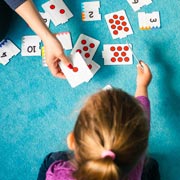
Number 'dot' cards give children a practical example of the number's meaning and help them better understand quantities.A more advanced form of the number cards could depict the correct number of dots (or other drawn objects) instead of — or as well as — the actual written number. So, for example, the ‘3’ card could show a column or row of 3 round dots or squares or even something like 3 drawn strawberries — whatever your child likes! In a way, it’s a bit like traditional playing cards where each has both a number and the right amount of hearts, diamonds, clubs or spades on it, to match the number.

The benefit of this, more advanced type of card is that children will be able to see (and count), for example, two ‘dots’ on a ‘2’ card, four on a ‘4’ card, and so on. By using this approach, children will have a visual clue and practical example of the number’s meaning and, crucially, it will allow them to recognise and better understand quantities.

Introduce Simple Addition & Subtraction

When your child is more advanced using their number cards, a gradual introduction to simple addition and subtraction concepts will come easier — particularly if they use the cards with the numbers depicted with the dots/symbols. So, when you ask them what happens when they add a 2 and a 3 together, they will be able to count (or, with practice, recognise) the quantity of symbols on both cards. Before long, they’ll grasp the underlying concepts and be able to do it in reverse (subtraction). You could also consider adding mathematical ‘symbol’ cards into the pack, for example, ‘plus’ and ‘minus’ symbol cards.

TIP:

Ensure you give your child a round of applause when they get things right in any of these games — it will give them encouragement to keep going and also give them a sense of progress and achievement. Consider awarding them a prize or sticker to celebrate their achievements.

Number Matching Games

Dominoes are a great way for children to learn about number matching.This next game will require a set of dominoes or, if you don’t have a set, they’re also easy enough to make in a similar way to the number cards. As you may know, each half of every domino has a number of dots, most commonly from 1 to 6. So, for example, there might be two dots on one end and five on the other, with the dot formations being rather like those you’d see on dice.

Whether using real dominoes or a homemade paper alternative, this game is traditionally played with 2 people. However, for the purpose of today’s game, it can be played just as well by a solo child, although under-fives will benefit most if they have some adult supervision and feedback. The idea of the game is to lay down one domino. Then, the next domino will need to be laid alongside one end of it so that the touching numbers match. So, for example, if the first domino has a 2 at one end and a 5 at the other, the second domino will need to have at least one number that matches and that should be placed so the two matching numbers touch. This is repeated so more and more dominoes are added, each time with a matching number connecting to an existing domino. Although traditionally there is a winner and a loser in dominoes, if playing solo, the idea here is simply for children to learn to easily recognise the number of dots. It’s a great way for children to be able to instinctively know whether they are looking at 1, 2, 3, 4, 5 or 6 dots — recognising the quantity and associated number will become instinctive if they practise.

Quantity Estimating Games
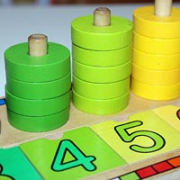
Counters can be used by children to learn maths vocabulary like more, less, taller, shorter, etc.Understanding whether a quantity of something is more or less than something else is an important concept for children to grasp. Similarly, being able to estimate a quantity is a useful and practical skill for little ones to master. Such concepts can easily be highlighted, and the skills mastered, using simple estimating games. Some examples follow.

With the help of your child, build two stacks of one kind of object (e.g. draughts counters, biscuits, drinks coasters, etc.) and ask your child to confirm which stack they think has more than the other — without actually counting. Take some away or add some and repeat the process. They’ll soon be able to confirm the answers more accurately and grasp concepts like more, less, taller, shorter, and so on. This is a simple but practical game that will exercise children’s estimating skills and improve maths vocabulary.

Once they’ve mastered simple stacks of identical components one directly on top of another, you could make the game more challenging. There are a few ways to approach this.

  • It can be achieved by making the stacks more complex, for example, in layers of different quantities — a pyramid format would be a good example.
  • Or, instead of using a stack of near-identical components, try using small piles of irregular items, e.g. vegetables or fruit. Due to the different sizes and shapes, these will be more of a challenge and will get children thinking and concentrating harder.Counting and estimating irregular-shaped items like tomatoes and fruit will be a more advanced challenge for preschoolers.

As before, perhaps take away or add more objects to one or more of the groups and ask them to estimate which has more and which has less. Also, ask them to estimate, using logic, how many components each group has. You could even take it a step further by adding piles of objects to scales. Ask your child which they think is going to be heaviest, which is lightest, and so on.

Such games and challenges are a great workout for children’s young brains and great ways to introduce new number- and quantity-based concepts to children’s worlds, all in a fun way. They will also help little ones introduce new maths terminology into their vocabulary.

The Shop Game
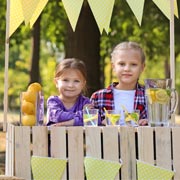
Playing shops is a great way to make counting, numbers, and even money fun!Pretending to be a shopkeeper or a shopper buying from one is a great next step for children. What’s more, they’ll naturally love playing shops having, no doubt, accompanied parents to real shops. This is where they can put all the things they’ve learned from the games above into practice. They can check they have the right quantities, weights or volumes or products, check they’re giving the shopkeeper the right amount of money, ensure that any change is correct — and so on! Playing shops is such a great way to master numbers, counting, estimating, weighing, addition, subtraction and more!

Numeracy Skills Boost Children’s Long-Term Outcomes!

We hope that today’s activity ideas, in the form of games, help your child to grasp maths terminology and number-based concepts like counting, subtracting, adding, comparing, and estimating. Learning through play is by far the best way for little ones to learn. And, by learning about the application of number concepts through games and activities, they will be able to experience real-life applications of them. It will naturally make more sense and make learning about numbers and counting child’s play!

What’s more, an early boost to numeracy skills has been proven to enhance outcomes for children even in the longer term. Studies show that the benefits of number mastery include a propensity to stay in education longer, better job prospects, and improved earning potential as adults. That’s the power of understanding numbers!

Little Cedars Nursery, Streatham

Ofsted rates Little Cedars Day Nursery as a Good ProviderLittle Cedars is a nursery & preschool offering high-quality childcare in Streatham, near Tooting, Tooting Bec, Tooting Common, Tooting Broadway, Furzedown, Balham, Norbury and Colliers Wood.At Little Cedars Nursery in Streatham, we also take every opportunity to help children learn about numbers, how they work, their significance to everyday life, and the maths vocabulary that surrounds them. It’s all an important part of the EYFS curriculum and something they’ll benefit from profoundly as they grow older – crucially too in readiness for school. If you would like to explore the possibility of your child attending this wonderful nursery and preschool in London SW16, please get in touch or simply apply for a place (see the options below). Little Cedars Nursery is officially a Good Provider and supports eligible children through various government-funded childcare schemes, including those for eligible babies from just 9 months.

As well as being perfectly located for families looking for nurseries in Streatham, Streatham Common, Streatham Park and Streatham Hill, we may also suit those seeking high-quality childcare near Tooting, Furzedown, Balham, Norbury and Colliers Wood.


Apply Now for the ‘30 Hours’ Childcare Scheme for Working Families – for Children 9 Months+

[May 2025]: Applications are now open for the final “30 hours” expansion of the Government’s free childcare scheme for working families. The new, expanded childcare hours are for eligible children, aged 9 months up to 3 years by 1st September 2025, attending nursery from that month. It doubles the previous number of hours available under the scheme, potentially saving eligible families as much as £7,500 per annum per child. The extended childcare hours will also allow parents — particularly mothers — improved potential to get back into work or take on more hours. Either would increase both household income and the greater economy. Most importantly, though, increasing access to high-quality early years childcare will give children the best start in life, enabling them with the skills and tools necessary to thrive once they leave early years settings to begin school.

Don’t delay — if your child is eligible, you can now apply for the September 2025 term but you only have until the 31st of August in which to do so. That deadline will be here before we know it, so act quickly if you want to benefit from the expanded childcare funding from September 2025.

The changes will make a “massive difference to children and working parents”— Bridget Phillipson, Education Secretary.

Here’s a snapshot:

  • Who can apply? Eligible working families with a child aged 9 months up to 3 years by September 1st 2025.
  • How many funded hours will be available? 30 hours per week over 38 weeks per year term time (1140 childcare hours over the year).*
  • When can families start to apply? From 12th May 2025 for a September ’25 term start.
  • When is the application deadline? Apply no later than 31 August 2025 if you want your child to start nursery in the September 2025 term.
  • What About Children Aged 3 and 4? 3-and-4-year-olds of eligible working families have been able to access the 30 hours of free childcare per week (1140 hours per year) since it was phased in late last year (September 2024). Previously, only half those hours had been available under the scheme for this age group.
  • Does the funding cover everything? No. The government funding does not cover additional items like extra childcare hours over the allowance or nappies, meals, and the cost of trips. Your chosen provider will be able to provide more details specific to their particular setting. To clarify for government-funded places at Little Cedars Day Nursery, meals, other consumables, and extra hours will need to be paid for separately.
  • What if we’re not a working family? If you’re not a working family that’s eligible for the new 30 hours extension, it’s worth noting that all children who live in England already qualify for 15 hours per week (570 childcare hours per annum) under their ‘Universal Entitlement’. That is a separate scheme that’s explained here, does not require parents to be working, and is not means tested.

* Some settings may allow some flexibility, for example, by spreading out the same number of annual hours over more weeks of the year. For the academic year 2025-26, Little Cedars will accommodate families in this way via a 51-week provision starting in September 2025. Click here to learn more.

This is a plan “to break the unfair link between background and opportunity across this country, which starts by ensuring our children start school ready to learn.” — Bridget Phillipson, Education Secretary.

Eligibility

The key rules around eligibility for working families state that both you and your partner if you have one must:

  • Click the link below for an overview of the 30 Hours childcare funding scheme available to eligible children, from 9 months of age, from September 2025.Work at least 16 hours or more per week at the National Minimum Wage or more;


  • Earn an adjusted net income of less than £100k per annum;
  • Have a National Insurance number.

If the above factors do not apply to you, you may still be eligible for childcare funding if you are disabled, a carer, on maternity/paternity/adoption leave, or receive certain benefits or assistance from the government. Check your eligibility more comprehensively in Step 1 below. More details and an excellent overview are also provided in an official video provided by the Department of Education (viewing time: 2½ minutes).

To-Do List

  1. First, check that your child is eligible via the Childcare Choices website.
  2. If eligible, apply for the funded childcare on the Government website by 31 August 2025 if you want your child to start in the September 2025 term. If applying for a different term, you will need to apply during the term preceding it (terms begin on the 1st of January, April and September). Once approved, you will be issued with a code that your childcare provider will require in order to access the funding.
  3. Contact your preferred childcare provider at any point to check if they have a place available for your child under the scheme. Be aware that some have waiting lists.
  4. Log into your Gov.uk childcare account every 3 months to ensure your code is kept up to date. You need to reconfirm your details and check for continued eligibility in case your circumstances have changed.

You will not be able to receive the funded childcare without a valid code!

Funded Nursery Places at Little Cedars Nursery, Streatham

Little Cedars is a nursery & preschool offering high-quality childcare in Streatham, near Tooting, Tooting Bec, Tooting Common, Tooting Broadway, Furzedown, Balham, Norbury and Colliers Wood.Ofsted rates Little Cedars Day Nursery as a Good ProviderLittle Cedars Day Nursery is a wonderful childcare setting in Streatham, close to Tooting Common, that offers a first-class service to local families and their children. The setting supports most government-funded childcare schemes and thereby provides affordable childcare for Streatham, Furzedown, Tooting and Balham families. Through the government funding schemes, free childcare is available to eligible children aged from 9 months to school age and this includes a number of places available under the extended ’30 hours’ scheme for working families. It’s the perfect way to give children the best start in life while also allowing parents, especially mothers, to rejoin the workplace after maternity leave, boost working hours if they want to, and elevate household income.

Begin your application to Little Cedars Nursery, Streatham, come for a visit with your child or send us your questions today. We can’t wait to meet you!

Little Cedars Nursery in Streatham is rated as a Good Provider of childcare and early years education by Ofsted. It may also be a convenient choice for families living nearby in Tooting, Furzedown, Balham, Norbury and Colliers Wood.

Congenital Toxoplasmosis: Information for Expectant Parents
With a new baby on the horizon, pregnancy is often a time of excitement and anticipation. However, it is often also a time for heightened awareness around health and safety matters — and rightly so. Indeed it’s instinctive to want to protect both the expectant mother and the unborn child. While many expectant parents are familiar with common pregnancy risks, one lesser-known yet serious threat is congenital toxoplasmosis. This parasitic infection can have devastating consequences for unborn babies. In today’s post, we’ll explore what congenital toxoplasmosis is, the risks it poses, and practical steps pregnant women and families with young children can take to minimise exposure.

What is Congenital Toxoplasmosis?

Toxoplasmosis is an infection that’s caused by the parasite Toxoplasma gondii. While the infection is often harmless and asymptomatic for healthy adults, it becomes particularly concerning when a pregnant woman contracts it, as the parasite can cross the placenta and infect the developing baby. This is known as congenital toxoplasmosis.

How Common is Congenital Toxoplasmosis?

According to the pregnancy and baby charity Tommy’s, approximately 350 people are infected by toxoplasmosis each year in England and Wales. So, the chances of infection during pregnancy are small. However, this article is inspired by a real-life case where such an infection occurred during pregnancy. Sadly, the adverse effects for the child were severe and permanent.

What are the Risks to Unborn Babies & Young Children?

The timing of any exposure to the Toxoplasmosis gondii parasite during pregnancy affects both the risk of transmission and the potential severity of the effects on the foetus/child. While the transmission risk is lower during early pregnancy, the possible adverse effects for the developing foetus are much more severe. Conversely, the risk of transmission to the child is higher in late pregnancy but the potential effects may be milder or appear later in their lives. Depending on the timing, therefore, the risks to the child could be anything from mild effects that appear later in life to something as severe as brain abnormalities, eye damage, or even stillbirth. Other potential effects include seizures and neurological issues, miscarriages, hearing problems, learning disabilities and more. It is therefore incredibly important for expectant families to understand how to avoid toxoplasmosis infection.

“If you get toxoplasmosis while you’re pregnant it can cause miscarriage. If it spreads to your baby it can cause serious complications.” — NHS

How Pregnant Women Can Reduce The Risk

Preventing toxoplasmosis during pregnancy is crucial. Here are key measures expectant mothers should take:

Food Safety

  • Avoid touching and/or eating raw or undercooked meat, especially lamb, pork and venison.
  • Avoid touching and/or eating cured/dried/smoked meats like salami, Parma ham etc.
  • Avoid handling and/or eating raw or undercooked oysters, clams and mussels.
  • Ensure that fruit and vegetables are thoroughly washed.
  • Avoid unpasteurised dairy products that may carry the parasite, especially those containing unpasteurised goat’s milk.
  • Wash hands, kitchen surfaces, and utensils, especially after handling uncooked meat or indeed any of the above.

Pets & Animals

  • If you are pregnant and own a cat, avoid changing the litter box yourself. If that’s not possible, ensure that you wear protective gloves while doing so and thoroughly wash your hands once you’ve finished.
  • Consider keeping pet cats indoors during pregnancy to prevent them from hunting infected rodents or birds.
  • Don’t give pet cats uncooked or undercooked meat.
  • Avoid contact with sheep, especially pregnant sheep and lambs.

Hygiene and Environmental Care

  • Always wash your hands after gardening or handling soil.
  • Wear gloves while gardening or handling sandboxes (sandpits may be contaminated with cat faeces).
  • Ensure meat is cooked to safe and sufficiently high temperatures.

Protecting Young Children from Infection

For families with toddlers and young children, it’s important to maintain hygiene practices to reduce exposure:

  • Teach children to wash hands after playing outdoors, handling pets, and before eating.
  • Cover outdoor sandpits to prevent contamination by neighbourhood cats.
  • Ensure family meals follow proper food safety guidelines.

The Cat Myth

Many who have heard of toxoplasmosis believe its cause is linked primarily to cats. While cats are a host for Toxoplasma gondii and it can be contracted through contact with their faeces, they are not the most common way people get infected. Most often, contaminated food (such as undercooked meat, unwashed vegetables, or contaminated water) is the primary source of infection. Pregnant women should therefore be cautious about handling soil, raw meat, and unpasteurised dairy — not just cats. The NHS itself says:

“You cannot catch toxoplasmosis from stroking a cat, having a cat as a pet or from coming into contact with someone who’s got it.”

Stay Vigilant

Congenital toxoplasmosis is a serious but preventable condition. If they take the proper precautions, expectant mothers and families with young children can significantly reduce their risk of infection. Awareness and education are crucial, so feel free to bookmark and share this information with loved ones to help protect future generations. Learn more about toxoplasmosis and its symptoms here.

Little Cedars Nursery, Streatham, London SW16

A high-quality childcare service for your child at Little Cedars Nursery in Streatham

Little Cedars is a nursery & preschool offering high-quality childcare in Streatham, near Tooting, Tooting Bec, Tooting Common, Tooting Broadway, Furzedown, Balham, Norbury and Colliers Wood.Ofsted rates Little Cedars Day Nursery as a Good Provider

Little Cedars Nursery is a first-class nursery and preschool in Streatham in London’s SW16 postcode. The childcare setting offers high-quality weekday childcare for babies, toddlers, and children under five and opens virtually all year round. All major childcare funding options are supported and the nursery has ‘Good Provider’ status from Ofsted.

Find out more about Little Cedars Nursery in Streatham by choosing a button below. We’re here to show you around, answer questions, and welcome your child to this wonderful Streatham nursery.

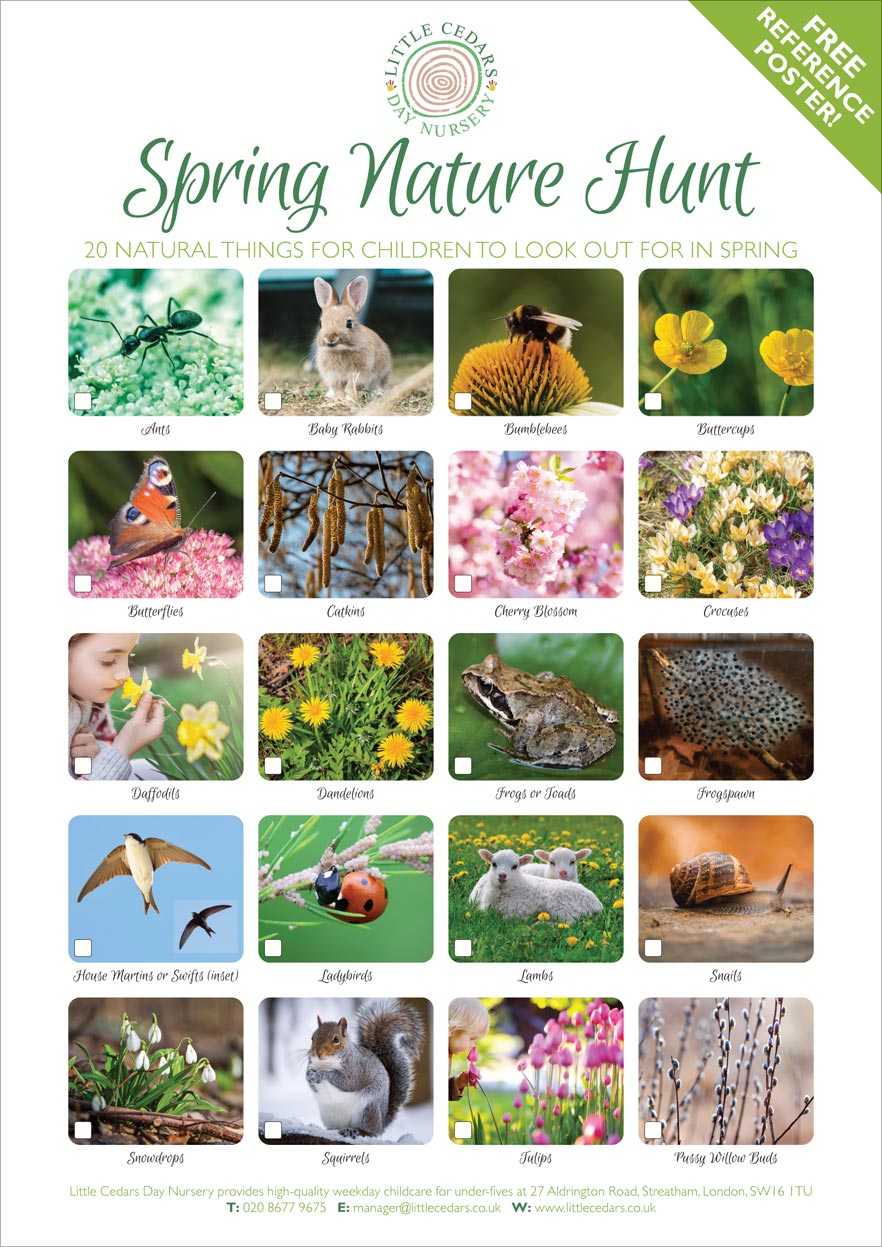
Spring Nature Hunt Activity for Children - with Free Reference Poster!

Spring arrives in March* every year and most would agree that it’s a relief to leave winter behind! All the signs are that it’s gradually beginning to get warmer. Plants and animals know this too. So, as the new season progresses, more and more of them can be seen by those who venture outdoors. From sprouting snowdrops, crocuses, and daffodils to the reappearance of bumblebees, butterflies, and migrating birds, the signs of spring are there for those who look. With that in mind, today’s post is a Spring Nature Hunt Activity for children to take part in. With it comes our nature hunt reference poster, which is part of a series that’s all free to download. Why not print it out for your children and encourage them, under supervision, to get outdoors and enjoy the spring sunshine? See how many of the 20 wonderful signs of spring they can spot! This activity will be a fun adventure that not only opens children’s eyes to the natural world but also gives them access to the profound benefits of spending time in nature. Nature is incredibly good for children and adults alike, so this is a wonderful opportunity for discovery, greater well-being, personal development and an antidote to the season we’re leaving behind. Step into spring with your little ones today and enjoy!

*When is the First Day of Spring?

There is often confusion over when, exactly, the season of spring begins. This is not surprising given that there are 2 official definitions of the first day of spring for those of us in the Northern Hemisphere:

  • Using the meteorological calendar, spring begins on the first day of March and ends on the last day of May — simple! However, most of us more commonly recognise the second definition, which we explain below.
  • Using the astronomical calendar, spring begins on the spring or ‘vernal’ equinox. That is the first day of the year in which both the day and night are of equal length, i.e. 12 hours each. The date of this event is not always the same each year as it all hinges on the position and tilt of the planet in its orbit around the sun. For 2025, the spring equinox — and therefore the first day of spring according to the astronomical calendar — begins on the 20th of March.

Your Free Spring Nature Hunt Reference Poster

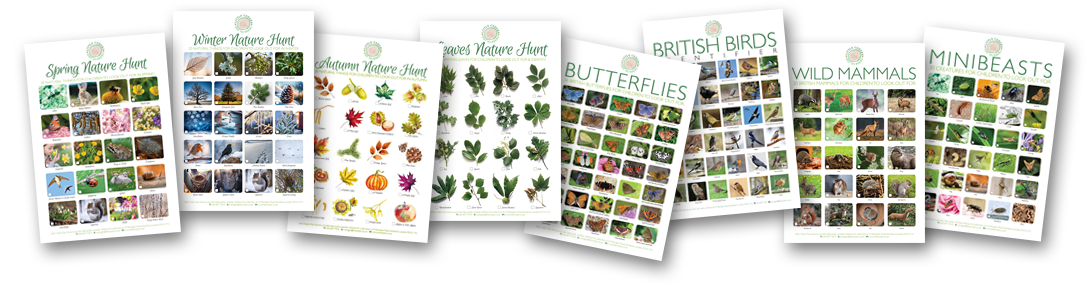
Left- or right-click the preview image below to view or download in high-resolution PDF format. We suggest printing it out in colour with the highest quality paper and settings for the best results. The PDF can be printed as large as A3 or reduced to A4 or A5 if preferred. Once printed out, perhaps allow children to take a copy as a reference on outdoor trips, or display it on their bedroom wall.

Preview of the Spring Nature Hunt activity poster - free to download.

Getting Closer to Nature at Little Cedars Nursery, Streatham

Ofsted rates Little Cedars Day Nursery as a Good ProviderLittle Cedars is a nursery & preschool offering high-quality childcare in Streatham, near Tooting, Tooting Bec, Tooting Common, Tooting Broadway, Furzedown, Balham, Norbury and Colliers Wood.Children at Little Cedars Nursery in Streatham have ample opportunities to get close to nature. Our early years practitioners ensure they have regular access to enjoy and learn from the natural world— we know how important it is for them. The nursery/preschool is located close to the natural open spaces of Tooting Common and has its own planting area for children to enjoy. There, children look after seedlings and plants and even grow their own vegetables, which they can harvest when ready. Children instinctively love being close to nature as it’s fun, adventurous, character-building and educational. What’s more, it teaches them new skills, more about the world, where food originates, and the importance of taking responsibility for other living things. These are huge life lessons that illuminate the circle of life and a little more about their place in the world.

If you have a baby, toddler, or preschool child under five, why not explore a place for them at Little Cedars Nursery — we’d love to hear from you!

Little Cedars is a wonderful nursery in Streatham, London SW16. Ofsted rates the setting as a Good Provider in all categories, so you can be sure your child will be safe, well cared for and nurtured by professionals who have their best interests in mind. As well as serving those in Streatham, Streatham Hill and Streatham Common, Little Cedars Nursery may also suit families from Tooting, Furzedown, Balham, Norbury and Colliers Wood.

Outdoor Safety For Kids

Children, especially the young, require appropriate adult supervision and vigilance at all times when playing and exploring outdoors. For more information about the safety of children outdoors, check out our Top Tips for Outdoor Safety for Kids.

World Book Day Fun for Under-Fives

World Book DayChildren of the UK, it’s time to get ready for World Book Day! Arriving in early March, it is a wonderful annual event where children across the nation get to immerse themselves in books, storytelling, and other book-inspired activities. Such activities are incredibly important for children. Did you know, for example, that children who regularly read for pleasure are happier children who also go on to have greater success in their lives? This uplift is even more significant for children from disadvantaged backgrounds. Such is the power of reading for little ones! With all this in mind, today’s article outlines more about World Book Day and why it’s so important. It also suggests some activities that children and families can take part in to celebrate this year’s event.

“World Book Day improves children’s life chances, particularly those growing up in disadvantage and inequality, by encouraging reading for pleasure.” — World Book Day® Impact Report 2024

Why World Book Day is So Important to Children

Reading with children in their early years can help boost language skills by 8 months — before they're even five!World Book Day arrives each year on the first Thursday of March. So, for 2025 it’s celebrated on the 6th of March, then in 2026 it’s on the 5th, for 2027 it’s the 4th, and so on. Organised by the charity of the same name, the core mission of World Book Day is “to promote reading for pleasure, offering every child and young person the opportunity to have a book of their own.” The reason is simple: a life-long love of reading for pleasure results in improved life chances. It’s incredibly powerful for children of all ages, as indicated in the following findings from the Organisation for Economic Co-operation & Development:

“Reading for pleasure is the single biggest indicator of a child’s future success – more than their family circumstances, their parents’ educational background or their income.”

The National Literacy Trust, BookTrust and others also came to similar conclusions:

“Evidence … shows that reading enjoyment and literacy levels are associated with educational attainment and employability skills as well as health, social, emotional and intellectual benefits.”

How to Encourage Children to Love Books

Children said that being able to choose what to read, when to read, and where to read were crucial factors to their enjoyment.The World Book Day® charity published a 17-page impact report for the event that took place in 2024. One of the key findings was that something needed to be done to stop the significant drop in children reading for pleasure. Otherwise, children would be missing out on some profound benefits. The report concluded that there had been several reasons for the downward trend. For example, 20% of children said they felt judged for what books they read. Some said that reading felt more like a chore or ‘work’ because the books were foisted upon them by adults. Just over 8% of children simply didn’t have access to any books at home. Of those that did, over a third said they had no choice over what they read.

However, after asking the children what would make reading better, the conclusion was that being able to choose what to read, when to read, and where to read were crucial factors in their enjoyment. Being given the freedom to read in other ways also played a role; for example, some wanted access to audiobooks, graphic novels, and other non-standard book types. From this, a new approach was devised and World Book Day organisers have adopted it this year. It’s called ‘Read Your Way’ and is proving to have positive results.

Employ the ‘Read Your Way’ Approach to Reading

This new theme has six key components, each helping to increase children’s enjoyment and regular uptake of reading:

  1. Read to/with children regularly;
  2. Help children find time to read;
  3. Ensure children have books at home as well as at school/nursery etc.
  4. Make reading fun for children;
  5. Ensure children get to choose which book(s) they read;
  6. Ensure children have trusted help when choosing a new book.

Books for World Book Day

In the UK, children under 18 are eligible to receive a £1 book token through the event.In the UK, children under 18 are eligible to receive a £1 book token through the event. This can be used to buy a special World Book Day title or go towards another book (more information is available here). World Book Day is therefore the perfect time to encourage children to read books – or, of course, to read in tandem with parents/carers if they’re not yet old enough to understand printed words. Greater success is likely, though, if the ‘Read Your Way’ approach, outlined above, has been employed. So, for example, by allowing a child to choose the book, when to read it, and where to read it. And they don’t have to stick only to World Book Day because every day is a great day for children to benefit from reading!

Activity Ideas for Under-Fives

While many schools and childcare settings arrange activities for children on World Book Day, families can also organise their own. Consider these fun and simple ideas to get you started:

Visit a Library or Bookshop

Many local libraries take part in World Book Day each year by organising storytelling sessions, book-themed activities, and fancy-dress fun for local families. So, perhaps check what’s on near you. A special trip to a local bookshop is also a great idea for World Book Day, especially if your child has one of the event’s book tokens and the bookstore is a scheme participant. Make it an event, let your little one pick out a book, and it can become a truly special experience for them.

Dressing Up for Story Time

Children will love dressing up as their favourite book character! It doesn’t have to be complicated — a red top for Little Red Riding Hood, a black sheet or tablecloth for Harry Potter’s robe, or a stripey t-shirt for Where’s Wally can be effective as a little one’s costume. Then, snuggle up and read their chosen book together.

Creating a Cosy Storytelling Nook

Setting up a storytelling nook with your child is a wonderful way to encourage regular reading.A storytelling nook or corner is also a wonderful addition to a child’s home. Part of the fun is setting them up with your child, so they’re cosy and comfortable. Cushions, warm rugs, and child-safe LED candles give a bit of atmosphere and perhaps blankets can be stretched over a frame or furniture to create a snug teepee or den. Once complete, you and your child have somewhere welcoming and comfortable to read stories together. Follow the bold link to learn more about this magical idea.

Interactive Storytelling

Make books come to life with silly voices, props, and actions. These give stories a realistic slant as well as making them interactive — and great fun! For example, whispers can add suspense, scary voices can add tension, and well-placed silly voices can add a bit of humour!  Perhaps go a step further and act out scenes with your child after reading sessions.

Sensory Play Inspired by Books

Stories can also be brought to life with hands-on sensory activities. For example, the book The Very Hungry Caterpillar could inspire a home fruit-tasting session! Let your child try different fruits and talk about their colours, textures, and flavours. Harry Potter books or Room on the Broom could inspire playful potion-making. Children could mix coloured water, glitter, leaves and all sorts of (safe) things for a magical potion play session!

Book-Themed Arts & Crafts

Books and stories can really inspire children’s creativity. So, why not harness that instinct and get them busy with some book-inspired crafts? Some easy creative ideas include making a DIY bookmark with stickers and drawings, creating a simple puppet of a story character, designing and decorating a mini picture book together, or even creating stories together that the children can illustrate.

Get Siblings Involved

If your child has older siblings, they can read aloud to their younger brother or sister, act out a story together, or even write their own book. Encouraging them to share their love of reading encourages little ones and makes the day even more special.

These are just a few ideas for families celebrating World Book Day. Be sure to check out the family activity ideas on the World Book Day website for even more ideas.

World Book Day is a fantastic way to introduce children to the joy of books, but why stop there? Reading with children is incredibly beneficial to them, so keep the reading fun going all year by making stories a daily part of playtime and bedtime. Happy World Book Day!

Little Cedars Day Nursery, Streatham

Ofsted rates Little Cedars Day Nursery as a Good ProviderLittle Cedars is a nursery & preschool offering high-quality childcare in Streatham, near Tooting, Tooting Bec, Tooting Common, Tooting Broadway, Furzedown, Balham, Norbury and Colliers Wood.Today’s article was brought to you by the team at Little Cedars Nursery in Streatham. This wonderful nursery and preschool in London SW16 provides high-quality weekday childcare virtually all year round. It is rated as a Good Provider by Ofsted and supports funded childcare for eligible children under five including babies from just 9 months. Being located in Streatham, close to Tooting Common, means it may also be a convenient choice for families in Tooting, Furzedown, Balham, Norbury and Colliers Wood.

Get in touch today to explore a possible nursery place for your baby or child under five — we’d love to hear from you and would be happy to show you around on a guided visit with your child:

Food Safety & Hygiene Around Children — a Guide for Parents

Today's post outlines various ways in which parents can stay on top of hygiene and safety around the preparation of food.With all the food and feasting associated with Christmas, it got us thinking about food hygiene and safety for children. Aside from keeping alert to possible allergens, parents need to be careful to ensure families remain safe from illnesses caused by food hygiene mishaps. After all, such illnesses can be particularly dangerous to little ones, who are fragile, but can be largely avoidable when good hygiene measures are taken. With that in mind, today’s post outlines various ways in which parents can stay on top of hygiene around the preparation of food for their children. And, of course, such measures will keep adults safer too.

A Clean Environment for Food Preparation

Ensure the food preparation environment is clean and hygienic to reduce the chance of microbes contaminating food.Ensuring the food preparation environment is clean and hygienic will reduce the chance of microbes, including germs and viruses, contaminating food. Wiping down with warm, soapy, water on clean dish cloths is ideal for many such tasks. Anti-bacterial sprays are useful but should not be allowed to contaminate food, plates and cutlery etc. directly or indirectly.


  • Keep kitchen worktops, sinks, cupboard doors, drawer handles and door knobs clean and hygienic.
  • Remember to do likewise for electronic appliance doors, handles, knobs, and buttons. For example, on fridges, freezers, microwaves, air fryers, ovens, and hobs.
  • Utensils also need to be clean and hygienic before being used for food preparation.
  • Cutlery, plates, food bowls, and serving bowls/utensils also need to be spotlessly clean before food is served on them.
  • Tea towels, hand towels and dish cloths should be regularly laundered in hot water to prevent them being contaminated or becoming breeding grounds for bacteria.
  • Do not let pets, e.g. cats, access worktops etc. where food is prepared.

Good Personal Hygiene

Always wash hands and fingers well before handling food - and teach children to do so too.

Those preparing food, whether they are parents, relatives, or children helping, also need to ensure good hygiene protocols are followed.

  • Wash hands and fingers thoroughly using warm soapy water, rinse well and dry using a clean towel or equivalent before preparing food.
  • Ensure long hair is tied back for both personal safety and food hygiene reasons.
  • Food should not be prepared by anyone who is feeling ill or who has any kind of bug.
  • Avoid coughing or sneezing near food.
  • Avoid smoking near food preparation and eating areas; it’s not good for children – or adults.

Safety & Hygiene Around Food Preparation

In regard to food safety, some key basics are essential to get right.

  • It's best to use eggs stamped with the Red Lion (British Lion Mark).Only feed children, especially babies and under-fives, age-appropriate food/meals. This is very important because many foods contain too much salt, sugar and saturated fats for young children. Some other foods can contain dangerous levels of toxins or even heavy metals. Learn more on the NHS website.
  • Feed children a healthy, balanced diet with appropriate portion sizes.
  • Only use food, that’s been stored correctly, within its ‘use by’ or ‘best before’ dates.
  • Read food packaging to ensure you are not using anything containing known allergens that affect your child, or any ingredients they’re intolerant to.
  • Prepare food according to instructions on food packets, for example, in regard to cooking times, cooking temperatures and, if appropriate, defrosting times.
  • Ensure frozen food is thoroughly defrosted before cooking.
  • Always ensure cooked food is fully cooked, including on the inside, before serving.
  • Before serving, test the food’s temperature to ensure it’s not too hot for your child. This is especially important for food that is microwaved as it may not cook evenly without stirring/mixing and can also continue cooking once removed from the appliance.

The safe handling and preparation of food itself is also crucial. There are some specifics to be aware of:

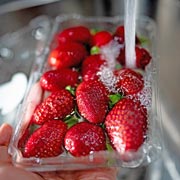
  • Always thoroughly wash vegetables, fruit and salads before use.Always thoroughly wash vegetables, fruit and salads and, when appropriate, peel vegetables before use.
  • Rice is a special case to be wary of (see next section for more details).
  • Never feed eggs to children under 6 months.
  • For children over 6 months of age, it’s best to source chicken eggs stamped with the Red Lion (British Lion Mark), particularly if they’re to be only lightly cooked or used raw, for example, in mayonnaise.
  • All other types of egg must be thoroughly cooked, so that both yolk and egg white are firm and opaque, before serving to children.
  • Always ensure fish, shellfish, prawns, and other seafood is cooked thoroughly.

Safety Around Food Storage

  • Ensure your fridge is set to the right temperature and that its door remains fully closed when not being accessed.
  • Keep it clean and clear up any spillages right away if they occur.
  • Keep foods like meat, fish, and seafood in the fridge until needed (discard if past their ‘use by’ date).
  • Raw meat, fish and seafoods should be separated, stowed in individual containers with covers, and stored away from other foods on the bottom shelf of the fridge. By doing so, it will avoid the likelihood of them dripping onto other foods.
  • Never be tempted to put pre-cooked food in the fridge or freezer while it is still warm, especially near meat and seafood products.
  • Instead, ensure they are rapidly cooled before placing into the fridge/freezer (e.g. by placing in a sealed Tupperware-type container and running under the cold tap).
  • Meat and fish/seafood should be rapidly cooled within 1 to 2 hours maximum before placing in the fridge or freezer once fully cold.
  • Rice is a special case and must be rapidly cooled within one hour before placing in the fridge. This is so as to avoid the build-up of toxins that are particular to rice.
  • For the same reason, rice should only ever be reheated a maximum of once and then only eaten if consumed within 24 hours of being originally cooked.
  • Frozen food is best labelled and dated to better ensure that it is consumed within an appropriate time.

Teach Your Child About Food Safety & Hygiene

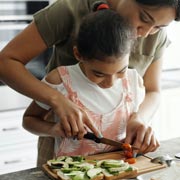
It's hugely beneficial if children are taught about safety and hygiene associated with food preparation.It’s hugely beneficial if children learn about food safety and proper hygiene associated with its preparation. Such things are useful life lessons and will help to keep them more safe and free of illnesses and nasty bugs. Teach them by example whenever possible. A great start is to encourage them to thoroughly wash their hands and fingers with warm, soapy water before preparing or eating food. They should also be encouraged to sit down at the table and be in a calm state before eating. This will help to better ensure food does not become contaminated or knocked onto a dirty floor. It will also reduce the chance of the child choking on food.


Food is one of life’s great pleasures and ensuring good hygiene around its preparation will help to keep it that way. Teaching children good hygiene habits will not only help to keep them safe and well, but will also encourage independence and the development of responsibility. Such things are key skills they’ll need as they grow older, particularly when they start school.

Healthy Eating at Little Cedars Nursery, SW16

Little Cedars is a nursery & preschool offering high-quality childcare in Streatham, near Tooting, Tooting Bec, Tooting Common, Tooting Broadway, Furzedown, Balham, Norbury and Colliers Wood.Ofsted rates Little Cedars Day Nursery as a Good Provider

At Little Cedars Nursery in Streatham, we recognise how important good food and high-quality meals are to children under five. When it’s right, it boosts cognitive function and energy levels, ensures they receive good nutrition as they grow, and boosts their overall well-being. We therefore employ our own in-house chef who prepares fresh, balanced meals for children every day. The menu is varied, accounts for special diets, and uses only the most fresh, high-quality ingredients. Click the following bold link for our guide to healthy eating for under-fives.

A Nursery Place for Your Child in Streatham

To learn more about Little Cedars Nursery in Streatham and explore a possible place for your child, please get in touch:

Safety Notice

PLEASE NOTE: These are starter guidelines only — parents/guardians should do their own comprehensive risk assessments. Children should only help to prepare food under close adult supervision. Ensure they keep safe from sharp implements like knives and heat sources like stoves, ovens, and even hot food. There are also other potentially harmful things in kitchens such as chillies, which could get into their eyes if handled inappropriately, and harmful chemicals in things like dishwasher tablets. So, check thoroughly, supervise children, and be alert. In case of an emergency, call 999 to seek urgent medical attention.


The Magic of a Storytelling Nook for Under-5s

A storytelling nook at home is something that children, particularly under-fives, will find magical. It’ll particularly come into its own once winter arrives, being somewhere warm and cosy that children can nestle with a parent, carer, or older sibling. There, they can enjoy high-quality shared moments together. In a corner dedicated to the task, an adult and child can read and share stories, steer clear of inclement weather, and escape on an unlimited number of imaginary adventures. Through the power of the written or spoken word, children’s imaginations can be taken to a myriad of destinations, situations and climes. Sharing stories in such a way will be a truly precious part of their childhood, particularly if undertaken regularly. What’s more, reading with children is proven to benefit little ones enormously. With all this in mind, today’s post outlines how to set up a storytelling nook at home and make it successful for your child.

Set Up a Storytelling Nook for Success

Any successful storytelling nook needs to be warm, cosy, quiet and comfortable.Any successful storytelling nook needs to be warm, cosy, quiet and comfortable. That means choosing a corner or recess of some kind in the home that’s away from distractions like TVs and game consoles. Somewhere that’s not used as a thoroughfare by other family members will also help. Wherever you choose, it also needs to be warm. Therefore, somewhere away from draughts is required, so avoid being too close to entrances and exits to the outside. A corner of a quiet room or a tranquil alcove are therefore often ideal spots for your child’s storytelling nook.

To make it more cosy and comfortable, add soft, padded cushions or beanbags. Blankets will make it even more comfy and allow children to wrap themselves up in readiness for each storytelling or reading session. You can take it further by adding magical fairy lights, perhaps adorning a teepee or mini indoor tent in which to ‘nest’. Children will absolutely love the cosy and safe feel of such an area. Indeed, it’s very Hygge, as the Danish would say (a “cosy, contented mood evoked by comfort and conviviality”). By taking such steps in the set-up of a storytelling and reading nook, children will naturally be drawn to spend time there. The real bonus is that it will further encourage them to spend time reading with parents, which is beneficial to them in a myriad of ways.

Theme Your Storytelling Nook – for Extra Engagement!

You/your child can even theme the storytelling nook. For example,

  • In Autumn your child could collect dried leaves and attach them to the play tent or stick them to the edge of a nearby bookshelf.
  • In winter, they could cut out home-made snowflake art, or characters like snowmen to decorate their nook.
  • At Christmas, they could create cut-out Santas, stars, holly leaf paintings and suchlike to cut out and adorn the teepee entrance.
  • Alternative themes might include soft animal toys, teddies, farm animals, their favourite cuddly toy, and so on.

The various storytelling nook themes can be taken a step further by combining them with storytelling topics that are thematically matched. To illustrate the point, the children’s book “The Snowman” by Raymond Briggs would be an ideal match when the nook is decorated with a winter or Christmas theme.

Regular theme updates will give more life and longevity to your child’s storytelling nook; it’ll make it more inviting, engaging and, in a word, successful. Theming, along with the aforementioned measures to make it comfy and cosy, attracts children and ensures they are drawn to the storytelling area. In turn, this helps encourage children to garner a love of reading and creative stories. Such things are both magical and immensely beneficial to them, so putting effort into a storytelling nook will be a hugely worthwhile undertaking.

Captivate Your Child Through Expressive Storytelling

Being animated and expressive really brings a story to life.Whether reading from a book or creating a new story off the top of one’s head, there’s something that really brings a story to life — being animated and expressive during storytelling, rather like actors might do. That’s true whether it’s the adult or the child telling the story.

Examples of how to add extra expression and dynamics to a story include:

  • Adding theatrics like hand movements and facial expressions to the storytelling;
  • Using props — like a hand puppet or soft toy to bring life to a character or situation in the story;
  • Using different voices for different characters in the story;
  • Using varying tones and volumes as appropriate to the storyline — whispering here creates suspense, bellowing there creates drama, and so on;

Such facets give life to characters, make storylines seem more real, and create a much more immersive experience for a child.

Encourage Your Child to Join In

Encouraging children to join in with certain parts of the storytelling also makes it more immersive — and fun! For example, allow them to exclaim ‘Yes!’, ‘No!’, ‘Ooh!’, and ‘Ahh!’, when appropriate to the storyline, to ask questions, and add in their own ideas for how the story can unfold. Not only do such activities bring things to life, but they also draw children into the story and encourage them to exercise their imaginations, get creative, and even problem-solve. Such skills can often lead to great strides in creativity, critical thinking, and ultimately even to careers in creative, theatrical, scientific, or technical fields.

Storytelling Nooks – a Wonderful Addition for Any Family

Storytelling nooks open up whole new worlds to children and are a wonderful antidote to electronic screens, gloomy weather, and shorter daylight hours over winter.Do consider adding a storytelling nook or reading corner to your child’s home. They’re great vehicles for escapism, are incredibly worthwhile, and offer potentially magical experiences for your child. And, if you go the extra mile to make them cosy, immersive and special, they will encourage your child to love reading and creating new adventures using their imagination. Storytelling nooks and reading corners can open up whole new worlds to your child and be a wonderful antidote to electronic screens, gloomy weather, and more limited daylight during winter months. What’s more, they’re a great way for all parties to grow deeper bonds through shared periods of exquisitely immersive, high-quality time.


Little Cedars Nursery, Streatham

Ofsted rates Little Cedars Day Nursery as a Good ProviderLittle Cedars is a nursery & preschool offering high-quality childcare in Streatham, near Tooting, Tooting Bec, Tooting Common, Tooting Broadway, Furzedown, Balham, Norbury and Colliers Wood.At Little Cedars Day Nursery in Streatham, we nurture every aspect of children’s reading, language, vocabulary, creativity, self-expression and so much more. Guided reading, two-way interactive feedback and creative storytelling are just some of the ways we approach this. We know just how important reading with children is and how much it benefits them — it’s potentially transformative! As such, we encourage parents to read with their children too. What better way to do so than in a magical storytelling nook? There, both parent and child can get comfy, totally immerse themselves in the story, and take themselves on adventures to incredible places and situations.

Little Cedars Nursery is located in Streatham, close to Streatham Common, Streatham Hill, Streatham Park, Tooting Common, Tooting, Tooting Broadway, Furzedown, Balham, Norbury and Colliers Wood. If you would like to consider a place there for your child, please get started today:

Apply for a Place Arrange a Visit Message Us 020 8677 9675

Quotations That Will Inspire Every Parent

From time to time, we discover quotations that inspire us and would, indeed, inspire any parent. They’re quotes by anyone from scientists and world leaders to celebrities, parents, and occasionally unknown authors. Often, the quotations are quite profound. They stop us in our tracks and really make us think — about childhood, growing up, how we educate and nurture young minds, and everything that goes into parenting. Today we publish below a collection of our favourites. Enjoy!

Inspirational Quotations for Parents:

Some of the inspiring quotes for parents.

Healthy Snack Ideas for Toddlers

The NHS recommends that, from the age of 1, parents can introduce toddlers to 2 healthy snacks per day, given between meals.The NHS recommends that, from the age of 12 months, parents can introduce little ones to 2 healthy snacks per day between meals. Toddlers have small stomachs, so they need snacks to maintain energy and nutrient levels. However, what kind of snacks can parents give to their toddlers? Sometimes, it can be hard to come up with something that’s enjoyable as well as being nutritious and healthy. With that in mind, today’s article is designed to inspire parents with some quick, easy, and healthy snack ideas to give toddlers at snack time.

Quick, Easy, Healthy Snack Ideas for Toddlers

Pre-plan for giving toddlers 2 snacks per day. Here are just a few suggestions that are simple, nutritious, quick and easy to prepare, and healthy for toddlers.

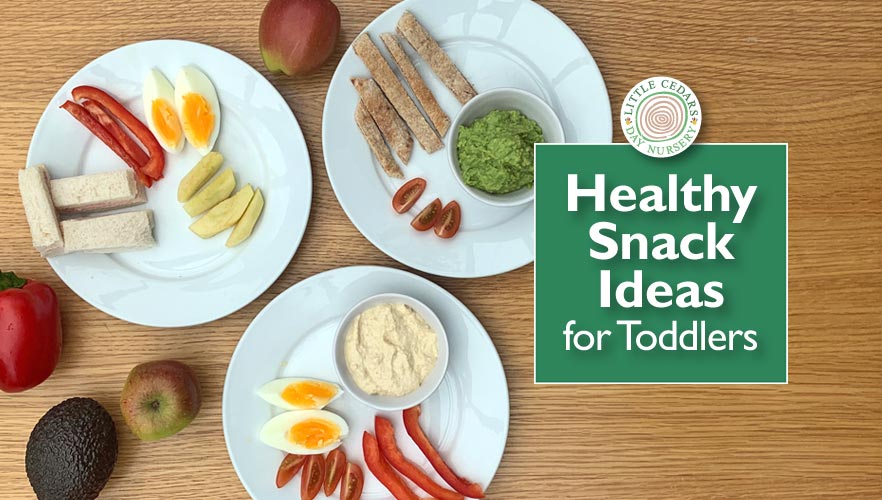
  • Fruit and vegetable sticks are great as healthy snacks for toddlers.Try small, finger-sized watermelon sticks; they’re delicious, nutritious and refreshing for your little one.

  • Try making a fruit cocktail for your toddler. It can, for example, contain chopped banana, apple, strawberry, peeled peaches and pears, and grapes (all suitably diced to avoid being a choking hazard). Use fresh or tinned fruit. If using tinned, ensure it’s in juice, not syrup.
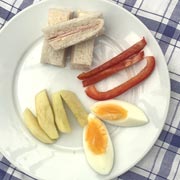
  • Vegetable sticks are a great choice as they’re easy for toddlers to hold and are healthy and nutritious. Houmous dip, sliced egg, pepper fingers and tomato, suitably diced.Consider using soft-cooked carrots, peppers, or cauliflower in finger-sized stick form, or even broccoli florets. Cucumber sticks are also an option but don’t require soft-cooking.
  • Fruit and vegetable sticks are also great with houmous dip, perhaps also served with suitably sized slices of pitta bread.
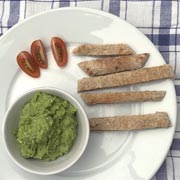
  • Pitta slices and vegetable sticks are also great with mashed avocado. A touch of honey can be used to sweeten the avocado if required, but ensure it’s never given to babies/those under the age of 12 months — it can produce harmful toxins in infants’ intestines due to a reaction to the bacteria it contains.Pitta slices, a mashed avocado dip, and diced tomatoes.
  • Another great snack is cheese sticks or small pieces of diced cheese (sized so as not to be a choking hazard). Perhaps combine them with healthy crackers, pitta bread, or chapati (each also suitably and safely sized, of course)
  • Mini sandwiches, cut either into small fingers or tiny cubes, are also a great choice for a healthy snack. Fill with healthy fillings like houmous, lean ham, mashed avocado, grated cheese, or perhaps cream cheese.
  • Cream cheese can also be used as a dip or spread in snacks made with rice cakes or finger-sized slices of English muffins. If serving fresh at home, the muffins could even be slightly warmed or lightly toasted — delicious! (N.B. Test the heat level for suitability before serving, of course).
  • Sliced hard-boiled egg, apple and pepper fingers, and finger-shaped sandwiches.Another firm favourite with toddlers is a hard-boiled egg sliced into holdable fingers. Such slices are rich in protein, vitamins, and minerals.

  • Pasteurised, unsweetened, plain yoghurt is great, especially if combined with fruit pieces that have been suitably diced.
  • Home-made smoothies are also a wonderful snack choice that can also be made from yoghurt (again pasteurised, unsweetened and unflavoured) or pasteurised milk that’s been blended with fruit like bananas, strawberries, raspberries or even mango. Delicious!

The snacks should be given in between meals, to keep children from being hungry. However, it’s important not to give children snacks too close to mealtimes, otherwise it is likely to limit what they eat for their proper meals.

Tips For Snack Success

  • Make the snacks look appealing as this will have a greater chance of being consumed by your child. Combining colours, textures, and shapes may help, as may some tasty, healthy dips.
  • Space snacks out so that they fill hunger gaps midway between meals.
  • Try to give your toddler snacks at the same time each day so that they and their stomachs get used to the pattern.

Portion Sizes

Snacks should contribute towards the four key food groups that children need each day as part of a balanced diet (starchy foods, fruit and vegetables, dairy, and protein). Portion sizes are important when serving meals and snacks, especially under the age of five. However, as children grow, so can portion sizes. However, how big is a portion?

  • For starchy foods like rice, beans and potatoes, a child’s portion is the amount that would fit into the child’s cupped hand.
  • For proteins like fish and meat, the child’s hand also offers a useful guide; a portion is about the size of their palm.
  • For fruit and cereal, the child’s hand again offers a useful guide; a portion is about the size of their fist.
  • For vegetables, it’s similar to starchy foods in that a portion is about the size of the little one’s cupped hand. However, when children are still hungry after main meals, they can fill up a bit more using vegetables because it’s not necessary to limit the intake of those (unlike the other food groups) — and they’re particularly healthy.

More information about healthy eating for under-fives can be found here.

Little Cedars Day Nursery, Streatham

Your High-Quality Childcare Provider in London SW16

Little Cedars is a nursery & preschool offering high-quality childcare in Streatham, near Tooting, Tooting Bec, Tooting Common, Tooting Broadway, Furzedown, Balham, Norbury and Colliers Wood.Ofsted rates Little Cedars Day Nursery as a Good Provider

At Little Cedars Day Nursery in Streatham we do, of course, also supply healthy snacks for children, as appropriate, with one given mid-morning and another mid-afternoon. These are healthy snacks, prepared in-house by our chef using fresh, high-quality ingredients as part of the setting’s healthy eating regime.

If you are looking for a high-quality nursery or preschool for your child in Streatham or close to Furzedown, Tooting, Norbury, Balham, or Colliers Wood, do consider Little Cedars. Ofsted rates the setting as a Good Provider and many of the Government’s free childcare schemes are supported, making childcare more affordable for eligible families.

Register your child for a nursery place, book a guided visit with your child, or find out more today:

Safety Notice

Only feed children age-appropriate food. Please ensure that you do your own research. This article is intended for parents of toddlers aged at least 12 months. It is supplied in good faith but does not constitute professional advice. Seek the help of a professional if you are at all concerned about your child’s diet, health and well-being. Always read the labels and be mindful of possible allergens, choking hazards, and other dangers such as heat sources when preparing food for and around children.

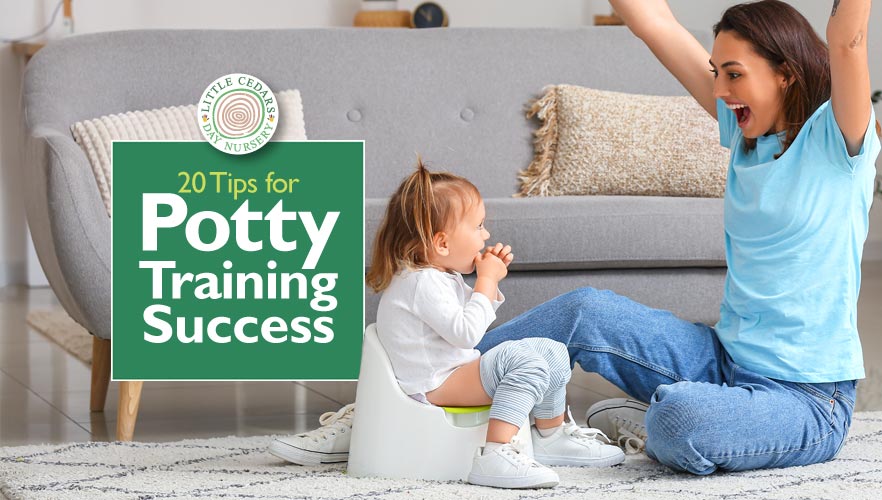
20 Tips for Potty Training Success: How to Fast-Track Toileting in Under-5s

While some toddlers take to it like a duck to water, potty training can be quite daunting for others. It’s a task that can sometimes be the source of considerable upset for little ones which, in turn, can be stressful for parents. However, with the right tools and some useful tips from experts and those who have already gone through the process, potty training can be plain sailing. With that in mind, today’s guide gathers together 20 top tips for successfully fast-tracking potty training — take a look!

Before we begin on the tips, though, let’s see what we should be expecting from our little ones:

When Should We Expect Children to Master Potty Training?

There is no hard and fast rule about the age by which little ones should have mastered the use of the potty.Children are all different. They learn and develop at different rates to each other and that applies to potty training success too. Circumstances in each family are different too, and this will also have an effect. In other words, there is no hard and fast rule about the age by which little ones should have mastered the use of the potty. Parents should therefore not worry if their child is slower to master toileting than their siblings or peers. That said, some very rough guidelines will always be useful to parents and these follow.

During the daytime, some tots will manage to stay mostly dry by the age of two to three, with most achieving it completely by the age of four. It’s a huge milestone when it finally happens!

During the night, most are also dry overnight by the age of six, although generally, infants will no longer poop at night even earlier — around the age of 12 months. That said, some children continue to wet the bed at night well beyond the age of 5 or 6. This can be for a variety of reasons, for example, simply because they sleep so deeply. They should never be told off about such incidents and minimal fuss should be made (they are, after all, accidents). The good news is that children are likely to grow out of bed-wetting anyway. We may follow up at a later date to write about measures families can take to minimise the likelihood of bed-wetting incidents for children over five.

20 Top Tips for Potty Training Success

Now we’ve outlined the key background information, it’s time for our 20 tips for potty training success.

  1. A good time to start your child on potty training is when they have shown that they’re aware of what’s in their nappy. Clues include looking in the nappy during a change, showing discomfort when in need of a change, or showing an awareness that they’re actually going to the loo.
  2. Beginning potty training during the warmer months of the year is also another top tip. That way, children will be wearing less clothes and what clothes they are wearing will be easier to dry on the washing line.
  3. Teach little ones all the appropriate words around the topic of potty training and toileting. By empowering them to use such language, they’re much better placed to ask to go to the loo in good time.
  4. Try rewarding your child for successful use of the potty. The promise of a treat for a successful ‘number two’ can often be all that’s needed to convince a reticent child to attempt it on the potty. Colourful reward stickers and a toileting chart celebrating successes also encourage children.
  5. When a number one or two are each achieved, especially early on in their potty training, celebrate and congratulate your child — these are huge milestones! Giving them praise will encourage them to build on their success.
  6. There are lots of different types of potty and toileting accessories on the market.Allowing your toddler to help choose their potty can automatically make it less daunting and instead more of a ‘friendly’ thing to have in their life.

  7. Potties and toileting accessories that feature your child’s favourite characters, for example, dinosaurs, unicorns, or TV characters, will also make them much more friendly and even fun to the little one.
  8. Indeed, choosing the ‘right’ potty and toileting accessories is important on many levels. There are many different kinds to choose from, each suitable for different circumstances and preferences, including:
    Portable potties for when you’re out and about (some even come in a travel case format with wheels).
    Training seats that attach to an adult toilet.
    Musical potties that activate a song when they’ve sensed a successful use; these are great for children to sing along to and doing so will encourage them.
    A set of suitable steps will also help little ones get themselves to the right height once they’ve progressed from a potty to a toilet. These are also useful for reaching adult-level sinks to wash their hands.
  9. Encouraging children to 'teach' dolls and teddy bears to use the potty will help normalise it.Children can also be encouraged by having their own toy potties. They, and parents, can ‘train’ teddies and dolls to use these during play. Doing so will help them be both relaxed and more educated about potty training — even proactive.

  10. Parents can also source potty training-themed books, stories, songs, YouTube videos and even games that will help children engage in the potty-training process whilst also making it fun.
  11. When potty training first begins, it’s a great idea to encourage your toddler to visit the potty at initially short, regular intervals. This could be every 30 minutes at the start but can be gradually extended to longer intervals once the child is showing signs of success.
  12. Ensure your child tries to use the potty immediately before bedtime, of course, and when they wake up from any period of sleep (day or night). It’s also a good idea to encourage them to use it after meals.
  13. When progressing away from using nappies, the use of ‘pull-ups’ is a good tool for the transition. Pull-ups are midway between a nappy and traditional underwear and, as such, will both protect and get children used to not wearing nappies.
  14. When starting potty training, picking a quiet time will help children focus, so they do not get distracted or put off.
  15. Setting a toileting schedule that doesn’t conflict with other items in your child’s routine will also help. Sticking to such a schedule will get little ones used to using the potty — and indeed they’ll expect to do so.
  16. Don't forget to make potty training fun!Don’t forget to make potty training fun! Many of these tips will help towards that, including the rewards idea (#4), praise (#5), characters on potties (#7), toileting-themed music (#8), and so on.

  17. Normalise the whole process. The last thing potty training needs to be perceived as is a ‘problem’, so making it just a normal part of everyday life is essential to success.
  18. Let them know that their friends or peers are also potty training (or trained). Ensure children know that you also went through the process of potty training, as did older siblings, friends, and relatives. In this way, they won’t be made to feel ‘different’ or that something is ‘wrong’.
  19. Keep calm in front of your child even if they begin to get stressed during potty training or toileting. Don’t let them hear anything negative about potty training, including any accidents, which will happen however swimmingly the training goes.
  20. Remember that part of potty training is also teaching your child good hygiene practices including the need to always wash hands after use of the potty or toilet. They need to understand that this is essential for their health,Mastering the potty and toilet will boost children's independence and self-confidence. household cleanliness, and for their independence.

With successful potty training comes an easier home life for parents, improved cleanliness and hygiene for children and, with no nappies to buy, less household expense. Mastering potties and later the toilet will also be a huge boost to children’s independence and self-confidence; both being hugely important at nursery/preschool and, in particular, when they begin school.

Our Nursery in Streatham, London SW16

Little Cedars Nursery: High-Quality Childcare Services in Streatham

Little Cedars is a nursery & preschool offering high-quality childcare in Streatham, near Tooting, Tooting Bec, Tooting Common, Tooting Broadway, Furzedown, Balham, Norbury and Colliers Wood.Ofsted rates Little Cedars Day Nursery as a Good Provider

We hope that today’s potty training tips help to make the process go smoothly. We are Little Cedars Nursery in Streatham, London SW16, situated conveniently close to Furzedown, Tooting, Norbury, Balham, and Colliers Wood. As a Good Provider of early years childcare, we give babies, toddlers, and preschoolers under 5 the very best start in life. We bring out the best in them, so they’re ready to hit the ground running by the time they start school. We also support many of the Government’s free childcare schemes to make it more affordable for eligible families.

Contact Little Cedars Nursery today to register your child for a childcare place, ask a question, or book a free tour of the setting: