
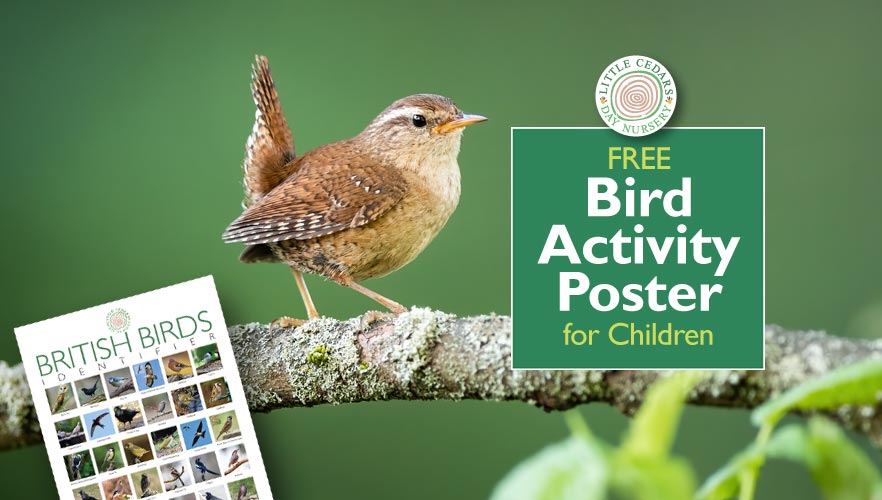
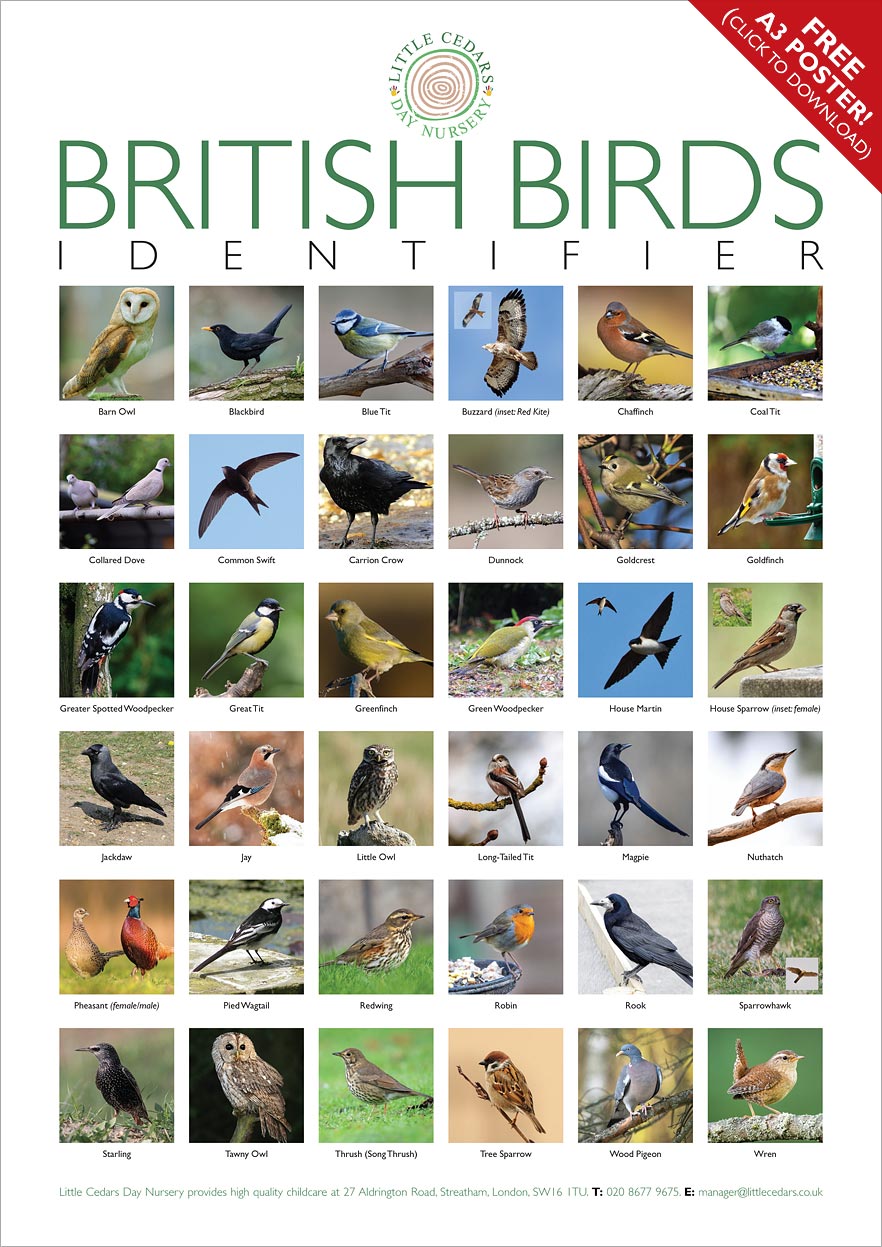
 Spring arrives in the UK on 20th March, according to the meteorological calendar. As well as plants beginning to shoot, daffodils flowering and trees starting to bud, an increased number of wild birds can now be seen too. While a few overwintered here in England, many will have spent winter abroad, where it’s warmer, and only begin to return to the UK once spring begins. So, come springtime, more and more varieties of birds can be spotted — and that’s what today’s post is all about. To encourage children to appreciate, enjoy and learn from nature, we have put together a bird identifier poster that children and parents can download for free, print out to A3 or A4, or view on screen in beautiful high resolution. It highlights 37 species of bird that are popular in England, which children can try to spot as the days and weeks go by. Children can perhaps tick off each type of bird that they spot. With a little help from parents for the youngest children, this activity is a great way to teach them the different bird names and help them to recognise the different types as time goes by. It’s also a great children’s pastime that will encourage them to really appreciate nature. The A3 poster is free to download and share — simply click the preview image below to save or view it in Acrobat PDF format. Enlarge on screen for extra detail or simply print out as large as you can. Children will love this activity and feel a real sense of achievement as they learn more about these wonderful, feathered visitors.
Free A3 Bird Identifier Poster Download:
Nature is So Good for Children
One of life’s great pleasures is the natural world and nature is something that’s beneficial to children in many profound ways (click the bold link to learn more). Children, including those under five, should be encouraged to spend time around nature, outdoors in the fresh air, whether that’s in the countryside, a park or in a garden (all under adult supervision, of course). Our bird-spotting poster is a great way to encourage them to get outside and take a close look at their natural surroundings. And, of course, putting out home-made bird feeders somewhere suitable will help. We’ll cover that topic in a future post as it’s also great fun for little ones.
37 Types of Bird are Featured
 We’ve selected our favourite birds from the hundreds of species that visit the UK each year. There was no way to fit in all of them, so we’ve picked out the most common visitors to our own gardens and nearby parks. In addition, we also added a few extra birds that would be great for children to keep a lookout for, despite a few being shy. Owls are around, for instance, coming out mostly at night. However, barn owls can be seen before dark if you know where to look (the sound of owls hooting or screeching is a dead giveaway). Buzzards, Red Kites and Sparrowhawks are more likely to be seen in the sky overhead, so we’ve shown images where their distinctive silhouettes can give their species away to the onlooker.
We have not yet included waterfowl, ducks, geese, herons, gulls and suchlike in this first bird collection, but may follow up with a second poster if this one proves popular. Let us know what you think!
More Ways for Children to Identify Birds
With a little bit of help from an adult, there are additional, fun ways for children to identify birds in the UK too, all courtesy of the wonderful R.S.P.B. Take a look at some of their bird identification tools available online:
- Identify from over 400 birds seen in the UK using filters like location, size, colour, beak shape, activity and leg colour.
- Identify a bird by its song (only available, at least for free, for a few types of bird).
- Search for a specific type of bird (for example, type in siskin — they’re very cute).
- How to tell similar birds apart — is that a Great Tit or a Blue Tit? Was that a Common Swift or a House Martin? All the answers can be found on that link.
Looking for Good Nurseries or Preschools in Streatham?
Little Cedars is a wonderful nursery & preschool in Streatham, offering high-quality childcare services near Furzedown, Tooting, Balham, Norbury & Colliers Wood

 Are you looking for the best nursery or preschool in Streatham? We’d love to show you and your child around Little Cedars Nursery if so. We provide high-quality weekday childcare and a rich early years education for babies and under-fives. Our nursery/preschool is also convenient if your family is near Streatham Hill, Streatham Park, Streatham Common, Furzedown, Tooting, Tooting Bec, Tooting Broadway, Tooting Common, Balham, Norbury or Colliers Wood.
To apply for a nursery place, book a guided tour or ask a question, please get in touch using an option below:
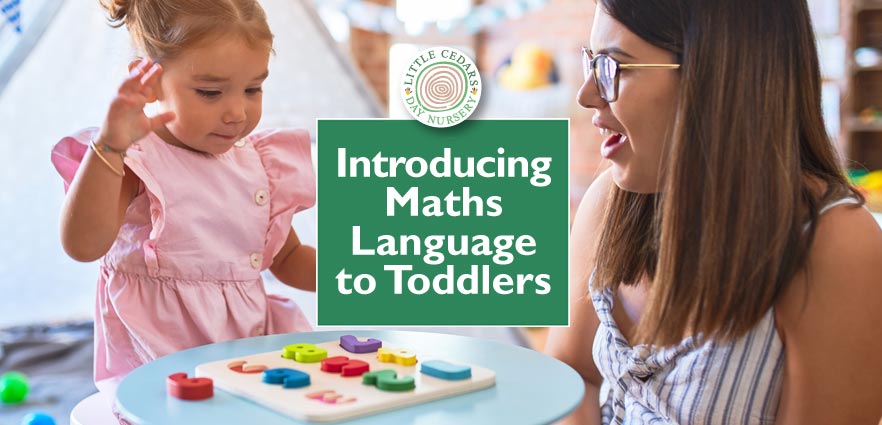
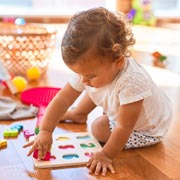 However, many children struggle with maths and have negative attitudes towards the topic. To prevent this, it is important to introduce maths concepts and vocabulary to children at a young age. Fortunately toddlers are at a period of development where they can learn and understand a range of maths words and concepts when given the opportunity. And, by introducing mathematical concepts and vocabulary to toddlers in a fun and engaging way, adults can help children develop a strong foundation in maths and foster a positive attitude towards the subject.
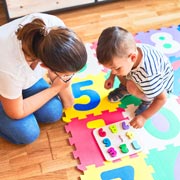 Introducing maths words and language to toddlers is all part of
 Parents and caregivers can help toddlers learn maths words and maths-related language in a variety of ways. General examples include:
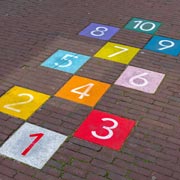 Number Hopscotch
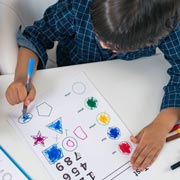 Parents can create simple patterns using objects such as blocks, toys, or coloured pencils, and ask toddlers to continue the pattern. This activity can help toddlers develop their pattern recognition skills and understand basic maths concepts such as repetition and sequencing.
 Introducing maths words and concepts to toddlers is an important step in fostering their overall learning and development as well as in relation to success in mathematics itself. By teaching toddlers maths vocabulary and concepts at a young age, we can help them develop strong foundations in maths, enhance their cognitive development and language skills, and improve their attitudes towards maths. It is never too early to start introducing maths concepts to children, and by doing so, we can help them develop a lifelong appreciation of maths as well as nurturing a strong foundation for future success in many areas of their lives.
 Milestones are a crucial thing to monitor when you’re bringing up a baby or young child. Speech is an important one and it’s one that parents would be wise to take stock of at regular times in their child’s early years. Today we look at this milestone at around the age of 30 months. So, what should you expect your 30-month-old to be able to say at this age and, if appropriate, how can you encourage them to speak more? Let’s explore speech milestones at 30 months…
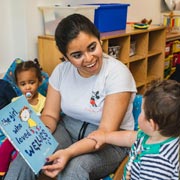
 The more ‘chatty’ time you have with your toddler, the more they will naturally get involved — and learn from you. Talking to your toddler facilitates good listening skills and helps them to build up their own vocabulary, particularly when you make physical reference to the things you are talking about. In this way they can associate a word with its physical equivalent (e.g. holding up or pointing to an object that you’re talking about).
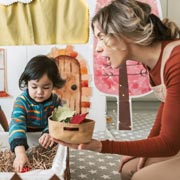 Use repetition. This helps your toddler through hearing the same words over and over again. They will copy and get used to which words go with which scenario in this way. You can take this a step further too…
 The same applies to books. Get your toddler to point out details in pictures sand repeat the words after you. You can also ask your toddler questions about the book and get a conversation going, for example, whether they know a particular character, a particular object or a colour. Point to details and see if they know the word, or say the word out loud and let them repeat it.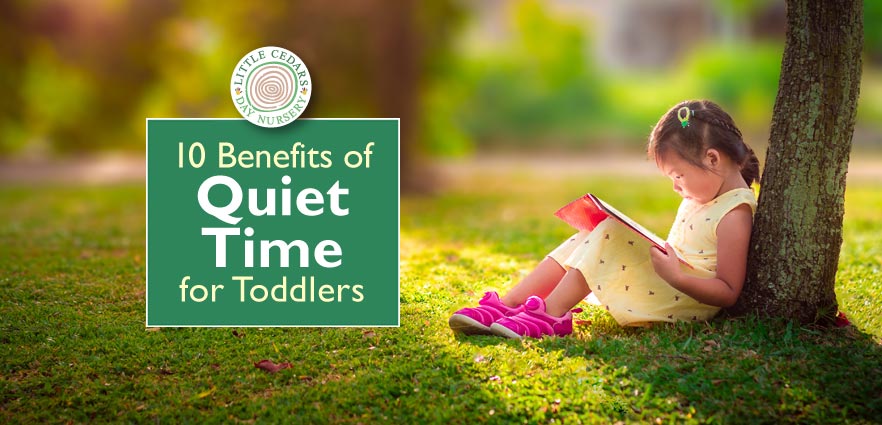
 In today’s post, we look at the importance and benefits of periods of ‘quiet time’ for toddlers and children under five. Toddlers are busy little people, often rushing around, going from one toy or activity to the next. They’re at a stage where they realise the world is an exciting place and often want to experience it all at once. However, when they are so ‘on-the-go’, playing and learning from everything and everyone around them, their brains and body have a lot to take in and process. It can be extremely tiring! So, this is where some much-needed quiet time often comes in, bringing with it a whole range of benefits. Studies also back this up.
 With so much going on around them, children’s young senses of sight, hearing, touch and smell are experiencing a full-on assault. Their minds are also being challenged with learning new skills. This can all be very tiring for our youngsters, so a period of quiet time will give them a break, to allow them to breathe and unwind.
 After prolonged activity or concentration on the part of the child, a well-earned nap may well be on the agenda. As well as giving the toddler a chance to re-charge their batteries,
  Quiet time provides an opportunity for children to develop their own, natural creativity. During quiet time, they have the opportunity to make up a game or activity, without intervention from others. This time is totally unstructured too, so children can be as free as they like to explore and adapt the game or activity. They can create their own little environment and immerse themselves in their own new world. Their imaginations are set free and opportunities to be creative will come naturally.
 As we can see above, during quiet time, children can engage in activities that they have chosen for themselves. This can greatly help them to become more independent and self-reliant. That’s a great skill for them to develop as they approach the time to transition to school. There, they will need to rely much more on such skills.
 When you first introduce quiet time to your child, start slowly and begin with short periods each day. This can be increased as your little one gets used to it.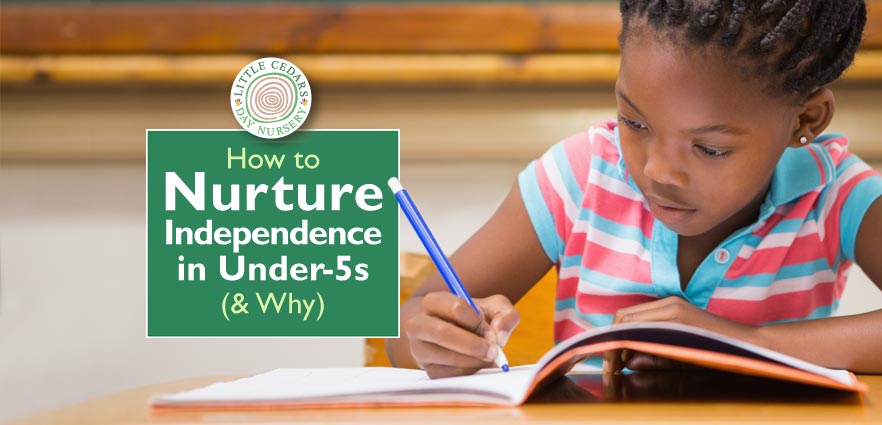
 It’s easier and often quicker for adults to take the lead in getting toddlers and under-five children dressed, fed, washed and suchlike. However, at some point, our little ones have to become confident and self-sufficient at doing these – and many other things – themselves. After all, they won’t have Mum or Dad around when they’re starting at school. So, today, we look at the ways we can help children under five help themselves and become more independent, including in their learning. First, though, let’s look at the many benefits of encouraging their independence.
 Increased self-esteem: Children feel a sense of accomplishment when they are able to do things on their own. This can give a healthy boost to their self-esteem.
 Better self-management skills: Children who are used to taking care of themselves and making their own decisions are better able to manage their own learning and behaviour. This is important, particularly once they move on to a school setting. Studies published in the Journal of Educational Psychology have highlighted better grades and higher levels of achievement in this regard.
 A greater sense of responsibility: Children who are able to do things independently may more easily learn to take responsibility for their own actions and decisions. Learning from one’s own mistakes is also one of life’s most important lessons.
 Encourage self-care skills: Help children learn how to dress themselves,
  Provide opportunities for children to make their own decisions: Give children small choices and let them choose what they want to do. This helps them feel a sense of control, encourages independence and builds confidence. A good example is allowing them to choose what they want to wear.
 Set realistic expectations: Children are still developing their skills and abilities, so be realistic about what they can do independently.
 In today’s post, we explore the benefits of using positive language around under-fives. All too often, it’s tempting to say ‘No!’, ‘Stop that!’ or even ‘Don’t Eat That!’ and similar around little ones. This is particularly true when you want them to cease the offending activity urgently or are simply exhausted if it’s been a challenging day. There are good reasons for such negative commands, of course, not least that of their safety in many cases. However, such commands can sound stern and cause stress for the little ones. What’s more, if a child hears too much negative language and cannot understand why they’re not allowed to do a particular thing, problems can begin to arise and, indeed, the issue can become insidious. It may even result in worsening behaviour. Let’s explore, therefore, the issues around negative language and the simple solution that’s available in the form of positive language.
 Sometimes, though, constantly hearing ‘no’ can spark tantrums, particularly if a child doesn’t understand the reason they are not allowed to do something. They can feel particularly frustrated when they receive a succession of negative commands and, in the end, may feel they simply can’t do anything right. This can lead not only to stress for them, but also to possible low self-esteem. Furthermore, if they hear ‘no’ and other negative language too often, they can begin to ‘tune out’ to it. They could then go on to develop challenging behaviour due to this, their confusion and frustration. Stress levels can then rise for the parent too, the infant can pick up on this and it can become a real vicious circle. It doesn’t have to be that way, though …
 Stop shouting!
 Please use a much softer voice.
 Today’s post will appeal to families who are finding the current financial climate particularly challenging. With energy costs and inflation so high, the following may represent a welcome piece of good news. Today we highlight the many Baby Banks that are popping up all around the UK and explain how they can help struggling families, all for free.
 A Baby bank is a similar concept to a food bank. However, instead of food and drink, it provides second-hand clothing, toys and equipment for babies, under-fives and often even for children up to the age of 16 in some cases. Baby Banks can also be compared to a charity shop, however, with baby banks, everything is free.
 Baby Banks are run by all sorts of different people and organisations and therefore the rules around actually getting ones hands on the free items vary from Baby Bank to Baby Bank. Some accept requests for items directly from families themselves. Others only deal via a referral from some kind of professional. Examples include social workers, family support agencies, teachers, family centres, health visitors, medical professionals, food banks and women’s refuges. So, once you have located your nearest Baby Bank, you will need to check whether they will deal with you directly or only through such a referral. Either way, you will usually need to agree a time and date for collection of your item with the Baby Bank (you can’t usually just turn up, although there are exceptions). Not all Baby Banks are open all week and that’s another reason to check with Baby Banks or their websites first.
 Absolutely! Baby Banks rely on the generous donations from families that no long require their baby clothes or equipment. Perhaps the child has grown out of them and the items are still in good condition, or perhaps they were an unwanted gift. Donating items is also a great way to declutter and to make space in the home, as well as helping others. However, before donating to a Baby Bank, always check with them to see if all your proposed items are required and, as before, ensure you know whether an appointment is needed or whether you can just turn up with your items. Certain rules may also apply around the condition and type of items (this varies depending upon which Baby Bank you are dealing with). Baby car seats and electronic items may also have special rules due to the extra safety considerations.
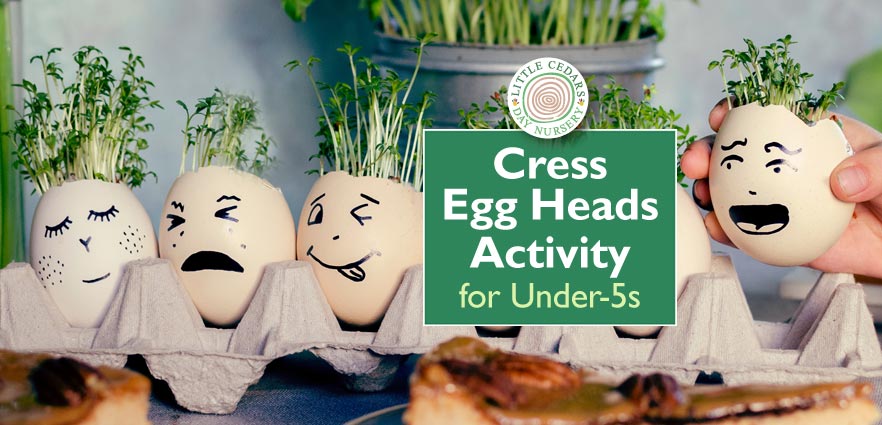
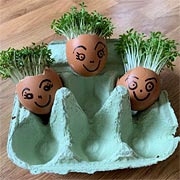 A nature-based, food-related activity that young children can enjoy indoors at any time of the year is cress growing. Today we outline how it can be made even more fun and creative for kids by growing the cress as little ‘egg heads’. These come complete with comical faces and amusing hairstyles made of green cress shoots! Children will absolutely love it when they end up with little egg faces with spouting hairstyles that each have real character. And, they’ll even be able to eat the results!
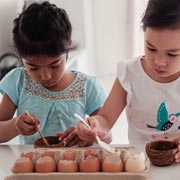 Cress is Easy to Grow, & Tasty!
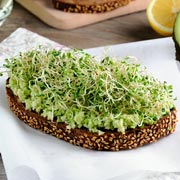 Growing Cress for Small Kids and Big Kids
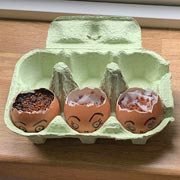 Next, find a vessel to prop the egg shells up in. This could simply be an egg cup or even an egg carton, like that shown in the photo. Then, decide what to fill the empty egg shells with. Children can choose either damp kitchen roll or damp compost/soil to grow the cress seeds on. Carefully fill the empty egg shells almost to the top with the chosen filler. (We tried both and each grew well. Interestingly, the cress seeds grown on kitchen roll tissue paper grew a little faster and therefore taller than those grown on compost. They therefore looked a bit more ‘wild’ — it was quite a surprise and had an amusing impact on the egg-people’s hairstyles).
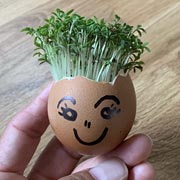 Make sure you or your child add some funny faces on the shells — maybe even give them names. The faces can be drawn simply using a marker pen (Sharpies are ideal) or you can get even more creative using coloured paints. Children may find drawing the faces easier if they are shown some visual reference and perhaps they can practise first on paper. If too young to draw suitable faces, a parent or creative older sibling may be able to help.
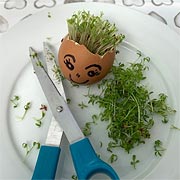 Within a week or so, the little egg heads should begin to sprout green ‘hair’ shoots!
 Are you a student as well as a parent? If so, there are several Government schemes that offer help with childcare costs, some of which will save student parents substantial amounts of money. By doing so, they also make the prospect of juggling parenthood with being a student much more manageable. Today we examine the key childcare funding options, including how the type of course and the age of the parent affect eligibility.
 The very generous Student Childcare Grant is available for eligible students who who are studying full-time on a higher education course and have dependent children aged 14 or under (16 or under if they have special needs).
 If you are aged 20 or over, are a parent studying in further education for a qualification on a Level 3 course or below and are facing financial hardship, you may be eligible for childcare funding under the Learner Support scheme. This funding could help you with childcare and other study-related costs if you fit the right eligibility criteria.
 If you are a parent as well as a student aged under 20 when you begin one of a range of publicly-funded courses in England, you may be eligible for childcare funding through the Care to Learn bursary scheme. If eligible, you could claim as much as £175 in childcare per week, per child if you live in London, reducing to £160 per week, per child, outside London.
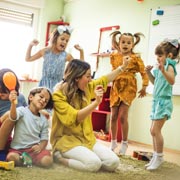 Both children and adults have a natural affinity with music. It’s one of life’s simple pleasures that just about everyone seems to enjoy in one way or another. Children will naturally start to move, dance, join in or even learn songs that they hear — such reactions seem instinctive to them. Learning to play a musical instrument is therefore a natural next step for them. Indeed, it’s one that parents, guardians and carers should consider encouraging, particularly given how beneficial such an endeavour will be to their child. Learning to play a musical instrument is not simply fun; it profoundly benefits children’s learning and development. With that in mind, we take a look today at the incredible array of benefits that learning a musical instrument poses for children, including under-fives.
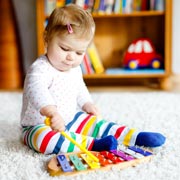 Studies have also shown that learning an instrument or learning how to read music develops the left side of the brain. This area is responsible for processing language and reasoning. Hand-eye coordination skills are also aided when learning to play a musical instrument and reading music. As children’s playing and reading become more advanced, it requires the brain to work at a range of speeds, which is also great exercise for the brain.
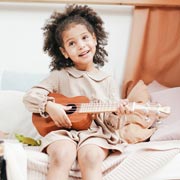 Music gives children a really flexible way of expressing themselves. For instance, the way they choose to bang on a drum, shake a tambourine or strum a guitar can allow them to show happiness, anger, frustration, calmness and many other emotions. Playing a musical instrument gives them a real freedom of expression, even at a very young age. Then, if they reach a point where they are able to make up their own melodies and arrangements, music can become an almost immeasurably powerful tool for self-expression and communication.
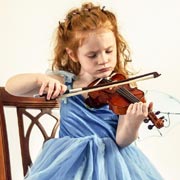 Although playing an instrument is creative, music and maths are very much intertwined. Beats, rhythms and scales are all based on maths and children naturally need to work out some maths in order to understand the song and any sheet music. This will naturally help them to better grasp mathematics and illustrate a real-world example of how it underlies many things.
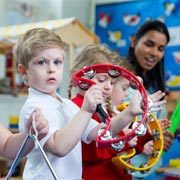 Whether your child is listening to a tutor, teacher, friend or relative, listening skills are very important. Music is a natural way to encourage listening and that’s even more true when children learn to play music themselves. Doing so in their early years will help them to follow instructions, listen out for smaller details as well as the bigger picture. Working together on a piece of music is also a fantastic way to hone group listening skills and teamwork and to encourage collaboration.
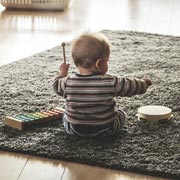 Indeed, music helps to support all 7 focus areas of
  When children master a song, no matter how basic, they get an enormous sense of achievement and even more so if they are praised by adults and peers. Such praise also encourages the child to progress further, of course. Boosting self-esteem and self-confidence in their early years is important for their future wellbeing too. Achieving something through learning, patience and practising regularly also teaches them that persistence and effort will help them overcome challenges. That’s a very important lesson in life.
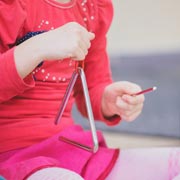 Little ones can first practise keeping in time to music or a beat that an adult is demonstrating, perhaps. Maracas are also good starter instruments although, again, anything that makes a shaking sound can be made at home at zero cost. For instance using an empty carton or plastic container securely sealed with dried rice, pasta or lentils inside. Once they get the hang of such percussive or shaker-style instruments, you can consider transitioning them to more advanced instruments like recorders, ocarinas, keyboards, stringed instruments and so on. Often, children will be more than willing to give such instruments a try and some encouragement and guidance from knowledgeable adults or older children will always be helpful. And, who knows, they could end up being maestros and even stars in the making!