
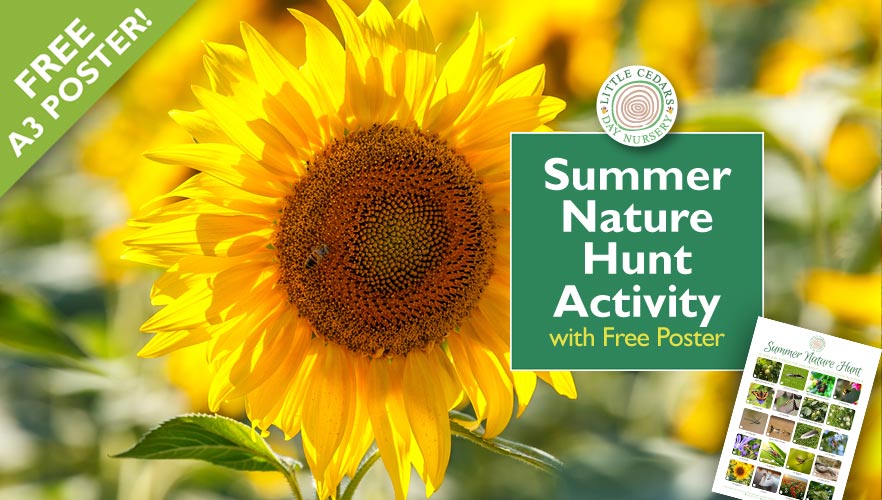
 Summer is in full swing from late June until late September*. It’s a wonderful season that brings with it many amazing things for children and families to look out for in nature. Indeed, that’s what today’s suggested activity is all about. We’ve created a free-to-download poster that highlights 20 things from nature that children, including under-fives, can look out for when they’re outdoors†. Whether it’s in gardens, on walks with family members, at the park, or out in the countryside, summer’s natural wonders are incredibly abundant when you take time to look.
How many of the wonderful flora and fauna can your child spot? Some, like bees and butterflies, will be super-easy to spot. Others, like sunbathing birds and — for the very lucky few — slow worms, may be a little harder to discover. Searching is part of the fun, though, and this nature-based activity is a great way to get little ones to open their eyes to the natural world around them whilst also enjoying exercise and fresh air. It’s a great opportunity to encourage little ones to spend time outdoors, close to nature† — which is so incredibly good for them! Why not download the free Summer Nature Hunt activity poster today and see what you and your little one can spot?
* When Exactly is Summer?
According to the astronomical calendar, for 2025 summer starts in the UK on Saturday 21st June, which is the Summer Solstice — the longest day of the year. It continues until Monday 22nd September 2025, which is the Autumnal Equinox. That’s the time in the year when day and night are of virtually equal length because the sun is right above the equator. Dates vary a little from year to year, however, because the solstice and equinox will fall on slightly different days.
In contrast, summer always spans the calendar months from the 1st of July, through August, until the 30th of September according to the meteorological calendar. This calendar is used more for things like weather forecasting.
Download Your Free ‘Summer Nature Hunt’ Reference Poster
Click the preview image below to view or download the free Summer Nature Hunt reference poster (2MB, Acrobat PDF format). Print it out at any size up to A3 in high resolution. Use your printer’s best paper and settings for the best results.
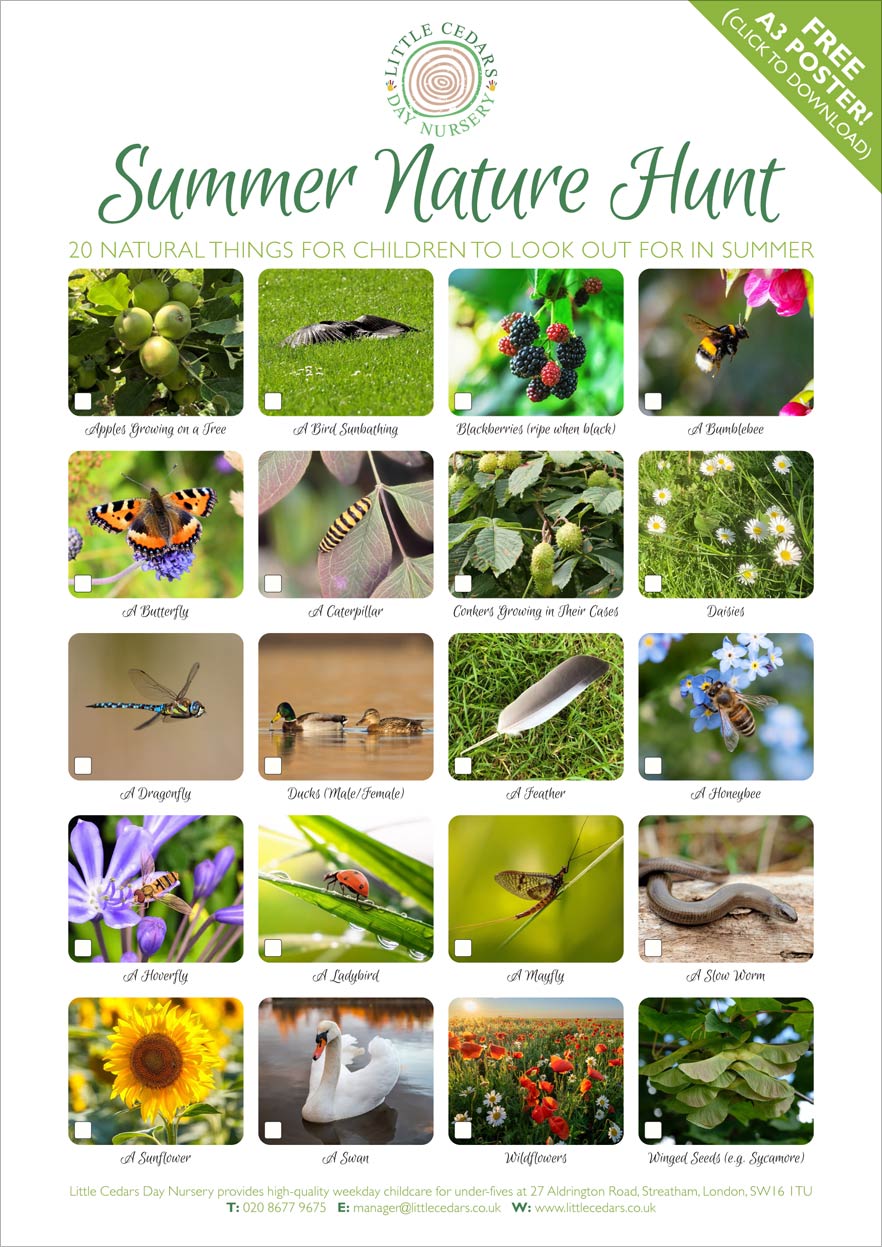
There are many species of some of the creatures shown, so your child does not need to find one that’s absolutely identical. There are 51 species of mayflies, for example, each of which will look a little different. Similarly, there are over 40 different ladybirds and 59 species of butterflies in the U.K. — the variety of nature is incredible!
“Look Don’t Touch!”
Remember that children should look but not touch; the idea is to spot natural things, not to try to collect them or to interfere with living creatures who are going about their business. That’s a safety and well-being issue as much as anything — for both the child and nature’s flora and fauna. The idea is for children to simply see how many they can see when out and about. Then, when spotted, they can perhaps tick them off using the little tick boxes provided on the poster.
Have Fun Little Explorers — Nature is Good for You!
We hope today’s free poster and the activity idea give children and families some educational fun outdoors this summer. Spending time outdoors in the fresh air, close to nature, is incredibly important to children and adults alike. It benefits them in an amazing variety of ways, from greater motor skills and improved problem-solving to enhanced well-being and reduced stress just for starters. And did you know that even academic grades are improved when children spend time closer to nature? That’s just one of the many benefits of nature that you can learn more about here.
Other Nature-Themed Posters for Children
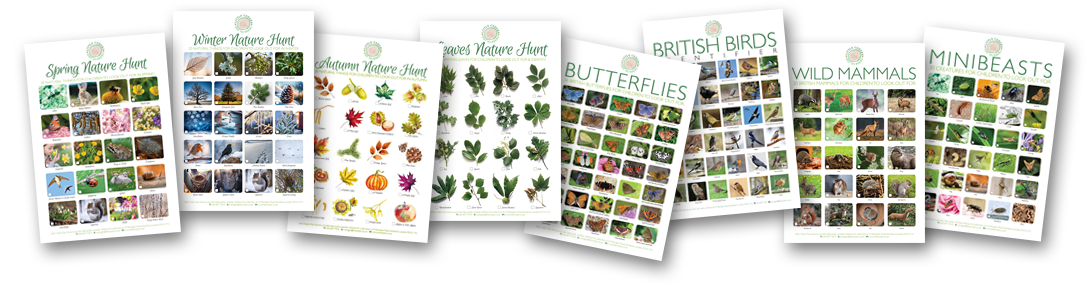
Today’s Summer Nature Hunt poster is just one in a whole series of nature-based activity posters that families can download free of charge. Other posters in the series include a Spring Nature Hunt, a Winter Nature Hunt, an Autumn Nature Hunt, a Leaves Nature Hunt, Discover British Butterflies, British Bird Spotting, Wild Mammal Spotting, and a Minibeast hunt. Visit our blog area regularly for more free stuff for kids! Click the bold blue links for more information.
Opportunities to be Close to Nature at Little Cedars Nursery, Streatham

 Children get to enjoy nature at Little Cedars Nursery in Streatham too! We know how important spending time in and around nature is to children. So, we’re lucky to be close to natural open spaces like Tooting Common and to have our own planting area. Here, children can nurture seedlings, grow flowering plants that attract pollinators, and harvest their own vegetables. They love it! It teaches them so much about the world, where food comes from, the importance of taking responsibility for another living thing, and all the time teaching them new skills.
Little Cedars is a fabulous nursery located in Streatham near Streatham Hill and Streatham Common, conveniently close to those in Tooting, Furzedown, Balham, Norbury and Colliers Wood. Rated as a Good Provider by Ofsted, you know your child will be well looked after and nurtured at Little Cedars. It’s a warm, welcoming, home-from-home environment where children feel safe, well cared-for, and valued. If you’d like your baby, toddler, or preschooler to have the best start in life in readiness for school, consider Little Cedars Day Nursery for your weekday childcare needs. We would love to show you and your little one around, so you can see for yourself the wonderful environment for under-fives.
Get in touch today to register for a place, request a tour, or ask a question — we’re here to help!
† Outdoor Safety
It goes almost without saying that children, especially the youngest, should only explore outdoors under appropriate and close adult supervision. Read our tips for child safety outdoors for more safety inspiration.
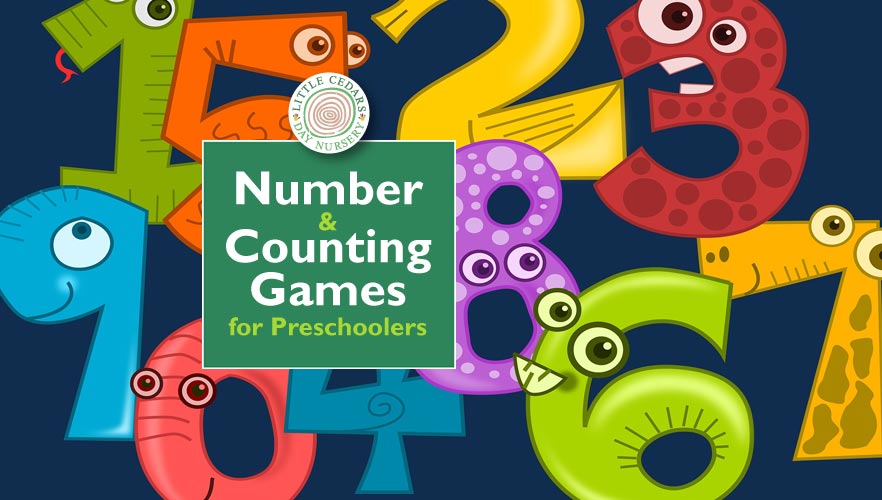
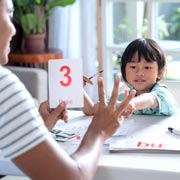 Concepts involving numbers and counting can sometimes be tricky for some preschoolers to grasp. Making sense of such concepts is important, though, because many aspects of children’s day-to-day lives will require an increasing understanding of numbers as time passes. Whether it’s knowing if a quantity of something is more or less than something else, how much of an ingredient is required in a mixture, or what change to expect from a purchase, children will need to grasp number-based concepts — and understand their real-world applications. What’s more, they’ll need to do this sooner rather than later if they’re to thrive, not least when they leave early years settings to begin school.
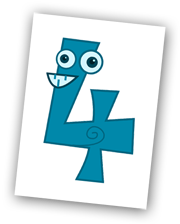 Making ‘number cards’ with your child will be a fun and useful first step. These could be as simple as small pieces of paper or card, each having a single large number written clearly on them. Alternatively, your child could take the opportunity to get more creative. For example, you and your child could make the numbers bright and colourful, have patterned in-fills, or even be made to look like animals or number ‘characters’ that have eyes. For the very young, start with numbers up to 5, or go to 10 or even 20 for older and more advanced children. Size-wise, perhaps aim for cards sized at about A6 (a quarter of an A4 sheet) or even A7 (A4 divided into 8).
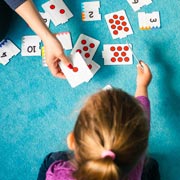 A more advanced form of the number cards could depict the correct number of dots (or other drawn objects) instead of — or as well as — the actual written number. So, for example, the ‘3’ card could show a column or row of 3 round dots or squares or even something like 3 drawn strawberries — whatever your child likes! In a way, it’s a bit like traditional playing cards where each has both a number and the right amount of hearts, diamonds, clubs or spades on it, to match the number.
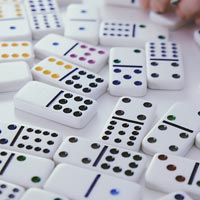 This next game will require a set of dominoes or, if you don’t have a set, they’re also easy enough to make in a similar way to the number cards. As you may know, each half of every domino has a number of dots, most commonly from 1 to 6. So, for example, there might be two dots on one end and five on the other, with the dot formations being rather like those you’d see on dice.
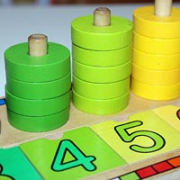 Understanding whether a quantity of something is more or less than something else is an important concept for children to grasp. Similarly, being able to estimate a quantity is a useful and practical skill for little ones to master. Such concepts can easily be highlighted, and the skills mastered, using simple estimating games. Some examples follow.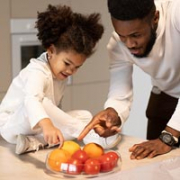
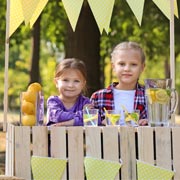 Pretending to be a shopkeeper or a shopper buying from one is a great next step for children. What’s more, they’ll naturally love playing shops having, no doubt, accompanied parents to real shops. This is where they can put all the things they’ve learned from the games above into practice. They can check they have the right quantities, weights or volumes or products, check they’re giving the shopkeeper the right amount of money, ensure that any change is correct — and so on! Playing shops is such a great way to master numbers, counting, estimating, weighing, addition, subtraction and more!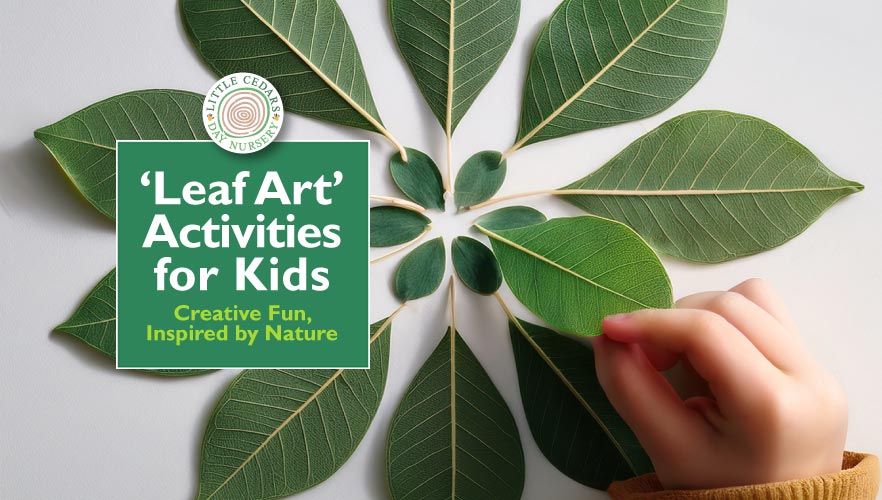
 With warmer weather and plants and trees flourishing wherever we look, it got us thinking about some creative children’s activities, inspired by nature. One simple starting point is the humble leaf, which can lend itself to a surprisingly wide range of creative activities for children to enjoy. Such activities will not only draw children’s attention to
  The first thing children will need is, of course, a selection of suitable leaves. To give them enough scope for a wide range of creative activities, we suggest families forage a variety of different sizes and shapes. We suggest focusing primarily on tree leaves as these are likely to be fairly robust, come in lots of different forms, and often have well-defined ‘vein’ structures. Oak leaves, sycamore, beech, hawthorn, horse chestnut, lime, sweet chestnut and silver birch would represent a nicely varied selection, for example. Download our
 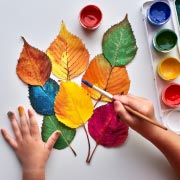 One of the most straightforward activities using leaves is for children to simply paint them. The youngest will love painting one side of each leaf in a different colour — or even adorn them with patterns like spots, zigzags, hearts, and stripes. Once the paint is dry, the leaves can be used in a variety of different ways. For example, they could be glued into an attractive design on a sheet of paper/card and displayed in a frame, made into a garland for the wall, bunched together to form an attractive hand-held fan, glued to a circle of paper or card to form an attractive crown, or glued to an upturned stick or tree sprig to represent a colourful tree. These are just a few ways they can be used once painted and, indeed, coming up with ideas is all part of the fun and creativity for children!
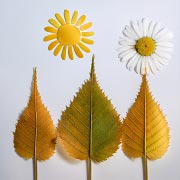 Collages made from leaves can also be very easy for children to accomplish; they just need a base card or paper, child-safe glue, some leaves and perhaps some flowers too. Ideally, leaves should be flat and, even better, dried. This can be achieved through pressing, which is explained later. For added beauty, add fresh or pressed flowers of different colours too — perhaps even other items like stars and glitter. Children can then gradually build up an attractive design (rather like organic wallpaper) or a simple picture like our example. It will result in a fascinating piece of leaf and flower art that can be displayed in the home — something for children to be proud of!
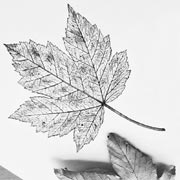 A freshly painted leaf can also be used to make leaf prints. When the paint is still very wet, children should simply turn their leaves over and press all areas of them against a sheet of paper or card. Doing this by hand is OK but if you have a roller, even better! In this way, the paint is transferred to the sheet and will typically show the leaf shape and all the structural veins of the donor leaf. And, by repeating the process with one or more leaves and colours, a design or picture can be gradually built up on the sheet. This might be as simple as a repeat pattern or as complex as a pictorial scene. By adding other media like painted or drawn lines, leaf prints could, for example, represent a forest on a hillside. Add little figures of people and perhaps little dogs underneath each ‘tree’ and it’ll start to come to life!
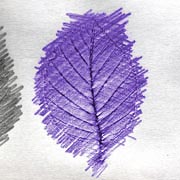 A leaf-rubbing activity is also fun and intriguing for little ones. Find a flat surface like a table or rigid sketch pad and place a thin sheet of paper over one or more leaves. By rubbing a thick wax crayon, charcoal stick, or soft-leaded pencil repeatedly over the sheet where there is an underlying leaf, the leaf’s form will gradually reveal itself. Children will be able to see the structural veins that form the leaf, along with leaf edges as they scribble. Children can experiment with different media, colours, and types of leaves to get different creative results.
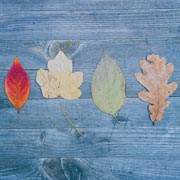 eaves and small, non-bulky flowers can be dried and flattened through the process of pressing. All that’s needed is the leaves and flowers and a thick book of paper sheets — a large sketch pad is perfect or, alternatively, sheets of unprinted newsprint or blotting paper. Manually place single flowers and leaves between the leaves of the paper and then place something large, flat, and heavy over the entire thing and leave it for anything from a couple of days to a couple of weeks. How long will depend on the type of leaves and flowers involved (and how dry and flat they were to begin with). Once ready, the flowers and leaves will be thin and dry, ready to use. They could, for example, be used individually as mementoes or bookmarks, or assembled with glue into ‘pictures’ via a collage, as explained earlier.
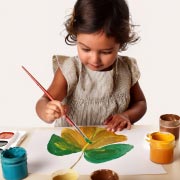 Another creative activity involving leaves is simply to represent them in pencil, paint, or other media of a child’s choice. Encourage them to look carefully at the leaf’s shape and detail, so they can try to mimic them in drawn or painted form. Drawing and painting are highly useful skills for children to develop and mastering such skills will prove useful throughout their educational years. If you, as a parent, are good at drawing or painting, perhaps join in the activity too. By doing so, you can show your child what is possible with some close attention to detail and carefully placed lines and strokes. As you build up your own picture, perhaps explain how you are achieving the results, so they can learn from your approach. And — who knows — perhaps you’ll discover that you have a budding artist in the family!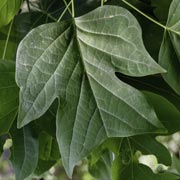
 Whether dried, painted, or simply picked as they are, leaves can also be made into other objects, characters, and so on. Some leaves can look like other items, for example, a particular type of tree (the Tulip Tree a.k.a. Yellow-Poplar) has individual leaves shaped rather like t-shirts! Children could look out for these and perhaps paint them in their favourite football team’s colours, draw in legs, arms and a head to make people and — hey presto — they’ve created a person! Similarly, there are several leaves shaped like hearts which, once painted in a suitable colour, can be useful when making greetings cards for birthdays or Valentine’s Day.
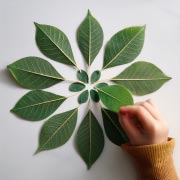
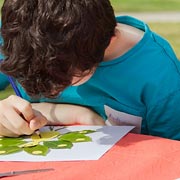 Another example of how leaves can represent other things can be illustrated by simple leaves like beech leaves. Each of these looks rather like the shape of a classic flower petal. So, perhaps a child can be encouraged to fan several around in a circle, almost tip to tip, to look like a big flower head. Children can paint the circle in the middle or glue a circle of coloured paper or wool there to represent the centre of the flower. And, if they start with a paper large enough, they could create several of these and make a picture of multiple flowers made of leaves. Use thin twigs, wool, or drawn crayon lines for stems and perhaps longer, thinner leaves to make the flowers’ leaves.
 The activity ideas above are just a starting point and there are plenty more that are possible with leaves. Whether it’s dried leaves painted, glued and varnished onto pebbles to form paperweights, dried leaves gently sprayed with perfume to form pot-pourri, or suspended leaves that form a mobile, the possibilities for leaf art are almost endless! We hope our ideas today inspire children to use their imaginations and make some beautiful creations — all with simple, humble leaves.
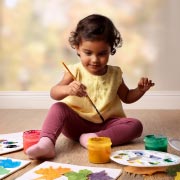 In addition to being fun and creative, these activities all support the Early Years Foundation Stage curriculum for under-fives. EYFS areas supported by the activities include:
 Work at least 16 hours or more per week at the National Minimum Wage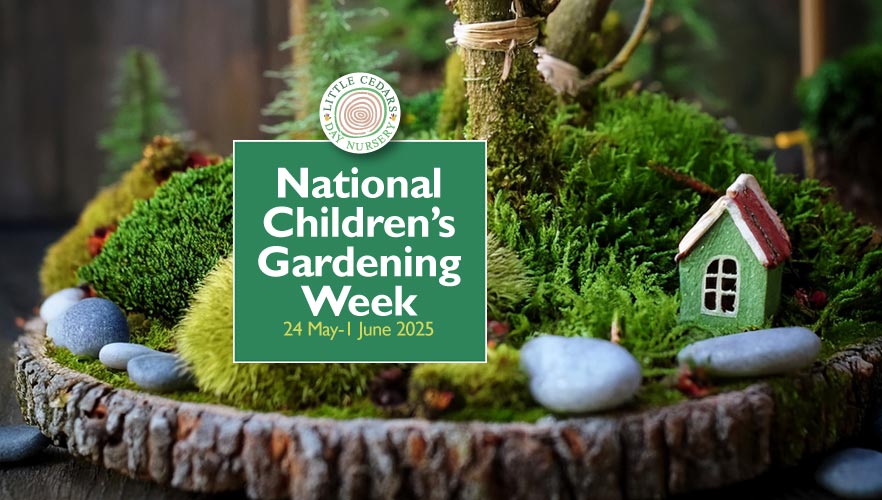
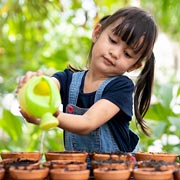 National Children’s Gardening Week is a wonderful annual event that’s designed to inspire children’s curiosity around growing plants and gardening-related activities. It takes place during what is typically a warm period of the year. That’s important because it means seeds and plants will grow faster and need minimal protective measures from inclement weather. Speedy growing results will appeal to little ones!
 National Children’s Gardening Week coincides perfectly with the Spring Bank Holiday and May half-term school holiday, taking place from the 24th of May to the 1st of June 2025. It’s usually a lovely warm week and is perfect timing for children to make the most of the event and to maximise the many benefits of spending time around nature.
 National Children’s Gardening Week also raises money to support children in hospices through the national charity Greenfingers. They create inspiring gardens and beautiful outdoor spaces where hospice children with life-limiting conditions can play, rest, relax, and spend time with family and friends. Such outdoor spaces allow affected children to spend quality time away from the bedside in well-designed outdoor areas where they can enjoy all the benefits of fresh air and a natural environment.
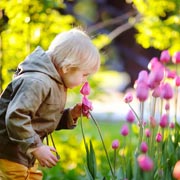 Children and families can take part at home as well as in participating schools, childcare settings, community groups, ‘outdoorsy’ retail outlets and even some National Trust properties.
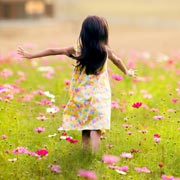 Sowing Wildflower Seeds
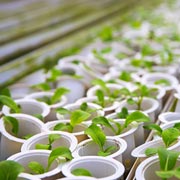 Herbs and some vegetables can be grown from seeds, cultivated, and harvested from simple flowerpots or yoghurt pots. They can also be ‘re-grown’ through various devious means that will fascinate children including under-fives. We wrote a whole post about that too, so take a look — it’s quite ingenious, is incredibly educational, and results in free food! What’s more, it can be done indoors.
 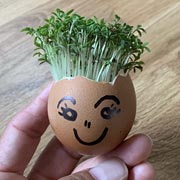 Another ‘indoor gardening’ activity is growing these comical ‘egg heads’. Grown simply from cress seeds, they can be grown in egg shells as shown, or another alternative would be yoghurt pots. When the cress is ready to be harvested and used in salads or as a garnish, the little characters can have a haircut!
 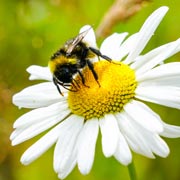 Another activity that children can get involved in for National Children’s Gardening Week is to create bee-friendly gardens. Our recent post about World Bee Day explains how to make a bee oasis (from where bees and pollinators can get a refreshing drink) and a bee-friendly garden.
 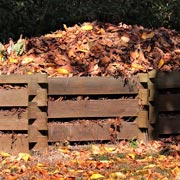 Plants love compost and so do minibeasts. So, another wonderful activity for children in National Children’s Gardening Week is to make homemade compost. Our dedicated
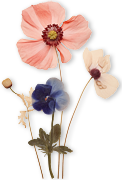 Once the flowers are blooming outside, children can experiment with pressing flowers. Pressed flowers are a wonderful way for children to save flowers semi-permanently as keepsakes or to use as part of an art activity.
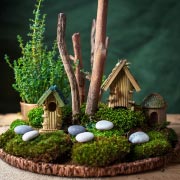 The youngest children will love this activity! Children will need some scavenged moss, pebbles, sticks, seashells and perhaps small pieces of driftwood from a beach. Children can then use these to transform the soil in a large pot or on top of a log into
 May’s World Bee Day is a wonderful and very worthwhile International event. It’s also one that’s perfect for children, including under-fives, to get involved in. Not only does it raise families’ awareness of the importance of bees and pollinators, but it’s also a great opportunity to introduce little ones to some of nature’s adorable little creatures and get them more interested in the natural world.
 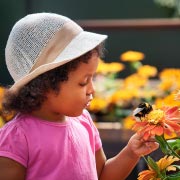 Children naturally take to planting seeds, tending seedlings as they grow, and watering plants and flowers. That’s great because it gives many opportunities for
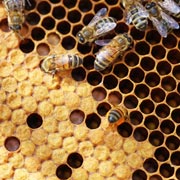
 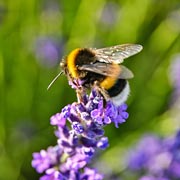 Wherever there are flowers, children will find bees, particularly if the flowers are brightly coloured and fragrant. A walk around the local neighbourhood, park, or natural open spaces will be both great exercise and an opportunity for little ones to spot some lovely bees and pollinators. Getting outdoors (appropriately supervised* and dressed) is beneficial to children in many ways, and a bee-spotting walk will be a simple way to introduce them to these important and cute little creatures. Can they spot a bumblebee? Can they spot a bee collecting nectar in their leg pouches (also known as pollen baskets or corbiculae)? Which
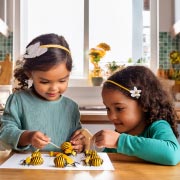 If the weather is unsuitable for outdoor activities, one of the easiest bee-related activities that children can take part in is making bee art. They can try drawing bumblebees, flowers, and hives with pencils, pens, or markers. Alternatively, they can get even more creative using paints or collages. Cutting up coloured tissue paper shapes and making bee-related images using appliqué is sure to be fun and impressive (child-safe scissors being used by parents or under super-close supervision). Parents can perhaps cut out any tricky shapes for the youngest children and then help guide them as they glue bee, flower, or hive elements into place.
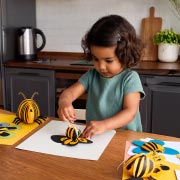 Bee art can be extended further by creating three-dimensional models and shapes. With a little help from parents or older siblings, even children under five can take part. They will enjoy sticking shaped paper or cardboard pieces and other recycled materials into place to form three-dimensional bees and flowers. Useful materials for such models could be things like corrugated card, tissue paper in various colours, coloured pipe cleaners, fabric, kitchen roll cores, paper plates and cups and, of course, coloured paints to decorate the final piece. Such creations can be as simple or complex as families like. This is a great activity to boost fine motor skills and hand-eye coordination!
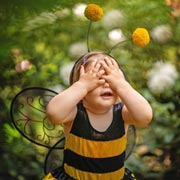 Children can get into bee-inspired fancy dress while doing their waggle dance! Striped clothes will help. Perhaps parents can help them make wings from card or material and shaped wire. Some antennae should not be too difficult to make from a headband, some pipe cleaners and some homemade pom-poms or foam balls from a craft shop. Children will love such creativity and the fun that ensues with friends once they’re all dressed up!
 The bee-related activity ideas suggested in today’s post will be a fabulous way to introduce children to these magical little creatures, the wonderful work they do for us and the planet, and the measures little ones can take in their own lives to improve the plight of the natural world. The activities will also be fun and educational — indeed supporting many areas of
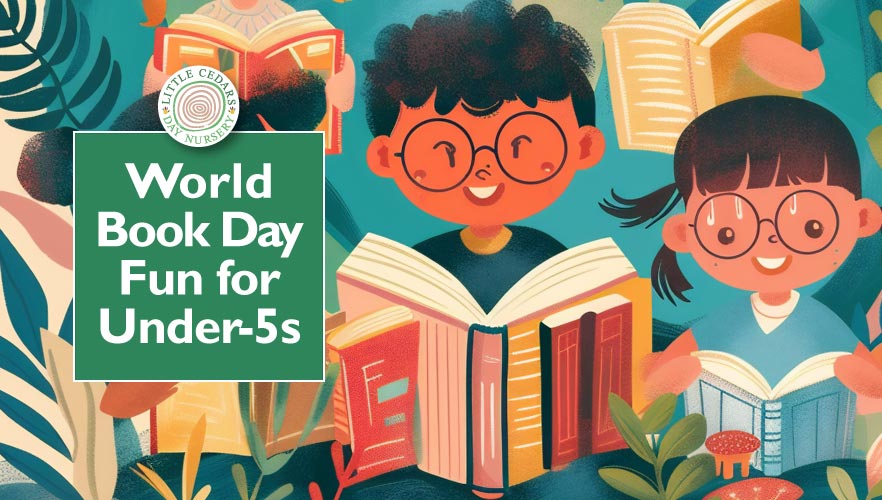
 Children of the UK, it’s time to get ready for World Book Day! Arriving in early March, it is a wonderful annual event where children across the nation get to immerse themselves in books, storytelling, and other book-inspired activities. Such activities are incredibly important for children. Did you know, for example, that children who regularly read for pleasure are happier children who also go on to have greater success in their lives? This uplift is even more significant for children from disadvantaged backgrounds. Such is the power of reading for little ones! With all this in mind, today’s article outlines more about World Book Day and why it’s so important. It also suggests some activities that children and families can take part in to celebrate this year’s event.
 World Book Day arrives each year on the first Thursday of March. So, for 2025 it’s celebrated on the 6th of March, then in 2026 it’s on the 5th, for 2027 it’s the 4th, and so on. Organised by the charity of the same name, the core mission of World Book Day is “to promote reading for pleasure, offering every child and young person the opportunity to have a book of their own.” The reason is simple: a life-long love of reading for pleasure results in improved life chances. It’s incredibly powerful for children of all ages, as indicated in the following findings from the Organisation for Economic Co-operation & Development:
 The World Book Day® charity published a 17-page impact report for the event that took place in 2024. One of the key findings was that something needed to be done to stop the significant drop in children reading for pleasure. Otherwise, children would be missing out on some profound benefits. The report concluded that there had been several reasons for the downward trend. For example, 20% of children said they felt judged for what books they read. Some said that reading felt more like a chore or ‘work’ because the books were foisted upon them by adults. Just over 8% of children simply didn’t have access to any books at home. Of those that did, over a third said they had no choice over what they read.
 In the UK, children under 18 are eligible to receive a £1 book token through the event. This can be used to buy a special World Book Day title or go towards another book (
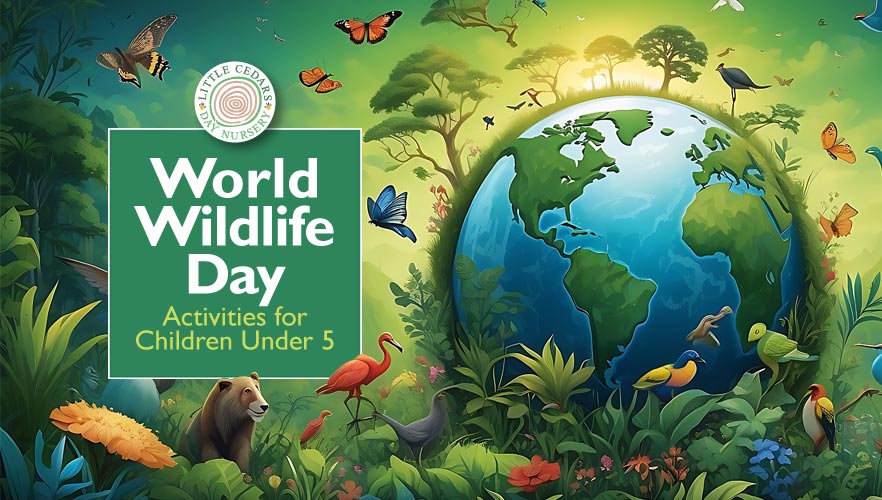
 Families: get ready for World Wildlife Day! On 3rd March each year, we celebrate UN World Wildlife Day, an important event that is all about protecting nature’s flora and fauna. At nursery age, little ones are naturally curious and eager to learn more about the world around them. World Wildlife Day is therefore the perfect opportunity to inspire a greater love for nature and wildlife in our young. Exploring the wonders of plants, trees, and the animal kingdom teaches them more about the world and also helps children develop key skills like language, creativity, and empathy. Whether through outdoor play or wildlife-themed activities, engaging with nature’s wildlife can therefore create valuable early learning experiences. With that in mind, today’s post outlines some simple activities that children, including those under five*, can take part in to celebrate World Wildlife Day. We also highlight some of the benefits of nature to children towards the end of the post.
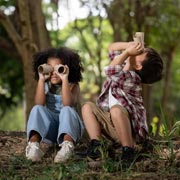 Getting outdoors is the best way to see wildlife, especially if your family lives near a park or the countryside. Rambles, picnics, and simple walks are all obvious options and, of course, wildlife sanctuaries are a good choice if you have one nearby. That said, while such outdoor options are amongst the best ways for children to connect with nature, sometimes they’re simply not possible. However, when that’s the case, there are plenty of other possibilities including bringing the wonders of wildlife into your nursery, home, or garden. Here are some engaging, age-appropriate activities that will allow children to take part in World Wildlife Day whatever their circumstances:
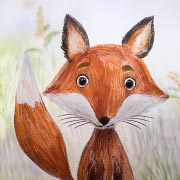 Most children naturally take to drawing, so encouraging them to draw wild animals, plants and birds will be a popular suggestion, especially around the time of World Wildlife Day. For example, they could try drawing British mammals like rabbits and squirrels, jungle animals like elephants and tigers, or sea creatures like dolphins and whales. To make it easier, perhaps give them some visual reference to inspire them. They could choose from a variety of media, be it pencils, crayons, paints, or collages — or something entirely different. Playdough or salt dough models are also an option. Children naturally love to create and, once complete, perhaps display their pieces to encourage future progress.
 Reading books about wildlife will introduce children to new animals and habitats. Great options for younger under-fives include ‘Dear Zoo’ by Rod Campbell and ‘Brown Bear, Brown Bear, What Do You See?’ by Bill Martin Jr. (author) and Eric Carle (illustrator). Also, of course, children and families have the option to tell each other made-up stories. They’re a great way to encourage creative thinking and can be approached in a number of different ways. For example, a parent could tell a story first to give the child an idea of
  Try making some simple bird feeders with your children. There are lots of easy ways to make them as outlined in our dedicated guide,
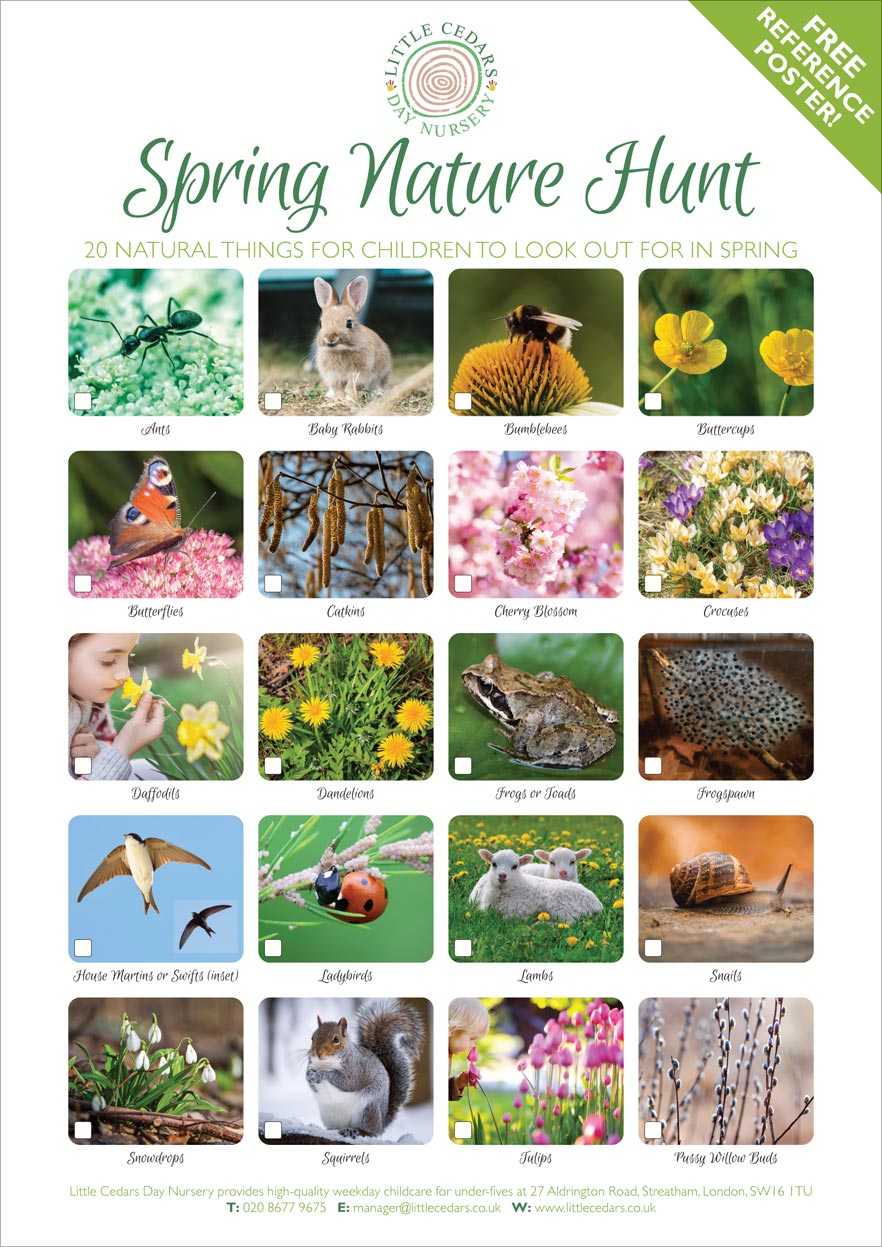
 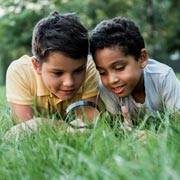 Create a simple scavenger hunt using pictures, words, or our free nature hunt sheets to encourage children to find different natural objects like leaves, feathers, and pine cones. This activity builds children’s observation skills, gives them deep insights into nature, and instils in them a better appreciation for the environment. Currently, free reference sheets are available for
 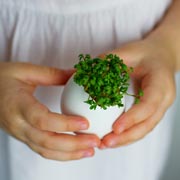 Engage children with easy science experiments, like
 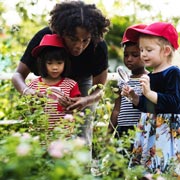 Spending time in nature or learning about wildlife isn’t just fun—it has incredible benefits for early childhood development. To harness such benefits, families can incorporate nature-based learning into children’s routines in a variety of ways. Examples include organising outdoor exploration sessions, setting up small wildlife observation areas, and using nature-themed storytelling to engage the young learners. Connecting children with nature:
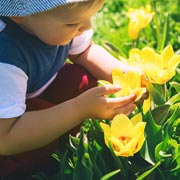 Incorporating wildlife into children’s activities doesn’t have to be limited to one day. Encouraging youngsters to notice the birds in the garden, look for insects on nature walks, or watch the changing seasons can gift them a lifelong love of nature. Parents and families can make wildlife observation a regular habit, perhaps by keeping a simple nature sketchbook where children can draw or glue in pictures of what they see, or by creating a wildlife corner at home with books, nature finds, and small child-safe plants. Even setting up a bird-watching station near a window can turn everyday moments into exciting learning opportunities. By celebrating World Wildlife Day, we can inspire the next generation of nature lovers—one little explorer at a time!