Watch any infant, toddler or preschooler for just a few minutes and you’ll see that one thing comes naturally to them; play. Indeed, it’s as if they’ve been programmed that way, with the need to play coming instinctively to youngsters, whatever their species. Aside from it simply being great fun, there are a multitude of very good reasons for that — play teaches them an enormous amount about each other, themselves, other living things, cause and effect, and the world around them. It also allows them to learn and fine-tune a whole swathe of new skills as they grow older, play new games, and become more experienced. Add in some careful steering and nurturing during that play from Mum or Dad and they have a real recipe for success. With that in mind, we look today at the key ways in which learning through play profoundly benefits children.
1. Play & Creativity Go Hand-in-Hand
Play and creativity go hand-in-hand. Whether making up a new game, role-playing, constructing, or playing in a den, children will naturally create both scenarios and physical items as part of their play. Such activities teach them how to use their imaginations and to be creative — in a myriad of ways.
2. Play Boosts Problem-Solving & Critical Thinking Skills
During play, children will inevitably reach points where a problem needs to be solved or a challenge overcome. Such things will help to stretch children’s minds and stimulate thinking skills to help them invent new ways to do things, solve problems, accomplish tasks, or do something more efficiently. Problem-solving and critical thinking skills will benefit hugely in this way and these are crucial skills for children to learn as they grow older.
3. Play Hones Motor Skills
Different play activities require different types of movement and physical interaction from children. Indeed, this is a fundamental aspect of play. Whether jumping and running with large movements or carefully constructing with small items like building blocks, children will naturally hone both fine and gross motor skills during play. Such physical skills are essential to their ability to navigate and interact with the world around them and, in the most natural of ways, play is at the heart of enhancing those abilities.
4. Play Makes Children Fitter
All that running around, chasing, jumping, hopping and playing games is sure to raise a child’s heart rate and, in time, get them a little out of breath. That’s great exercise, right there, but play makes it fun rather than a chore. And, as we know, exercise is good for us, helping to keep us more fit and healthy. In fact, along with a healthy, balanced, diet, it can even help children to reduce or avoid the prospect of childhood obesity.
5. Play is Good for Children’s Emotional Well-Being
Did you know that the hormone cortisol, which the body releases when under stress, reduces when children play? It just goes to prove that playing makes children happy — after all, it’s great fun — and that’s great for their overall emotional well-being.
6. Play Enhances Cognitive Skills
Playing not only improves physical fitness, motor skills and coordination, but it also improves brain function. After all, play takes a myriad of different forms, each type requiring a different mixture of concentration and cognitive skills to succeed. Play is, indeed, like a good workout for the mind, with every passing minute of play enabling the brain to form countless new connections that will stand a child in good stead through improved skills and knowledge going forward.
7. Play Improves Social Skills
Social skills are also improved through play. Children naturally play with other children and, by so doing, will soon pick up social skills as they begin to better understand social protocols that allow them to succeed both as individuals and in groups. Decent manners, saying please and thank you, cooperation, teamwork and closer bonding are all examples of social skills that can benefit through group play. Other examples include conflict resolution, better sharing, negotiation and communication, which we’ll come to next.
8. Play Helps Children Learn to Communicate Better
Through all this play, children will be communicating with each other and with any adults that are supervising. As such, play is a great facilitator of communication. Indeed, good communication is essential to most games and, through it, children can cooperate and achieve in ways that will help them in both the short term and into adulthood. Improving communication skills is also a fundamental way to improve success when you think about it.
9. Play Enhances Emotional Intelligence
Play also allows children to see things from one another’s perspectives. Role-play games are a great example and, through such endeavours, children can better understand how their actions might affect others. Through such play opportunities, they’ll learn to have improved empathy, patience, and perception of others. Those are important tools for any individual to master, both as children and as adults.
10. Play Stimulates Children’s Senses
One of the key ways babies and infants learn is through the senses and it’s through play that they often do this. Whether reaching out to touch a soft toy during tummy time, playing with coloured shapes, or progressing to creative play with play dough and suchlike when they’re older, they can learn a lot about the world through the senses during early play. Learn more about The Benefits of Sensory Play for Under-Fives here.
11. Play Makes Sense of Mathematics
Mathematics is often embedded into games and pastimes. Children can learn, for example, about adding, subtracting, multiplication and division through games. Even dividing group play into teams requires some fundamental maths to ensure teams are equal in size. Building towers out of blocks is another great example where children can count how many blocks they can stack into a tower before it falls over. They can try to beat their own maximum, or even compete against one another to see who can use the most blocks.
12. Play Teaches Children Real-World Science
Play also teaches children about science and how it applies to the real world around them. Properties of materials are a good example, with children learning to understand the properties of liquids, solids, play dough, gravity, heat and cold, cause and effect, and so on — often through the simple act of playing.
13. Play Teaches Children to Assess Risk
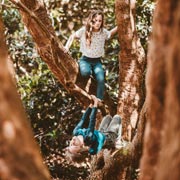
Another great skill that children can learn through play is that of risk assessment. Should they climb further up this tree or is it too dangerous? Should they add another block to their tower construction, or will it tip over? Can they leap across this puddle without getting wet? All such things are great examples of how simple play activities can teach children how to assess risk — and learn from it.
14. Play Educates Children About the World Around Them
Play comes in a vast array of different forms, shapes, and sizes. Through so doing, it introduces children to countless scenarios, situations, and challenges. By immersing children into such widely differing environments, they learn huge amounts about the world around them, and everything within it. Whether it’s newfound knowledge about a new object, material, place, culture, activity, or something else, play is an amazing conduit to new knowledge and the need to learn new skills. Play is the ultimate educator and the incredible thing is that children may be unaware that they’re learning — they’re having too much fun!
15. Play Makes Learning Fun & Natural
All in all, play teaches children a vast amount about the world around them, about themselves, and about others. It also teaches them a myriad of new skills. Incredibly, it makes such learning fun and totally natural. As such, play is an immensely powerful teacher that’s key to the success of every child’s early learning and development.
Children Learn Through Play at Little Cedars Nursery, Streatham
The childcare professionals at Little Cedars Nursery understand very well the superpowers of play. That’s why babies, toddlers and preschoolers learn mostly through play and child-led activities at the nursery in Streatham. Through play and a learning and development programme that’s custom-designed for each child, little ones absolutely thrive at Little Cedars, achieving personal bests in every area of the curriculum and personal development. In this way, we ensure they are as school-ready as possible by the time they leave us as they approach the age of five.

 Would you like to explore the possibility of your baby or under-five child attending Little Cedars Nursery in Streatham? We’re officially a ‘good provider’ of childcare and early years education and offer a warm, cosy, home-from-home environment where every child thrives and feels valued. We’re also conveniently located if you live or work near Streatham Hill, Streatham Park, Streatham Common, Furzedown, Tooting, Tooting Bec, Tooting Broadway, Tooting Common, Balham, Norbury and Colliers Wood. Get in touch today to get started on your application, to visit, or to find out more:



 Little Cedars Nursery is a high-quality childcare provider in Streatham, providing excellent weekday childcare to families in Streatham, Streatham Common, Streatham Hill, and Streatham Park, as well as those nearby in Tooting, Furzedown, Balham, Norbury, and Colliers Wood. The nursery has a good Ofsted rating and is happy to support government-funded childcare for eligible families with children as young as 9 months of age.

 Work at least 16 hours or more per week at the National Minimum Wage

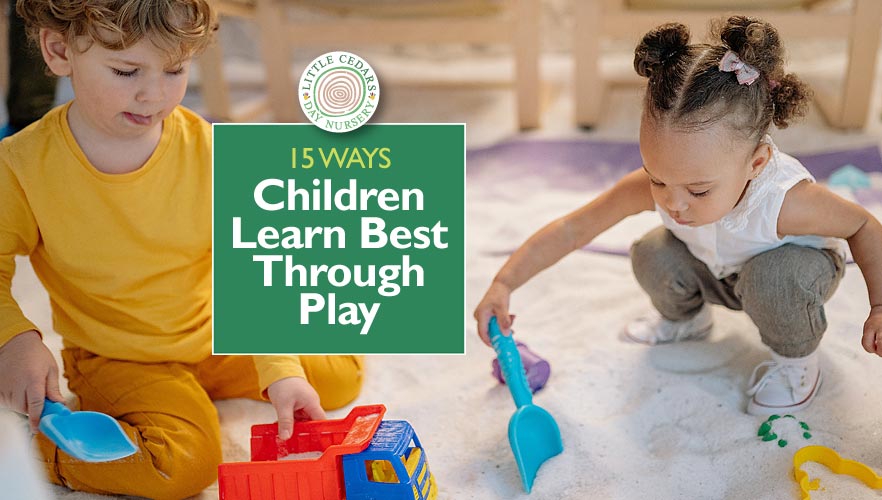
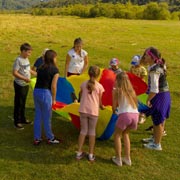 Watch any infant, toddler or preschooler for just a few minutes and you’ll see that one thing comes naturally to them; play. Indeed, it’s as if they’ve been programmed that way, with the need to play coming instinctively to youngsters, whatever their species. Aside from it simply being great fun, there are a multitude of very good reasons for that — play teaches them an enormous amount about each other, themselves, other living things, cause and effect, and the world around them. It also allows them to learn and fine-tune a whole swathe of new skills as they grow older, play new games, and become more experienced. Add in some careful steering and nurturing during that play from Mum or Dad and they have a real recipe for success. With that in mind, we look today at the key ways in which learning through play profoundly benefits children.
 Play and creativity go hand-in-hand. Whether making up a new game, role-playing, constructing, or playing in a den, children will naturally create both scenarios and physical items as part of their play. Such activities teach them how to use their imaginations and to be creative — in a myriad of ways.
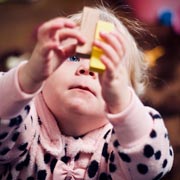 Different play activities require different types of movement and physical interaction from children. Indeed, this is a fundamental aspect of play. Whether jumping and running with large movements or carefully constructing with small items like building blocks, children will naturally hone both fine and gross motor skills during play. Such physical skills are essential to their ability to navigate and interact with the world around them and, in the most natural of ways, play is at the heart of enhancing those abilities.
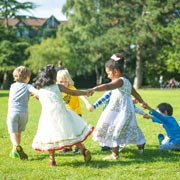 Social skills are also improved through play. Children naturally play with other children and, by so doing, will soon pick up social skills as they begin to better understand social protocols that allow them to succeed both as individuals and in groups. Decent manners, saying please and thank you, cooperation, teamwork and closer bonding are all examples of social skills that can benefit through group play. Other examples include conflict resolution, better sharing, negotiation and communication, which we’ll come to next.
 Through all this play, children will be communicating with each other and with any adults that are supervising. As such, play is a great facilitator of communication. Indeed, good communication is essential to most games and, through it, children can cooperate and achieve in ways that will help them in both the short term and into adulthood. Improving communication skills is also a fundamental way to improve success when you think about it.
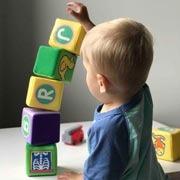 Mathematics is often embedded into games and pastimes. Children can learn, for example, about adding, subtracting, multiplication and division through games. Even dividing group play into teams requires some fundamental maths to ensure teams are equal in size. Building towers out of blocks is another great example where children can count how many blocks they can stack into a tower before it falls over. They can try to beat their own maximum, or even compete against one another to see who can use the most blocks.
 Play comes in a vast array of different forms, shapes, and sizes. Through so doing, it introduces children to countless scenarios, situations, and challenges. By immersing children into such widely differing environments, they learn huge amounts about the world around them, and everything within it. Whether it’s newfound knowledge about a new object, material, place, culture, activity, or something else, play is an amazing conduit to new knowledge and the need to learn new skills. Play is the ultimate educator and the incredible thing is that children may be unaware that they’re learning — they’re having too much fun!
 In today’s guide, we outline a simple but powerful nature-based activity that will be both fun and educational for children and under-fives. This one is all about how to sow wildflower seeds. Once growing, these will bring beauty and wonder to any setting. The activity will also complement our recent
 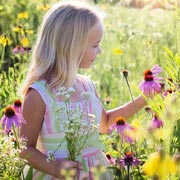 Children benefit very much from spending time in nature, as we outlined in our article entitled
  Colour(s) — Children can help decide whether to grow wildflowers of just one colour, a limited 2- or 3-colour palette or perhaps multiple colours. If parents have an existing colour theme in their garden or plant area, they may wish to point children in a particular direction, so as to keep that colour theme going.
 Free wildflower seeds can be harvested from existing wildflowers — either from your own wildflowers if you have them, or from those found in the wild along hedgerows and similar (N.B. only do so in moderation and for personal use). Timing will, of course, be critical because seeds will only be available at certain times of the year, i.e. when the wildflowers have “gone to seed” at the end of their flowering period.
 Sowing seeds on existing lawns that you/your child want as a wildflower meadow is simply a case of scattering seeds on the lawn, ideally spaced out in such a way that they don’t have to compete with each other once they start growing. Then ensure that the area of lawn is kept moist by either rain or, if there is no rain, regular sprinkling from a watering can fitted with a sprinkling head (a.k.a. ‘rose head’). Children may need to remind adults not to cut the lawn thereafter, of course!
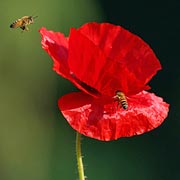
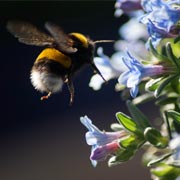 Children will love it once the wildflowers begin to grow and later bloom. They’ll also love seeing bees, butterflies, and other insects visiting and the results of the activity may indeed give them a great sense of accomplishment. The whole process and the results are quite magical when you think about it.