

Today’s post is an urgent reminder: if you want your child to benefit from free, government-funded childcare hours from January, you must apply for the funding no later than 31 December. That’s the case whether you’re a new applicant or an existing one for the types of childcare support that require a code. If you miss the 31 December deadline, you’ll have no code to give your provider — meaning they won’t be able to provide free childcare hours to your child for the whole of that term. So — time is of the essence! Today, we bring you more detailed information and a reminder of how and where to apply, so you’re not out of pocket or without childcare from the term starting this January.
“If you do not apply on or before the deadline, you will not be able to take up your entitlements in that term.” ∞
Which Childcare Funding Schemes Require a Code?
There are several ways the UK Government supports eligible children with childcare funding. Of those, the most popular childcare funding schemes in England that require a code are:
- 30 hours of free childcare per week for eligible working families with children aged from 9 months to 4 years inclusive. That’s 1140 free childcare hours per year. (Learn more).
- 15 hours of free childcare per week for disadvantaged children, aged 2, from households that receive some additional Government support — e.g., benefits like Universal Credit, JSA, Disability Living Allowance, and others. The 15 hours per week, for 38 weeks of the year, represent 570 hours of free childcare per annum. (Learn more).
Another popular scheme, which provides 15 hours of free childcare per week (570 per year) to all children aged 3 and 4 living in England, is known as the Universal Entitlement. However, this scheme does not require a code.
There are also additional schemes, for example, Tax-Free Childcare and support for student parents.
Confused About Which Childcare Support Your Child is Entitled To?
It can be confusing trying to work out which, if any, childcare funding/support schemes your child may be entitled to. However, the UK Government has a useful online tool that allows you to quickly and easily check what childcare support your child is entitled to. Click the bold blue link and answer a few simple questions. Within just a few moments, the options that apply to you will be confirmed.
“We recommend parents speak with their chosen provider about when they will be able to offer them a place.” — BestStartinLife.gov.uk
Check if a Childcare Place is Available
You will, of course, need to check whether a funded childcare place is actually available locally for your child. After researching local providers, check with your preferred childcare provider first — or with an alternative if your first choice has no availability for your child. Bear in mind that some providers also have waiting lists, so don’t leave it too late.
“If your chosen provider doesn’t have a place available, we advise that you explore other providers in your local area.” — BestStartinLife.gov.uk
Apply for Childcare Funding & Your All-Important Code
When you’re confident you know which type of childcare support you are entitled to, and have lined up a provider, you’ll need to apply for the funding and all-important code, where applicable.
- For childcare support for working parents, apply online on the Gov.uk website in order to obtain your code.
- For childcare support for disadvantaged 2-year-olds who receive some additional form of support, apply via your local council to get your code.
- For the Universal Entitlement scheme for all 3 and 4-year-olds living in England, contact your preferred childcare provider directly. No code is required, but you’ll need to provide your child’s birth certificate and sign a form.
You will need to reconfirm eligibility every 3 months, via your Childcare Account, to continue receiving the childcare funding/support. Emailed reminders will be sent to you 2 and 4 weeks before the deadlines for reconfirmation.
The Application Deadline
The deadline for applying for childcare codes is the last day of the month that precedes the start of the term. So:
- For the January term, apply for your code no later than 31 December.
- For the April term, apply for your code no later than 31 March.
- For the September term, apply for your code no later than 31 August.
That said, we urge families to apply ideally at least 6 weeks earlier than the deadline, not least because some childcare providers ask for codes earlier than the deadlines specified above. Applying early will also allow time to iron out any unexpected issues that may arise.
After Applying
After applying, most families find out whether their application is successful right away — and receive their code immediately if so. However, sometimes it takes longer, which is another reason not to leave applications until the last minute.
NOTE: Failure to successfully apply by the deadline will mean that your child is unlikely to be able to receive funding for that entire term.
DON’T FORGET: You will need to reconfirm your eligibility every 3 months.
Good luck with your application!
Nursery Places at Little Cedars Nursery, Streatham

 Are you looking for a childcare place in Streatham? If you have a baby, toddler, or child under five and live nearby, consider Little Cedars Day Nursery in Streatham for your weekday childcare. We are rated as a Good Provider by Ofsted, offer a home-from-home and nurturing environment for your child, and support various childcare funding schemes for eligible families. We also offer a stretched (51-week) provision that spreads free childcare hours over the whole year. As well as providing a childcare service to families in Streatham, we may also suit those living nearby in places like Tooting, Furzedown, Balham, Norbury, and Colliers Wood. Choose an option to get in touch today:

 Work at least 16 hours or more per week at the National Minimum Wage
 May’s World Bee Day is a wonderful and very worthwhile International event. It’s also one that’s perfect for children, including under-fives, to get involved in. Not only does it raise families’ awareness of the importance of bees and pollinators, but it’s also a great opportunity to introduce little ones to some of nature’s adorable little creatures and get them more interested in the natural world.
  World Bee Day arrives on the same date each year — the 20th of May. The annual event celebrates bees and other pollinators and the important role they play in the world. Without them, there would be no food crops, fruit, vegetables, or nuts, leaving animals — including humans — in real mortal danger. The event also raises awareness of the plight and dwindling numbers of bees and other pollinators around the world, shining a spotlight on ways to reverse their decline.
 Children naturally take to planting seeds, tending seedlings as they grow, and watering plants and flowers. That’s great because it gives many opportunities for
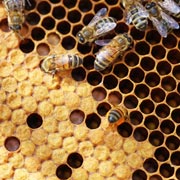
  Wherever there are flowers, children will find bees, particularly if the flowers are brightly coloured and fragrant. A walk around the local neighbourhood, park, or natural open spaces will be both great exercise and an opportunity for little ones to spot some lovely bees and pollinators. Getting outdoors (appropriately supervised* and dressed) is beneficial to children in many ways, and a bee-spotting walk will be a simple way to introduce them to these important and cute little creatures. Can they spot a bumblebee? Can they spot a bee collecting nectar in their leg pouches (also known as pollen baskets or corbiculae)? Which
 If the weather is unsuitable for outdoor activities, one of the easiest bee-related activities that children can take part in is making bee art. They can try drawing bumblebees, flowers, and hives with pencils, pens, or markers. Alternatively, they can get even more creative using paints or collages. Cutting up coloured tissue paper shapes and making bee-related images using appliqué is sure to be fun and impressive (child-safe scissors being used by parents or under super-close supervision). Parents can perhaps cut out any tricky shapes for the youngest children and then help guide them as they glue bee, flower, or hive elements into place.
 Bee art can be extended further by creating three-dimensional models and shapes. With a little help from parents or older siblings, even children under five can take part. They will enjoy sticking shaped paper or cardboard pieces and other recycled materials into place to form three-dimensional bees and flowers. Useful materials for such models could be things like corrugated card, tissue paper in various colours, coloured pipe cleaners, fabric, kitchen roll cores, paper plates and cups and, of course, coloured paints to decorate the final piece. Such creations can be as simple or complex as families like. This is a great activity to boost fine motor skills and hand-eye coordination!
 Children can get into bee-inspired fancy dress while doing their waggle dance! Striped clothes will help. Perhaps parents can help them make wings from card or material and shaped wire. Some antennae should not be too difficult to make from a headband, some pipe cleaners and some homemade pom-poms or foam balls from a craft shop. Children will love such creativity and the fun that ensues with friends once they’re all dressed up!
 The bee-related activity ideas suggested in today’s post will be a fabulous way to introduce children to these magical little creatures, the wonderful work they do for us and the planet, and the measures little ones can take in their own lives to improve the plight of the natural world. The activities will also be fun and educational — indeed supporting many areas of


 Last year,
  As well as helping families financially, the scheme expansion should help children begin their early years education even earlier, for many, which has been shown to be hugely beneficial to them. The free childcare provision will also help many more women back into the workforce. Children, families and the economy should all benefit.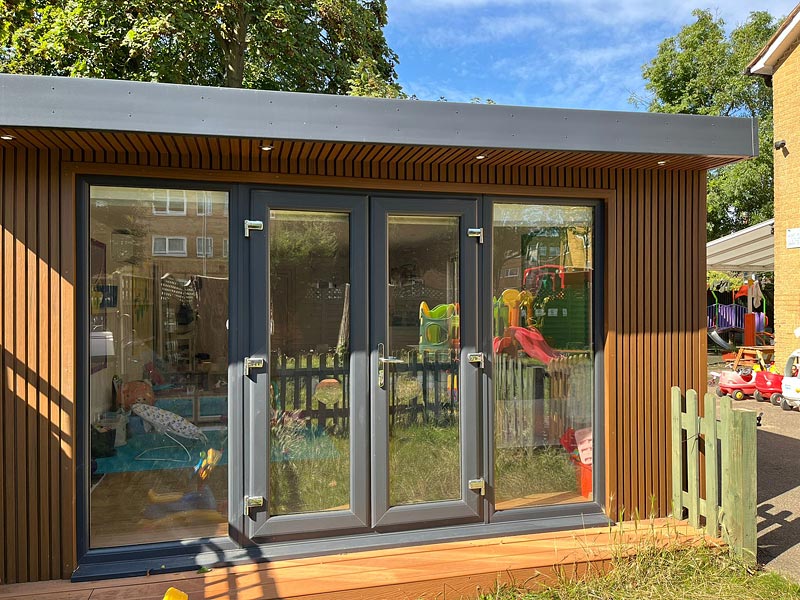
 With Universal Free Childcare, children aged 3 or 4 can receive up to 570 hours of free childcare over the course of the year.
 With Extended Free Childcare, eligible 3- and 4-year-olds can receive up to 1140 hours of free childcare per year instead of only 570.
 Some disadvantaged children aged 2 can also receive up to 570 hours of free childcare over the course of the year.
 For those that are eligible, up to £2,000 in free childcare is available each year to children aged 11 or under* through the Tax-Free Childcare scheme.
 You can sacrifice up to £55 per week of your earnings, which will be free of National Insurance and Income Tax, to fund Childcare Vouchers.
 Following the Spring Budget 2023, childcare funding through Universal Credit is to be improved with nearly 50% more generous funding becoming available from July 2023.
 Those already claiming for childcare costs via Working Tax Credits may be able to obtain up to £122.50 for one or £210.00 for more than one child each week.
 2-year-olds may be eligible for the ’15 Hours’ scheme from April 2024.
 Up to 85% of childcare costs incurred by students may be claimed, up to a maximum of £188.90 per week for 1 child or £323.85 for 2 or more (correct for academic year 2023-2024).
 Up to £160 per child is available each week for those living outside London.
 While it’s not designed to fund childcare, it can be used to do so in some circumstances.
 Improving Education for Disadvantaged 3- & 4-Year-Olds
 To be eligible for the EYPP funding, a child must meet certain criteria:
 After checking eligibility, interested families or guardians can either
 Today’s post will appeal to families who are finding the current financial climate particularly challenging. With energy costs and inflation so high, the following may represent a welcome piece of good news. Today we highlight the many Baby Banks that are popping up all around the UK and explain how they can help struggling families, all for free.
 A Baby bank is a similar concept to a food bank. However, instead of food and drink, it provides second-hand clothing, toys and equipment for babies, under-fives and often even for children up to the age of 16 in some cases. Baby Banks can also be compared to a charity shop, however, with baby banks, everything is free.
 Baby Banks are run by all sorts of different people and organisations and therefore the rules around actually getting ones hands on the free items vary from Baby Bank to Baby Bank. Some accept requests for items directly from families themselves. Others only deal via a referral from some kind of professional. Examples include social workers, family support agencies, teachers, family centres, health visitors, medical professionals, food banks and women’s refuges. So, once you have located your nearest Baby Bank, you will need to check whether they will deal with you directly or only through such a referral. Either way, you will usually need to agree a time and date for collection of your item with the Baby Bank (you can’t usually just turn up, although there are exceptions). Not all Baby Banks are open all week and that’s another reason to check with Baby Banks or their websites first.
 Absolutely! Baby Banks rely on the generous donations from families that no long require their baby clothes or equipment. Perhaps the child has grown out of them and the items are still in good condition, or perhaps they were an unwanted gift. Donating items is also a great way to declutter and to make space in the home, as well as helping others. However, before donating to a Baby Bank, always check with them to see if all your proposed items are required and, as before, ensure you know whether an appointment is needed or whether you can just turn up with your items. Certain rules may also apply around the condition and type of items (this varies depending upon which Baby Bank you are dealing with). Baby car seats and electronic items may also have special rules due to the extra safety considerations.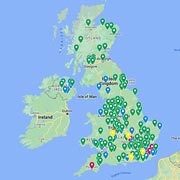
 Are you a student as well as a parent? If so, there are several Government schemes that offer help with childcare costs, some of which will save student parents substantial amounts of money. By doing so, they also make the prospect of juggling parenthood with being a student much more manageable. Today we examine the key childcare funding options, including how the type of course and the age of the parent affect eligibility.
 The very generous Student Childcare Grant is available for eligible students who who are studying full-time on a higher education course and have dependent children aged 14 or under (16 or under if they have special needs).
 If you are aged 20 or over, are a parent studying in further education for a qualification on a Level 3 course or below and are facing financial hardship, you may be eligible for childcare funding under the Learner Support scheme. This funding could help you with childcare and other study-related costs if you fit the right eligibility criteria.
 If you are a parent as well as a student aged under 20 when you begin one of a range of publicly-funded courses in England, you may be eligible for childcare funding through the Care to Learn bursary scheme. If eligible, you could claim as much as £175 in childcare per week, per child if you live in London, reducing to £160 per week, per child, outside London.