
Our statutory maternity leave & pay guide from August 2021 briefly touched upon a parent’s right to unpaid parental leave. As promised, we now come back to the topic in more detail, below.
 Your Right to Unpaid Parental Leave
 Your Right to Unpaid Parental Leave
It’s fair to say that many employed parents* in the UK are unaware of their right to take parental leave on an unpaid basis. In fact, employees are entitled to take up to 18 weeks of unpaid leave before their child reaches the age of 18. That’s significant time off in addition to any standard annual leave. It’s per child too.
*While we use the term “parents”, the rules apply to those with ‘parental responsibility’ over the child. This includes parents who are named on the child’s birth certificate or adoption certificate, or those who officially have, or expect to have, parental responsibility(i) over the child. Foster parents are not eligible unless they are legally recognised as having parental responsibility e.g. via a successful UK court application.
Why Take Unpaid Parental Leave?
Parenting is an incredibly important task. However, it’s not always easy for working parents to find enough family time with their children, even at important milestones in their children’s lives. Aside from holidays and breaks, sometimes parents simply need additional time off to gain necessary time with, or for, their children.  For example, there may come a time when parents need to look at nurseries, pre-schools, primary and secondary schools and, as children approach their mid teens, further education settings. Other reasons to take time off might include time for parents to visit relatives with the children, or to investigate extra-curricular activities such as sports clubs, or simply to spend quality time with their children.
The good news is that most parents who are employees in the UK are entitled to additional time off, on an unpaid basis, from their employer. Although it’s unpaid leave, it can be an absolute Godsend to busy parents, who may well appreciate the time off even if they have to go without pay during their absence. Rules apply, of course, but it’s fair to say that many parents do not make the most of this opportunity.
How Much Unpaid Leave Are Parents Entitled To?
Parents can take 18 weeks of unpaid leave per child until the child reaches the age of 18. The maximum they can take in any one year is 4 weeks (again, per child) unless their employer agrees to more. Unpaid parental leave must be taken in whole weeks rather than sporadic days. Should an employee only work for, say, 4 days per week, then their week off is essentially the same as that. Should their working pattern be more random, then an average of how many days they work per week is computed from working times over the whole year.
What if Parents Change Jobs?
 It doesn’t really matter if you change jobs. The rules around unpaid parental leave apply in relation to your child(ren); not your employer. So, if you change jobs and have already used up 9 weeks of unpaid leave for one child during your previous job, then you can still use another 9 weeks, so long as it’s taken before your child reaches the age of 18.
What Other Rules Apply Around Eligibility?
In addition to the rules discussed above, an eligible parent must have been employed by their current employer for at least one year before making a claim. They must be an employee (not a contractor/sub-contractor, agency worker, ‘worker’ or self-employed).
Employers have a right to ask to see a birth certificate or other proof showing parental responsibility over the child in question. And, of course, the child for whom the claim is being made must be under 18.
Claiming Unpaid Parental Leave
 To claim a period of unpaid parental leave, just 21 days (3 weeks) of notice must be given to the employer and this must state the start and finish dates. It can be confirmed verbally although employers may request the notice in writing.
Given that 3 weeks’ notice is not long in the business world, an employer has the right to request a postponement of the unpaid parental leave if there is a fair reason for doing so. An example would be where such leave would cause significant disruption to the smooth running of the business — perhaps suitable cover cannot be arranged in time. However, in such a scenario, the employer must confirm in writing, within a week of the original request, why the leave is being denied. They must also suggest a new date for it to begin. This must be no later than 6 months after the original date and must be for the same number of weeks originally requested.
Make the Most of Your Parental Leave Allowance
So, all in all, it’s pretty straight forward to get extra leave off work to spend with, or for, your children. Although this particular type of leave is unpaid, sometimes time is the most precious commodity of all — often far more important than money. There’s also only one chance to make the most of your child’s childhood, so unpaid leave is worth thinking about from time to time, while you still have rights to it under UK employment law.
A Wonderful Childcare Nursery in Streatham, SW16
 We hope that the information brought to you here is useful. We are Little Cedars, a wonderful nursery in Streatham, supplying an outstanding childcare service in and around Streatham, Streatham Common, Streatham Hill, Streatham Park, Furzedown, Tooting, Tooting Bec, Norbury, Balham and Colliers Wood. Why not book a visit with your child to see the setting in action, register for a place, or contact us to ask any questions — we’ll be happy to help.

 3. Almost 50% More Bones Than Adults
 6. Not So Hot on Eye Sight
 9. Natural Born Swimmers (… Kind of)
 14. Is Breast Really is Best?
 16. The Only Smiling Primate
 19. Outcomes of Being First Born
 Following up from our
  The father, or partner of the mother, must give their employer at least 15 weeks’ advance notice that they wish to take Statutory Paternity Leave. This can be imprecise, however, given that they won’t be 100% certain which day the child(ren) will be born. If they later change the proposed date, employers must be given at least 28 days (4 weeks) notice of the change, made in writing if requested by the employer.
 the child’s father, or
 To be eligible for Statutory Paternity Pay, a person needs to:
 The payments are made through their wages by the employer after deducting any tax and National Insurance if due. (Figures correct at September 2021).
 Today, we’ll take a look at how much time and money mothers are entitled to under Statutory Maternity Leave and what the eligibility requirements are. We’ll concentrate purely on the rules for mothers who are employees in this post. However, we will follow up to cover paternity leave, shared leave and support for self-employed mothers separately, in future guides.
 The good news is that, to be eligible for Statutory Maternity Leave in the UK, just two main rules apply. You need to:
 Statutory Maternity Pay (‘SMP’) is available to mothers who:
 There’s a great online tool that you can use to check whether you are eligible to claim maternity/paternity leave and pay (as well as Maternity Allowance, which may help self-employed mums). It’ll also calculate how much you could receive. Head over to
 Being let loose with coloured paints, art materials and creative opportunities is sure to bring a smile to their faces and a sense of enormous fun, creativity and discovery. No doubt too; they’ll be proud to show others their creations!
 As well as being enormous fun, messy play allows children to express themselves in unbounded creative ways. That’s important. Self-expression and creativity will help children to gain a sense of achievement and, through this subtle way, a greater sense of self-worth and confidence.
 Hand-eye coordination will also benefit, of course.
 We fully understand the many benefits of messy play at Little Cedars Nursery, of course. Indeed, it’s part of the curriculum. Under-fives are encouraged to learn through messy play using an enormous wealth of resources, equipment and materials at the setting. That’s both indoors and in our outside play areas. From paint and paper indoors to sandpits and water play outside, toddlers and preschoolers have a wonderful time with messy play at Little Cedars, all in a safe, structured, fun and educational environment.
 Recent studies show that use of connected screens and devices by children, including under-fives, is growing fast. The pandemic appears to have increased kids’ screen use too, as children have spent more time indoors and less time playing ‘in person’ with friends.
 Over 75% of children under five have access to a connected device, with up to 60% of preschoolers actually owning their own.
 “Parents have always played a huge role in curating what [under-fives] consume and how their time is spent, but toddlers are now confidently navigating digital platforms for themselves, and using touchscreen devices with purpose and determination.” (Childwise)
 that the ‘RF wireless radiation’ emitted by Wi-Fi connected screens and devices may carry potential health risks particularly, they argue, for pregnant women, their unborn foetuses and the young. The very young, of course, have brains that are still at a critical development stage. For this reason, the experts concerned advocate that access to devices like mobile phones should be limited, removed from children’s bedrooms at night or, at the very least, placed in Flight Mode when possible. Using devices wired instead of using Wi-Fi apparently reduces risks. Use of them in hands-free mode is another useful approach, so that the devices are not so close to youngsters’ heads. We’re not experts ourselves, but these measures seem like sensible precautions.
 While time spent by children on connected screens and devices is rising, it’s not all bad news. The pandemic has also seen an increase in the time that parents have been spending with children, including on shared screen viewing as well as on other pastimes like baking, crafts and family activities. At the end of the day, it’s all about a healthy balance and, of course, adult supervision to ensure children’s wellbeing at all times.






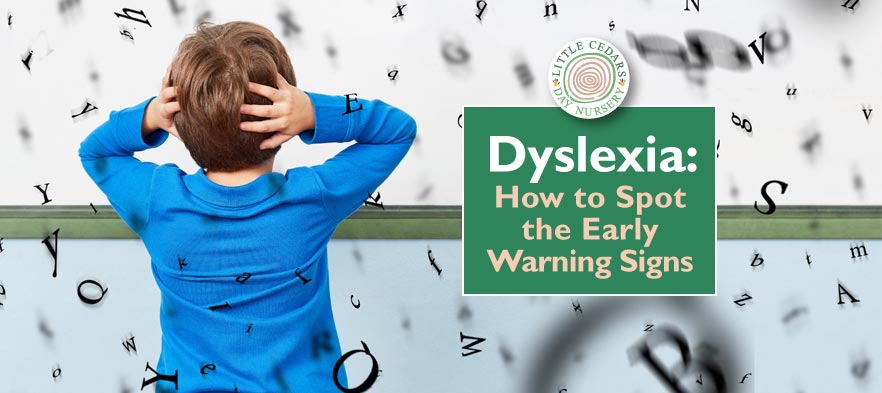
 Despite many dyslexic people being highly intelligent, dyslexia makes it difficult for them to recognise words and/or be able to break them down into their smaller components. It is recognised as a Specific Learning Difficulty (‘SpLD’) and can seriously affect their education if not recognised and addressed early.
 Such an affliction can have profound implications for a person. It will adversely affect their reading, writing and comprehension, thereby limiting their overall learning capability and hindering overall literacy. These are particularly critical skills during their early years as that’s at the start of their education, when the knock-on effects of such limiting factors will be at their most significant. It will slow down their progress in many topics and areas of education, also leading potentially to lower self-confidence and possibly even getting them mislabelled as ‘slow’ or ‘lazy’ by the unenlightened. Ultimately, it can severely limit their potential careers and life outcomes.
 Children finding it difficult to learn the alphabet;
 The child describing words and letters as visually jumbling, blurring or even moving around when they try to read them;
 There is no cure for dyslexia, but measures to mitigate its effects can be taken by education professionals, parents, carers and even those affected by it. It’s incredibly important, though, for both parents and education professionals to try to recognise it early, for example at nursery or pre-school, so that a suitable teaching programme can be introduced as early as possible.
 The EYFS framework sets the statutory approach required for pretty much every aspect of early years childcare and education provision in the UK. The standards cover the learning and development programmes, learning goals, approach to assessment, safeguarding, welfare of children, staffing, and much more. In this guide, however, we’ll focus purely on the 7 key areas of learning and development covered by the EYFS. Essentially, these form the core curriculum at nurseries like Little Cedars Nursery in Streatham. Let’s take a look …
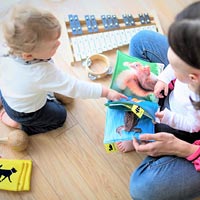 It would be hard to overstate the importance of good communication and language skills, as they underpin early years progress in just about everything else. So, early years providers like Little Cedars encourage two-way interactions and language-rich communications between staff and children right from the outset. Childcare professionals will introduce new vocabulary regularly and help children to understand it and use it themselves through activities like story-telling, role play and question-and-answer sessions. Practitioners will regularly read with (not just to) children, using a wide variety of high quality reading materials, encouraging feedback and engagement from the children as they progress. In this way, new vocabulary is embedded, conversations come naturally and children will thrive in their language and communication skills.
 Physical development is, of course, another key skill that is foundational for children. After all, it impacts on health, mobility, strength, fitness, agility, coordination, wellbeing and general happiness. So, great care is taken at nurseries like Little Cedars to help children hone their physical skills and development incrementally, to improve all of the above. This is done through the EYFS programmes that are set and customised for each individual child. Skills like balance, gross and fine motor skills, coordination, spatial awareness, hand/eye coordination, strength and agility will therefore gradually improve and become second nature to each child as they grow. Active children will generally become more healthy children. They will also improve social skills and confidence through the activities that they participate in alongside peers. It is also, of course, great fun!
 Health, happiness and even the development of early years cognitive function are all underpinned by children’s personal, social and emotional development (‘PSED’). Indeed, PSED forms the backbone of children’s relationships to all adults and peers around them — and also governs how they feel they fit in. That’s all incredibly important, so childcare settings like Little Cedars Nursery approach PSED as a ‘prime’ element within the EYFS curriculum. The result is that children are supported and support one another, they learn how to manage emotions and behaviours, how to eat healthy diets, look after themselves physically, and independently manage their own personal needs. All of this will have the knock-on effect of improving confidence and self-esteem and even allow them to set some of their own goals. Close bonds will be made with both staff and other children and conflicts will be more easily resolved peaceably.
 Reading and writing are crucial elements within every child’s education. Without these skills, learning about other topics would become much more difficult. Literacy is therefore a key area of focus within the EYFS learning and development framework. Like other nurseries, pre-schools and childcare settings that adhere to the EYFS approach, Little Cedars Nursery will therefore endeavour to encourage a love of reading within every child. Reading teaches children to comprehend language, vocabulary, grammar and spelling as well as learning more about the underlying topics themselves.
 Nurseries, pre-schools, kindergartens and other childcare settings also recognise the importance of mathematics within children’s learning and development. The EYFS curriculum caters well for this, encouraging early years professionals to help children master counting first to 10 and later to 20 and beyond. Children will learn the patterns around numbers, including recognition of odd and even numbers, along with skills like simple addition and subtraction, and the ability to recognise low quantities without having to count. They will also learn to recognise when one quantity is more than, less than or equal to another. In so doing, children will also learn the vocabulary around mathematics in readiness for school once they leave their early years setting.
 A good early years education is nothing unless children understand the world around them. The EYFS framework used by early years nurseries like Little Cedars builds in programmes to help children learn more about the world. This includes helping them to learn how to observe, recognise, describe and even draw what’s immediately around them as well as exposing them to environments like the natural world, local parks and museums. It even teaches them to recognise similarities and differences between other cultures, religions and communities in the UK and lives being lived abroad. They will get to know more about people’s roles in society too, for example through visits from police officers, firefighters and nurses. A broad range of written material (both fiction and non-fiction) will inform them further. Topics explored will touch on culture, technology, ecology, religion, community, nature and much, much more. This will enrich their knowledge and understanding of the world they live within, giving context to what they see, hear and read about as they grow older.
 Expressive arts and design are also integral elements within the EYFS curriculum. Early years childcare settings like Little Cedars ensure that children are given a wide range of opportunities to be creative and to free their imaginations. A huge variety of media, materials, tools and activities can be used by children to express themselves and communicate both visually and audibly. Colour, texture, form and function are explored along with opportunities for role play, story-telling, poetry, singing, performance and even dancing when appropriate.
 Little Cedars Nursery (Streatham) uses the EYFS framework to shape the educational activities and programmes that babies and children experience at the nursery. Part of this includes the setting of learning goals that each child needs to work towards as they gradually approach the age of 5, when they will move on to school. These are individual goals, tailored to the unique needs, interests, abilities – and any disabilities – of each individual child. A continuous regime of assessment will be undertaken by staff to monitor each child’s progress during their time with the nursery, with the learning programme adjusted, as necessary, along the way. A ‘Key Person’, allocated to each child, facilitates that assessment proactively. Additionally, staff will regularly engage with parents or carers/guardians to ensure that progress towards the learning and development goals is continued at home, wherever possible. Progress is communicated and a learning journal retained and available to parents at any time. In this way, each child achieves personal bests in all areas and everyone is kept up-to-date with the child’s progress.