
If you’ve ever found yourself reading The Very Hungry Caterpillar or The Gruffalo for the fifteenth time in a week, you’re not alone. Many parents and carers will notice that young children latch onto a particular story and insist on hearing it again and again, often word for word, and with little patience for alternatives. It’s a scenario that plays out in homes and nurseries everywhere — a favourite book that’s already been read countless times, yet you hear another heartfelt plea of “Again!”
 At first glance, this devotion to a single story might seem puzzling. As adults, we crave novelty and variation, and it’s tempting to encourage children to explore new titles or gently steer them towards something ‘different’. But this desire for repetition is not only entirely normal for infants, toddlers and preschoolers — it’s actually a sign of healthy development. In fact, there’s a great deal happening beneath the surface every time your child requests a beloved book for the umpteenth time.
In today’s post, we’ll explore why children are drawn to repeated readings, what they gain from the experience, and how supporting this instinct — both at home and in the nursery setting — can help lay the foundation for a lifelong love of language, stories and learning.
Why Repetition Feels Good to Young Children
For very young children, the world is a busy and often unpredictable place. Every day brings something new to see, hear, taste or try. Although that can be exciting, it can also overwhelm little ones. In contrast to all this change, repetition provides a welcome sense of familiarity and control. When a child chooses to hear the same story again and again, they are engaging with something known and reassuring — something where they already understand the pattern, remember the characters, and can predict what happens next. That sense of mastery is deeply comforting to them.
“Repetition provides a welcome sense of familiarity and control.”
From a developmental perspective, repetition plays an important role in helping children make sense of their surroundings. The human brain in the early years is working at an astonishing pace, constantly building connections and absorbing information. Repeated experiences help strengthen those neural pathways. Hearing the same sentences or phrases in a book over and over helps the brain to recognise patterns, anticipate outcomes, and form more lasting memories.
“Hearing the same sentences or phrases in a book over and over helps the brain to recognise patterns, anticipate outcomes, and begin to form more lasting memories.”
 There is also an emotional component to repeated reading. When a child hears a favourite story in the voice of a parent or trusted adult, it creates a strong sense of connection. The warmth, tone and rhythm of familiar words spoken by someone they love reinforce a feeling of safety and belonging. For many children, this shared experience becomes part of their routine, and returning to a much-loved story can offer comfort in moments of transition, tiredness or uncertainty.
Ultimately, repetition isn’t a sign of boredom or a lack of imagination — it’s a powerful tool that children instinctively use to deepen their understanding of language, narrative, and the world around them. While it may test an adult’s patience from time to time, for a young child, there’s real joy in knowing what comes next — and in getting to experience that joy all over again.
“There’s real joy in knowing what comes next — and in getting to experience that joy all over again.”
What Children Are Learning When They Hear the Same Book Over and Over
Although it may seem as though nothing new is happening when a child asks for the same book yet again, each repeated reading is building something important beneath the surface. Young children learn through repetition, and stories are one of the richest and most enjoyable ways to support that process.
 One of the clearest benefits of repeated reading is vocabulary development. Hearing the same words and phrases over time helps children internalise them. This is especially important when books introduce new or more complex language than a child might hear in everyday conversation. By encountering those words again and again in a familiar context, children begin to understand them more deeply and even start to use them in their own speech. The rhythm and rhyme found in many favourite books further support this by making the language more memorable and easier to imitate.
Repetition also supports children’s comprehension skills. Each time a story is heard, a child can focus on different aspects of it. On one occasion, they might be captivated by the pictures; on another, they might notice how a character is feeling, or how the story builds to its conclusion. With each reading, their understanding becomes more layered and nuanced, and their ability to retell or discuss the story improves too. This not only lays the groundwork for future reading comprehension, but also builds important narrative skills that will support them across all areas of communication and learning.
Another key area of development supported by re-reading is, of course, memory. As children hear a story repeatedly, they begin to anticipate what happens next, often joining in with familiar lines or reciting whole sections by heart. This ability to recall and predict is a sign that they are developing strong cognitive skills, including sequencing, attention, and auditory memory. These are all crucial foundations for later literacy.
Stories also offer a window into emotions, relationships, and the wider world. Through characters and plots, children are introduced to a range of feelings and situations, many of which may mirror their own experiences. When a child asks for the same book repeatedly, it may be because the story has resonated with them on a personal level. The more times they hear it, the more opportunities they have to explore those feelings and make sense of them in a safe and supportive way.
In essence, that familiar book on the shelf isn’t just a favourite — it’s a powerful learning tool, offering children the chance to build language, understanding, and confidence each time it’s opened.
“A familiar book is a powerful learning tool, offering children the chance to build language, understanding, and confidence each time it’s opened.”
Supporting This at Home
 At home, parents or carers can support this by continuing to follow a child’s lead. If your child keeps choosing the same book, that’s a good thing — it means they’re connecting with it. You can enhance the experience by reading with enthusiasm, pausing to let your child fill in familiar lines, or asking gentle questions like “What happens next?” or “How do you think they feel here?” If your child wants to tell you the story instead, even better — this kind of role reversal strengthens memory, language, and storytelling abilities.
It’s also important to enjoy the shared experience. Reading the same book again isn’t a task to be ticked off — it’s an opportunity to connect, communicate, and learn together. And, by honouring children’s desire for repetition, we’re showing them that their interests matter to us. We’re also showing that we’re there for them to help nurture their developing minds.
Repetition Is a Sign of Growth
It’s easy to assume that when a child insists on reading the same book for the fifth time in a row, they’re simply stuck in a habit. But in truth, this kind of repetition is often a clear sign of growth. Rather than being a sign that they aren’t moving forward, it shows that they are consolidating what they’ve already learned — laying the groundwork for more complex thinking, communication, and understanding.
“Repetition shows that children are consolidating what they’ve already learned — laying the groundwork for more complex thinking, communication, and understanding.”
Children instinctively return to what feels manageable and rewarding. A book they already know offers them a chance to succeed, to feel confident in their understanding, and to enjoy the predictability of a story they can follow with ease. Each time they hear the same words, they’re not just passively listening — they’re actively building familiarity with language patterns, story structures, and emotional cues.
“A book they already know offers them a chance to succeed, to feel confident in their understanding, and to enjoy the predictability of a story they can follow with ease.”
 Eventually, children do move on. When they’ve had their fill of a particular book, they’re often ready to explore new stories with a richer set of skills in place. The comfort and confidence gained from repeated readings help them approach unfamiliar books with greater interest and less frustration. So rather than seeing repetition as a rut, it’s helpful to view it as a bridge — a way for children to move steadily from the familiar to the new.
So the next time your child runs up to you with that well-worn favourite, eager to hear it “just one more time,” you’ll know it’s a good thing. Repeated reading is doing far more than meets the eye! It’s helping to build language, memory, emotional understanding and connection — all wrapped up within the safe and familiar story they love.
Little Cedars Nursery

 At our childcare nursery in Streatham, we understand how important repeated reading is for young children’s development, embracing it as a valuable part of our daily routine. Story time is a cherished activity, and we know that when a child asks for a favourite book again, it’s because they’re engaging deeply with it. Whether it’s the comforting rhythm of a well-loved picture book or the excitement of anticipating a favourite character’s next adventure, we follow the children’s interests and support their choices — however many times they may request them. After all, we know that every repeated story is a step forward in a child’s learning journey.
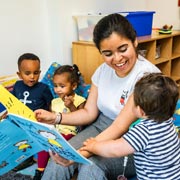 Our practitioners are skilled at making repeated reading feel fresh and interactive, even when the story is already very familiar. By using expressive voices, gestures, and encouraging children to join in with key words or sounds, we help bring the story to life each time. Children are often invited to take on the role of storyteller themselves, turning pages, pointing to pictures, and even “reading” aloud from memory. These small but powerful moments help build confidence and strengthen communication skills in a way that feels natural and joyful.
At Little Cedars Nursery, we also make space for quiet, independent reading. Our book areas are set up with inviting, accessible book choices so that children can freely revisit the stories they love. It’s not uncommon to see a toddler carefully turning the pages of a book they know well, reciting parts of it to themselves or sharing it with a friend! These self-initiated moments show just how much children internalise and treasure the books that matter to them.
Why not explore the possibility of sending your baby, toddler, or preschooler to Little Cedars Nursery in Streatham? We’re rated as a Good Provider by Ofsted and support many Government-funded childcare schemes and vouchers. These include the ’30 Hours’ extension to free childcare for children aged from just 9 months (for eligible working families) that begins in September 2025. Contact us today!
Little Cedars Nursery provides a first-class childcare service to families in Streatham and may also be convenient for families in and around Tooting, Furzedown, Balham, Norbury and Colliers Wood.
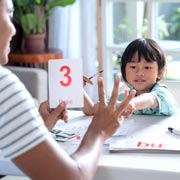 Concepts involving numbers and counting can sometimes be tricky for some preschoolers to grasp. Making sense of such concepts is important, though, because many aspects of children’s day-to-day lives will require an increasing understanding of numbers as time passes. Whether it’s knowing if a quantity of something is more or less than something else, how much of an ingredient is required in a mixture, or what change to expect from a purchase, children will need to grasp number-based concepts — and understand their real-world applications. What’s more, they’ll need to do this sooner rather than later if they’re to thrive, not least when they leave early years settings to begin school.
 Making ‘number cards’ with your child will be a fun and useful first step. These could be as simple as small pieces of paper or card, each having a single large number written clearly on them. Alternatively, your child could take the opportunity to get more creative. For example, you and your child could make the numbers bright and colourful, have patterned in-fills, or even be made to look like animals or number ‘characters’ that have eyes. For the very young, start with numbers up to 5, or go to 10 or even 20 for older and more advanced children. Size-wise, perhaps aim for cards sized at about A6 (a quarter of an A4 sheet) or even A7 (A4 divided into 8).
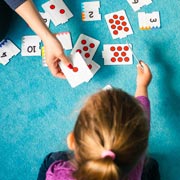 A more advanced form of the number cards could depict the correct number of dots (or other drawn objects) instead of — or as well as — the actual written number. So, for example, the ‘3’ card could show a column or row of 3 round dots or squares or even something like 3 drawn strawberries — whatever your child likes! In a way, it’s a bit like traditional playing cards where each has both a number and the right amount of hearts, diamonds, clubs or spades on it, to match the number.
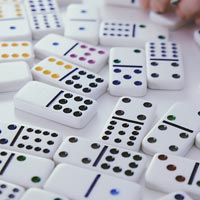 This next game will require a set of dominoes or, if you don’t have a set, they’re also easy enough to make in a similar way to the number cards. As you may know, each half of every domino has a number of dots, most commonly from 1 to 6. So, for example, there might be two dots on one end and five on the other, with the dot formations being rather like those you’d see on dice.
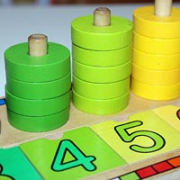 Understanding whether a quantity of something is more or less than something else is an important concept for children to grasp. Similarly, being able to estimate a quantity is a useful and practical skill for little ones to master. Such concepts can easily be highlighted, and the skills mastered, using simple estimating games. Some examples follow.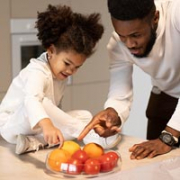
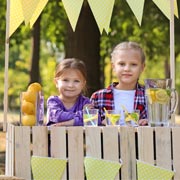 Pretending to be a shopkeeper or a shopper buying from one is a great next step for children. What’s more, they’ll naturally love playing shops having, no doubt, accompanied parents to real shops. This is where they can put all the things they’ve learned from the games above into practice. They can check they have the right quantities, weights or volumes or products, check they’re giving the shopkeeper the right amount of money, ensure that any change is correct — and so on! Playing shops is such a great way to master numbers, counting, estimating, weighing, addition, subtraction and more!
 Work at least 16 hours or more per week at the National Minimum Wage
 May’s World Bee Day is a wonderful and very worthwhile International event. It’s also one that’s perfect for children, including under-fives, to get involved in. Not only does it raise families’ awareness of the importance of bees and pollinators, but it’s also a great opportunity to introduce little ones to some of nature’s adorable little creatures and get them more interested in the natural world.
  World Bee Day arrives on the same date each year — the 20th of May. The annual event celebrates bees and other pollinators and the important role they play in the world. Without them, there would be no food crops, fruit, vegetables, or nuts, leaving animals — including humans — in real mortal danger. The event also raises awareness of the plight and dwindling numbers of bees and other pollinators around the world, shining a spotlight on ways to reverse their decline.
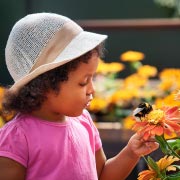 Children naturally take to planting seeds, tending seedlings as they grow, and watering plants and flowers. That’s great because it gives many opportunities for
  Wherever there are flowers, children will find bees, particularly if the flowers are brightly coloured and fragrant. A walk around the local neighbourhood, park, or natural open spaces will be both great exercise and an opportunity for little ones to spot some lovely bees and pollinators. Getting outdoors (appropriately supervised* and dressed) is beneficial to children in many ways, and a bee-spotting walk will be a simple way to introduce them to these important and cute little creatures. Can they spot a bumblebee? Can they spot a bee collecting nectar in their leg pouches (also known as pollen baskets or corbiculae)? Which
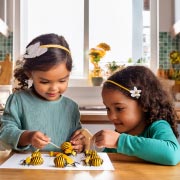 If the weather is unsuitable for outdoor activities, one of the easiest bee-related activities that children can take part in is making bee art. They can try drawing bumblebees, flowers, and hives with pencils, pens, or markers. Alternatively, they can get even more creative using paints or collages. Cutting up coloured tissue paper shapes and making bee-related images using appliqué is sure to be fun and impressive (child-safe scissors being used by parents or under super-close supervision). Parents can perhaps cut out any tricky shapes for the youngest children and then help guide them as they glue bee, flower, or hive elements into place.
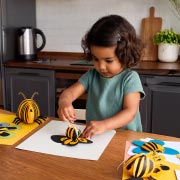 Bee art can be extended further by creating three-dimensional models and shapes. With a little help from parents or older siblings, even children under five can take part. They will enjoy sticking shaped paper or cardboard pieces and other recycled materials into place to form three-dimensional bees and flowers. Useful materials for such models could be things like corrugated card, tissue paper in various colours, coloured pipe cleaners, fabric, kitchen roll cores, paper plates and cups and, of course, coloured paints to decorate the final piece. Such creations can be as simple or complex as families like. This is a great activity to boost fine motor skills and hand-eye coordination!
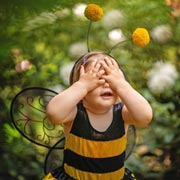 Children can get into bee-inspired fancy dress while doing their waggle dance! Striped clothes will help. Perhaps parents can help them make wings from card or material and shaped wire. Some antennae should not be too difficult to make from a headband, some pipe cleaners and some homemade pom-poms or foam balls from a craft shop. Children will love such creativity and the fun that ensues with friends once they’re all dressed up!
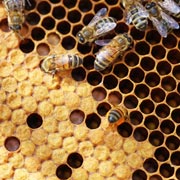 The bee-related activity ideas suggested in today’s post will be a fabulous way to introduce children to these magical little creatures, the wonderful work they do for us and the planet, and the measures little ones can take in their own lives to improve the plight of the natural world. The activities will also be fun and educational — indeed supporting many areas of
 Transform your living room into a mini adventure zone. If you don’t have existing adventure equipment, perhaps use cushions and make tunnels from blankets draped over furniture. You can also create masking tape ‘routes’ on the floor to mark out an exciting course for little ones to navigate, crawl through, jump over, and balance along. You can add a timer to make it a fun race or include challenges like hopping on one foot or crawling backwards. This is a great way to build gross motor skills while having loads of fun.
 Hide small toys or objects* around the house and give your child simple clues or a checklist to find them. This activity encourages problem-solving and keeps them engaged in an exciting mission. Perhaps introduce themes, for example, a pirate treasure hunt with a ‘treasure map’ or a nature scavenger hunt using items like leaves or toy animals.
 A few sheets stretched over furniture, with blankets, pillows, and child-safe* LED fairy lights below, can create a cosy hideaway. This can be used for storytelling, imaginative play, or simply a quiet space to relax. Encourage your child to bring their favourite books and stuffed animals inside, to make it their own secret retreat. Den building helps encourage creativity, teamwork, and a sense of independence.
 Let your little ones dress up as pirates, fairies, princesses, or superheros and encourage them to act out their own stories. Role-playing helps boost their imagination, creativity, and confidence. Provide props like child-safe* toy swords, wands, or kitchen utensils as pretend play items to expand their stories. Acting out different scenarios enhances communication skills and self-expression.
 Swap traditional paintbrushes for sponges, cotton pads, or even cut vegetable fingers or potato ‘stamps’. Using unusual tools to apply paint allows children to explore different textures and get creative with their masterpieces. You can also use things like leaves, or child-safe kitchen utensils, to achieve different effects. Let them mix colours and discover new shades while experimenting with new application techniques.
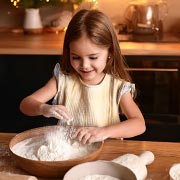 Help your child make their own salt dough with flour, salt, and water. Moulding and shaping salt dough is a great sensory and motor skill activity. While supervising children for safety, provide cookie cutters, rolling pins, or stamps so they can make different shapes and imprints. You can also add child-safe food colouring for extra sensory fun.
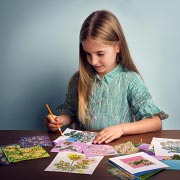 Give your child a mix of stickers, old magazines, and child-safe glue sticks to create their own collage artwork. This is a great way to develop fine motor skills. Set up themes such as Under the Sea or Space Adventure to inspire their creativity. When finished, perhaps display their artwork on the fridge or a wall to encourage pride in their work and nurture their sense of achievement.
 A large cardboard box can become a rocket, a car, or a house with just a little imagination. Provide crayons or water-based markers and stickers for decoration and let their creativity take over. You can cut out* windows, and doors, and even make a steering wheel for them. Encourage storytelling by asking them where their box creation will take them.
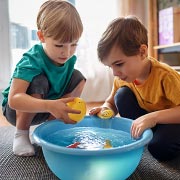 Closely supervising* children for safety, fill a washing-up bowl with water and let them guess whether different objects will sink or float. This simple science experiment is both educational and fun. You can extend the activity by discussing why some things float and others sink, teaching basic physics in an engaging way.
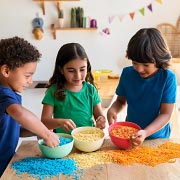 Dye dry rice or pasta with child-safe food colouring for a colourful, ‘scoop-able’ sensory play activity. Once the dye has dried, provide spoons, cups, and small containers for pouring, scooping, and mixing. This activity helps develop fine motor skills while being visually stimulating.
 (While supervising children*): mixing flour with baby oil or vegetable oil will create a soft, mouldable
 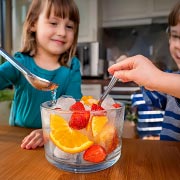 Freeze fruit like strawberries, orange segments, or suitably sized small toys in ice. Once you have removed them from the freezer, let children “rescue” the fruit and objects from the ice by using warm water and spoons. This activity promotes patience and problem-solving skills with a scientific twist. You can add child-safe food colouring to the water before freezing for a more visually engaging experience.
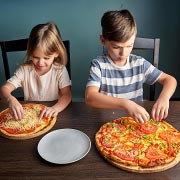 Provide ready-made bases, tomato sauce, cheese, and toppings for kids to assemble* their own mini pizzas. Encourage them to arrange toppings into faces, pictures, or patterns, making the activity both fun and delicious.
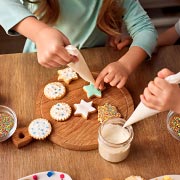 Applying icing and sprinkles to cookies or biscuits makes for a fun and tasty decorating activity. Let children experiment with different patterns and colour combinations, encouraging creativity and hand-eye coordination.
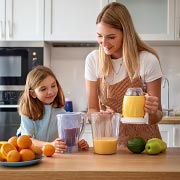 Let children choose their ingredients and blend* fruit with milk or yoghurt to make delicious and nutritious drinks. If they’re old enough, are closely supervised, and it’s safe for them to do so, let them help with mixing. Once the smoothie mix is ready, use fun paper straws or cups to make it feel like a special treat.
 Play your children’s favourite tunes and have a dance-off! A dance party is great for burning off extra energy indoors and it’s immense fun. Children can swirl paper ribbons or strands of coloured tissue paper for added fun and movement when they dance. Dancing helps children stay fit and is also good for honing coordination, balance, and motor skills.
 Musical statues and musical chairs are classic games that never fail to bring laughter and excitement to a rainy day. Add fun challenges like dancing in slow motion or pretending to dance like a robot and it’s sure to be a big hit with kids!
 Create shakers using rice or dried pasta in bottles — or use pots and pans as drums, perhaps using a wooden spoon. Encourage your child to form their own mini band. Different materials and a range of cardboard boxes or Tupperware-style tubs will allow children to experiment with a variety of possible sounds. It’s very creative!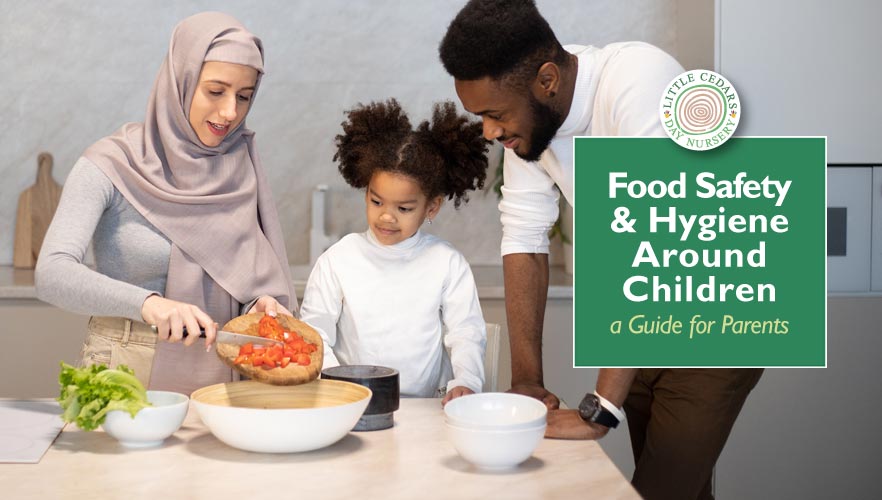
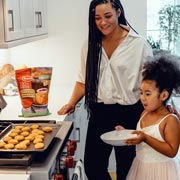 With all the food and feasting associated with Christmas, it got us thinking about food hygiene and safety for children. Aside from keeping alert to possible allergens, parents need to be careful to ensure families remain safe from illnesses caused by food hygiene mishaps. After all, such illnesses can be particularly dangerous to little ones, who are fragile, but can be largely avoidable when good hygiene measures are taken. With that in mind, today’s post outlines various ways in which parents can stay on top of hygiene around the preparation of food for their children. And, of course, such measures will keep adults safer too.
 Ensuring the food preparation environment is clean and hygienic will reduce the chance of microbes, including germs and viruses, contaminating food. Wiping down with warm, soapy, water on clean dish cloths is ideal for many such tasks. Anti-bacterial sprays are useful but should not be allowed to contaminate food, plates and cutlery etc. directly or indirectly.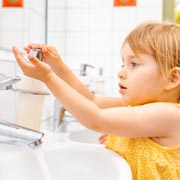
 Only feed children, especially babies and under-fives, age-appropriate food/meals. This is very important because many foods contain too much salt, sugar and saturated fats for young children. Some other foods can contain dangerous levels of toxins or even heavy metals.
  Always thoroughly wash vegetables, fruit and salads and, when appropriate, peel vegetables before use.
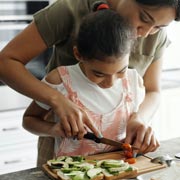 It’s hugely beneficial if children learn about food safety and proper hygiene associated with its preparation. Such things are useful life lessons and will help to keep them more safe and free of illnesses and nasty bugs. Teach them by example whenever possible. A great start is to encourage them to thoroughly wash their hands and fingers with warm, soapy water before preparing or eating food. They should also be encouraged to sit down at the table and be in a calm state before eating. This will help to better ensure food does not become contaminated or knocked onto a dirty floor. It will also reduce the chance of the child choking on food.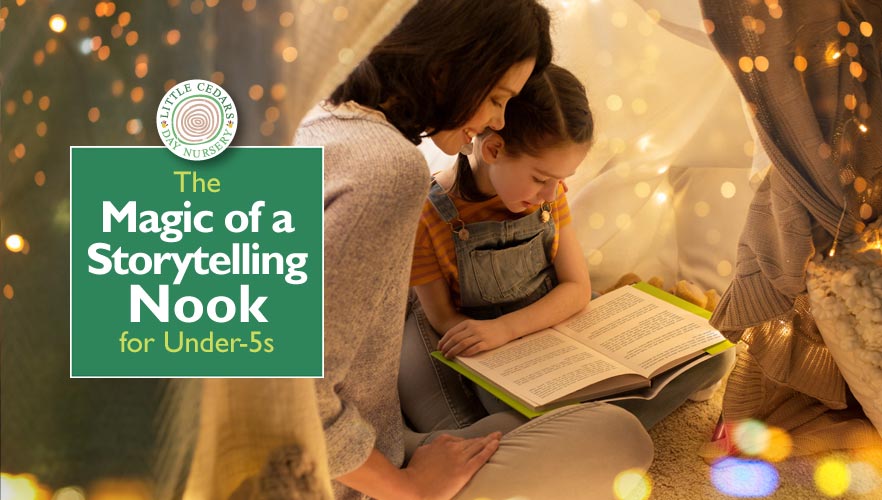
 Any successful storytelling nook needs to be warm, cosy, quiet and comfortable. That means choosing a corner or recess of some kind in the home that’s away from distractions like TVs and game consoles. Somewhere that’s not used as a thoroughfare by other family members will also help. Wherever you choose, it also needs to be warm. Therefore, somewhere away from draughts is required, so avoid being too close to entrances and exits to the outside. A corner of a quiet room or a tranquil alcove are therefore often ideal spots for your child’s storytelling nook.
 Whether reading from a book or creating a new story off the top of one’s head, there’s something that really brings a story to life — being animated and expressive during storytelling, rather like actors might do. That’s true whether it’s the adult or the child telling the story.
 Do consider adding a storytelling nook or reading corner to your child’s home. They’re great vehicles for escapism, are incredibly worthwhile, and offer potentially magical experiences for your child. And, if you go the extra mile to make them cosy, immersive and special, they will encourage your child to love reading and creating new adventures using their imagination. Storytelling nooks and reading corners can open up whole new worlds to your child and be a wonderful antidote to electronic screens, gloomy weather, and more limited daylight during winter months. What’s more, they’re a great way for all parties to grow deeper bonds through shared periods of exquisitely immersive, high-quality time.
 Are you the parent of a 3-year-old child, or one that’s just turning 4? If so, you need to choose your 3 preferred primary schools now and submit your application for them at the latest by mid-January of the coming year. It’ll be here before you know it! Whether you want your child to begin school at the age of four or five, you have limited time left for your application. With that in mind, today’s post outlines our top tips for a successful primary school application for your preschooler. Read on to learn how to maximise your potential success in achieving a school place that’s best for your child.
 It’s important for parents to focus on primary schools that are close to their child’s home. That’s for two reasons:
 Visit the schools on your shortlist. Such ‘in-person’ visits are like gold dust. You can ask questions, get a feel for the school, see how the existing children are getting on, witness the teaching style, and see how well your child might fit in. Take them with you if possible. Most primary schools will have open days or evenings, so find out about those and attend. Alternatively, call the head or school office to arrange a guided visit if possible.
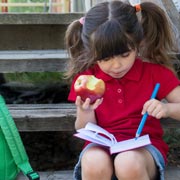 One of the most fundamental decisions you need to make before applying is whether you want your child to begin at primary school when they’re 4 or the ‘legal’ maximum age of 5. This is a conundrum especially for “summer-born children” i.e. those born between the start of April and the end of August. For this age group, they’ll be amongst the youngest if they start in Reception Year at 4 or amongst the oldest if they defer their start until the age of 5. What’s more, for those deferring until 5, it’s not the parent who decides whether a child goes into Reception or Year 1 — it’s the schools and local admission authorities. So, parents need to decide, before applying, whether they wish to go with the usual flow and start their children at 4 (will they be ready?), or defer a year until they’re 5. It’s a fine balancing act and your decision needs to be made in the best interests of the child. That said, most children do start at 4 and go in Reception Year.
 Priority for primary school places is given first to those who submit applications on time. Each year, that means between the 1st of September and the 15th of January when your child is 3 or has just turned 4. Even if you intend to defer your child’s school start until they’re 5 rather than starting them while they’re 4, you still need to apply while they’re only 3 or have just turned 4. If you miss the mid-January deadline, you will stand a much lower chance of achieving a place for your child at your preferred school(s) — because places will already have been allocated to those who applied on time. Sadly, many families miss out because they simply didn’t realise how early they needed to apply.
 You read that right! When National Offer Day for primary schools arrives, it’s generally agreed that you should accept whichever school place is offered to your child. That’s the case even if you’re unhappy! It’s because your child then has a firm school place to fall back on should you appeal, or go on a waiting list for another school, and are unsuccessful. Accepting the initial school place that’s offered does not adversely affect your chances with appeals or waiting lists, which is why the accepted wisdom is to accept the initial offer.