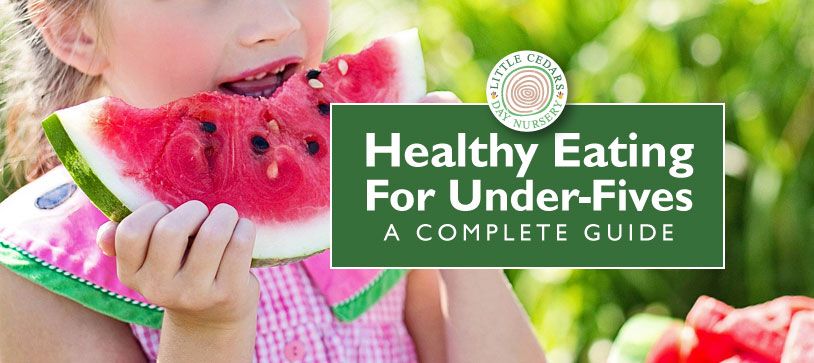
 With families living busy lives these days, it’s not always easy to provide the very best nutritious meals for children. This is compounded by an abundance of ready meals and convenience food available in shops and advertised everywhere. However, healthy, balanced diets are incredibly important for children in their early years. Adopting a healthy diet early on can mean that some diseases associated with later life can be avoided. Healthy food also has other beneficial effects on growing children including sustained energy levels, improved cognitive activity, the evening out of a child’s moods, help with mental wellbeing and maintaining a healthy weight.
What should children be eating as part of a healthy lifestyle?
As a rough guide, toddlers need three meals per day plus two or three snacks. They also need to drink six to eight drinks per day.
“Experience of a variety of different foods at an early age increases acceptance of new foods, and provides a more diverse diet with the range of nutrients, vitamins and minerals needed for health.” (Public Health England)
Young children need a balanced diet, i.e. one that gives them all the elements that they need to remain healthy and thrive. There are four main food groups that form a good basis of healthy living. A rough guide is to try and include something from each food group in every meal, or within their snacks. The four core food groups are:
- STARCH, which is found in bread, potato, rice cereal and pasta. Starch provides the energy children need as well as Vitamin B and calcium. You can choose wholegrain versions of these food types if you wish to introduce more fibre and nutrients, but this should only be introduced gradually.
- FRUITS & VEGETABLES. These will provide a source of Vitamin C as well as many other nutrients. A rough guide is about 5 hand-sized portions of fruit and vegetables per day. Fresh is great, but it can also be canned, dried or frozen.
- DAIRY, which can include cheese, yogurt and milk. Full fat versions are best for toddlers but semi-skimmed options can be given from the age of 2. A rough guide is about 3 portions a day.
- PROTEIN, which is typically found in meat, fish, nuts, pulses and eggs. You can also use pulses like tofu and soya. These foods provide iron and zinc. Also try and give children an oily fish now and then, like salmon or fresh tuna. Try to include roughly two portions a day of the foods in the protein group.
How big is a portion?
 Make sure you give the correctly sized food portions. As a rule of thumb, one portion is generally about the size of the child’s cupped hand for things like rice, beans and other starchy foods of that nature. For proteins like meat and fish, the size of the palm of the child’s hand is about right. For cereal and fruit, an appropriate portion is about the size of the child’s fist. For a portion of one vegetable type, you can start something about the size of a child’s cupped hand but you do not need to limit it so much. For example, give them more vegetables if they are still hungry after eating everything on their plate and are asking for seconds.
Drinks
Don’t forget to make sure your child stays hydrated. Aim for 6 to 8 drinks per day. Water is best, but also include milk. Try to avoid sugary drinks, which can cause tooth decay and will be laden with calories.
Recognising when children are overweight
Our young children grow at different rates and come in all different shapes and sizes. It can therefore be difficult to gauge whether your child is overweight and the correct quantities of food are being given. Warning signs may include your child struggling to keep up with others when exercising or playing energetic games, wearing larger clothing that’s really meant for an older child, wanting portions better suited to someone older, or asking for more food once they’ve finished eating a reasonable sized meal.
If you are at all worried, seek professional advice. Your GP or health visitor should be able to advise you. On the flip-side, occasionally children’s diets may need boosting with extra vitamins. If you suspect this is the case for your child, also seek professional advice.
“Research shows children who stay a healthy weight tend to be fitter, healthier, better able to learn, and more self-confident.” (NHS)
The Impact of Childhood Obesity
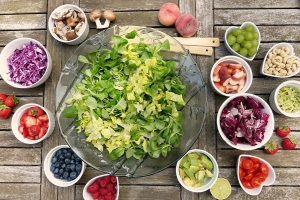 Childhood obesity is a growing problem in the UK, with nearly a third of children aged two to fifteen being overweight or obese. What’s more, data shows that children are becoming overweight at ever-earlier ages and are generally eating less fruit, vegetables, oily fish and fibre than is recommended. The lack of a varied diet will leave children lacking in some essential vitamins and minerals. This is all of major concern. Obesity alone can lead to health issues in later life such as diabetes, heart problems, high blood pressure and even cancer. It may also lead to bullying and self-consciousness which may adversely affect a child’s self-esteem and mental wellbeing.
Apart from medical conditions, the main causes of obesity are a poor diet rich in sugar, fat and salt and children consuming more calories than they are burning up. This is not helped by the media, which is overrun with adverts promoting unhealthy food, and some children having too little exercise. So, parents, nurseries, educational settings and parents alike all need to play their part in ensuring that children eat what’s good for them, and in appropriate quantities.
How can nurseries & pre-schools help?
“Children’s food preferences and eating habits are formed early in life and the time that they spend in early years settings provides an ideal opportunity to shape healthy behaviours.” (Public Health England)
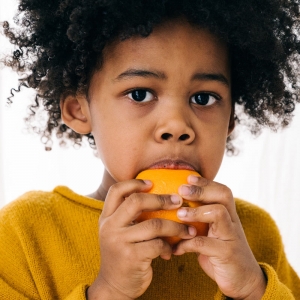 Little Cedars Day Nursery recognises the incredibly important impact of a healthy diet on the young. For this reason, the nursery is committed to delivering a very healthy, high quality eating programme to all children at the setting. High quality, fresh ingredients are used each day and are prepared by our own on-site chef. Children attending for a full day will receive 3 meals plus a snack during the morning and another during the afternoon. Water is also available to drink all day. Our chefs are also happy to provide vegetarian and vegan meals and to cater for any other dietary requirements.
Get in touch
If you’d like to know more about healthy eating for under-fives at our Streatham nursery in London SW16, call us on 020 8677 9675 or email us here. We’ll be happy to answer any questions. You can also book a visit to the nursery here if you’d like to see the nursery/pre-school in action during the working week — we’d love to show you around.
This article is for general guidance only. Always seek professional medical advice if you are concerned about your baby or child’s health and wellbeing.