

[May 2025]: Applications are now open for the final “30 hours” expansion of the Government’s free childcare scheme for working families. The new, expanded childcare hours are for eligible children, aged 9 months up to 3 years by 1st September 2025, attending nursery from that month. It doubles the previous number of hours available under the scheme, potentially saving eligible families as much as £7,500 per annum per child. The extended childcare hours will also allow parents — particularly mothers — improved potential to get back into work or take on more hours. Either would increase both household income and the greater economy. Most importantly, though, increasing access to high-quality early years childcare will give children the best start in life, enabling them with the skills and tools necessary to thrive once they leave early years settings to begin school.
Don’t delay — if your child is eligible, you can now apply for the September 2025 term but you only have until the 31st of August in which to do so. That deadline will be here before we know it, so act quickly if you want to benefit from the expanded childcare funding from September 2025.
The changes will make a “massive difference to children and working parents”— Bridget Phillipson, Education Secretary.
Here’s a snapshot:
- Who can apply? Eligible working families with a child aged 9 months up to 3 years by September 1st 2025.
- How many funded hours will be available? 30 hours per week over 38 weeks per year term time (1140 childcare hours over the year).*
- When can families start to apply? From 12th May 2025 for a September ’25 term start.
- When is the application deadline? Apply no later than 31 August 2025 if you want your child to start nursery in the September 2025 term.
- What About Children Aged 3 and 4? 3-and-4-year-olds of eligible working families have been able to access the 30 hours of free childcare per week (1140 hours per year) since it was phased in late last year (September 2024). Previously, only half those hours had been available under the scheme for this age group.
- Does the funding cover everything? No. The government funding does not cover additional items like extra childcare hours over the allowance or nappies, meals, and the cost of trips. Your chosen provider will be able to provide more details specific to their particular setting. To clarify for government-funded places at Little Cedars Day Nursery, meals, other consumables, and extra hours will need to be paid for separately.
- What if we’re not a working family? If you’re not a working family that’s eligible for the new 30 hours extension, it’s worth noting that all children who live in England already qualify for 15 hours per week (570 childcare hours per annum) under their ‘Universal Entitlement’. That is a separate scheme that’s explained here, does not require parents to be working, and is not means tested.
* Some settings may allow some flexibility, for example, by spreading out the same number of annual hours over more weeks of the year. For the academic year 2025-26, Little Cedars will accommodate families in this way via a 51-week provision starting in September 2025. Click here to learn more.
This is a plan “to break the unfair link between background and opportunity across this country, which starts by ensuring our children start school ready to learn.” — Bridget Phillipson, Education Secretary.
Eligibility
The key rules around eligibility for working families state that both you and your partner if you have one must:
 Work at least 16 hours or more per week at the National Minimum Wage∞ or more;
- Earn an adjusted net income∞ of less than £100k per annum;
- Have a National Insurance number.
 Work at least 16 hours or more per week at the National Minimum Wage
If the above factors do not apply to you, you may still be eligible for childcare funding if you are disabled, a carer, on maternity/paternity/adoption leave, or receive certain benefits or assistance from the government. Check your eligibility more comprehensively in Step 1 below. More details and an excellent overview are also provided in an official video provided by the Department of Education (viewing time: 2½ minutes).
To-Do List
- First, check that your child is eligible via the Childcare Choices website.
- If eligible, apply for the funded childcare on the Government website by 31 August 2025 if you want your child to start in the September 2025 term. If applying for a different term, you will need to apply during the term preceding it (terms begin on the 1st of January, April and September). Once approved, you will be issued with a code that your childcare provider will require in order to access the funding.
- Contact your preferred childcare provider at any point to check if they have a place available for your child under the scheme. Be aware that some have waiting lists.
- Log into your Gov.uk childcare account every 3 months to ensure your code is kept up to date. You need to reconfirm your details and check for continued eligibility in case your circumstances have changed.
You will not be able to receive the funded childcare without a valid code!
Funded Nursery Places at Little Cedars Nursery, Streatham

 Little Cedars Day Nursery is a wonderful childcare setting in Streatham, close to Tooting Common, that offers a first-class service to local families and their children. The setting supports most government-funded childcare schemes and thereby provides affordable childcare for Streatham, Furzedown, Tooting and Balham families. Through the government funding schemes, free childcare is available to eligible children aged from 9 months to school age and this includes a number of places available under the extended ’30 hours’ scheme for working families. It’s the perfect way to give children the best start in life while also allowing parents, especially mothers, to rejoin the workplace after maternity leave, boost working hours if they want to, and elevate household income.
Begin your application to Little Cedars Nursery, Streatham, come for a visit with your child or send us your questions today. We can’t wait to meet you!
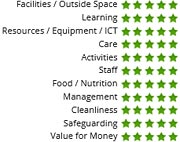
Little Cedars Nursery in Streatham is rated as a Good Provider of childcare and early years education by Ofsted. It may also be a convenient choice for families living nearby in Tooting, Furzedown, Balham, Norbury and Colliers Wood.




 Last year,
  As well as helping families financially, the scheme expansion should help children begin their early years education even earlier, for many, which has been shown to be hugely beneficial to them. The free childcare provision will also help many more women back into the workforce. Children, families and the economy should all benefit.

 When you’re searching for the best nursery for your baby or toddler, or the perfect preschool for your 3-or-4-year-old, the choice can often be overwhelming.

 Autumn is a time of the year when magical colour changes occur across gardens, parks and landscapes. Leaves can be seen in a multitude of different colours before falling along with seeds, ripening fruits and berries. In autumn, nature shows us a wonderful metamorphosis and it’s a time of beautifully crisp air and clear distant views. It’s all incredible to behold and also offers children some unique seasonal activity opportunities.

 The arrival of October means it’s time for children and families to prepare for Halloween! Arriving on the 31st of the month, it’s a firm favourite for any childhood and gives children the opportunity for uniquely spooky fun, games and dressing up. Indeed, Halloween offers a wonderful variety of activities for children to take part in and that’s exactly what we look at in today’s article. Stand by, then, to prepare the household for some spookylicious Halloween activity ideas for kids!
 Children adore dressing up for Halloween. The spooky nature of Halloween costumes really appeals to them, especially if they get together with friends and compare outfits on Halloween evening.
 Similarly, black sheets are easy to make into witch or wizard outfits. Alternatively, use black clothing and, if it’s no longer being worn for anything else, it can even be given ragged edges for extra effect. Add pointy black hats made of cardboard or paper and the costumes are complete.
 If you want your child’s Halloween experience to be truly spooktacular, encourage them to decorate the house – whether inside or out – with all manner of ghoulish decorations and ghostly paraphernalia. Home-made spider webs can, of course, be made using string, thread or stretched-out cotton wool. However, such decorations can usually be purchased inexpensively from supermarkets, which typically have cheap Halloween decorations around October each year. Spiders can be home-made by children from wool or black pipe cleaners, or similarly bought commercially along with shop-bought decorations depicting skeletons, ghosts, bats and suchlike. You can also buy LED lights, including strings of lights, that look like Halloween pumpkin lanterns. Such lighting is great for extra atmosphere!
 If your household is carving pumpkins for Halloween this year, perhaps save some of the flesh and use it to make a spookylicious pumpkin soup for the family to eat come Halloween evening time. There are plenty of excellent recipes online and children can help make the soup, under supervision for safety purposes.
 Children can combine Halloween fancy dress costumes, spooky decorations, and themed food and drink by hosting a Halloween party for friends and family. Such preparations are sure to set up a wonderfully spooky atmosphere in which children will have immense fun comparing outfits and getting into the spirit of the event. Add Halloween-themed games, play ghostly music and take turns to read ghost stories and the evening is sure to be one to remember! It’s also a great conduit through which children can socialise and perhaps grow stronger bonds.
 Take the Halloween activities to an extra level by arranging a group trick-or-treat session, under adult supervision, for children in your street. They will absolutely love this activity and it’s sure to result in much giggling and laughter if it goes as planned. However, be sure to check with each neighbour before the day. In that way, they can opt out if they prefer not to get involved. For those that do take part, most neighbours usually go the ‘treat’ route but be ready for the possibility that a few may opt for the ‘trick’ option, in which scenario the children under your supervision will need to be ready with a fun but harmless trick. Some forethought and creative thinking may be needed there, with care being taken not to allow children to overstep the mark.
 Pumpkin patches are often wonderful places for children and families to spend a few hours in the run-up to Halloween. In such places, your little one can explore amongst hundreds of pumpkins and other gourds of different sizes and shapes. And, if they find one they take a liking to, they can usually be purchased to take home, or might even be included in the price if the venue has an entrance fee. Pumpkin patches often also have other Halloween-themed activities at this time of year, whether it’s displays where you can take memorable snaps of your child amongst the pumpkins, wheelbarrow rides for children across a pumpkin field, pop-up refreshments with Halloween-themed food and drink or pumpkin-decorating workshops, they’re always great fun for children. They really help to make Halloween the special time of year that it is.
 Once you’ve sourced a suitable pumpkin for your child, it’s time for the really fun part — pumpkin carving and decorating! While the carving part may not be suited to children of a young age (knives are super-dangerous), they can usually help, under supervision, with scooping out the flesh and then, the most fun part of all, decorating. Pumpkins can depict faces, spiders, owls or any spooky imagery you or your little one can imagine. And, even if they may be too young to carve the holes,
 they can still decorate using paint or markers, or simply enjoy Mum or Dad getting creative on their behalves.
 TIP: Kids don’t even really need a pumpkin; the smallest of children can decorate oranges or yellow/orange bell peppers! They look really cute and an added bonus is that they avoid the need for any carving.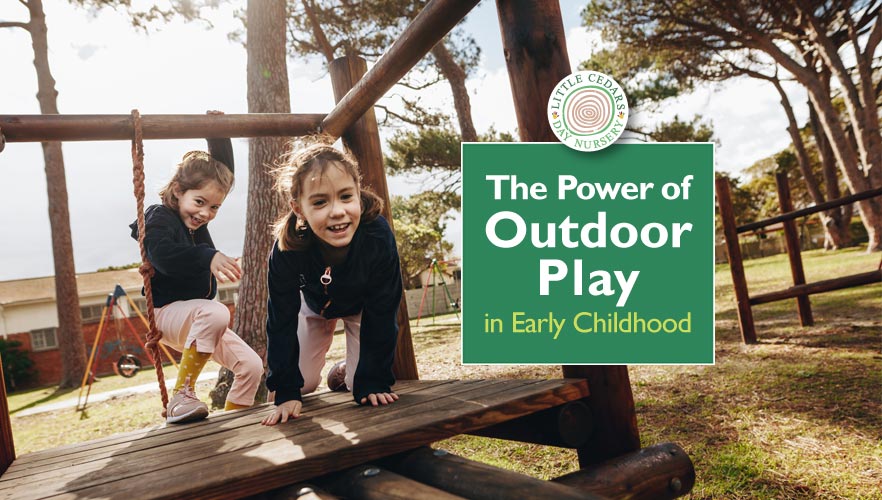
 In today’s guide, we take a close look at the incredible importance of outdoor play for children, including those under five. Outdoor play isn’t just about fun; it’s one of the cornerstones of childhood learning and development and has an immense number of benefits for little ones. So, in this comprehensive article, we’ll explore why outdoor play is so essential for our youngsters and how its effects can be transformative. Let’s take a look…
 For children, the outdoors represents a magical place where fun, exploration and real adventure can take place. Picture a world where a simple stick can become a wizard’s wand, or a puddle can transform into a treasure-filled lagoon, and you’ll soon understand how exciting the outdoors can be for children. Indeed, outdoor play is the realm of limitless imagination. It offers children a vast canvas in which to immerse themselves into adventures, fostering creativity and igniting their instinctive curiosity.
 The Great Outdoors serves as a natural classroom, with true hands-on learning experiences that provide numerous opportunities for children to acquire new skills and knowledge. Whether it’s
  Outdoor play engages all the senses and
  The outdoors serves as an exceptional classroom. When they’re playing outside, children effortlessly absorb knowledge about the world around them. In the open air, they will naturally learn about nature, seasons, different types of flora and fauna, and how the environment functions. It is true learning through discovery.
 The open spaces of the outdoors also serve as a wonderful canvas for creativity. Children’s imaginations run wild outdoors as they invent games, stories, and art inspired by the natural world. Outdoor play encourages them to think in new, innovative, ways and to truly embrace their creative potential.
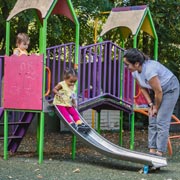 At Little Cedars Nursery, we really understand the profound impact that outdoor play has on early childhood development. With that in mind, our childcare practitioners ensure that children are given every opportunity to immerse themselves in a wide range of outdoor activities that help to nurture every child’s learning, growth, curiosity, and resilience. And let’s not forget one more important factor about outdoor play — it’s simply immense fun for children! As such, it is a perfect way to facilitate learning in the most natural way of all — through play.
 Today’s minibeast-spotting activity is the third in a series of nature-based children’s activities and, like the others, comes with a free poster. As with the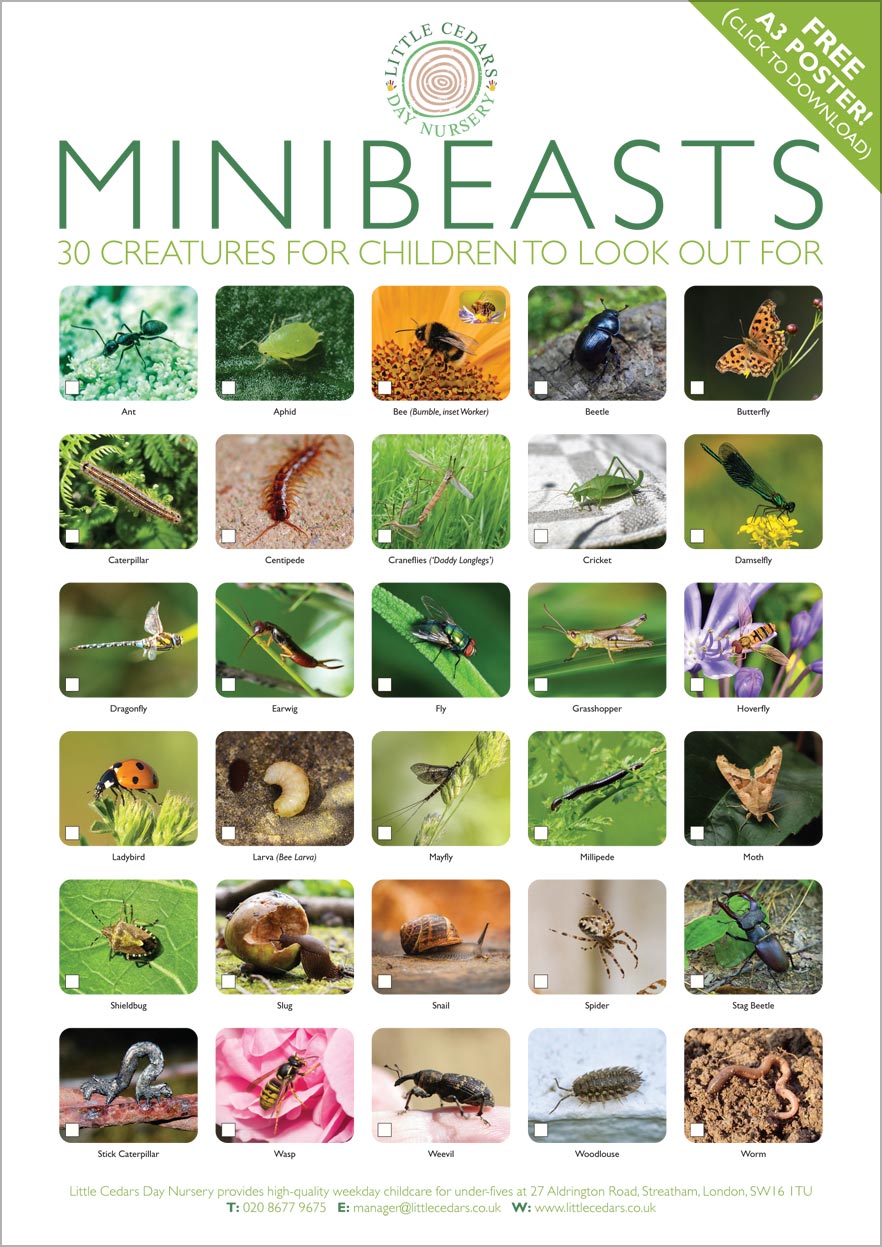
 Identification of a special educational need or disability is, of course, the first step in being able to properly support a child with SEND. For this reason, good early years providers like Little Cedars Nursery will, as a matter of course, watch out for signs of things that might be challenging for children. As prescribed by
  Support plans for suspected or confirmed special needs or disabilities are then discussed and custom-designed for the child. Such plans will be agreed between the child’s parents/caregivers, staff at the early years setting itself and any external specialists or professionals involved in the child’s care. Such programmes will be customised to suit the individual child’s specific needs and may include tailored activities, strategies, resources and so on. Formalisation of the support programme will allow all parties to pull in the same direction, working cooperatively for the benefit of the child.
 In parallel to the SENCo at the child’s early years setting, local authorities also have their own Special Educational Needs Coordinator, known as the Area SENCo. They will also be integral to a child’s SEND support plan, helping with coordination between the local authority, the various parties involved in supporting the child, and in relation to any special funding requirements. If approved, special funding might be required, for example, for an additional member of staff tasked with giving one-to-one support to the child, or to fund extra learning resources and activities for them.
 All 3- and 4-year-olds living in England are eligible for a minimum of 570 hours of free childcare per annum, irrespective of whether or not they have SEND. This is known as Universal Free Childcare or their Free entitlement and is typically taken as 15 hours of childcare each week over 38 weeks of the year, but how it is taken can differ.