

 Sleepless nights are something most parents expect when a new baby arrives. But sometimes those broken nights can stretch on for months, through into toddlerhood, or even beyond. For affected families, bedtime can become a battle every night, and soon the exhaustion can build up and take its toll. High-quality sleep is important for little ones too, of course, so solving sleep problems will benefit the entire household. For parents who have perhaps tried everything without success, a sleep consultant can step in to offer support and professional guidance.
At Little Cedars Nursery, we often hear parents sharing stories of early morning wake-ups, tricky nap times, or little ones who seem determined to party at midnight. It’s important to know that these challenges are common, and they don’t mean you’re doing anything wrong. Sometimes, though, an extra helping hand can make all the difference. So, with that in mind, welcome to today’s guide to sleep consultants.
What Exactly is a Sleep Consultant?
A sleep consultant is someone who works alongside parents to help babies and young children develop healthier sleep patterns.
Some consultants have backgrounds in health visiting, nursing, or childcare, while others have trained through specialist sleep programmes. Because there isn’t formal regulation for the specialism in the UK, approaches can vary. In view of this, it’s advisable to ask about their experience and methods, and seek any recommendations from friends and family, before choosing your child’s sleep consultant.
What Does a Sleep Consultant Do?
 A sleep consultant works with families to understand a child’s sleep patterns and suggest gentle, practical ways to improve things. They spend time learning about a child’s routine, feeding habits, daily schedule, and sleep environment before creating an improvement plan that feels realistic for the child’s family. The idea isn’t about handing parents a rigid set of rules, but about working together to find an approach that feels the most suitable and fits in with the family’s values.
When Might a Family Consider Using One?
Every child has ups and downs with sleep, and many phases resolve themselves. But if night waking is relentless, naps are a constant struggle, or early mornings begin long before dawn, it can start to impact the whole household. Parents sometimes seek help when they feel they’ve tried everything themselves — advice from books, friends, or online forums — but nothing seems to have worked. A consultant offers not just ideas, but reassurance and encouragement, which can be just as valuable as the plan itself.
What to Expect
 Working with a sleep consultant often begins with a thorough conversation about your child’s routine — what time they go to bed, how they fall asleep, how they feed, and what happens during the night. From there, the consultant will create a personalised plan that involves tailored changes. These might be small adjustments, such as introducing a calmer wind-down before bed, or they could involve gradually teaching your child to settle with less help. It may also include strategies for how you respond when your child wakes in the night.
Putting the plan into practice takes consistency and patience, which is why many consultants often stay in touch for several weeks, checking in by phone, video call, or messages. That ongoing support can make the process feel less daunting and also help keep families on track.
Different Approaches to Sleep
Not every consultant works in the same way. Some focus on gentle, responsive methods where parents stay close, offering comfort and reassurance as children learn to settle more independently. Others place more emphasis on the rhythm of the day, with carefully timed naps, bedtime routines, and adjustments to the sleep environment. A few use more structured behavioural strategies, for example, where parents slowly reduce how much they intervene at bedtime.
Most UK-based consultants tend to favour family-friendly, gentle approaches rather than anything that involves leaving babies to cry alone for long stretches of time. Still, it’s important for parents to ask about this in advance and choose someone whose philosophy feels like the right fit.
Practical Considerations
 Costs for hiring a sleep consultant vary. Depending on the consultant contacted, a one-off initial consultation can often be an affordable first step — and one that will allow families to explore the potential of proceeding with a full plan. However, a full package with several weeks of guidance can often be several hundred pounds. In-home, overnight support is potentially at an even higher end of the scale — but, again, it varies from consultant to consultant. Many families find that online or phone-based support from a sleep consultant is more affordable, and sometimes just as effective.
There are also free options to explore, of course. Health visitors sometimes run sleep workshops or offer individual guidance, and charities such as the Lullaby Trust provide excellent advice including important resources on safe sleep. Many parents also find comfort via parenting groups, where they can share experiences and discover new ideas.
Our Perspective
 At Little Cedars Nursery, we understand that sleep — or the lack of it — has a huge impact on family life. Sleep consultants may not be a quick fix, but for families who are reaching their limit, they can offer a real lifeline. Success usually comes from finding someone whose approach aligns with your parenting style, sticking with the plan for long enough to see improvements, and feeling supported along the way.
Sleep challenges can feel overwhelming, but whether you decide to invest in professional help or draw on free resources and community support, the most important thing is remembering that you’re not alone. With time, consistency, and sometimes a little outside help, things really can get better. And remember: struggles with sleep are common and don’t make you any less of a wonderful parent. And, who knows, perhaps in a year or two when you’ve come out the other side, people may come to you for advice!
Little Cedars Nursery, Streatham

 Little Cedars is a high-quality nursery in Streatham, near Tooting, Furzedown, Balham, Norbury, and Colliers Wood. Graded as a good provider by Ofsted, we ensure that babies and children under five have the very best start in life in a warm, caring, home-from-home environment. We also support free childcare schemes for eligible children aged from 9 months to 4 years — great for working parents!
If you would like to learn more about Little Cedars Nursery or visit in person for a guided tour, please get in touch. You can also ask any questions or start the process of enrolling your child using the options below:

 Tantrums are a common part of life with toddlers and under-fives, but when they happen, they can be very challenging! Whether it’s a meltdown at dinner time or a dramatic on-the-floor outburst in the middle of the supermarket aisle, they can test even the most patient of parents and carers. However, it’s important to understand that tantrums aren’t a sign that something is wrong — they’re actually a normal, healthy stage of child development.
 In their early years, children are still learning how to manage big emotions. There’s a mismatch, though; their brains are developing rapidly, but they haven’t yet mastered language, impulse control, or emotional regulation. So, when they’re tired, hungry, overstimulated, or frustrated, it can all become too much for them.
  When a tantrum starts, staying calm yourself is key. Your child will take emotional cues from you, their trusted adult. If you can remain steady, even if you’re feeling flustered inside, you send the message that you’re in control—and that they’re safe.
 Avoid reasoning or explaining too much during a tantrum. When a child is overwhelmed, they’re unlikely to take much in. It’s often best to wait it out and stay close so they know they’re not alone. For some children, a gentle touch or hug might be helpful. Others may need a bit of space before they’re ready for comfort.
 Offering limited choices — like “Would you like to wear the red jumper or the blue one?” — can also give them a sense of control without overwhelming them.


 Last year,
  As well as helping families financially, the scheme expansion should help children begin their early years education even earlier, for many, which has been shown to be hugely beneficial to them. The free childcare provision will also help many more women back into the workforce. Children, families and the economy should all benefit.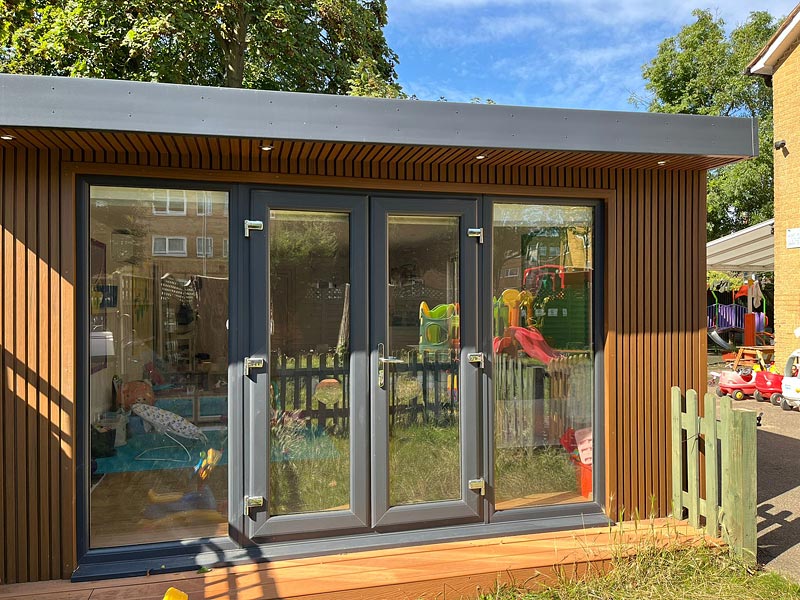
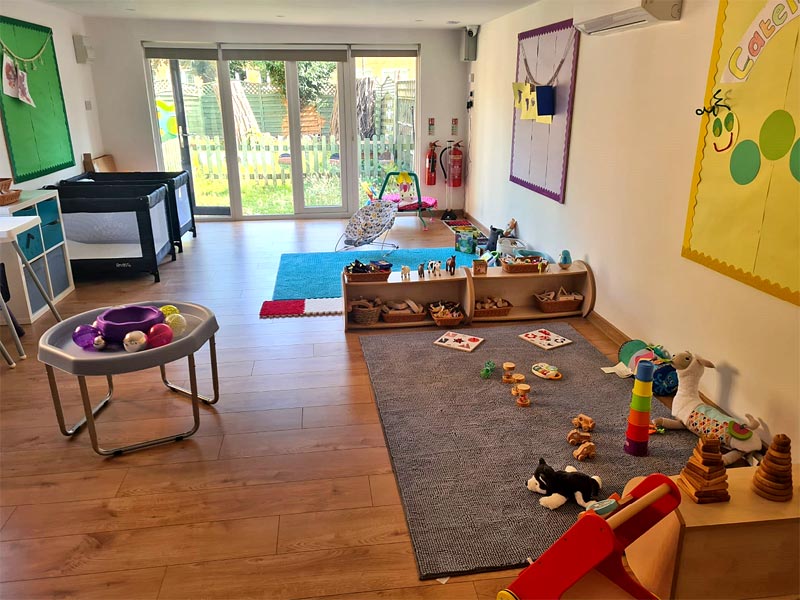

 Children are all different. They learn and develop at different rates to each other and that applies to potty training success too. Circumstances in each family are different too, and this will also have an effect. In other words, there is no hard and fast rule about the age by which little ones should have mastered the use of the potty. Parents should therefore not worry if their child is slower to master toileting than their siblings or peers. That said, some very rough guidelines will always be useful to parents and these follow.
 Allowing your toddler to help choose their potty can automatically make it less daunting and instead more of a ‘friendly’ thing to have in their life.
 Children can also be encouraged by having their own toy potties. They, and parents, can ‘train’ teddies and dolls to use these during play. Doing so will help them be both relaxed and more educated about potty training — even proactive.
 Don’t forget to make potty training fun! Many of these tips will help towards that, including the rewards idea (#4), praise (#5), characters on potties (#7), toileting-themed music (#8), and so on.
 household cleanliness, and for their independence.
 Have you ever noticed that some babies are born with blue or grey eyes that later change to brown, green or hazel? It’s a magical metamorphosis that sometimes occurs in growing infants and it can be quite intriguing. Parents may indeed wonder whether their newborn child’s eyes are going to change or remain the same as they were at birth. The answer comes down to a combination of time, location, genetics and something called Melanin and today’s article explores this captivating phenomenon.
 When we talk about eye colour we are, of course, talking primarily about the colour of the irises of a human’s eyes. The iris is the circular muscle around the centre pupil and it is this muscle that governs how much light can pass into the eye by making the pupil larger or smaller. When there is lots of light around, the iris constricts the size of the pupil and, in contrast, makes it big when light levels are low.
 Melanin is a protein that’s secreted by special skin cells called melanocyte cells, which form colouration pigmentation in our bodies, including in the eyes, hair and skin. When it comes to the eyes, a lot of melanin pigment means the eye colour is more likely to be dark, for example brown. In contrast, those without much melanin eye pigmentation will have lighter eyes, for example, grey or blue. It is also those lighter colours that are most affected by the Rayleigh Scattering and Tyndall effects that we discussed in the last section.
 Melanin is a protective protein and, by having more melanin pigmentation, an eye has greater protection against harmful ultraviolet (UV) sun rays. That’s one of the reasons that populations from hot, sunnier countries are more likely to have brown or darker eyes — because those are better protected from the sun’s UV rays. Indeed, brown eyes are the most common eye colour in infancy, despite some common misconceptions. It is true, however, that blue or grey eyes are common in infancy in Northern Europe, where the sunlight is less strong.
 Genetics also play a part in the colour of the eyes and can be helpful when attempting to predict a newborn’s eye colouring. However, correctly predicting the colour of a baby’s eyes based solely on that of parents is not guaranteed. That’s because any inherited colouration may skip one or more generations. And, with a mix of different chromosomes and genes being passed down from parents, grandparents and beyond, skipping generations can sometimes result in completely unexpected eye colouring in infants. Genes will also control how much melanin will initially be present in a newborn’s eyes as well as affecting further production as the child ages and the eyes adjust to conditions.
 Heterochromia is a condition that affects less than 1% of the world’s population. Those affected may have two different coloured eyes or perhaps two colours present in one eye. The causes of heterochromia include physical injury, disease, genetics or sometimes the use of specific medications.
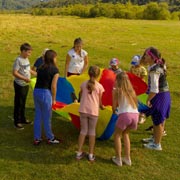 Watch any infant, toddler or preschooler for just a few minutes and you’ll see that one thing comes naturally to them; play. Indeed, it’s as if they’ve been programmed that way, with the need to play coming instinctively to youngsters, whatever their species. Aside from it simply being great fun, there are a multitude of very good reasons for that — play teaches them an enormous amount about each other, themselves, other living things, cause and effect, and the world around them. It also allows them to learn and fine-tune a whole swathe of new skills as they grow older, play new games, and become more experienced. Add in some careful steering and nurturing during that play from Mum or Dad and they have a real recipe for success. With that in mind, we look today at the key ways in which learning through play profoundly benefits children.
 Play and creativity go hand-in-hand. Whether making up a new game, role-playing, constructing, or playing in a den, children will naturally create both scenarios and physical items as part of their play. Such activities teach them how to use their imaginations and to be creative — in a myriad of ways.
 Different play activities require different types of movement and physical interaction from children. Indeed, this is a fundamental aspect of play. Whether jumping and running with large movements or carefully constructing with small items like building blocks, children will naturally hone both fine and gross motor skills during play. Such physical skills are essential to their ability to navigate and interact with the world around them and, in the most natural of ways, play is at the heart of enhancing those abilities.
 Social skills are also improved through play. Children naturally play with other children and, by so doing, will soon pick up social skills as they begin to better understand social protocols that allow them to succeed both as individuals and in groups. Decent manners, saying please and thank you, cooperation, teamwork and closer bonding are all examples of social skills that can benefit through group play. Other examples include conflict resolution, better sharing, negotiation and communication, which we’ll come to next.
 Through all this play, children will be communicating with each other and with any adults that are supervising. As such, play is a great facilitator of communication. Indeed, good communication is essential to most games and, through it, children can cooperate and achieve in ways that will help them in both the short term and into adulthood. Improving communication skills is also a fundamental way to improve success when you think about it.
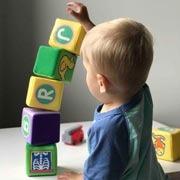 Mathematics is often embedded into games and pastimes. Children can learn, for example, about adding, subtracting, multiplication and division through games. Even dividing group play into teams requires some fundamental maths to ensure teams are equal in size. Building towers out of blocks is another great example where children can count how many blocks they can stack into a tower before it falls over. They can try to beat their own maximum, or even compete against one another to see who can use the most blocks.
 Play comes in a vast array of different forms, shapes, and sizes. Through so doing, it introduces children to countless scenarios, situations, and challenges. By immersing children into such widely differing environments, they learn huge amounts about the world around them, and everything within it. Whether it’s newfound knowledge about a new object, material, place, culture, activity, or something else, play is an amazing conduit to new knowledge and the need to learn new skills. Play is the ultimate educator and the incredible thing is that children may be unaware that they’re learning — they’re having too much fun!

 Autumn is a magical time filled with vibrant colours, falling leaves, and a wonderful quality to the air. With rustling leaves covering the ground in a myriad of hues, it’s the perfect season to engage children with the wonders of a composting activity. Composting is fun, worthwhile, and educational. It not only teaches kids about the importance of recycling and sustainability but also provides an exciting outdoor activity that connects them with nature. In today’s article, we’ll explore the joy of composting with an autumn twist, where children can harness the abundance of fallen leaves to create a rich and fertile compost for the garden. Children of all ages will love this nature-based outdoor activity and it’s a win-win in every sense — for children, nature’s flora and fauna, and the garden itself.
 Autumn leaves are rather like nature’s confetti and they play a crucial role in composting. Perhaps explain to children how leaves provide essential carbon and nutrients that are key ingredients for a successful compost pile. Encourage them to collect a variety of leaves in different colours and shapes, so this activity becomes a stimulating treasure hunt too.
 Guide children in setting up a compost bin or, in its most basic form, it could take the form of a simple pile in the garden if you have one. If not, an undisturbed corner somewhere outside will suffice. Emphasise the importance of a balanced mix of green (nitrogen-rich) and brown (carbon-rich) materials. Leaves are a fantastic source of carbon, balancing out the kitchen scraps and other green materials that you and your child may soon start to add.
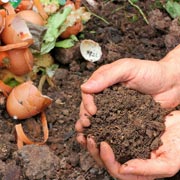 As the compost pile transforms, involve children in observing the changes. Discuss how the compost becomes darker and richer over time. Point out the
  To make composting even more enjoyable, you and the children could incorporate other autumn-themed activities. For example, they could create leaf art while waiting for the compost to develop, they could decorate the compost container through painting, or they could take part in
 When you’re searching for the best nursery for your baby or toddler, or the perfect preschool for your 3-or-4-year-old, the choice can often be overwhelming.