

 When you’re searching for the best nursery for your baby or toddler, or the perfect preschool for your 3-or-4-year-old, the choice can often be overwhelming. A Good Ofsted rating will help, of course. However, genuine customer feedback is crucial as a tool to gauge the suitability of local childcare providers. And recommendations and 5-star ratings can be priceless. So, if you’re a family looking for childcare in the Streatham or Tooting area, it may help to read what the parents of some of our children have to say about us — and that’s exactly what today’s post is designed to showcase.
The good news is that our reviews on Google and elsewhere are awash with 5-star reviews and glowing testimonials about the quality of our childcare services and the loving, nurturing qualities found at the setting. Take a look below to read just some of the wonderful feedback that Little Cedars Nursery receives, from families past and present.
Sara Z recommends Little Cedars Day Nursery

“My daughter has been at Little Cedars for some time now. Lovely little nursery and great staff.”
(Sara Z. via Facebook, June 2022.)
“Maggie the centre manager was helpful and super efficient with everything! Thank you”
(Charlotte M. via Google, 2 months ago).
“What an amazing nursery. I had my little ones here for years … they really loved [it] and the management & teachers are so lovely. I just want to say thank you for taking care of my kids so brilliantly. Always so helpful! I will miss you and my kids too xxx”
(Rita T. via Google, 2 months ago).
“Lovely setting away from the hustle and bustle of Streatham. Nice big garden and friendly staff who always make our baby boy feel welcome. The baby room is clean and full of kind staff – whenever we drop off or collect our child he is in the lap of a team member and given a lot of attention. He loves the rabbits in the garden and gets plenty of outside play. The chef cooks a variety of healthy meals and snacks and is also so friendly with the babies. Prices are affordable for the area without any compromise on quality – we highly recommend LC!”
(Roxanne H. via Google, 2 months ago).
“My son has been attending this day care for almost 2 years now. As a first time mom I didn’t have enough confidence in myself when it came to choosing a nursery however as soon as I stepped into this facility and met Maggie I knew this was a journey my son and I would enjoy.
Needless to say 2 years in I’m completely happy that I chose Little cedars day care as my son’s educational starting point.
From the little baby room to the toddler room he has grown [in] leaps and bounds, his social skills are amazing, his vocabulary improves with each week and I love the close-knit relationships he enjoys with both the staff and his peers.
The staff are friendly, very attentive and strive for excellence. There are many activities that are planned for the kids throughout the school terms and parents are invited to some which is great and they also have a big outdoor area which is awesome for the little ones to enjoy in all climates.
I love the fact that there are chickens and rabbits in the garden meaning the learning continues beyond the classroom. The toddler room also has a lizard named Lizzy who the kids help look after too, thus again helping develop their nurturing side.
There’s a good ratio of staff to pupils and your child will not be part of the furniture, it’s an overall wonderful experience.
It’s such a lovely atmosphere from drop off to pick up you just know you’ve left your child in an environment where they can learn and explore and be well taken care of all at the same time.
I’d like to extend a big thank you to all the staff at the day care … Thank you from the bottom of my heart!”
(Nomvula B. via Google, 11 months ago).
“Nice place; my daughter is excited to go there”
(‘Local Guide’ Hamza Y. via Google, a year ago).
“My daughter attends this nursery for over a year now. I just love the friendly vibes, the lovely facilities (including resources, grand garden and animals!) Maggie, the manager, has been just wonderful and you can see her deep commitment as she often supports her team in the rooms! [A] hands-on manager that will always give you time to talk about your child is a recipe for success! Highly recommended!”
(‘SmallFrog’, via Google, a year ago).
“Amazing nursery! Our daughter loved it here and all the staff are fantastic!”
(‘Local Guide’ Johann H. via Google).
Your Streatham Nursery & Preschool
A home-from-home that nurtures babies and children under five, in Streatham, near Tooting

 It’s clear from the feedback highlighted today that Little Cedars Nursery in Streatham is not just a childcare provider. Indeed, it’s more like an extended family that’s as invested in nurturing the growth and development of little ones as parents are. At Little Cedars, curiosity is sparked, friendships are forged, and the foundation for a love of learning is laid.
If you’re local to Streatham or Tooting and like what you’ve learned in this post today, we look forward to the opportunity to be a part of your child’s early years, shaping moments that matter and creating a haven where your little one can truly thrive.
To enquire about a nursery or preschool place for your child, please get in touch:
Little Cedars is a high-quality childcare nursery in Streatham, close to Streatham Hill, Streatham Park, Streatham Common, Furzedown, Tooting, Tooting Common, Tooting Bec, Tooting Broadway, Balham, Norbury and Colliers Wood.
Why Not Write a Review?
We’d love your feedback! Are you happy with Little Cedars Day Nursery? If so, why not post a review to our Google profile (here)? And, of course, if there’s something you’re not happy with or if you have a suggestion, please let us know and we’ll urgently work to address it. Feedback from parents is incredibly important to us as part of our continuous mission to improve the breadth and quality of the childcare services we provide. Thank you.

 Autumn is a time of the year when magical colour changes occur across gardens, parks and landscapes. Leaves can be seen in a multitude of different colours before falling along with seeds, ripening fruits and berries. In autumn, nature shows us a wonderful metamorphosis and it’s a time of beautifully crisp air and clear distant views. It’s all incredible to behold and also offers children some unique seasonal activity opportunities.
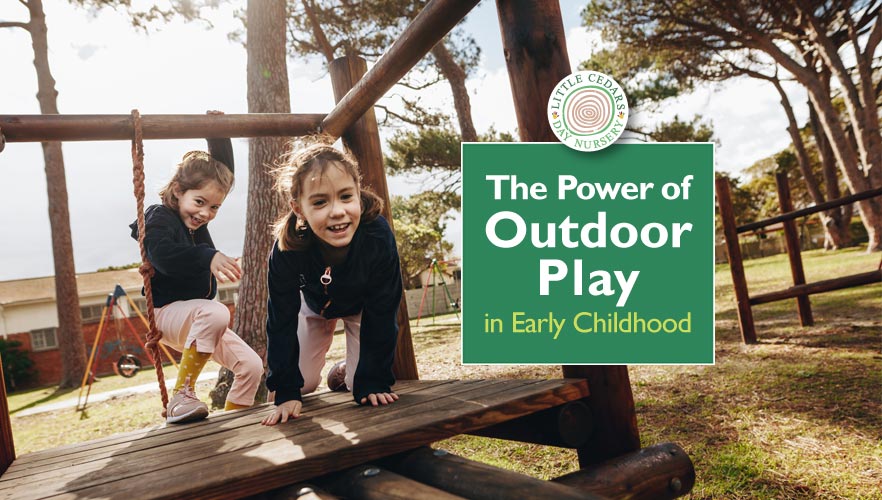
 In today’s guide, we take a close look at the incredible importance of outdoor play for children, including those under five. Outdoor play isn’t just about fun; it’s one of the cornerstones of childhood learning and development and has an immense number of benefits for little ones. So, in this comprehensive article, we’ll explore why outdoor play is so essential for our youngsters and how its effects can be transformative. Let’s take a look…
 For children, the outdoors represents a magical place where fun, exploration and real adventure can take place. Picture a world where a simple stick can become a wizard’s wand, or a puddle can transform into a treasure-filled lagoon, and you’ll soon understand how exciting the outdoors can be for children. Indeed, outdoor play is the realm of limitless imagination. It offers children a vast canvas in which to immerse themselves into adventures, fostering creativity and igniting their instinctive curiosity.
 The Great Outdoors serves as a natural classroom, with true hands-on learning experiences that provide numerous opportunities for children to acquire new skills and knowledge. Whether it’s
  Outdoor play engages all the senses and
  The outdoors serves as an exceptional classroom. When they’re playing outside, children effortlessly absorb knowledge about the world around them. In the open air, they will naturally learn about nature, seasons, different types of flora and fauna, and how the environment functions. It is true learning through discovery.
 The open spaces of the outdoors also serve as a wonderful canvas for creativity. Children’s imaginations run wild outdoors as they invent games, stories, and art inspired by the natural world. Outdoor play encourages them to think in new, innovative, ways and to truly embrace their creative potential.
 At Little Cedars Nursery, we really understand the profound impact that outdoor play has on early childhood development. With that in mind, our childcare practitioners ensure that children are given every opportunity to immerse themselves in a wide range of outdoor activities that help to nurture every child’s learning, growth, curiosity, and resilience. And let’s not forget one more important factor about outdoor play — it’s simply immense fun for children! As such, it is a perfect way to facilitate learning in the most natural way of all — through play.
 As parents and caregivers, we understand
  Boundaries create a sense of security. Ensure boundaries are understood and that play areas have clear markers. Guide children to understand and respect these boundaries to reduce the risk of children wandering away — and potentially becoming lost.
 Children are naturally drawn to water, but it can pose significant risks. Ensure that play areas are far from water bodies, and when near any water source, always provide direct and continuous supervision. Even shallow water can be dangerous for little ones.
 Although they’re young, children want to explore and will naturally want to climb as they get older. It’s therefore important to teach children a safe approach to climbing. This should include emphasising the importance of staying within safe heights to prevent falls, assisting with climbing technique and, of course, risk-assessing what they should and shouldn’t attempt to climb in the first place.
 While exploring nature is exciting, it’s essential to be aware of potential dangers. Educate your child about the dangers of poisonous plants and fungi or insects that could harm them. Encourage them not to touch or eat anything unfamiliar.
 Outdoor exploration sometimes involves contact with dirt and mud. Promote hygiene by ensuring handwashing facilities are readily available and teaching children the importance of cleanliness after outdoor play.
 Campfire stories can be delightful and intriguing for children, but we must always prioritise fire safety. If you decide to expose them to it, children must be educated about the potential dangers of fire and always supervised during any fire-related activities. Fostering a responsible understanding around fire safety is paramount.
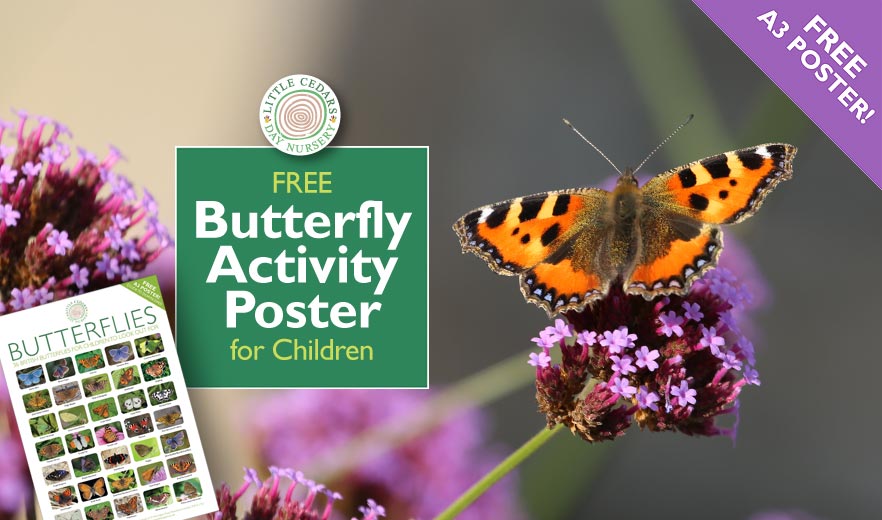
 Following on from our
 We must also add that children should be encouraged to ‘look but don’t touch’ as butterflies are very delicate creatures. Children should not try to touch or catch them — they are best left in peace as every one of them is a little individual that simply wants to go about his or her day. They’re wonderful to watch, though, and our free poster should help children and adults identify many of the different types. Perhaps see how many different species can be spotted over the course of a year. Take photos too, and compare them with friends! Some butterflies visit gardens, floral window boxes and parks while others may only be found in wilder locations in the countryside. This activity is therefore a great excuse for families to get out and explore The Great Outdoors! Recording the date and location of each butterfly spotted will also help families work out where the best butterfly-spotting locations are for next time.
 With that in mind, why not take this activity a step further and get involved in the UK’s annual Big Butterfly Count? For 2024, it takes place between Friday the 12th of July and Sunday the 4th of August, which is when most butterflies are at their adult stage. All it takes is 15 minutes and children will love being little ‘citizen scientists’! The activity can be done in gardens, parks, school grounds or out in the countryside. Taking part will give children a real opportunity to help with butterfly conservation.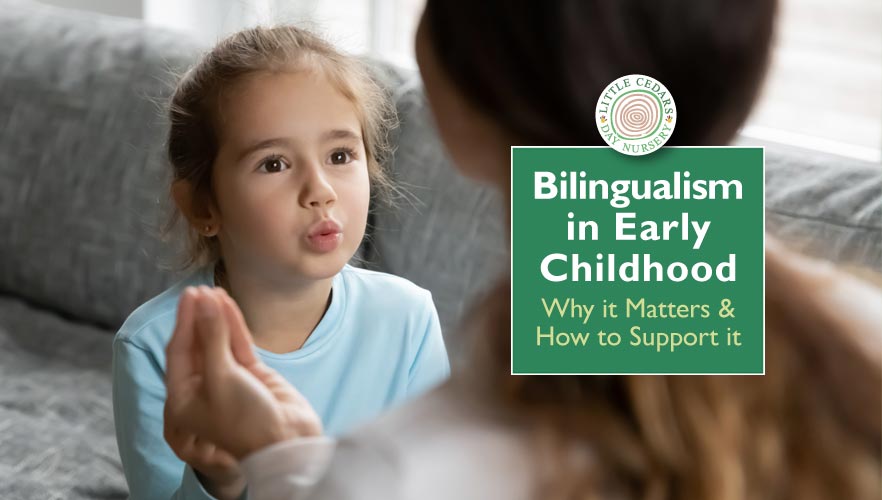
 Bilingual children have been shown to have better cognitive flexibility, focus and creativity. Studies have shown that this often leads to better decision-making, prioritisation and planning skills too. With such skills in place, bilingual children may also have a better ability to multitask and switch between separate tasks.
 Young bilingual children may sometimes mix their languages or use one language inappropriately in certain contexts. This is a normal part of the language acquisition process but can be a little confusing, at times, for both the child and their caregivers.
 Parents play a crucial role in supporting their bilingual children’s language development. To help your child become proficient in two different languages, it’s important to consistently speak both at home. Doing so can help children develop a particularly strong foundation in both languages.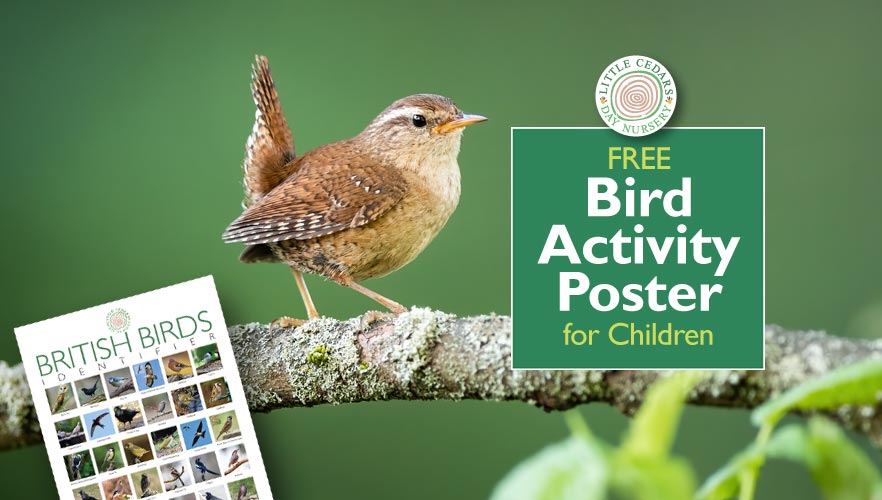
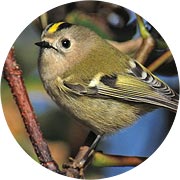 Spring arrives in the UK on 20th March, according to the meteorological calendar. As well as plants beginning to shoot, daffodils flowering and trees starting to bud, an increased number of wild birds can now be seen too. While a few overwintered here in England, many will have spent winter abroad, where it’s warmer, and only begin to return to the UK once spring begins. So, come springtime, more and more varieties of birds can be spotted — and that’s what today’s post is all about. To encourage children to appreciate, enjoy and learn from nature, we have put together a bird identifier poster that children and parents can download for free, print out to A3 or A4, or view on screen in beautiful high resolution. It highlights 37 species of bird that are popular in England, which children can try to spot as the days and weeks go by. Children can perhaps tick off each type of bird that they spot. With a little help from parents for the youngest children, this activity is a great way to teach them the different bird names and help them to recognise the different types as time goes by. It’s also a great children’s pastime that will encourage them to really appreciate nature. The A3 poster is free to download and share — simply click the preview image below to save or view it in Acrobat PDF format. Enlarge on screen for extra detail or simply print out as large as you can. Children will love this activity and feel a real sense of achievement as they learn more about these wonderful, feathered visitors.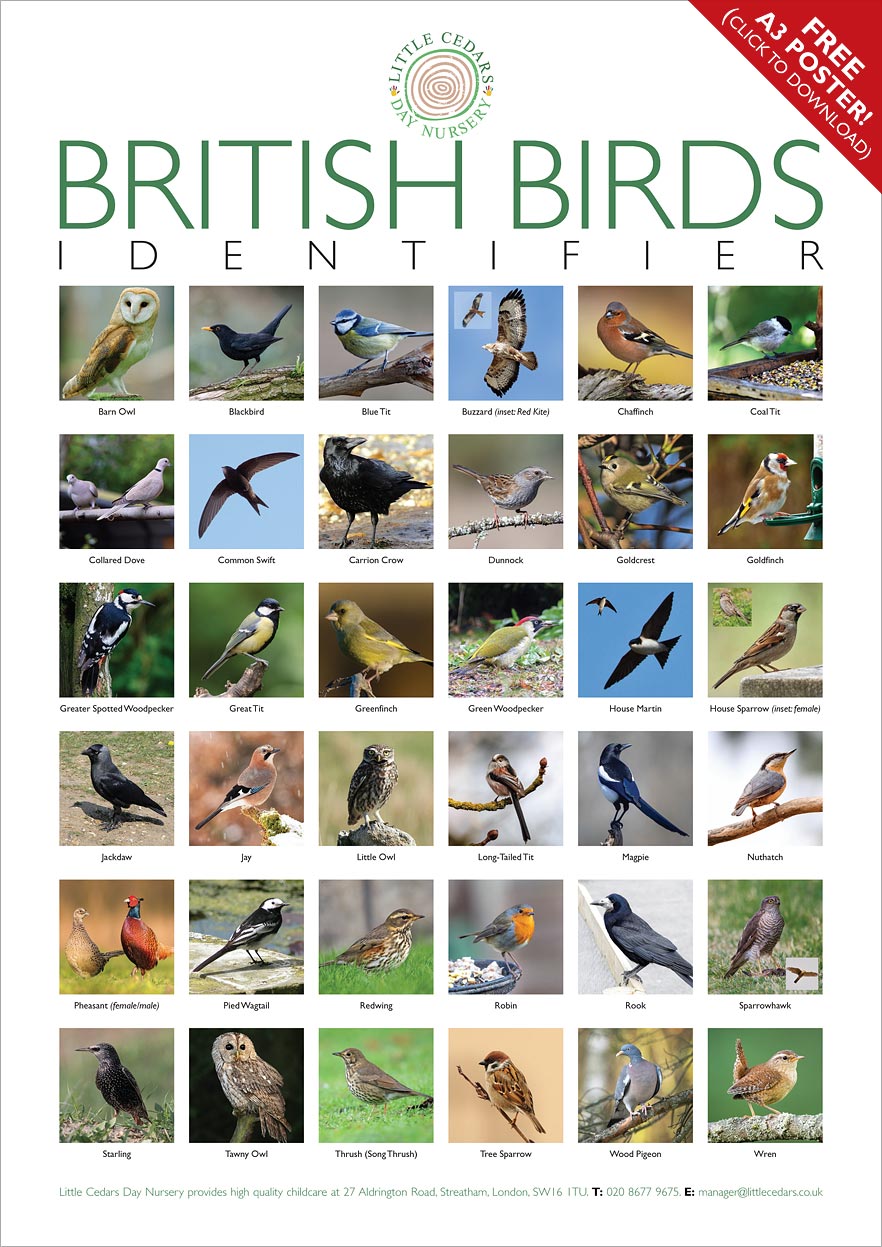
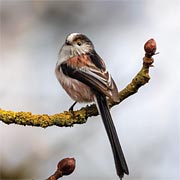 We’ve selected our favourite birds from the hundreds of species that visit the UK each year. There was no way to fit in all of them, so we’ve picked out the most common visitors to our own gardens and nearby parks. In addition, we also added a few extra birds that would be great for children to keep a lookout for, despite a few being shy. Owls are around, for instance, coming out mostly at night. However, barn owls can be seen before dark if you know where to look (the sound of owls hooting or screeching is a dead giveaway). Buzzards, Red Kites and Sparrowhawks are more likely to be seen in the sky overhead, so we’ve shown images where their distinctive silhouettes can give their species away to the onlooker.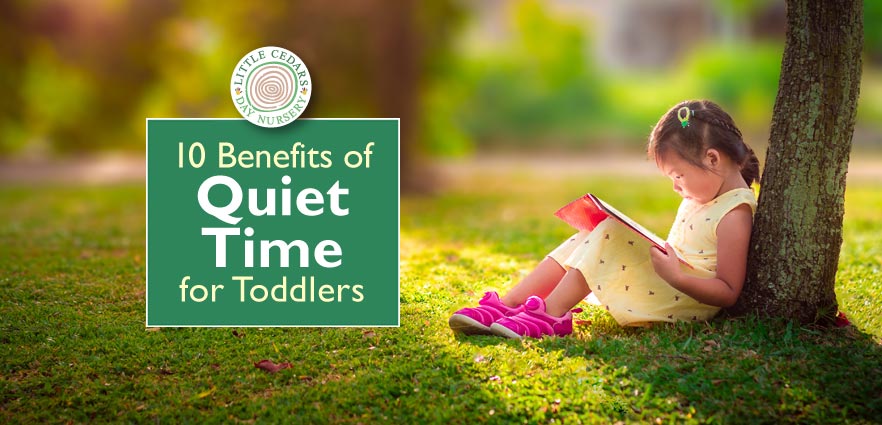
 In today’s post, we look at the importance and benefits of periods of ‘quiet time’ for toddlers and children under five. Toddlers are busy little people, often rushing around, going from one toy or activity to the next. They’re at a stage where they realise the world is an exciting place and often want to experience it all at once. However, when they are so ‘on-the-go’, playing and learning from everything and everyone around them, their brains and body have a lot to take in and process. It can be extremely tiring! So, this is where some much-needed quiet time often comes in, bringing with it a whole range of benefits. Studies also back this up.
 With so much going on around them, children’s young senses of sight, hearing, touch and smell are experiencing a full-on assault. Their minds are also being challenged with learning new skills. This can all be very tiring for our youngsters, so a period of quiet time will give them a break, to allow them to breathe and unwind.
 After prolonged activity or concentration on the part of the child, a well-earned nap may well be on the agenda. As well as giving the toddler a chance to re-charge their batteries,
  Quiet time provides an opportunity for children to develop their own, natural creativity. During quiet time, they have the opportunity to make up a game or activity, without intervention from others. This time is totally unstructured too, so children can be as free as they like to explore and adapt the game or activity. They can create their own little environment and immerse themselves in their own new world. Their imaginations are set free and opportunities to be creative will come naturally.
 As we can see above, during quiet time, children can engage in activities that they have chosen for themselves. This can greatly help them to become more independent and self-reliant. That’s a great skill for them to develop as they approach the time to transition to school. There, they will need to rely much more on such skills.
 When you first introduce quiet time to your child, start slowly and begin with short periods each day. This can be increased as your little one gets used to it.
 It’s easier and often quicker for adults to take the lead in getting toddlers and under-five children dressed, fed, washed and suchlike. However, at some point, our little ones have to become confident and self-sufficient at doing these – and many other things – themselves. After all, they won’t have Mum or Dad around when they’re starting at school. So, today, we look at the ways we can help children under five help themselves and become more independent, including in their learning. First, though, let’s look at the many benefits of encouraging their independence.
 Increased self-esteem: Children feel a sense of accomplishment when they are able to do things on their own. This can give a healthy boost to their self-esteem.
 Better self-management skills: Children who are used to taking care of themselves and making their own decisions are better able to manage their own learning and behaviour. This is important, particularly once they move on to a school setting. Studies published in the Journal of Educational Psychology have highlighted better grades and higher levels of achievement in this regard.
 A greater sense of responsibility: Children who are able to do things independently may more easily learn to take responsibility for their own actions and decisions. Learning from one’s own mistakes is also one of life’s most important lessons.
 Encourage self-care skills: Help children learn how to dress themselves,
  Provide opportunities for children to make their own decisions: Give children small choices and let them choose what they want to do. This helps them feel a sense of control, encourages independence and builds confidence. A good example is allowing them to choose what they want to wear.
 Set realistic expectations: Children are still developing their skills and abilities, so be realistic about what they can do independently.