
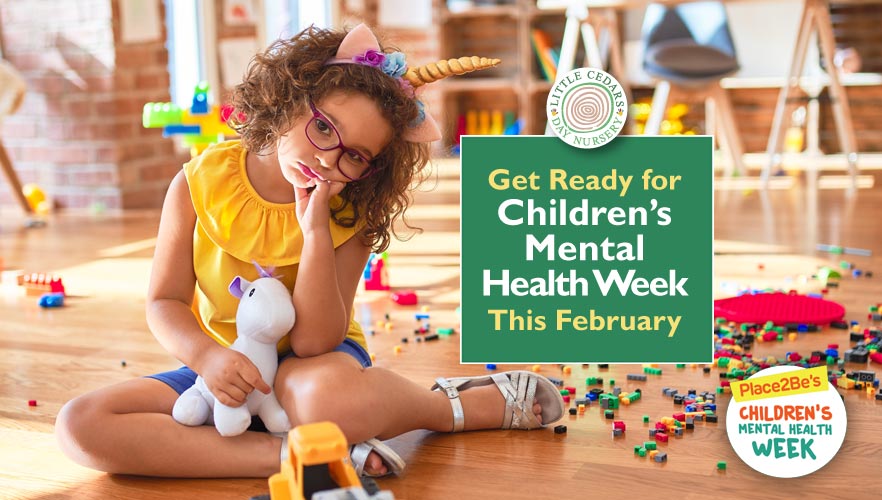
Each year, February marks the date for Children’s Mental Health Week. It is the perfect opportunity to reflect on how we can all contribute to improving children’s mental wellbeing. Often overlooked in favour of a focus on ‘physical’ health, good mental health for children is, of course, profoundly important. This special week occurs every year during February and has done so for over a decade. Let’s take a closer look today and see how the initiative can both inspire and empower parents and families to help children’s mental health thrive.
“Around 50% of mental health conditions are established before age 14.” — Place2Be (Children’s Mental Health Charity).
What & When is Children’s Mental Health Week?
Children’s Mental Health Week is designed to bring greater awareness around the mental health of children. It aims to give children a voice, empower them, and give them the tools to thrive. It is a UK initiative originally launched in 2015 by Place2Be, a charity that focuses on children’s mental health.
In 2026, Children’s Mental Health Week will be from Monday the 9th to Sunday the 15th of February inclusive.
The Theme for 2026
 Each year, the event has a theme. The theme for 2026 is ‘This is My Place’. It brings a focus to the need, by every child, to feel they belong. Whether it’s to a friendship group, peers at their nursery or school, their family, a club, or a team of some kind, it’s incredibly important for every child to feel they belong. Hence, the theme ‘This is My Place’ for 2026. Click the thumbnail image or this link to launch the official video.
“To know our place and really feel part of our environment is a basic human need. It can have powerful and long-lasting impacts in lots of areas of our lives, including our physical and mental health, education, employment and relationships. When we feel that we belong, it empowers us to contribute to the world and make a real difference.” — Place2Be.
By feeling they belong, children will feel that they are connected, accepted, and valued for who they are. That’s important for children of any age and, in turn, will help them feel happy and safe. It will also teach them to be more inclusive and kind towards others, so no child feels alone or an outsider.
“As parents and carers, you play an important role in your child’s wellbeing.” — Place2Be.
Resources for Families of Children — Including Under 5s
Although the charity that founded Children’s Mental Health Week is primarily involved in supporting children in schools, the overall theme applies equally well to pre-school children under five. Indeed, the Place2Be charity has support and resources that fit perfectly with helping good mental health in children in their early years. Families can download free resources here, and useful information for parents and carers here.
How Can Families Help Children?
To facilitate children’s good mental health, parents and carers have a number of ways to help children, including under-fives, to feel that they fit in and are valued. A few examples include:
- Enrolling them in environments like clubs, nurseries, and sports teams, and nurturing their participation in friendship groups.
- Taking an avid interest in the child’s interests — getting involved, asking them questions about what they’re passionate about, and encouraging them in associated activities.
- Taking the time to be present with your child, engaging with them proactively during activities they’re interested in, and avoiding other distractions whilst doing so.
- Encouraging activities that clearly make them happy and feel safe.
- Allowing them to choose and steer activities, while also allowing them to explore other pastimes that may be new to them.
- Listening, allowing them to speak, encouraging and reassuring them at every step.
- Ensuring they have a warm, comfortable space of their own where they can play while feeling safe and nurtured.
- Providing consistency so that bonds with siblings, friends, and peers can grow and flourish.
- Encouraging those relationships that look to be the most healthy for your child, while withdrawing them from toxic environments that don’t look healthy.
- Being your child’s biggest cheerleader — applauding their achievements and boosting their self-worth and confidence.
- Talking with children to explore their feelings around belonging, being included, being important, being liked by peers, being loved by family, and being enormously valued.
“1 in 5 children currently has a probable mental health disorder.” — Place2Be.
With it being likely that 1 in 5 children has a mental health disorder and around half of such disorders being established before the age of 14, it’s never been more important to address the issue. As parents and carers, we need to be conscious of the issues, aware of the possible signs, and equipped with the tools to support our children. Learn more about Children’s Mental Health Week and some of the support available here. A non-profit called MindForward Alliance also has an excellent toolkit for parents whose children are experiencing mental health difficulties. Download the toolkit here.
Little Cedars Nursery, Streatham
A High-Quality Childcare Service for Southwest London

 Do you have a child under five and live in Streatham or close by? Little Cedars Nursery provides high-quality childcare in Streatham, and we’re conveniently close to families in Streatham Common, Streatham Hill, Streatham Park, Tooting, Furzedown, Balham, Norbury, and Colliers Wood. Rated ‘Good’ in all categories by Ofsted, we also support free childcare hours for eligible children from the age of 9 months to 5 years.
Start your childcare application today or contact us to learn more:

 In today’s world, electronic screens are everywhere — from TVs and smartphones to tablets and games consoles. Even our youngest children are growing up in increasingly digital environments. While technology brings many conveniences, intentionally unplugging can offer profound benefits for little ones and their families. Whether it’s for a day, a weekend, a holiday, or even longer, the value gained from a ‘digital detox’ may surprise even the most dubious amongst us. Today’s post investigates.
 Research consistently shows the positive effects of stepping away from our screens. Studies report that a digital detox can lead to decreased stress and anxiety, improved mood and well-being, and even better physical health through healthier, less sedentary, lifestyles. Pausing the use of electronic screens can even help reset our perception of time, making days feel longer, fuller, and more engaged.
 When families go screen-free, the benefits extend well beyond the individual. Removing screens often rekindles face-to-face interactions and facilitates more laughter and unfiltered conversations within the family. Parents who’ve tried it report a renewed sense of connection and deeper engagement with their children. Even short periods of unplugging can turn into lasting changes—more shared stories, more creative play, and more real presence.
 Better sleep for everyone with children tending to drop off more easily and adults feeling more rested.
 Begin by designating screen-free boundaries, such as bedrooms or mealtimes, and/or set a daily screen-free hour in the evening.
 The evidence clearly shows: families who have periods free of electronic screens will benefit. A digital detox enriches and elongates days. It enhances sleep quality for children and adults by facilitating their natural rhythms. Days feel more spacious and calm without digital distractions and imaginative play soon steps in and thrives. In the absence of screens, children are also likely to get outdoors more often — and benefit from everything nature and outdoor play have to offer. Mental health and even academic grades are also likely to improve when this happens.

 With all the food and feasting associated with Christmas, it got us thinking about food hygiene and safety for children. Aside from keeping alert to possible allergens, parents need to be careful to ensure families remain safe from illnesses caused by food hygiene mishaps. After all, such illnesses can be particularly dangerous to little ones, who are fragile, but can be largely avoidable when good hygiene measures are taken. With that in mind, today’s post outlines various ways in which parents can stay on top of hygiene around the preparation of food for their children. And, of course, such measures will keep adults safer too.
 Ensuring the food preparation environment is clean and hygienic will reduce the chance of microbes, including germs and viruses, contaminating food. Wiping down with warm, soapy, water on clean dish cloths is ideal for many such tasks. Anti-bacterial sprays are useful but should not be allowed to contaminate food, plates and cutlery etc. directly or indirectly.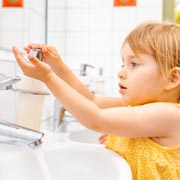
 Only feed children, especially babies and under-fives, age-appropriate food/meals. This is very important because many foods contain too much salt, sugar and saturated fats for young children. Some other foods can contain dangerous levels of toxins or even heavy metals.
  Always thoroughly wash vegetables, fruit and salads and, when appropriate, peel vegetables before use.
 It’s hugely beneficial if children learn about food safety and proper hygiene associated with its preparation. Such things are useful life lessons and will help to keep them more safe and free of illnesses and nasty bugs. Teach them by example whenever possible. A great start is to encourage them to thoroughly wash their hands and fingers with warm, soapy water before preparing or eating food. They should also be encouraged to sit down at the table and be in a calm state before eating. This will help to better ensure food does not become contaminated or knocked onto a dirty floor. It will also reduce the chance of the child choking on food.
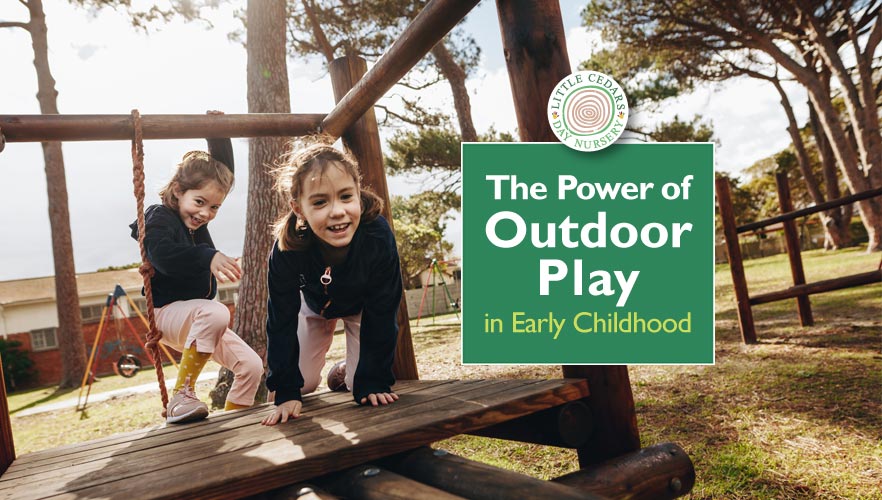
 In today’s guide, we take a close look at the incredible importance of outdoor play for children, including those under five. Outdoor play isn’t just about fun; it’s one of the cornerstones of childhood learning and development and has an immense number of benefits for little ones. So, in this comprehensive article, we’ll explore why outdoor play is so essential for our youngsters and how its effects can be transformative. Let’s take a look…
 For children, the outdoors represents a magical place where fun, exploration and real adventure can take place. Picture a world where a simple stick can become a wizard’s wand, or a puddle can transform into a treasure-filled lagoon, and you’ll soon understand how exciting the outdoors can be for children. Indeed, outdoor play is the realm of limitless imagination. It offers children a vast canvas in which to immerse themselves into adventures, fostering creativity and igniting their instinctive curiosity.
 The Great Outdoors serves as a natural classroom, with true hands-on learning experiences that provide numerous opportunities for children to acquire new skills and knowledge. Whether it’s
  Outdoor play engages all the senses and
  The outdoors serves as an exceptional classroom. When they’re playing outside, children effortlessly absorb knowledge about the world around them. In the open air, they will naturally learn about nature, seasons, different types of flora and fauna, and how the environment functions. It is true learning through discovery.
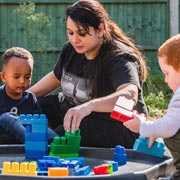 The open spaces of the outdoors also serve as a wonderful canvas for creativity. Children’s imaginations run wild outdoors as they invent games, stories, and art inspired by the natural world. Outdoor play encourages them to think in new, innovative, ways and to truly embrace their creative potential.
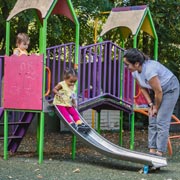 At Little Cedars Nursery, we really understand the profound impact that outdoor play has on early childhood development. With that in mind, our childcare practitioners ensure that children are given every opportunity to immerse themselves in a wide range of outdoor activities that help to nurture every child’s learning, growth, curiosity, and resilience. And let’s not forget one more important factor about outdoor play — it’s simply immense fun for children! As such, it is a perfect way to facilitate learning in the most natural way of all — through play.
 As parents and caregivers, we understand
  Boundaries create a sense of security. Ensure boundaries are understood and that play areas have clear markers. Guide children to understand and respect these boundaries to reduce the risk of children wandering away — and potentially becoming lost.
 Children are naturally drawn to water, but it can pose significant risks. Ensure that play areas are far from water bodies, and when near any water source, always provide direct and continuous supervision. Even shallow water can be dangerous for little ones.
 Although they’re young, children want to explore and will naturally want to climb as they get older. It’s therefore important to teach children a safe approach to climbing. This should include emphasising the importance of staying within safe heights to prevent falls, assisting with climbing technique and, of course, risk-assessing what they should and shouldn’t attempt to climb in the first place.
 While exploring nature is exciting, it’s essential to be aware of potential dangers. Educate your child about the dangers of poisonous plants and fungi or insects that could harm them. Encourage them not to touch or eat anything unfamiliar.
 Outdoor exploration sometimes involves contact with dirt and mud. Promote hygiene by ensuring handwashing facilities are readily available and teaching children the importance of cleanliness after outdoor play.
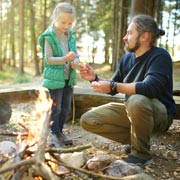 Campfire stories can be delightful and intriguing for children, but we must always prioritise fire safety. If you decide to expose them to it, children must be educated about the potential dangers of fire and always supervised during any fire-related activities. Fostering a responsible understanding around fire safety is paramount.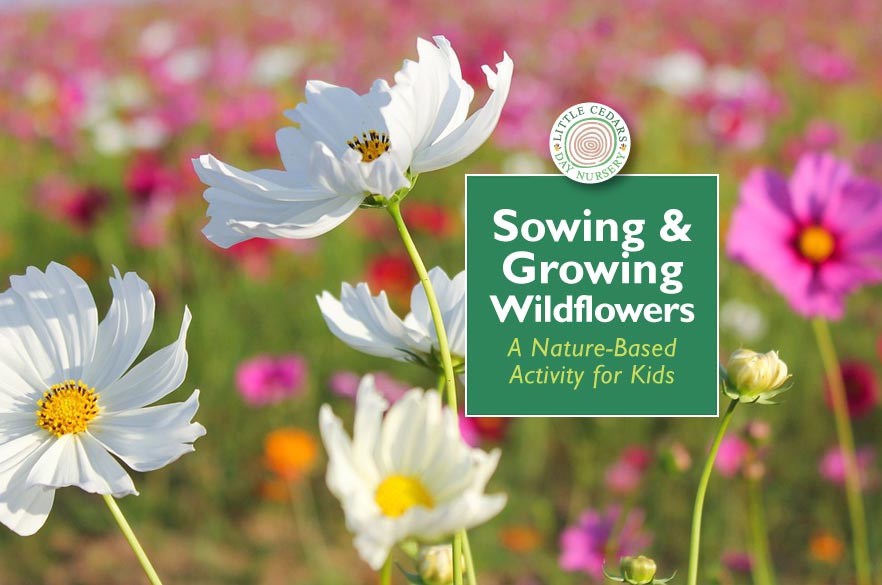
 In today’s guide, we outline a simple but powerful nature-based activity that will be both fun and educational for children and under-fives. This one is all about how to sow wildflower seeds. Once growing, these will bring beauty and wonder to any setting. The activity will also complement our recent
  Children benefit very much from spending time in nature, as we outlined in our article entitled
  Colour(s) — Children can help decide whether to grow wildflowers of just one colour, a limited 2- or 3-colour palette or perhaps multiple colours. If parents have an existing colour theme in their garden or plant area, they may wish to point children in a particular direction, so as to keep that colour theme going.
 Free wildflower seeds can be harvested from existing wildflowers — either from your own wildflowers if you have them, or from those found in the wild along hedgerows and similar (N.B. only do so in moderation and for personal use). Timing will, of course, be critical because seeds will only be available at certain times of the year, i.e. when the wildflowers have “gone to seed” at the end of their flowering period.
 Sowing seeds on existing lawns that you/your child want as a wildflower meadow is simply a case of scattering seeds on the lawn, ideally spaced out in such a way that they don’t have to compete with each other once they start growing. Then ensure that the area of lawn is kept moist by either rain or, if there is no rain, regular sprinkling from a watering can fitted with a sprinkling head (a.k.a. ‘rose head’). Children may need to remind adults not to cut the lawn thereafter, of course!
 Children will love it once the wildflowers begin to grow and later bloom. They’ll also love seeing bees, butterflies, and other insects visiting and the results of the activity may indeed give them a great sense of accomplishment. The whole process and the results are quite magical when you think about it.
 In today’s post, we look at the importance and benefits of periods of ‘quiet time’ for toddlers and children under five. Toddlers are busy little people, often rushing around, going from one toy or activity to the next. They’re at a stage where they realise the world is an exciting place and often want to experience it all at once. However, when they are so ‘on-the-go’, playing and learning from everything and everyone around them, their brains and body have a lot to take in and process. It can be extremely tiring! So, this is where some much-needed quiet time often comes in, bringing with it a whole range of benefits. Studies also back this up.
 With so much going on around them, children’s young senses of sight, hearing, touch and smell are experiencing a full-on assault. Their minds are also being challenged with learning new skills. This can all be very tiring for our youngsters, so a period of quiet time will give them a break, to allow them to breathe and unwind.
 After prolonged activity or concentration on the part of the child, a well-earned nap may well be on the agenda. As well as giving the toddler a chance to re-charge their batteries,
  Quiet time provides an opportunity for children to develop their own, natural creativity. During quiet time, they have the opportunity to make up a game or activity, without intervention from others. This time is totally unstructured too, so children can be as free as they like to explore and adapt the game or activity. They can create their own little environment and immerse themselves in their own new world. Their imaginations are set free and opportunities to be creative will come naturally.
 As we can see above, during quiet time, children can engage in activities that they have chosen for themselves. This can greatly help them to become more independent and self-reliant. That’s a great skill for them to develop as they approach the time to transition to school. There, they will need to rely much more on such skills.
 When you first introduce quiet time to your child, start slowly and begin with short periods each day. This can be increased as your little one gets used to it.