

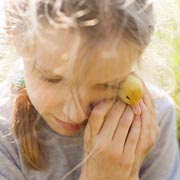
 Sooner or later, many parents will consider the possible benefits of pets and whether their child should grow up with one. Mostly, the answer is positive because growing up with a pet can benefit children in many important ways — and really enrich their lives. However, looking after animals is a huge responsibility, not least to the animal itself, so should never be taken on lightly. Today we explore the topic and also outline a couple of animal-related initiatives that we have undertaken at our nursery/pre-school in Streatham.
“Although no pet should be the sole responsibility of a child, they can learn to take on certain responsibilities (such as feeding or refilling water bottles) with the aid of a supervising adult.” (1)
The Benefits of Pets & Regular Interactions with Animals
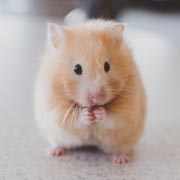 On a simple level, pets are incredibly cute and great fun to be around. As such, most children are naturally drawn to them.
At a deeper level, animals and pets can teach children a huge amount about nature, the similar sentience of non-humans and ultimately also about themselves. Looking after and living with animals can teach children countless skills and new pieces of knowledge. It can also encourage feelings of responsibility, empathy, compassion, loyalty and happiness — indeed, a pet can be the very best friend a child or indeed adult could ever dream of having. They can be a huge source of comfort when a child needs it, for example when facing one of life’s many challenges. Pets are someone a child can confide in, knowing they can trust them to keep their secrets safe. In fact, children often form deep bonds with pets, often just as deep as they would be with a brother or sister. More often than not, pets simply become part of the family.
A pet can be the very best friend a child could ever dream of having
 Familiarity with animals and closeness to pets also teaches children respect for other individuals (whether human or non-human), including recognition of the consequences of their actions towards them. It shows them how to care for others too. It can also teach them patience (e.g. when training) and even some of the harder lessons about life cycles.
Animals such as dogs also encourage children to get out and about on walks, perhaps out in nature, which is all good for both heart and soul. Regular playing, walking and interaction with pets can positively transform physical things like blood pressure and chemical levels in the body as well as helping children when they’re feeling down or lonely.
Considerations
 Introducing animals like dogs and cats to the household is quite a life-changing thing. After all, they are the kinds of animals that pretty much become one of the family and, as such, require significant time, care and attention for their own wellbeing. They also often live freely within the house and require access to the garden and, for dogs, regular walks outdoors. They are quite an undertaking, so the decision to introduce one needs careful and thorough consideration. Many animals form deep, lifelong bonds and you will become their family just as much as they become yours. So, that lifelong commitment is an important one — they are absolutely not unfeeling objects to be treated like just a toy.
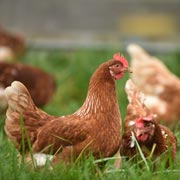 Pets like hamsters, rabbits, budgies and guinea pigs require less space in the household, of course. Indeed, some types of pets can be housed outdoors in suitable hutches. They’re also small enough to be temporarily moved elsewhere, for example to a friend or neighbour when you go on holiday. However, despite them being small, they too have their own needs and wants, including your care and regular attention. Giving them this, however, will be rewarded and children who spend significant time with any pet will soon begin to pick up on each one’s distinct personality and any likes or dislikes. Treat them well and pets will become trusting and friendly. Dogs, in particular, are incredibly loyal when treated well.
The important thing with all types of pet, though, is to ensure that your child understands that they’re not a toy and they have real feelings and needs of their own. Taking on a pet requires commitment, money for food and bedding etc. and a significant investment of time.
Research First
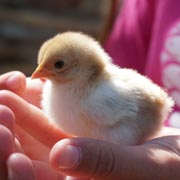 Just like humans, animals need care, proper food, fresh water, friendship, comfort and stimulation. If they don’t get these essentials, they may lead miserable and potentially even foreshortened lives. So, before a family takes on a pet, it’s best to thoroughly research the particular type of animal and exactly what they will require, from food, nutrition and bedding to stimulation (games, exercise etc.), contact with others and medical needs. Families should find out about all these things before taking an animal on. For some types of animal, for example dogs, even the breed and background is important. That’s for the wellbeing of both the pet and the family itself. Remember too that some animals will need training, for example toilet training in the case of cats, dogs and perhaps even ‘house’ rabbits. Some dogs may also require behaviour training. Everything needs factoring in beforehand including things like who will look after the pets while adults are at work, what happens when you go on holiday, who will exercise the dog, clean out the rabbit hutch regularly, feed the rabbit or clean the budgie cage.
Chickens & Butterflies at Little Cedars Day Nursery, Streatham
 At Little Cedars Nursery in Streatham, we believe that children will learn a huge amount through contact with animals. For this reason, we have our own chickens and rabbits at the setting — and the children adore them! Our rabbits are named Miffy and Bella and indeed naming them naturally encourages children to treat them like individuals rather than something to play with.
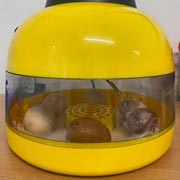 We are also raising some new chickens from fertilised eggs that we currently have in an incubator. We’ll teach children all about the life cycle of chickens with these. Once they hatch, children are sure to love the adorable little chicks that will emerge and they’ll be able to watch them grow up from fluffy chicks to adult chickens. When old enough, the chickens will join our existing, fully-grown chickens that we keep for the children in our animal enclosure outside.
Children are able to care for the various animals that we keep and this gives them valuable life lessons as well as being enjoyable and educational. It also means that the animals get love, attention and stimulation, which is so much better than being stuck in a closed hutch all day.
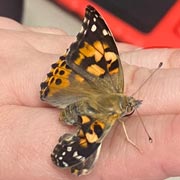 We also have a caterpillar/butterfly enclosure indoors at the setting. Through this, children can follow the incredible life cycle of butterflies, starting off as tiny eggs, hatching into caterpillars, building cocoons and eventually emerging as incredibly beautiful butterflies. This is an amazing metamorphosis for children to witness and teaches them so much about the wonder of the natural world as well as the individual needs of some of its creatures.
Little Cedars Nursery & Pre-school in Streatham
Little Cedars is a nursery & pre-school in Streatham, near Furzedown, Tooting, Balham, Norbury & Colliers Wood
 If you are looking for the best childcare nursery or pre-school in Streatham area, please do consider Little Cedars. We offer high quality childcare on weekdays for babies and children aged up to five years old. We’re also conveniently located if you are looking for good nurseries or pre-schools in Streatham Hill, Streatham Park, Streatham Common, Furzedown, Tooting, Tooting Bec, Tooting Broadway, Tooting Common, Balham, Norbury or Colliers Wood.
Please use one of the buttons below to apply for a place for your child, arrange a visit, to call us or to ask us any questions — we’re here to help:
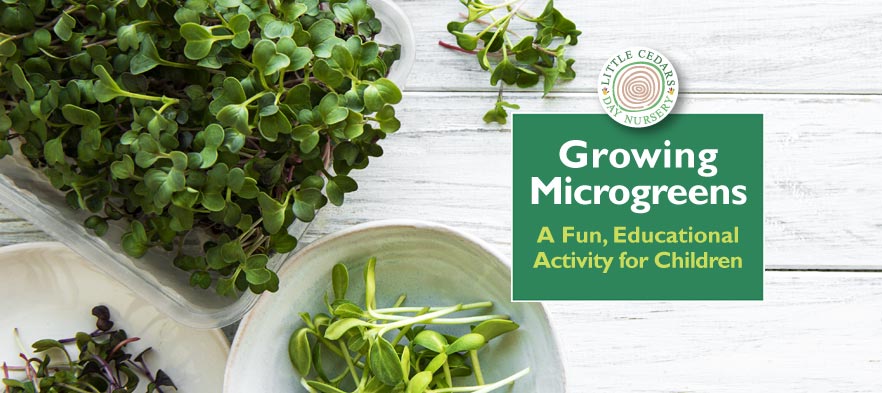
 Back in April last year, we wrote an article about
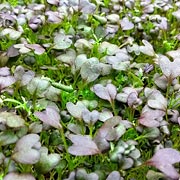
  Microgreens are great fun and extremely easy for children to grow. Once ready, they can be used rather like salads and garnishes. They are very tasty and are extremely nutritious.
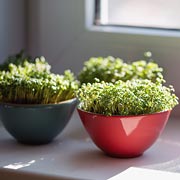 Microgreens are traditionally grown in shallow seed trays, which are inexpensive to buy. However, at home, they can just as easily be grown in flower pots, used yoghurt pots, empty egg cartons, the trays from ready-meals or even cut-down cardboard cores from kitchen rolls. So long as water is allowed to drain from them and they can support at least a shallow depth of compost, these can all be suitable. Plastic cartons will need a few holes punched in the bottom to allow for drainage, so parents might need to organise that in order to avoid their children hurting themselves. Other than that, it’s plain sailing for supervised children to do themselves.
 Suitable seeds include: rocket, a type of strongly-flavoured lettuce; beetroot, with their lovely red stems and mild, earthy taste; spinach, which also has a mild flavour and is full of goodness; red cabbage, which is also rich in a variety of vitamins and minerals; fennel, which will have a distinctive aniseed flavour; broccoli, which will grow into sprouts that have a slightly spicy taste; radish seeds, which also grow into leaves that taste a little fiery; and also mustard seeds (for children who are OK with even more hot, spicy flavours).
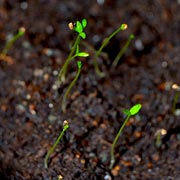 First, your child should fill the seed trays, flower pots or equivalent, almost to the top, with some compost.
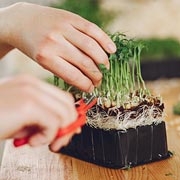 As as shoots begin to appear (usually after just a few days), remove any covering if used and continue to ensure that the compost is always kept moist, but not over-watered.
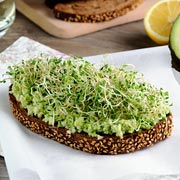 Once harvested, they should be rinsed to get rid of any stray compost. They are delicious to eat and, depending on the seeds grown, have a huge variety of tastes and colours. Children and parents alike can benefit from the nutritious and tasty shoots as part of a variety of meal types. Full of vitamins and minerals, they can be used in salads, as pizza toppings, garnishes, toppings for risottos, soups and pastas, as fillings in sandwiches, sprinkled on top of baked potatoes or into burgers and much more. They’re very adaptable and, with their distinctive tastes and textures, will make any meal really special.
 Children will love growing these little edible plants and harvesting them for food. They will learn so much along the way, building to a great sense of achievement in what is a great home learning activity. Learning at home is just as essential as all the learning that takes place at nurseries like
 We previously covered
  Motor dysgraphia is primarily the result of poor fine motor skills and poor dexterity, making the control needed for legible writing or drawings difficult. It may also be the result of poor muscle tone. In contrast to dyslexic dysgraphia, motor dysgraphia may result in poor writing legibility even when the words are copied. Spelling, however, is not adversely affected. Short bursts with unusually high concentration levels may result in better letter and word formation, but the level of concentration needed to achieve this is unsustainable over a longer period.
 sgraphic children may also hold their writing instruments in an unusual way or have strange posture when writing;
 Diagnosing Dysgraphia
 At education settings, additional bespoke learning strategies and interventions, that all teaching professionals can employ, may include:
 Childcare/teaching professionals and parents/guardians should always work together and compare notes, so that all parties are fully informed about any challenges the child may have. By doing so, they can share strategies and each work with the child towards the same goals. It’s important to begin such work as early as possible, so that the impact of the disorder on the child’s life is minimised. Early diagnosis is therefore crucial.
 In today’s guide, we answer frequently asked questions (FAQs) about Dyscalculia, particularly in relation to children, including preschoolers. Around 5% of children of school age are thought to have dyscalculia.
 A few of the possible signs of dyscalculia include:
 They may also continue to use fingers to count long after their contemporaries have moved on to mental counting;
 Just as with dyslexia, there is no cure for dyscalculia. However, there are many ways to help children cope with its effects. It’s also worth bearing in mind that children with dyscalculia can be very gifted in other areas, for example creativity, strategic thinking, problem solving, practical abilities and often great intuition.
 They can also benefit when important words and numbers are highlighted (to draw attention to their importance);
 Your Right to Unpaid Parental Leave
 For example, there may come a time when parents need to look at nurseries, pre-schools, primary and secondary schools and, as children approach their mid teens, further education settings. Other reasons to take time off might include time for parents to visit relatives with the children, or to investigate extra-curricular activities such as sports clubs, or simply to spend quality time with their children.
 It doesn’t really matter if you change jobs. The rules around unpaid parental leave apply in relation to your child(ren); not your employer. So, if you change jobs and have already used up 9 weeks of unpaid leave for one child during your previous job, then you can still use another 9 weeks, so long as it’s taken before your child reaches the age of 18.
 To claim a period of unpaid parental leave, just 21 days (3 weeks) of notice must be given to the employer and this must state the start and finish dates. It can be confirmed verbally although employers may request the notice in writing.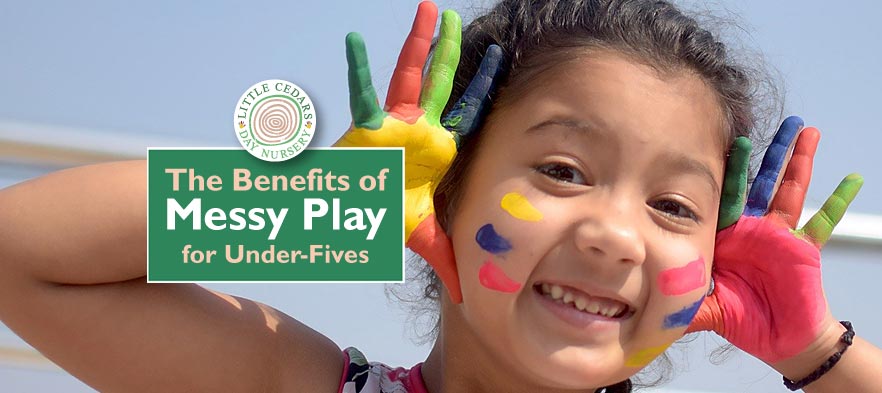
 Being let loose with coloured paints, art materials and creative opportunities is sure to bring a smile to their faces and a sense of enormous fun, creativity and discovery. No doubt too; they’ll be proud to show others their creations!
 As well as being enormous fun, messy play allows children to express themselves in unbounded creative ways. That’s important. Self-expression and creativity will help children to gain a sense of achievement and, through this subtle way, a greater sense of self-worth and confidence.
 Hand-eye coordination will also benefit, of course.
 We fully understand the many benefits of messy play at Little Cedars Nursery, of course. Indeed, it’s part of the curriculum. Under-fives are encouraged to learn through messy play using an enormous wealth of resources, equipment and materials at the setting. That’s both indoors and in our outside play areas. From paint and paper indoors to sandpits and water play outside, toddlers and preschoolers have a wonderful time with messy play at Little Cedars, all in a safe, structured, fun and educational environment.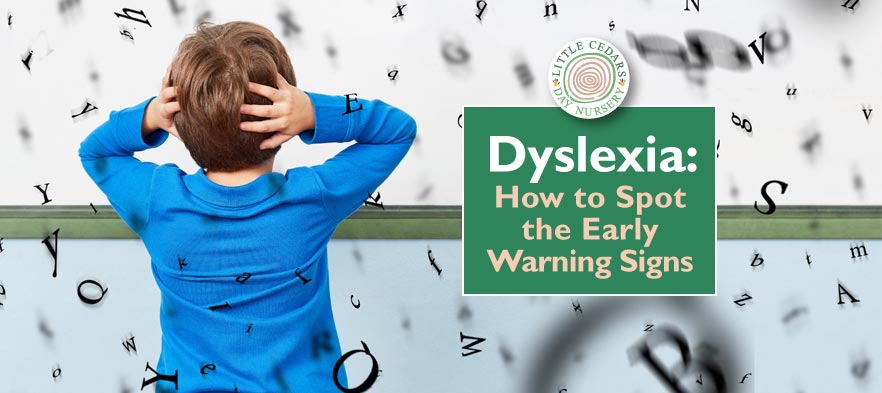
 Despite many dyslexic people being highly intelligent, dyslexia makes it difficult for them to recognise words and/or be able to break them down into their smaller components. It is recognised as a Specific Learning Difficulty (‘SpLD’) and can seriously affect their education if not recognised and addressed early.
 Such an affliction can have profound implications for a person. It will adversely affect their reading, writing and comprehension, thereby limiting their overall learning capability and hindering overall literacy. These are particularly critical skills during their early years as that’s at the start of their education, when the knock-on effects of such limiting factors will be at their most significant. It will slow down their progress in many topics and areas of education, also leading potentially to lower self-confidence and possibly even getting them mislabelled as ‘slow’ or ‘lazy’ by the unenlightened. Ultimately, it can severely limit their potential careers and life outcomes.
 Children finding it difficult to learn the alphabet;
 The child describing words and letters as visually jumbling, blurring or even moving around when they try to read them;
 There is no cure for dyslexia, but measures to mitigate its effects can be taken by education professionals, parents, carers and even those affected by it. It’s incredibly important, though, for both parents and education professionals to try to recognise it early, for example at nursery or pre-school, so that a suitable teaching programme can be introduced as early as possible.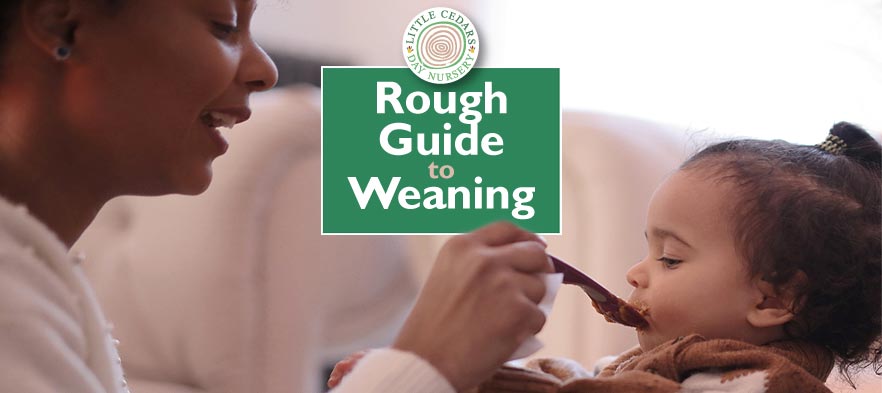
 Also known as complementary feeding, weaning is an important milestone for any parent or baby and usually occurs when the baby reaches the age of about 6 months. Sometimes babies simply tire of milk and weaning thereby comes naturally. In other cases, a baby needs a bit more encouragement to make their transition towards solids. Here, we’ll explore the whole topic of weaning in more detail, including ways parents can help to make the transition smoothly and stress-free for all parties.
 Weaning should be fun and it’s also the only time in a child’s life where they won’t have any preconceived ideas about what foods they “do or don’t like”. So, parents can experiment, within reason of course. It’s a time when introducing new foods to the baby comes naturally once the baby has caught on to the idea of this new experience.
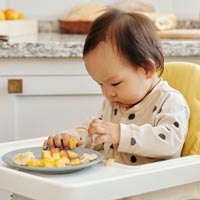 Don’t rush it; set aside some time with baby so it’s relaxed, otherwise everyone can get stressed, especially initially.
 You can later move on to whole, (adult) finger-sized pieces of very soft fruits that baby can learn to hold. However, do read the Health & Safety Considerations section below before moving to un-mashed foods.
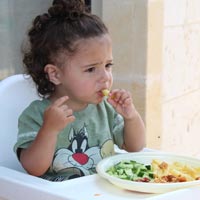 Huge care needs to be taken to avoid giving infants anything that’s going to represent a potential choking hazard. Whole grapes, cherry tomatoes or anything else of a similar size would be examples of this as they are perfectly sized to block a baby’s airway if not first chopped up. Also avoid anything hard like nuts, raw vegetables or un-mashed apple and ensure that any pips/seeds/stones are removed from fruit and bones are removed from fish or meat.
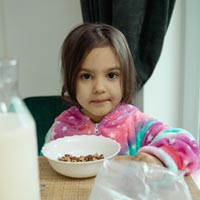 Always try to maintain a varied diet for the infant, so they get all the vitamins and nutrients they need as they intake less and less milk. Ensure the foods contain sufficient iron, which can be sought from fortified cereal, fish, milk, dark green vegetables, lentils and beans. Giving them finger foods to hold and eat themselves is a great way to encourage them to feed themselves (under supervision, of course). As they grow older they can be encouraged to eat at the family table with parents/siblings and eventually upskill to using cutlery, along with eventually learning the rules around good table manners etc.
 The EYFS framework sets the statutory approach required for pretty much every aspect of early years childcare and education provision in the UK. The standards cover the learning and development programmes, learning goals, approach to assessment, safeguarding, welfare of children, staffing, and much more. In this guide, however, we’ll focus purely on the 7 key areas of learning and development covered by the EYFS. Essentially, these form the core curriculum at nurseries like Little Cedars Nursery in Streatham. Let’s take a look …
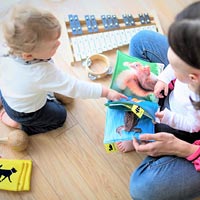 It would be hard to overstate the importance of good communication and language skills, as they underpin early years progress in just about everything else. So, early years providers like Little Cedars encourage two-way interactions and language-rich communications between staff and children right from the outset. Childcare professionals will introduce new vocabulary regularly and help children to understand it and use it themselves through activities like story-telling, role play and question-and-answer sessions. Practitioners will regularly read with (not just to) children, using a wide variety of high quality reading materials, encouraging feedback and engagement from the children as they progress. In this way, new vocabulary is embedded, conversations come naturally and children will thrive in their language and communication skills.
 Physical development is, of course, another key skill that is foundational for children. After all, it impacts on health, mobility, strength, fitness, agility, coordination, wellbeing and general happiness. So, great care is taken at nurseries like Little Cedars to help children hone their physical skills and development incrementally, to improve all of the above. This is done through the EYFS programmes that are set and customised for each individual child. Skills like balance, gross and fine motor skills, coordination, spatial awareness, hand/eye coordination, strength and agility will therefore gradually improve and become second nature to each child as they grow. Active children will generally become more healthy children. They will also improve social skills and confidence through the activities that they participate in alongside peers. It is also, of course, great fun!
 Health, happiness and even the development of early years cognitive function are all underpinned by children’s personal, social and emotional development (‘PSED’). Indeed, PSED forms the backbone of children’s relationships to all adults and peers around them — and also governs how they feel they fit in. That’s all incredibly important, so childcare settings like Little Cedars Nursery approach PSED as a ‘prime’ element within the EYFS curriculum. The result is that children are supported and support one another, they learn how to manage emotions and behaviours, how to eat healthy diets, look after themselves physically, and independently manage their own personal needs. All of this will have the knock-on effect of improving confidence and self-esteem and even allow them to set some of their own goals. Close bonds will be made with both staff and other children and conflicts will be more easily resolved peaceably.
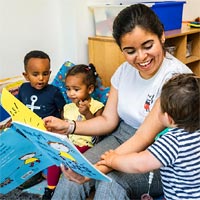 Reading and writing are crucial elements within every child’s education. Without these skills, learning about other topics would become much more difficult. Literacy is therefore a key area of focus within the EYFS learning and development framework. Like other nurseries, pre-schools and childcare settings that adhere to the EYFS approach, Little Cedars Nursery will therefore endeavour to encourage a love of reading within every child. Reading teaches children to comprehend language, vocabulary, grammar and spelling as well as learning more about the underlying topics themselves.
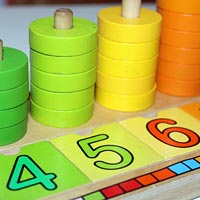 Nurseries, pre-schools, kindergartens and other childcare settings also recognise the importance of mathematics within children’s learning and development. The EYFS curriculum caters well for this, encouraging early years professionals to help children master counting first to 10 and later to 20 and beyond. Children will learn the patterns around numbers, including recognition of odd and even numbers, along with skills like simple addition and subtraction, and the ability to recognise low quantities without having to count. They will also learn to recognise when one quantity is more than, less than or equal to another. In so doing, children will also learn the vocabulary around mathematics in readiness for school once they leave their early years setting.
 A good early years education is nothing unless children understand the world around them. The EYFS framework used by early years nurseries like Little Cedars builds in programmes to help children learn more about the world. This includes helping them to learn how to observe, recognise, describe and even draw what’s immediately around them as well as exposing them to environments like the natural world, local parks and museums. It even teaches them to recognise similarities and differences between other cultures, religions and communities in the UK and lives being lived abroad. They will get to know more about people’s roles in society too, for example through visits from police officers, firefighters and nurses. A broad range of written material (both fiction and non-fiction) will inform them further. Topics explored will touch on culture, technology, ecology, religion, community, nature and much, much more. This will enrich their knowledge and understanding of the world they live within, giving context to what they see, hear and read about as they grow older.
 Expressive arts and design are also integral elements within the EYFS curriculum. Early years childcare settings like Little Cedars ensure that children are given a wide range of opportunities to be creative and to free their imaginations. A huge variety of media, materials, tools and activities can be used by children to express themselves and communicate both visually and audibly. Colour, texture, form and function are explored along with opportunities for role play, story-telling, poetry, singing, performance and even dancing when appropriate.
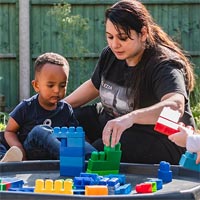 Little Cedars Nursery (Streatham) uses the EYFS framework to shape the educational activities and programmes that babies and children experience at the nursery. Part of this includes the setting of learning goals that each child needs to work towards as they gradually approach the age of 5, when they will move on to school. These are individual goals, tailored to the unique needs, interests, abilities – and any disabilities – of each individual child. A continuous regime of assessment will be undertaken by staff to monitor each child’s progress during their time with the nursery, with the learning programme adjusted, as necessary, along the way. A ‘Key Person’, allocated to each child, facilitates that assessment proactively. Additionally, staff will regularly engage with parents or carers/guardians to ensure that progress towards the learning and development goals is continued at home, wherever possible. Progress is communicated and a learning journal retained and available to parents at any time. In this way, each child achieves personal bests in all areas and everyone is kept up-to-date with the child’s progress.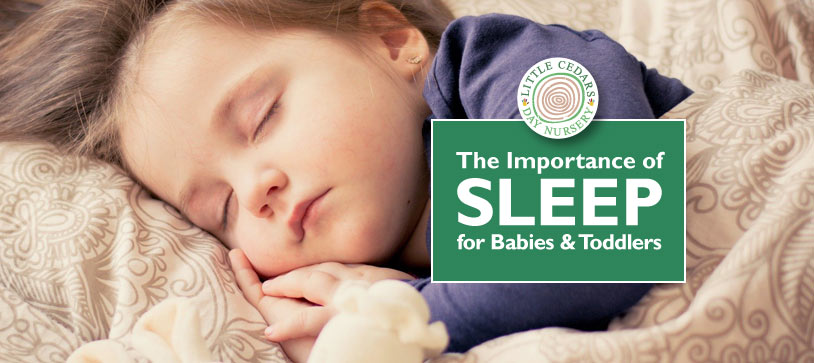
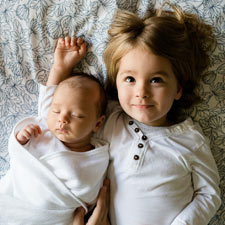
 These are significant benefits, so high quality sleep — and the right amount — is incredibly important.
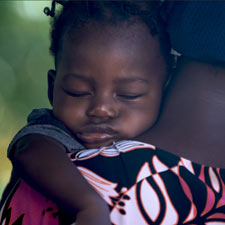 ‘Sleep Hygiene‘ is a term that refers to the whole routine around bedtime and sleeping, including important preparation measures during the run-up to bedtime A good sleep hygiene regime will help children get to sleep and to sleep soundly.
 The biggest message is that setting up — and sticking to — a set bedtime routine will greatly help with the quality of your child’s sleep. It sets a pattern that their minds and bodies will become used to naturally. A regime of this nature can include winding-down activities like a warm bath or shower, a peaceful book-reading session, dimmed lights and so on in the approach to bedtime. The routine will prepare them automatically for sleep even during the run-up to actually sleeping.
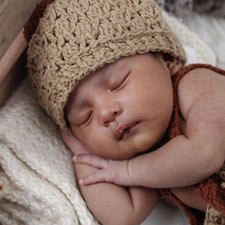 At Little Cedars Day Nursery in Streatham, we understand the importance of sleep, particularly for babies and the youngest of the children. For that reason, we ensure that children have the opportunity of a nap both in the morning and in the afternoon. For example, babies sleep for about half an hour to an hour around 9.30am and then again after lunch, for 1 to 2 hours between about 1pm and 3pm. Preschoolers don’t have to sleep if they don’t want to, but are given the opportunity to do so — every child is different. We also take a lead from parents who may prefer their child to keep to a particular sleep pattern. If you would like more information about this topic, and how we approach it at the nursery, please do get in touch.