
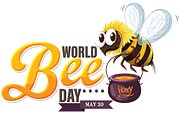
 May’s World Bee Day is a wonderful and very worthwhile International event. It’s also one that’s perfect for children, including under-fives, to get involved in. Not only does it raise families’ awareness of the importance of bees and pollinators, but it’s also a great opportunity to introduce little ones to some of nature’s adorable little creatures and get them more interested in the natural world. Nature is fabulously good for children, benefiting them in a myriad of different ways, so creating a buzz around World Bee Day is sure to be fun, educational, and hugely beneficial to children. With that in mind, today’s post explains more about World Bee Day and activities that children can take part in to celebrate the event.
What is World Bee Day?
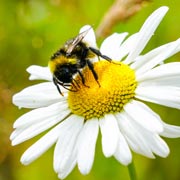 World Bee Day arrives on the same date each year — the 20th of May. The annual event celebrates bees and other pollinators and the important role they play in the world. Without them, there would be no food crops, fruit, vegetables, or nuts, leaving animals — including humans — in real mortal danger. The event also raises awareness of the plight and dwindling numbers of bees and other pollinators around the world, shining a spotlight on ways to reverse their decline.
So, by drawing children’s attention to bees, they’ll learn more about bees and pollinators, more about nature, where food comes from, and how human practices impact the natural world. Such a focus is a great way to both educate and instil in them the need to look after nature and all its flora and fauna. After all, today’s children are tomorrow’s stewards of this precious planet.
How Can Children Get Involved in World Bee Day?
There are many ways to create a buzz and get children involved in World Bee Day, so read on to discover some excellent bee-related activity ideas for under-fives below.
Create a Bee-Friendly Garden
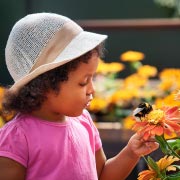 Children naturally take to planting seeds, tending seedlings as they grow, and watering plants and flowers. That’s great because it gives many opportunities for children to make gardens wildlife-friendly in readiness for World Bee Day each year. They can sow wildflower seeds, water existing flowers and bulbs in the garden, or even plant some low-cost flowers or seedlings in pots for the family’s windowsills, patio, balcony or garden. And, when flowers are blooming in May, the bees and pollinators will come! Whether it’s honeybees, bumblebees, or other pollinators like hoverflies, each one is adorable and a delight for children to see.
TIP! Bees love brightly-coloured flowers including those which are yellow or white. However, they are particularly attracted to those which are blue, purple, violet, and ultraviolet.
Teach Respect & Empathy
Remember to teach respect and empathy; bees are busy little things, going about their business, so it’s important for children to look but not touch. Encourage children to watch them and not disrupt their lives — they have feelings, their own lives, and incredibly important jobs to do after all.
Make a Bee Oasis
During hot days, bees can get very weary and can therefore sometimes be seen on the ground motionless as if they’re dying* or ill. Often they’re simply exhausted from all their hard work, flying in hot weather, and might also be dehydrated. To help bees avoid getting to this stage, children can put out little saucers (like those that go under flowerpots) with shallow water in them. They can simply be placed on flowerbeds and lawn edges close to the flowers that bees visit to collect nectar. However, it’s essential to include stones or small rocks that protrude from below the waterline into the air above. Bees, along with other pollinators, will then be able to use these to land on, crawl along, and sip at the water’s edge. The stones or rocks are also useful as an escape route should they accidentally end up in the water — bees can’t swim!
* Also learn how you can help a bee that needs reviving with sugar water here.
Take Children on a Bee-Spotting Walk
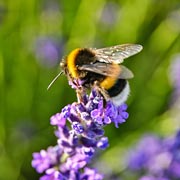 Wherever there are flowers, children will find bees, particularly if the flowers are brightly coloured and fragrant. A walk around the local neighbourhood, park, or natural open spaces will be both great exercise and an opportunity for little ones to spot some lovely bees and pollinators. Getting outdoors (appropriately supervised* and dressed) is beneficial to children in many ways, and a bee-spotting walk will be a simple way to introduce them to these important and cute little creatures. Can they spot a bumblebee? Can they spot a bee collecting nectar in their leg pouches (also known as pollen baskets or corbiculae)? Which type of bees are they seeing? Can they tell the difference between a common wasp (generally with yellow stripes) and a honeybee (generally with brown stripes)? And do they like the smell of some of the beautiful flowers that they’ll see on their bee walk? Such an activity is a delight to the senses!
Teach Children the Bee Waggle Dance!
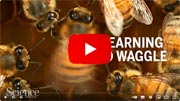 Honeybees dance! Did you know? When they want to communicate the discovery of a source of nectar to other bees in their colony, they will do what’s called the ‘Waggle Dance’. It’s a real thing! Scientists have studied the dance and have discovered that it tells other bees the direction, quality, and distance of the new food source from the hive. It consists of a wiggle while walking forward in the direction of the food source. The number of repetitions and specifics about the wiggles give other bees clues about the distance, location, and quality of the food source. They’ll then know which direction to head in and how far they’ll to need to fly. The accompanying video explains more. Inspired by this, why not encourage children to do their own waggle dance to music?
Create Bee Art!
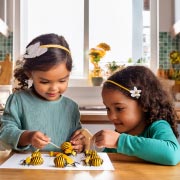 If the weather is unsuitable for outdoor activities, one of the easiest bee-related activities that children can take part in is making bee art. They can try drawing bumblebees, flowers, and hives with pencils, pens, or markers. Alternatively, they can get even more creative using paints or collages. Cutting up coloured tissue paper shapes and making bee-related images using appliqué is sure to be fun and impressive (child-safe scissors being used by parents or under super-close supervision). Parents can perhaps cut out any tricky shapes for the youngest children and then help guide them as they glue bee, flower, or hive elements into place.
Bee Crafts!
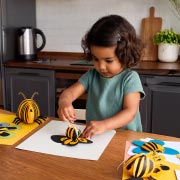 Bee art can be extended further by creating three-dimensional models and shapes. With a little help from parents or older siblings, even children under five can take part. They will enjoy sticking shaped paper or cardboard pieces and other recycled materials into place to form three-dimensional bees and flowers. Useful materials for such models could be things like corrugated card, tissue paper in various colours, coloured pipe cleaners, fabric, kitchen roll cores, paper plates and cups and, of course, coloured paints to decorate the final piece. Such creations can be as simple or complex as families like. This is a great activity to boost fine motor skills and hand-eye coordination!
Bee Fancy Dress
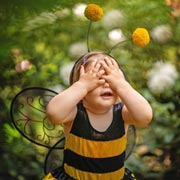 Children can get into bee-inspired fancy dress while doing their waggle dance! Striped clothes will help. Perhaps parents can help them make wings from card or material and shaped wire. Some antennae should not be too difficult to make from a headband, some pipe cleaners and some homemade pom-poms or foam balls from a craft shop. Children will love such creativity and the fun that ensues with friends once they’re all dressed up!
Create a Buzz About World Bee Day This May!
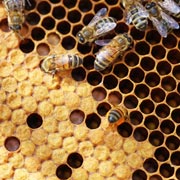 The bee-related activity ideas suggested in today’s post will be a fabulous way to introduce children to these magical little creatures, the wonderful work they do for us and the planet, and the measures little ones can take in their own lives to improve the plight of the natural world. The activities will also be fun and educational — indeed supporting many areas of the EYFS — and allow children to benefit from the enormous number of ways that nature can help them. From greater well-being and lower stress levels to greater focus and improved grades, nature is amazing for children and adults alike. What’s more, spending time around bees and nature will help children become more ecologically conscious, give them a sense of empathy and responsibility, and live more sustainably as they grow older. We wish everyone a happy World Bee Day this May.
Lessons from Nature at Little Cedars Nursery, Streatham

 We know how important nature is to children at Little Cedars Nursery in Streatham and that’s why the setting has its own planting and vegetable area for the children. Nurturing flowers, growing fruit and vegetables and tending plants will teach children a lot about the natural world, the importance of taking responsibility for other living things under their care, empathy, and where food comes from. Such activities also give them new knowledge, new skills, and a sense of achievement. They’re just one element in the full spectrum of early years learning and development opportunities at Little Cedars.
Get in touch today if you’d like your baby or child to visit Little Cedars Nursery — it’s by far the best way to see how well they will fit in. We can show you both around, answer questions, and tell you more about nursery places here in Streatham.
Little Cedars Nursery in Streatham is designated a ‘Good Provider’ by Ofsted and supports childcare funding for eligible children from 9 months of age. Located in Streatham close to Tooting Common, it will be a convenient choice for those living in and around Tooting, Furzedown, Balham, Norbury and Colliers Wood.
* Young children should be supervised at all times when exploring or playing outdoors. Read our safety tips for outdoor play for more ways to keep them safe outdoors.
 Children of the UK, it’s time to get ready for World Book Day! Arriving in early March, it is a wonderful annual event where children across the nation get to immerse themselves in books, storytelling, and other book-inspired activities. Such activities are incredibly important for children. Did you know, for example, that children who regularly read for pleasure are happier children who also go on to have greater success in their lives? This uplift is even more significant for children from disadvantaged backgrounds. Such is the power of reading for little ones! With all this in mind, today’s article outlines more about World Book Day and why it’s so important. It also suggests some activities that children and families can take part in to celebrate this year’s event.
 World Book Day arrives each year on the first Thursday of March. So, for 2025 it’s celebrated on the 6th of March, then in 2026 it’s on the 5th, for 2027 it’s the 4th, and so on. Organised by the charity of the same name, the core mission of World Book Day is “to promote reading for pleasure, offering every child and young person the opportunity to have a book of their own.” The reason is simple: a life-long love of reading for pleasure results in improved life chances. It’s incredibly powerful for children of all ages, as indicated in the following findings from the Organisation for Economic Co-operation & Development:
 The World Book Day® charity published a 17-page impact report for the event that took place in 2024. One of the key findings was that something needed to be done to stop the significant drop in children reading for pleasure. Otherwise, children would be missing out on some profound benefits. The report concluded that there had been several reasons for the downward trend. For example, 20% of children said they felt judged for what books they read. Some said that reading felt more like a chore or ‘work’ because the books were foisted upon them by adults. Just over 8% of children simply didn’t have access to any books at home. Of those that did, over a third said they had no choice over what they read.
 In the UK, children under 18 are eligible to receive a £1 book token through the event. This can be used to buy a special World Book Day title or go towards another book (
 Families: get ready for World Wildlife Day! On 3rd March each year, we celebrate UN World Wildlife Day, an important event that is all about protecting nature’s flora and fauna. At nursery age, little ones are naturally curious and eager to learn more about the world around them. World Wildlife Day is therefore the perfect opportunity to inspire a greater love for nature and wildlife in our young. Exploring the wonders of plants, trees, and the animal kingdom teaches them more about the world and also helps children develop key skills like language, creativity, and empathy. Whether through outdoor play or wildlife-themed activities, engaging with nature’s wildlife can therefore create valuable early learning experiences. With that in mind, today’s post outlines some simple activities that children, including those under five*, can take part in to celebrate World Wildlife Day. We also highlight some of the benefits of nature to children towards the end of the post.
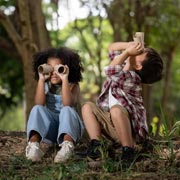 Getting outdoors is the best way to see wildlife, especially if your family lives near a park or the countryside. Rambles, picnics, and simple walks are all obvious options and, of course, wildlife sanctuaries are a good choice if you have one nearby. That said, while such outdoor options are amongst the best ways for children to connect with nature, sometimes they’re simply not possible. However, when that’s the case, there are plenty of other possibilities including bringing the wonders of wildlife into your nursery, home, or garden. Here are some engaging, age-appropriate activities that will allow children to take part in World Wildlife Day whatever their circumstances:
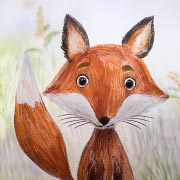 Most children naturally take to drawing, so encouraging them to draw wild animals, plants and birds will be a popular suggestion, especially around the time of World Wildlife Day. For example, they could try drawing British mammals like rabbits and squirrels, jungle animals like elephants and tigers, or sea creatures like dolphins and whales. To make it easier, perhaps give them some visual reference to inspire them. They could choose from a variety of media, be it pencils, crayons, paints, or collages — or something entirely different. Playdough or salt dough models are also an option. Children naturally love to create and, once complete, perhaps display their pieces to encourage future progress.
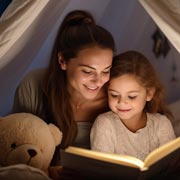 Reading books about wildlife will introduce children to new animals and habitats. Great options for younger under-fives include ‘Dear Zoo’ by Rod Campbell and ‘Brown Bear, Brown Bear, What Do You See?’ by Bill Martin Jr. (author) and Eric Carle (illustrator). Also, of course, children and families have the option to tell each other made-up stories. They’re a great way to encourage creative thinking and can be approached in a number of different ways. For example, a parent could tell a story first to give the child an idea of
  Try making some simple bird feeders with your children. There are lots of easy ways to make them as outlined in our dedicated guide,
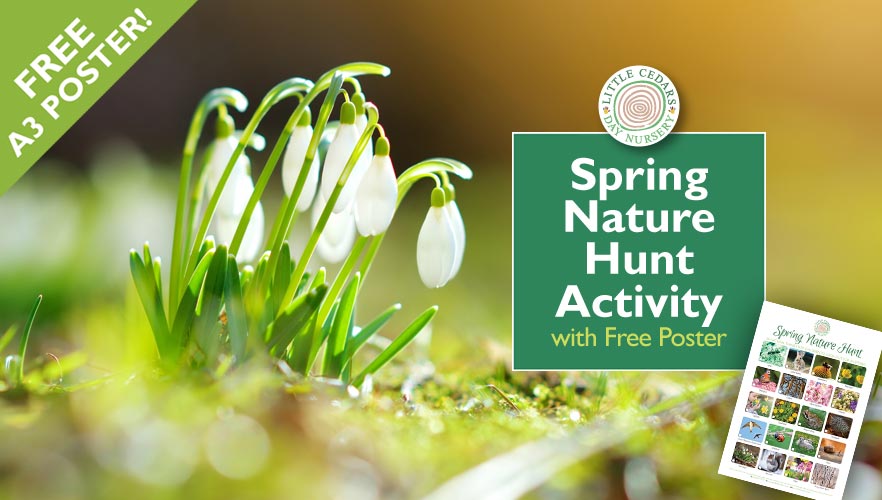
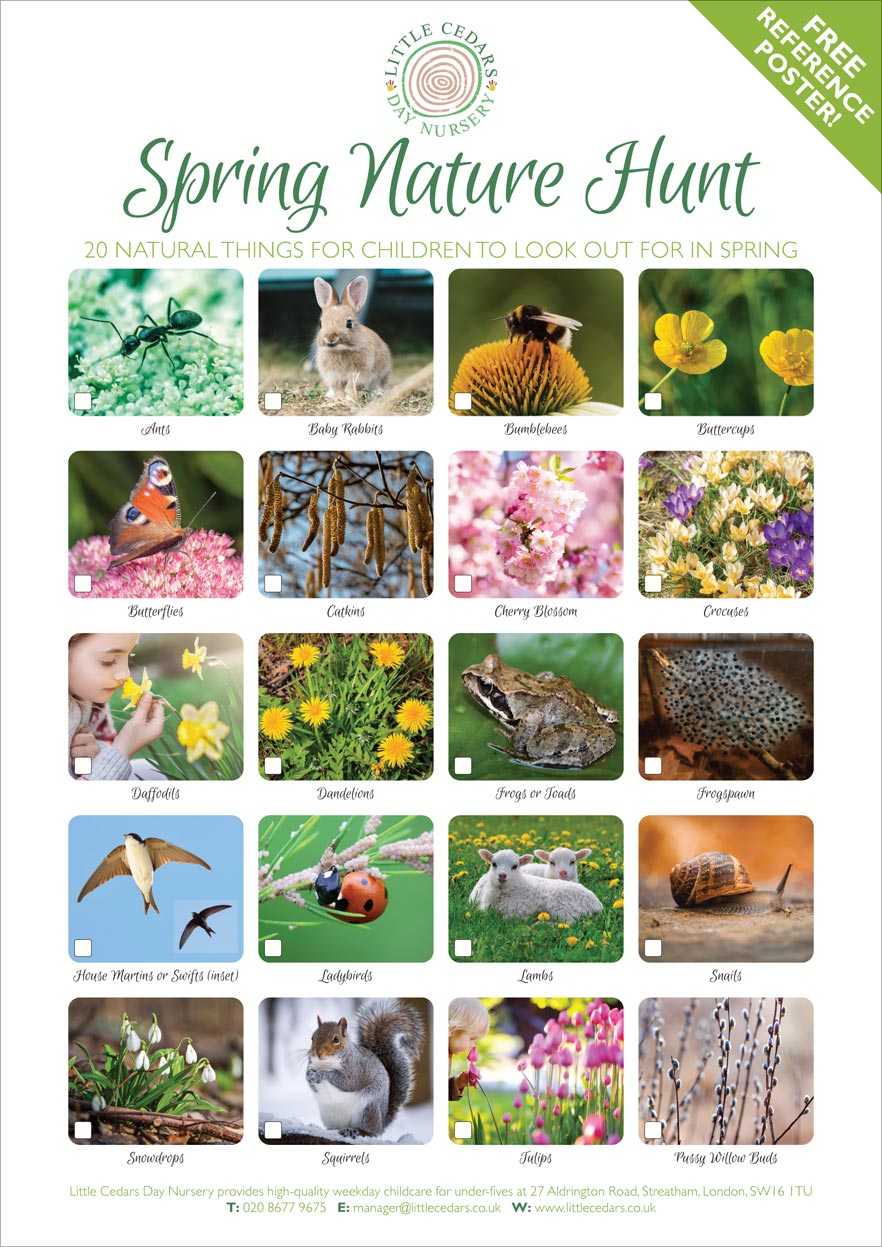
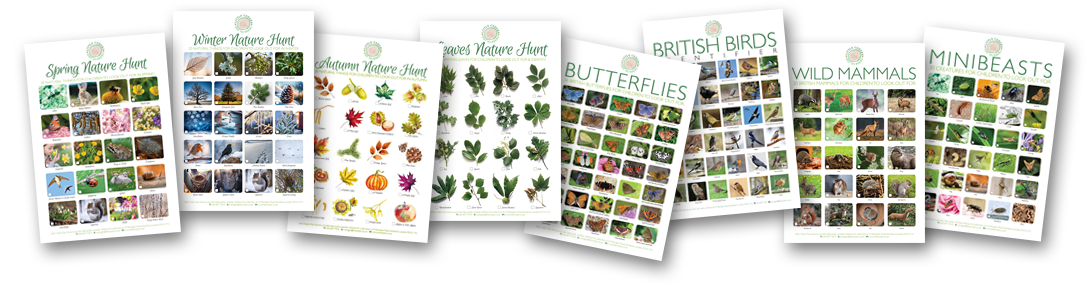
 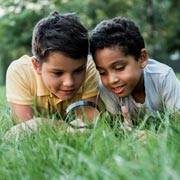 Create a simple scavenger hunt using pictures, words, or our free nature hunt sheets to encourage children to find different natural objects like leaves, feathers, and pine cones. This activity builds children’s observation skills, gives them deep insights into nature, and instils in them a better appreciation for the environment. Currently, free reference sheets are available for
  Engage children with easy science experiments, like
 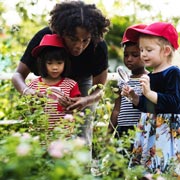 Spending time in nature or learning about wildlife isn’t just fun—it has incredible benefits for early childhood development. To harness such benefits, families can incorporate nature-based learning into children’s routines in a variety of ways. Examples include organising outdoor exploration sessions, setting up small wildlife observation areas, and using nature-themed storytelling to engage the young learners. Connecting children with nature:
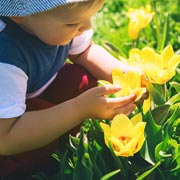 Incorporating wildlife into children’s activities doesn’t have to be limited to one day. Encouraging youngsters to notice the birds in the garden, look for insects on nature walks, or watch the changing seasons can gift them a lifelong love of nature. Parents and families can make wildlife observation a regular habit, perhaps by keeping a simple nature sketchbook where children can draw or glue in pictures of what they see, or by creating a wildlife corner at home with books, nature finds, and small child-safe plants. Even setting up a bird-watching station near a window can turn everyday moments into exciting learning opportunities. By celebrating World Wildlife Day, we can inspire the next generation of nature lovers—one little explorer at a time!


 With all the food and feasting associated with Christmas, it got us thinking about food hygiene and safety for children. Aside from keeping alert to possible allergens, parents need to be careful to ensure families remain safe from illnesses caused by food hygiene mishaps. After all, such illnesses can be particularly dangerous to little ones, who are fragile, but can be largely avoidable when good hygiene measures are taken. With that in mind, today’s post outlines various ways in which parents can stay on top of hygiene around the preparation of food for their children. And, of course, such measures will keep adults safer too.
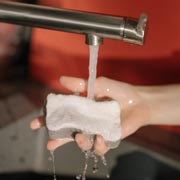 Ensuring the food preparation environment is clean and hygienic will reduce the chance of microbes, including germs and viruses, contaminating food. Wiping down with warm, soapy, water on clean dish cloths is ideal for many such tasks. Anti-bacterial sprays are useful but should not be allowed to contaminate food, plates and cutlery etc. directly or indirectly.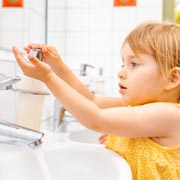
 Only feed children, especially babies and under-fives, age-appropriate food/meals. This is very important because many foods contain too much salt, sugar and saturated fats for young children. Some other foods can contain dangerous levels of toxins or even heavy metals.
 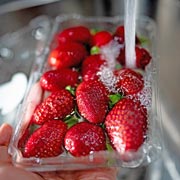 Always thoroughly wash vegetables, fruit and salads and, when appropriate, peel vegetables before use.
 It’s hugely beneficial if children learn about food safety and proper hygiene associated with its preparation. Such things are useful life lessons and will help to keep them more safe and free of illnesses and nasty bugs. Teach them by example whenever possible. A great start is to encourage them to thoroughly wash their hands and fingers with warm, soapy water before preparing or eating food. They should also be encouraged to sit down at the table and be in a calm state before eating. This will help to better ensure food does not become contaminated or knocked onto a dirty floor. It will also reduce the chance of the child choking on food.
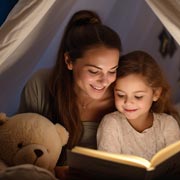 Any successful storytelling nook needs to be warm, cosy, quiet and comfortable. That means choosing a corner or recess of some kind in the home that’s away from distractions like TVs and game consoles. Somewhere that’s not used as a thoroughfare by other family members will also help. Wherever you choose, it also needs to be warm. Therefore, somewhere away from draughts is required, so avoid being too close to entrances and exits to the outside. A corner of a quiet room or a tranquil alcove are therefore often ideal spots for your child’s storytelling nook.
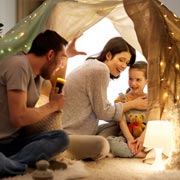 Whether reading from a book or creating a new story off the top of one’s head, there’s something that really brings a story to life — being animated and expressive during storytelling, rather like actors might do. That’s true whether it’s the adult or the child telling the story.
 Do consider adding a storytelling nook or reading corner to your child’s home. They’re great vehicles for escapism, are incredibly worthwhile, and offer potentially magical experiences for your child. And, if you go the extra mile to make them cosy, immersive and special, they will encourage your child to love reading and creating new adventures using their imagination. Storytelling nooks and reading corners can open up whole new worlds to your child and be a wonderful antidote to electronic screens, gloomy weather, and more limited daylight during winter months. What’s more, they’re a great way for all parties to grow deeper bonds through shared periods of exquisitely immersive, high-quality time.