
 A childcare nursery should not be thought of only as a crèche, playgroup, or simply somewhere that looks after babies and children while parents go to work. Good nurseries and pre-schools like Little Cedars are so much more than that. It’s incredible just how much they benefit under-fives, families and society as a whole once you take a closer look at everything they do — and that’s exactly what we’re doing today…
Somewhere Safe for your Child, While You Work
Yes of course, in the most simple analysis, a childcare nursery or pre-school is somewhere for babies, toddlers and under-fives to be safely looked after in a parent’s absence. And, as a high quality, Ofsted-registered childcare setting, Little Cedars Nursery will only employ trusted, trained and fully-vetted staff to look after little ones. All the appropriate safeguarding measures will also be in place in a professional childcare setting such as ours. This allows parents to continue with their careers, safe in the knowledge that their little ones are being cared for well, in a safe and trusted place.
A Home-From-Home Environment & Beneficial Interaction
 What’s more, staff at childcare settings like Little Cedars will form close bonds with little ones. Studies show that regular interaction with adults helps children’s brains to develop optimally. Did you know that a million new connections form in a child’s brain every second when you interact with them?
“A child’s brain forms a million new connections every second when you interact with them.”
Our early years practitioners will also ensure that children feel at home at the nursery/pre-school right away. The home-from-home atmosphere and warm, deeply caring staff mean that your little one also knows that they are safe, loved, valued and is being looked after well.
A Good Early Years Education
 Good Ofsted-registered nurseries/pre-schools like Little Cedars also give under-fives a full early years education. That’s important to know. Through a learning and development programme that’s customised to each individual child, we ensure they achieve their own personal bests in all areas of the statutory Early Years Foundation Stage (EYFS) curriculum. Despite their young age, areas of their learning are huge in scope. They include communication, language, literacy, mathematics, art and design as well as physical development and understanding the world as a whole. Children’s personal, social and emotional development is also nurtured fully.
Through this comprehensive and tailored approach to learning and development, children benefit, far into their older years, in many profound ways. A good early years education is therefore incredibly important and beneficial to children and, indeed, many studies back this up.
Nurturing a Love of Learning
This early years education is also done in a way that’s fun, with learning mainly through play, in such a way that children love learning! They naturally explore, investigate, question and ultimately learn more throughout their lives because their early years education has nurtured a natural will to learn in them. That’s gold dust for little learners!
Social Development & Fun With Friends
 Part of children’s personal, social and emotional development comes through active play with other children that they meet and get to know at the nursery. This is firstly great fun, of course, and that’s a hugely important part of any happy childhood. However, they’ll also learn many things through play. Without socialising with others, it would be more difficult to improve social skills, for example. Only by being around other children will they learn to account for the feelings of others, learn to respect one another and ultimately form close bonds, trust and friendships. Many such friendships will indeed continue long afterwards, as children move to schools at the age of five.
Improvement of Physical Skills
Children benefit from good nurseries and pre-schools like Little Cedars in other ways too. As well as helping them educationally, cognitively, emotionally and socially, children benefit physically from a good early years education. The learning and development programmes and activities at Little Cedars Nursery, for example, help children to master physical skills. They gain strength and fitness as well as improving coordination and motor skills. Both fine and gross motor skills will improve through both planned and free-play activities available at the nursery. This is all part of the plan for each child at the nursery. Indeed, everything at the nursery, whether it’s an item of equipment, game or activity, has a purpose.
Preparedness for School
 Another key aim of good early years childcare provision is to prepare children thoroughly for school. Why? Because well-prepared under-fives are statistically likely to do much better at school — and beyond — than those who didn’t receive a good early years education. By preparing and educating them in their early years, children will be able to hit the ground running the moment they start school at the age of five. Grades will be better and they will then have more choices and opportunities when the time comes to apply for further education in their teens.
“15-year-olds who had attended some pre-primary education outperformed students who had not by about a year of achievement.” (OECD report, 2011)
Super-Charging Children for Success
 It’s almost as if children are super-charged for success — the benefits of a good early years education are surprisingly long lasting. Some studies even show that the benefits last into people’s working lives, improving salaries (a US study even puts a figure on it), boosting careers and thereby also enhancing a person’s standard of living — well into adulthood. That’s incredible, when you think about it.
Independence and a Healthy Self-Confidence
Another part of a good early years education is for children to learn to be more independent and self-confident. That’s another thing that good nurseries like Little Cedars helps to nurture. We’ll help point them in the right direction, for example with solo tasks, group activities, personal hygiene skills, toilet training, good manners and much more. All of these skills will stand them in good stead in the real world, including when they leave us to start school around the age of five.
Early Warning of Any Issues
 Working so closely with babies, toddlers and preschoolers allows us to continually monitor their individual progress. In so doing, we are in a prime position to spot any issues early and to make appropriate arrangements to mitigate them if needed. For example, we may spot that a child is finding reading challenging. If so, we can put extra effort and time into improving the situation for the child. On occasion, that may even include talking to parents about the possible intervention of a specialist of some kind, or it could simply be that they need to practise specific activities to overcome the issue. The earlier challenges or any special educational or developmental needs are spotted, the sooner the child in question can be helped.
Our Early Years Education Benefits Families & Society Too
As well as hugely benefiting children, the high quality childcare and early years education from providers like Little Cedars Nursery also helps families and society in general. Parents are freed up to go back to work and boost household incomes, boosting the family’s standard of living. Society also benefits from early years education through upward mobility, lower welfare dependency, reduced poverty levels and even lower crime rates. Learn more about the benefits of an early years education here.
An Outstanding Childcare Service in Streatham
Little Cedars Nursery is in Streatham (also close to Furzedown, Tooting, Balham, Norbury & Colliers Wood)

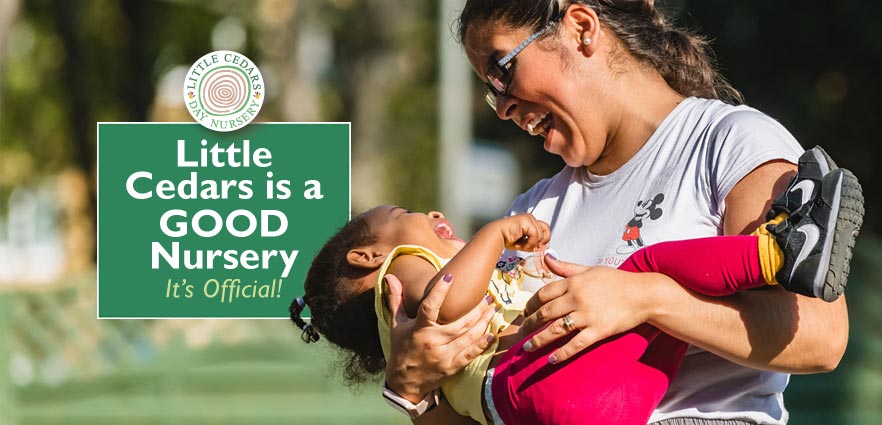
 Rated by Ofsted as a good early years provider, Little Cedars Nursery gives babies, toddlers and under-fives the very best start in life. Why not come for a guided tour with your little one — or simply apply for a nursery place for your child. Our nursery and pre-school is in Streatham near Streatham Hill, Streatham Park, Streatham Common and Furzedown. We’re also conveniently close to Tooting, Tooting Bec, Tooting Broadway, Tooting Common, Balham, Norbury and Colliers Wood. Choose a button below to get started with your nursery application or tour — or for help with any queries.
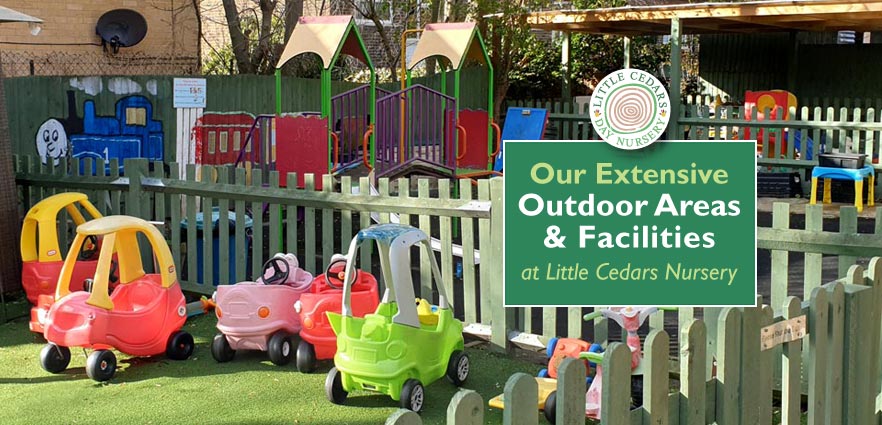
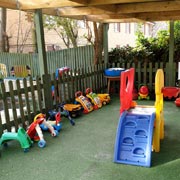 We have a huge outdoor area for children at Little Cedars Nursery, Streatham. Parents express their surprise when they first see it, regularly commenting that it’s much larger than the outdoor areas of other nurseries and pre-schools in the area. Our extensive outdoor play areas are also packed full of fun, educational play equipment and facilities that our under-five children absolutely adore. That includes areas and facilities set up especially for particular age groups.
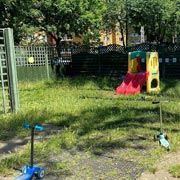 The outdoor ‘mud kitchen’ is a particular hit with children at the nursery. They can enjoy creating in the sand play and water play areas too. These are fun and educational activities —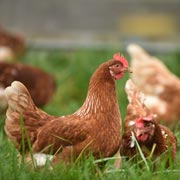
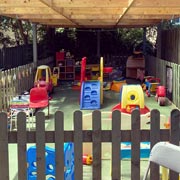 As you can see from some of the photographs, the nursery’s extensive outdoor areas include both open-air and undercover areas. That means children can play and explore whatever the weather. Outdoor play is good for children, teaching them some things that simply can’t be taught indoors, so it’s wonderful that many of the outdoor facilities can be used all-year-round.
 Outdoor play at Little Cedars Nursery also supports the Early Years Foundation Stage (EYFS) curriculum. Learning through outdoor play teaches children so much and in a natural way. Outdoor play supports such areas as communication & language, physical development, personal, social and emotional development and understanding the world. Many such lessons come naturally as children play with one another and interact together via outdoor activities.
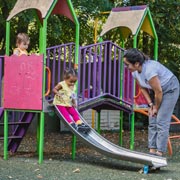 Such staff will continuously identify the individual interests and needs of each child and ensure that the learning and development activities they access will benefit them in the optimum ways. The idea is to further strengthen existing areas where children are strong, while bolstering children’s skills in areas that may require extra focus.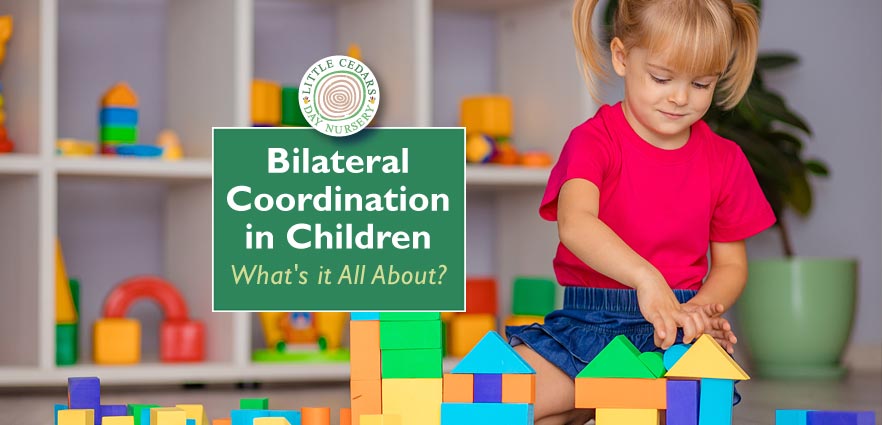
 Bilateral coordination is an important skill for children to master and is something that parents should look out for as children develop in their early years. Today we look at the topic, explaining what it is, why it’s important and how mastery of the skill benefits little ones.
 You may also hear reference to the phrase crossing the midline and this is also linked to bilateral coordination. It refers to a person reaching across their body, from one side to the opposite side, in order to complete a task. An example would be a child reaching with their right hand, across their body, to pick up a toy that’s to their left. Crossing the midline in such a way is a significant step because it demonstrates that infants have progressed from naturally using the side of their body nearest the object to using a dominant or preferred side. This may be the first indication parents have of whether their child is going to be left- or right-handed.
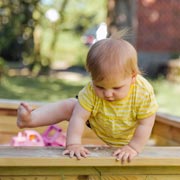 uncoordinated and will struggle with a variety of physical tasks.
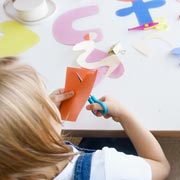 Reciprocal bilateral coordination: this is where both sides of the body form a rhythmic motion but the movements on each side alternate. Examples include walking, swimming and cycling.
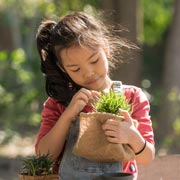 Mastery of bilateral coordination requires children to develop and fine-tune three types of motor skill:
 Threading beads on a string, or string through holes punched though paper or card;
 Play-doh — squeezing and rolling it, including use of tools to shape it;
 These are just a few examples. Any age-appropriate game or activity is likely to help improve bilateral coordination so long as it requires precise, measured movements and coordination of both sides of the body. It’s a case of the child practising over time, often through play, until a particular physical outcome has been mastered. Progress is particularly easy to see in babies and infants as they gradually become more physically able, dextrous, strong and coordinated.
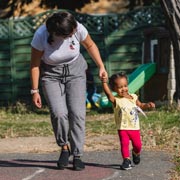 Independent feedback from other parents is worth its weight in gold. In the last five years, Little Cedars has received only 5-star reviews on Google and Facebook. That’s top marks, consistently for 5 years running.* Comments that accompanied these independent reviews were equally compelling — here are just a few examples:
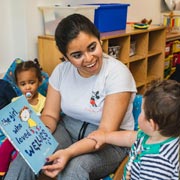 Little Cedars is a warm, welcoming and nurturing environment. To the babies and children, it very much becomes a home-from-home where they feel safe, valued, cared for and all with wonderful, close relationships with both peers and our childcare professionals. It’s also a place of immense fun where little ones are happy, stimulated and nurtured in order to bring out the best in them.
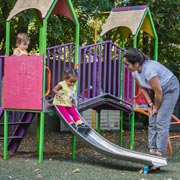 Little Cedars Nursery is extremely well resourced and equipped, both inside and out.
 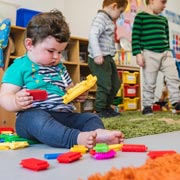 If your 2-year-old is eligible for the Government’s free childcare scheme for this age group, rest assured that Little Cedars Day Nursery supports them and this can potentially give your little one 15 free hours of childcare per week for as many as 38 weeks of the year. That’s 570 free childcare hours per year for your 2-year-old!
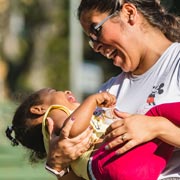 A Key Person is assigned to each child at Little Cedars Nursery. This is an early years practitioner who ensures that the child’s needs are being catered for and that their care at the setting is tailored to them as an individual. They help children settle in when they first join the nursery and build strong relationships with both the child and the parents. They are therefore usually the natural and key point of contact at the nursery.
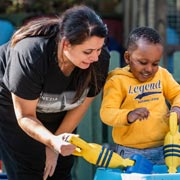 We have a very special team at Little Cedars Nursery. Every one of them has been hand picked to ensure they are the perfect fit for the nursery and for the children therein. They’re warm, natural carers who will form wonderful relationships with children and bring out the very best in them. They become the children’s safe, familiar and friendly faces at the setting as well as facilitating top-notch learning and early years education. They also ensure every child is happy and is having fun whilst under our care.
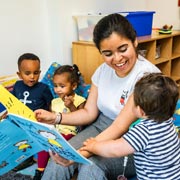 At Little Cedars we do so much more than simply look after babies, toddlers and under-fives. We educate and nurture them too. In fact, we ensure that our little ones achieve personal bests in all 7 areas of


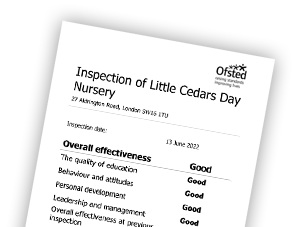 Here’s how Ofsted rate Little Cedars Nursery:
 June 2022 has seen the release of a new set of recommendations that outline ways to reduce the likelihood of sleep-related deaths amongst babies and infants up to the age of 1. This includes, but is not limited to, deaths related to Sudden Infant Death Syndrome (SIDS). Sadly, SIDS and other sleep-related issues are responsible for nearly 200 infant deaths in the UK each year and up to a staggering 3,500 every year in the United States. Perhaps even more surprisingly, that last number has not reduced at all in the last 30 or so years. This new set of recommendations from experts in the U.S. aims to change that and is something that all parents need to take a look at if they have a baby or infant. Let’s take a look at the new guidance …
 PLEASE NOTE: we have summarised key points from the new guidance in good faith but advise parents/carers of babies and infants to do their own research.
 It’s amazing how much nature benefits children, particularly in their early years when they’re finding out about the world around them — and also learning about themselves. There have been many studies into the importance of nature, to youngsters in particular, and the studies all reach a similar conclusion — nature is incredibly important and beneficial to children. Today we’ll explore the topic and learn why children should regularly access the natural world.
 Stress is also reduced on both a mental and physiological level through exposure to a natural environment. In studies, stress hormone and blood pressure levels both improved after exposure to nature, helping children both physically and emotionally. Nature seems to be a great way to recharge children’s batteries and lower stress and anxiety, as well as improving attention, engagement and academic performance. That includes improvements in important skills like reading, writing and mathematics.
 Improved social skills and even wider circles of friends due to the opportunities offered through outdoor play and adventure.
 The new skills, knowledge and freedom that nature gives children also helps them to become more self-confident and independent individuals.
 Even in built-up cities like London, immersion in nature is possible via gardens, parks, commons or, if you’re lucky to have them near you, nature reserves and nature gardens. There are many of these dotted around London, including
  If you’re searching for
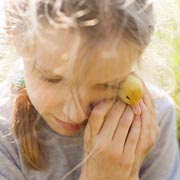 Sooner or later, many parents will consider the possible benefits of pets and whether their child should grow up with one. Mostly, the answer is positive because growing up with a pet can benefit children in many important ways — and really enrich their lives. However, looking after animals is a huge responsibility, not least to the animal itself, so should never be taken on lightly. Today we explore the topic and also outline a couple of animal-related initiatives that we have undertaken at
  On a simple level, pets are incredibly cute and great fun to be around. As such, most children are naturally drawn to them.
 Familiarity with animals and closeness to pets also teaches children respect for other individuals (whether human or non-human), including recognition of the consequences of their actions towards them. It shows them how to care for others too. It can also teach them patience (e.g. when training) and even some of the harder lessons about life cycles.
 Introducing animals like dogs and cats to the household is quite a life-changing thing. After all, they are the kinds of animals that pretty much become one of the family and, as such, require significant time, care and attention for their own wellbeing. They also often live freely within the house and require access to the garden and, for dogs, regular walks outdoors. They are quite an undertaking, so the decision to introduce one needs careful and thorough consideration. Many animals form deep, lifelong bonds and you will become their family just as much as they become yours. So, that lifelong commitment is an important one — they are absolutely not unfeeling objects to be treated like just a toy.
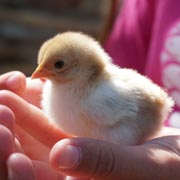 Just like humans, animals need care, proper food, fresh water, friendship, comfort and stimulation. If they don’t get these essentials, they may lead miserable and potentially even foreshortened lives. So, before a family takes on a pet, it’s best to thoroughly research the particular type of animal and exactly what they will require, from food, nutrition and bedding to stimulation (games, exercise etc.), contact with others and medical needs. Families should find out about all these things before taking an animal on. For some types of animal, for example dogs, even the breed and background is important. That’s for the wellbeing of both the pet and the family itself. Remember too that some animals will need training, for example toilet training in the case of cats, dogs and perhaps even ‘house’ rabbits. Some dogs may also require behaviour training. Everything needs factoring in beforehand including things like who will look after the pets while adults are at work, what happens when you go on holiday, who will exercise the dog, clean out the rabbit hutch regularly, feed the rabbit or clean the budgie cage.
 At Little Cedars Nursery in Streatham, we believe that children will learn a huge amount through contact with animals. For this reason, we have our own chickens and rabbits at the setting — and the children adore them! Our rabbits are named Miffy and Bella and indeed naming them naturally encourages children to treat them like individuals rather than something to play with.
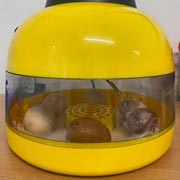 We are also raising some new chickens from fertilised eggs that we currently have in an incubator. We’ll teach children all about the life cycle of chickens with these. Once they hatch, children are sure to love the adorable little chicks that will emerge and they’ll be able to watch them grow up from fluffy chicks to adult chickens. When old enough, the chickens will join our existing, fully-grown chickens that we keep for the children in our animal enclosure outside.
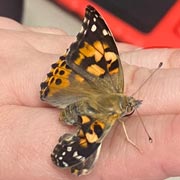 We also have a caterpillar/butterfly enclosure indoors at the setting. Through this, children can follow the incredible life cycle of butterflies, starting off as tiny eggs, hatching into caterpillars, building cocoons and eventually emerging as incredibly beautiful butterflies. This is an amazing metamorphosis for children to witness and teaches them so much about the wonder of the natural world as well as the individual needs of some of its creatures.
 It can be frustrating when children refuse to eat particular foods, often seemingly for no apparent reason. Much of it is new to them, though, if they’ve only recently been weaned off milk. So, firstly don’t get stressed about it. Refusing certain foods initially is quite normal for the very young. Often, all that is needed is a strategy for dealing with finicky eating and a little patience. Let’s take a look, today, at measures parents or carers can take to manage children who are fussy eaters. After all, it’s imperative that they have a healthy, balanced diet.
 Similarly, some foods are an acquired taste, i.e. one that’s initially not liked, but is later appreciated and enjoyed. Avocados have a taste that’s quite subtle and delicate, for example. Because of that, some youngsters think they are bland — but may well love their subtle flavour and texture once they’re older. That’s an acquired taste. So, again, it’s worth encouraging your child to keep trying foods even if they don’t think they like them in the beginning.
 If your child loves one food but not initially another, try using food bridges. This is when you pair one food with another food that you know they already like. You can start small and gradually increase the amount of the ‘new’ food. Adding cheese to potato or pasta is one example. Adding a small garnish of finely chopped herbs, vegetables or even fruit to pasta, rice, pulses or meat is another. These may slip under the child’s radar and this will help with gradual acceptance.
 You could even make the food into fun pictures, all entirely made of the food you want them to eat. For example, peas could be made to represent a hill, broccoli could represent a wooded area, the yolk of a fried egg could represent the sun and so on. This approach will help children to see a fun aspect of food, and to engage more directly with it.
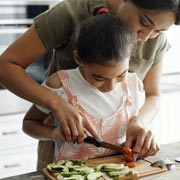 You could even get children involved in the creativity and choices around food. With the requisite care around safety, you could involve them in food preparation, choosing foods, deciding how they are displayed on the plate and so on. This will again get them more engaged around food and make it into a fun, creative activity. Children will love that. Remember, though, that this should only be taken so far. After all, you do not want to encourage them to always ‘play’ with their food.
 When your child eats something that they’ve not been keen on eating before, give them positive feedback as this will encourage them. A well done here and a good job there will sometimes do wonders.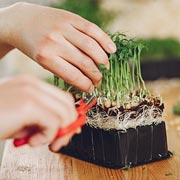
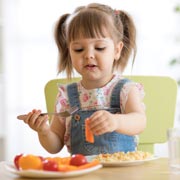 At Little Cedars Nursery in Streatham we know how finicky young children can sometimes be. So, we too occasionally employ some of the tactics described above. After all, food and a healthy, balanced diet is important and never more so than in children’s formative years. Study after study has shown this to be the case. Read our