
Today’s activity is one that’s fabulous fun for children and parents alike. It’s all about showing children how quick and easy it is to transform their drawings, paintings, and art using Artificial Intelligence (‘A.I.’). With help from a parent, magical results take just minutes to accomplish, and each transformation is often incredible. It’s also clear that the finished results truly honour children’s creations, while simultaneously elevating them to new, highly professional digital art imagery. What’s more, the tools that achieve this are freely available to families via desktop computers and smartphone apps.
Let’s dive in, then, to see how children and parents can take children’s art to magical new heights — easily, and in just minutes. We’ve also included some ‘before’ and ‘after’ images to exemplify what’s possible using the right approach. Parental or adult supervision is, of course, essential, particularly for the youngest children.
Why Introduce A.I. Digital Art Transformations to Children
This activity will encourage children’s art, communication and creative skills, and boost their understanding of today’s world. While some may be nervous about introducing youngsters to A.I., it’s a technology that’s ubiquitous — embedded all around us on computers, smartphones, and countless other devices. Indeed, today’s children are likely to grow up with it being a normal part of their lives. Many will grow up using A.I. daily at home and in the workplace, and some may even end up in a career that involves it. So, what better way to introduce artificial intelligence to little ones than via a responsible parent who has their best interests at heart? Such a parent can closely supervise them and ensure they use A.I. safely and responsibly. With that in mind, today’s A.I. art activity is a simple but fun way to help them see the technology’s potential, and to generate digital art that they can call their own and be proud of. Bringing their art to life in this way will also demonstrate that their imaginations, ideas and creations have enormous potential, are valued, and therefore matter.
Bringing children’s art to life will demonstrate that their imaginations, ideas and creations have enormous potential, are valued, and therefore matter.
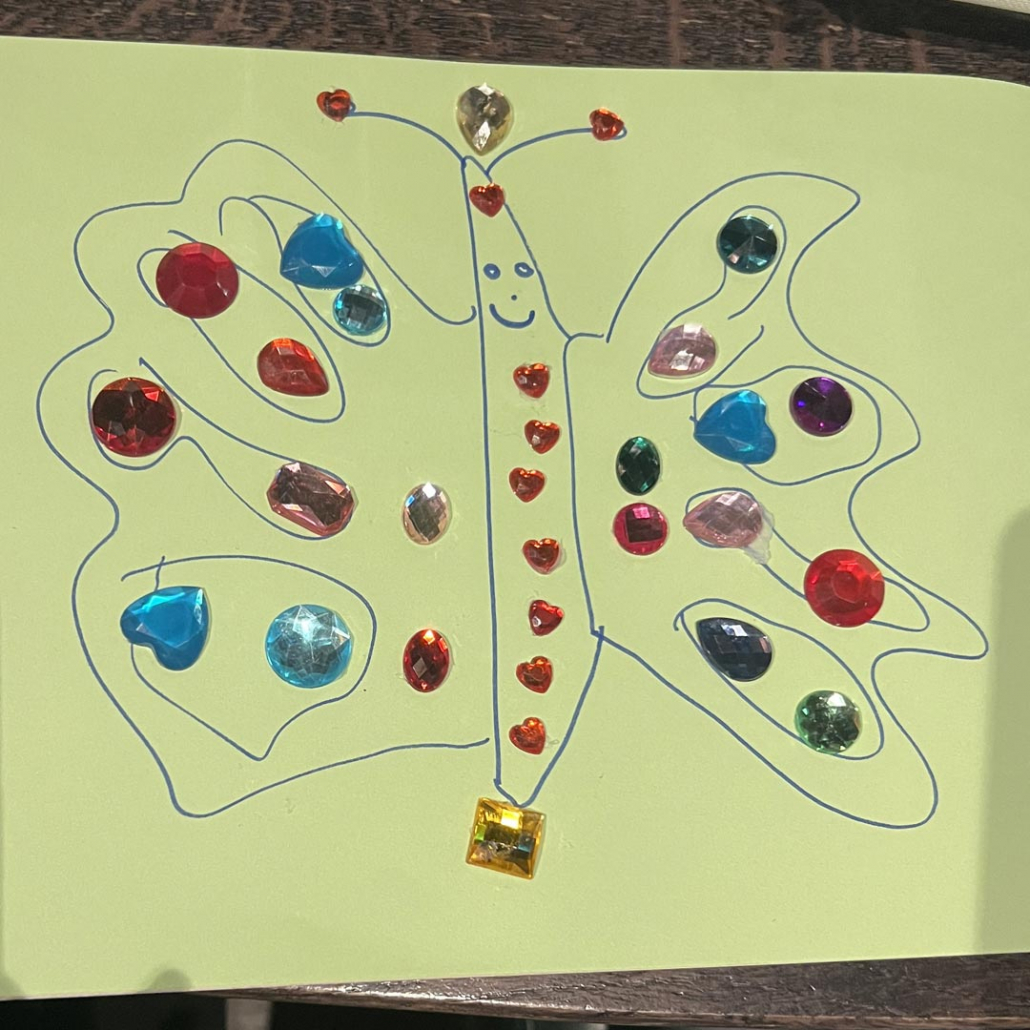
Here’s a clickable gallery showing what’s possible when you ask an A.I. tool to transform a child’s art:
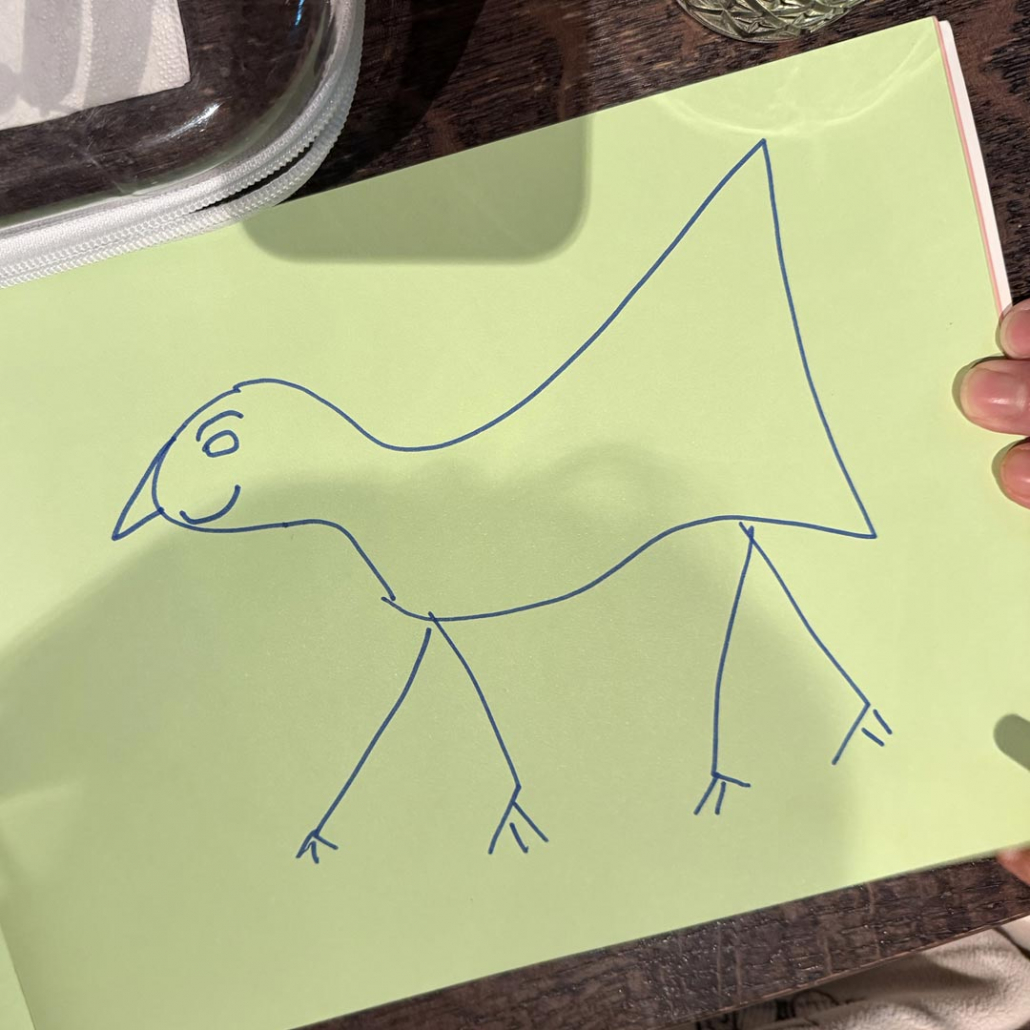
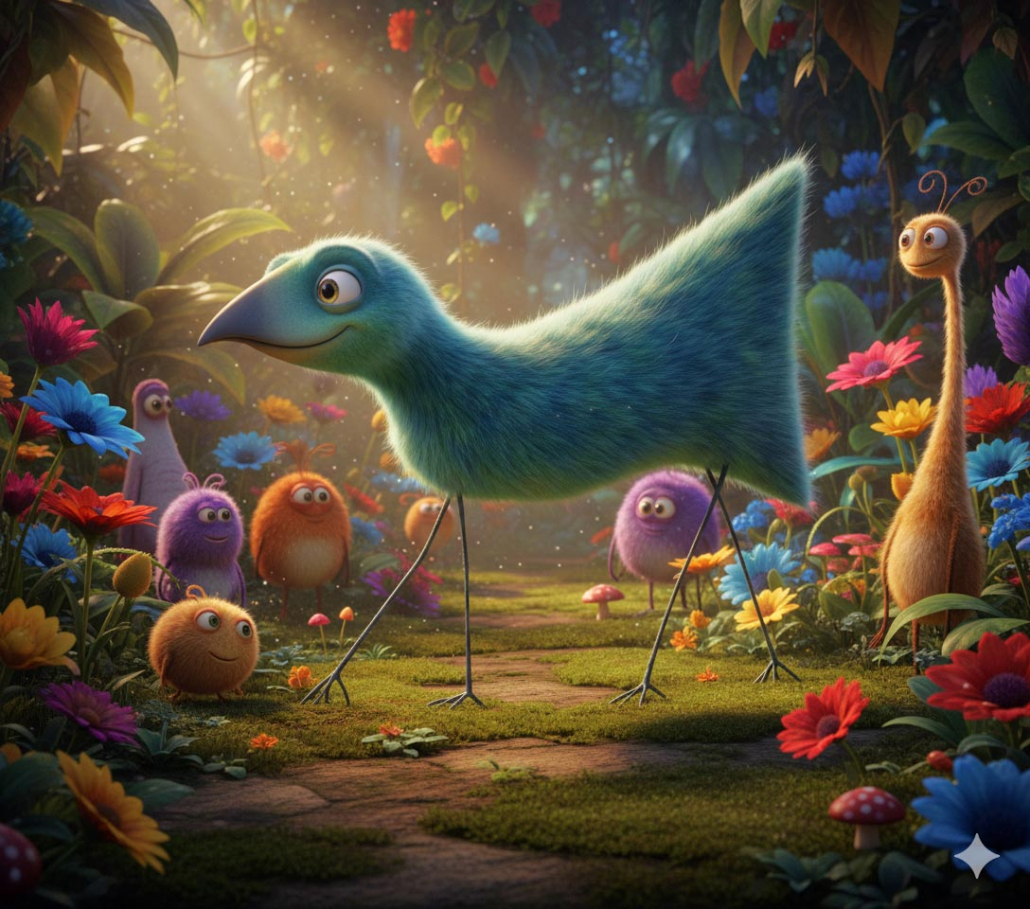


Steps to Incredible A.I. Transformations
Step 1: Make a Drawing or Painting
Step 1 is for children to do what they often do best: draw or paint something on a sheet of paper. If they need some ideas, an image of one or more people, animals, monsters, robots or what they might imagine to be aliens would be a good place to start. They can include anything they like around the main character or focus of the piece, be it a background of a home, forest, mountain scene, alien landscape, or indeed nothing at all — because asking the A.I. tool to insert some kind of background is also something they can do (see Step 4).
Step 2: Photograph or Scan Your Child’s Art
Once the child is happy with their drawing or painting, the parent should scan or take a smartphone photo of the image from above and save it, noting where it’s been saved. Try to avoid casting any shadows across the art when you photograph it, and ensure the results are clear before moving to Step 3.
Step 3: Upload it to the A.I. Tool
The next step is to upload the saved photo to the A.I. tool. For most A.I. tools, this is usually done simply by clicking the + symbol in the chat window of your chosen A.I. tool (more about those below) and selecting the appropriate instruction (upload, or add photos/files, as appropriate). Then, ideally, include your instructions for the A.I. tool within the same prompt or, failing that, immediately after it in your next prompt. See Step 4 below for our recommendations.
Which A.I. Tool?
There are many different A.I. image-generating tools available to families, including powerful ones that are free to use, within certain limits. ChatGPT is perhaps the most well-known and has a fabulous image-generating tool, directly available from the chat prompt via the paperclip symbol (whether via its website or its smartphone app). However, ChatGPT has fairly stringent limitations on the number of image transformations it will produce per hour or day, particularly when the system is busy, and transformations may be a little slower than with some other A.I. tools (paid upgrades are available to reduce some of those limitations).
A good alternative for families to start off with is an A.I. tool that’s less stringent yet more accessible. ‘Copilot’ would be an excellent choice on Windows 11 PCs because it’s embedded into that operating system. Another good alternative would be Google Gemini, which is accessible directly via any web browser by clicking our bold, blue link.
Either way, an image can be uploaded from the A.I. chat prompt by clicking the + symbol, subsequently choosing ‘Upload’ for Copilot, ‘Add photos & files’ for ChatGPT, or ‘Upload files’ for Gemini.
Other A.I. tools are available, but the suggestions above are a good starting place. Parents will need to do their own research around functionality, any image generation limits, possible fees if they want to upgrade, privacy, image ownership, etc.
Step 4: Give the A.I. Instructions
Once your image has finished uploading to the A.I. chat prompt, the next step is to write your instructions, ideally in the same prompt window or, failing that, in the very next prompt that you make. Such instructions tell the A.I. tool what you want it to do with the image you have uploaded. You can give it some simple instructions, which will allow it flexibility to make many of its own decisions, or feed it highly detailed instructions that give you much more control on the final output. Your child can be involved in such instructions, of course, and this can all be a part of the creative fun! Such an option may work best once they’ve learnt what the A.I. tool is capable of doing, having perhaps transformed their first few pieces of art.
What Can You/Your Child Ask the A.I. For?
What you can ask the A.I. tool to do with your child’s drawing or painting is only limited by your (or their) imagination! For example:
- You could ask them to transform it into a cartoon style if you want to keep it simple (for example, in the style of SpongeBob SquarePants or The Simpsons).
- You could ask the A.I. to transform a scribble of a robot into a high-definition one that takes the same form but looks every bit like it’s made of painted metal and resides in a futuristic city.
- You could request a transformation in the style of a Pixar movie. For example, with the main character(s) having shaggy fur, bright colours, all set in the interior of an imaginary spacecraft with illuminated buttons and futuristic furniture.
- Another option would be to request the output to be in the style of clay characters of the kind you’d see in a Wallace & Gromit animated movie.
- Or ask for the final image to be in the style of a wooden puppet, a fabric soft toy like you’d see in a child’s nursery, or indeed something that looks like it is from Toy Story.
- You could perhaps ask for something that looks like your child’s drawn character comes from Sesame Street or The Muppets.
- Be aware that you can also specify the type of lighting (soft, hard, backlit, etc.), what the background should be, what the location is, what style of image it should be, and even whether any elements of the child’s original drawing should be ignored, adapted, or substituted. If you/your child has something in mind, simply tell the A.I. tool.
Step 5: Wait for the Amazing Results!
Once your child’s drawing or painting has been submitted along with the appropriate instructions, it’s a case of waiting a minute or two for the results. Be prepared for a “WOW!” from both yourself and your child when the generated image appears, because the results are usually incredibly impressive. The A.I. tool will have taken the essence of your child’s creation and elevated it to incredible new heights.
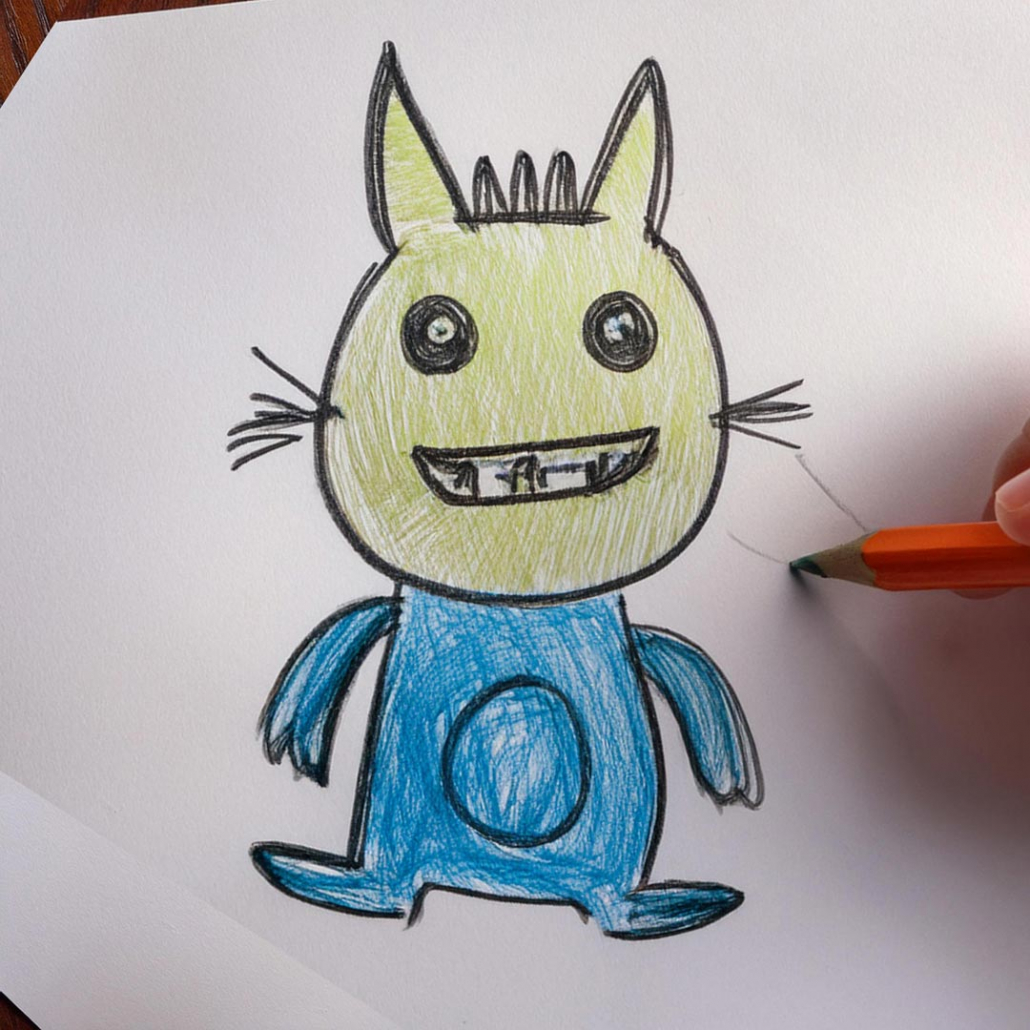
Here are a few more examples, which are clickable for a larger view:
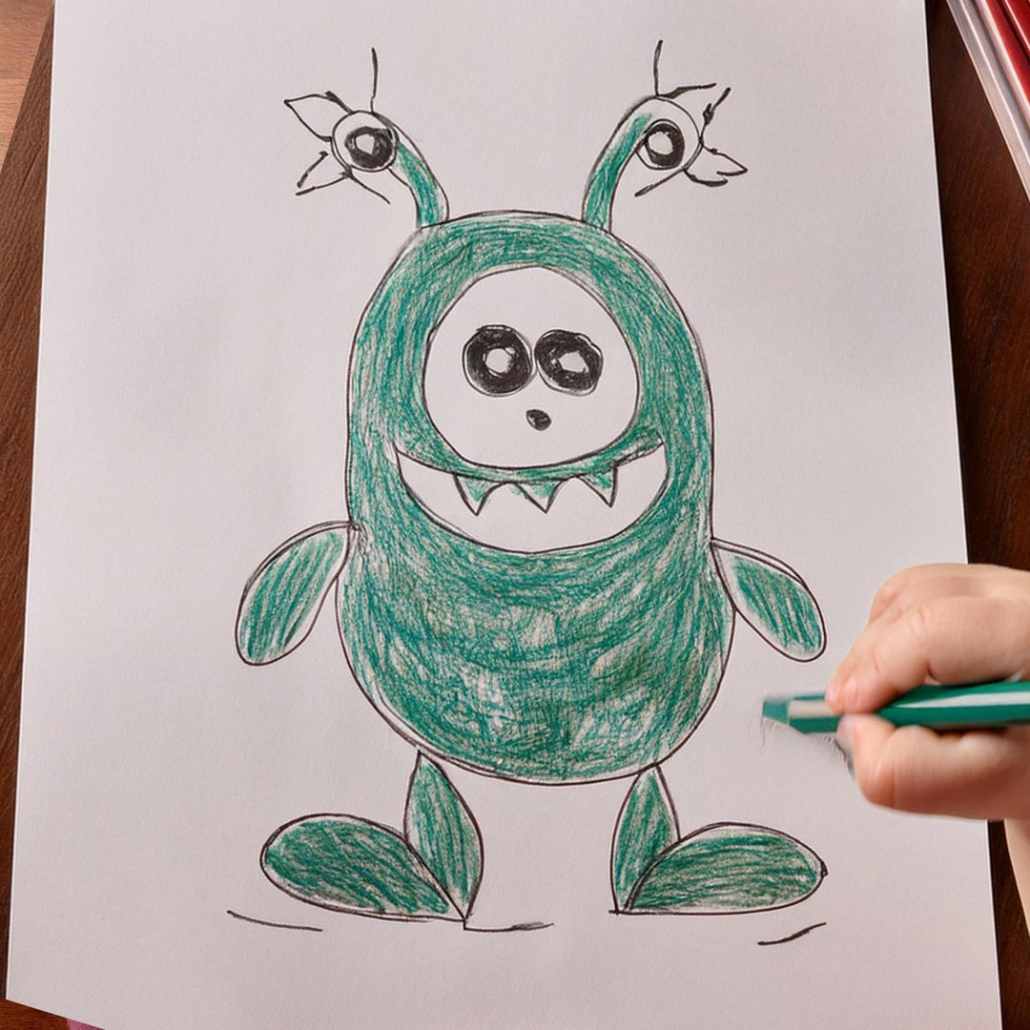
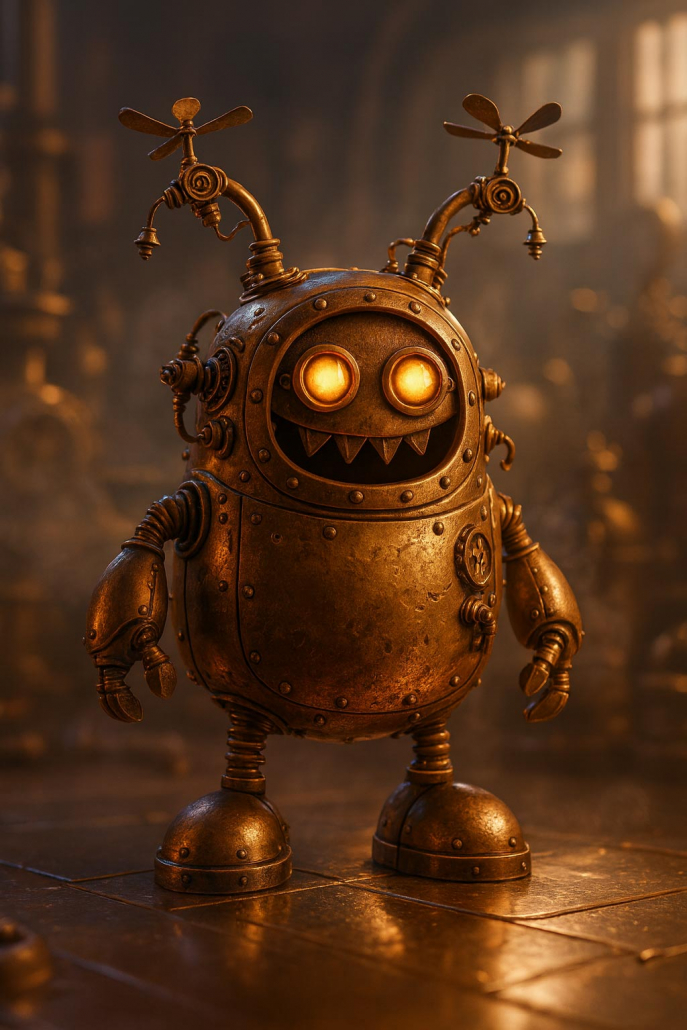
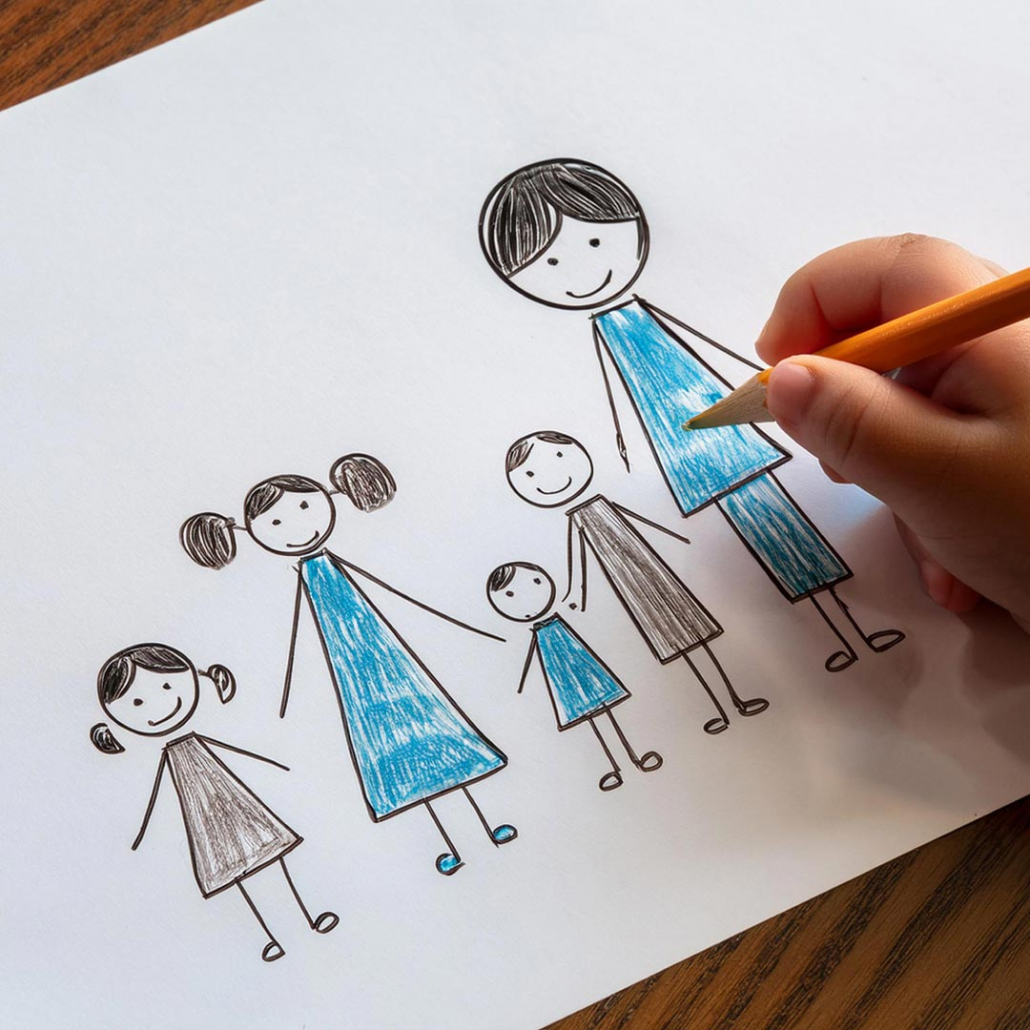
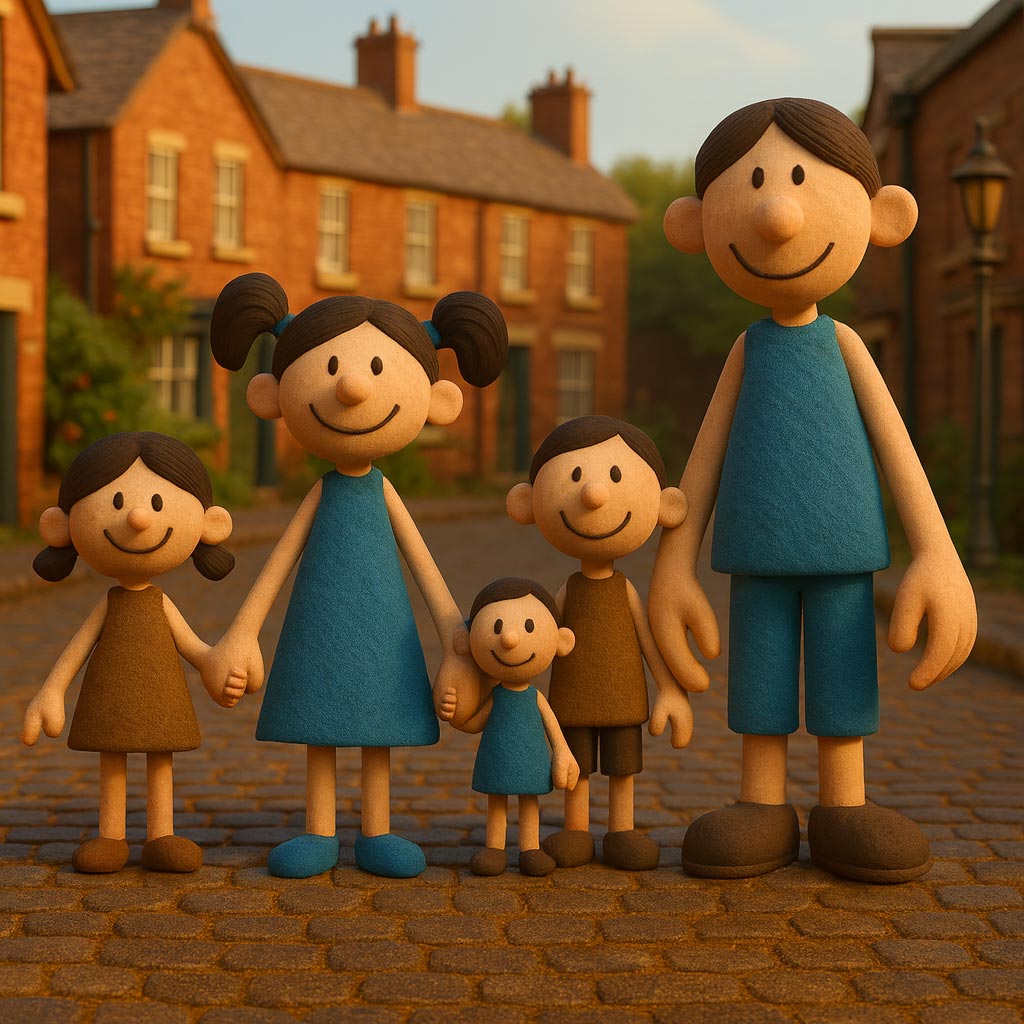
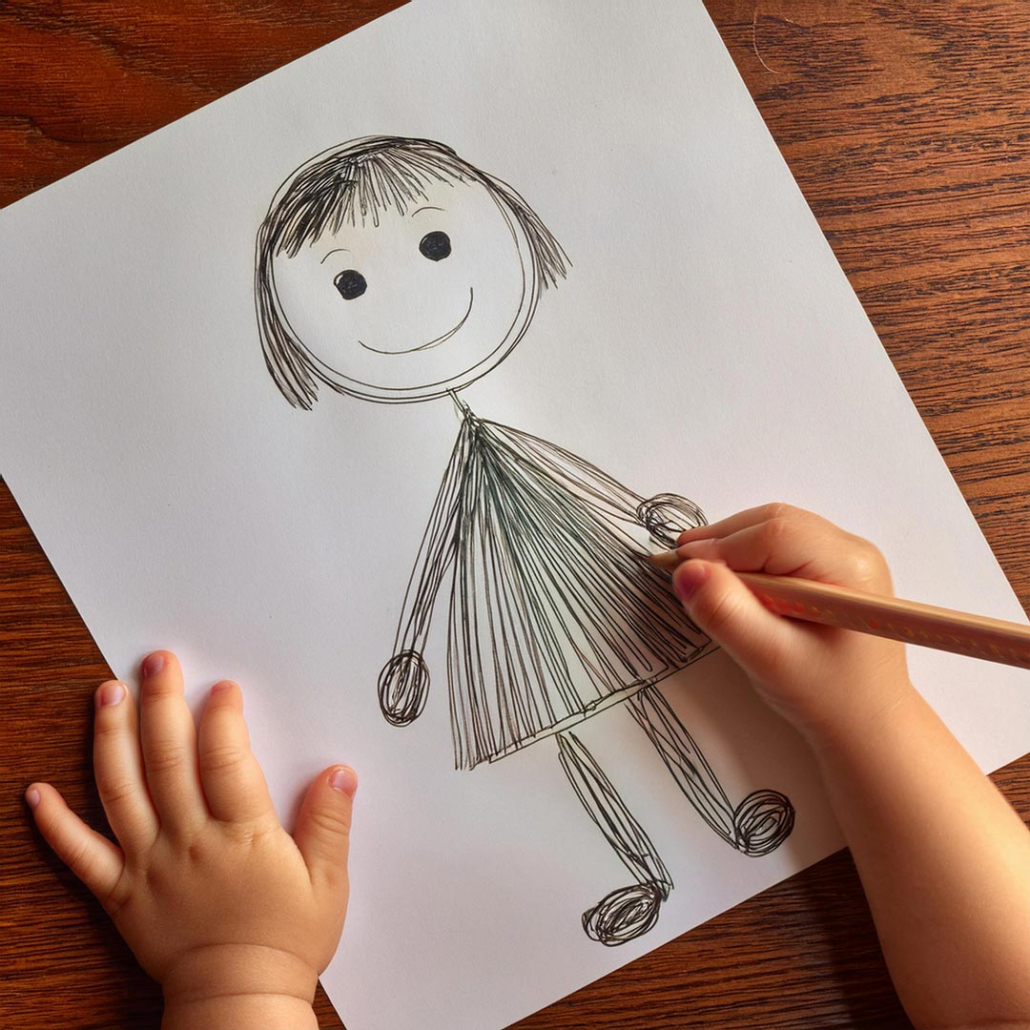
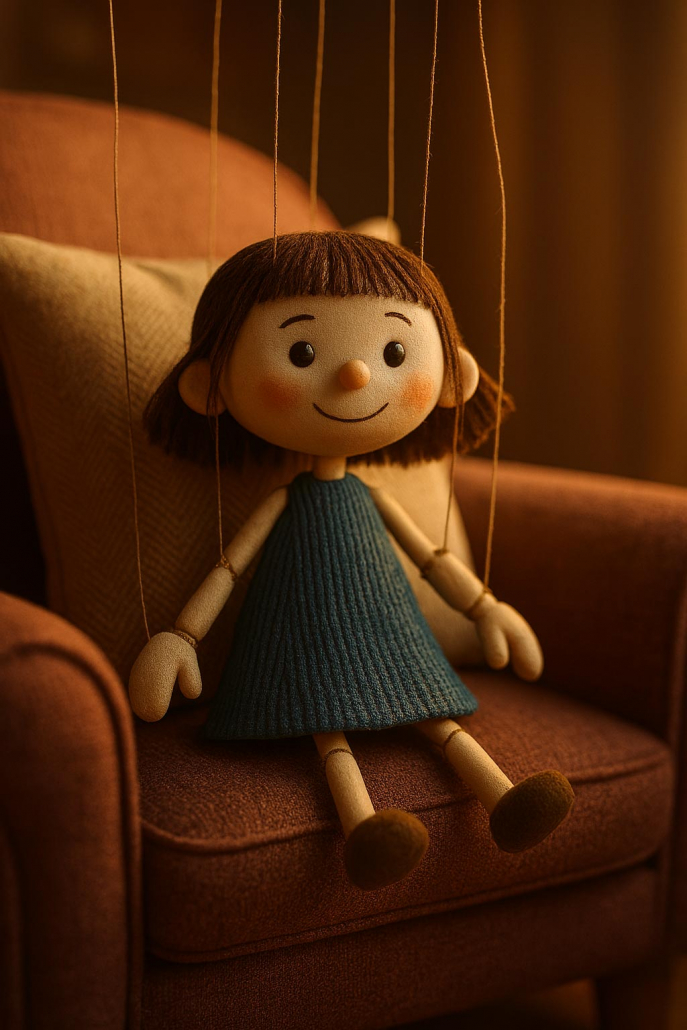
We had the most fun creating today’s post! And, if it’s fun for adults, just imagine how enjoyable children will find the activity. With the help of a parent or carer, they’ll see their creations come to life in incredible ways. They’ll be able to see how simple drawings can be absolutely transformed into high-resolution, highly detailed, professional-looking imagery that would not look out of place in an art gallery, on TV, or in a cinematic movie. What’s more, they can let their imaginations strive for new heights by suggesting exactly how their images should be enhanced. Would they like their drawing to look like a character from The Smeds & The Smoos, something from a Minions movie, more akin to a cartoon character like Peppa Pig, or something that would look at home in a soft toy shop? With today’s A.I., they can let their imaginations run riot, wield truly powerful tools, and reach for the stars to transform their art into truly magical results. It takes just minutes — and can be achieved totally free of charge. After printing out the results or saving the images digitally, children will end up with something they can be proud of. More importantly, though, they will come to understand what magic is possible from something they have imagined and created.
A High-Quality Childcare Service in Streatham
Little Cedars Nursery — Weekday Childcare for Under-5s

 Little Cedars Nursery is a wonderful childcare service in Streatham. The setting may also suit those searching for a good nursery/preschool near Streatham Common, Streatham Hill, Streatham Park, Tooting, Furzedown, Balham, Norbury, or Colliers Wood. Little Cedars Nursery is rated as a good provider by Ofsted, so you know your child will be in good hands. The nursery is warm and welcoming, with a home-from-home environment where children and babies feel safe, nurtured, loved, and valued. We have wonderful, caring staff and all the facilities, equipment, and resources that will ensure under-fives get the best start in life. By doing so, they’ll become the best versions of themselves and will be ready to thrive! Little Cedars Nursery supports free/funded childcare schemes for eligible children and babies.
Contact Little Cedars Nursery today to learn more, register for a place, or book a guided tour:

 Childhood passes so quickly — a blur of breakfast times, nursery drop-offs, and bedtime stories. Yet every so often, something extraordinary happens: a moment that will light up a child’s eyes and linger in their memory for years to come. These are the magical moments that they never forget. They’re also moments that help shape how children see the world, their place within it — and sometimes even themselves.
 Psychologists tell us that children build their sense of self through experiences that stir strong, positive emotions — especially awe, wonder, joy, and belonging. These feelings act as emotional anchors, shaping how safe, capable, and loved a child feels. When parents or caregivers create a moment that makes a child’s heart race or eyes widen with joy or wonder, they’re not just giving them a fun memory — they’re helping to build emotional security that lasts well into adulthood.
 Magical childhood memories do not require grand holidays or costly toys. They’re far more likely to spring from connection, surprise, wonder, and imagination.
 On a clear night, gently wake your child and wrap them in a blanket to watch a meteor shower or count shooting stars. Tell them about the Northern Lights, how they can wish on a star, how astronauts are planning to travel vast distances to Mars, and give them inspiration for their dreams. The quiet awe of the night sky will stay with them forever.
 Leave a tiny note or drawing from the “garden fairies” or “forest pixies” thanking your child for something kind they’ve done — perhaps watering houseplants or helping a friend or sibling. It’s a simple act that blends imagination with a message of kindness and care. Perhaps take it a step further and encourage little ones to make mossy beds for the fairies, and a little home-made miniature shelter for them to sleep in. Take photos of them as a memento for your child.
 Create small rituals that return every year — picking flowers in springtime to display around the home, having a “summer-solstice supper” in the garden, or putting out biscuits and carrots on Christmas Eve for Santa’s reindeer — be sure to show your little one how the carrots have been nibbled on Christmas morning! Such traditions will give children a comforting rhythm and a sense that life’s changes can be filled with fun and joy.
 Pause for half an hour to watch the sunrise or sunset together, make wishes while blowing dandelion seeds into the breeze, or follow a butterfly in the park to see where it leads. These small acts teach children that magic is woven through the everyday world — they just have to stop a while and notice it sometimes.
 As adults, those memories often become emotional landmarks: the glow of torchlight in a tent, the spectacle of a meteor streaking across the sky, the distinctive smell of campfire food being carried on the wind, and telling stories beneath a blanket. Such recollections help shape optimism and emotional well-being long after childhood ends. They are also the moments that, years later, children will recall fondly and still talk about.
 Summer is in full swing from late June until late September*. It’s a wonderful season that brings with it many amazing things for children and families to look out for in nature. Indeed, that’s what today’s suggested activity is all about. We’ve created a free-to-download poster that highlights 20 things from nature that children, including under-fives, can look out for when they’re outdoors†. Whether it’s in gardens, on walks with family members, at the park, or out in the countryside, summer’s natural wonders are incredibly abundant when you take time to look.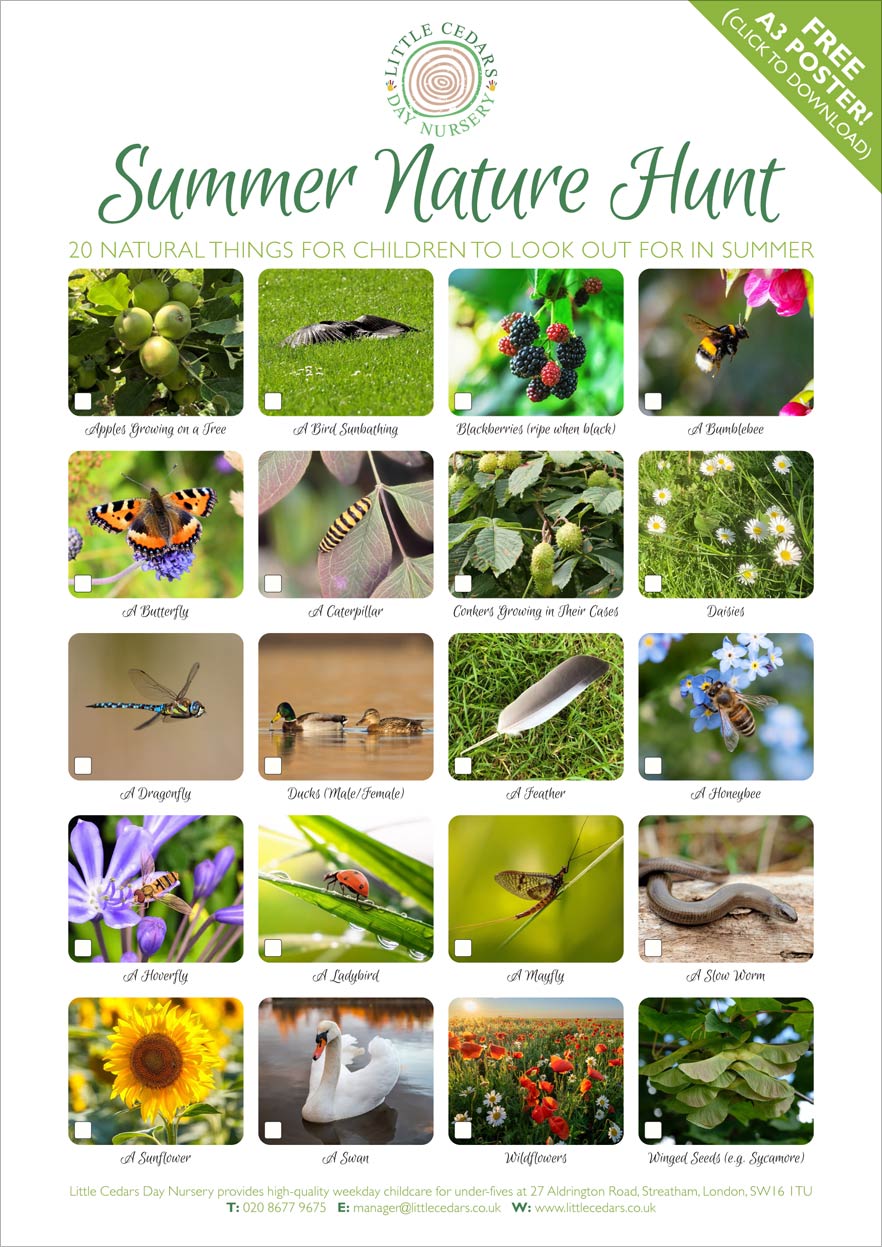



 As we previously reported,
 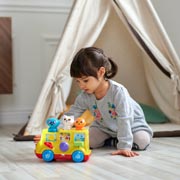 One of the ways you can optimise the success of any indoor play is to set aside a dedicated and safe play area or room for your child. Here, you can ensure that children have the space and tools available for stimulating play when needed, and quieter play at other times. Age-appropriate toys, books, and equipment are, of course, the first prerequisite for such an area. However, you may also consider other elements such as a quiet storytelling/reading corner, a play den or teepee, a relaxation area with cushions and blankets, a creative section with art and craft supplies, a play kitchen or play tools section, and so on. Giving your child such a space is sure to encourage them to immerse themselves in their play activities. And, as we know, children learn best through play.
 As well as giving children the tools for imaginative and educational play at home, your proactive input will also boost the benefits they receive from such activities. So, get involved, lead them sometimes and at other times let them lead. They’ll discover and learn more in this way. Ask and answer questions, encourage them to be creative in their thinking and physical approach and highlight aspects and elements that they may not otherwise have been aware of. Such an approach can teach children so much. It may well also deepen the bond between you.
 There are many types of play at home that can involve role-play, which is a powerful tool for learning. Role-play allows children to immerse themselves deeply into the game, story, or scenario they are acting out. As such it greatly boosts young imaginations and stimulates creativity skills. So, encourage such activities as dressing up in costumes, acting, and putting on pretend voices to embody characters. You and your child can take this a step further through the setting up of play equipment or props to create a new play scenario, for example, a play den, cave, pretend kitchen, or castle. Children will have immense fun whilst also learning huge amounts from such creative and imaginative activities.
 Role-playing can also be brought into time spent reading with your child.
  While electronic screens have their occasional place in the education and entertainment of families, it’s healthy to ensure your child has regular screen-free time. Partaking in active play at home — rather than staring inactively at a screen — can only be a good thing, in so many ways. Social skills will be better when children are actively involved in physical play with others. Motor skills and fitness will also benefit. Creativity levels will go through the roof too when children play in real life. They will also learn so much about the world, everything around them and the endless possibilities available to them by playing in the real world. Ensuring children get access to such benefits and opportunities by switching off smartphones, TVs, tablets and game consoles is something every parent can easily do for their child. Doing so will allow for more traditional play, which will enrich their lives in an infinite number of ways.
 Toys that allow open-ended play are the toys that young children will usually learn the most from. For example, allowing your child to play with building blocks and materials for arts and crafts will let your child’s imagination run riot. Through these, they will be able to create an infinite range of scenarios and possibilities. Dolls and action figures are also good examples that will allow children to immerse themselves in open-ended play, with you there to help expand those possibilities, scenarios and learning opportunities even further.
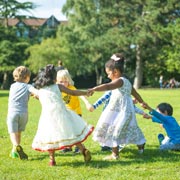 It doesn’t have to be just you and your child playing. Siblings and your child’s peers can also be encouraged to join in. Consider inviting your little one’s friends to your home or local park for a play date. Getting your child’s friends and peers together for group play will allow your child to learn and hone social skills like cooperation, teamwork, leadership, sharing and potentially even conflict resolution. And, with you there to oversee the group session, you can be sure that home play will be fulfilling, organised, fair and rewarding for all who take part.
 Remember that you can facilitate learning through play outdoors with your child too. Whether in the garden, park or countryside, playing outdoors gives children a vast number of learning opportunities — and it’s great fun! By accompanying children outdoors, they can naturally explore and discover — and enjoy doing so in ways that are much more free than when playing indoors. Outdoor play is a feast for the senses, it will encourage the honing of physical skills like balance, coordination, motor skills and strength as well as fitness. Playing in the natural world is also incredibly good for children’s mental well-being and holistic development. Learn more about
 Children and families, get ready for National Storytelling Week! For 2024, storytelling in the UK is officially celebrated from Saturday the 27th of January to Sunday the 4th of February. It’s a great opportunity for children and families to get creative and to entertain one another through the sharing of stories.
 National Storytelling Week couldn’t come at a better time of year. As many across the UK have witnessed in recent weeks, January brings with it cold days, dull skies, and wintery weather. Even the daylight hours are short, limiting the number of activities children can undertake outdoors. With storytelling, however, families can be transported to any number of different locations, situations and climates, all in the blink of an eye. Indeed, storytelling can take children to places and scenarios that would simply not be possible in real life. Such is the power of this art form and the human imagination.
 Stories stimulate imaginations;
 Another great way to help children create new stories is to encourage them to be inspired by objects around them. For example, a teddy bear, toy character, or picture nearby may inspire them. This can be taken further by providing children with a basket of such props, for example, a toy animal, pine cone, toy crown, goblet, apple, and a rock. A ‘story scrapbook’ can be used by children in a similar way. Such things can significantly help children to become more creative and generate storyline ideas, sequencing, and plot twists.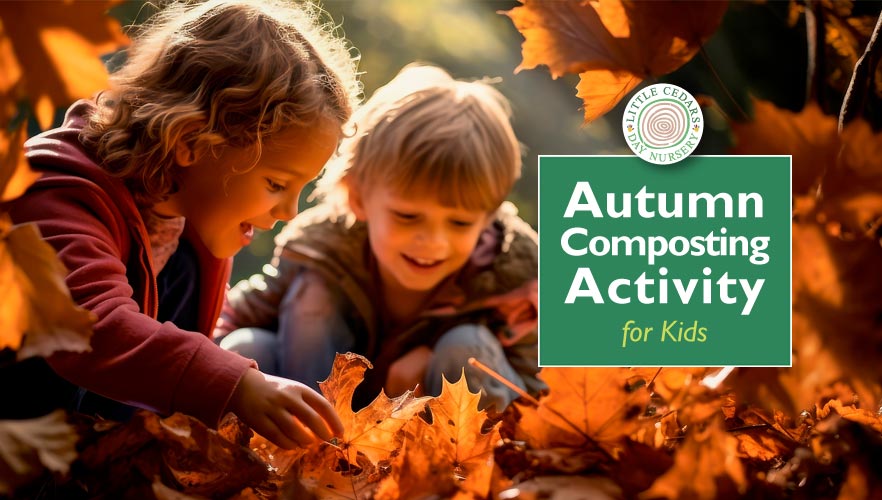
 Autumn is a magical time filled with vibrant colours, falling leaves, and a wonderful quality to the air. With rustling leaves covering the ground in a myriad of hues, it’s the perfect season to engage children with the wonders of a composting activity. Composting is fun, worthwhile, and educational. It not only teaches kids about the importance of recycling and sustainability but also provides an exciting outdoor activity that connects them with nature. In today’s article, we’ll explore the joy of composting with an autumn twist, where children can harness the abundance of fallen leaves to create a rich and fertile compost for the garden. Children of all ages will love this nature-based outdoor activity and it’s a win-win in every sense — for children, nature’s flora and fauna, and the garden itself.
 Autumn leaves are rather like nature’s confetti and they play a crucial role in composting. Perhaps explain to children how leaves provide essential carbon and nutrients that are key ingredients for a successful compost pile. Encourage them to collect a variety of leaves in different colours and shapes, so this activity becomes a stimulating treasure hunt too.
 Guide children in setting up a compost bin or, in its most basic form, it could take the form of a simple pile in the garden if you have one. If not, an undisturbed corner somewhere outside will suffice. Emphasise the importance of a balanced mix of green (nitrogen-rich) and brown (carbon-rich) materials. Leaves are a fantastic source of carbon, balancing out the kitchen scraps and other green materials that you and your child may soon start to add.
 As the compost pile transforms, involve children in observing the changes. Discuss how the compost becomes darker and richer over time. Point out the
  To make composting even more enjoyable, you and the children could incorporate other autumn-themed activities. For example, they could create leaf art while waiting for the compost to develop, they could decorate the compost container through painting, or they could take part in
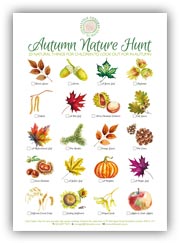 Autumn is a time of the year when magical colour changes occur across gardens, parks and landscapes. Leaves can be seen in a multitude of different colours before falling along with seeds, ripening fruits and berries. In autumn, nature shows us a wonderful metamorphosis and it’s a time of beautifully crisp air and clear distant views. It’s all incredible to behold and also offers children some unique seasonal activity opportunities.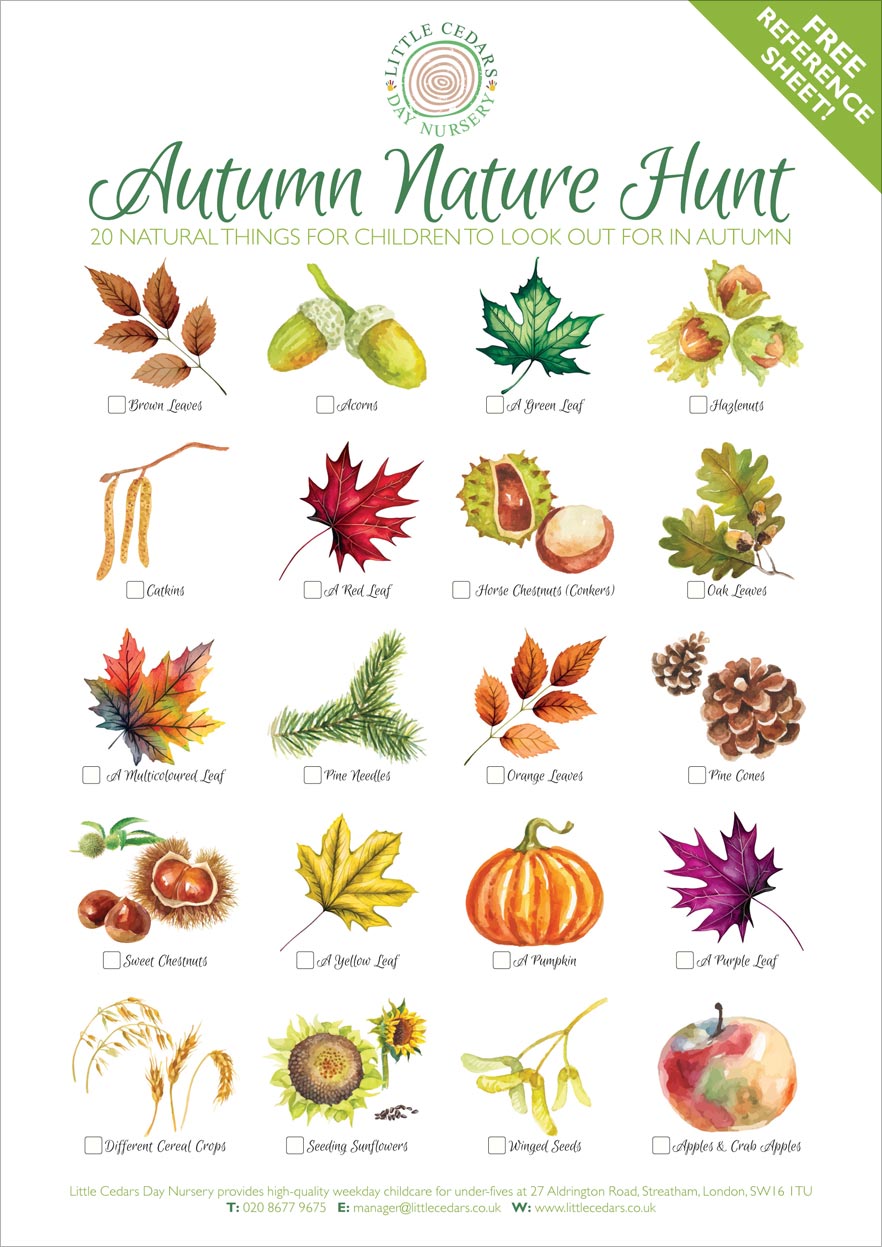

 The arrival of October means it’s time for children and families to prepare for Halloween! Arriving on the 31st of the month, it’s a firm favourite for any childhood and gives children the opportunity for uniquely spooky fun, games and dressing up. Indeed, Halloween offers a wonderful variety of activities for children to take part in and that’s exactly what we look at in today’s article. Stand by, then, to prepare the household for some spookylicious Halloween activity ideas for kids!
 Children adore dressing up for Halloween. The spooky nature of Halloween costumes really appeals to them, especially if they get together with friends and compare outfits on Halloween evening.
 Similarly, black sheets are easy to make into witch or wizard outfits. Alternatively, use black clothing and, if it’s no longer being worn for anything else, it can even be given ragged edges for extra effect. Add pointy black hats made of cardboard or paper and the costumes are complete.
 If you want your child’s Halloween experience to be truly spooktacular, encourage them to decorate the house – whether inside or out – with all manner of ghoulish decorations and ghostly paraphernalia. Home-made spider webs can, of course, be made using string, thread or stretched-out cotton wool. However, such decorations can usually be purchased inexpensively from supermarkets, which typically have cheap Halloween decorations around October each year. Spiders can be home-made by children from wool or black pipe cleaners, or similarly bought commercially along with shop-bought decorations depicting skeletons, ghosts, bats and suchlike. You can also buy LED lights, including strings of lights, that look like Halloween pumpkin lanterns. Such lighting is great for extra atmosphere!
 If your household is carving pumpkins for Halloween this year, perhaps save some of the flesh and use it to make a spookylicious pumpkin soup for the family to eat come Halloween evening time. There are plenty of excellent recipes online and children can help make the soup, under supervision for safety purposes.
 Children can combine Halloween fancy dress costumes, spooky decorations, and themed food and drink by hosting a Halloween party for friends and family. Such preparations are sure to set up a wonderfully spooky atmosphere in which children will have immense fun comparing outfits and getting into the spirit of the event. Add Halloween-themed games, play ghostly music and take turns to read ghost stories and the evening is sure to be one to remember! It’s also a great conduit through which children can socialise and perhaps grow stronger bonds.
 Take the Halloween activities to an extra level by arranging a group trick-or-treat session, under adult supervision, for children in your street. They will absolutely love this activity and it’s sure to result in much giggling and laughter if it goes as planned. However, be sure to check with each neighbour before the day. In that way, they can opt out if they prefer not to get involved. For those that do take part, most neighbours usually go the ‘treat’ route but be ready for the possibility that a few may opt for the ‘trick’ option, in which scenario the children under your supervision will need to be ready with a fun but harmless trick. Some forethought and creative thinking may be needed there, with care being taken not to allow children to overstep the mark.
 Pumpkin patches are often wonderful places for children and families to spend a few hours in the run-up to Halloween. In such places, your little one can explore amongst hundreds of pumpkins and other gourds of different sizes and shapes. And, if they find one they take a liking to, they can usually be purchased to take home, or might even be included in the price if the venue has an entrance fee. Pumpkin patches often also have other Halloween-themed activities at this time of year, whether it’s displays where you can take memorable snaps of your child amongst the pumpkins, wheelbarrow rides for children across a pumpkin field, pop-up refreshments with Halloween-themed food and drink or pumpkin-decorating workshops, they’re always great fun for children. They really help to make Halloween the special time of year that it is.
 Once you’ve sourced a suitable pumpkin for your child, it’s time for the really fun part — pumpkin carving and decorating! While the carving part may not be suited to children of a young age (knives are super-dangerous), they can usually help, under supervision, with scooping out the flesh and then, the most fun part of all, decorating. Pumpkins can depict faces, spiders, owls or any spooky imagery you or your little one can imagine. And, even if they may be too young to carve the holes,
 they can still decorate using paint or markers, or simply enjoy Mum or Dad getting creative on their behalves.
 TIP: Kids don’t even really need a pumpkin; the smallest of children can decorate oranges or yellow/orange bell peppers! They look really cute and an added bonus is that they avoid the need for any carving.
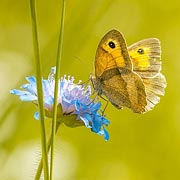 In today’s guide, we outline a simple but powerful nature-based activity that will be both fun and educational for children and under-fives. This one is all about how to sow wildflower seeds. Once growing, these will bring beauty and wonder to any setting. The activity will also complement our recent
  Children benefit very much from spending time in nature, as we outlined in our article entitled
  Colour(s) — Children can help decide whether to grow wildflowers of just one colour, a limited 2- or 3-colour palette or perhaps multiple colours. If parents have an existing colour theme in their garden or plant area, they may wish to point children in a particular direction, so as to keep that colour theme going.
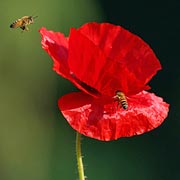 Free wildflower seeds can be harvested from existing wildflowers — either from your own wildflowers if you have them, or from those found in the wild along hedgerows and similar (N.B. only do so in moderation and for personal use). Timing will, of course, be critical because seeds will only be available at certain times of the year, i.e. when the wildflowers have “gone to seed” at the end of their flowering period.
 Sowing seeds on existing lawns that you/your child want as a wildflower meadow is simply a case of scattering seeds on the lawn, ideally spaced out in such a way that they don’t have to compete with each other once they start growing. Then ensure that the area of lawn is kept moist by either rain or, if there is no rain, regular sprinkling from a watering can fitted with a sprinkling head (a.k.a. ‘rose head’). Children may need to remind adults not to cut the lawn thereafter, of course!
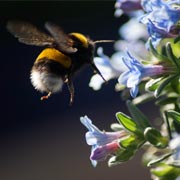 Children will love it once the wildflowers begin to grow and later bloom. They’ll also love seeing bees, butterflies, and other insects visiting and the results of the activity may indeed give them a great sense of accomplishment. The whole process and the results are quite magical when you think about it.