

If you have a baby, toddler or preschooler, you’ll soon need to think about them starting school. The rules around starting school in England can be confusing at times, so today we take a look through commonly asked questions around the topic to clarify matters. For instance, at what age do children in England legally have to begin school? Is ‘Reception Year’ the same as Year 1 (no, by the way), and is attending Reception Class even compulsory? All these questions and many more are answered in today’s post. Click any question to reveal the answer.
Q: What is Reception Year?
Reception Year is the year most children in England, aged from 4 to 5, start school. It’s a kind of ‘in-between’ year, coming after nursery/pre-school, but before primary school ‘Year 1’. Although Reception Year takes place at primary school, it’s the final year of the Early Years Foundation Stage (EYFS) and continues to use a primarily play-based learning approach. However, once Reception Year is complete, children move to Year 1 and begin the Key Stage 1 (KS1) curriculum, a more adult-led, formal learning approach by topic.
Q: Are there other names for Reception Year?
Reception Year is also referred to simply as ‘Reception‘ as well as being known as Year R, Year 0, or FS2 (for Foundation Second Year).
Q: Is Reception Year the same as Year 1 at school?
No — as outlined above, Reception Year is the year that precedes Year 1 so, numerically speaking, is Year 0 (see the question above for additional naming variants).
Q: How important is Reception Year?
The general consensus is that children who attend school in Reception Year benefit hugely. Having attended Reception, reading, writing, numeracy, social skills and many other abilities will have improved. Studies show that longer-term academic outcomes, including GCSE grades, are improved. Even children’s likely earnings will be higher later on as adults — such is the positive effect of a good Reception Year education.
Q: Is Reception Year compulsory?
Attending school in Reception Year is not compulsory, but is a great way for children to transition from preschool to school and to gain extra teaching. As such, it is something that the UK Government’s Department of Education (DfE) believes children should not miss out on.
Q: What age are children who go into Reception Class?
Children who go into Reception Year are usually aged between 4 and 5. However, there are occasional exceptions. An example would be where a child aged 5 has missed Reception – for whatever reason – and their parents have later made a successful application for their admission to Reception “outside of the normal age group”.
Q: What age is it compulsory for my child to go to school?
The law states that children reach Compulsory School Age on the earliest of the 31st of the August, December, or March which arrives on or after they reach the age of 5. They would then usually start school in the September term that follows (being the start of the nearest full school year).
That said, most children begin school earlier, at the age of 4, as we’ll see below.
Q: Can my child start school at the age of 4?
Yes. Despite the compulsory school age for full-time education in England being five, most children actually start school at the age of four. The majority of them will start in ‘Reception Year’ in the September term that follows their fourth birthday. However, whilst still four, they can attend part-time, full-time, or even part of the way through the year. Indeed, some schools have a staggered system for 4-year-olds joining Reception Year, starting them part-time at first. Others, however, require full-time schooling right from the start.
Q: Can I defer my child‘s school start date until they’re 5?
Yes*, for what are known as ‘Summer born’ children. That’s if your child’s birthday falls somewhere during the period 1 April and 31 August and, for example, you feel they are not ready for the challenges of school while they’re still 4. In such a scenario, you can defer their start until they’re five — in accordance with Compulsory School Age rules outlined earlier. Learn more about delaying your child’s school start here.
* Different rules apply to children who are subject to an Educational, Health & Care (EHC) plan.
Q: What school year does my child join if they don’t start school until five?
If your child doesn’t start school until they’re five, local authorities and schools will decide whether such children should start in Reception Year (a year later than most of their peers of the same age) or go straight into Year One with children of the same age. It all comes down to what they feel would be in the child’s best interests, taking into account any special circumstances or special needs. Parents can, however, make a request for such children to start school in Reception Year as opposed to Year 1 and this is known as ‘requesting admission out of the normal age group‘.
This is a tricky area because, on the one hand, the Government’s official view is: “… it is usually not in a child’s best interests to miss the teaching that takes place during the Reception Year, and … it should be rare for a child to start school in year 1.” However, on the other hand, the usual ‘default’ for children starting school at the age of 5, whose parents have not made a request for admission out of the normal age group, is that they would usually go straight into Year 1 — i.e. with children their own age.
Q: When should I apply for a primary school place for my child?
Irrespective of whether your child begins school at the age of 4 or 5, you need to apply for a place when they are still 3, or at the very latest when they have just reached the age of 4. More details about applying for school places are available in this guide.
Q: How do I find a state-funded school for my child?
If you live in England*, your local authority is responsible for education in state-funded schools. Click here to find the right local authority for your area and then navigate to the relevant schools section of their website. This will contain a whole host of information usually including a school search function, term dates, eligibility requirements, how to apply for a school place, plus a wealth of additional school- and education-related information.
Try to visit any contenders — most will have open days. Also, check Ofsted reports and school performance tables and try to speak with parents whose children have attended to gain some insights.
* Scotland, Wales and Northern Ireland have different processes. (∞).
Q: How do I find a private/independent school place for my child?
You can alternatively pay for your child’s education through a private (‘independent’) school by making enquiries directly with them. Research to find them online, try a search engine or ask around for recommendations.
Like state-funded schools, independent schools are also inspected and reports will be available through whichever organisation inspects them (about half of them are through Ofsted).
Q: Can I ‘school’ my child at home instead of sending them to school?
In many cases you can, if you so decide, teach your child at home instead of sending them to school. This is known as ‘Elective Home Education’ (EHE). If going this route, your child must be receiving a suitable, efficient, full-time education and be doing so from the age of five. You can school them at home full-time, or educate them part-time at home and the other part at school, although some schools may not allow part-time school placements.
However, there are some scenarios where it’s not possible to school your child at home. Examples may include some children who are party to a ‘School Attendance Order‘, some children with SEN attending special schools, and children who have been deemed by the local authority not to be receiving suitable home education.
Q: How do special educational needs or disabilities (SEND) affect Reception Year places?
By law, schools must publish certain information on their official websites and this includes a special educational needs (SEN) information report. This must explain their individual policies in regard to eligibility and arrangements for children who have special educational needs and disabilities.
If you would like to suggest any additional questions on the topics of starting school and Reception Year, please let us know using the middle button below; many thanks.
Little Cedars is a High-Quality Nursery in Streatham
Little Cedars Day Nursery provides first-class weekday childcare services in Streatham

 Little Cedars is a wonderful childcare nursery located in Streatham in London’s SW16 area. As you can see via the logo on the left, we are rated by Ofsted as a ‘Good Provider’, so you know your baby, toddler or preschooler will be in safe and caring hands. We’ll ensure they receive the very best care and an early years education that will help them become the very best version of themselves. In this way, they’ll be school-ready by the time they leave us to begin in Reception Year at primary school.
To further explore the chance of a childcare place for your child at Little Cedars Nursery, please get in touch using an option below:

 As we previously reported,
 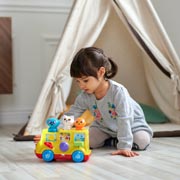 One of the ways you can optimise the success of any indoor play is to set aside a dedicated and safe play area or room for your child. Here, you can ensure that children have the space and tools available for stimulating play when needed, and quieter play at other times. Age-appropriate toys, books, and equipment are, of course, the first prerequisite for such an area. However, you may also consider other elements such as a quiet storytelling/reading corner, a play den or teepee, a relaxation area with cushions and blankets, a creative section with art and craft supplies, a play kitchen or play tools section, and so on. Giving your child such a space is sure to encourage them to immerse themselves in their play activities. And, as we know, children learn best through play.
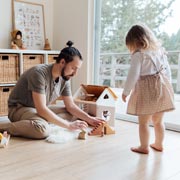 As well as giving children the tools for imaginative and educational play at home, your proactive input will also boost the benefits they receive from such activities. So, get involved, lead them sometimes and at other times let them lead. They’ll discover and learn more in this way. Ask and answer questions, encourage them to be creative in their thinking and physical approach and highlight aspects and elements that they may not otherwise have been aware of. Such an approach can teach children so much. It may well also deepen the bond between you.
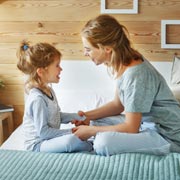 There are many types of play at home that can involve role-play, which is a powerful tool for learning. Role-play allows children to immerse themselves deeply into the game, story, or scenario they are acting out. As such it greatly boosts young imaginations and stimulates creativity skills. So, encourage such activities as dressing up in costumes, acting, and putting on pretend voices to embody characters. You and your child can take this a step further through the setting up of play equipment or props to create a new play scenario, for example, a play den, cave, pretend kitchen, or castle. Children will have immense fun whilst also learning huge amounts from such creative and imaginative activities.
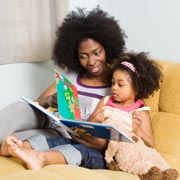 Role-playing can also be brought into time spent reading with your child.
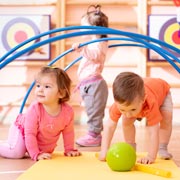
  While electronic screens have their occasional place in the education and entertainment of families, it’s healthy to ensure your child has regular screen-free time. Partaking in active play at home — rather than staring inactively at a screen — can only be a good thing, in so many ways. Social skills will be better when children are actively involved in physical play with others. Motor skills and fitness will also benefit. Creativity levels will go through the roof too when children play in real life. They will also learn so much about the world, everything around them and the endless possibilities available to them by playing in the real world. Ensuring children get access to such benefits and opportunities by switching off smartphones, TVs, tablets and game consoles is something every parent can easily do for their child. Doing so will allow for more traditional play, which will enrich their lives in an infinite number of ways.
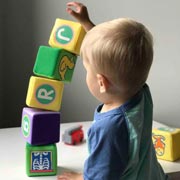
 Toys that allow open-ended play are the toys that young children will usually learn the most from. For example, allowing your child to play with building blocks and materials for arts and crafts will let your child’s imagination run riot. Through these, they will be able to create an infinite range of scenarios and possibilities. Dolls and action figures are also good examples that will allow children to immerse themselves in open-ended play, with you there to help expand those possibilities, scenarios and learning opportunities even further.
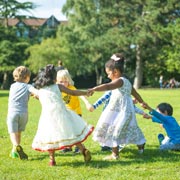 It doesn’t have to be just you and your child playing. Siblings and your child’s peers can also be encouraged to join in. Consider inviting your little one’s friends to your home or local park for a play date. Getting your child’s friends and peers together for group play will allow your child to learn and hone social skills like cooperation, teamwork, leadership, sharing and potentially even conflict resolution. And, with you there to oversee the group session, you can be sure that home play will be fulfilling, organised, fair and rewarding for all who take part.
 Remember that you can facilitate learning through play outdoors with your child too. Whether in the garden, park or countryside, playing outdoors gives children a vast number of learning opportunities — and it’s great fun! By accompanying children outdoors, they can naturally explore and discover — and enjoy doing so in ways that are much more free than when playing indoors. Outdoor play is a feast for the senses, it will encourage the honing of physical skills like balance, coordination, motor skills and strength as well as fitness. Playing in the natural world is also incredibly good for children’s mental well-being and holistic development. Learn more about
 At Little Cedars Nursery, Streatham, one of the activities we do with children around this time of year is to explore the season of spring. Spring is a wonderful antidote to the cold, winter months as new shoots begin to sprout from the soil, flowers start to reappear, birds begin to return from warmer climes and there are early indications of warmer weather ahead. Paying attention to such things when spring arrives can teach children a great deal about the world around them, nature, and the impact of the various seasons. It’s also a free, fascinating, and educational activity that parents/guardians can do with children. Families can, for example, explore the signs of spring in the garden, out on walks, in local parks, and in the countryside. With that in mind, today’s article looks at the type of things children and families can look out for during the season of spring.
 As every child knows, young lambs are an absolute delight. They’re incredibly cute and the way they play, group together with fellow lambs, and happily jump into the air is simply adorable! Although timing varies from farm to farm, most newborn lambs arrive during early spring — typically in March — with others arriving in April, particularly if they’re in UK areas further north where it can be colder. At Little Cedars Nursery, we try to ensure children get to meet some spring lambs or calves each year and it’s always a huge hit with the children.
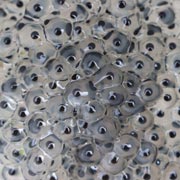 Another huge hit with children in spring is the appearance of frogspawn in ponds. Children will love watching the little eggs change over time, their contents growing from tiny black dots into creatures that have obvious legs, tails and heads. And, once they emerge from the eggs, the tadpoles continue to delight little ones as they gradually develop into tiny frogs. It’s a wonderfully magical thing for children to witness in spring and is also hugely educational.
 Snowdrops are one of the very first plants to reappear when spring arrives. They’re pretty little plants with slender green leaves and flowers that, as their name suggests, resemble delicate drops of snow. Young children will love that! Look out for them in gardens, parks, forests and hedgerows. Each plant generally forms a ‘bunch’ of around ten stems and they reappear every year. Warn children to look but not touch, though, as they are poisonous if eaten.
 Another of the earliest plants to appear in the year is daffodils. Their shoots begin to appear through the soil in February and, once spring arrives in March, their flowers will brighten up any garden, lawn, forest or flower bed right into May. Once daffodils are in bloom, you also know other plants will soon follow. So, they’re a great sign of the changing season for children to look out for, and a signal that gloomy winter is now over and summer is not far away.
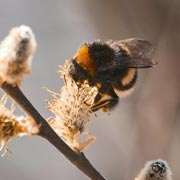 Bumblebees are amongst the cutest of garden visitors and many children will naturally love them, particularly once they’ve realised how adorable they are with their velvety bodies, sweet faces and attractive markings. They’re also peaceful little creatures, many of whom don’t even have a sting, who simply want to go about their business of collecting nectar from flowers. Bumblebees start to reappear in the spring — because flowers are also reappearing after being dormant over the winter months. They then become more and more populous as the months become warmer and can be seen right into autumn.
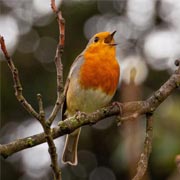 The return of many of the UK’s favourite birds is another wonderful sign that spring has arrived and winter is over. While some birds, including robins, may stay during winter, others will have migrated to warmer places, perhaps thousands of miles away. Once they return to the UK, children will be able to watch out for them and listen out for more birdsong. Early mornings and sunsets are great times to hear them, particularly when the weather is calm, meaning their sounds travel more clearly. For example, tiny wrens have an incredible and very melodic set of sounds. Robins are also beautiful to listen to. Thrushes sometimes sing at the tops of trees at dusk too, and that’s also wonderful to hear. Encourage children to watch and listen out for other birds too, for example, blackbirds, starlings, doves, blue tits, great tits and occasionally more rarely-seen birds like goldcrests.
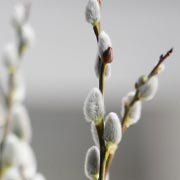 Buds on trees and bushes can also be an interesting natural phenomenon for children to look out for in spring. Many are quite beautiful if you take the time to have a close look. Young children are indeed fascinated by several types of tree buds in early spring and perhaps the most attractive one to them is pussy willow. For them, the soft, fur-like buds of the pussy willow are an instant hit and something that really draws their attention. They really do feel furry and it’s almost as if they’re little creatures or kittens paws — quite a magical thing for any child to look out for in spring!
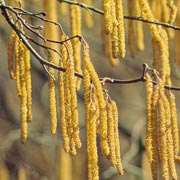 Catkins are also fascinating. Their little dangling fronds almost look like yellow caterpillars, so this is another type of spring occurrence to draw children’s attention to. From such attention, they can be taught lessons about pollen, seeds, nectar and the circle of life.

 Getting children interested in nature, and spending time around it, is extremely good for them as we’ve reported before —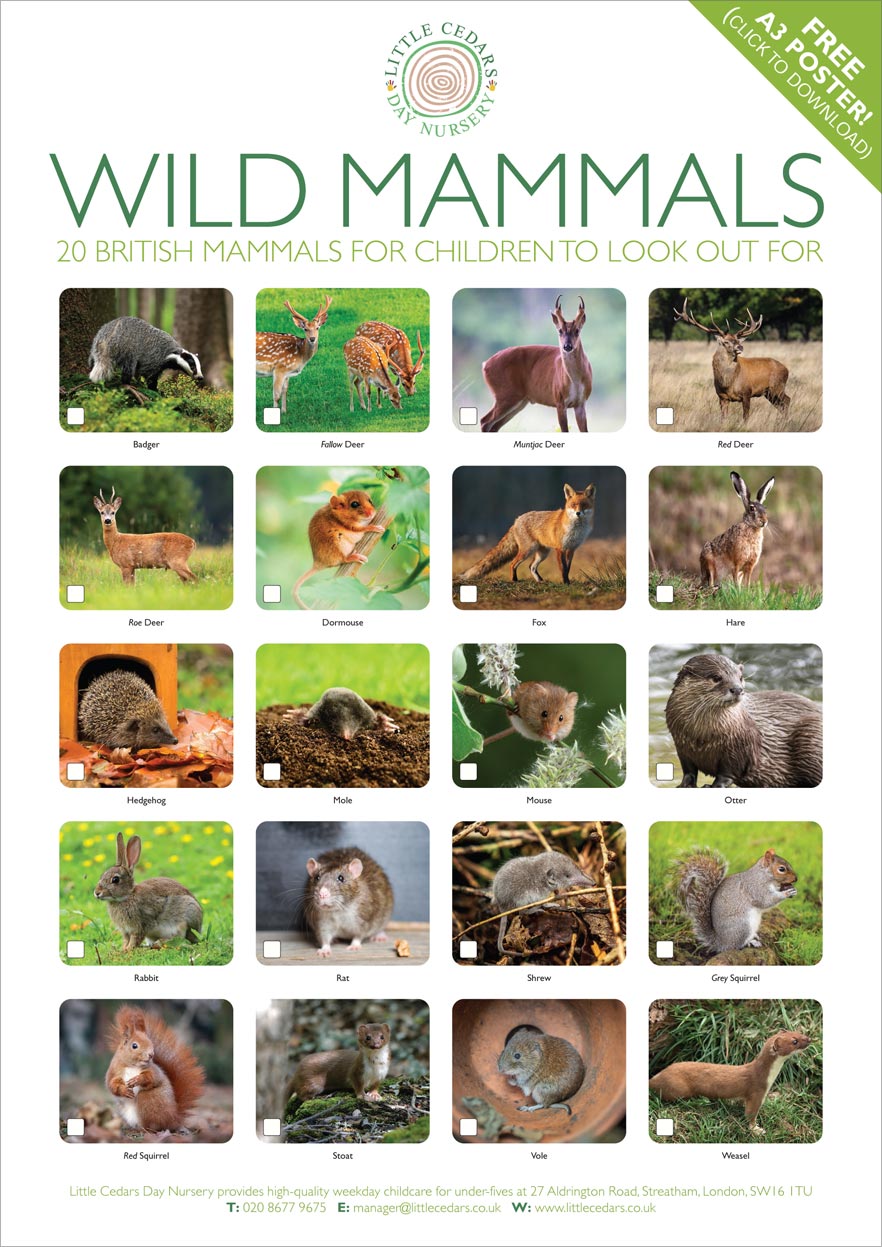
 World Wildlife Day celebrates the world’s flora and fauna. It happens on the 3rd of March each year and is a way to raise awareness of the need to protect nature. That can be achieved by reducing harmful emissions, pollution, habitat loss, and the loss of biodiversity. By introducing children to the beautiful wildlife around them, children will naturally be more empathetic towards other creatures and even progress to learning about conservation matters and the impact of humans on the planet. In this way, little ones can grow into young stewards of the planet and have an active interest in protecting it going forward. Get them started today by downloading our free Wild Mammals poster — who knows where it could lead!
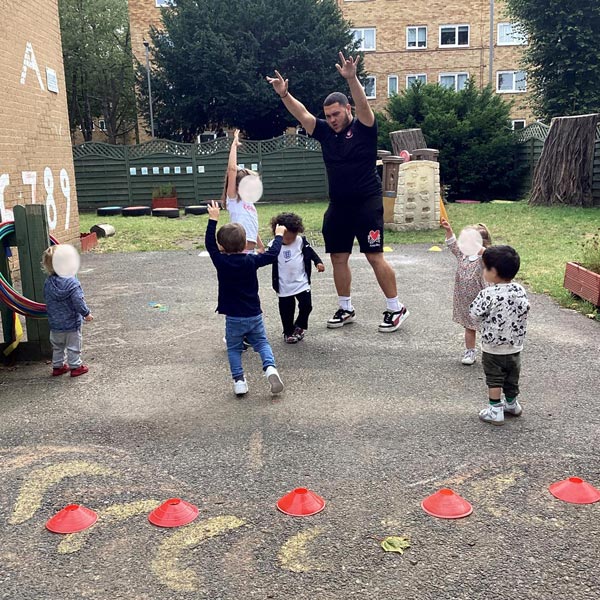
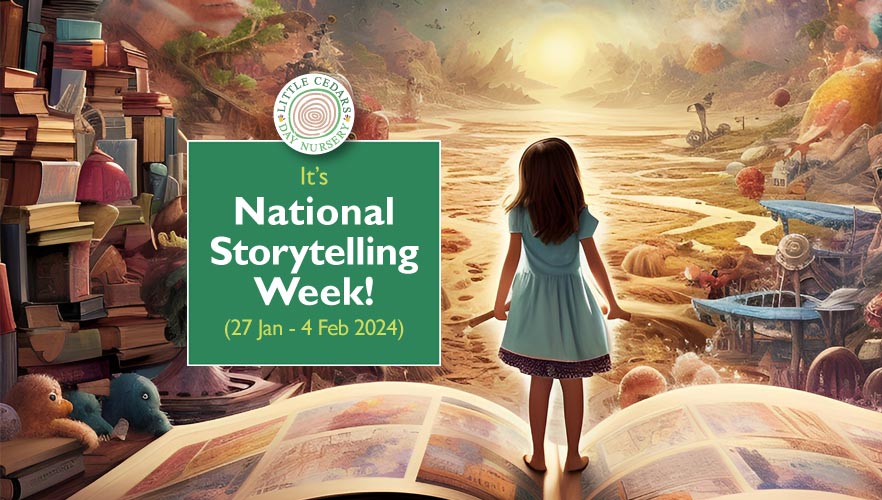
 Children and families, get ready for National Storytelling Week! For 2024, storytelling in the UK is officially celebrated from Saturday the 27th of January to Sunday the 4th of February. It’s a great opportunity for children and families to get creative and to entertain one another through the sharing of stories.
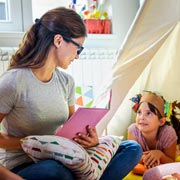 National Storytelling Week couldn’t come at a better time of year. As many across the UK have witnessed in recent weeks, January brings with it cold days, dull skies, and wintery weather. Even the daylight hours are short, limiting the number of activities children can undertake outdoors. With storytelling, however, families can be transported to any number of different locations, situations and climates, all in the blink of an eye. Indeed, storytelling can take children to places and scenarios that would simply not be possible in real life. Such is the power of this art form and the human imagination.
 Stories stimulate imaginations;
 Another great way to help children create new stories is to encourage them to be inspired by objects around them. For example, a teddy bear, toy character, or picture nearby may inspire them. This can be taken further by providing children with a basket of such props, for example, a toy animal, pine cone, toy crown, goblet, apple, and a rock. A ‘story scrapbook’ can be used by children in a similar way. Such things can significantly help children to become more creative and generate storyline ideas, sequencing, and plot twists.
 Parents and children, don’t miss this year’s incredibly important birdwatching activity for the RSPB — and the planet — which occurs from Friday 24th to Sunday 26th January. The Big Garden Birdwatch only takes one hour, is free, and is an extremely worthwhile activity for children and families to take part in. It’s a great way to introduce children to the concept of conservation as well as getting them interested in spending time in and around nature. And, as we’ve reported before, nature is extremely good for children! In today’s post, we explain how easy it is to get your little ones involved and why taking part is a win-win-win for families, birds and nature.
 Monitoring populations of bird species every year allows the RSPB and other conservation organisations to see how the various types of garden birds are faring. Whether or not they’re doing well will be a barometer of the state of nature itself as well as that of the individual bird populations. If the RSPB and other conservation organisations can see a problem, they can then mobilise to try to do something about it. Likewise, if they see a particular bird species doing well, they can learn from that and better understand what measures are helping that particular bird population to thrive.
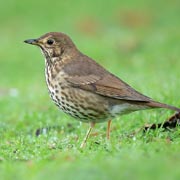 In 2023, the bird species spotted the most was the House Sparrow, followed by the Blue Tit in second place, Starling in third, Wood Pigeon in fourth and Blackbird in fifth.
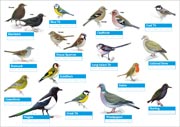 By registering you’ll also get a free guide to taking part in the event, which includes visual reference to the birds to look out for, as well as other perks like a discount on bird food and other bird feeding supplies available from the RSPB’s online shop.
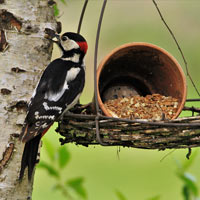 If you’re keen to attract as many birds as possible to your Garden Birdwatch count, the RSPB has you covered. As well as providing useful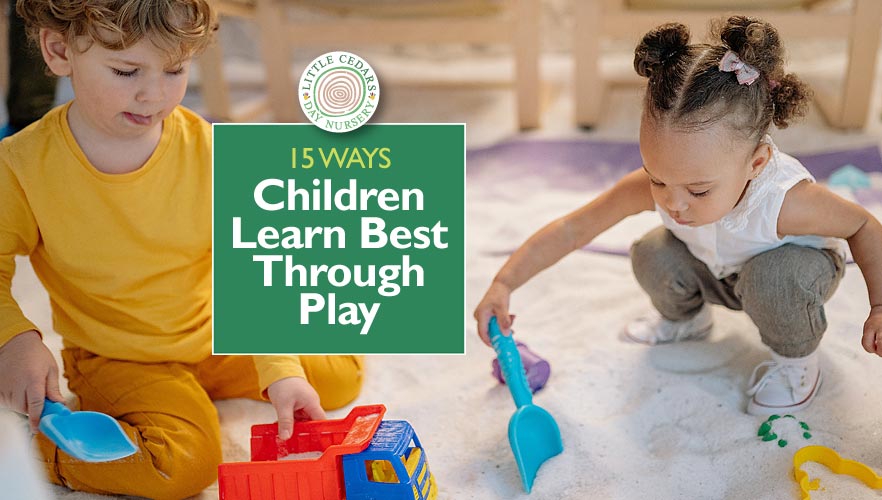
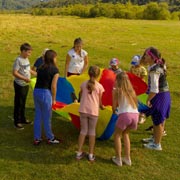 Watch any infant, toddler or preschooler for just a few minutes and you’ll see that one thing comes naturally to them; play. Indeed, it’s as if they’ve been programmed that way, with the need to play coming instinctively to youngsters, whatever their species. Aside from it simply being great fun, there are a multitude of very good reasons for that — play teaches them an enormous amount about each other, themselves, other living things, cause and effect, and the world around them. It also allows them to learn and fine-tune a whole swathe of new skills as they grow older, play new games, and become more experienced. Add in some careful steering and nurturing during that play from Mum or Dad and they have a real recipe for success. With that in mind, we look today at the key ways in which learning through play profoundly benefits children.
 Play and creativity go hand-in-hand. Whether making up a new game, role-playing, constructing, or playing in a den, children will naturally create both scenarios and physical items as part of their play. Such activities teach them how to use their imaginations and to be creative — in a myriad of ways.
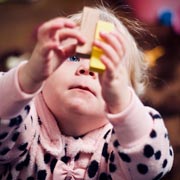 Different play activities require different types of movement and physical interaction from children. Indeed, this is a fundamental aspect of play. Whether jumping and running with large movements or carefully constructing with small items like building blocks, children will naturally hone both fine and gross motor skills during play. Such physical skills are essential to their ability to navigate and interact with the world around them and, in the most natural of ways, play is at the heart of enhancing those abilities.
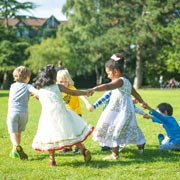 Social skills are also improved through play. Children naturally play with other children and, by so doing, will soon pick up social skills as they begin to better understand social protocols that allow them to succeed both as individuals and in groups. Decent manners, saying please and thank you, cooperation, teamwork and closer bonding are all examples of social skills that can benefit through group play. Other examples include conflict resolution, better sharing, negotiation and communication, which we’ll come to next.
 Through all this play, children will be communicating with each other and with any adults that are supervising. As such, play is a great facilitator of communication. Indeed, good communication is essential to most games and, through it, children can cooperate and achieve in ways that will help them in both the short term and into adulthood. Improving communication skills is also a fundamental way to improve success when you think about it.
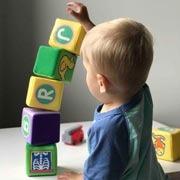 Mathematics is often embedded into games and pastimes. Children can learn, for example, about adding, subtracting, multiplication and division through games. Even dividing group play into teams requires some fundamental maths to ensure teams are equal in size. Building towers out of blocks is another great example where children can count how many blocks they can stack into a tower before it falls over. They can try to beat their own maximum, or even compete against one another to see who can use the most blocks.
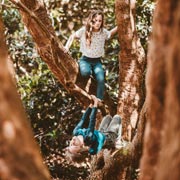 Play comes in a vast array of different forms, shapes, and sizes. Through so doing, it introduces children to countless scenarios, situations, and challenges. By immersing children into such widely differing environments, they learn huge amounts about the world around them, and everything within it. Whether it’s newfound knowledge about a new object, material, place, culture, activity, or something else, play is an amazing conduit to new knowledge and the need to learn new skills. Play is the ultimate educator and the incredible thing is that children may be unaware that they’re learning — they’re having too much fun!
 Autumn is a magical time filled with vibrant colours, falling leaves, and a wonderful quality to the air. With rustling leaves covering the ground in a myriad of hues, it’s the perfect season to engage children with the wonders of a composting activity. Composting is fun, worthwhile, and educational. It not only teaches kids about the importance of recycling and sustainability but also provides an exciting outdoor activity that connects them with nature. In today’s article, we’ll explore the joy of composting with an autumn twist, where children can harness the abundance of fallen leaves to create a rich and fertile compost for the garden. Children of all ages will love this nature-based outdoor activity and it’s a win-win in every sense — for children, nature’s flora and fauna, and the garden itself.
 Autumn leaves are rather like nature’s confetti and they play a crucial role in composting. Perhaps explain to children how leaves provide essential carbon and nutrients that are key ingredients for a successful compost pile. Encourage them to collect a variety of leaves in different colours and shapes, so this activity becomes a stimulating treasure hunt too.
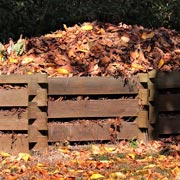 Guide children in setting up a compost bin or, in its most basic form, it could take the form of a simple pile in the garden if you have one. If not, an undisturbed corner somewhere outside will suffice. Emphasise the importance of a balanced mix of green (nitrogen-rich) and brown (carbon-rich) materials. Leaves are a fantastic source of carbon, balancing out the kitchen scraps and other green materials that you and your child may soon start to add.
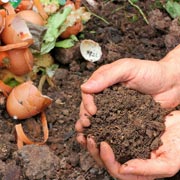 As the compost pile transforms, involve children in observing the changes. Discuss how the compost becomes darker and richer over time. Point out the
  To make composting even more enjoyable, you and the children could incorporate other autumn-themed activities. For example, they could create leaf art while waiting for the compost to develop, they could decorate the compost container through painting, or they could take part in