

A new approach to Ofsted ratings officially launched in November 2025, as part of a new Education Inspection Framework. Parents of children attending early years settings, schools, and further education, will therefore soon begin to see the new-style Ofsted ‘Report Cards’ that will be published following inspections. These are designed to replace — and improve upon — the previous one-word Ofsted rating system, which had become controversial∞. Gone will be what became known as the “single word judgements” on settings (previously a choice between Outstanding, Good, Requires Improvement, or Inadequate). Instead, parents will see a much more detailed ‘Report Card’ that combines at-a-glance headline information with multiple sub-section details. The idea is to give parents a more comprehensive view of how schools and settings measure up across a broad range of performance metrics, as well as providing important context. In essence, parents will be able to easily and quickly identify areas of strength, as well as those that require development. In today’s post, we take a look at Ofsted’s new Report Card and explain how it works.
The New Performance Metrics
The single ‘Overall Effectiveness’ grade has now been retired. Instead, Ofsted will assess settings across a range of key areas and confirm their evaluation of each one separately on the new Report Card. For each, they will use a 5-point scale, with the exception of Safeguarding, which we’ll come to separately in a moment.
The 5-Point Assessment Scale
 Except for Safeguarding, the new Report Card will show Ofsted’s evaluation of each of the assessment areas as one of the following:
- Exceptional — the highest quality provision (indicated in blue);
- Strong standard (indicated in dark green);
- Expected standard (indicated in bright green);
- Needs attention (indicated in orange); or
- Urgent improvement (indicated in red).
The Report Card will use colour-coding, as indicated above in brackets.
Key Areas of Assessment
For Early Years SettingsFor early years settings, Ofsted will evaluate the following areas of provision:
|
For SchoolsFor schools* inspected by Ofsted, they will evaluate a slightly different list of key areas:
|
* Early years and/or sixth form education will also be assessed if schools provide them. In parallel to the above, independent schools will also continue to be assessed against the ‘independent schools standards’.
For Further Education & Skills ProvidersThe list of key areas of assessment for further education settings and skills providers is longer still. As today’s guide pertains to younger children, however, such a list can be viewed separately here. |
Safeguarding
Because the safety and welfare of children is paramount, Ofsted’s assessment of a setting’s Safeguarding features separately in the new Ofsted Report Card. That’s for all types of settings, whether they’re early years providers, schools, further education, or skills providers.
How will that look? The new Report Card will show the result for the assessment of Safeguarding clearly as either Met (with a green tick) or Not Met. More detail will be available by opening a drop-down ‘show/hide’ selector and sub-link (shown below).

More Details on the Ofsted Report Cards
As well as assigning a finding of either Met or Not Met to the Safeguarding element and rating each of the other key areas using the 5-point scale, Ofsted will provide extra narrative to explain each of the findings in more detail. In tandem with this, additional commentary will provide contextual information, such as any relevant SEND, demographic, or other factors that may explain the story behind the grades. Additional narrative providing an overview of what it’s like to attend the setting will also be included. These expandable narrative sections will be displayed below the more prominent colour-coded assessment grid and Safeguarding section.

Final Thoughts
The new Ofsted report cards intend to give families both an at-a-glance snapshot and more comprehensive details that outline strengths — and any areas that require development — for educational settings like nurseries, schools, colleges, etc. By showing their evaluation of a whole raft of key areas in this way, Ofsted is aiming to give parents a clearer picture of each setting. That’s in stark contrast to the historical “single word judgements” that we’ve been used to – until now. It does make sense — after all, no single word can ever tell the whole story or sum up a unique and complex service.
Not everyone is convinced the changes go far enough. However, Sir Martyn Oliver, His Majesty’s Chief Inspector for Education, Children’s Services and Skills, has said that the new system should be fairer and better for parents, while also providing tangible and financial support to any settings in difficulty. The government expects the new system to raise standards for children, which is incredibly important — and what it’s all about at the end of the day. Learn about the new education inspection framework in more detail here.
Little Cedars Nursery – a Good Provider
Looking for a High-Quality Nursery/Preschool in Streatham?

 We haven’t yet been graded using the new Ofsted rating system, so we don’t yet have one of the new-style ‘report cards’. However, Ofsted rated us as a Good Provider in their most recent report, so you know your little one is in safe hands if you send them to Little Cedars Nursery, Streatham. If you’d like to explore a possible nursery or preschool place for your child at this wonderful setting close to Streatham Common, Streatham Hill, Streatham Park, Tooting, Furzedown, Balham, Norbury, and Colliers Wood, get in touch — or start your application today. We’d love to show you and your child around and answer any questions. We also support funded childcare places for eligible families.
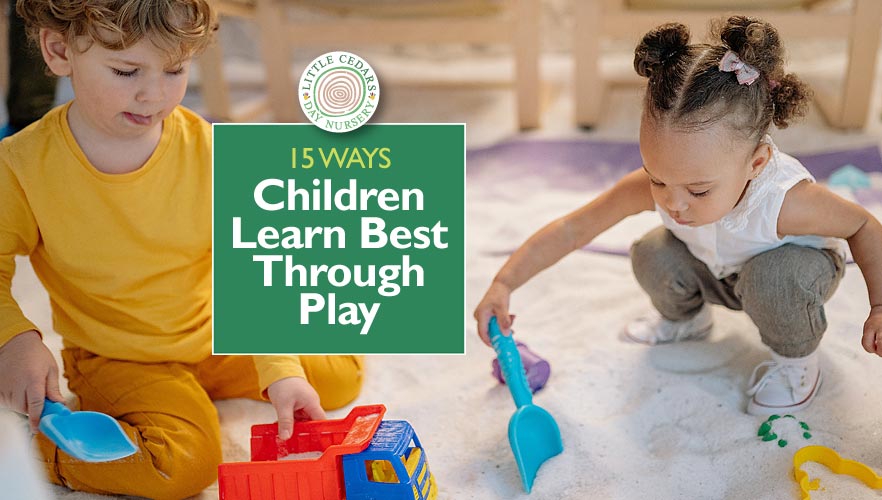
 Watch any infant, toddler or preschooler for just a few minutes and you’ll see that one thing comes naturally to them; play. Indeed, it’s as if they’ve been programmed that way, with the need to play coming instinctively to youngsters, whatever their species. Aside from it simply being great fun, there are a multitude of very good reasons for that — play teaches them an enormous amount about each other, themselves, other living things, cause and effect, and the world around them. It also allows them to learn and fine-tune a whole swathe of new skills as they grow older, play new games, and become more experienced. Add in some careful steering and nurturing during that play from Mum or Dad and they have a real recipe for success. With that in mind, we look today at the key ways in which learning through play profoundly benefits children.
 Play and creativity go hand-in-hand. Whether making up a new game, role-playing, constructing, or playing in a den, children will naturally create both scenarios and physical items as part of their play. Such activities teach them how to use their imaginations and to be creative — in a myriad of ways.
 Different play activities require different types of movement and physical interaction from children. Indeed, this is a fundamental aspect of play. Whether jumping and running with large movements or carefully constructing with small items like building blocks, children will naturally hone both fine and gross motor skills during play. Such physical skills are essential to their ability to navigate and interact with the world around them and, in the most natural of ways, play is at the heart of enhancing those abilities.
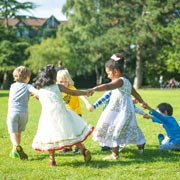 Social skills are also improved through play. Children naturally play with other children and, by so doing, will soon pick up social skills as they begin to better understand social protocols that allow them to succeed both as individuals and in groups. Decent manners, saying please and thank you, cooperation, teamwork and closer bonding are all examples of social skills that can benefit through group play. Other examples include conflict resolution, better sharing, negotiation and communication, which we’ll come to next.
 Through all this play, children will be communicating with each other and with any adults that are supervising. As such, play is a great facilitator of communication. Indeed, good communication is essential to most games and, through it, children can cooperate and achieve in ways that will help them in both the short term and into adulthood. Improving communication skills is also a fundamental way to improve success when you think about it.
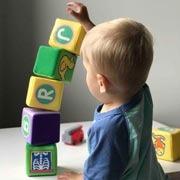 Mathematics is often embedded into games and pastimes. Children can learn, for example, about adding, subtracting, multiplication and division through games. Even dividing group play into teams requires some fundamental maths to ensure teams are equal in size. Building towers out of blocks is another great example where children can count how many blocks they can stack into a tower before it falls over. They can try to beat their own maximum, or even compete against one another to see who can use the most blocks.
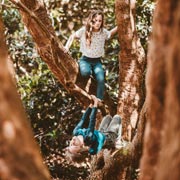 Play comes in a vast array of different forms, shapes, and sizes. Through so doing, it introduces children to countless scenarios, situations, and challenges. By immersing children into such widely differing environments, they learn huge amounts about the world around them, and everything within it. Whether it’s newfound knowledge about a new object, material, place, culture, activity, or something else, play is an amazing conduit to new knowledge and the need to learn new skills. Play is the ultimate educator and the incredible thing is that children may be unaware that they’re learning — they’re having too much fun!
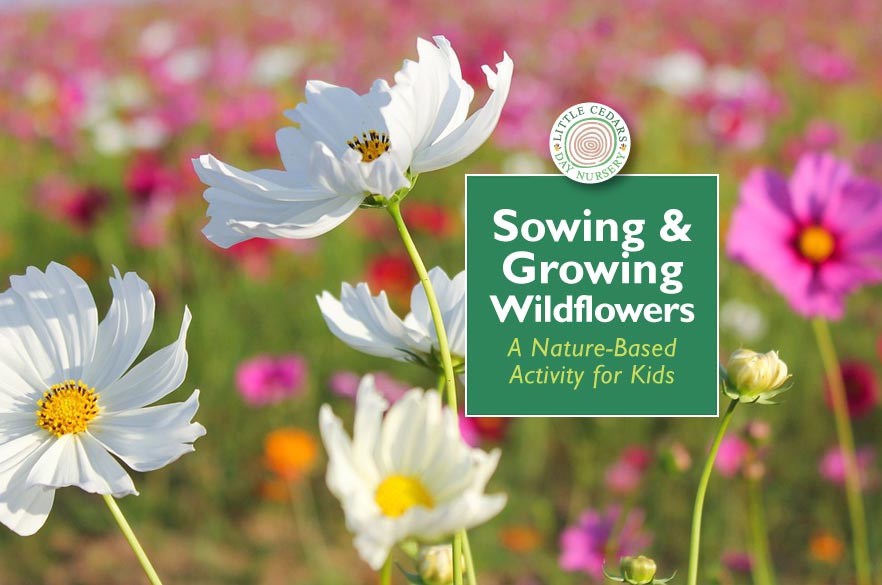
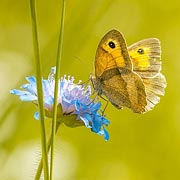 In today’s guide, we outline a simple but powerful nature-based activity that will be both fun and educational for children and under-fives. This one is all about how to sow wildflower seeds. Once growing, these will bring beauty and wonder to any setting. The activity will also complement our recent
 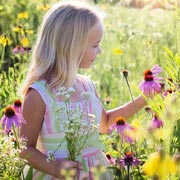 Children benefit very much from spending time in nature, as we outlined in our article entitled
 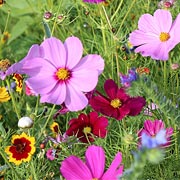 Colour(s) — Children can help decide whether to grow wildflowers of just one colour, a limited 2- or 3-colour palette or perhaps multiple colours. If parents have an existing colour theme in their garden or plant area, they may wish to point children in a particular direction, so as to keep that colour theme going.
 Free wildflower seeds can be harvested from existing wildflowers — either from your own wildflowers if you have them, or from those found in the wild along hedgerows and similar (N.B. only do so in moderation and for personal use). Timing will, of course, be critical because seeds will only be available at certain times of the year, i.e. when the wildflowers have “gone to seed” at the end of their flowering period.
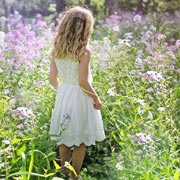 Sowing seeds on existing lawns that you/your child want as a wildflower meadow is simply a case of scattering seeds on the lawn, ideally spaced out in such a way that they don’t have to compete with each other once they start growing. Then ensure that the area of lawn is kept moist by either rain or, if there is no rain, regular sprinkling from a watering can fitted with a sprinkling head (a.k.a. ‘rose head’). Children may need to remind adults not to cut the lawn thereafter, of course!
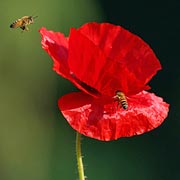
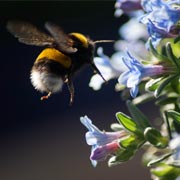 Children will love it once the wildflowers begin to grow and later bloom. They’ll also love seeing bees, butterflies, and other insects visiting and the results of the activity may indeed give them a great sense of accomplishment. The whole process and the results are quite magical when you think about it.