
 Bilateral coordination is an important skill for children to master and is something that parents should look out for as children develop in their early years. Today we look at the topic, explaining what it is, why it’s important and how mastery of the skill benefits little ones.
What is Bilateral Coordination?
Bilateral coordination refers to the developmental skill of accomplishing one or more activities, using both sides of the body at the same time. Examples might include using one hand to hold paper still and the other to draw, or coordinating each foot in a different way in order to successfully propel oneself on a scooter or bicycle.
“Crossing the Midline”
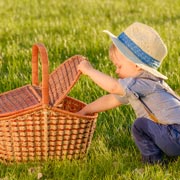
 You may also hear reference to the phrase crossing the midline and this is also linked to bilateral coordination. It refers to a person reaching across their body, from one side to the opposite side, in order to complete a task. An example would be a child reaching with their right hand, across their body, to pick up a toy that’s to their left. Crossing the midline in such a way is a significant step because it demonstrates that infants have progressed from naturally using the side of their body nearest the object to using a dominant or preferred side. This may be the first indication parents have of whether their child is going to be left- or right-handed.
Why is Bilateral Coordination Important?
As adults, we take bilateral coordination very much for granted, forgetting that we weren’t born with such abilities. Being able to coordinate both sides of the body to accomplish tasks, activities or even just movements is incredibly important. If children don’t learn the skill, they may appear clumsy and  uncoordinated and will struggle with a variety of physical tasks.
Signs of Possible Difficulty
Parents/carers can watch out for signs of possible difficulty with bilateral coordination in children. Signs could include difficulty tying shoe laces, buttoning up clothes, handwriting, catching a ball, clapping and even knowing when to lift or bend a limb in order to achieve a particular physical movement — when walking up a step, for example. The appearance of clumsiness is another sign.
The 3 Types of Bilateral Coordination
Bilateral coordination falls into three categories:
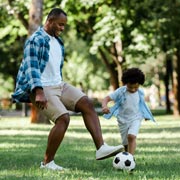
 Reciprocal bilateral coordination: this is where both sides of the body form a rhythmic motion but the movements on each side alternate. Examples include walking, swimming and cycling.
- Symmetrical bilateral coordination: this is where both sides of the body are performing the same task at the same time. For example, clapping, catching a ball or doing star jumps.
- Asymmetrical bilateral coordination: here, both sides of the body are required to perform a task, but the motions on one side do not match those on the other at all. Cutting a piece of paper, for example, involves one hand holding or moving the paper and the other using the scissors. Tying shoe laces also requires each hand to perform a different task. Playing a musical instrument is another example. For instance, violin strings will need to be held down against the fret board by one hand and played with the other using a bow.
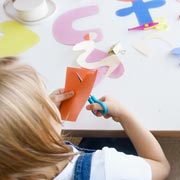 Reciprocal bilateral coordination: this is where both sides of the body form a rhythmic motion but the movements on each side alternate. Examples include walking, swimming and cycling.
In many cases, the child will find themselves using a worker hand on one side of the body and a helper hand on the other. One ultimately becomes the dominant hand in 99% of all children. Thus, they become either left-handed or right-handed. Just 1% of people are properly ambidextrous, i.e. having no dominant hand, although many more will exhibit one or more ambidextrous skills at some stage of their development.
The Motor Skills Needed for Bilateral Coordination
 Mastery of bilateral coordination requires children to develop and fine-tune three types of motor skill:
- Fine motor skills — the smaller, precise movements needed to accomplish things like building with Lego blocks, doing up buttons etc;
- Gross motor skills e.g. walking, crawling, skipping, jumping, riding a bike or peddling a scooter;
- Visual motor skills e.g. using skilled hand-eye coordination for writing, drawing, tracing and using scissors to make accurate cuts.
Activities That Help Improve Bilateral Coordination
When age appropriate for safety purposes, practising activities like those above and listed below can help children to improve bilateral coordination and body awareness:
- Threading beads on a string, or string through holes punched though paper or card;
- Playing catch with a ball;
- Ball games that use hands and/or feet;
- Playing with musical instruments e.g. banging drums, playing a keyboard etc.;
- Carefully cutting or tearing paper along a specific path;
- Popping bubbles using both hands;
- Play-doh — squeezing and rolling it, including use of tools to shape it;
- Playing physical movement games like ‘Simon Says’;
- Playing with equipment in playgrounds, for example climbing up a ramp or climbing frame etc;
- Helping with household duties like carrying shopping, filling or emptying bags, loading and unloading washing;
- Swimming and other sports activities;
- Role play as animals e.g. walking on all fours, walking sideways, jumping etc.;
- Playing the commercial game ‘Twister’, which is also brilliant fun.
 Threading beads on a string, or string through holes punched though paper or card;
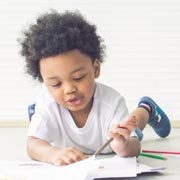 Play-doh — squeezing and rolling it, including use of tools to shape it;
 These are just a few examples. Any age-appropriate game or activity is likely to help improve bilateral coordination so long as it requires precise, measured movements and coordination of both sides of the body. It’s a case of the child practising over time, often through play, until a particular physical outcome has been mastered. Progress is particularly easy to see in babies and infants as they gradually become more physically able, dextrous, strong and coordinated.
Any Concerns?
We should mention that some children take longer than others to achieve mastery of bilateral coordination and this is quite normal — every child is different. That said, a few children are affected by conditions such as Developmental Co-ordination Disorder (‘DCD’) and Dyspraxia, which adversely affect coordination. However, a positive diagnosis of such conditions is only really possible once a child reaches the age of 4 or 5. Our Guide to DCD and Dyspraxia in Children explains more. If you have any concerns about your child, please ask your GP or health visitor for a professional opinion.
Nursery Places at Little Cedars Nursery & Pre-school, Streatham
Little Cedars Nursery is in Streatham, close to Furzedown, Tooting, Balham, Norbury & Colliers Wood

 Little Cedars is a wonderful nursery and pre-school in Streatham. It offers an outstandingly good childcare service near Streatham Hill, Streatham Park, Streatham Common and Furzedown. We’re also conveniently located if you live or work near Tooting, Tooting Bec, Tooting Broadway, Tooting Common, Balham, Norbury or Colliers Wood. Click a button below to apply for a nursery place, arrange a free tour of the nursery or to contact us with any queries — we’re here to help!
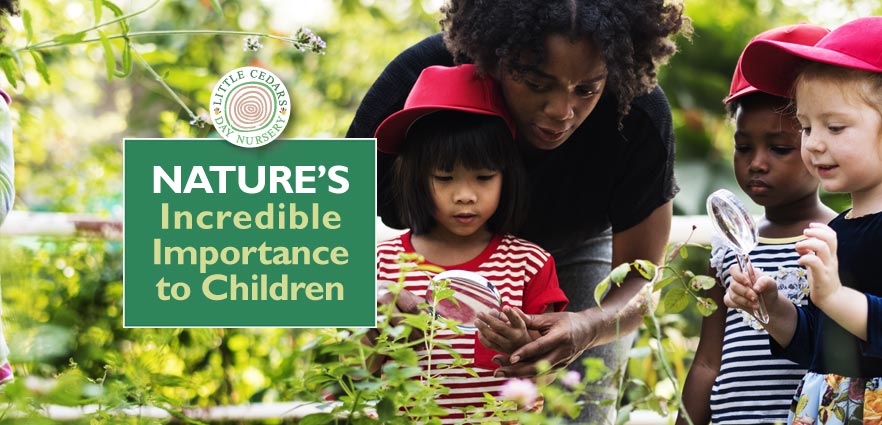
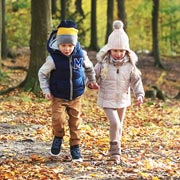 It’s amazing how much nature benefits children, particularly in their early years when they’re finding out about the world around them — and also learning about themselves. There have been many studies into the importance of nature, to youngsters in particular, and the studies all reach a similar conclusion — nature is incredibly important and beneficial to children. Today we’ll explore the topic and learn why children should regularly access the natural world.
 Stress is also reduced on both a mental and physiological level through exposure to a natural environment. In studies, stress hormone and blood pressure levels both improved after exposure to nature, helping children both physically and emotionally. Nature seems to be a great way to recharge children’s batteries and lower stress and anxiety, as well as improving attention, engagement and academic performance. That includes improvements in important skills like reading, writing and mathematics.
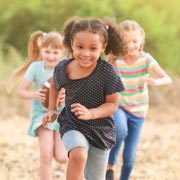 Improved social skills and even wider circles of friends due to the opportunities offered through outdoor play and adventure.
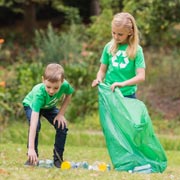 The new skills, knowledge and freedom that nature gives children also helps them to become more self-confident and independent individuals.
 Even in built-up cities like London, immersion in nature is possible via gardens, parks, commons or, if you’re lucky to have them near you, nature reserves and nature gardens. There are many of these dotted around London, including
 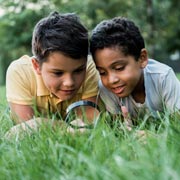 If you’re searching for