
 Concepts involving numbers and counting can sometimes be tricky for some preschoolers to grasp. Making sense of such concepts is important, though, because many aspects of children’s day-to-day lives will require an increasing understanding of numbers as time passes. Whether it’s knowing if a quantity of something is more or less than something else, how much of an ingredient is required in a mixture, or what change to expect from a purchase, children will need to grasp number-based concepts — and understand their real-world applications. What’s more, they’ll need to do this sooner rather than later if they’re to thrive, not least when they leave early years settings to begin school.
Early parental help can significantly boost children’s understanding of numbers, counting, and maths terminology. One of the key ways to help preschoolers is through number and counting games. What’s more, by using games and playful challenges, learning number and counting concepts will be fun! That fun element will be a key to both success and enjoyment. Indeed, learning through play is, as we know, the very best way for young children to learn. With that said, let’s take a look at some examples of games and fun challenges that under-fives can take part in. With supervision and guidance from adults, these are a great way to boost comprehension of number-based concepts in little ones — and support the EYFS curriculum.
First Create Some Number Cards
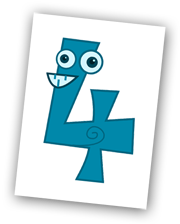 Making ‘number cards’ with your child will be a fun and useful first step. These could be as simple as small pieces of paper or card, each having a single large number written clearly on them. Alternatively, your child could take the opportunity to get more creative. For example, you and your child could make the numbers bright and colourful, have patterned in-fills, or even be made to look like animals or number ‘characters’ that have eyes. For the very young, start with numbers up to 5, or go to 10 or even 20 for older and more advanced children. Size-wise, perhaps aim for cards sized at about A6 (a quarter of an A4 sheet) or even A7 (A4 divided into 8).
Number Order Games
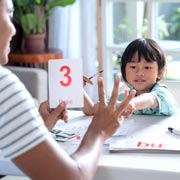
Once you have a set of numbered cards, first ensure your child recognises the numbers and can say their names. Then, get your child to jumble them up. They should then place each card on the table or other flat surface and try to move them back into the correct numerical order. The idea is to end up with the lowest number on the left, going in order until they have correctly placed the highest number on the right. Ask them to count them out loud, from left to right, once complete. Praising and congratulating them when they do well will encourage them but, of course, help them if they struggle at first.
Once they’ve mastered the first game, make it more challenging by asking them to reverse the numbers and, when complete, count the numbers backwards.
Getting More Advanced
When your child becomes more advanced, perhaps shake things up a bit by hiding a number and seeing if they can tell you which one is missing. Later still, you could even miss out all the odd numbers, so they have to play the game with only even numbers, then do it the other way around. Learning to count all the odd or even numbers will be another useful and practical skill as they get older.
Number ‘Dot’ Cards
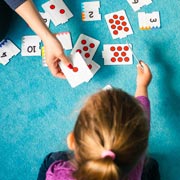 A more advanced form of the number cards could depict the correct number of dots (or other drawn objects) instead of — or as well as — the actual written number. So, for example, the ‘3’ card could show a column or row of 3 round dots or squares or even something like 3 drawn strawberries — whatever your child likes! In a way, it’s a bit like traditional playing cards where each has both a number and the right amount of hearts, diamonds, clubs or spades on it, to match the number.
The benefit of this, more advanced type of card is that children will be able to see (and count), for example, two ‘dots’ on a ‘2’ card, four on a ‘4’ card, and so on. By using this approach, children will have a visual clue and practical example of the number’s meaning and, crucially, it will allow them to recognise and better understand quantities.
Introduce Simple Addition & Subtraction
When your child is more advanced using their number cards, a gradual introduction to simple addition and subtraction concepts will come easier — particularly if they use the cards with the numbers depicted with the dots/symbols. So, when you ask them what happens when they add a 2 and a 3 together, they will be able to count (or, with practice, recognise) the quantity of symbols on both cards. Before long, they’ll grasp the underlying concepts and be able to do it in reverse (subtraction). You could also consider adding mathematical ‘symbol’ cards into the pack, for example, ‘plus’ and ‘minus’ symbol cards.
Ensure you give your child a round of applause when they get things right in any of these games — it will give them encouragement to keep going and also give them a sense of progress and achievement. Consider awarding them a prize or sticker to celebrate their achievements.TIP:
Number Matching Games
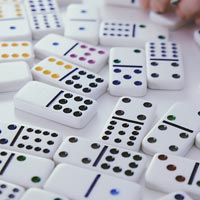 This next game will require a set of dominoes or, if you don’t have a set, they’re also easy enough to make in a similar way to the number cards. As you may know, each half of every domino has a number of dots, most commonly from 1 to 6. So, for example, there might be two dots on one end and five on the other, with the dot formations being rather like those you’d see on dice.
Whether using real dominoes or a homemade paper alternative, this game is traditionally played with 2 people. However, for the purpose of today’s game, it can be played just as well by a solo child, although under-fives will benefit most if they have some adult supervision and feedback. The idea of the game is to lay down one domino. Then, the next domino will need to be laid alongside one end of it so that the touching numbers match. So, for example, if the first domino has a 2 at one end and a 5 at the other, the second domino will need to have at least one number that matches and that should be placed so the two matching numbers touch. This is repeated so more and more dominoes are added, each time with a matching number connecting to an existing domino. Although traditionally there is a winner and a loser in dominoes, if playing solo, the idea here is simply for children to learn to easily recognise the number of dots. It’s a great way for children to be able to instinctively know whether they are looking at 1, 2, 3, 4, 5 or 6 dots — recognising the quantity and associated number will become instinctive if they practise.
Quantity Estimating Games
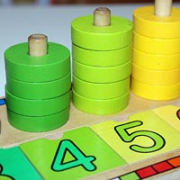 Understanding whether a quantity of something is more or less than something else is an important concept for children to grasp. Similarly, being able to estimate a quantity is a useful and practical skill for little ones to master. Such concepts can easily be highlighted, and the skills mastered, using simple estimating games. Some examples follow.
With the help of your child, build two stacks of one kind of object (e.g. draughts counters, biscuits, drinks coasters, etc.) and ask your child to confirm which stack they think has more than the other — without actually counting. Take some away or add some and repeat the process. They’ll soon be able to confirm the answers more accurately and grasp concepts like more, less, taller, shorter, and so on. This is a simple but practical game that will exercise children’s estimating skills and improve maths vocabulary.
Once they’ve mastered simple stacks of identical components one directly on top of another, you could make the game more challenging. There are a few ways to approach this.
- It can be achieved by making the stacks more complex, for example, in layers of different quantities — a pyramid format would be a good example.
- Or, instead of using a stack of near-identical components, try using small piles of irregular items, e.g. vegetables or fruit. Due to the different sizes and shapes, these will be more of a challenge and will get children thinking and concentrating harder.

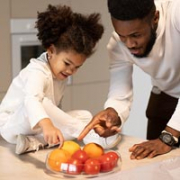
As before, perhaps take away or add more objects to one or more of the groups and ask them to estimate which has more and which has less. Also, ask them to estimate, using logic, how many components each group has. You could even take it a step further by adding piles of objects to scales. Ask your child which they think is going to be heaviest, which is lightest, and so on.
Such games and challenges are a great workout for children’s young brains and great ways to introduce new number- and quantity-based concepts to children’s worlds, all in a fun way. They will also help little ones introduce new maths terminology into their vocabulary.
The Shop Game
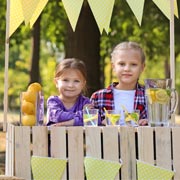 Pretending to be a shopkeeper or a shopper buying from one is a great next step for children. What’s more, they’ll naturally love playing shops having, no doubt, accompanied parents to real shops. This is where they can put all the things they’ve learned from the games above into practice. They can check they have the right quantities, weights or volumes or products, check they’re giving the shopkeeper the right amount of money, ensure that any change is correct — and so on! Playing shops is such a great way to master numbers, counting, estimating, weighing, addition, subtraction and more!
Numeracy Skills Boost Children’s Long-Term Outcomes!
We hope that today’s activity ideas, in the form of games, help your child to grasp maths terminology and number-based concepts like counting, subtracting, adding, comparing, and estimating. Learning through play is by far the best way for little ones to learn. And, by learning about the application of number concepts through games and activities, they will be able to experience real-life applications of them. It will naturally make more sense and make learning about numbers and counting child’s play!
What’s more, an early boost to numeracy skills has been proven to enhance outcomes for children even in the longer term. Studies show that the benefits of number mastery include a propensity to stay in education longer, better job prospects, and improved earning potential as adults. That’s the power of understanding numbers!
Little Cedars Nursery, Streatham

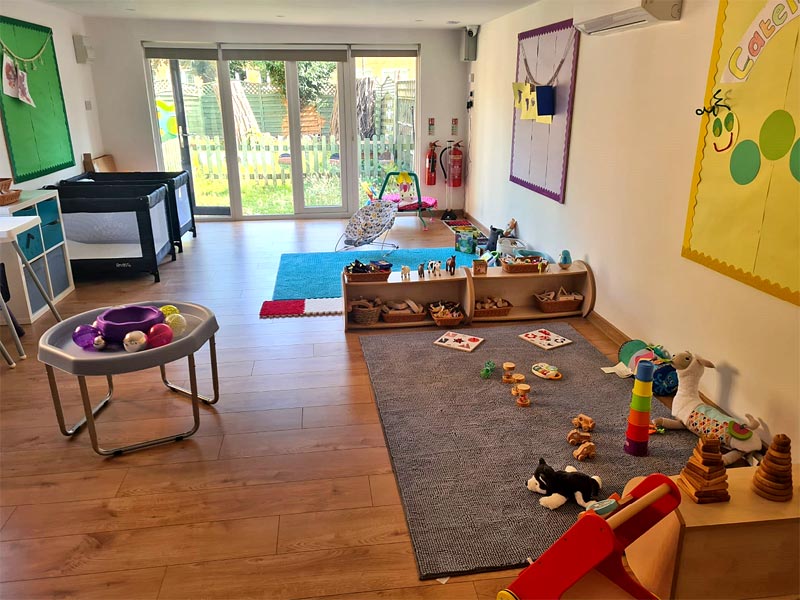
 At Little Cedars Nursery in Streatham, we also take every opportunity to help children learn about numbers, how they work, their significance to everyday life, and the maths vocabulary that surrounds them. It’s all an important part of the EYFS curriculum and something they’ll benefit from profoundly as they grow older – crucially too in readiness for school. If you would like to explore the possibility of your child attending this wonderful nursery and preschool in London SW16, please get in touch or simply apply for a place (see the options below). Little Cedars Nursery is officially a Good Provider and supports eligible children through various government-funded childcare schemes, including those for eligible babies from just 9 months.
As well as being perfectly located for families looking for nurseries in Streatham, Streatham Common, Streatham Park and Streatham Hill, we may also suit those seeking high-quality childcare near Tooting, Furzedown, Balham, Norbury and Colliers Wood.
 Work at least 16 hours or more per week at the National Minimum Wage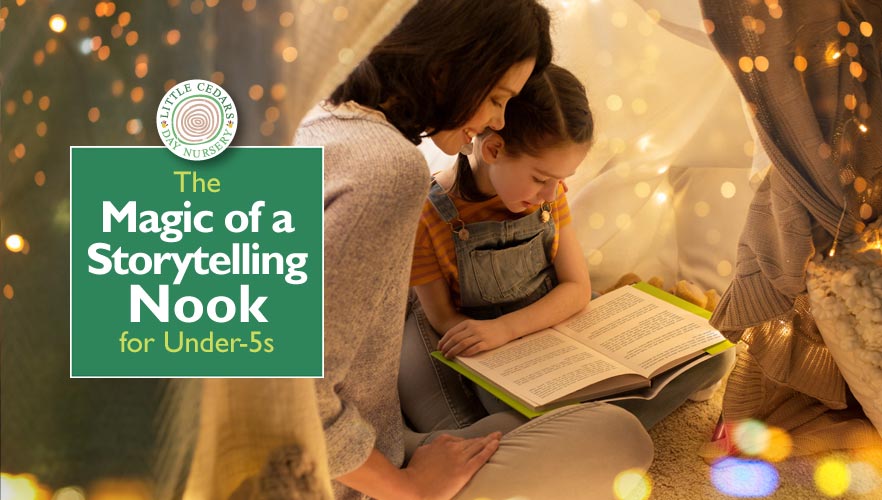
 Any successful storytelling nook needs to be warm, cosy, quiet and comfortable. That means choosing a corner or recess of some kind in the home that’s away from distractions like TVs and game consoles. Somewhere that’s not used as a thoroughfare by other family members will also help. Wherever you choose, it also needs to be warm. Therefore, somewhere away from draughts is required, so avoid being too close to entrances and exits to the outside. A corner of a quiet room or a tranquil alcove are therefore often ideal spots for your child’s storytelling nook.
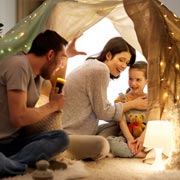 Whether reading from a book or creating a new story off the top of one’s head, there’s something that really brings a story to life — being animated and expressive during storytelling, rather like actors might do. That’s true whether it’s the adult or the child telling the story.
 Do consider adding a storytelling nook or reading corner to your child’s home. They’re great vehicles for escapism, are incredibly worthwhile, and offer potentially magical experiences for your child. And, if you go the extra mile to make them cosy, immersive and special, they will encourage your child to love reading and creating new adventures using their imagination. Storytelling nooks and reading corners can open up whole new worlds to your child and be a wonderful antidote to electronic screens, gloomy weather, and more limited daylight during winter months. What’s more, they’re a great way for all parties to grow deeper bonds through shared periods of exquisitely immersive, high-quality time.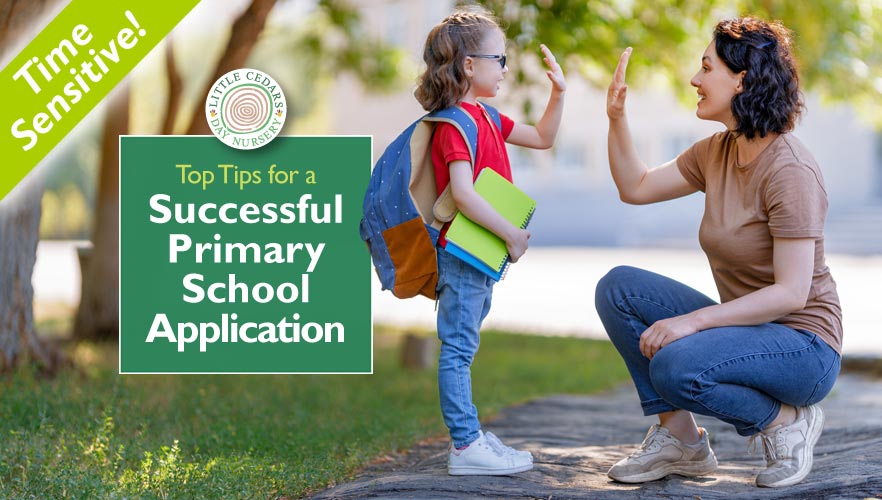
 Are you the parent of a 3-year-old child, or one that’s just turning 4? If so, you need to choose your 3 preferred primary schools now and submit your application for them at the latest by mid-January of the coming year. It’ll be here before you know it! Whether you want your child to begin school at the age of four or five, you have limited time left for your application. With that in mind, today’s post outlines our top tips for a successful primary school application for your preschooler. Read on to learn how to maximise your potential success in achieving a school place that’s best for your child.
 It’s important for parents to focus on primary schools that are close to their child’s home. That’s for two reasons:
 Visit the schools on your shortlist. Such ‘in-person’ visits are like gold dust. You can ask questions, get a feel for the school, see how the existing children are getting on, witness the teaching style, and see how well your child might fit in. Take them with you if possible. Most primary schools will have open days or evenings, so find out about those and attend. Alternatively, call the head or school office to arrange a guided visit if possible.
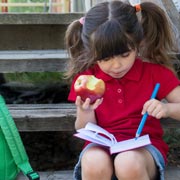 One of the most fundamental decisions you need to make before applying is whether you want your child to begin at primary school when they’re 4 or the ‘legal’ maximum age of 5. This is a conundrum especially for “summer-born children” i.e. those born between the start of April and the end of August. For this age group, they’ll be amongst the youngest if they start in Reception Year at 4 or amongst the oldest if they defer their start until the age of 5. What’s more, for those deferring until 5, it’s not the parent who decides whether a child goes into Reception or Year 1 — it’s the schools and local admission authorities. So, parents need to decide, before applying, whether they wish to go with the usual flow and start their children at 4 (will they be ready?), or defer a year until they’re 5. It’s a fine balancing act and your decision needs to be made in the best interests of the child. That said, most children do start at 4 and go in Reception Year.
 Priority for primary school places is given first to those who submit applications on time. Each year, that means between the 1st of September and the 15th of January when your child is 3 or has just turned 4. Even if you intend to defer your child’s school start until they’re 5 rather than starting them while they’re 4, you still need to apply while they’re only 3 or have just turned 4. If you miss the mid-January deadline, you will stand a much lower chance of achieving a place for your child at your preferred school(s) — because places will already have been allocated to those who applied on time. Sadly, many families miss out because they simply didn’t realise how early they needed to apply.
 You read that right! When National Offer Day for primary schools arrives, it’s generally agreed that you should accept whichever school place is offered to your child. That’s the case even if you’re unhappy! It’s because your child then has a firm school place to fall back on should you appeal, or go on a waiting list for another school, and are unsuccessful. Accepting the initial school place that’s offered does not adversely affect your chances with appeals or waiting lists, which is why the accepted wisdom is to accept the initial offer.
 Last year,
  As well as helping families financially, the scheme expansion should help children begin their early years education even earlier, for many, which has been shown to be hugely beneficial to them. The free childcare provision will also help many more women back into the workforce. Children, families and the economy should all benefit.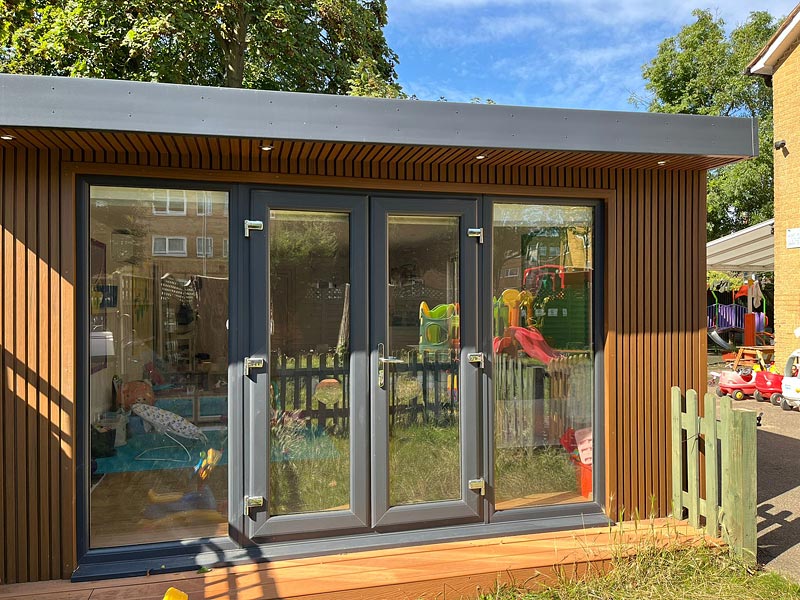
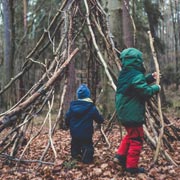 Home-made play dens are great fun both to construct and to use. Children will love constructing them, perhaps using fallen branches, sticks, or garden bamboo canes. If they show real ‘bush craft’ potential, they could even progress to covering them with large leaves, moss, fir tree fronds, or simply use a spare blanket or sheet from indoors. Once made, children will adore setting up camp, perhaps with cushions or soft moss, straw, or hay, used as a comfy base inside. Once built, their imaginations will run riot as they invent all kinds of games, role-play scenarios, and free-form play. This creative activity is such fun and has so much potential!
 With a little help from an adult or using suitable reference from the Internet or a book, children will be able to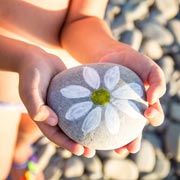
 Rocks, particularly the smooth pebble kind, are often magnets for children’s attention when they spot them outdoors. Parents and carers can encourage children to take their natural interest a few steps further by creating rock art and rock sculpture (using, of course, suitable rocks that are safe for them to use under supervision). Children will love painting rocks with patterns, flowers, or abstract designs and these can look hugely attractive. Rock sculptures are also something that children will love building, whether using painted rocks or natural ones. Scenes with multiple ‘towers’ of piled rocks look magical and children can even pretend these are part of their ‘castle’ or mark the boundaries of their kingdom and suchlike. Creating outdoors with rocks will be fun and creative, it’ll stimulate imaginations, and also hone art and motor skills.
 Children will love creating their own picnic, whether it’s in the garden, local park, or out in the countryside. It’s a multi-faceted activity where they can first help prepare the food and drink, help pack it in backpacks or a cool bag, and then settle somewhere pleasant outdoors. There, they can set up camp, perhaps with a nice soft blanket to sit on, and lay out their picnic feast. It’ll be a great spot, too, to relax with friends or family, or use as a base from which to embark on other outdoor games and activities. Picnics are also a great way to extend the time children can spend outdoors because they’ll be fed and watered outside too. Magical!
 Introduce children to the concept of rambling. It’s a term that also sounds much more interesting than ‘walking’ in any case, and is a great excuse to get little ones out and about, for example, in the countryside, local park, or green space. Rambling out in nature is good for children (and adults) and also presents lots of exciting opportunities for adventure for little ones. Whether it’s a fallen log that children can try to walk along, tree stumps that they can balance on, branches they can try to hang from by their arms, or little brooks and ditches that they can jump across, rambles can be wonderful adventures for children — under adult supervision, of course. They’re also great ways to stimulate imaginations as children can pretend they’re explorers, pirates, hobbits, and so on.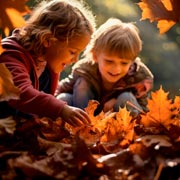
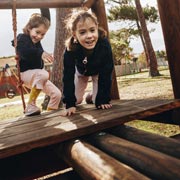 Children will also hugely enjoy making and then competing in their own obstacle race. Encourage them to set up a route through a suitable clearing, forest, field or park. Get them to mark boundaries and the course route with natural objects (sticks, rocks, stones, jumpers, etc.). Include obstacles like branches to jump over, tree trunks to run around, ditches or other similar hazards to jump over, and so on. Perhaps they can race several times and you, as the supervising adult, can time them. Whoever wins could be presented with a prize of some kind, whether it’s a purchased toy or simply a gold star sticker. It’ll be a great chance for children to let off steam, keep fit, and hone balance, coordination and motor skills.
 Little ones are usually familiar with the concept of photographs, especially in today’s age, with cameras on every smartphone and tablet. And, of course, there are still simple stand-alone cameras available, whether digital or using traditional film. Either way, suggest that children — with care not to break or damage the device — take photos of natural things and scenery when they’re outdoors. There could even be a competition to see who can take the best photo of a flower, insect, or scene of some kind. This activity will stimulate their creativity, encourage an understanding of scientific concepts like light and shadows, and give them a sense of responsibility as they (hopefully) look after the camera or smartphone itself. Prizes or stickers could perhaps be available for the most successful and appealing shots.
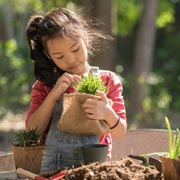 Children will love having their own mini garden. Whether it’s a small area in the household garden or simply some flowerpots or grow-bags on a windowsill or patio, there is always somewhere a child can grow plants (or even vegetables or herbs) in a household. All they need is some light, soil, and water, after all. And, of course, the care and attention of someone to look after them. Children will naturally be fascinated by the concept of growing plants, flowers, herbs, vegetables, or fruit from seeds or seedlings. Tending to them and seeing them successfully grow will also give them a sense of responsibility, achievement, and perhaps even of empathy. Children can learn so much from tending to plants.
 Our final outdoor activity idea for children is wildlife spotting. Whether it’s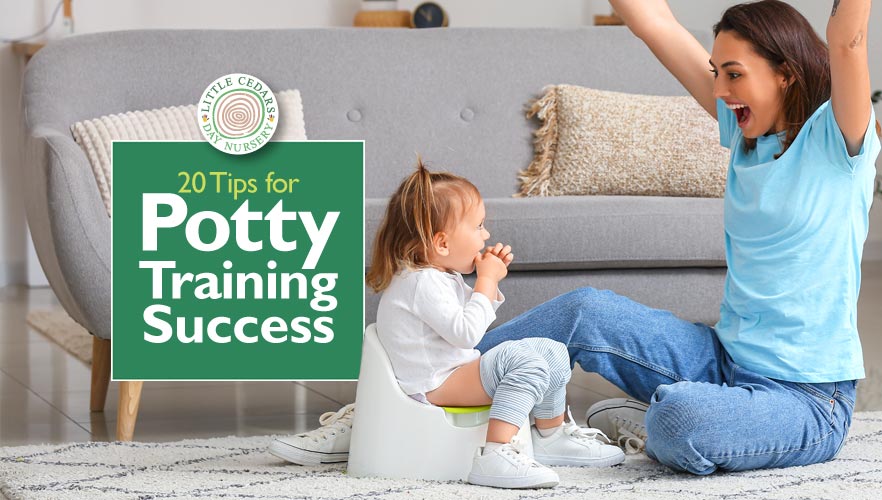
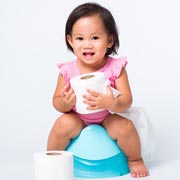 Children are all different. They learn and develop at different rates to each other and that applies to potty training success too. Circumstances in each family are different too, and this will also have an effect. In other words, there is no hard and fast rule about the age by which little ones should have mastered the use of the potty. Parents should therefore not worry if their child is slower to master toileting than their siblings or peers. That said, some very rough guidelines will always be useful to parents and these follow.
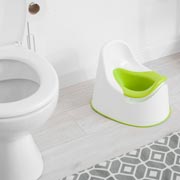 Allowing your toddler to help choose their potty can automatically make it less daunting and instead more of a ‘friendly’ thing to have in their life.
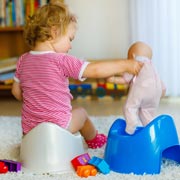 Children can also be encouraged by having their own toy potties. They, and parents, can ‘train’ teddies and dolls to use these during play. Doing so will help them be both relaxed and more educated about potty training — even proactive.
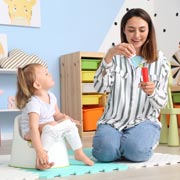 Don’t forget to make potty training fun! Many of these tips will help towards that, including the rewards idea (#4), praise (#5), characters on potties (#7), toileting-themed music (#8), and so on.
 household cleanliness, and for their independence.
 As promised in our last post we now extend our
 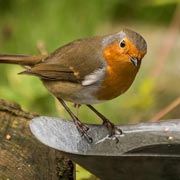 One of the key things that pollinators like bees need is something to drink, particularly when the weather is hot. They expend a lot of energy buzzing about and can easily become exhausted without a source of water. So, a simple thing that children and families can do is to put out some small, shallow dishes of water among any flowers (whether in flowerbeds or flowerpots). The little drip trays that you put under flowerpots are perfect but any small, shallow dish will do. A critically important detail is that a ‘landing stone’ should be placed into the water so that the bees have somewhere safe to land above the level of the water’s surface.
 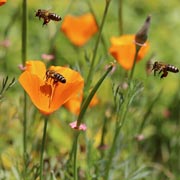 Bees, hoverflies, butterflies and all pollinators also need nectar as a food source. For our children, that means that flowers — and their pollen — are the key to attracting them. So, with adult supervision, children can sow pollinator-attracting flowers from things like poppy seeds and wildflower seed mixes. These are readily available commercially, are usually marked on the packets as pollinator-friendly, and are usually very inexpensive. They’re also easy to grow (see our
 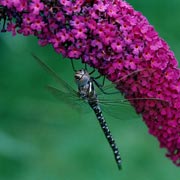 As we mentioned above, butterflies will be attracted to flowers like poppies and wildflowers. However, they absolutely love flowering Buddleia (right) and Hylotelephium (a.k.a. ‘Ice Plant’ – see main image at top), especially if they’re located in a sunny position. On a good day, children may find such plants absolutely covered with visiting butterflies and other pollinators — and these creatures are a delight for little ones and adults alike. Note, though, that parents will need to hard prune most Buddleia varieties in early Spring, otherwise, they can grow quite large. If space is limited, therefore, stick with poppies, wildflowers, and ice plants rather than buddleia.
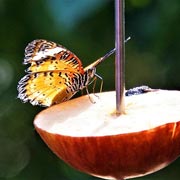 As well as enjoying the nectar from the flowers that children have planted (see above), butterflies can also be lured to children’s gardens through a kind of drink that’s also food for them. For butterflies, children simply mix up to four parts of warmed water with one part of sugar. Stir until the sugar has dissolved. Children can then drizzle the sweet solution over small slices of ripe fruit or even small cut-up pieces of a clean sponge. As with the water for the bees, these can then be placed in shallow dishes and left among flowerbeds or alongside flowerpots on a balcony or windowsill. Once they’ve discovered them, butterflies will soon begin to land to sip at this sweet food supply. Children will then be able to see their incredible beauty up close.
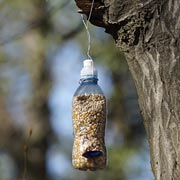
 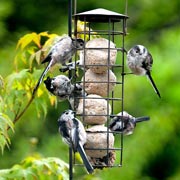 Putting out food suitable for birds is the most simple way to attract birds to a child’s garden or outdoor space. Once the birds recognise and trust it, the new food source will provide a regular stream of pretty, feathered visitors. Children will love knowing they helped to attract these wonderful creatures and have been responsible for giving them a much-needed meal. They can also use
 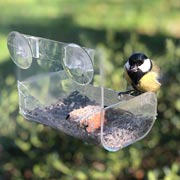 Commercially available ‘Robin peanut cakes’ and ‘sunflower hearts’ are also a big hit with many birds, and can usually be found in supermarkets or online. Whole bird-friendly peanuts are also popular with birds like bluetits and great tits, however, can be a choking hazard for baby birds during the breeding season if not crushed into tiny pieces. More information about suitable food types for birds can be found using the link in the paragraph above.
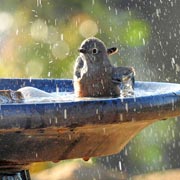 Birds need to drink and bathe themselves, so putting out water in shallow vessels like flowerpot saucers will be welcomed by them. These are best located somewhere a little secluded, e.g. in amongst flowers in a flowerbed or below overhanging shrubs or trees, rather than right out in the open. Otherwise, birds may avoid them as they’ll feel unsafe from birds of prey that sometimes view from high up in the air. If bird baths supplied are on the larger side, birds may bathe in them as well as drink from them. That’s a delight for children to see, so encourage your little one to make one or more bird baths available but also make sure of several things:
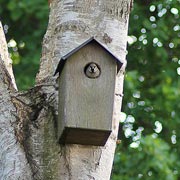 Children will also love seeing birds moving into birdhouses, which families can either make or buy, often inexpensively, and put up around gardens or properties. There are lots of different kinds, for example, blue tit boxes have a hole as an entrance whereas robins require a larger opening. Some research online may be wise and families can decide which type to go for based on what species of birds they wish to attract.
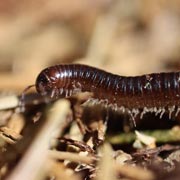 By far the best way to attract minibeasts, apart from ensuring harmful weedkillers and other nasty chemicals aren’t used around the garden, is to give them a compost heap to live in. Such places will attract minibeasts like centipedes, woodlice, millipedes, worms and many other types — perhaps even slow worms. Building a compost heap is a wonderfully worthwhile, fun, and educational activity for children to take part in and our
 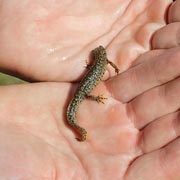 Aside from that, minibeasts and many other types of garden visitors love a wild area of the garden or outdoor space to live in, ideally with ramshackle things like flower pots, rocks, piles of rotting leaves, and rotting logs/branches for bugs, slow worms and other minibeasts to live under. Lizards, frogs, and toads may also be attracted to such areas, particularly if the area is kept damp.
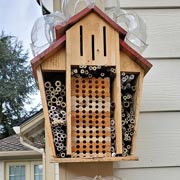 Make or buy a ‘bug hotel’ and place this in the wilderness area too, as it’ll provide a home for all sorts of bugs and insects, including some pollinators like solitary bees, bumblebees, and other minibeasts like ladybirds, woodlice, snails, spiders — even some types of butterfly potentially. Indeed, bug hotels are excellent in autumn as they will provide somewhere safe for the creatures to over-winter and hibernate. The RSPB has
 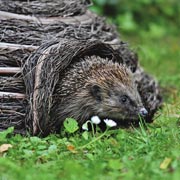 With the right preparation and if children are really lucky, they may even find that adorable little hedgehogs pay a visit. Better still, they may even move in under and raise families of adorable baby hedgehogs if the circumstances are right. Piles of leaves in wild areas, compost heaps in garden corners, unlit bonfire wood stacks, beneath sheds and where there are leaves collecting under undergrowth are all great areas for hedgehogs to stay, particularly if they’re secluded and peaceful areas away from noise, activity, and garden pets like dogs and cats. Ensuring there is a suitable gap under garden fences will also allow hedgehogs to come and go as they please, to forage for food. Ensure they’re not too big, though, if you have a pet.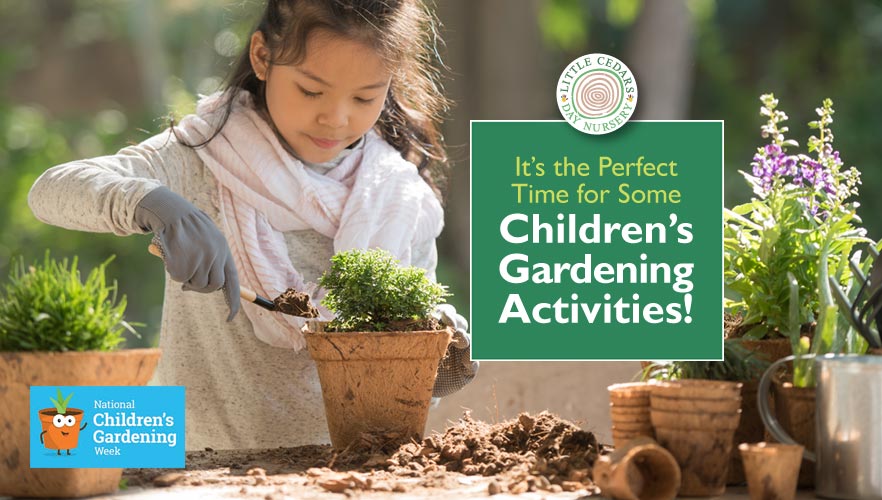
 National Children’s Gardening Week takes place each year in the UK during what’s known as the ‘warm week’ beginning right at the end of May. This year (2024) it spans from 25 May to 2 June. However, children can get involved in gardening well outside of those dates*, of course.
 This year (2024), National Children’s Gardening Week has teamed up with The World of Peter Rabbit and is encouraging children and their families to Grow With Peter Rabbit!
 Did you know, there are some incredibly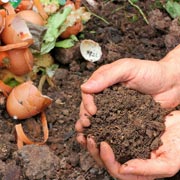
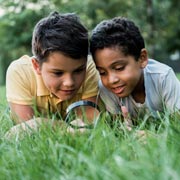 Compost heaps are also wonderful homes for minibeasts, which are also fun and educational for children to spot. Use our previously published
 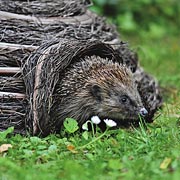 So, making a wildlife-friendly garden or area is a very worthwhile activity for children to take part in — and is educational on so many levels. See
 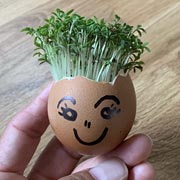 Children can do ‘gardening’ activities indoors too! Get them to
 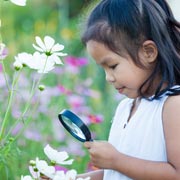 The benefits of gardening for children are many and varied and that’s why it’s such a wonderful activity to get them involved in. It will teach children many new skills and new knowledge. It’ll teach them about the circle of life, how to care and be responsible for other living things, and about the importance of looking after the planet. It will also give them an insight into where some food types come from. It is also great fun, will give children a huge sense of achievement, and may even open their eyes to the possibility of careers in horticulture, land management, food production, farming, and the like. And, of course, gardening makes the world a better place in so many ways. Let’s also not forget that