
With a new baby on the horizon, pregnancy is often a time of excitement and anticipation. However, it is often also a time for heightened awareness around health and safety matters — and rightly so. Indeed it’s instinctive to want to protect both the expectant mother and the unborn child. While many expectant parents are familiar with common pregnancy risks, one lesser-known yet serious threat is congenital toxoplasmosis. This parasitic infection can have devastating consequences for unborn babies. In today’s post, we’ll explore what congenital toxoplasmosis is, the risks it poses, and practical steps pregnant women and families with young children can take to minimise exposure.
What is Congenital Toxoplasmosis?
Toxoplasmosis is an infection that’s caused by the parasite Toxoplasma gondii. While the infection is often harmless and asymptomatic for healthy adults, it becomes particularly concerning when a pregnant woman contracts it, as the parasite can cross the placenta and infect the developing baby. This is known as congenital toxoplasmosis.
How Common is Congenital Toxoplasmosis?
According to the pregnancy and baby charity Tommy’s, approximately 350 people are infected by toxoplasmosis each year in England and Wales. So, the chances of infection during pregnancy are small. However, this article is inspired by a real-life case where such an infection occurred during pregnancy. Sadly, the adverse effects for the child were severe and permanent.
What are the Risks to Unborn Babies & Young Children?
The timing of any exposure to the Toxoplasmosis gondii parasite during pregnancy affects both the risk of transmission and the potential severity of the effects on the foetus/child. While the transmission risk is lower during early pregnancy, the possible adverse effects for the developing foetus are much more severe. Conversely, the risk of transmission to the child is higher in late pregnancy but the potential effects may be milder or appear later in their lives. Depending on the timing, therefore, the risks to the child could be anything from mild effects that appear later in life to something as severe as brain abnormalities, eye damage, or even stillbirth. Other potential effects include seizures and neurological issues, miscarriages, hearing problems, learning disabilities and more. It is therefore incredibly important for expectant families to understand how to avoid toxoplasmosis infection.
“If you get toxoplasmosis while you’re pregnant it can cause miscarriage. If it spreads to your baby it can cause serious complications.” — NHS
How Pregnant Women Can Reduce The Risk
Preventing toxoplasmosis during pregnancy is crucial. Here are key measures expectant mothers should take:
Food Safety
- Avoid touching and/or eating raw or undercooked meat, especially lamb, pork and venison.
- Avoid touching and/or eating cured/dried/smoked meats like salami, Parma ham etc.
- Avoid handling and/or eating raw or undercooked oysters, clams and mussels.
- Ensure that fruit and vegetables are thoroughly washed.
- Avoid unpasteurised dairy products that may carry the parasite, especially those containing unpasteurised goat’s milk.
- Wash hands, kitchen surfaces, and utensils, especially after handling uncooked meat or indeed any of the above.
Pets & Animals
- If you are pregnant and own a cat, avoid changing the litter box yourself. If that’s not possible, ensure that you wear protective gloves while doing so and thoroughly wash your hands once you’ve finished.
- Consider keeping pet cats indoors during pregnancy to prevent them from hunting infected rodents or birds.
- Don’t give pet cats uncooked or undercooked meat.
- Avoid contact with sheep, especially pregnant sheep and lambs.
Hygiene and Environmental Care
- Always wash your hands after gardening or handling soil.
- Wear gloves while gardening or handling sandboxes (sandpits may be contaminated with cat faeces).
- Ensure meat is cooked to safe and sufficiently high temperatures.
Protecting Young Children from Infection
For families with toddlers and young children, it’s important to maintain hygiene practices to reduce exposure:
- Teach children to wash hands after playing outdoors, handling pets, and before eating.
- Cover outdoor sandpits to prevent contamination by neighbourhood cats.
- Ensure family meals follow proper food safety guidelines.
The Cat Myth
Many who have heard of toxoplasmosis believe its cause is linked primarily to cats. While cats are a host for Toxoplasma gondii and it can be contracted through contact with their faeces, they are not the most common way people get infected. Most often, contaminated food (such as undercooked meat, unwashed vegetables, or contaminated water) is the primary source of infection. Pregnant women should therefore be cautious about handling soil, raw meat, and unpasteurised dairy — not just cats. The NHS itself says:
“You cannot catch toxoplasmosis from stroking a cat, having a cat as a pet or from coming into contact with someone who’s got it.”
Stay Vigilant
Congenital toxoplasmosis is a serious but preventable condition. If they take the proper precautions, expectant mothers and families with young children can significantly reduce their risk of infection. Awareness and education are crucial, so feel free to bookmark and share this information with loved ones to help protect future generations. Learn more about toxoplasmosis and its symptoms here.
Little Cedars Nursery, Streatham, London SW16
A high-quality childcare service for your child at Little Cedars Nursery in Streatham


Little Cedars Nursery is a first-class nursery and preschool in Streatham in London’s SW16 postcode. The childcare setting offers high-quality weekday childcare for babies, toddlers, and children under five and opens virtually all year round. All major childcare funding options are supported and the nursery has ‘Good Provider’ status from Ofsted.
Find out more about Little Cedars Nursery in Streatham by choosing a button below. We’re here to show you around, answer questions, and welcome your child to this wonderful Streatham nursery.
Important Notice
These are introductory guidelines only — parents/guardians will need to do their own comprehensive research to learn more. They may also wish to consult our related tips on food safety and hygiene around children.
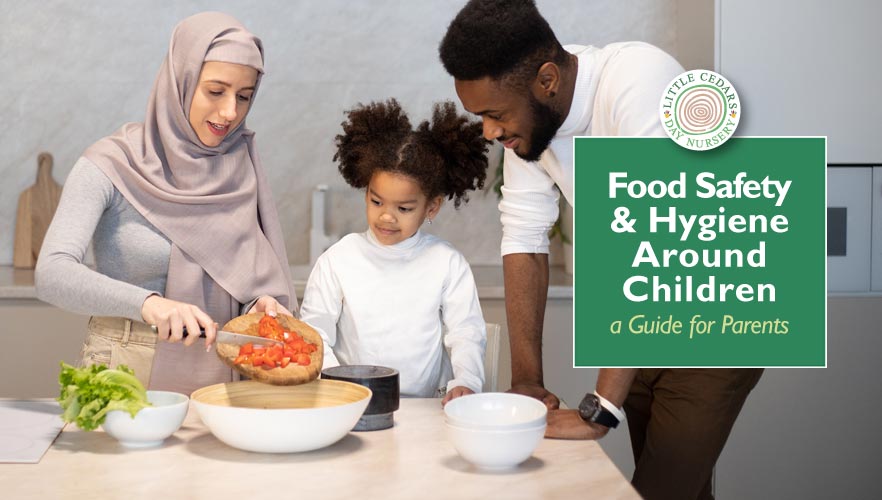
 With all the food and feasting associated with Christmas, it got us thinking about food hygiene and safety for children. Aside from keeping alert to possible allergens, parents need to be careful to ensure families remain safe from illnesses caused by food hygiene mishaps. After all, such illnesses can be particularly dangerous to little ones, who are fragile, but can be largely avoidable when good hygiene measures are taken. With that in mind, today’s post outlines various ways in which parents can stay on top of hygiene around the preparation of food for their children. And, of course, such measures will keep adults safer too.
 Ensuring the food preparation environment is clean and hygienic will reduce the chance of microbes, including germs and viruses, contaminating food. Wiping down with warm, soapy, water on clean dish cloths is ideal for many such tasks. Anti-bacterial sprays are useful but should not be allowed to contaminate food, plates and cutlery etc. directly or indirectly.
 Only feed children, especially babies and under-fives, age-appropriate food/meals. This is very important because many foods contain too much salt, sugar and saturated fats for young children. Some other foods can contain dangerous levels of toxins or even heavy metals.
  Always thoroughly wash vegetables, fruit and salads and, when appropriate, peel vegetables before use.
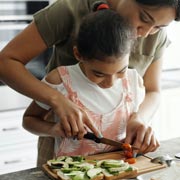 It’s hugely beneficial if children learn about food safety and proper hygiene associated with its preparation. Such things are useful life lessons and will help to keep them more safe and free of illnesses and nasty bugs. Teach them by example whenever possible. A great start is to encourage them to thoroughly wash their hands and fingers with warm, soapy water before preparing or eating food. They should also be encouraged to sit down at the table and be in a calm state before eating. This will help to better ensure food does not become contaminated or knocked onto a dirty floor. It will also reduce the chance of the child choking on food.
 As parents and caregivers, we understand
  Boundaries create a sense of security. Ensure boundaries are understood and that play areas have clear markers. Guide children to understand and respect these boundaries to reduce the risk of children wandering away — and potentially becoming lost.
 Children are naturally drawn to water, but it can pose significant risks. Ensure that play areas are far from water bodies, and when near any water source, always provide direct and continuous supervision. Even shallow water can be dangerous for little ones.
 Although they’re young, children want to explore and will naturally want to climb as they get older. It’s therefore important to teach children a safe approach to climbing. This should include emphasising the importance of staying within safe heights to prevent falls, assisting with climbing technique and, of course, risk-assessing what they should and shouldn’t attempt to climb in the first place.
 While exploring nature is exciting, it’s essential to be aware of potential dangers. Educate your child about the dangers of poisonous plants and fungi or insects that could harm them. Encourage them not to touch or eat anything unfamiliar.
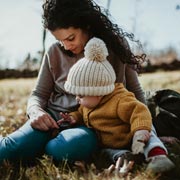 Outdoor exploration sometimes involves contact with dirt and mud. Promote hygiene by ensuring handwashing facilities are readily available and teaching children the importance of cleanliness after outdoor play.
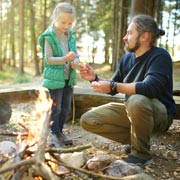 Campfire stories can be delightful and intriguing for children, but we must always prioritise fire safety. If you decide to expose them to it, children must be educated about the potential dangers of fire and always supervised during any fire-related activities. Fostering a responsible understanding around fire safety is paramount.
 June 2022 has seen the release of a new set of recommendations that outline ways to reduce the likelihood of sleep-related deaths amongst babies and infants up to the age of 1. This includes, but is not limited to, deaths related to Sudden Infant Death Syndrome (SIDS). Sadly, SIDS and other sleep-related issues are responsible for nearly 200 infant deaths in the UK each year and up to a staggering 3,500 every year in the United States. Perhaps even more surprisingly, that last number has not reduced at all in the last 30 or so years. This new set of recommendations from experts in the U.S. aims to change that and is something that all parents need to take a look at if they have a baby or infant. Let’s take a look at the new guidance …
 PLEASE NOTE: we have summarised key points from the new guidance in good faith but advise parents/carers of babies and infants to do their own research.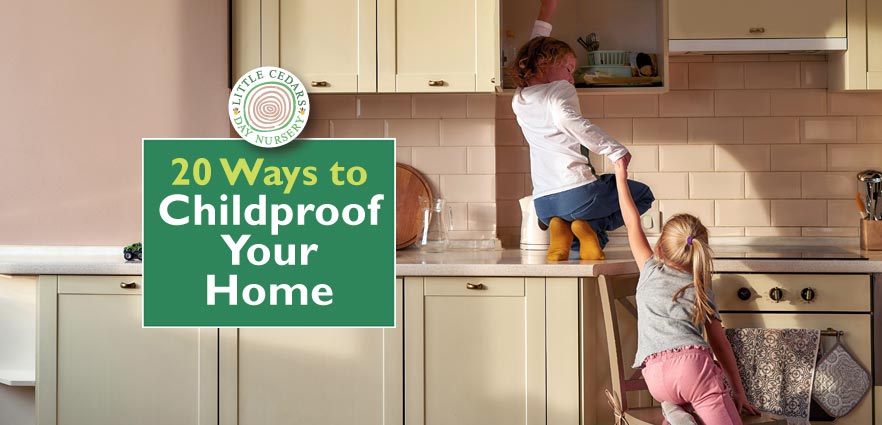
 Once babies can crawl, they’re well on their way to becoming toddlers. Then, in no time at all, they can suddenly become fully mobile, able to climb and even be out of your sight in just seconds. With this new mobility comes exploration, the potential for danger and even possible injury. With that in mind, we bring you 20 ways to begin childproofing your home to keep little ones safer and further from harm’s way.
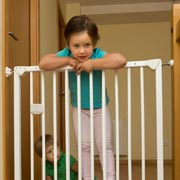 Safety gates, strategically placed around the home, are a great way to keep your little one confined to a safer, controlled area. There are lots of different types available, whether new or second-hand, but make sure they’re made to UK safety standards. Some are suitable for doorways and others for stairs. Using safety gates to keep young children away from stairs, kitchens and other hazardous places really is a no-brainer and a great place to start with your childproofing exercise.
 Clear floor-to-ceiling glass is also a hazard once children are mobile. Therefore such glass, whether part of a window, patio door, glass partition or conservatory should ideally not be clear all the way down. Otherwise, an unsuspecting child — or even adult — could find themselves running straight through what they thought was an opening. An easy way to ensure glass can be seen as a barrier is to use strategically placed stickers dotted around on the glass. These could be fun and attractive, for example little flower or butterfly stickers. Alternatively, you can even buy modern-looking ‘frosting’ strips that, when applied in one or more horizontal stripes or shapes at an appropriate height, will make clear glass more visible to you and your child. Guards are, of course, another possible temporary option.
 Whether they’re in the kitchen, on the landing, under the stairs or elsewhere, cupboards can represent a number of possible hazards to children. Fingers can be hurt if shut in the doors or near the hinges and the cupboards themselves can contain any number of dangerous things. Therefore, it’s wise to obtain some childproof locks, latches or catches for cupboard doors that you don’t want your child to be able to open. These are often simple, easy to affix (and remove when children are older) and can be inexpensive if you shop around.
 Similarly, ensure that entrance/exit doors throughout your home are secure where they need to be. Front doors, doors to gardens, balconies and patios all need to be particularly well secured from access by young children, whether through locks, latches or specialist childproofing mechanisms (there are lots available on the market). Similarly, windows need to be secure and that’s never more true than when there’s a nasty drop the other side.
 Everything with a motor or moving parts is a potential hazard to small children. The obvious items to keep well beyond their reach are tools like drills and saws along with household appliances like vacuums, food mixers and coffee-makers. However, larger things like washing machines, tumble driers, dishwashers and any appliance with a door that they could climb into are also potentially very dangerous for little ones. It may even take a combination of precautions to keep children safe from such hazards.
 Another reason to keep little ones out of cupboards and certain areas of the home is to keep them safe from hazardous products. Some things will be poisonous and others may be corrosive. Dishwasher and laundry pods need to be stored well out of children’s reach as do medicines, cleaning products and DIY items like paint, solvents and glues. Any of these could prove fatal if they get into little hands. Remember, too, that children learn to climb, so even cupboards high up need to be secured.
 Smoke alarms suitably located around the home are one of the most basic precautions any parent or carer can make. Countless lives are saved each year due to smoke alarms. Sadly, though, many are also lost due to them not being present or due to batteries having expired. So, ensure that smoke alarms are ideally in every room as well as being in hallways, stairwells and so on. Also test them regularly to ensure batteries are in good, working order.
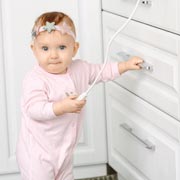 For similar reasons, it’s also wise to keep electrical wire cords tidy and out of reach of little ones. If they were to pull a kettle lead or trip over an electric iron lead, for example, the potential outcomes do not bear thinking about. Cords on telephones and electrical appliances are also choking hazards, of course. So, keep them out of harm’s way i.e. well out of grabbing and tripping distance.
 Dangling pull-cords on window blinds have, regrettably, been the cause of several deaths around the world. If they’re dangling down, small children could get these wrapped around their necks and potentially strangle themselves. Any toggle on the end of the cords can also be a choking hazard. So, if you have any of these in your home, ensure they are tied safely out of reach, ideally using the safety fitments that often come with new blinds, or are available inexpensively. The same kind of approach may also be needed in rooms where the electrical light, shower or extractor switch comes in a pull-cord form.
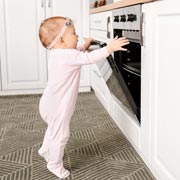
 Heat sources are a terrible hazard for children and adults alike. However, little ones will seldom realise the hazards, so parents and guardians need to ensure that all heat sources are kept well out of children’s reach. Examples include hair straighteners, irons, kettles, sandwich makers, pots and pans that have been on the cooker, and so on. With regard to cookers, hobs, grills, and ovens, it’s the children that need to be kept away from them, of course. Even a switched-off oven can still have a door that’s retained enough heat to burn little hands. A combination of several of the precautions outlined in this page may therefore help to make complete safety feasible in the kitchen and anywhere there are appliances that heat up.
 Radiators, heaters and, of course, fires, stoves and any other heat source in fireplaces are terribly dangerous things for children. Therefore radiator covers, fire guards, permanent vigilance and a good dose of common sense should enable parents and carers to keep children well away from such heat sources.
 Scissors, knives, razors, needles, hand tools like saws and screwdrivers must be locked well away and never left lying around. Even pens and pencils are sharp and dangerous around eyes, when you think about it. So, it’s imperative that parents/guardians are vigilant and supervise at all times when it comes to anything sharp or pointed.
 Vigilance will still be needed, however, as bumpers can only go so far.
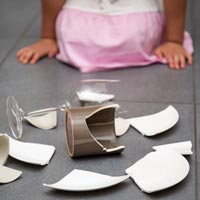 Table cloths and table runners may look attractive but are another hazard around children, albeit a less obvious one. They look innocuous enough, but should a child grab one end and walk or fall way, they could end up with all sorts of things crashing upon them. When you think about what goes on tables (e.g. glassware, candles, china etc.), this could potentially be disastrous. So, the best advice is to completely avoid their use around young children and certainly never to allow any edges to hang down at ‘grabbing’ height.
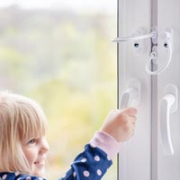 Supervised access to the garden or other outdoor space or environment is good for even the youngest of children. However, they must never be allowed to just wander into the garden or street unaccompanied (of course). There are countless dangers outside, including poisonous plants, stranger danger, cars and many other hazards. Even in your own garden there are usually hazards, from steps, inclines and level drops to dangerous garden tools plus another type of hazard we’ll see in our last tip below. Therefore exit points in the property need to be secure (see tip #4 above) and supervised at all times around the very young.
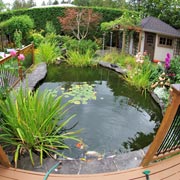 Gardens often have ponds or, if you’re lucky enough, hot tubs and even swimming pools. These are all hazards to young children. Even a puddle is a potential drowning hazard to the very young. It’s the same indoors, with baths and even basins of water being potential drowning hazards. So, once again, parents and any supervising adults need to be doing just that, i.e. supervising anywhere there is water. For different reasons, that’s even more the case around hot water, of course, and anywhere a child could potentially splash or pour water near electrics.
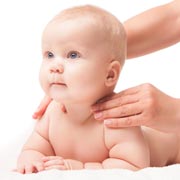 Welcome to our quick guide to Tummy Time. One of the most important things for babies during their earliest development is to build strength, muscles, motor skills and coordination. In particular, learning to lift and safely move their heads is one of the most crucial skills at this young age. Strength and muscle coordination in their neck is therefore very important. That’s not easy when they’re newborns in their first few weeks because their head is comparatively large and heavy compared with their little bodies at that age. Building upper body strength in arms, shoulders, core and back will also greatly help them in their physical development and mobility, essentially helping them to perform and survive safely as humans. Tummy Time is a key tool in learning to accomplish all of these goals — and many more.
 What is Tummy Time?
 It helps to stop the development of deformations in the skull. ‘Positional plagiocephaly’ (or ‘Flat Head Syndrome’) might otherwise occur if the baby is only positioned in a limited number of positions, i.e. mostly on its back. Bear in mind, of course, that at this young age the baby’s skull bones are far more flexible than those of an adult, so such deformations are more likely if the baby’s head is always lying in the same position.
 Making sense of sensory stimuli is also aided by the positive results of Tummy Time, as babies can better explore and gain improved sensory perception of everything in their immediate vicinity.
 Try putting the baby in a prone position (i.e. on their tummy) on, say, a clean blanket or rug. Lie down on your tummy too and face them, encouraging them to stay on their tummies by use of a game like peek-a-boo. If you can, try to get them to raise themselves onto their arms or, eventually, hands. Move yourself around a little, so they move too and strengthen their muscles. If they’re finding it too difficult initially, a rolled-up blanket underneath their chest may help to start them off. Don’t worry if at first they can only push themselves up on their arms or hands only for fleeting moments; they will gradually improve as they try more and more.
 After 6 months, they should start to be able to support their weight on their arms in a raised, kind of ‘press-up’ position. This can be encouraged with some support (and play) from you and they’ll get the hang of it with practise. Soon enough, they’ll also be able to roll sideways in either direction and get themselves back into the prone position when they want to. They’ll soon master the art of passing a toy from one hand to another at around this time. They’ll also be able to get themselves into a sitting position before they’re 9 months old, or thereabouts.

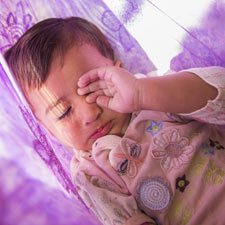 These are significant benefits, so high quality sleep — and the right amount — is incredibly important.
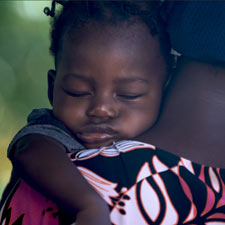 ‘Sleep Hygiene‘ is a term that refers to the whole routine around bedtime and sleeping, including important preparation measures during the run-up to bedtime A good sleep hygiene regime will help children get to sleep and to sleep soundly.
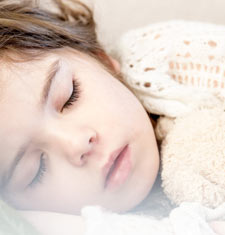 The biggest message is that setting up — and sticking to — a set bedtime routine will greatly help with the quality of your child’s sleep. It sets a pattern that their minds and bodies will become used to naturally. A regime of this nature can include winding-down activities like a warm bath or shower, a peaceful book-reading session, dimmed lights and so on in the approach to bedtime. The routine will prepare them automatically for sleep even during the run-up to actually sleeping.
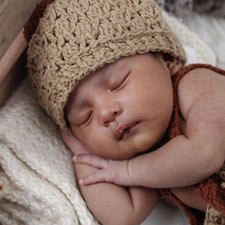 At Little Cedars Day Nursery in Streatham, we understand the importance of sleep, particularly for babies and the youngest of the children. For that reason, we ensure that children have the opportunity of a nap both in the morning and in the afternoon. For example, babies sleep for about half an hour to an hour around 9.30am and then again after lunch, for 1 to 2 hours between about 1pm and 3pm. Preschoolers don’t have to sleep if they don’t want to, but are given the opportunity to do so — every child is different. We also take a lead from parents who may prefer their child to keep to a particular sleep pattern. If you would like more information about this topic, and how we approach it at the nursery, please do get in touch.