When preparing articles for this website, we often spot interesting baby facts that may surprise people. So, today, we thought we’d share 20 or so of our most surprising discoveries with you. Many are a reminder of just how amazing babies really are!
1. 266 Babies Born Every Minute
Did you know, one baby is born every 0.225 seconds. That’s 266 every minute, almost 16,000 every hour and nearly 384,000 every single day.
2. Rapidly Expanding Brains
A baby’s brain will more than double in size in their first year. By the time they’re five, it will have tripled in size compared to its size at birth. The brain will not finish fully developing, however, until the individual reaches their twenties. The brain of newborn boys may also grow faster in the first 3 months than that of newborn girls. It’s something that’s keenly debated amongst experts, though.
 3. Almost 50% More Bones Than Adults
Babies are born with more bones than adults. In time, some will harden and fuse together into just a single bone. Babies’ heads have soft spots when newly born, but which don’t last. That’s because various, separate, bones form their skull at birth. Initially these are connected by something called ‘noggin’, but later the separate skull bones fuse together. Babies are born with around 300 bones. By the time they’re adult’s they will have just 206.
4. But No Kneecaps
Babies do not have kneecaps when they’re born! Had you ever noticed? These finish appearing only once the baby reaches at least 6 months of age.
5. Amazing Taste
Babies have about 30,000 taste buds when they’re born. This is three times as many as adults. This is accounted for by the baby having taste buds not only on their tongue, but also on the sides and roof of their mouths as well as on the tonsils and back of the throat. Despite this, they apparently can’t taste salt until they’re about 4 months old.
6. Not So Hot on Eye Sight
Newborn babies are short sighted, only being able to properly focus on an area 8 to 14 inches in front of them — that’s perfect for seeing mum when being breastfed when you think about it. This area of focus will increase with time, of course, and babies also use their peripheral vision to make up for the lack of deeper focus.
7. Fur, Gills & a Tail — Yes, Really!
According to the experts, foetuses have gills, fur and even a tail during development. All three end up disappearing either before birth or, often in the case of fur, within the first few weeks after being born. The tail will have become the coccyx and the ‘gills’, which are temporary slits (pharyngeal arches) in the neck, will have developed into jaw and ear bones by the time the babies have been born.
8. No Tears for Weeks
Babies don’t cry tears until they’re about a month old. Until then, it’s rather like ‘dry’ crying.
9. Natural Born Swimmers (… Kind of)
Newborns hold their breath underwater automatically and even adapt their heart rate and peripheral blood vessels when doing so. We strongly advise against you testing this, of course, but apparently it’s true. This natural ability does not last past the age of six months, however.
10. Baby Time in the Womb
Some interesting statistics suggest that, on average, female babies remain in the womb a day longer than males, white babies remain there 5 days longer than black babies and Indian babies remain there 6 days longer than white babies. If true and not simply a momentary glitch, the reasons for this are a bit of a mystery.
11. No Memory Before Three
People’s long-term memories go back no earlier, in general, than the age of three. This is believed to be because either memory function hasn’t developed sufficiently until then or because memory may be tied to the ability to understand language.
12. Recognising Day & Night
It can take up to 12 weeks before a baby will recognise the difference between day and night. Hence, the irregular sleep pattern that can last until they’re 5 or so months of age.
13. Eyes to the Right
85% of newborn babies prefer to face to the right when lying on their back. The preference only lasts a few months, but may also be an indicator of whether they’ll turn out to be right-handed or left-handed.
14. Is Breast Really is Best?
As well as protecting against diseases, breastfeeding babies for at least 2 months halves the risk of Sudden Infant Death Syndrome (SIDS) — that’s incredible when you think about it. It also gives greater protection from SIDS the longer you continue.
15. And Breast Milk Adapts Like Magic
Expressed breast milk for a baby should never exceed 4oz per bottle no matter what age they are. While formula-fed infants have bigger bottles as they grow older, babies fed via bottles containing expressed breast milk should stick to 4oz (1 to 1½oz per hour) maximum. That’s because the breast milk adapts itself to their precise needs as they grow; it constantly changes its composition as the child gets older and that includes calorie content contained per ounce. That’s clever!
16. The Only Smiling Primate
Human babies are the only primate babies that smile at their mother or father. That’s quite remarkable, although we wonder whether other primates have a different way of smiling that we don’t recognise or understand.
17. Special Birth Months
According to statistics, the most common date of birth is the 9th of September. This is closely followed by the 19th, 12th and 17th of September, in that order. Interestingly, babies born around this time stand the best chance of being the smartest in the class and going on to have the greatest success in life. We considered whether this could be linked to school starting in September, making these children the oldest, most mature pupils in the class at a time when learning and development is so crucial.
Meanwhile, people born in October seem to live the longest, living on average 160 more days than those born in the Spring.
Scientific evidence also points to the month of birth affecting personality. For example, those born in the summer months having the most optimistic outlooks.
18. And the Not So Special
Meanwhile, December, January and February are the least common months for births, with December 25th and 26th seeing the fewest during the entire year.
19. Outcomes of Being First Born
Children who are first-born are 1.7 times more likely than their younger siblings to live to the age of one hundred. Those with young mothers at birth stand the greatest chance of doing so. The first born is statistically more likely to have better mental health but have a slightly higher propensity to be overweight or have high blood pressure. Firstborns are often natural leaders but younger siblings may experience that simply as bossiness when growing up!
20. The Origins of ‘Infant’
The term ‘infant’ comes from the Latin ‘infans’, which means ‘unable to speak‘ … which makes sense, when you think about it.
We hope that you have found these surprising facts of interest and have perhaps learned something you didn’t know before — we certainly enjoyed putting them together for you.
High Quality Childcare in Streatham
 We are Little Cedars, a pre-school and childcare nursery in Streatham. As well as being one of the best nurseries in the London SW16 area, we would also make a convenient choice for anyone requiring childcare nurseries, pre-schools or playgroups in/around Balham, Tooting, Norbury, Colliers Wood, Furzedown, Streatham Common, Streatham Hill and Streatham Park. Why not book a visit, register for a nursery place, or ask any questions — our childcare professionals are here to help:

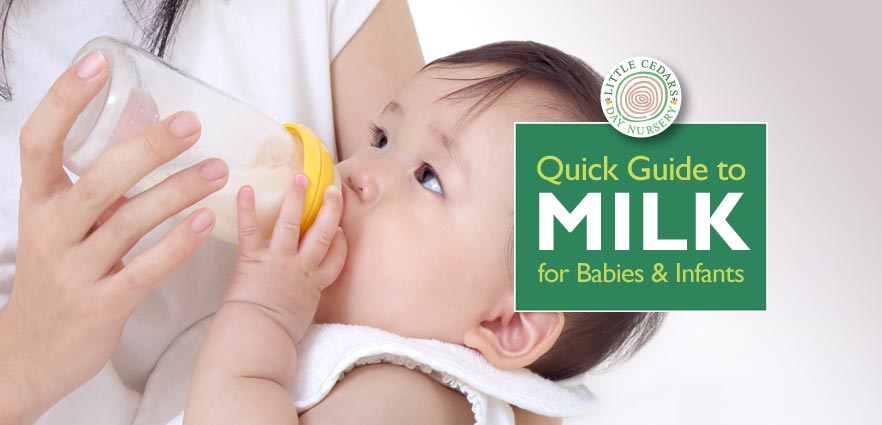
 Our “Benefits of Breastfeeding” post described in great detail how breast milk really is nature’s perfect food for babies. It’s tailored to the needs of the baby and even adapts as the baby grows. As well as essential vitamins, minerals, fats and proteins, it also passes antibodies, hormones and polyunsaturated fatty acids to the baby. All these things are incredibly important to the growing infant and many are simply not possible with formula milk and alternatives to breast milk. That said, there are many reasons why parents may switch to other alternatives and that’s where today’s guide should prove most useful.
 The variety of formula milks is surprisingly large, not helped by the fact that different brands call some of them by different names. Some products and names also seem to have been developed in order to cover small niches, many of which are actually already adequately covered by larger, existing product lines (‘Toddler Milk’ and ‘Growing-Up Milk’ are two examples cited by the NHS). Then add in the fact that many are sold as liquid and also as powder that needs to be made up. The choice can be overwhelming, which is where the following guide can help …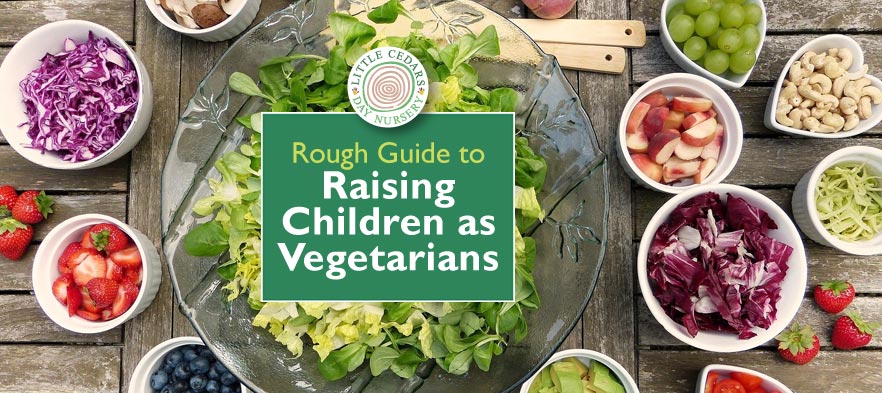
 In our last post, we asked
  For those on dairy-based formula milk, it’s pretty much plain sailing too. Because vegetarians — as opposed to vegans — are OK eating dairy-based food, formula milk is generally fine for them. The most popular types are based on cows’ milk, although several other animal milks are also available. So long as dairy-based formula milk is high quality, given in the right quantities, consumed at the right intervals and is age appropriate for the child, it contains all the nutrients and vitamins needed. That’s without the need to give additional supplements too.
 Fruit and vegetables are really a given because they pack so much goodness, including many vitamins, minerals like potassium and also fibre. Fresh vegetables and fruit are ideal but, failing that, frozen, tinned and even dried varieties are also OK.
 Tofu, also known as bean curd, which is made from soy.
 any pulses, seeds or grains should be sprouted, cooked or soaked before consumption (as appropriate);
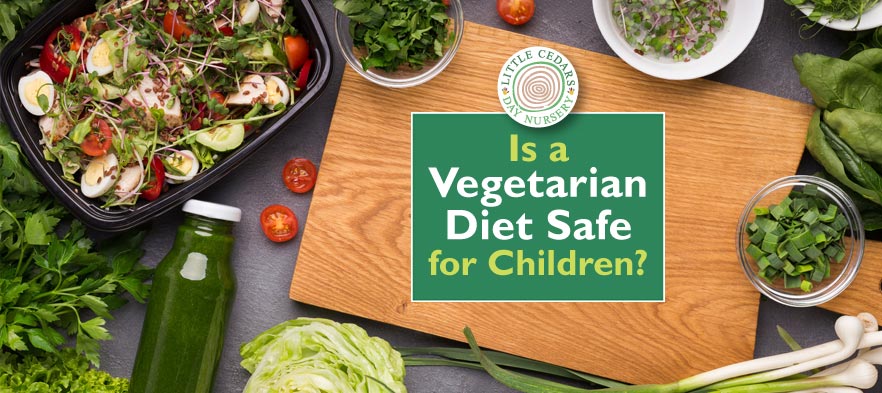
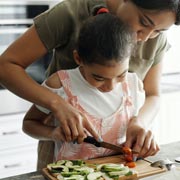 Let’s first take a look at the benefits of vegetarianism …
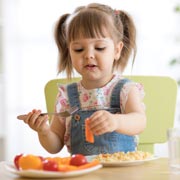 is linked to a reduction in symptoms for those with asthma;
 Scientific studies conclude that switching to a vegetarian diet will help the planet enormously. That’s because significantly less greenhouse gas is produced in growing crops compared to raising livestock. What’s more, scientists believe that the necessary reduction in green house gas emissions will be achieved far more swiftly through a widespread switch to vegetarianism than through what’s currently just a gradual shift away from the burning of fossil fuels. Growing crops rather than animals also causes far less pollution in waterways and oceans and also uses significantly less water. The benefits of vegetarianism to the planet are simply enormous.
 Is a Vegetarian or Vegan Diet Safe for Children?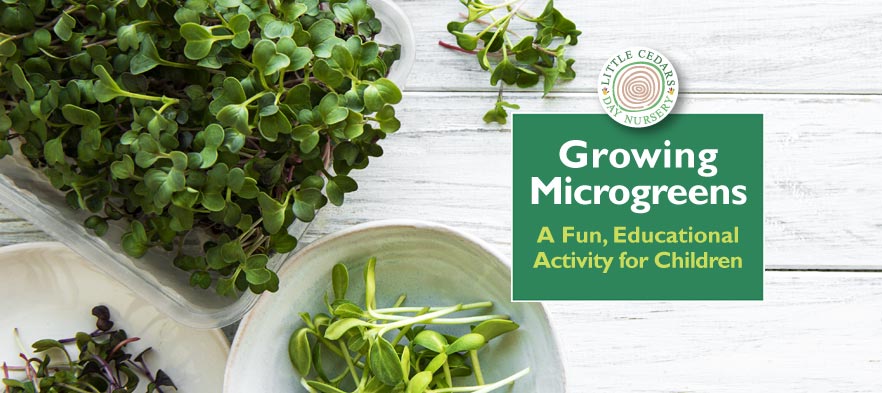
 Back in April last year, we wrote an article about
  Microgreens are great fun and extremely easy for children to grow. Once ready, they can be used rather like salads and garnishes. They are very tasty and are extremely nutritious.
 Microgreens are traditionally grown in shallow seed trays, which are inexpensive to buy. However, at home, they can just as easily be grown in flower pots, used yoghurt pots, empty egg cartons, the trays from ready-meals or even cut-down cardboard cores from kitchen rolls. So long as water is allowed to drain from them and they can support at least a shallow depth of compost, these can all be suitable. Plastic cartons will need a few holes punched in the bottom to allow for drainage, so parents might need to organise that in order to avoid their children hurting themselves. Other than that, it’s plain sailing for supervised children to do themselves.
 Suitable seeds include: rocket, a type of strongly-flavoured lettuce; beetroot, with their lovely red stems and mild, earthy taste; spinach, which also has a mild flavour and is full of goodness; red cabbage, which is also rich in a variety of vitamins and minerals; fennel, which will have a distinctive aniseed flavour; broccoli, which will grow into sprouts that have a slightly spicy taste; radish seeds, which also grow into leaves that taste a little fiery; and also mustard seeds (for children who are OK with even more hot, spicy flavours).
 First, your child should fill the seed trays, flower pots or equivalent, almost to the top, with some compost.
 As as shoots begin to appear (usually after just a few days), remove any covering if used and continue to ensure that the compost is always kept moist, but not over-watered.
 Once harvested, they should be rinsed to get rid of any stray compost. They are delicious to eat and, depending on the seeds grown, have a huge variety of tastes and colours. Children and parents alike can benefit from the nutritious and tasty shoots as part of a variety of meal types. Full of vitamins and minerals, they can be used in salads, as pizza toppings, garnishes, toppings for risottos, soups and pastas, as fillings in sandwiches, sprinkled on top of baked potatoes or into burgers and much more. They’re very adaptable and, with their distinctive tastes and textures, will make any meal really special.
 We previously covered
  Motor dysgraphia is primarily the result of poor fine motor skills and poor dexterity, making the control needed for legible writing or drawings difficult. It may also be the result of poor muscle tone. In contrast to dyslexic dysgraphia, motor dysgraphia may result in poor writing legibility even when the words are copied. Spelling, however, is not adversely affected. Short bursts with unusually high concentration levels may result in better letter and word formation, but the level of concentration needed to achieve this is unsustainable over a longer period.
 sgraphic children may also hold their writing instruments in an unusual way or have strange posture when writing;
 Diagnosing Dysgraphia
 At education settings, additional bespoke learning strategies and interventions, that all teaching professionals can employ, may include:
 Childcare/teaching professionals and parents/guardians should always work together and compare notes, so that all parties are fully informed about any challenges the child may have. By doing so, they can share strategies and each work with the child towards the same goals. It’s important to begin such work as early as possible, so that the impact of the disorder on the child’s life is minimised. Early diagnosis is therefore crucial.
 In today’s guide, we answer frequently asked questions (FAQs) about Dyscalculia, particularly in relation to children, including preschoolers. Around 5% of children of school age are thought to have dyscalculia.
 A few of the possible signs of dyscalculia include:
 They may also continue to use fingers to count long after their contemporaries have moved on to mental counting;
 Just as with dyslexia, there is no cure for dyscalculia. However, there are many ways to help children cope with its effects. It’s also worth bearing in mind that children with dyscalculia can be very gifted in other areas, for example creativity, strategic thinking, problem solving, practical abilities and often great intuition.
 They can also benefit when important words and numbers are highlighted (to draw attention to their importance);
 Your Right to Unpaid Parental Leave
 For example, there may come a time when parents need to look at nurseries, pre-schools, primary and secondary schools and, as children approach their mid teens, further education settings. Other reasons to take time off might include time for parents to visit relatives with the children, or to investigate extra-curricular activities such as sports clubs, or simply to spend quality time with their children.
 It doesn’t really matter if you change jobs. The rules around unpaid parental leave apply in relation to your child(ren); not your employer. So, if you change jobs and have already used up 9 weeks of unpaid leave for one child during your previous job, then you can still use another 9 weeks, so long as it’s taken before your child reaches the age of 18.
 To claim a period of unpaid parental leave, just 21 days (3 weeks) of notice must be given to the employer and this must state the start and finish dates. It can be confirmed verbally although employers may request the notice in writing.
 The Government’s Early Years Foundation Stage (‘EYFS’) framework prescribes how adults should approach the education and development of children under five. As such, it forms the backbone of the curriculum at childcare settings like Little Cedars Nursery in Streatham. The EYFS guidelines were expanded this year (2021) and one aspect of early childhood development discussed therein merits closer exploration: the affect of adult interaction on an infant’s brain development. Here we take a look.
 Their research suggests that constructive experiences will build on and enhance the structure of the brain, whereas “adverse experiences early in life can impair brain architecture, with negative effects lasting into adulthood.”
 The Harvard Center on the Developing Child suggests that parents1 can help babies and toddlers develop their brain architecture in the best way through regular and strategic interaction between adult and infant. They call the process ‘serve and return’. Think of it as a tennis metaphor— we’ll explain. First, the child may indicate an interest in an object or activity. That’s the serve of the tennis ball, if you like. The adult should look out for such indications of interest, recognise them as a kind of invitation from the child and then get involved with that object or activity with the child. Responding in this way is like the ‘return’ of the ball in the tennis metaphor. It’s a great approach because the child is indicating what they are interested in and therefore, when a parent responds through activity involving themselves with the source of interest, the child will naturally get more from the interaction. After all, it was they who first indicated an interest and an adult can now help them to get the most from it.
 Repetition is also important. This helps to reinforce circuits in the brain. Reminding a child several times about something will naturally help them to understand and remember the point under scrutiny.
 The research, as well as a good dose of common sense, shows the incredible importance of parents interacting well with children from the moment they are born. Their interaction and guidance will help the developing child to understand themselves, the world around them, and their place within it. Millions of brain connections are built with every interaction, building healthy foundations upon which the baby will grow into a well-rounded individual with the requisite cognitive, physical, social and emotional skills to handle life. It all comes down to love, responsive and responsible care, with parents matching the infant’s signals and needs with positive, insightful responses. The reassurance and tools such interactions give the infant will allow them to confidently, safely and comfortably explore and learn about the world and, going forwards, their place within it.
 3. Almost 50% More Bones Than Adults
 6. Not So Hot on Eye Sight
 9. Natural Born Swimmers (… Kind of)
 14. Is Breast Really is Best?
 16. The Only Smiling Primate
 19. Outcomes of Being First Born
 Following up from our
  The father, or partner of the mother, must give their employer at least 15 weeks’ advance notice that they wish to take Statutory Paternity Leave. This can be imprecise, however, given that they won’t be 100% certain which day the child(ren) will be born. If they later change the proposed date, employers must be given at least 28 days (4 weeks) notice of the change, made in writing if requested by the employer.
 the child’s father, or
 To be eligible for Statutory Paternity Pay, a person needs to:
 The payments are made through their wages by the employer after deducting any tax and National Insurance if due. (Figures correct at September 2021).