

 As parents and caregivers, we understand the incredible value of outdoor play in our children’s development. The fresh air, unstructured exploration, sensory-rich experiences, and social interactions contribute significantly to their holistic growth. However, while we encourage outdoor adventures, safety must remain our top priority. With that in mind, this article provides some essential tips and precautions that will help to safeguard children during outdoor play. The suggestions can be used as a checklist, but parents/caregivers should use it only as a starting point and do their own risk assessments.
Always Keep an Eye Out
Let’s start with the most obvious; while outdoor play is a wonderful way for children to learn and grow, constant supervision is crucial. Be sure to keep a watchful eye on your child, guiding them away from potential hazards and ensuring their safety at all times.
Set Boundaries and Rules
 Boundaries create a sense of security. Ensure boundaries are understood and that play areas have clear markers. Guide children to understand and respect these boundaries to reduce the risk of children wandering away — and potentially becoming lost.
Be Mindful of Traffic Risks
The bustling world outside may often involve traffic hazards that demand our utmost attention when children are under our care. To mitigate this risk, play areas are best located away from access to busy streets, ensuring that children are shielded from the dangers of passing vehicles. Drives where vehicles are parked are also best avoided.
Teach Stranger Safety
Outdoor play can bring encounters with unfamiliar faces. Teach your child about stranger danger and the importance of staying close only to trusted adults. Clear guidelines should be established in regard to possible interactions with strangers.
Stay Clear of Water Dangers
 Children are naturally drawn to water, but it can pose significant risks. Ensure that play areas are far from water bodies, and when near any water source, always provide direct and continuous supervision. Even shallow water can be dangerous for little ones.
Mind the Terrain
Outdoor terrain can be uneven, and young children are prone to trips and falls. Before allowing your child to play, scan the area for potential trip hazards and clear them away. Teach your child to navigate uneven ground carefully.
Climbing Structures & Fall Prevention
 Although they’re young, children want to explore and will naturally want to climb as they get older. It’s therefore important to teach children a safe approach to climbing. This should include emphasising the importance of staying within safe heights to prevent falls, assisting with climbing technique and, of course, risk-assessing what they should and shouldn’t attempt to climb in the first place.
Sharp Objects & Tools
Children are naturally drawn to exploring their surroundings, which includes investigating potentially dangerous items. Therefore thoroughly inspect new play areas to remove sharp objects, tools, or equipment that could harm curious hands.
Beware Choking Hazards
Children’s natural curiosity when exploring may often lead them to want to put objects in their mouths. This can obviously be extremely dangerous, so ensure vigilance at all times. Inspect play areas to remove small items that could pose choking hazards, ensuring a safe space for our little ones to explore.
Flora & Fauna Hazards
 While exploring nature is exciting, it’s essential to be aware of potential dangers. Educate your child about the dangers of poisonous plants and fungi or insects that could harm them. Encourage them not to touch or eat anything unfamiliar.
Animal Encounters
Nature’s wonders may include encounters with wildlife. While we might cherish these experiences, we should take precautions to ensure outdoor spaces are free from potentially harmful creatures and educate children on respectful interactions with animals.
Hygiene and Sanitation
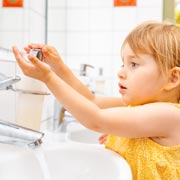
 Outdoor exploration sometimes involves contact with dirt and mud. Promote hygiene by ensuring handwashing facilities are readily available and teaching children the importance of cleanliness after outdoor play.
Weather-Appropriate Clothing
Proper attire is crucial for outdoor play. Dress your child in weather-appropriate clothing, including hats and sunscreen for sun protection. When the weather becomes colder, layering of clothing will help to keep children warm in comfort.
Be Prepared for Changing Weather
Weather can be unpredictable, so check the forecast before outdoor playtime. Be prepared with a store of sunscreen when it’s sunny and raincoats or extra layers for when it turns cold and rainy. Suspend play during lightning storms or extreme weather conditions. Be mindful of slipping hazards when it’s wet.
Hydration and Breaks
Outdoor play can be physically demanding, so be sure your child stays hydrated. Provide breaks for rest and water to prevent exhaustion.
Allergen Awareness
Some children may have allergies triggered by outdoor elements. If your child is affected, be sure to maintain an allergen-free environment by regularly cleaning and inspecting play areas and educating friends and relatives about allergy management around your child.
Fire Safety Awareness
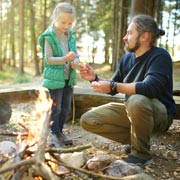 Campfire stories can be delightful and intriguing for children, but we must always prioritise fire safety. If you decide to expose them to it, children must be educated about the potential dangers of fire and always supervised during any fire-related activities. Fostering a responsible understanding around fire safety is paramount.
Foster a Love for Nature
Encourage your child to appreciate and respect nature. Teach them to observe wildlife from a safe distance and not to disturb animals or their habitats. This helps to keep children and wildlife safe.
In Summary
As parents and caregivers, our priority is the safety and well-being of our children. By using these essential starting points, you can help ensure that your child’s outdoor play is not only fun and educational but also safe and secure. At Little Cedars Nursery, Streatham, we share your commitment to providing a safe environment for outdoor exploration. Our dedicated staff, thoughtfully designed play areas, and safety-conscious practices further enhance the outdoor experiences of children under our care. Together, therefore, we can create enduring memories of outdoor adventures that are as secure as they are captivating, enriching and fun for our little ones.
Little Cedars Nursery: High-Quality Childcare in Streatham
A Childcare Nursery & Preschool in Streatham, near Furzedown, Tooting, Balham, Norbury & Colliers Wood

 If you are looking for the best nurseries or preschools in the Streatham area, do consider Little Cedars. We offer an outstanding weekday childcare service for babies, toddlers, and preschoolers under five. We’re also conveniently close to those living or working in Streatham Hill, Streatham Park, Streatham Common, Furzedown, Tooting, Tooting Bec, Tooting Broadway, Tooting Common, Balham, Norbury and Colliers Wood.
To apply for a childcare place, arrange a guided tour of the setting, or ask us any questions, please simply choose an option to contact us below:
Also: See Our Indoor Safety Guide
The above is a useful companion article to our earlier guide, 20 Ways to Childproof Your Home, which concentrates mostly on indoor safety. Click the bold blue link for more information.
 Identification of a special educational need or disability is, of course, the first step in being able to properly support a child with SEND. For this reason, good early years providers like Little Cedars Nursery will, as a matter of course, watch out for signs of things that might be challenging for children. As prescribed by
  Support plans for suspected or confirmed special needs or disabilities are then discussed and custom-designed for the child. Such plans will be agreed between the child’s parents/caregivers, staff at the early years setting itself and any external specialists or professionals involved in the child’s care. Such programmes will be customised to suit the individual child’s specific needs and may include tailored activities, strategies, resources and so on. Formalisation of the support programme will allow all parties to pull in the same direction, working cooperatively for the benefit of the child.
 In parallel to the SENCo at the child’s early years setting, local authorities also have their own Special Educational Needs Coordinator, known as the Area SENCo. They will also be integral to a child’s SEND support plan, helping with coordination between the local authority, the various parties involved in supporting the child, and in relation to any special funding requirements. If approved, special funding might be required, for example, for an additional member of staff tasked with giving one-to-one support to the child, or to fund extra learning resources and activities for them.
 All 3- and 4-year-olds living in England are eligible for a minimum of 570 hours of free childcare per annum, irrespective of whether or not they have SEND. This is known as Universal Free Childcare or their Free entitlement and is typically taken as 15 hours of childcare each week over 38 weeks of the year, but how it is taken can differ.
 In today’s guide, we outline a simple but powerful nature-based activity that will be both fun and educational for children and under-fives. This one is all about how to sow wildflower seeds. Once growing, these will bring beauty and wonder to any setting. The activity will also complement our recent
  Children benefit very much from spending time in nature, as we outlined in our article entitled
  Colour(s) — Children can help decide whether to grow wildflowers of just one colour, a limited 2- or 3-colour palette or perhaps multiple colours. If parents have an existing colour theme in their garden or plant area, they may wish to point children in a particular direction, so as to keep that colour theme going.
 Free wildflower seeds can be harvested from existing wildflowers — either from your own wildflowers if you have them, or from those found in the wild along hedgerows and similar (N.B. only do so in moderation and for personal use). Timing will, of course, be critical because seeds will only be available at certain times of the year, i.e. when the wildflowers have “gone to seed” at the end of their flowering period.
 Sowing seeds on existing lawns that you/your child want as a wildflower meadow is simply a case of scattering seeds on the lawn, ideally spaced out in such a way that they don’t have to compete with each other once they start growing. Then ensure that the area of lawn is kept moist by either rain or, if there is no rain, regular sprinkling from a watering can fitted with a sprinkling head (a.k.a. ‘rose head’). Children may need to remind adults not to cut the lawn thereafter, of course!
 Children will love it once the wildflowers begin to grow and later bloom. They’ll also love seeing bees, butterflies, and other insects visiting and the results of the activity may indeed give them a great sense of accomplishment. The whole process and the results are quite magical when you think about it.
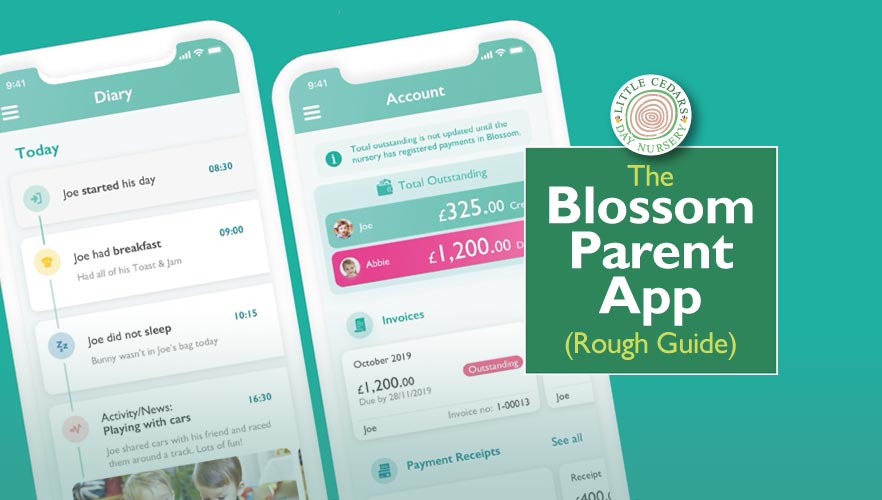
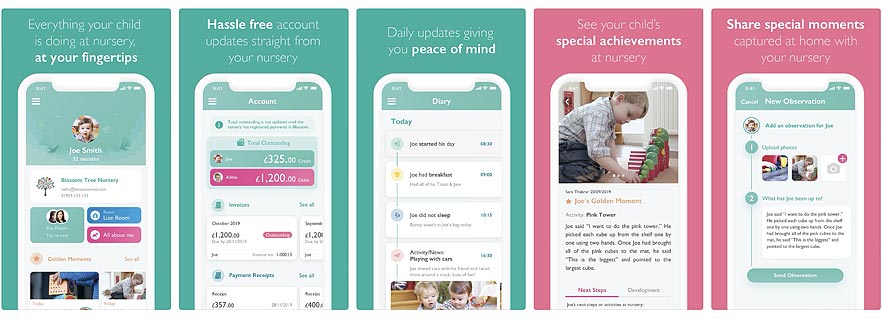
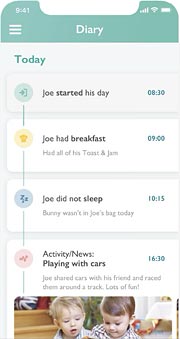
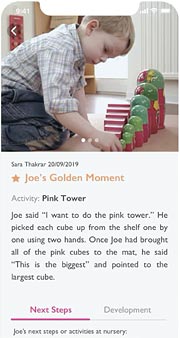 With the Blossom app, you can get real-time updates on your child’s activities at nursery/pre-school, including nappy changes, meals, naps, and developmental moments. You can also view photos and videos of your child’s day, helping you feel connected to your child even when you’re not there.
 The Blossom app also provides a useful mechanism for booking non-standard childcare sessions that fall outside of your child’s usual days and hours. With the app, you simply request a particular session and the childcare provider will see your request and let you know whether it’s approved.
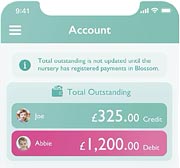 Convenient Payment & Invoicing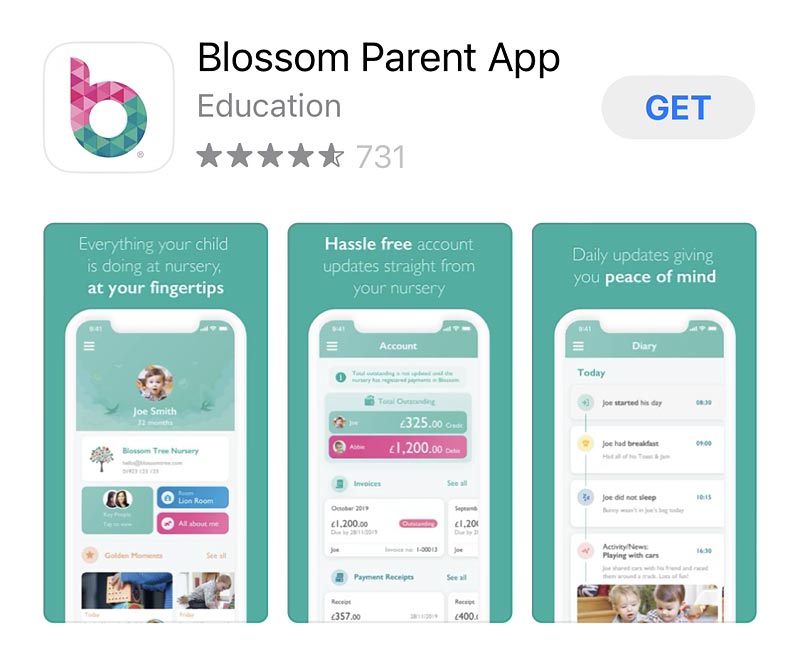
 With Universal Free Childcare, children aged 3 or 4 can receive up to 570 hours of free childcare over the course of the year.
 With Extended Free Childcare, eligible 3- and 4-year-olds can receive up to 1140 hours of free childcare per year instead of only 570.
 Some disadvantaged children aged 2 can also receive up to 570 hours of free childcare over the course of the year.
 For those that are eligible, up to £2,000 in free childcare is available each year to children aged 11 or under* through the Tax-Free Childcare scheme.
 You can sacrifice up to £55 per week of your earnings, which will be free of National Insurance and Income Tax, to fund Childcare Vouchers.
 Following the Spring Budget 2023, childcare funding through Universal Credit is to be improved with nearly 50% more generous funding becoming available from July 2023.
 Those already claiming for childcare costs via Working Tax Credits may be able to obtain up to £122.50 for one or £210.00 for more than one child each week.
 2-year-olds may be eligible for the ’15 Hours’ scheme from April 2024.
 Up to 85% of childcare costs incurred by students may be claimed, up to a maximum of £188.90 per week for 1 child or £323.85 for 2 or more (correct for academic year 2023-2024).
 Up to £160 per child is available each week for those living outside London.
 While it’s not designed to fund childcare, it can be used to do so in some circumstances.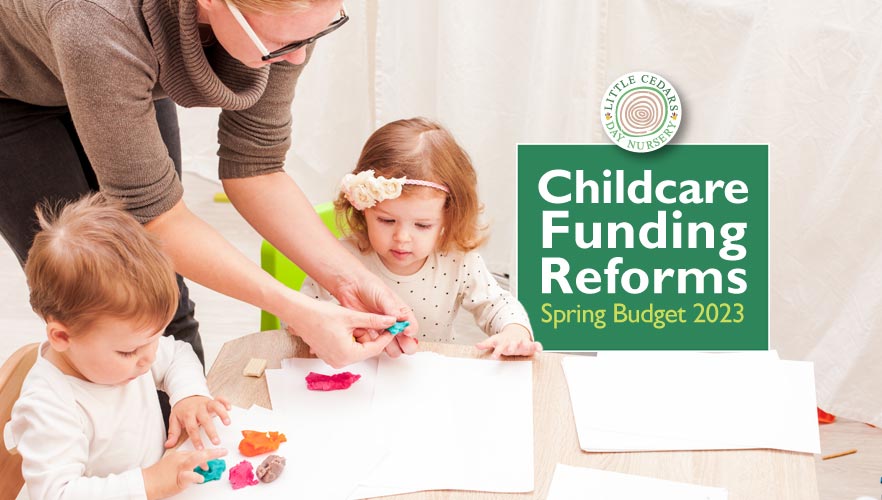
 March 15th 2023 saw the Chancellor of the Exchequer’s Spring Budget announcement, which included news of extra funding to cover costs for childcare. Crucially, the new funding will support childcare for infants as young as 9 months old for the first time, as well as including other positive changes. Although it’ll be introduced in stages, the free funding should be welcome news for those parents who will be eligible. Let’s take a look today at the proposed childcare changes, including which age groups will benefit, what extra funding is promised to support families and when the new help will become available. First, though, we’ll look at the main aims of the new funding.
 The ‘main event’ in the Spring Budget from the perspective of childcare provision is the significant expansion of the ‘free hours’ schemes. Previously, only
  Some struggling parents in receipt of Universal Credit childcare support, who would like to move into work or increase existing working hours, will have subsidised childcare costs paid in advance under the new proposals. This is in contrast to the existing approach where all parents had to pay for the childcare upfront and then reclaim the costs retrospectively. Funding the childcare costs in advance will make the subsidised childcare costs much easier for the lowest-income families to afford from a practical, cash-flow point of view. It will also hopefully improve the situation whereby, currently, only 13% of eligible low-income families actually claim the childcare element of Universal Credit.
 Although this website and our childcare service are geared to the early years age groups, it would be remiss of us not to include a brief overview of the enhancements that are being introduced for children of school age. These are coming in via proposed changes to what is known as ‘Wraparound Care’ as we’ll explain.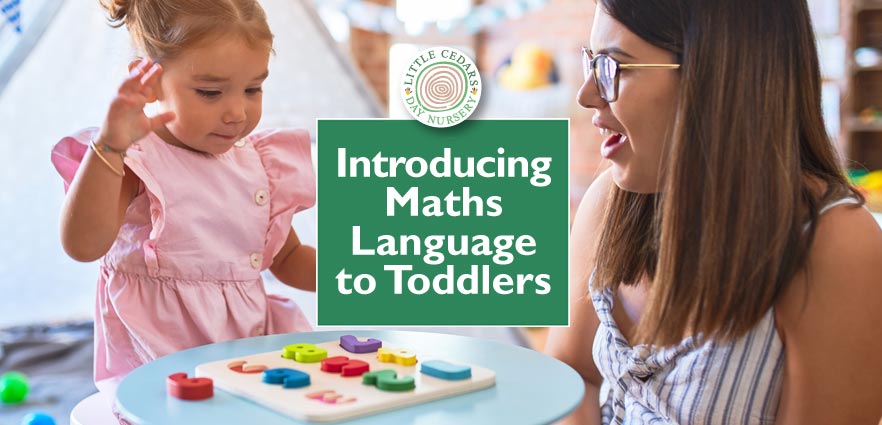
 However, many children struggle with maths and have negative attitudes towards the topic. To prevent this, it is important to introduce maths concepts and vocabulary to children at a young age. Fortunately toddlers are at a period of development where they can learn and understand a range of maths words and concepts when given the opportunity. And, by introducing mathematical concepts and vocabulary to toddlers in a fun and engaging way, adults can help children develop a strong foundation in maths and foster a positive attitude towards the subject.
 Introducing maths words and language to toddlers is all part of
 Parents and caregivers can help toddlers learn maths words and maths-related language in a variety of ways. General examples include:
 Number Hopscotch
 Parents can create simple patterns using objects such as blocks, toys, or coloured pencils, and ask toddlers to continue the pattern. This activity can help toddlers develop their pattern recognition skills and understand basic maths concepts such as repetition and sequencing.
 Introducing maths words and concepts to toddlers is an important step in fostering their overall learning and development as well as in relation to success in mathematics itself. By teaching toddlers maths vocabulary and concepts at a young age, we can help them develop strong foundations in maths, enhance their cognitive development and language skills, and improve their attitudes towards maths. It is never too early to start introducing maths concepts to children, and by doing so, we can help them develop a lifelong appreciation of maths as well as nurturing a strong foundation for future success in many areas of their lives.
 Improving Education for Disadvantaged 3- & 4-Year-Olds
 To be eligible for the EYPP funding, a child must meet certain criteria:
 After checking eligibility, interested families or guardians can either
 It’s easier and often quicker for adults to take the lead in getting toddlers and under-five children dressed, fed, washed and suchlike. However, at some point, our little ones have to become confident and self-sufficient at doing these – and many other things – themselves. After all, they won’t have Mum or Dad around when they’re starting at school. So, today, we look at the ways we can help children under five help themselves and become more independent, including in their learning. First, though, let’s look at the many benefits of encouraging their independence.
 Increased self-esteem: Children feel a sense of accomplishment when they are able to do things on their own. This can give a healthy boost to their self-esteem.
 Better self-management skills: Children who are used to taking care of themselves and making their own decisions are better able to manage their own learning and behaviour. This is important, particularly once they move on to a school setting. Studies published in the Journal of Educational Psychology have highlighted better grades and higher levels of achievement in this regard.
 A greater sense of responsibility: Children who are able to do things independently may more easily learn to take responsibility for their own actions and decisions. Learning from one’s own mistakes is also one of life’s most important lessons.
 Encourage self-care skills: Help children learn how to dress themselves,
  Provide opportunities for children to make their own decisions: Give children small choices and let them choose what they want to do. This helps them feel a sense of control, encourages independence and builds confidence. A good example is allowing them to choose what they want to wear.
 Set realistic expectations: Children are still developing their skills and abilities, so be realistic about what they can do independently.