
 Children and families, get ready for National Storytelling Week! For 2024, storytelling in the UK is officially celebrated from Saturday the 27th of January to Sunday the 4th of February. It’s a great opportunity for children and families to get creative and to entertain one another through the sharing of stories.
Storytelling is an ancient and important tradition across the globe and one that has many benefits for both the storyteller and the listener. As such, it’s something that should be encouraged amongst children of any age. Today, we take a closer look at some of those benefits and suggest ways that both kids and families can make the most of this wonderful, free activity.
Storytelling: the Perfect Antidote to Wintery Days
 National Storytelling Week couldn’t come at a better time of year. As many across the UK have witnessed in recent weeks, January brings with it cold days, dull skies, and wintery weather. Even the daylight hours are short, limiting the number of activities children can undertake outdoors. With storytelling, however, families can be transported to any number of different locations, situations and climates, all in the blink of an eye. Indeed, storytelling can take children to places and scenarios that would simply not be possible in real life. Such is the power of this art form and the human imagination.
Some Benefits of Taking Part in National Storytelling Week
Whether storytelling is a simple verbal activity or dramatised in some way through acting or the use of props, it can be highly entertaining and captivating. There are also a significant number of additional benefits for both the storyteller and the listener, including:
 Stories stimulate imaginations;
- Storytelling enhances creativity;
- By showing what it’s like to be someone or even something else, stories nurture empathy;
- Storytelling can be a great way to relax;
- Storytelling helps to expand vocabulary and literacy;
- Storytelling helps to improve children’s speech and listening skills;
- Stories can be a great way to share new facts;
- Stories open up new worlds to children;
- Stories are a great vehicle for escapism, which is important, especially to those who have had a challenging day;
- Storytelling activities can even lead to careers involving writing or other creative jobs;
- Last but not least, storytelling is simply great fun!
 Stories stimulate imaginations;
So, all in all, there’s every reason for children and families to get involved in National Storytelling Week from Saturday the 27th of January to Sunday the 4th of February 2024. However, don’t stop there … storytelling is worthwhile any time of year!
How to Enhance Children’s Storytelling Sessions
If you’re an adult overseeing a storytelling session with children, perhaps start them off by telling them a short story yourself to get the ball rolling. They can learn from your example and then take turns to tell their story to the group. Making up brand new stories is beneficial (it will promote greater creativity) but it’s also OK for the youngest children to be influenced by existing stories they’re familiar with if they initially struggle to create something from scratch.
 Another great way to help children create new stories is to encourage them to be inspired by objects around them. For example, a teddy bear, toy character, or picture nearby may inspire them. This can be taken further by providing children with a basket of such props, for example, a toy animal, pine cone, toy crown, goblet, apple, and a rock. A ‘story scrapbook’ can be used by children in a similar way. Such things can significantly help children to become more creative and generate storyline ideas, sequencing, and plot twists.
Try encouraging questions and interaction from children who are listening. This will help to get them more involved and immersed in the storyline.
Another creative approach is to let them influence how the story should unfold by making suggestions along the way.
Hand or finger puppets can also be excellent, immersive tools to bring stories to life. Adding in some acting will add an extra layer of drama and entertainment to stories too, so encourage this. It can be taken to many different levels, perhaps with the use of different voices and accents, fancy dress to look like a character, introducing props and so on.
Why not set up a storytelling corner or nook? This can be used all year round and should be a quiet, comfortable space. Perhaps scatter cushions, blankets, and soft toys, and add fairly lights, props and, for young actors-in-the-making, costumes. A bespoke storytelling corner is sure to encourage children to come back to the activity throughout the year.
Such approaches are a recipe for a very entertaining, captivating and immersive storytelling session, which children will love! It’ll get them thinking deeply, stir their creative juices, boost their imaginations, and allow them to enter a different and magical reality for a short time. They’ll learn more about the world and gain improvements to skills like empathy and literacy along the way. Through the simple activity of storytelling, both the listener and storyteller will benefit in a myriad of ways. So — get children involved this National Storytelling Week and watch them blossom!
Little Cedars: Your Streatham Nursery & Preschool
A High-Quality Nursery in Streatham, near Furzedown, Tooting, Balham, Norbury & Colliers Wood


Are you searching for the perfect nursery or preschool for your child in or near Streatham? Little Cedars Day Nursery offers a high-quality home-from-home environment where babies, toddlers and preschoolers absolutely thrive. Rated as a Good Provider of childcare and early years education by Ofsted, Little Cedars represents a wonderful choice for families looking for the very best fit for their little ones. We also support a raft of free childcare funding schemes, making childcare more affordable for eligible families.
Get in touch today to find out about available childcare places, arrange a guided tour with your child, or ask any questions:
Our Streatham childcare nursery may also suit families living nearby in Tooting Common, Tooting, Streatham Hill, Streatham Park, Streatham Common, Furzedown, Tooting Bec, Tooting Broadway, Balham, Norbury and Colliers Wood.
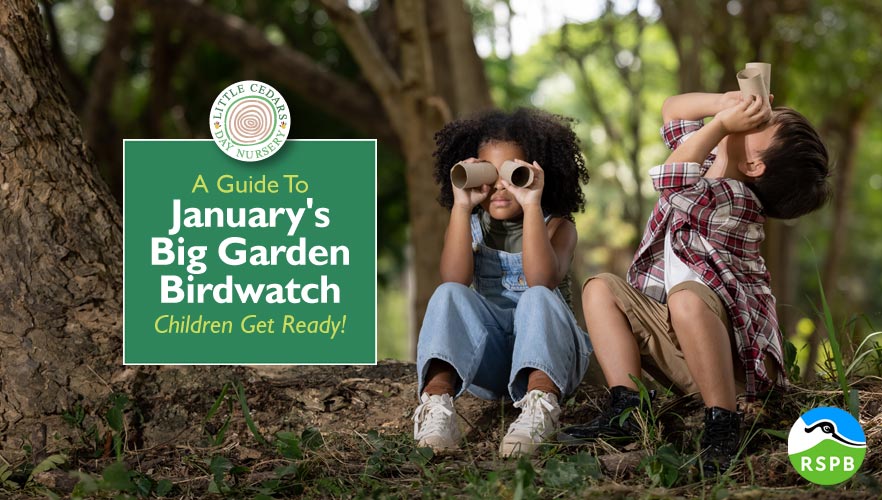
 Parents and children, don’t miss this year’s incredibly important birdwatching activity for the RSPB — and the planet — which occurs from Friday 24th to Sunday 26th January. The Big Garden Birdwatch only takes one hour, is free, and is an extremely worthwhile activity for children and families to take part in. It’s a great way to introduce children to the concept of conservation as well as getting them interested in spending time in and around nature. And, as we’ve reported before, nature is extremely good for children! In today’s post, we explain how easy it is to get your little ones involved and why taking part is a win-win-win for families, birds and nature.
 Monitoring populations of bird species every year allows the RSPB and other conservation organisations to see how the various types of garden birds are faring. Whether or not they’re doing well will be a barometer of the state of nature itself as well as that of the individual bird populations. If the RSPB and other conservation organisations can see a problem, they can then mobilise to try to do something about it. Likewise, if they see a particular bird species doing well, they can learn from that and better understand what measures are helping that particular bird population to thrive.
 In 2023, the bird species spotted the most was the House Sparrow, followed by the Blue Tit in second place, Starling in third, Wood Pigeon in fourth and Blackbird in fifth.
 By registering you’ll also get a free guide to taking part in the event, which includes visual reference to the birds to look out for, as well as other perks like a discount on bird food and other bird feeding supplies available from the RSPB’s online shop.
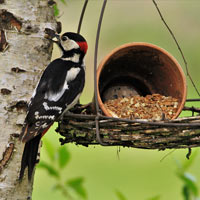 If you’re keen to attract as many birds as possible to your Garden Birdwatch count, the RSPB has you covered. As well as providing useful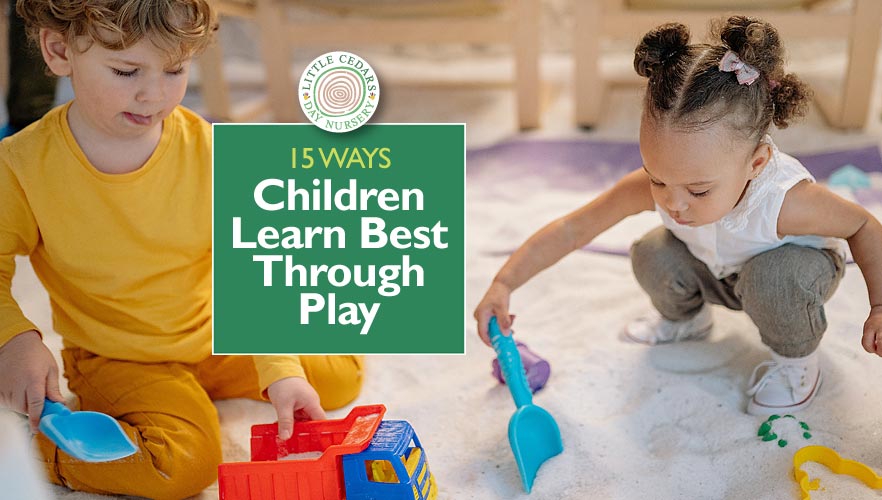
 Watch any infant, toddler or preschooler for just a few minutes and you’ll see that one thing comes naturally to them; play. Indeed, it’s as if they’ve been programmed that way, with the need to play coming instinctively to youngsters, whatever their species. Aside from it simply being great fun, there are a multitude of very good reasons for that — play teaches them an enormous amount about each other, themselves, other living things, cause and effect, and the world around them. It also allows them to learn and fine-tune a whole swathe of new skills as they grow older, play new games, and become more experienced. Add in some careful steering and nurturing during that play from Mum or Dad and they have a real recipe for success. With that in mind, we look today at the key ways in which learning through play profoundly benefits children.
 Play and creativity go hand-in-hand. Whether making up a new game, role-playing, constructing, or playing in a den, children will naturally create both scenarios and physical items as part of their play. Such activities teach them how to use their imaginations and to be creative — in a myriad of ways.
 Different play activities require different types of movement and physical interaction from children. Indeed, this is a fundamental aspect of play. Whether jumping and running with large movements or carefully constructing with small items like building blocks, children will naturally hone both fine and gross motor skills during play. Such physical skills are essential to their ability to navigate and interact with the world around them and, in the most natural of ways, play is at the heart of enhancing those abilities.
 Social skills are also improved through play. Children naturally play with other children and, by so doing, will soon pick up social skills as they begin to better understand social protocols that allow them to succeed both as individuals and in groups. Decent manners, saying please and thank you, cooperation, teamwork and closer bonding are all examples of social skills that can benefit through group play. Other examples include conflict resolution, better sharing, negotiation and communication, which we’ll come to next.
 Through all this play, children will be communicating with each other and with any adults that are supervising. As such, play is a great facilitator of communication. Indeed, good communication is essential to most games and, through it, children can cooperate and achieve in ways that will help them in both the short term and into adulthood. Improving communication skills is also a fundamental way to improve success when you think about it.
 Mathematics is often embedded into games and pastimes. Children can learn, for example, about adding, subtracting, multiplication and division through games. Even dividing group play into teams requires some fundamental maths to ensure teams are equal in size. Building towers out of blocks is another great example where children can count how many blocks they can stack into a tower before it falls over. They can try to beat their own maximum, or even compete against one another to see who can use the most blocks.
 Play comes in a vast array of different forms, shapes, and sizes. Through so doing, it introduces children to countless scenarios, situations, and challenges. By immersing children into such widely differing environments, they learn huge amounts about the world around them, and everything within it. Whether it’s newfound knowledge about a new object, material, place, culture, activity, or something else, play is an amazing conduit to new knowledge and the need to learn new skills. Play is the ultimate educator and the incredible thing is that children may be unaware that they’re learning — they’re having too much fun!
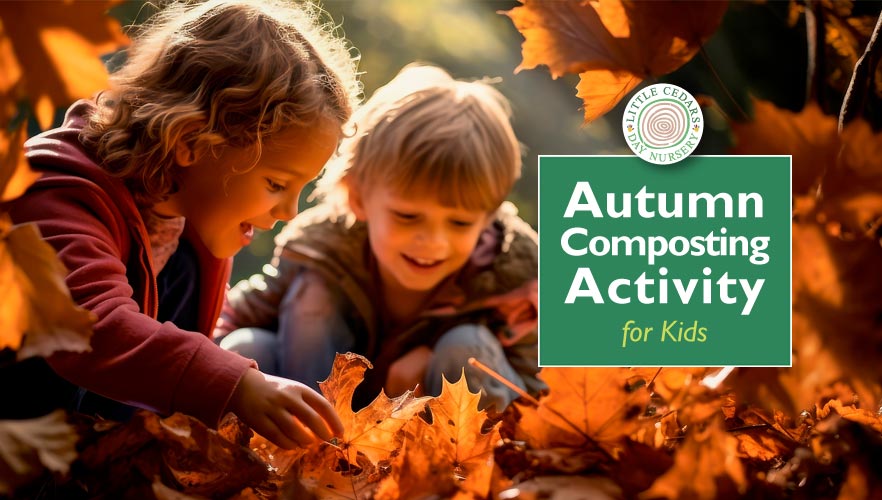
 Autumn is a magical time filled with vibrant colours, falling leaves, and a wonderful quality to the air. With rustling leaves covering the ground in a myriad of hues, it’s the perfect season to engage children with the wonders of a composting activity. Composting is fun, worthwhile, and educational. It not only teaches kids about the importance of recycling and sustainability but also provides an exciting outdoor activity that connects them with nature. In today’s article, we’ll explore the joy of composting with an autumn twist, where children can harness the abundance of fallen leaves to create a rich and fertile compost for the garden. Children of all ages will love this nature-based outdoor activity and it’s a win-win in every sense — for children, nature’s flora and fauna, and the garden itself.
 Autumn leaves are rather like nature’s confetti and they play a crucial role in composting. Perhaps explain to children how leaves provide essential carbon and nutrients that are key ingredients for a successful compost pile. Encourage them to collect a variety of leaves in different colours and shapes, so this activity becomes a stimulating treasure hunt too.
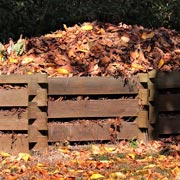 Guide children in setting up a compost bin or, in its most basic form, it could take the form of a simple pile in the garden if you have one. If not, an undisturbed corner somewhere outside will suffice. Emphasise the importance of a balanced mix of green (nitrogen-rich) and brown (carbon-rich) materials. Leaves are a fantastic source of carbon, balancing out the kitchen scraps and other green materials that you and your child may soon start to add.
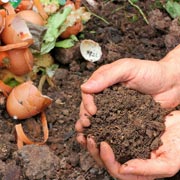 As the compost pile transforms, involve children in observing the changes. Discuss how the compost becomes darker and richer over time. Point out the
  To make composting even more enjoyable, you and the children could incorporate other autumn-themed activities. For example, they could create leaf art while waiting for the compost to develop, they could decorate the compost container through painting, or they could take part in
 When you’re searching for the best nursery for your baby or toddler, or the perfect preschool for your 3-or-4-year-old, the choice can often be overwhelming.

 Autumn is a time of the year when magical colour changes occur across gardens, parks and landscapes. Leaves can be seen in a multitude of different colours before falling along with seeds, ripening fruits and berries. In autumn, nature shows us a wonderful metamorphosis and it’s a time of beautifully crisp air and clear distant views. It’s all incredible to behold and also offers children some unique seasonal activity opportunities.

 Child Benefit is a financial support scheme, provided by the UK Government, that’s there to assist parents and guardians in covering the costs of raising children. It is an essential part of the social safety net in the United Kingdom and aims to help families with the financial responsibilities that come with bringing up children. Eligible families are free to spend Child Benefit however they like, whether that’s on children’s clothes, food, or something else.
 You can claim Child Benefit for all of your children who meet the eligibility criteria. It may surprise some to learn that there are no restrictions on the number of children you can claim for (unlike with some other types of Government child support), so each eligible child in your care can be covered under this benefit.
 Child Benefit can be affected by your or your partner’s individual income if either of you earns over £50,000 annually. In such cases, you may have to pay a ‘High Income Child Benefit Tax Charge’. This charge gradually reduces your Child Benefit entitlement if your income is between £50,000 and £60,000. Indeed, if your income exceeds £60,000, you’ll likely have to repay the entire amount through this tax charge. We’ll cover more of the detail in the next section below…
 Claiming Child Benefit is a straightforward process: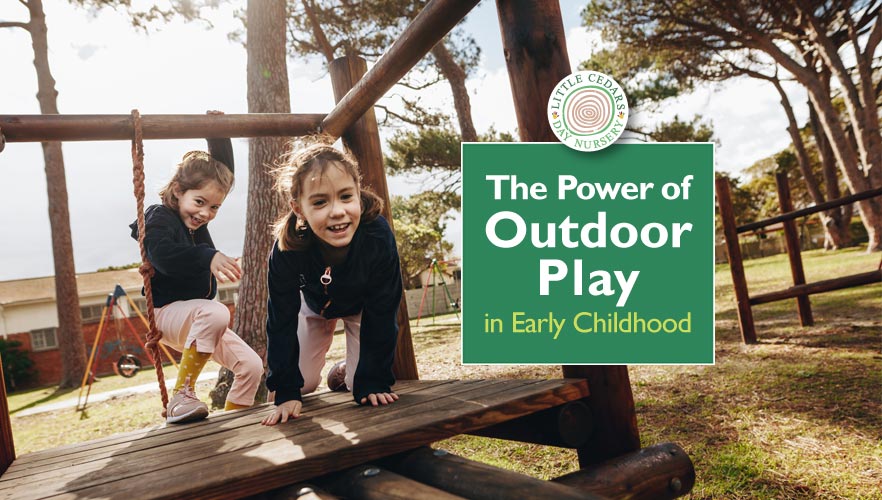
 In today’s guide, we take a close look at the incredible importance of outdoor play for children, including those under five. Outdoor play isn’t just about fun; it’s one of the cornerstones of childhood learning and development and has an immense number of benefits for little ones. So, in this comprehensive article, we’ll explore why outdoor play is so essential for our youngsters and how its effects can be transformative. Let’s take a look…
 For children, the outdoors represents a magical place where fun, exploration and real adventure can take place. Picture a world where a simple stick can become a wizard’s wand, or a puddle can transform into a treasure-filled lagoon, and you’ll soon understand how exciting the outdoors can be for children. Indeed, outdoor play is the realm of limitless imagination. It offers children a vast canvas in which to immerse themselves into adventures, fostering creativity and igniting their instinctive curiosity.
 The Great Outdoors serves as a natural classroom, with true hands-on learning experiences that provide numerous opportunities for children to acquire new skills and knowledge. Whether it’s
  Outdoor play engages all the senses and
  The outdoors serves as an exceptional classroom. When they’re playing outside, children effortlessly absorb knowledge about the world around them. In the open air, they will naturally learn about nature, seasons, different types of flora and fauna, and how the environment functions. It is true learning through discovery.
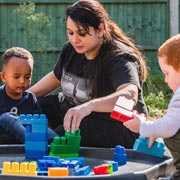 The open spaces of the outdoors also serve as a wonderful canvas for creativity. Children’s imaginations run wild outdoors as they invent games, stories, and art inspired by the natural world. Outdoor play encourages them to think in new, innovative, ways and to truly embrace their creative potential.
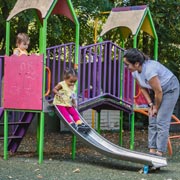 At Little Cedars Nursery, we really understand the profound impact that outdoor play has on early childhood development. With that in mind, our childcare practitioners ensure that children are given every opportunity to immerse themselves in a wide range of outdoor activities that help to nurture every child’s learning, growth, curiosity, and resilience. And let’s not forget one more important factor about outdoor play — it’s simply immense fun for children! As such, it is a perfect way to facilitate learning in the most natural way of all — through play.
 As parents and caregivers, we understand
  Boundaries create a sense of security. Ensure boundaries are understood and that play areas have clear markers. Guide children to understand and respect these boundaries to reduce the risk of children wandering away — and potentially becoming lost.
 Children are naturally drawn to water, but it can pose significant risks. Ensure that play areas are far from water bodies, and when near any water source, always provide direct and continuous supervision. Even shallow water can be dangerous for little ones.
 Although they’re young, children want to explore and will naturally want to climb as they get older. It’s therefore important to teach children a safe approach to climbing. This should include emphasising the importance of staying within safe heights to prevent falls, assisting with climbing technique and, of course, risk-assessing what they should and shouldn’t attempt to climb in the first place.
 While exploring nature is exciting, it’s essential to be aware of potential dangers. Educate your child about the dangers of poisonous plants and fungi or insects that could harm them. Encourage them not to touch or eat anything unfamiliar.
 Outdoor exploration sometimes involves contact with dirt and mud. Promote hygiene by ensuring handwashing facilities are readily available and teaching children the importance of cleanliness after outdoor play.
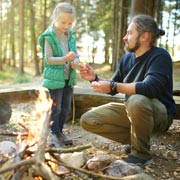 Campfire stories can be delightful and intriguing for children, but we must always prioritise fire safety. If you decide to expose them to it, children must be educated about the potential dangers of fire and always supervised during any fire-related activities. Fostering a responsible understanding around fire safety is paramount.
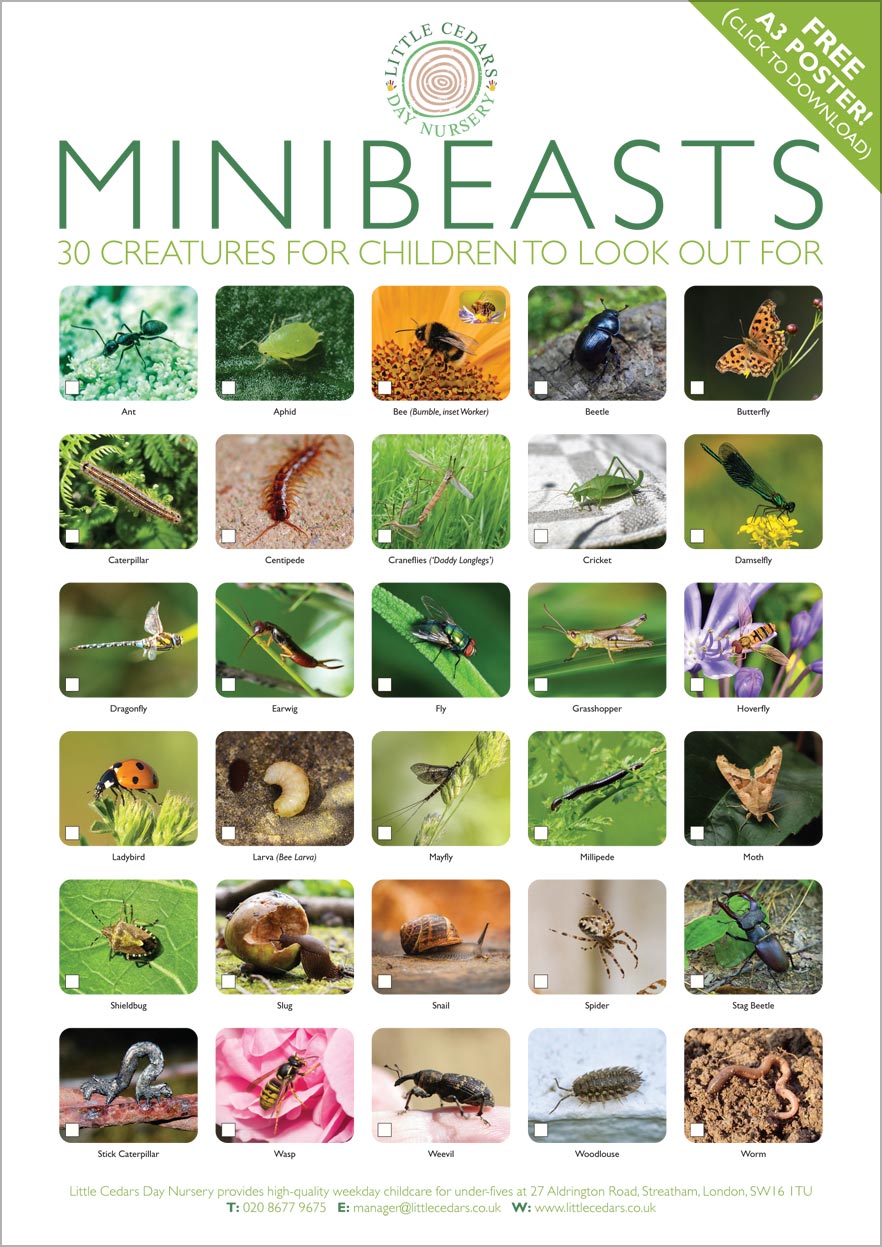
 Today’s minibeast-spotting activity is the third in a series of nature-based children’s activities and, like the others, comes with a free poster. As with the