
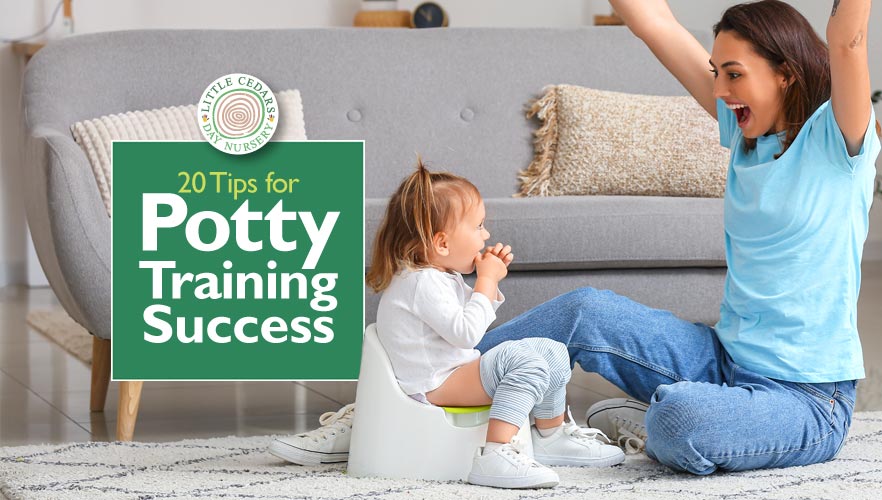
While some toddlers take to it like a duck to water, potty training can be quite daunting for others. It’s a task that can sometimes be the source of considerable upset for little ones which, in turn, can be stressful for parents. However, with the right tools and some useful tips from experts and those who have already gone through the process, potty training can be plain sailing. With that in mind, today’s guide gathers together 20 top tips for successfully fast-tracking potty training — take a look!
Before we begin on the tips, though, let’s see what we should be expecting from our little ones:
When Should We Expect Children to Master Potty Training?
 Children are all different. They learn and develop at different rates to each other and that applies to potty training success too. Circumstances in each family are different too, and this will also have an effect. In other words, there is no hard and fast rule about the age by which little ones should have mastered the use of the potty. Parents should therefore not worry if their child is slower to master toileting than their siblings or peers. That said, some very rough guidelines will always be useful to parents and these follow.
During the daytime, some tots will manage to stay mostly dry by the age of two to three, with most achieving it completely by the age of four. It’s a huge milestone when it finally happens!
During the night, most are also dry overnight by the age of six, although generally, infants will no longer poop at night even earlier — around the age of 12 months. That said, some children continue to wet the bed at night well beyond the age of 5 or 6. This can be for a variety of reasons, for example, simply because they sleep so deeply. They should never be told off about such incidents and minimal fuss should be made (they are, after all, accidents). The good news is that children are likely to grow out of bed-wetting anyway. We may follow up at a later date to write about measures families can take to minimise the likelihood of bed-wetting incidents for children over five.
20 Top Tips for Potty Training Success
Now we’ve outlined the key background information, it’s time for our 20 tips for potty training success.
- A good time to start your child on potty training is when they have shown that they’re aware of what’s in their nappy. Clues include looking in the nappy during a change, showing discomfort when in need of a change, or showing an awareness that they’re actually going to the loo.
- Beginning potty training during the warmer months of the year is also another top tip. That way, children will be wearing less clothes and what clothes they are wearing will be easier to dry on the washing line.
- Teach little ones all the appropriate words around the topic of potty training and toileting. By empowering them to use such language, they’re much better placed to ask to go to the loo in good time.
- Try rewarding your child for successful use of the potty. The promise of a treat for a successful ‘number two’ can often be all that’s needed to convince a reticent child to attempt it on the potty. Colourful reward stickers and a toileting chart celebrating successes also encourage children.
- When a number one or two are each achieved, especially early on in their potty training, celebrate and congratulate your child — these are huge milestones! Giving them praise will encourage them to build on their success.
 Allowing your toddler to help choose their potty can automatically make it less daunting and instead more of a ‘friendly’ thing to have in their life.
- Potties and toileting accessories that feature your child’s favourite characters, for example, dinosaurs, unicorns, or TV characters, will also make them much more friendly and even fun to the little one.
- Indeed, choosing the ‘right’ potty and toileting accessories is important on many levels. There are many different kinds to choose from, each suitable for different circumstances and preferences, including:
Portable potties for when you’re out and about (some even come in a travel case format with wheels). Training seats that attach to an adult toilet. Musical potties that activate a song when they’ve sensed a successful use; these are great for children to sing along to and doing so will encourage them. A set of suitable steps will also help little ones get themselves to the right height once they’ve progressed from a potty to a toilet. These are also useful for reaching adult-level sinks to wash their hands. - Children can also be encouraged by having their own toy potties. They, and parents, can ‘train’ teddies and dolls to use these during play. Doing so will help them be both relaxed and more educated about potty training — even proactive.
- Parents can also source potty training-themed books, stories, songs, YouTube videos and even games that will help children engage in the potty-training process whilst also making it fun.
- When potty training first begins, it’s a great idea to encourage your toddler to visit the potty at initially short, regular intervals. This could be every 30 minutes at the start but can be gradually extended to longer intervals once the child is showing signs of success.
- Ensure your child tries to use the potty immediately before bedtime, of course, and when they wake up from any period of sleep (day or night). It’s also a good idea to encourage them to use it after meals.
- When progressing away from using nappies, the use of ‘pull-ups’ is a good tool for the transition. Pull-ups are midway between a nappy and traditional underwear and, as such, will both protect and get children used to not wearing nappies.
- When starting potty training, picking a quiet time will help children focus, so they do not get distracted or put off.
- Setting a toileting schedule that doesn’t conflict with other items in your child’s routine will also help. Sticking to such a schedule will get little ones used to using the potty — and indeed they’ll expect to do so.
- Don’t forget to make potty training fun! Many of these tips will help towards that, including the rewards idea (#4), praise (#5), characters on potties (#7), toileting-themed music (#8), and so on.
- Normalise the whole process. The last thing potty training needs to be perceived as is a ‘problem’, so making it just a normal part of everyday life is essential to success.
- Let them know that their friends or peers are also potty training (or trained). Ensure children know that you also went through the process of potty training, as did older siblings, friends, and relatives. In this way, they won’t be made to feel ‘different’ or that something is ‘wrong’.
- Keep calm in front of your child even if they begin to get stressed during potty training or toileting. Don’t let them hear anything negative about potty training, including any accidents, which will happen however swimmingly the training goes.
- Remember that part of potty training is also teaching your child good hygiene practices including the need to always wash hands after use of the potty or toilet. They need to understand that this is essential for their health, household cleanliness, and for their independence.
 Allowing your toddler to help choose their potty can automatically make it less daunting and instead more of a ‘friendly’ thing to have in their life.
 Children can also be encouraged by having their own toy potties. They, and parents, can ‘train’ teddies and dolls to use these during play. Doing so will help them be both relaxed and more educated about potty training — even proactive.
 Don’t forget to make potty training fun! Many of these tips will help towards that, including the rewards idea (#4), praise (#5), characters on potties (#7), toileting-themed music (#8), and so on.
 household cleanliness, and for their independence.
With successful potty training comes an easier home life for parents, improved cleanliness and hygiene for children and, with no nappies to buy, less household expense. Mastering potties and later the toilet will also be a huge boost to children’s independence and self-confidence; both being hugely important at nursery/preschool and, in particular, when they begin school.
Our Nursery in Streatham, London SW16
Little Cedars Nursery: High-Quality Childcare Services in Streatham


We hope that today’s potty training tips help to make the process go smoothly. We are Little Cedars Nursery in Streatham, London SW16, situated conveniently close to Furzedown, Tooting, Norbury, Balham, and Colliers Wood. As a Good Provider of early years childcare, we give babies, toddlers, and preschoolers under 5 the very best start in life. We bring out the best in them, so they’re ready to hit the ground running by the time they start school. We also support many of the Government’s free childcare schemes to make it more affordable for eligible families.
Contact Little Cedars Nursery today to register your child for a childcare place, ask a question, or book a free tour of the setting:
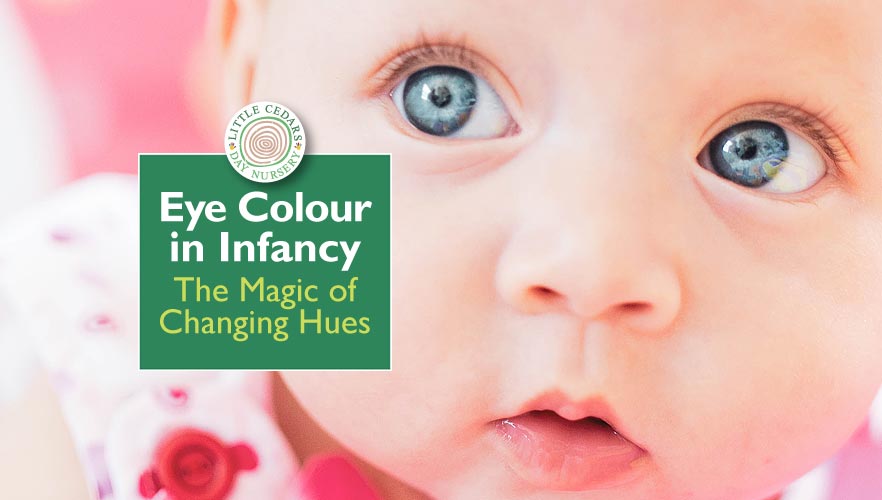
 Have you ever noticed that some babies are born with blue or grey eyes that later change to brown, green or hazel? It’s a magical metamorphosis that sometimes occurs in growing infants and it can be quite intriguing. Parents may indeed wonder whether their newborn child’s eyes are going to change or remain the same as they were at birth. The answer comes down to a combination of time, location, genetics and something called Melanin and today’s article explores this captivating phenomenon.
 When we talk about eye colour we are, of course, talking primarily about the colour of the irises of a human’s eyes. The iris is the circular muscle around the centre pupil and it is this muscle that governs how much light can pass into the eye by making the pupil larger or smaller. When there is lots of light around, the iris constricts the size of the pupil and, in contrast, makes it big when light levels are low.
 Melanin is a protein that’s secreted by special skin cells called melanocyte cells, which form colouration pigmentation in our bodies, including in the eyes, hair and skin. When it comes to the eyes, a lot of melanin pigment means the eye colour is more likely to be dark, for example brown. In contrast, those without much melanin eye pigmentation will have lighter eyes, for example, grey or blue. It is also those lighter colours that are most affected by the Rayleigh Scattering and Tyndall effects that we discussed in the last section.
 Melanin is a protective protein and, by having more melanin pigmentation, an eye has greater protection against harmful ultraviolet (UV) sun rays. That’s one of the reasons that populations from hot, sunnier countries are more likely to have brown or darker eyes — because those are better protected from the sun’s UV rays. Indeed, brown eyes are the most common eye colour in infancy, despite some common misconceptions. It is true, however, that blue or grey eyes are common in infancy in Northern Europe, where the sunlight is less strong.
 Genetics also play a part in the colour of the eyes and can be helpful when attempting to predict a newborn’s eye colouring. However, correctly predicting the colour of a baby’s eyes based solely on that of parents is not guaranteed. That’s because any inherited colouration may skip one or more generations. And, with a mix of different chromosomes and genes being passed down from parents, grandparents and beyond, skipping generations can sometimes result in completely unexpected eye colouring in infants. Genes will also control how much melanin will initially be present in a newborn’s eyes as well as affecting further production as the child ages and the eyes adjust to conditions.
 Heterochromia is a condition that affects less than 1% of the world’s population. Those affected may have two different coloured eyes or perhaps two colours present in one eye. The causes of heterochromia include physical injury, disease, genetics or sometimes the use of specific medications.
 Bilingual children have been shown to have better cognitive flexibility, focus and creativity. Studies have shown that this often leads to better decision-making, prioritisation and planning skills too. With such skills in place, bilingual children may also have a better ability to multitask and switch between separate tasks.
 Young bilingual children may sometimes mix their languages or use one language inappropriately in certain contexts. This is a normal part of the language acquisition process but can be a little confusing, at times, for both the child and their caregivers.
 Parents play a crucial role in supporting their bilingual children’s language development. To help your child become proficient in two different languages, it’s important to consistently speak both at home. Doing so can help children develop a particularly strong foundation in both languages.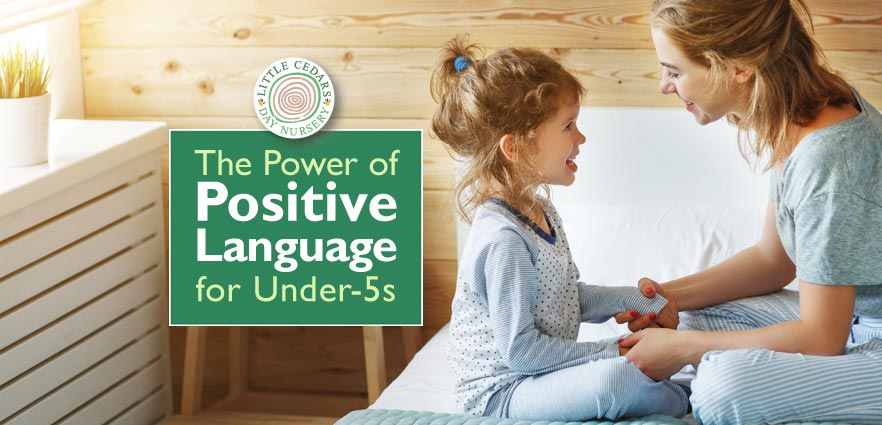
 In today’s post, we explore the benefits of using positive language around under-fives. All too often, it’s tempting to say ‘No!’, ‘Stop that!’ or even ‘Don’t Eat That!’ and similar around little ones. This is particularly true when you want them to cease the offending activity urgently or are simply exhausted if it’s been a challenging day. There are good reasons for such negative commands, of course, not least that of their safety in many cases. However, such commands can sound stern and cause stress for the little ones. What’s more, if a child hears too much negative language and cannot understand why they’re not allowed to do a particular thing, problems can begin to arise and, indeed, the issue can become insidious. It may even result in worsening behaviour. Let’s explore, therefore, the issues around negative language and the simple solution that’s available in the form of positive language.
 Sometimes, though, constantly hearing ‘no’ can spark tantrums, particularly if a child doesn’t understand the reason they are not allowed to do something. They can feel particularly frustrated when they receive a succession of negative commands and, in the end, may feel they simply can’t do anything right. This can lead not only to stress for them, but also to possible low self-esteem. Furthermore, if they hear ‘no’ and other negative language too often, they can begin to ‘tune out’ to it. They could then go on to develop challenging behaviour due to this, their confusion and frustration. Stress levels can then rise for the parent too, the infant can pick up on this and it can become a real vicious circle. It doesn’t have to be that way, though …
 Stop shouting!
 Please use a much softer voice.
 June 2022 has seen the release of a new set of recommendations that outline ways to reduce the likelihood of sleep-related deaths amongst babies and infants up to the age of 1. This includes, but is not limited to, deaths related to Sudden Infant Death Syndrome (SIDS). Sadly, SIDS and other sleep-related issues are responsible for nearly 200 infant deaths in the UK each year and up to a staggering 3,500 every year in the United States. Perhaps even more surprisingly, that last number has not reduced at all in the last 30 or so years. This new set of recommendations from experts in the U.S. aims to change that and is something that all parents need to take a look at if they have a baby or infant. Let’s take a look at the new guidance …
 PLEASE NOTE: we have summarised key points from the new guidance in good faith but advise parents/carers of babies and infants to do their own research.
 In our last post, we asked
 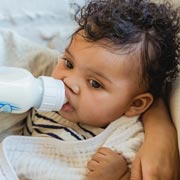 For those on dairy-based formula milk, it’s pretty much plain sailing too. Because vegetarians — as opposed to vegans — are OK eating dairy-based food, formula milk is generally fine for them. The most popular types are based on cows’ milk, although several other animal milks are also available. So long as dairy-based formula milk is high quality, given in the right quantities, consumed at the right intervals and is age appropriate for the child, it contains all the nutrients and vitamins needed. That’s without the need to give additional supplements too.
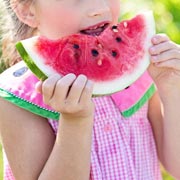 Fruit and vegetables are really a given because they pack so much goodness, including many vitamins, minerals like potassium and also fibre. Fresh vegetables and fruit are ideal but, failing that, frozen, tinned and even dried varieties are also OK.
 Tofu, also known as bean curd, which is made from soy.
 any pulses, seeds or grains should be sprouted, cooked or soaked before consumption (as appropriate);
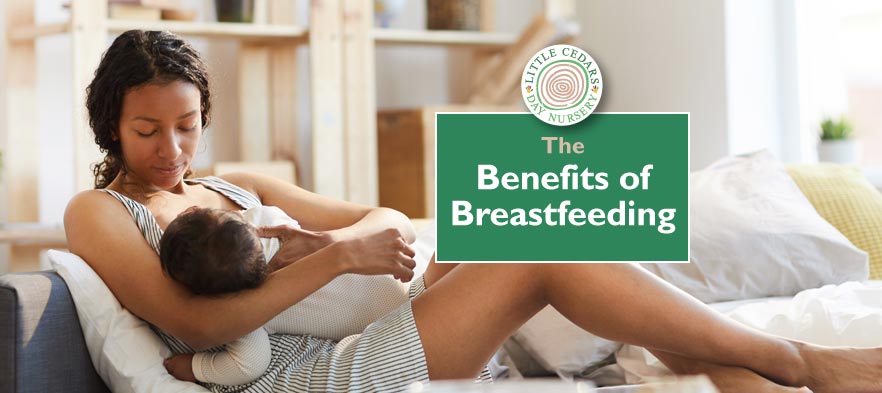
 Babies benefit enormously from breast milk; from simple, practical considerations to major health benefits, many of which continue to benefit them into adulthood. Let’s take a look:
 Breastfeeding also has a range of significant health (and other) benefits for mothers. These include:
 The childcare professionals at Little Cedars Nursery are keen to fall in with the wishes of parents when it comes to baby and infant milk. To that end, parents are free to supply