
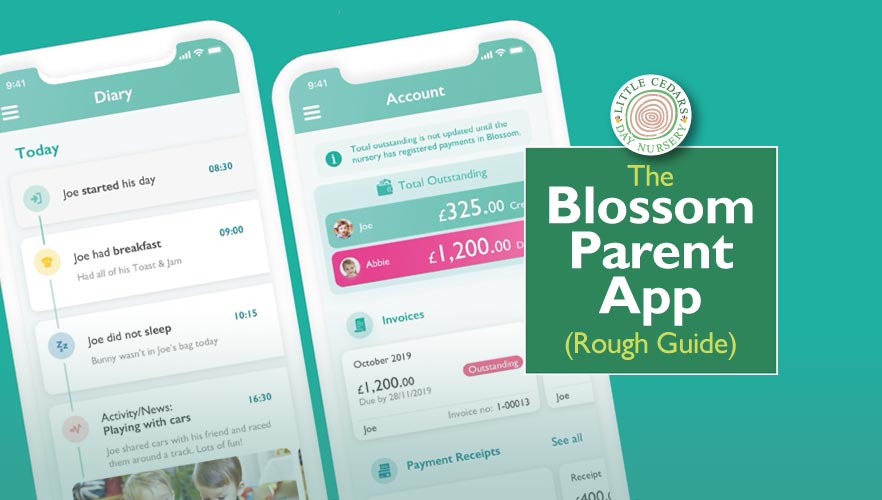
Staying on top of children’s activities, nappy changes, meals, and developmental milestones can be a challenge for parents when they happen away from home at the child’s childcare nursery. At Little Cedars, however, we use the Blossom app to take care of all of this. The mobile phone app is designed to help make things easier for parents by providing real-time updates on children’s activities and progress, as well as providing a convenient platform for communication between parent and childcare provider. In today’s guide, we’ll take a closer look at the Blossom app, its benefits, and how it can be used to bolster the partnership between childcare providers and parents.
“A window into your child’s time at nursery. Accessible from anywhere. Anytime.”
Features & Benefits of the Blossom App
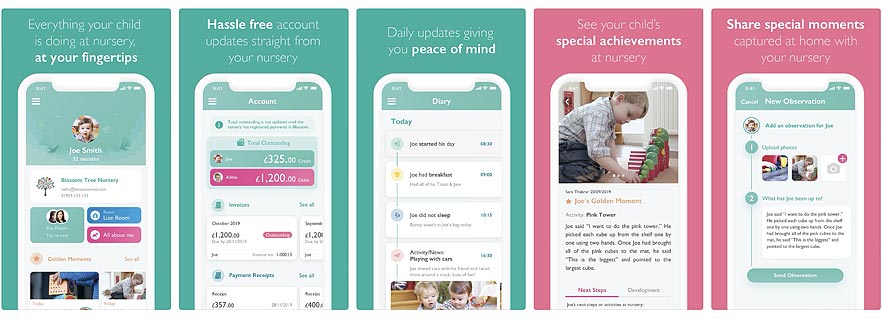
The Blossom app is fully-featured and provides a wide range of benefits for parents and ultimately their children. Let’s take a look at some of the features and benefits you can expect:
Blossom Allows you to Stay Connected with your Child’s Activities
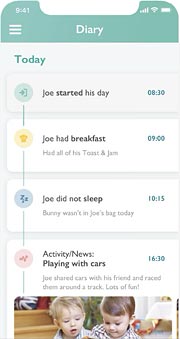
 With the Blossom app, you can get real-time updates on your child’s activities at nursery/pre-school, including nappy changes, meals, naps, and developmental moments. You can also view photos and videos of your child’s day, helping you feel connected to your child even when you’re not there.
It Helps you Celebrate your Child’s Achievements & Share Developmental Milestones
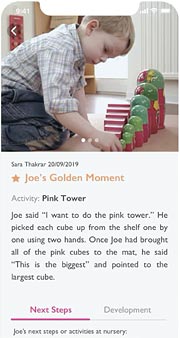
Blossom allows you to see and celebrate your child’s achievements, developmental progress and milestones, including new skills they’ve learned, special projects they’ve completed, and social interactions they’ve had with their peers. The app also allows you to take photos and feed back to the nursery about progress achieved at home. This is a great way to keep them up-to-date too, while your child is away from their care.
“View your child’s golden moments and formative reports to see how they are blossoming.”
Seamless & Instant Communication with your Childcare Provider
The app provides a convenient platform for 2-way communication with your childcare provider, enabling you to ask questions, provide updates, and receive feedback in real-time. This is particularly useful, for example, if you are going to be late dropping your children off, late picking them up, or if they are unwell.
A Strong Childcare Provider/Parent Partnership
Building a strong partnership between parents and childcare providers is a crucial part of building strong early years foundations for any child. The Blossom parent app makes this natural and easy. It even includes suggestions for activities that can be undertaken with children at home, all explained step by step.
“Through Blossom we track and understand your child’s learning more effectively and build strong, trusting parent partnerships.”
Blossom Provides Flexibility
 The Blossom app also provides a useful mechanism for booking non-standard childcare sessions that fall outside of your child’s usual days and hours. With the app, you simply request a particular session and the childcare provider will see your request and let you know whether it’s approved.
It Gives Parents Peace of Mind
With the Blossom app, you can rest assured that you’re always up-to-date on your child’s activities, and can quickly and easily get in touch with your childcare provider if needed. This provides unrivalled peace of mind for parents, particularly if they feel anxious about leaving their child in someone else’s care.
Important Information About Your Child
The app provides for a profile for each child, where you can view and update their personal information, such as their name, date of birth, likes, dislikes and any allergies. The latter is particularly crucial reference for the childcare provider when it’s time to provide food or snacks.
Useful Information About Parents
The app also provides a profile for parents, where you can view and update your personal information, including your contact details and emergency contacts. Should your child become ill, these will be invaluable to childcare staff and will ultimately aid the well-being of your child.
 Convenient Payment & Invoicing
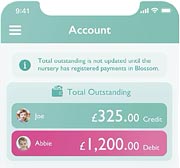 Convenient Payment & Invoicing
The app also allows you to view and pay invoices from your childcare provider from within the app, and keep track of your payment receipts. This makes it easy to manage your childcare payments and keep track of your finances.
Getting Started With the Blossom App
Getting started with the Blossom app is easy and it is available for download for both iOS and Android devices*. Simply go to the App Store or Google Play Store as appropriate for your device, search for “Blossom Parent App”, and download the app to your device. Be sure that it’s the one shown in our preview image.
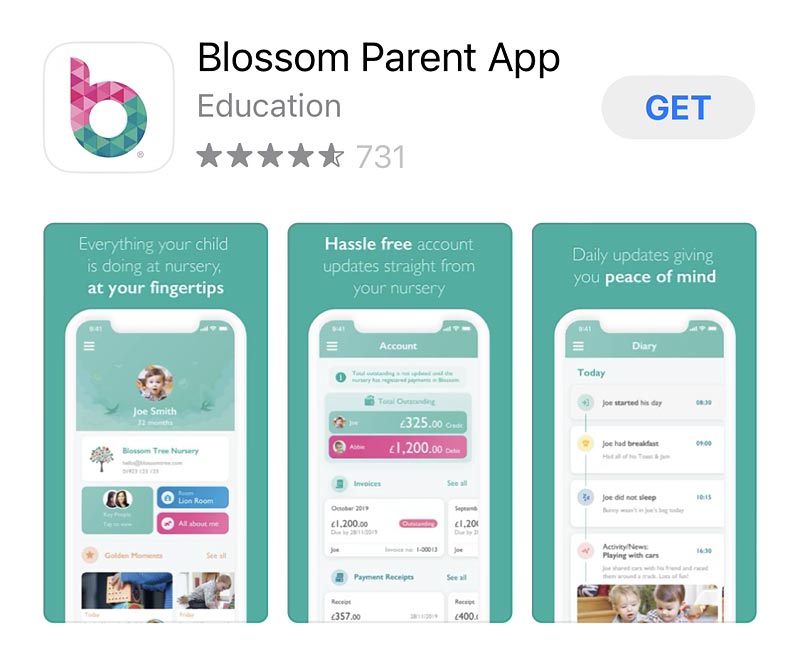
*Blossom also allows for updates via email for those without smartphones.
Connect With Your Childcare Provider
You’ll need to enter your email address and connect with your childcare provider through the app. If you cannot, check with your nursery/childcare provider that they have registered you for an account and ensure you are entering the email address associated with that account. Once you’ve set up your account and connected with your childcare provider, you can start using the app.
Set Up Your Profiles
When you first join the app, you’ll need to set up a profile for your child. This will include information such as their name, date of birth, and any allergies or medical conditions. Make sure this information is accurate and up-to-date so that your childcare provider has all the necessary information to care optimally for your child.
Also, ensure that you fill in the information relating to you, the parent(s), so that the childcare provider knows your contact information. Make sure you also include contact information for any emergency contacts.
Set Your Preferred Permissions
The app provides permissions settings that allow you to control who can access your child’s profile, information, photos and videos. Rest assured that security has been built into the Blossom parent app, including password encryption and compliance with both OFSTED and the Data Protection Act.
Use Daily & Check Often
Once set up, you can use the Blossom parent app to check for daily updates about your child’s activities, progress and developmental milestones. You’ll be able to use it to communicate with your childcare provider in real-time and feed back to one another. You’ll be able to ask questions, stay connected, receive updates as they happen, pay invoices and so much more. You’ll soon wonder how you ever managed without it!
Whether you’re a new parent just starting out with a childcare provider, or a seasoned parent looking for a more convenient and effective way to stay connected, the Blossom app is an excellent tool. By making the most of its features, you can ensure that you’re always up-to-date on your child’s activities and progress, and can communicate with your childcare provider easily and efficiently.
“By creating higher quality observations and linking them to the EYFS framework we track and monitor children’s progress enabling a greater understanding of your child’s learning and development.”
Download the App
Download the Blossom app today and start enjoying the benefits of this powerful tool for parents. (Download on IOS here or download on Android here).
Information Leaflet
If you’re interested in learning more about the Blossom app, its features, and how it can benefit you and your child, download the Blossom Parent Guide (Acrobat PDF) here. You can also ask your childcare provider to register you for an account, linked to them.
Connect With Little Cedars Nursery, Streatham
A ‘Good Provider’ of High-Quality Childcare in Streatham, SW16

 Get in touch with Little Cedars Nursery if we look after your child and have not yet connected with you via the Blossom parent app. It really is a game-changer and will benefit you, your child, and us as your childcare provider — it’s a win-win-win!
If you are living or working in the Streatham area and require high-quality childcare for your baby, toddler, or under-five child, why not bring them along for a guided tour? You can meet our childcare professionals, ask us any questions and see the wonderful setting and facilities. Alternatively, simply register your child for a nursery/preschool place and we’ll be delighted to welcome you and your little one. Please choose a button below to get in contact or to register.
Little Cedars is officially a good nursery, which is located in Streatham, SW16. We’re also near Streatham Hill, Streatham Common, Streatham Park, Furzedown, Tooting, Balham, Norbury, Colliers Wood, West Norwood, Wandsworth, Clapham and Brixton, so may suit you if you live or work nearby. We support free childcare for eligible families through the various Government childcare funding schemes for under-fives.
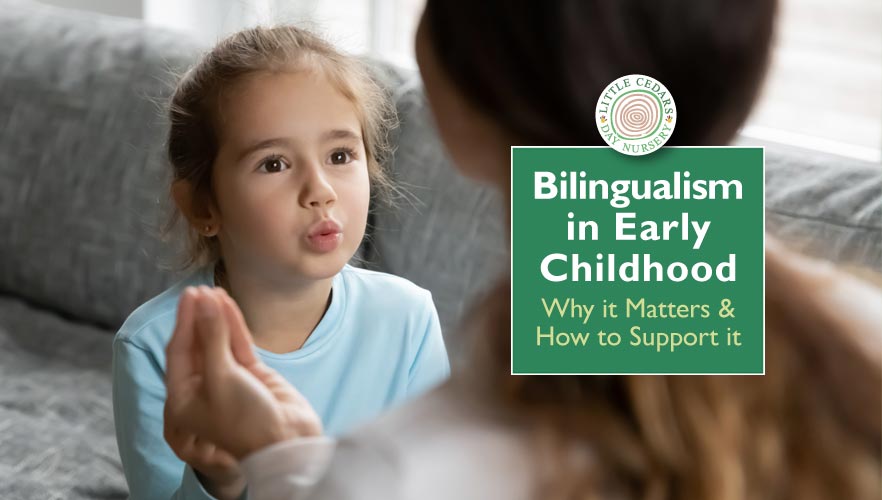
 Bilingual children have been shown to have better cognitive flexibility, focus and creativity. Studies have shown that this often leads to better decision-making, prioritisation and planning skills too. With such skills in place, bilingual children may also have a better ability to multitask and switch between separate tasks.
 Young bilingual children may sometimes mix their languages or use one language inappropriately in certain contexts. This is a normal part of the language acquisition process but can be a little confusing, at times, for both the child and their caregivers.
 Parents play a crucial role in supporting their bilingual children’s language development. To help your child become proficient in two different languages, it’s important to consistently speak both at home. Doing so can help children develop a particularly strong foundation in both languages.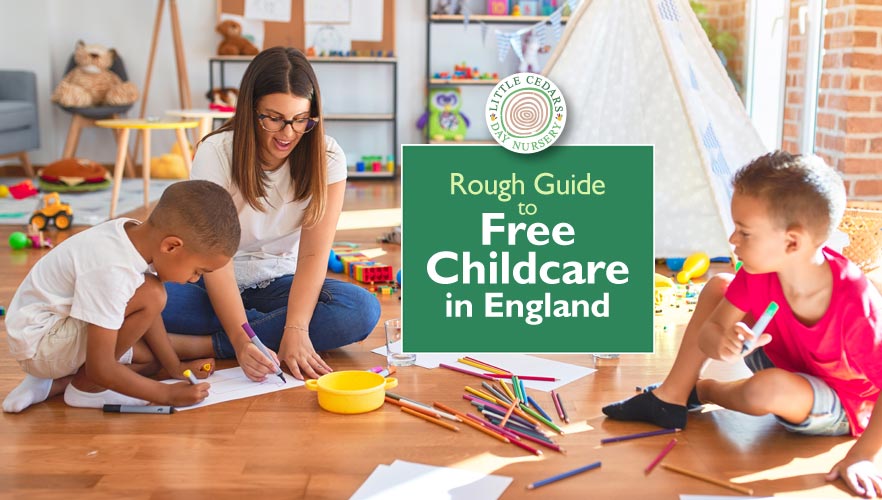
 With Universal Free Childcare, children aged 3 or 4 can receive up to 570 hours of free childcare over the course of the year.
 With Extended Free Childcare, eligible 3- and 4-year-olds can receive up to 1140 hours of free childcare per year instead of only 570.
 Some disadvantaged children aged 2 can also receive up to 570 hours of free childcare over the course of the year.
 For those that are eligible, up to £2,000 in free childcare is available each year to children aged 11 or under* through the Tax-Free Childcare scheme.
 You can sacrifice up to £55 per week of your earnings, which will be free of National Insurance and Income Tax, to fund Childcare Vouchers.
 Following the Spring Budget 2023, childcare funding through Universal Credit is to be improved with nearly 50% more generous funding becoming available from July 2023.
 Those already claiming for childcare costs via Working Tax Credits may be able to obtain up to £122.50 for one or £210.00 for more than one child each week.
 2-year-olds may be eligible for the ’15 Hours’ scheme from April 2024.
 Up to 85% of childcare costs incurred by students may be claimed, up to a maximum of £188.90 per week for 1 child or £323.85 for 2 or more (correct for academic year 2023-2024).
 Up to £160 per child is available each week for those living outside London.
 While it’s not designed to fund childcare, it can be used to do so in some circumstances.
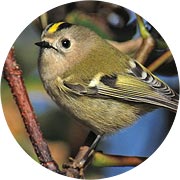 Spring arrives in the UK on 20th March, according to the meteorological calendar. As well as plants beginning to shoot, daffodils flowering and trees starting to bud, an increased number of wild birds can now be seen too. While a few overwintered here in England, many will have spent winter abroad, where it’s warmer, and only begin to return to the UK once spring begins. So, come springtime, more and more varieties of birds can be spotted — and that’s what today’s post is all about. To encourage children to appreciate, enjoy and learn from nature, we have put together a bird identifier poster that children and parents can download for free, print out to A3 or A4, or view on screen in beautiful high resolution. It highlights 37 species of bird that are popular in England, which children can try to spot as the days and weeks go by. Children can perhaps tick off each type of bird that they spot. With a little help from parents for the youngest children, this activity is a great way to teach them the different bird names and help them to recognise the different types as time goes by. It’s also a great children’s pastime that will encourage them to really appreciate nature. The A3 poster is free to download and share — simply click the preview image below to save or view it in Acrobat PDF format. Enlarge on screen for extra detail or simply print out as large as you can. Children will love this activity and feel a real sense of achievement as they learn more about these wonderful, feathered visitors.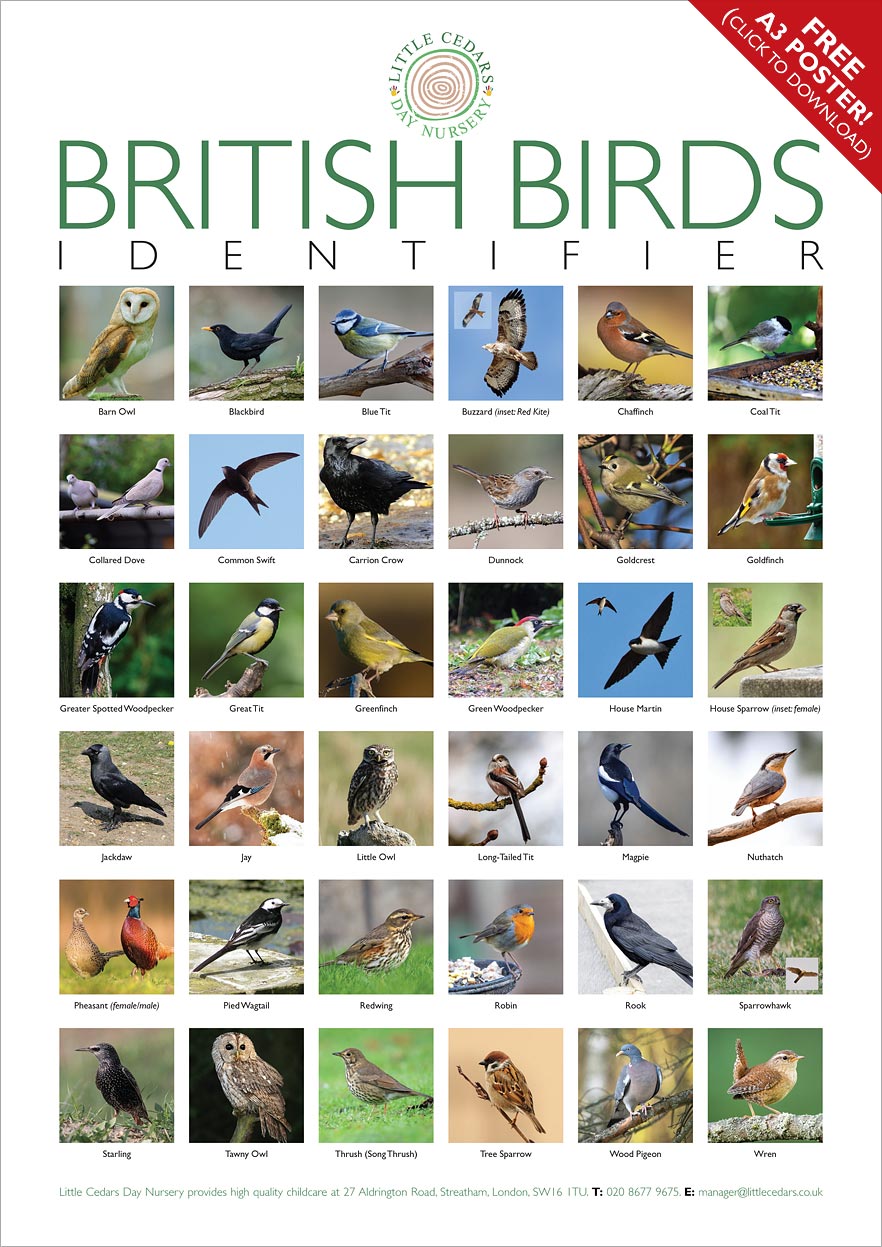
 We’ve selected our favourite birds from the hundreds of species that visit the UK each year. There was no way to fit in all of them, so we’ve picked out the most common visitors to our own gardens and nearby parks. In addition, we also added a few extra birds that would be great for children to keep a lookout for, despite a few being shy. Owls are around, for instance, coming out mostly at night. However, barn owls can be seen before dark if you know where to look (the sound of owls hooting or screeching is a dead giveaway). Buzzards, Red Kites and Sparrowhawks are more likely to be seen in the sky overhead, so we’ve shown images where their distinctive silhouettes can give their species away to the onlooker.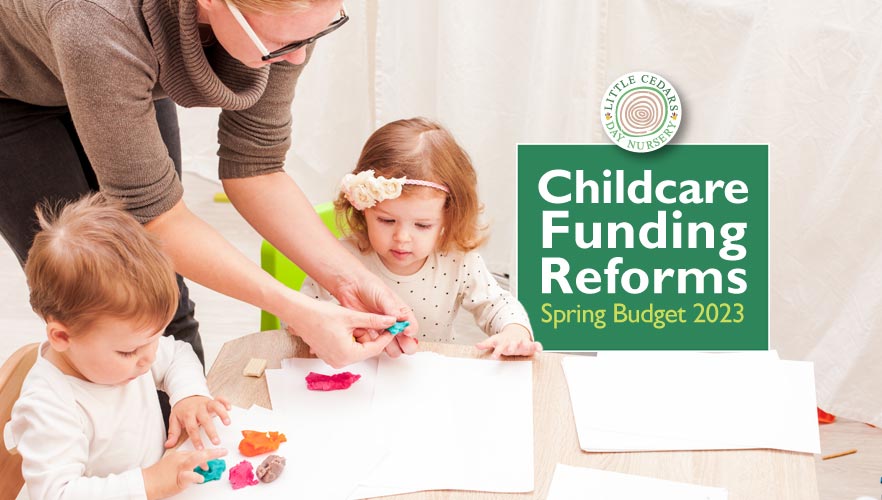
 March 15th 2023 saw the Chancellor of the Exchequer’s Spring Budget announcement, which included news of extra funding to cover costs for childcare. Crucially, the new funding will support childcare for infants as young as 9 months old for the first time, as well as including other positive changes. Although it’ll be introduced in stages, the free funding should be welcome news for those parents who will be eligible. Let’s take a look today at the proposed childcare changes, including which age groups will benefit, what extra funding is promised to support families and when the new help will become available. First, though, we’ll look at the main aims of the new funding.
 The ‘main event’ in the Spring Budget from the perspective of childcare provision is the significant expansion of the ‘free hours’ schemes. Previously, only
  Some struggling parents in receipt of Universal Credit childcare support, who would like to move into work or increase existing working hours, will have subsidised childcare costs paid in advance under the new proposals. This is in contrast to the existing approach where all parents had to pay for the childcare upfront and then reclaim the costs retrospectively. Funding the childcare costs in advance will make the subsidised childcare costs much easier for the lowest-income families to afford from a practical, cash-flow point of view. It will also hopefully improve the situation whereby, currently, only 13% of eligible low-income families actually claim the childcare element of Universal Credit.
 Although this website and our childcare service are geared to the early years age groups, it would be remiss of us not to include a brief overview of the enhancements that are being introduced for children of school age. These are coming in via proposed changes to what is known as ‘Wraparound Care’ as we’ll explain.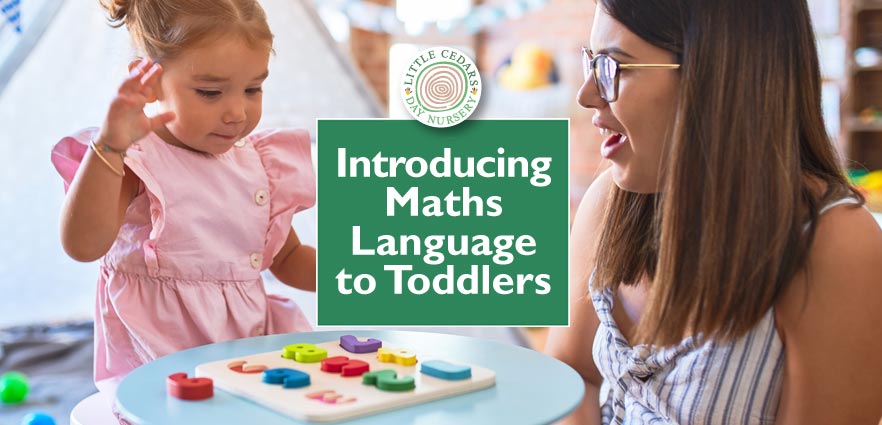
 However, many children struggle with maths and have negative attitudes towards the topic. To prevent this, it is important to introduce maths concepts and vocabulary to children at a young age. Fortunately toddlers are at a period of development where they can learn and understand a range of maths words and concepts when given the opportunity. And, by introducing mathematical concepts and vocabulary to toddlers in a fun and engaging way, adults can help children develop a strong foundation in maths and foster a positive attitude towards the subject.
 Introducing maths words and language to toddlers is all part of
 Parents and caregivers can help toddlers learn maths words and maths-related language in a variety of ways. General examples include:
 Number Hopscotch
 Parents can create simple patterns using objects such as blocks, toys, or coloured pencils, and ask toddlers to continue the pattern. This activity can help toddlers develop their pattern recognition skills and understand basic maths concepts such as repetition and sequencing.
 Introducing maths words and concepts to toddlers is an important step in fostering their overall learning and development as well as in relation to success in mathematics itself. By teaching toddlers maths vocabulary and concepts at a young age, we can help them develop strong foundations in maths, enhance their cognitive development and language skills, and improve their attitudes towards maths. It is never too early to start introducing maths concepts to children, and by doing so, we can help them develop a lifelong appreciation of maths as well as nurturing a strong foundation for future success in many areas of their lives.
 Improving Education for Disadvantaged 3- & 4-Year-Olds
 To be eligible for the EYPP funding, a child must meet certain criteria:
 After checking eligibility, interested families or guardians can either
 It’s easier and often quicker for adults to take the lead in getting toddlers and under-five children dressed, fed, washed and suchlike. However, at some point, our little ones have to become confident and self-sufficient at doing these – and many other things – themselves. After all, they won’t have Mum or Dad around when they’re starting at school. So, today, we look at the ways we can help children under five help themselves and become more independent, including in their learning. First, though, let’s look at the many benefits of encouraging their independence.
 Increased self-esteem: Children feel a sense of accomplishment when they are able to do things on their own. This can give a healthy boost to their self-esteem.
 Better self-management skills: Children who are used to taking care of themselves and making their own decisions are better able to manage their own learning and behaviour. This is important, particularly once they move on to a school setting. Studies published in the Journal of Educational Psychology have highlighted better grades and higher levels of achievement in this regard.
 A greater sense of responsibility: Children who are able to do things independently may more easily learn to take responsibility for their own actions and decisions. Learning from one’s own mistakes is also one of life’s most important lessons.
 Encourage self-care skills: Help children learn how to dress themselves,
  Provide opportunities for children to make their own decisions: Give children small choices and let them choose what they want to do. This helps them feel a sense of control, encourages independence and builds confidence. A good example is allowing them to choose what they want to wear.
 Set realistic expectations: Children are still developing their skills and abilities, so be realistic about what they can do independently.
 A nature-based, food-related activity that young children can enjoy indoors at any time of the year is cress growing. Today we outline how it can be made even more fun and creative for kids by growing the cress as little ‘egg heads’. These come complete with comical faces and amusing hairstyles made of green cress shoots! Children will absolutely love it when they end up with little egg faces with spouting hairstyles that each have real character. And, they’ll even be able to eat the results!
 Cress is Easy to Grow, & Tasty!
 Growing Cress for Small Kids and Big Kids
 Next, find a vessel to prop the egg shells up in. This could simply be an egg cup or even an egg carton, like that shown in the photo. Then, decide what to fill the empty egg shells with. Children can choose either damp kitchen roll or damp compost/soil to grow the cress seeds on. Carefully fill the empty egg shells almost to the top with the chosen filler. (We tried both and each grew well. Interestingly, the cress seeds grown on kitchen roll tissue paper grew a little faster and therefore taller than those grown on compost. They therefore looked a bit more ‘wild’ — it was quite a surprise and had an amusing impact on the egg-people’s hairstyles).
 Make sure you or your child add some funny faces on the shells — maybe even give them names. The faces can be drawn simply using a marker pen (Sharpies are ideal) or you can get even more creative using coloured paints. Children may find drawing the faces easier if they are shown some visual reference and perhaps they can practise first on paper. If too young to draw suitable faces, a parent or creative older sibling may be able to help.
 Within a week or so, the little egg heads should begin to sprout green ‘hair’ shoots!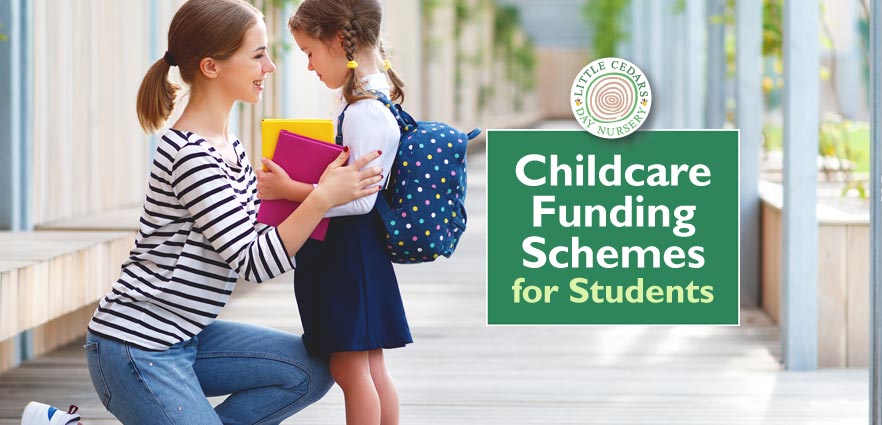
 Are you a student as well as a parent? If so, there are several Government schemes that offer help with childcare costs, some of which will save student parents substantial amounts of money. By doing so, they also make the prospect of juggling parenthood with being a student much more manageable. Today we examine the key childcare funding options, including how the type of course and the age of the parent affect eligibility.
 The very generous Student Childcare Grant is available for eligible students who who are studying full-time on a higher education course and have dependent children aged 14 or under (16 or under if they have special needs).
 If you are aged 20 or over, are a parent studying in further education for a qualification on a Level 3 course or below and are facing financial hardship, you may be eligible for childcare funding under the Learner Support scheme. This funding could help you with childcare and other study-related costs if you fit the right eligibility criteria.
 If you are a parent as well as a student aged under 20 when you begin one of a range of publicly-funded courses in England, you may be eligible for childcare funding through the Care to Learn bursary scheme. If eligible, you could claim as much as £175 in childcare per week, per child if you live in London, reducing to £160 per week, per child, outside London.