
Today, we’re looking at what help is available for children under five with Special Educational Needs & Disabilities (‘SEND’, also sometimes referred to as ‘SEN and disabilities’). Good support for such children, particularly in their formative years, is of critical importance to their longer-term progress, well-being and success. Appropriate support, provided in a timely and tailored manner, can have a real, positive impact on outcomes for children’s lives.
An Environment of Inclusivity
It is important to foster an inclusive environment for children with SEND, including at childcare/early years settings like Little Cedars Nursery. Whatever their differences, we know it’s crucial for all children to feel safe, comfortable, valued, and loved, as well as being free to express themselves. It’s also important that all children, irrespective of ability/disability, are able to make friends and socialise freely. This is therefore nurtured at childcare settings like Little Cedars.
Changes can also be made to childcare environments like ours, where appropriate, to improve accessibility for children with special educational needs and disabilities.
Identifying SEND
 Identification of a special educational need or disability is, of course, the first step in being able to properly support a child with SEND. For this reason, good early years providers like Little Cedars Nursery will, as a matter of course, watch out for signs of things that might be challenging for children. As prescribed by the EYFS approach to early years learning and development, such assessment will occur as part of the day-to-day activities at such nurseries, preschools and early years settings, as well as during more formal assessments like the Progress Check at 2. Childcare practitioners, the Key Person allocated to each individual child, and the setting’s Special Educational Needs Coordinator (SENCo) will usually all be involved in all assessment stages.
Parents will be alerted to any suspicions and indeed should alert childcare settings if they have a SEND-related concern regarding their child. After all, parents may well have more insight, as they know their child best.
External professionals including health visitors, paediatricians and professional specialists and therapists can also be brought in to help with assessments if deemed appropriate. Only once a possible special need or disability has been identified and evaluated is it possible to look at appropriate support options for a child.
Developing a Tailored Support Plan
 Support plans for suspected or confirmed special needs or disabilities are then discussed and custom-designed for the child. Such plans will be agreed between the child’s parents/caregivers, staff at the early years setting itself and any external specialists or professionals involved in the child’s care. Such programmes will be customised to suit the individual child’s specific needs and may include tailored activities, strategies, resources and so on. Formalisation of the support programme will allow all parties to pull in the same direction, working cooperatively for the benefit of the child.
“Assess, Plan, Do and Review.”
Progress and the effectiveness of support plans will be evaluated continuously. Should the support plan require fine-tuning along the way, then adjustments will be made to suit the ongoing needs of the child. There is also possible recourse to request an Education, Health & Care (EHC) assessment of the child’s needs from the local authority if deemed appropriate and sanctioned by parents. Should one occur, then a new support plan may be devised.
Similarly, if the help of external experts is required, for example help from a speech and language therapist, this can be arranged as part of the support package for the child.
With the right support, “the great majority of children and young people with SEN or disabilities … can find work, be supported to live independently, and participate in their community.” (DfE)
Special Funding & the Area SENCo
 In parallel to the SENCo at the child’s early years setting, local authorities also have their own Special Educational Needs Coordinator, known as the Area SENCo. They will also be integral to a child’s SEND support plan, helping with coordination between the local authority, the various parties involved in supporting the child, and in relation to any special funding requirements. If approved, special funding might be required, for example, for an additional member of staff tasked with giving one-to-one support to the child, or to fund extra learning resources and activities for them.
Area SENCos also continue to coordinate support for children with SEND through the transition from early years settings to school.
The ‘Local Offer’ Information Portal
Every local authority publishes information that informs families about the support available in their area for children and young people with special educational needs or disabilities. This is encapsulated in what’s known as The Local Offer. A Local Offer example for Streatham may help to illustrate the kind of help and resources available. Little Cedars Nursery is in the part of Streatham that falls within the London Borough of Wandsworth, and their Local Offer for SEND can be found here.
Funded Childcare for Under-5s with SEND
Parents may be wondering whether any free childcare is available for children with SEND. Here’s a quick snapshot of some of the options:
 All 3- and 4-year-olds living in England are eligible for a minimum of 570 hours of free childcare per annum, irrespective of whether or not they have SEND. This is known as Universal Free Childcare or their Free entitlement and is typically taken as 15 hours of childcare each week over 38 weeks of the year, but how it is taken can differ. Learn more here.
- In some circumstances, the above entitlement for 3- and 4-year-olds may be extended to 1140 hours per annum, equivalent to 30 hours of free childcare over 38 weeks of the year. This is known as Extended Free Childcare or the 30 hours scheme but, unlike with Universal Free Childcare, is means-tested. Many more eligibility criteria also apply (learn more here).
- 2-year-olds with SEND may also be eligible for free childcare hours if they fall within one or more specific categories (learn more here). These include:
– Receiving Disability Living Allowance (‘DLA’);
– Being subject to an Education, Health & Care Plan (‘EHC’);
– Having received a referral via their local authority’s Portage Service. - Parents of disabled children may be able to claim for free childcare support valued up to £4,000 per year through the Government’s Tax-Free Childcare Scheme. Learn more here.
 All 3- and 4-year-olds living in England are eligible for a minimum of 570 hours of free childcare per annum, irrespective of whether or not they have SEND. This is known as Universal Free Childcare or their Free entitlement and is typically taken as 15 hours of childcare each week over 38 weeks of the year, but how it is taken can differ.
 More information about various Government-funded childcare schemes is available in our rough guide to childcare funding here.
Nursery Places at Little Cedars Nursery, Streatham
Little Cedars is a Nursery & Preschool in Streatham, London SW16


We support all Government-funded childcare schemes for eligible families at Little Cedars. We also endorse all the above support measures aimed at helping children with special educational needs and disabilities. We are officially a good nursery, as benchmarked by Ofsted. Our nursery and preschool are located in Streatham, London SW16 although we are also conveniently close by for families in Streatham Hill, Streatham Common, Streatham Park, Furzedown, Tooting, Balham, Norbury, Colliers Wood, West Norwood, Wandsworth, Clapham and Brixton.
If you would like to apply for a nursery place for your child, ask any questions or book a tour with your child, please select an option below:
 Following on from our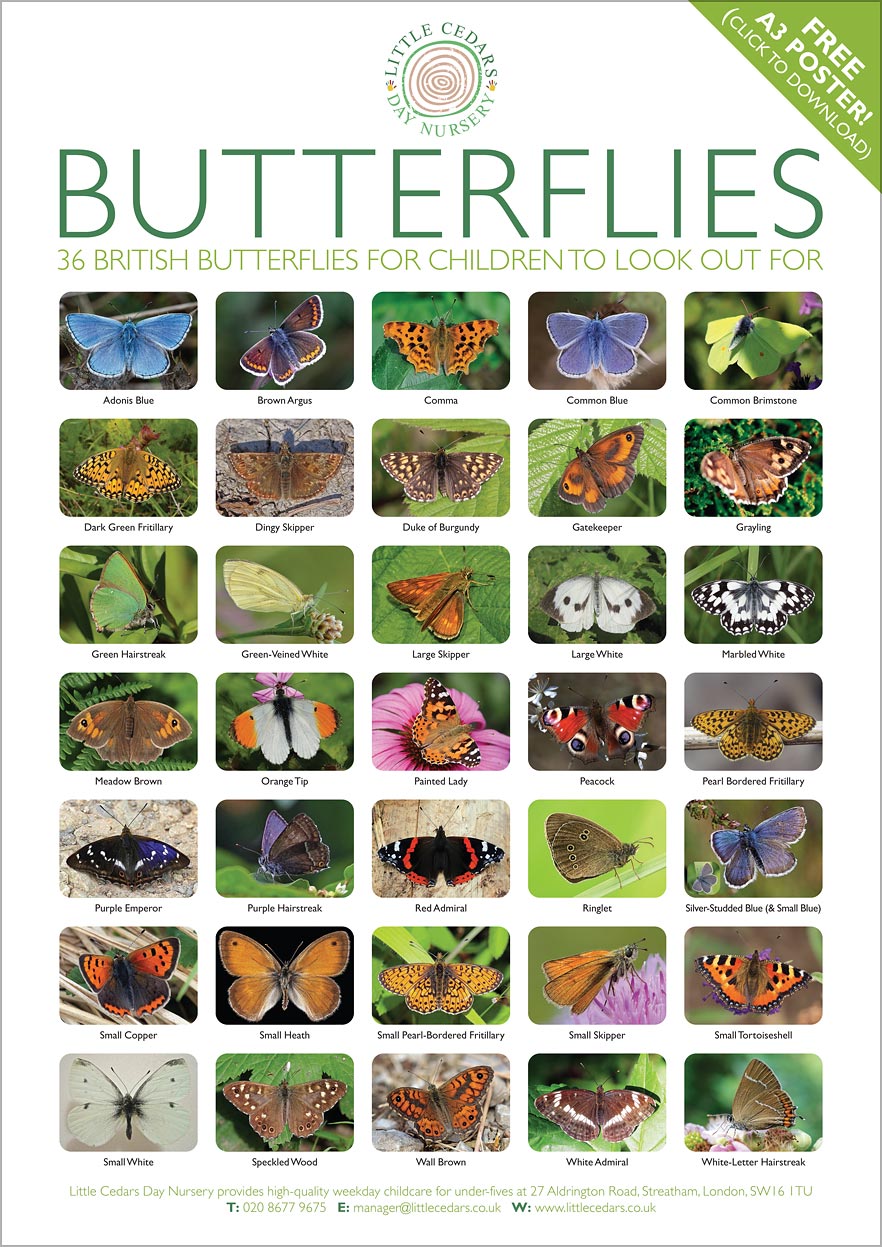
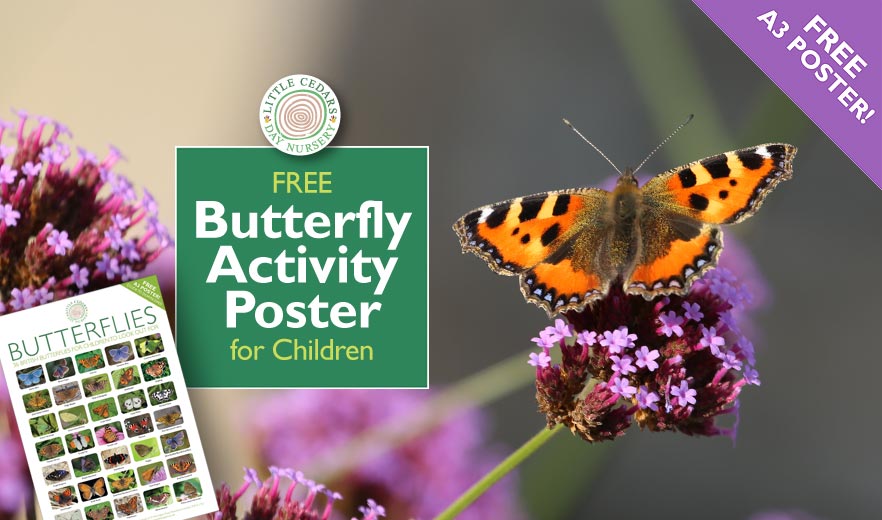
 We must also add that children should be encouraged to ‘look but don’t touch’ as butterflies are very delicate creatures. Children should not try to touch or catch them — they are best left in peace as every one of them is a little individual that simply wants to go about his or her day. They’re wonderful to watch, though, and our free poster should help children and adults identify many of the different types. Perhaps see how many different species can be spotted over the course of a year. Take photos too, and compare them with friends! Some butterflies visit gardens, floral window boxes and parks while others may only be found in wilder locations in the countryside. This activity is therefore a great excuse for families to get out and explore The Great Outdoors! Recording the date and location of each butterfly spotted will also help families work out where the best butterfly-spotting locations are for next time.
 With that in mind, why not take this activity a step further and get involved in the UK’s annual Big Butterfly Count? For 2024, it takes place between Friday the 12th of July and Sunday the 4th of August, which is when most butterflies are at their adult stage. All it takes is 15 minutes and children will love being little ‘citizen scientists’! The activity can be done in gardens, parks, school grounds or out in the countryside. Taking part will give children a real opportunity to help with butterfly conservation.
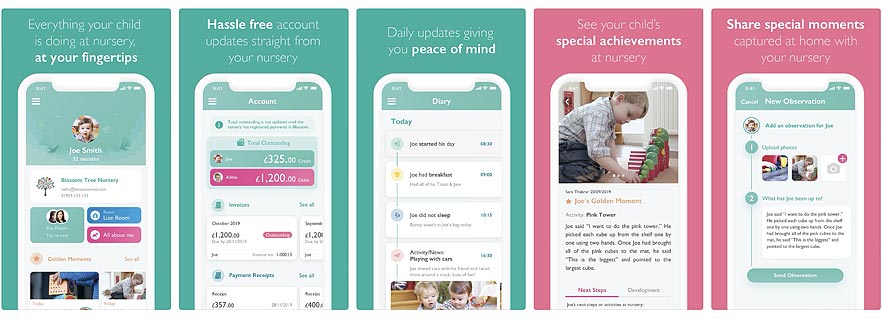
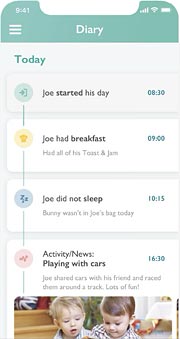
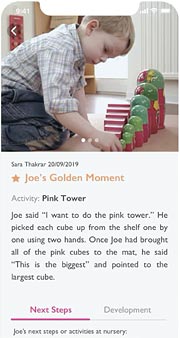 With the Blossom app, you can get real-time updates on your child’s activities at nursery/pre-school, including nappy changes, meals, naps, and developmental moments. You can also view photos and videos of your child’s day, helping you feel connected to your child even when you’re not there.
 The Blossom app also provides a useful mechanism for booking non-standard childcare sessions that fall outside of your child’s usual days and hours. With the app, you simply request a particular session and the childcare provider will see your request and let you know whether it’s approved.
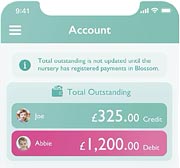 Convenient Payment & Invoicing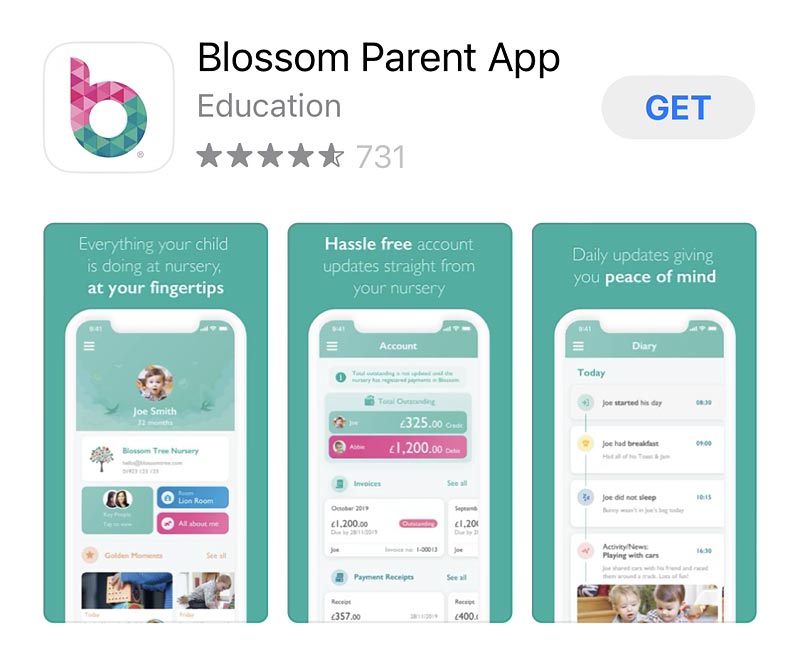
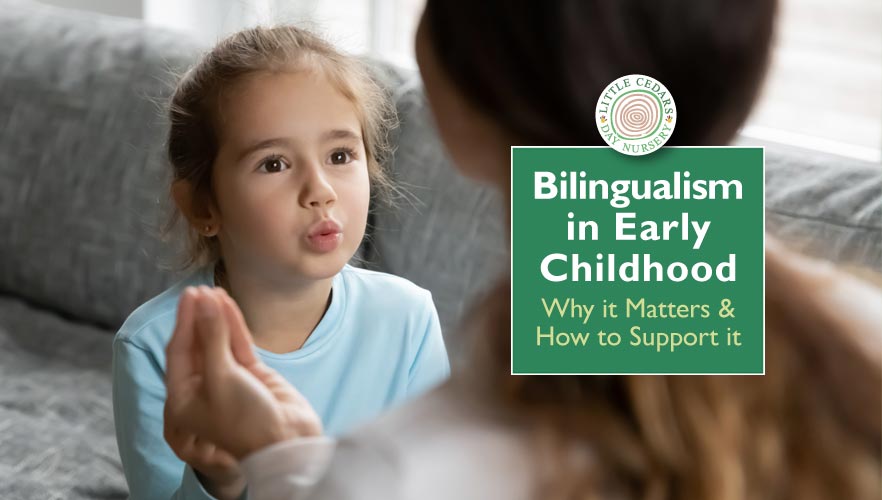
 Bilingual children have been shown to have better cognitive flexibility, focus and creativity. Studies have shown that this often leads to better decision-making, prioritisation and planning skills too. With such skills in place, bilingual children may also have a better ability to multitask and switch between separate tasks.
 Young bilingual children may sometimes mix their languages or use one language inappropriately in certain contexts. This is a normal part of the language acquisition process but can be a little confusing, at times, for both the child and their caregivers.
 Parents play a crucial role in supporting their bilingual children’s language development. To help your child become proficient in two different languages, it’s important to consistently speak both at home. Doing so can help children develop a particularly strong foundation in both languages.
 With Universal Free Childcare, children aged 3 or 4 can receive up to 570 hours of free childcare over the course of the year.
 With Extended Free Childcare, eligible 3- and 4-year-olds can receive up to 1140 hours of free childcare per year instead of only 570.
 Some disadvantaged children aged 2 can also receive up to 570 hours of free childcare over the course of the year.
 For those that are eligible, up to £2,000 in free childcare is available each year to children aged 11 or under* through the Tax-Free Childcare scheme.
 You can sacrifice up to £55 per week of your earnings, which will be free of National Insurance and Income Tax, to fund Childcare Vouchers.
 Following the Spring Budget 2023, childcare funding through Universal Credit is to be improved with nearly 50% more generous funding becoming available from July 2023.
 Those already claiming for childcare costs via Working Tax Credits may be able to obtain up to £122.50 for one or £210.00 for more than one child each week.
 2-year-olds may be eligible for the ’15 Hours’ scheme from April 2024.
 Up to 85% of childcare costs incurred by students may be claimed, up to a maximum of £188.90 per week for 1 child or £323.85 for 2 or more (correct for academic year 2023-2024).
 Up to £160 per child is available each week for those living outside London.
 While it’s not designed to fund childcare, it can be used to do so in some circumstances.
 March 15th 2023 saw the Chancellor of the Exchequer’s Spring Budget announcement, which included news of extra funding to cover costs for childcare. Crucially, the new funding will support childcare for infants as young as 9 months old for the first time, as well as including other positive changes. Although it’ll be introduced in stages, the free funding should be welcome news for those parents who will be eligible. Let’s take a look today at the proposed childcare changes, including which age groups will benefit, what extra funding is promised to support families and when the new help will become available. First, though, we’ll look at the main aims of the new funding.
 The ‘main event’ in the Spring Budget from the perspective of childcare provision is the significant expansion of the ‘free hours’ schemes. Previously, only
  Some struggling parents in receipt of Universal Credit childcare support, who would like to move into work or increase existing working hours, will have subsidised childcare costs paid in advance under the new proposals. This is in contrast to the existing approach where all parents had to pay for the childcare upfront and then reclaim the costs retrospectively. Funding the childcare costs in advance will make the subsidised childcare costs much easier for the lowest-income families to afford from a practical, cash-flow point of view. It will also hopefully improve the situation whereby, currently, only 13% of eligible low-income families actually claim the childcare element of Universal Credit.
 Although this website and our childcare service are geared to the early years age groups, it would be remiss of us not to include a brief overview of the enhancements that are being introduced for children of school age. These are coming in via proposed changes to what is known as ‘Wraparound Care’ as we’ll explain.
 Improving Education for Disadvantaged 3- & 4-Year-Olds
 To be eligible for the EYPP funding, a child must meet certain criteria:
 After checking eligibility, interested families or guardians can either
 Today’s post will appeal to families who are finding the current financial climate particularly challenging. With energy costs and inflation so high, the following may represent a welcome piece of good news. Today we highlight the many Baby Banks that are popping up all around the UK and explain how they can help struggling families, all for free.
 A Baby bank is a similar concept to a food bank. However, instead of food and drink, it provides second-hand clothing, toys and equipment for babies, under-fives and often even for children up to the age of 16 in some cases. Baby Banks can also be compared to a charity shop, however, with baby banks, everything is free.
 Baby Banks are run by all sorts of different people and organisations and therefore the rules around actually getting ones hands on the free items vary from Baby Bank to Baby Bank. Some accept requests for items directly from families themselves. Others only deal via a referral from some kind of professional. Examples include social workers, family support agencies, teachers, family centres, health visitors, medical professionals, food banks and women’s refuges. So, once you have located your nearest Baby Bank, you will need to check whether they will deal with you directly or only through such a referral. Either way, you will usually need to agree a time and date for collection of your item with the Baby Bank (you can’t usually just turn up, although there are exceptions). Not all Baby Banks are open all week and that’s another reason to check with Baby Banks or their websites first.
 Absolutely! Baby Banks rely on the generous donations from families that no long require their baby clothes or equipment. Perhaps the child has grown out of them and the items are still in good condition, or perhaps they were an unwanted gift. Donating items is also a great way to declutter and to make space in the home, as well as helping others. However, before donating to a Baby Bank, always check with them to see if all your proposed items are required and, as before, ensure you know whether an appointment is needed or whether you can just turn up with your items. Certain rules may also apply around the condition and type of items (this varies depending upon which Baby Bank you are dealing with). Baby car seats and electronic items may also have special rules due to the extra safety considerations.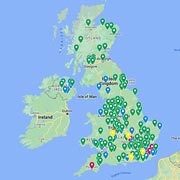
 Are you a student as well as a parent? If so, there are several Government schemes that offer help with childcare costs, some of which will save student parents substantial amounts of money. By doing so, they also make the prospect of juggling parenthood with being a student much more manageable. Today we examine the key childcare funding options, including how the type of course and the age of the parent affect eligibility.
 The very generous Student Childcare Grant is available for eligible students who who are studying full-time on a higher education course and have dependent children aged 14 or under (16 or under if they have special needs).
 If you are aged 20 or over, are a parent studying in further education for a qualification on a Level 3 course or below and are facing financial hardship, you may be eligible for childcare funding under the Learner Support scheme. This funding could help you with childcare and other study-related costs if you fit the right eligibility criteria.
 If you are a parent as well as a student aged under 20 when you begin one of a range of publicly-funded courses in England, you may be eligible for childcare funding through the Care to Learn bursary scheme. If eligible, you could claim as much as £175 in childcare per week, per child if you live in London, reducing to £160 per week, per child, outside London.