
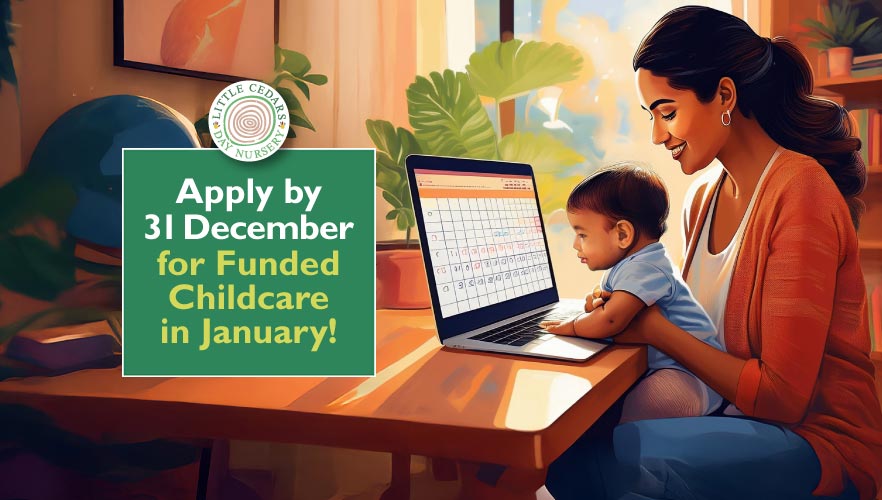
Today’s post is an urgent reminder: if you want your child to benefit from free, government-funded childcare hours from January, you must apply for the funding no later than 31 December. That’s the case whether you’re a new applicant or an existing one for the types of childcare support that require a code. If you miss the 31 December deadline, you’ll have no code to give your provider — meaning they won’t be able to provide free childcare hours to your child for the whole of that term. So — time is of the essence! Today, we bring you more detailed information and a reminder of how and where to apply, so you’re not out of pocket or without childcare from the term starting this January.
“If you do not apply on or before the deadline, you will not be able to take up your entitlements in that term.” ∞
Which Childcare Funding Schemes Require a Code?
There are several ways the UK Government supports eligible children with childcare funding. Of those, the most popular childcare funding schemes in England that require a code are:
- 30 hours of free childcare per week for eligible working families with children aged from 9 months to 4 years inclusive. That’s 1140 free childcare hours per year. (Learn more).
- 15 hours of free childcare per week for disadvantaged children, aged 2, from households that receive some additional Government support — e.g., benefits like Universal Credit, JSA, Disability Living Allowance, and others. The 15 hours per week, for 38 weeks of the year, represent 570 hours of free childcare per annum. (Learn more).
Another popular scheme, which provides 15 hours of free childcare per week (570 per year) to all children aged 3 and 4 living in England, is known as the Universal Entitlement. However, this scheme does not require a code.
There are also additional schemes, for example, Tax-Free Childcare and support for student parents.
Confused About Which Childcare Support Your Child is Entitled To?
It can be confusing trying to work out which, if any, childcare funding/support schemes your child may be entitled to. However, the UK Government has a useful online tool that allows you to quickly and easily check what childcare support your child is entitled to. Click the bold blue link and answer a few simple questions. Within just a few moments, the options that apply to you will be confirmed.
“We recommend parents speak with their chosen provider about when they will be able to offer them a place.” — BestStartinLife.gov.uk
Check if a Childcare Place is Available
You will, of course, need to check whether a funded childcare place is actually available locally for your child. After researching local providers, check with your preferred childcare provider first — or with an alternative if your first choice has no availability for your child. Bear in mind that some providers also have waiting lists, so don’t leave it too late.
“If your chosen provider doesn’t have a place available, we advise that you explore other providers in your local area.” — BestStartinLife.gov.uk
Apply for Childcare Funding & Your All-Important Code
When you’re confident you know which type of childcare support you are entitled to, and have lined up a provider, you’ll need to apply for the funding and all-important code, where applicable.
- For childcare support for working parents, apply online on the Gov.uk website in order to obtain your code.
- For childcare support for disadvantaged 2-year-olds who receive some additional form of support, apply via your local council to get your code.
- For the Universal Entitlement scheme for all 3 and 4-year-olds living in England, contact your preferred childcare provider directly. No code is required, but you’ll need to provide your child’s birth certificate and sign a form.
You will need to reconfirm eligibility every 3 months, via your Childcare Account, to continue receiving the childcare funding/support. Emailed reminders will be sent to you 2 and 4 weeks before the deadlines for reconfirmation.
The Application Deadline
The deadline for applying for childcare codes is the last day of the month that precedes the start of the term. So:
- For the January term, apply for your code no later than 31 December.
- For the April term, apply for your code no later than 31 March.
- For the September term, apply for your code no later than 31 August.
That said, we urge families to apply ideally at least 6 weeks earlier than the deadline, not least because some childcare providers ask for codes earlier than the deadlines specified above. Applying early will also allow time to iron out any unexpected issues that may arise.
After Applying
After applying, most families find out whether their application is successful right away — and receive their code immediately if so. However, sometimes it takes longer, which is another reason not to leave applications until the last minute.
NOTE: Failure to successfully apply by the deadline will mean that your child is unlikely to be able to receive funding for that entire term.
DON’T FORGET: You will need to reconfirm your eligibility every 3 months.
Good luck with your application!
Nursery Places at Little Cedars Nursery, Streatham

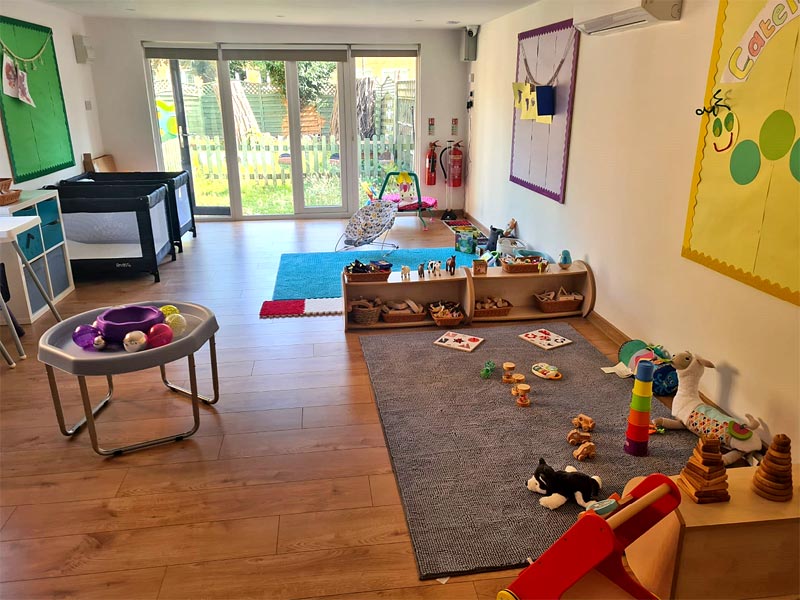
 Are you looking for a childcare place in Streatham? If you have a baby, toddler, or child under five and live nearby, consider Little Cedars Day Nursery in Streatham for your weekday childcare. We are rated as a Good Provider by Ofsted, offer a home-from-home and nurturing environment for your child, and support various childcare funding schemes for eligible families. We also offer a stretched (51-week) provision that spreads free childcare hours over the whole year. As well as providing a childcare service to families in Streatham, we may also suit those living nearby in places like Tooting, Furzedown, Balham, Norbury, and Colliers Wood. Choose an option to get in touch today:

 Except for Safeguarding, the new Report Card will show Ofsted’s evaluation of each of the assessment areas as one of the following:


 Summer is in full swing from late June until late September*. It’s a wonderful season that brings with it many amazing things for children and families to look out for in nature. Indeed, that’s what today’s suggested activity is all about. We’ve created a free-to-download poster that highlights 20 things from nature that children, including under-fives, can look out for when they’re outdoors†. Whether it’s in gardens, on walks with family members, at the park, or out in the countryside, summer’s natural wonders are incredibly abundant when you take time to look.


 Work at least 16 hours or more per week at the National Minimum Wage


 Are you the parent of a 3-year-old child, or one that’s just turning 4? If so, you need to choose your 3 preferred primary schools now and submit your application for them at the latest by mid-January of the coming year. It’ll be here before you know it! Whether you want your child to begin school at the age of four or five, you have limited time left for your application. With that in mind, today’s post outlines our top tips for a successful primary school application for your preschooler. Read on to learn how to maximise your potential success in achieving a school place that’s best for your child.
 It’s important for parents to focus on primary schools that are close to their child’s home. That’s for two reasons:
 Visit the schools on your shortlist. Such ‘in-person’ visits are like gold dust. You can ask questions, get a feel for the school, see how the existing children are getting on, witness the teaching style, and see how well your child might fit in. Take them with you if possible. Most primary schools will have open days or evenings, so find out about those and attend. Alternatively, call the head or school office to arrange a guided visit if possible.
 One of the most fundamental decisions you need to make before applying is whether you want your child to begin at primary school when they’re 4 or the ‘legal’ maximum age of 5. This is a conundrum especially for “summer-born children” i.e. those born between the start of April and the end of August. For this age group, they’ll be amongst the youngest if they start in Reception Year at 4 or amongst the oldest if they defer their start until the age of 5. What’s more, for those deferring until 5, it’s not the parent who decides whether a child goes into Reception or Year 1 — it’s the schools and local admission authorities. So, parents need to decide, before applying, whether they wish to go with the usual flow and start their children at 4 (will they be ready?), or defer a year until they’re 5. It’s a fine balancing act and your decision needs to be made in the best interests of the child. That said, most children do start at 4 and go in Reception Year.
 Priority for primary school places is given first to those who submit applications on time. Each year, that means between the 1st of September and the 15th of January when your child is 3 or has just turned 4. Even if you intend to defer your child’s school start until they’re 5 rather than starting them while they’re 4, you still need to apply while they’re only 3 or have just turned 4. If you miss the mid-January deadline, you will stand a much lower chance of achieving a place for your child at your preferred school(s) — because places will already have been allocated to those who applied on time. Sadly, many families miss out because they simply didn’t realise how early they needed to apply.
 You read that right! When National Offer Day for primary schools arrives, it’s generally agreed that you should accept whichever school place is offered to your child. That’s the case even if you’re unhappy! It’s because your child then has a firm school place to fall back on should you appeal, or go on a waiting list for another school, and are unsuccessful. Accepting the initial school place that’s offered does not adversely affect your chances with appeals or waiting lists, which is why the accepted wisdom is to accept the initial offer.
 Last year,
  As well as helping families financially, the scheme expansion should help children begin their early years education even earlier, for many, which has been shown to be hugely beneficial to them. The free childcare provision will also help many more women back into the workforce. Children, families and the economy should all benefit.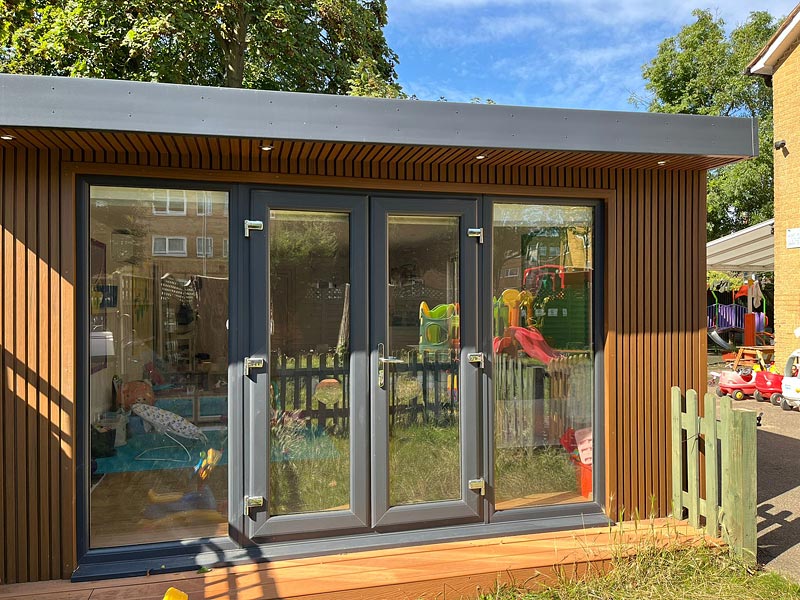


 National Children’s Gardening Week takes place each year in the UK during what’s known as the ‘warm week’ beginning right at the end of May. This year (2024) it spans from 25 May to 2 June. However, children can get involved in gardening well outside of those dates*, of course.
 This year (2024), National Children’s Gardening Week has teamed up with The World of Peter Rabbit and is encouraging children and their families to Grow With Peter Rabbit!
 Did you know, there are some incredibly
 Compost heaps are also wonderful homes for minibeasts, which are also fun and educational for children to spot. Use our previously published
  So, making a wildlife-friendly garden or area is a very worthwhile activity for children to take part in — and is educational on so many levels. See
  Children can do ‘gardening’ activities indoors too! Get them to
  The benefits of gardening for children are many and varied and that’s why it’s such a wonderful activity to get them involved in. It will teach children many new skills and new knowledge. It’ll teach them about the circle of life, how to care and be responsible for other living things, and about the importance of looking after the planet. It will also give them an insight into where some food types come from. It is also great fun, will give children a huge sense of achievement, and may even open their eyes to the possibility of careers in horticulture, land management, food production, farming, and the like. And, of course, gardening makes the world a better place in so many ways. Let’s also not forget that