
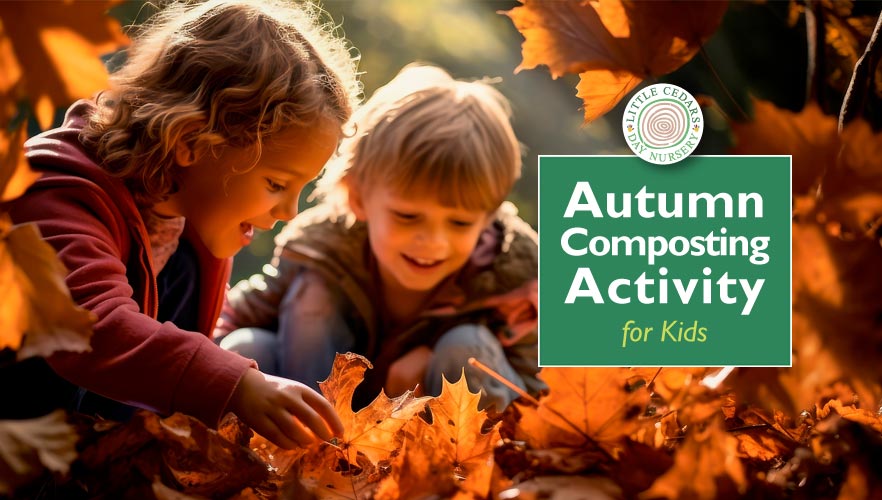
 Autumn is a magical time filled with vibrant colours, falling leaves, and a wonderful quality to the air. With rustling leaves covering the ground in a myriad of hues, it’s the perfect season to engage children with the wonders of a composting activity. Composting is fun, worthwhile, and educational. It not only teaches kids about the importance of recycling and sustainability but also provides an exciting outdoor activity that connects them with nature. In today’s article, we’ll explore the joy of composting with an autumn twist, where children can harness the abundance of fallen leaves to create a rich and fertile compost for the garden. Children of all ages will love this nature-based outdoor activity and it’s a win-win in every sense — for children, nature’s flora and fauna, and the garden itself.
Leaves, Learning & Fun!
The Magic of Autumn Leaves
 Autumn leaves are rather like nature’s confetti and they play a crucial role in composting. Perhaps explain to children how leaves provide essential carbon and nutrients that are key ingredients for a successful compost pile. Encourage them to collect a variety of leaves in different colours and shapes, so this activity becomes a stimulating treasure hunt too.
No garden? No worries; composting needs as little as a corner somewhere and the final product is just as good for indoor plants.
Creating a Compost Bin
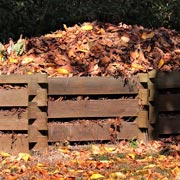 Guide children in setting up a compost bin or, in its most basic form, it could take the form of a simple pile in the garden if you have one. If not, an undisturbed corner somewhere outside will suffice. Emphasise the importance of a balanced mix of green (nitrogen-rich) and brown (carbon-rich) materials. Leaves are a fantastic source of carbon, balancing out the kitchen scraps and other green materials that you and your child may soon start to add.
Layering the Good Stuff
Help your little one understand the layering process of composting. Start with a layer of autumn leaves, add kitchen scraps like fruit leftovers, vegetable peels, and crushed eggshells, and then sprinkle a bit of soil if you have access to some. Repeat this process, creating a compost ‘lasagna’ that will eventually turn into nutrient-rich soil.
Turning the Pile
Composting is not just a one-time activity; it’s an ongoing process. Show children how turning the compost pile every few weeks helps speed up decomposition. This is a great opportunity for them to get their hands dirty (under supervision) while learning about the science behind composting.
Observing the Changes
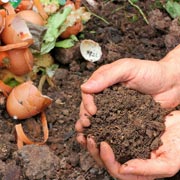 As the compost pile transforms, involve children in observing the changes. Discuss how the compost becomes darker and richer over time. Point out the minibeasts that’ll no doubt move in and, of course, teach them to be gentle around them, to nurture their sense of responsibility and empathy. You can also use composting as an opportunity to talk about the importance of recycling and reducing waste.
Using Compost in the Garden
Once the compost is ready, involve children in spreading it in the garden. Or, if you have no garden or outdoor plant areas, the compost is just as beneficial to indoor potted plants. Explain how the nutrient-rich soil that they have generated will help plants grow strong and healthy. This hands-on experience connects them with the entire cycle of composting, from collecting leaves to seeing the positive impact on plants.
Autumn Composting Activities
 To make composting even more enjoyable, you and the children could incorporate other autumn-themed activities. For example, they could create leaf art while waiting for the compost to develop, they could decorate the compost container through painting, or they could take part in an autumn treasure hunt for different types of leaves and seasonal seeds. This all adds an extra layer of fun to the composting process.
Composting is Fun, Worthwhile & Educational
Composting in autumn is not only a practical way to manage organic waste but also a delightful and educational activity that gets children outdoors and brings them closer to nature — and that is good for them! The vibrant colours of fallen leaves, the earthy smell of compost, and the satisfaction of creating something valuable from nature’s bounty make this experience both educational and enjoyable. So, encourage them to gather those leaves and embark on an autumn composting adventure together!
Your Streatham Nursery & Preschool
High-quality Weekday Childcare in Streatham

 Little Cedars is a wonderful nursery and preschool in Streatham. As well as providing weekday childcare for children under five, we also provide them with a high-quality early years education. This is all done by childcare professionals in a lovely home-from-home setting away from the busiest part of Streatham, close to Tooting Common, in Aldrington Road. At Little Cedars, we nurture every child so they achieve personal bests in all areas of their learning and development, ensuring they are school-ready by the time they leave us at the age of five. All the main Government-funded childcare schemes are also supported for eligible families.
Get in touch to ask any questions, to arrange a guided visit, or to enrol your child for a childcare place. We can’t wait to meet you and your child!
Little Cedars Day Nursery is based in Streatham, close to Tooting Common, Tooting, Streatham Hill, Streatham Park, Streatham Common, Furzedown, Tooting Bec, Tooting Broadway, Balham, Norbury and Colliers Wood.
Safeguarding Note
Children, particularly the very young, will require adult supervision and oversight when playing or exploring outdoors. Please do your own risk assessments as well as teaching children to be mindful of hazards, stranger danger, health and safety. Our safety tips for outdoor play should help to get you started.
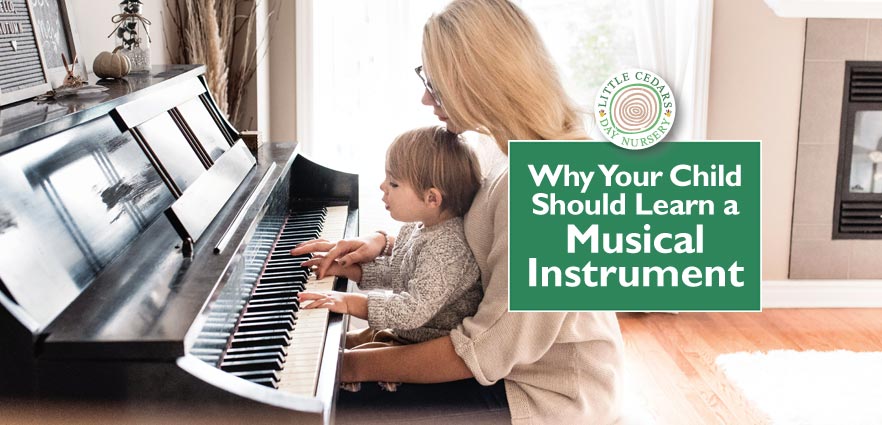
 Both children and adults have a natural affinity with music. It’s one of life’s simple pleasures that just about everyone seems to enjoy in one way or another. Children will naturally start to move, dance, join in or even learn songs that they hear — such reactions seem instinctive to them. Learning to play a musical instrument is therefore a natural next step for them. Indeed, it’s one that parents, guardians and carers should consider encouraging, particularly given how beneficial such an endeavour will be to their child. Learning to play a musical instrument is not simply fun; it profoundly benefits children’s learning and development. With that in mind, we take a look today at the incredible array of benefits that learning a musical instrument poses for children, including under-fives.
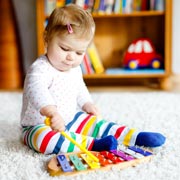 Studies have also shown that learning an instrument or learning how to read music develops the left side of the brain. This area is responsible for processing language and reasoning. Hand-eye coordination skills are also aided when learning to play a musical instrument and reading music. As children’s playing and reading become more advanced, it requires the brain to work at a range of speeds, which is also great exercise for the brain.
 Music gives children a really flexible way of expressing themselves. For instance, the way they choose to bang on a drum, shake a tambourine or strum a guitar can allow them to show happiness, anger, frustration, calmness and many other emotions. Playing a musical instrument gives them a real freedom of expression, even at a very young age. Then, if they reach a point where they are able to make up their own melodies and arrangements, music can become an almost immeasurably powerful tool for self-expression and communication.
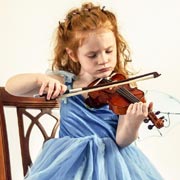 Although playing an instrument is creative, music and maths are very much intertwined. Beats, rhythms and scales are all based on maths and children naturally need to work out some maths in order to understand the song and any sheet music. This will naturally help them to better grasp mathematics and illustrate a real-world example of how it underlies many things.
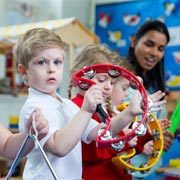 Whether your child is listening to a tutor, teacher, friend or relative, listening skills are very important. Music is a natural way to encourage listening and that’s even more true when children learn to play music themselves. Doing so in their early years will help them to follow instructions, listen out for smaller details as well as the bigger picture. Working together on a piece of music is also a fantastic way to hone group listening skills and teamwork and to encourage collaboration.
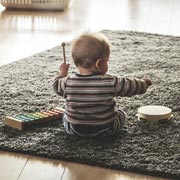 Indeed, music helps to support all 7 focus areas of
  When children master a song, no matter how basic, they get an enormous sense of achievement and even more so if they are praised by adults and peers. Such praise also encourages the child to progress further, of course. Boosting self-esteem and self-confidence in their early years is important for their future wellbeing too. Achieving something through learning, patience and practising regularly also teaches them that persistence and effort will help them overcome challenges. That’s a very important lesson in life.
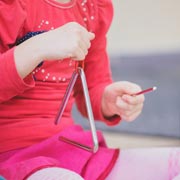 Little ones can first practise keeping in time to music or a beat that an adult is demonstrating, perhaps. Maracas are also good starter instruments although, again, anything that makes a shaking sound can be made at home at zero cost. For instance using an empty carton or plastic container securely sealed with dried rice, pasta or lentils inside. Once they get the hang of such percussive or shaker-style instruments, you can consider transitioning them to more advanced instruments like recorders, ocarinas, keyboards, stringed instruments and so on. Often, children will be more than willing to give such instruments a try and some encouragement and guidance from knowledgeable adults or older children will always be helpful. And, who knows, they could end up being maestros and even stars in the making!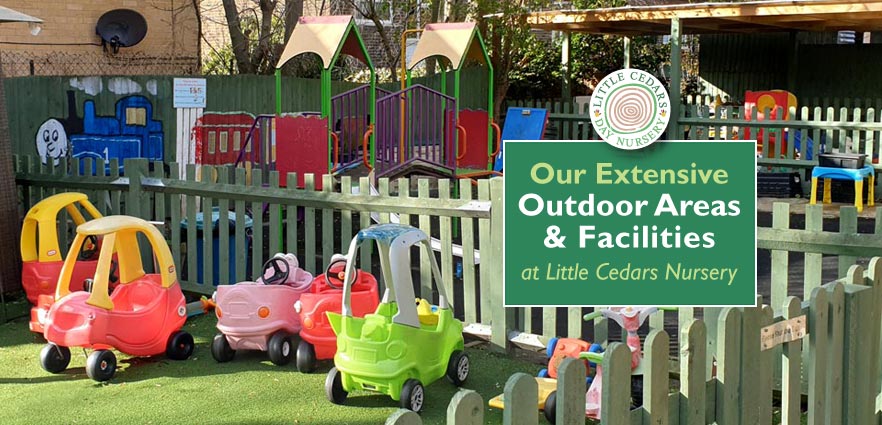
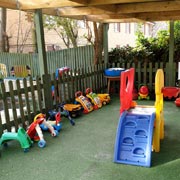 We have a huge outdoor area for children at Little Cedars Nursery, Streatham. Parents express their surprise when they first see it, regularly commenting that it’s much larger than the outdoor areas of other nurseries and pre-schools in the area. Our extensive outdoor play areas are also packed full of fun, educational play equipment and facilities that our under-five children absolutely adore. That includes areas and facilities set up especially for particular age groups.
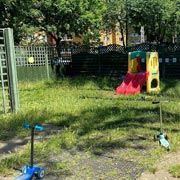 The outdoor ‘mud kitchen’ is a particular hit with children at the nursery. They can enjoy creating in the sand play and water play areas too. These are fun and educational activities —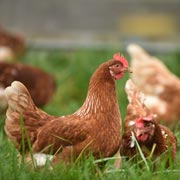
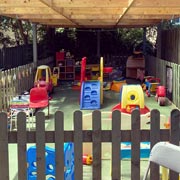 As you can see from some of the photographs, the nursery’s extensive outdoor areas include both open-air and undercover areas. That means children can play and explore whatever the weather. Outdoor play is good for children, teaching them some things that simply can’t be taught indoors, so it’s wonderful that many of the outdoor facilities can be used all-year-round.
 Outdoor play at Little Cedars Nursery also supports the Early Years Foundation Stage (EYFS) curriculum. Learning through outdoor play teaches children so much and in a natural way. Outdoor play supports such areas as communication & language, physical development, personal, social and emotional development and understanding the world. Many such lessons come naturally as children play with one another and interact together via outdoor activities.
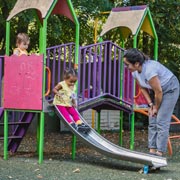 Such staff will continuously identify the individual interests and needs of each child and ensure that the learning and development activities they access will benefit them in the optimum ways. The idea is to further strengthen existing areas where children are strong, while bolstering children’s skills in areas that may require extra focus.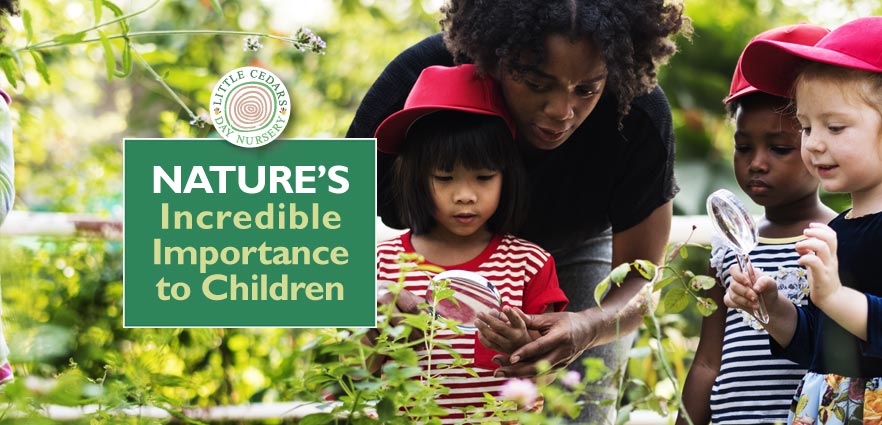
 It’s amazing how much nature benefits children, particularly in their early years when they’re finding out about the world around them — and also learning about themselves. There have been many studies into the importance of nature, to youngsters in particular, and the studies all reach a similar conclusion — nature is incredibly important and beneficial to children. Today we’ll explore the topic and learn why children should regularly access the natural world.
 Stress is also reduced on both a mental and physiological level through exposure to a natural environment. In studies, stress hormone and blood pressure levels both improved after exposure to nature, helping children both physically and emotionally. Nature seems to be a great way to recharge children’s batteries and lower stress and anxiety, as well as improving attention, engagement and academic performance. That includes improvements in important skills like reading, writing and mathematics.
 Improved social skills and even wider circles of friends due to the opportunities offered through outdoor play and adventure.
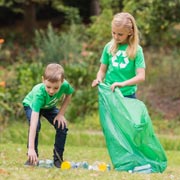 The new skills, knowledge and freedom that nature gives children also helps them to become more self-confident and independent individuals.
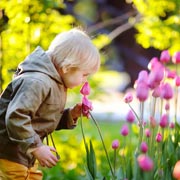 Even in built-up cities like London, immersion in nature is possible via gardens, parks, commons or, if you’re lucky to have them near you, nature reserves and nature gardens. There are many of these dotted around London, including
 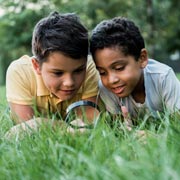 If you’re searching for
 Welcome to our quick guide to Tummy Time. One of the most important things for babies during their earliest development is to build strength, muscles, motor skills and coordination. In particular, learning to lift and safely move their heads is one of the most crucial skills at this young age. Strength and muscle coordination in their neck is therefore very important. That’s not easy when they’re newborns in their first few weeks because their head is comparatively large and heavy compared with their little bodies at that age. Building upper body strength in arms, shoulders, core and back will also greatly help them in their physical development and mobility, essentially helping them to perform and survive safely as humans. Tummy Time is a key tool in learning to accomplish all of these goals — and many more.
 What is Tummy Time?
 It helps to stop the development of deformations in the skull. ‘Positional plagiocephaly’ (or ‘Flat Head Syndrome’) might otherwise occur if the baby is only positioned in a limited number of positions, i.e. mostly on its back. Bear in mind, of course, that at this young age the baby’s skull bones are far more flexible than those of an adult, so such deformations are more likely if the baby’s head is always lying in the same position.
 Making sense of sensory stimuli is also aided by the positive results of Tummy Time, as babies can better explore and gain improved sensory perception of everything in their immediate vicinity.
 Try putting the baby in a prone position (i.e. on their tummy) on, say, a clean blanket or rug. Lie down on your tummy too and face them, encouraging them to stay on their tummies by use of a game like peek-a-boo. If you can, try to get them to raise themselves onto their arms or, eventually, hands. Move yourself around a little, so they move too and strengthen their muscles. If they’re finding it too difficult initially, a rolled-up blanket underneath their chest may help to start them off. Don’t worry if at first they can only push themselves up on their arms or hands only for fleeting moments; they will gradually improve as they try more and more.
 After 6 months, they should start to be able to support their weight on their arms in a raised, kind of ‘press-up’ position. This can be encouraged with some support (and play) from you and they’ll get the hang of it with practise. Soon enough, they’ll also be able to roll sideways in either direction and get themselves back into the prone position when they want to. They’ll soon master the art of passing a toy from one hand to another at around this time. They’ll also be able to get themselves into a sitting position before they’re 9 months old, or thereabouts.
 Being let loose with coloured paints, art materials and creative opportunities is sure to bring a smile to their faces and a sense of enormous fun, creativity and discovery. No doubt too; they’ll be proud to show others their creations!
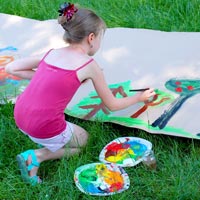 As well as being enormous fun, messy play allows children to express themselves in unbounded creative ways. That’s important. Self-expression and creativity will help children to gain a sense of achievement and, through this subtle way, a greater sense of self-worth and confidence.
 Hand-eye coordination will also benefit, of course.
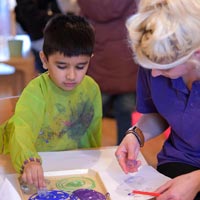 We fully understand the many benefits of messy play at Little Cedars Nursery, of course. Indeed, it’s part of the curriculum. Under-fives are encouraged to learn through messy play using an enormous wealth of resources, equipment and materials at the setting. That’s both indoors and in our outside play areas. From paint and paper indoors to sandpits and water play outside, toddlers and preschoolers have a wonderful time with messy play at Little Cedars, all in a safe, structured, fun and educational environment.
 Little Cedars is one of
 Sensory Play Ideas for Babies
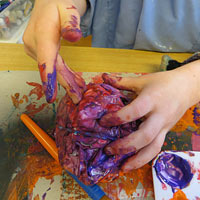 • Paper. Babies will love the feeling of scrunching up paper and will notice the sound as well as the contoured feel of their new creation. They may need a demonstration to get started, though. They’ll start to comprehend the concept that something in one form, like a pristine, wafer-thin sheet of paper, can be made into something completely different — in this case, perhaps a simple ‘ball’ of scrunched-up paper. Even
 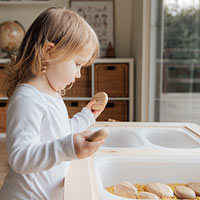 • Different objects & materials: babies will enjoy playing and learning about the properties, touch, feel and sound of different objects and materials. For example, (safe) wooden utensils, water in a closed beaker or bottle or small plastic or card boxes that they tap like a drum, or try to stack into a ‘wall’ — and so on. They’ll learn about physical properties of each along the way, including sounds, textures, touch and, if they include some carefully chosen food items, taste. It’s amazing what fun babies will have with such simple items — often learning far more from these than from purchased toys.
 • The natural world: babies also greatly enjoy the simple pleasures offered by the natural world. A breeze on their faces may greatly intrigue them, even more so when they see leaves rustling and moving a little on the ground. The feel and texture of grass on the lawn or the sight of sunlight dappling through the trees or reflecting off puddles can be wondrous to them. Under close supervision, getting to know the textures, hues and smells of safe, natural objects outdoors can also be a source of sensory discovery.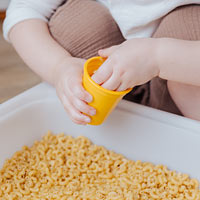
 • Hand & foot prints: preschoolers will never be bored with smothering their hands or feet in coloured paints, then making prints on paper or card. Footprints and handprints can be random or used to make images or patterns. This process is both creative and a sensory experience for them as the cold paint squelches between fingers or toes. They’ll learn so much including about mixing pigments, creating images from simple printed shapes, about the concept of paint eventually drying to form something semi-permanent and about different textures being formed, depending on the consistency of the paint. We take these discoveries for granted as adults, but we would originally have had to learn about them during our early, formative years.
 • Food creativity: toddlers can also take playing with food to the next level by introducing the concept of making images out of things like fruit- or vegetable-based sauces, cream or yogurt. Whole pictures can be made of food, using the hands, for example using broccoli for ‘trees’, peas for grassy areas and so on. The whole thing can smell great and even be tasted! Playing, hands-on, with food in this way can be fun and creative but also help children learn to accept new foods and tastes into their diets. However, care needs to be taken because proper mealtimes require good manners and children need to understand that food is not usually for playing with.
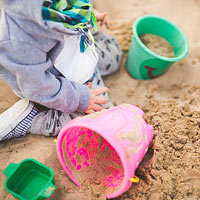
 • Sensory sand: it’s very rare for little ones to dislike playing with sand, which allows youngsters to get hands-on creatively. They can learn about the unique and varying textures, consistencies and properties of sand, depending on how much moisture it contains. Dry sand has its own unique set of properties, acting and feeling almost like a powder. Very runny, wet sand is great fun as it can be used to run through the hands and ‘set’ into pointy mountain shapes that look quite magical. Or, when less water is added, sand can be fashioned into shapes and, of course, “castles”, using the hands or by filling buckets, hollow vessels, or tubs. Children can also press their hands and feet into level, damp sand in a sandpit or tray, to make impressions and patterns. It feels great too and is an almost essential part of childhood. Young children learn so much from this stimulating, multi-sensory type of play.
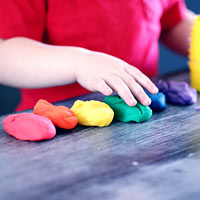
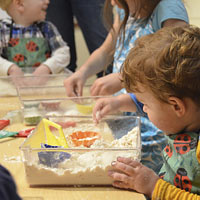 • Playing with dough: whether bought or home-made, dough is always a big hit with young children. It can be fashioned with the hands into shapes, characters, animals and mini-sculptures. Using food colouring in dough also allows children to discover more about mixing pigments. Salt dough can also be baked (under the close supervision of an adult) so that it hardens into more permanent creations. Many types of dough even smell great too! What’s more, it can even lead to a bigger interest in cooking real, edible dough and other baked foods when they’re a little older.
 • A sensory garden. We’ve left perhaps the best until last. Making a sensory garden area with, or for, little ones will give them a magical experience. There are so many materials that can be used in the construction of sensory gardens, including soil, earth, pea shingle, tree bark, moss and so on. Plants themselves will also add to the fascinating mixture of textures, colours and even smells found within a sensory garden. It can be as small or large as you have room for and can even be achieved in containers, pots or on balconies for those who do not have gardens. It can take many forms so it’s design also gives children a wonderful creative opportunity. Sensory gardens are a complete feast for the senses for young children — adults too — encompassing touch (e.g. the textures of materials, moss and plants), smell (why not include some herbs — these smell wonderful and can be tasted too), potentially sound (crunchy gravel, rustling leaves etc.), sight (aesthetics, colour etc.) and will also give children ample opportunity to improve balance and body awareness as they construct and create in this unique space.
 Sensory play is incredibly important for under-fives. Babies and young children benefit enormously when their play activities stimulate the senses and in this article we’ll explore those benefits in some detail.
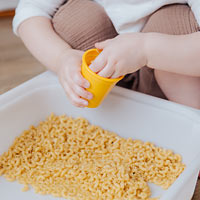 activities that involve touch, where babies and children can acquaint themselves with the feelings of temperature, softness, hardness, pressure, vibration, roughness, smoothness etc.;
 The Benefits of Sensory Play
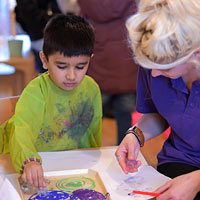 Babies and children are, of course, given a huge variety of sensory-based play opportunities at