 A childcare nursery should not be thought of only as a crèche, playgroup, or simply somewhere that looks after babies and children while parents go to work. Good nurseries and pre-schools like Little Cedars are so much more than that. It’s incredible just how much they benefit under-fives, families and society as a whole once you take a closer look at everything they do — and that’s exactly what we’re doing today…
Somewhere Safe for your Child, While You Work
Yes of course, in the most simple analysis, a childcare nursery or pre-school is somewhere for babies, toddlers and under-fives to be safely looked after in a parent’s absence. And, as a high quality, Ofsted-registered childcare setting, Little Cedars Nursery will only employ trusted, trained and fully-vetted staff to look after little ones. All the appropriate safeguarding measures will also be in place in a professional childcare setting such as ours. This allows parents to continue with their careers, safe in the knowledge that their little ones are being cared for well, in a safe and trusted place.
A Home-From-Home Environment & Beneficial Interaction
 What’s more, staff at childcare settings like Little Cedars will form close bonds with little ones. Studies show that regular interaction with adults helps children’s brains to develop optimally. Did you know that a million new connections form in a child’s brain every second when you interact with them?
“A child’s brain forms a million new connections every second when you interact with them.”
Our early years practitioners will also ensure that children feel at home at the nursery/pre-school right away. The home-from-home atmosphere and warm, deeply caring staff mean that your little one also knows that they are safe, loved, valued and is being looked after well.
A Good Early Years Education
 Good Ofsted-registered nurseries/pre-schools like Little Cedars also give under-fives a full early years education. That’s important to know. Through a learning and development programme that’s customised to each individual child, we ensure they achieve their own personal bests in all areas of the statutory Early Years Foundation Stage (EYFS) curriculum. Despite their young age, areas of their learning are huge in scope. They include communication, language, literacy, mathematics, art and design as well as physical development and understanding the world as a whole. Children’s personal, social and emotional development is also nurtured fully.
Through this comprehensive and tailored approach to learning and development, children benefit, far into their older years, in many profound ways. A good early years education is therefore incredibly important and beneficial to children and, indeed, many studies back this up.
Nurturing a Love of Learning
This early years education is also done in a way that’s fun, with learning mainly through play, in such a way that children love learning! They naturally explore, investigate, question and ultimately learn more throughout their lives because their early years education has nurtured a natural will to learn in them. That’s gold dust for little learners!
Social Development & Fun With Friends
 Part of children’s personal, social and emotional development comes through active play with other children that they meet and get to know at the nursery. This is firstly great fun, of course, and that’s a hugely important part of any happy childhood. However, they’ll also learn many things through play. Without socialising with others, it would be more difficult to improve social skills, for example. Only by being around other children will they learn to account for the feelings of others, learn to respect one another and ultimately form close bonds, trust and friendships. Many such friendships will indeed continue long afterwards, as children move to schools at the age of five.
Improvement of Physical Skills
Children benefit from good nurseries and pre-schools like Little Cedars in other ways too. As well as helping them educationally, cognitively, emotionally and socially, children benefit physically from a good early years education. The learning and development programmes and activities at Little Cedars Nursery, for example, help children to master physical skills. They gain strength and fitness as well as improving coordination and motor skills. Both fine and gross motor skills will improve through both planned and free-play activities available at the nursery. This is all part of the plan for each child at the nursery. Indeed, everything at the nursery, whether it’s an item of equipment, game or activity, has a purpose.
Preparedness for School
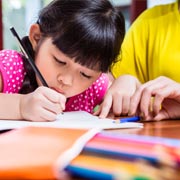 Another key aim of good early years childcare provision is to prepare children thoroughly for school. Why? Because well-prepared under-fives are statistically likely to do much better at school — and beyond — than those who didn’t receive a good early years education. By preparing and educating them in their early years, children will be able to hit the ground running the moment they start school at the age of five. Grades will be better and they will then have more choices and opportunities when the time comes to apply for further education in their teens.
“15-year-olds who had attended some pre-primary education outperformed students who had not by about a year of achievement.” (OECD report, 2011)
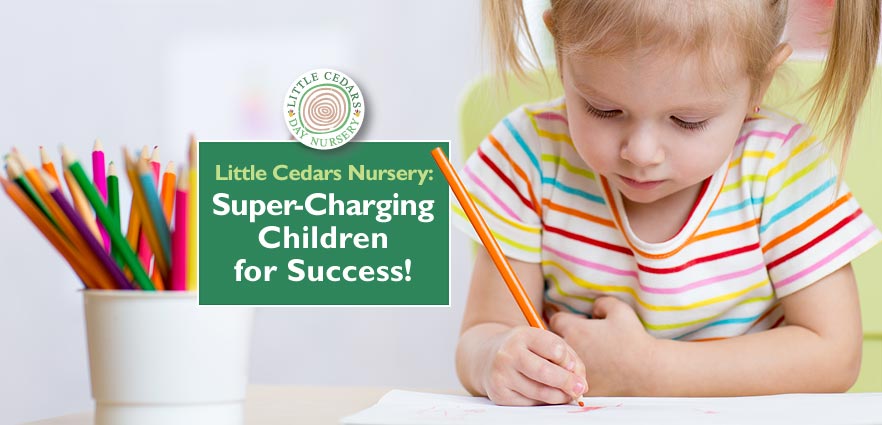
Super-Charging Children for Success
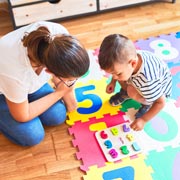 It’s almost as if children are super-charged for success — the benefits of a good early years education are surprisingly long lasting. Some studies even show that the benefits last into people’s working lives, improving salaries (a US study even puts a figure on it), boosting careers and thereby also enhancing a person’s standard of living — well into adulthood. That’s incredible, when you think about it.
Independence and a Healthy Self-Confidence
Another part of a good early years education is for children to learn to be more independent and self-confident. That’s another thing that good nurseries like Little Cedars helps to nurture. We’ll help point them in the right direction, for example with solo tasks, group activities, personal hygiene skills, toilet training, good manners and much more. All of these skills will stand them in good stead in the real world, including when they leave us to start school around the age of five.
Early Warning of Any Issues
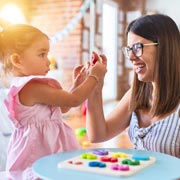 Working so closely with babies, toddlers and preschoolers allows us to continually monitor their individual progress. In so doing, we are in a prime position to spot any issues early and to make appropriate arrangements to mitigate them if needed. For example, we may spot that a child is finding reading challenging. If so, we can put extra effort and time into improving the situation for the child. On occasion, that may even include talking to parents about the possible intervention of a specialist of some kind, or it could simply be that they need to practise specific activities to overcome the issue. The earlier challenges or any special educational or developmental needs are spotted, the sooner the child in question can be helped.
Our Early Years Education Benefits Families & Society Too
As well as hugely benefiting children, the high quality childcare and early years education from providers like Little Cedars Nursery also helps families and society in general. Parents are freed up to go back to work and boost household incomes, boosting the family’s standard of living. Society also benefits from early years education through upward mobility, lower welfare dependency, reduced poverty levels and even lower crime rates. Learn more about the benefits of an early years education here.
An Outstanding Childcare Service in Streatham
Little Cedars Nursery is in Streatham (also close to Furzedown, Tooting, Balham, Norbury & Colliers Wood)

 Rated by Ofsted as a good early years provider, Little Cedars Nursery gives babies, toddlers and under-fives the very best start in life. Why not come for a guided tour with your little one — or simply apply for a nursery place for your child. Our nursery and pre-school is in Streatham near Streatham Hill, Streatham Park, Streatham Common and Furzedown. We’re also conveniently close to Tooting, Tooting Bec, Tooting Broadway, Tooting Common, Balham, Norbury and Colliers Wood. Choose a button below to get started with your nursery application or tour — or for help with any queries.
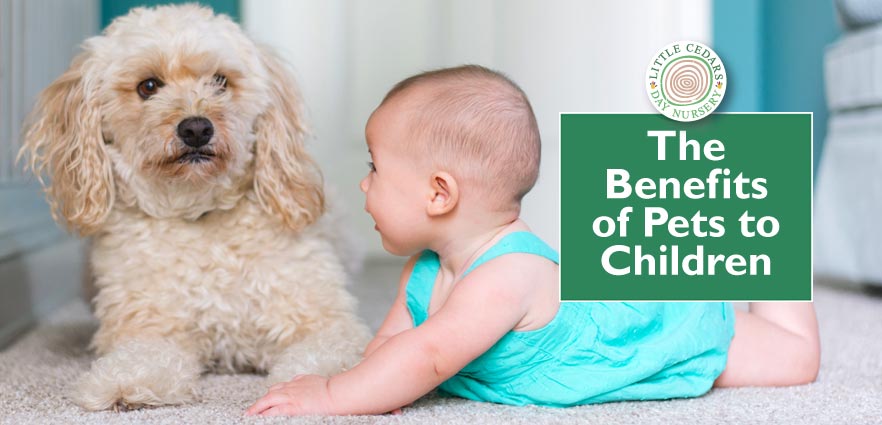
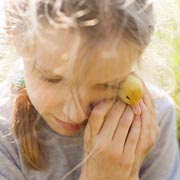 Sooner or later, many parents will consider the possible benefits of pets and whether their child should grow up with one. Mostly, the answer is positive because growing up with a pet can benefit children in many important ways — and really enrich their lives. However, looking after animals is a huge responsibility, not least to the animal itself, so should never be taken on lightly. Today we explore the topic and also outline a couple of animal-related initiatives that we have undertaken at
 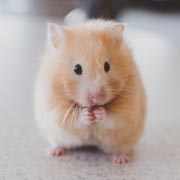 On a simple level, pets are incredibly cute and great fun to be around. As such, most children are naturally drawn to them.
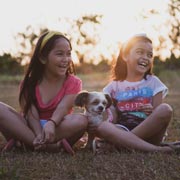
 Familiarity with animals and closeness to pets also teaches children respect for other individuals (whether human or non-human), including recognition of the consequences of their actions towards them. It shows them how to care for others too. It can also teach them patience (e.g. when training) and even some of the harder lessons about life cycles.
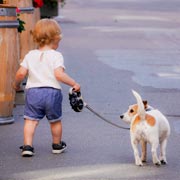
 Introducing animals like dogs and cats to the household is quite a life-changing thing. After all, they are the kinds of animals that pretty much become one of the family and, as such, require significant time, care and attention for their own wellbeing. They also often live freely within the house and require access to the garden and, for dogs, regular walks outdoors. They are quite an undertaking, so the decision to introduce one needs careful and thorough consideration. Many animals form deep, lifelong bonds and you will become their family just as much as they become yours. So, that lifelong commitment is an important one — they are absolutely not unfeeling objects to be treated like just a toy.
 Pets like hamsters, rabbits, budgies and guinea pigs require less space in the household, of course. Indeed, some types of pets can be housed outdoors in suitable hutches. They’re also small enough to be temporarily moved elsewhere, for example to a friend or neighbour when you go on holiday. However, despite them being small, they too have their own needs and wants, including your care and regular attention. Giving them this, however, will be rewarded and children who spend significant time with any pet will soon begin to pick up on each one’s distinct personality and any likes or dislikes. Treat them well and pets will become trusting and friendly. Dogs, in particular, are incredibly loyal when treated well.
 Just like humans, animals need care, proper food, fresh water, friendship, comfort and stimulation. If they don’t get these essentials, they may lead miserable and potentially even foreshortened lives. So, before a family takes on a pet, it’s best to thoroughly research the particular type of animal and exactly what they will require, from food, nutrition and bedding to stimulation (games, exercise etc.), contact with others and medical needs. Families should find out about all these things before taking an animal on. For some types of animal, for example dogs, even the breed and background is important. That’s for the wellbeing of both the pet and the family itself. Remember too that some animals will need training, for example toilet training in the case of cats, dogs and perhaps even ‘house’ rabbits. Some dogs may also require behaviour training. Everything needs factoring in beforehand including things like who will look after the pets while adults are at work, what happens when you go on holiday, who will exercise the dog, clean out the rabbit hutch regularly, feed the rabbit or clean the budgie cage.
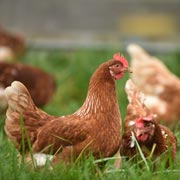
 At Little Cedars Nursery in Streatham, we believe that children will learn a huge amount through contact with animals. For this reason, we have our own chickens and rabbits at the setting — and the children adore them! Our rabbits are named Miffy and Bella and indeed naming them naturally encourages children to treat them like individuals rather than something to play with.
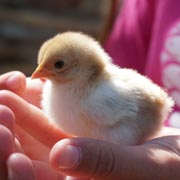
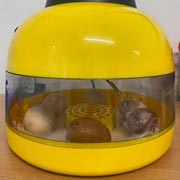 We are also raising some new chickens from fertilised eggs that we currently have in an incubator. We’ll teach children all about the life cycle of chickens with these. Once they hatch, children are sure to love the adorable little chicks that will emerge and they’ll be able to watch them grow up from fluffy chicks to adult chickens. When old enough, the chickens will join our existing, fully-grown chickens that we keep for the children in our animal enclosure outside.
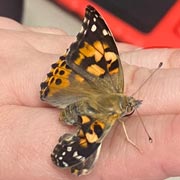 We also have a caterpillar/butterfly enclosure indoors at the setting. Through this, children can follow the incredible life cycle of butterflies, starting off as tiny eggs, hatching into caterpillars, building cocoons and eventually emerging as incredibly beautiful butterflies. This is an amazing metamorphosis for children to witness and teaches them so much about the wonder of the natural world as well as the individual needs of some of its creatures.
 In a follow-up to last month’s post about
 Reading with children, well ahead of them beginning school, has also been shown to boost their language skills, incredibly by the equivalent of as much as 8 months before they’re even five! The key is to read with them; not just to them. Learn more about
 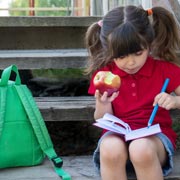 Listen to any reservations your child may have about the prospect of starting school. Listening is important, so be on the look-out for any concerns and reservations they may have.
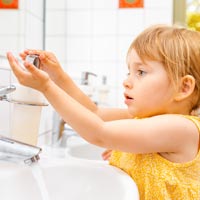 Children will greatly benefit in Reception Year at school if they’re already independent when they start. So, nurturing aspects of their independence well ahead of them beginning school is a good policy. For example, ensuring they know how to independently look after personal hygiene, dress themselves, tie shoe laces, dress, use the toilet, pack their bag and so on. If they can do this before they start school, it will help them enormously.
 Parents/guardians will also be wise to identify one or more of their children’s friends (or potential friends) that will also be starting school at the same time. Ensure they meet up and play regularly, before they’ve started school. In this way, there will be a friendly face at the school from the moment they start. It’ll help them feel more at home and less alone.
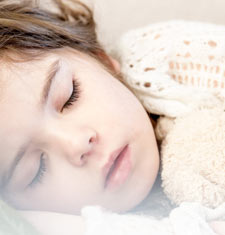 Several weeks before they start school, children should start to synchronise their day with the timings of the new school day. This should include getting up time in the morning and ideally even timings for lunch and suchlike. In this way, children’s body clocks will have adjusted in good time, before they actually start.
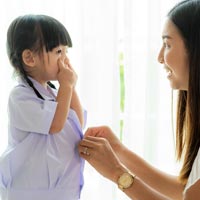 Ensuring children have everything they need, at least a little ahead of starting in Reception, is a good approach. Check that you have all items of their uniform, PE kit, any stationery, lunch box if appropriate, backpack or bag and so on. Is everything marked with your child’s name? Usually it should be.
 Your child will need to know, ahead of time, who is collecting them. If it’s not you, then they need to know clearly who it will be. They also need to be clear around their general safety rules, stranger danger and so on. Schools should also have safeguarding policies in place for unexpected scenarios. For example, if you are unexpectedly delayed and need to send someone else to collect your child, does the school have a password system in place to ensure that only the right person can collect your child? Find out.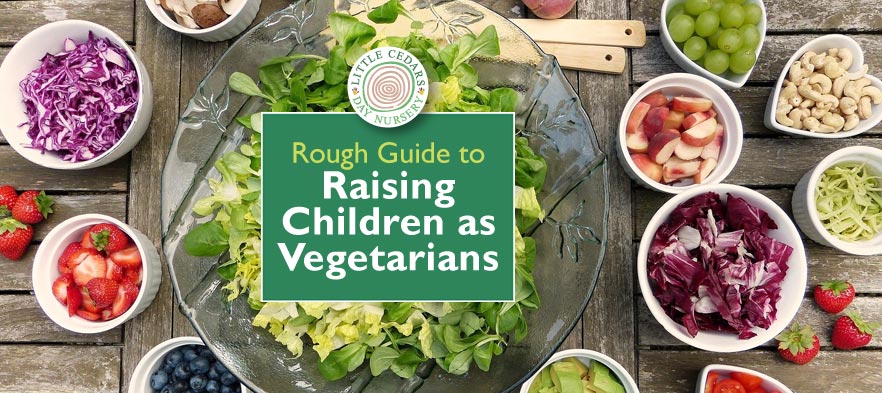
 In our last post, we asked
 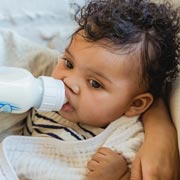 For those on dairy-based formula milk, it’s pretty much plain sailing too. Because vegetarians — as opposed to vegans — are OK eating dairy-based food, formula milk is generally fine for them. The most popular types are based on cows’ milk, although several other animal milks are also available. So long as dairy-based formula milk is high quality, given in the right quantities, consumed at the right intervals and is age appropriate for the child, it contains all the nutrients and vitamins needed. That’s without the need to give additional supplements too.
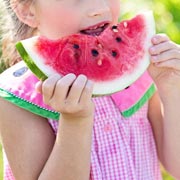 Fruit and vegetables are really a given because they pack so much goodness, including many vitamins, minerals like potassium and also fibre. Fresh vegetables and fruit are ideal but, failing that, frozen, tinned and even dried varieties are also OK.
 Tofu, also known as bean curd, which is made from soy.
 any pulses, seeds or grains should be sprouted, cooked or soaked before consumption (as appropriate);
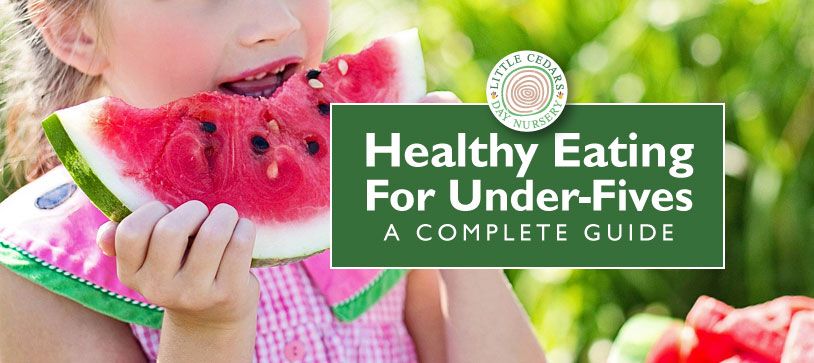
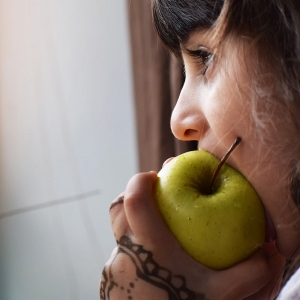 With families living busy lives these days, it’s not always easy to provide the very best nutritious meals for children. This is compounded by an abundance of ready meals and convenience food available in shops and advertised everywhere. However, healthy, balanced diets are incredibly important for children in their early years. Adopting a healthy diet early on can mean that some diseases associated with later life can be avoided. Healthy food also has other beneficial effects on growing children including sustained energy levels, improved cognitive activity, the evening out of a child’s moods, help with mental wellbeing and maintaining a healthy weight.
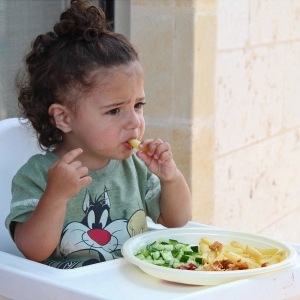 Make sure you give the
 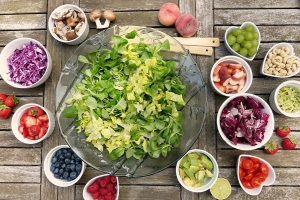 Childhood obesity is a growing problem in the UK, with nearly a third of children aged two to fifteen being overweight or obese. What’s more, data shows that children are becoming overweight at ever-earlier ages and are generally eating less fruit, vegetables, oily fish and fibre than is recommended. The lack of a varied diet will leave children lacking in some essential vitamins and minerals. This is all of major concern. Obesity alone can lead to health issues in later life such as diabetes, heart problems, high blood pressure and even cancer. It may also lead to bullying and self-consciousness which may adversely affect a child’s self-esteem and mental wellbeing.