

While most people have heard of dyslexia (see our recent guide), fewer are aware of a condition called dyspraxia. In this rough guide we give an overview as to what dyspraxia is, how it affects children, how to spot the signs of it and what can be done to mitigate its effects.
What is Dyspraxia/DCD?
In essence, dyspraxia (DCD) is a condition that causes problems with movement and co-ordination. When children have this, they may appear more clumsy than their peers and the condition will adversely affect how well they execute physical activities. For this reason, they may reach some of their key developmental milestones later than expected. There are varying degrees of the condition, so children who have it may exhibit symptoms sooner, later or more/less severely than others.
- The condition cannot be cured, so needs to be managed (usually right into adulthood) in order to mitigate its effects.
- Dyspraxia affects 3 to 4 times more boys than girls.
- It’s not usually possible to get a definitive diagnosis before a child is at least 4 to 5.
- The condition is also sometimes referred to as Specific Developmental Disorder of Motor Function (SDDMF).
- Children with dyspraxia often have other conditions including ADHD, autism, dyslexia and/or sometimes problems with speech.
How Does it Affect Children?
Although dyspraxia usually has nothing to do with intelligence or the ability to think, the condition can really hold children back. As well as the innate inconvenience of not being good at co-ordinating movements and physical tasks, it can leave children prone to being less fit. This is simply because they’re not naturally co-ordinated enough to be good at sport and physical activities, so are less likely to partake in them.
Children with dyslexia/DCD may also have trouble with concentration, low attention spans, following instructions, copying information and organising themselves or other items. Due to the issues around the condition, they are often slower at picking up new skills. All of this can be very frustrating for them, so sometimes they develop behavioural problems too. Dyspraxia/DCD can make a child feel different, feel isolated, sometimes become the focus for bullying and often have trouble making friends. All of this can lead on to give sufferers a low sense of self-esteem.
Signs to Look Out For
Babies and toddlers with dyspraxia may start to exhibit a delay in starting to crawl, roll or sit. Before they’re one, they may also end up in odd body positions or have strange posture.
As they develop and grow older, they may show difficulty when they eventually walk, feed themselves, dress, draw and/or write. They may have trouble stacking things, playing with certain toys, using pencils, using cutlery, eating and generally co-ordinating their movements. Playground activities like running, jumping, and kicking or catching a ball may be difficult for them to co-ordinate correctly. Trouble with buttoning clothing when they’re older and tying show laces is also a classic sign.
Why Children Develop Dyspraxia
It’s not known why children develop dyspraxia/DCD but children are more likely to develop it …
- if they were born prematurely;
- if they were low in weight at birth;
- if they come from a family with a history of it;
- if their mothers drank alcohol or took illegal drugs whilst pregnant.
Diagnosing Dyspraxia/DCD
If you suspect that your baby, toddler or child may exhibiting possible symptoms of dyspraxia/DCD, you should consult your GP, Health Visitor or the Special Educational Needs Co-ordinator (SENCO) at your child’s educational setting. Your child may then be referred to a specialist healthcare professional who can assess them. Diagnosis itself is usually undertaken by a paediatrician, often in tandem with an occupational therapist who will later be involved in treatment if the diagnosis turns out to be positive. Much more detail about dyspraxia/DCD diagnosis is available on the NHS website.
How to Help Children with Dyspraxia/DCD
While dyspraxia cannot be cured, there are ways to help children with the condition and indeed they may well require help for the long term. A tailored help plan is usually generated by a combination of healthcare and educational professionals in tandem with parents and the individual concerned. The plan will be designed to mitigate the specific challenges that a child is facing, so will differ from case to case. For example, a child may need help from a paediatric occupational therapist to master use of cutlery, writing, playing and dressing etc. And/or a clinical psychologist may be needed to help with the child’s mental health. An educational psychologist may be able to help the child overcome barriers to them progressing their education … and so on. Learn more about the types of treatment available for children with dyspraxia here.
The following video may also be useful as an illustration of how one family deals with childhood dyspraxia.
Dyspraxia & Special Educational Needs at Little Cedars Nursery, Streatham
It’s important for nursery staff, education professionals and parents to look out for the signs of possible dyspraxia, and any other conditions, in children under their care. The earlier symptoms are spotted, the more likely the child can be helped to best effect. While it’s not possible for children under 4 or 5 to be positively diagnosed with dyspraxia/DCD with full certainty, should a positive diagnosis be suspected, then a tailored learning and development programme can be put in place at the earliest opportunity. In this way, the child will be supported where needed and any adverse effects of the possible condition can be reduced to a minimum. Using this approach means that even children with special educational needs can thrive, achieving personal bests as they progress through their learning and development milestones.
 Little Cedars is one of the best nurseries in the area around Streatham, Streatham Common, Streatham Hill, Streatham Park, Furzedown, Tooting and Balham. We’re based at 27 Aldrington Road, Streatham, SW16 1TU and offer outstanding, weekday childcare services for babies, toddlers and preschoolers up to the age of 5. So, if you are looking for a high quality nursery or pre-school in any of these south west London areas, please make contact with us while a few places are still available (please choose a button):

 Streatham was the birthplace, home or workplace of a huge number of famous people. Just a few include:
 Henry Robertson Bowers, one of the explorers on the ill-fated Terra Nova exploration of the Antarctic with Robert Falcon Scott (better known as Scott of the Antarctic), lived in Streatham and attended Streatham High School for Boys in Pinfold Road.
 Super-model Naomi Campbell was born in Streatham in 1970, the maternal daughter of a professional dancer, but never met her father.
 Rapper ‘Dave’ Orobosa Omeregie, also known as ‘Santan Dave’ was born in Streatham and has since scored several top-20 records and a number 1 single, as well as winning several high profile awards. One of his top ten singles was even called ‘Streatham’.
 The fashion designer John Galliano lived in Streatham from the age of six, until moving later to Dulwich and subsequently other parts of London.
 Comedians Eddie Izzard and Paul Merton both have links to Streatham. Eddie used to host a comedy club there, in the White Lion pub. Apparently he often practised his lines when walking around Streatham Common.
 007 Actor Roger Moore lived in Streatham, with his then wife Doorn Van Steyn and her family, when he was just 18.
 Ken Livingstone was born at 21 Shrubbery Road, Streatham, in 1945 and also later attended the Philippa Fawcett Teacher Training College there. He was an MP, leader of the GLC, and later Mayor of London.
 The actor and presenter David Harewood MBE, also lives in Streatham. He is most famous for his role as a CIA operative in the popular American series Homeland.
 Even Brad Pitt has connections to Streatham! He was filmed during a fight scene for the movie Snatch at what was then Caesar’s Nightclub at 156 Streatham Hill.
 Speaking of The Rolling Stones, Bill Wyman, their bassist, worked for a time as a storekeeper and progress clerk. He earned £11 per week at John A. Sparks, the diesel engineers at Streatham Hill.
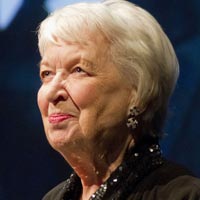 June Whitfield, the actress, was born in Streatham in 1925 and later attended Streatham Hill High School.
 Famous comedian Tommy Trinder was born at 54 Wellfield Road, Streatham, in 1909. Many will remember him for his catchphrase, “You lucky people!” from the pre- and post-WW2 era.
 Another former Prime Minister, John Major, also lived for a time in Streatham with his wife, Norma, at Primrose Court. He had bought the property in 1969.





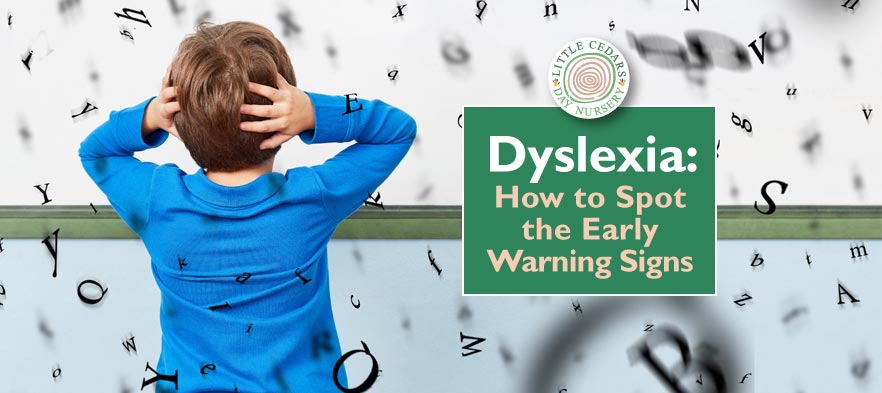
 Despite many dyslexic people being highly intelligent, dyslexia makes it difficult for them to recognise words and/or be able to break them down into their smaller components. It is recognised as a Specific Learning Difficulty (‘SpLD’) and can seriously affect their education if not recognised and addressed early.
 Such an affliction can have profound implications for a person. It will adversely affect their reading, writing and comprehension, thereby limiting their overall learning capability and hindering overall literacy. These are particularly critical skills during their early years as that’s at the start of their education, when the knock-on effects of such limiting factors will be at their most significant. It will slow down their progress in many topics and areas of education, also leading potentially to lower self-confidence and possibly even getting them mislabelled as ‘slow’ or ‘lazy’ by the unenlightened. Ultimately, it can severely limit their potential careers and life outcomes.
 Children finding it difficult to learn the alphabet;
 The child describing words and letters as visually jumbling, blurring or even moving around when they try to read them;
 There is no cure for dyslexia, but measures to mitigate its effects can be taken by education professionals, parents, carers and even those affected by it. It’s incredibly important, though, for both parents and education professionals to try to recognise it early, for example at nursery or pre-school, so that a suitable teaching programme can be introduced as early as possible.
 Teething can be an uncomfortable and painful stage for babies. As teeth start to come through, gums can become sore. Because of this, the little ones can become irritable and emotional, without really understanding why they’re feeling as they do. Every parent will know that having an irritable, tearful baby can be stressful for parents as well as for the baby. With all of this in mind, our Rough Guide to Teething should help parents to help their babies through this difficult stage.
 Along with the bluish-grey colouration in the gums mentioned above, other signs of a teething baby include drooling, sore-looking gums, red cheeks, the baby being tearful, rubbing their ears or chewing hands/toys more than usual. If the baby does drool, ensure that their faces are regularly wiped so as to avoid painful rashes causing further discomfort.
 Once your baby has one or more teeth showing through the gum, you should start brushing their teeth right away. This typically happens at the age of about 6 months. Take a look at our
 Babies benefit enormously from breast milk; from simple, practical considerations to major health benefits, many of which continue to benefit them into adulthood. Let’s take a look:
 Breastfeeding also has a range of significant health (and other) benefits for mothers. These include:
 The childcare professionals at Little Cedars Nursery are keen to fall in with the wishes of parents when it comes to baby and infant milk. To that end, parents are free to supply
 Also known as complementary feeding, weaning is an important milestone for any parent or baby and usually occurs when the baby reaches the age of about 6 months. Sometimes babies simply tire of milk and weaning thereby comes naturally. In other cases, a baby needs a bit more encouragement to make their transition towards solids. Here, we’ll explore the whole topic of weaning in more detail, including ways parents can help to make the transition smoothly and stress-free for all parties.
 Weaning should be fun and it’s also the only time in a child’s life where they won’t have any preconceived ideas about what foods they “do or don’t like”. So, parents can experiment, within reason of course. It’s a time when introducing new foods to the baby comes naturally once the baby has caught on to the idea of this new experience.
 Don’t rush it; set aside some time with baby so it’s relaxed, otherwise everyone can get stressed, especially initially.
 You can later move on to whole, (adult) finger-sized pieces of very soft fruits that baby can learn to hold. However, do read the Health & Safety Considerations section below before moving to un-mashed foods.
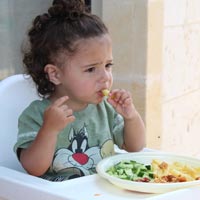 Huge care needs to be taken to avoid giving infants anything that’s going to represent a potential choking hazard. Whole grapes, cherry tomatoes or anything else of a similar size would be examples of this as they are perfectly sized to block a baby’s airway if not first chopped up. Also avoid anything hard like nuts, raw vegetables or un-mashed apple and ensure that any pips/seeds/stones are removed from fruit and bones are removed from fish or meat.
 Always try to maintain a varied diet for the infant, so they get all the vitamins and nutrients they need as they intake less and less milk. Ensure the foods contain sufficient iron, which can be sought from fortified cereal, fish, milk, dark green vegetables, lentils and beans. Giving them finger foods to hold and eat themselves is a great way to encourage them to feed themselves (under supervision, of course). As they grow older they can be encouraged to eat at the family table with parents/siblings and eventually upskill to using cutlery, along with eventually learning the rules around good table manners etc.
 The EYFS framework sets the statutory approach required for pretty much every aspect of early years childcare and education provision in the UK. The standards cover the learning and development programmes, learning goals, approach to assessment, safeguarding, welfare of children, staffing, and much more. In this guide, however, we’ll focus purely on the 7 key areas of learning and development covered by the EYFS. Essentially, these form the core curriculum at nurseries like Little Cedars Nursery in Streatham. Let’s take a look …
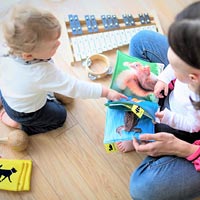 It would be hard to overstate the importance of good communication and language skills, as they underpin early years progress in just about everything else. So, early years providers like Little Cedars encourage two-way interactions and language-rich communications between staff and children right from the outset. Childcare professionals will introduce new vocabulary regularly and help children to understand it and use it themselves through activities like story-telling, role play and question-and-answer sessions. Practitioners will regularly read with (not just to) children, using a wide variety of high quality reading materials, encouraging feedback and engagement from the children as they progress. In this way, new vocabulary is embedded, conversations come naturally and children will thrive in their language and communication skills.
 Physical development is, of course, another key skill that is foundational for children. After all, it impacts on health, mobility, strength, fitness, agility, coordination, wellbeing and general happiness. So, great care is taken at nurseries like Little Cedars to help children hone their physical skills and development incrementally, to improve all of the above. This is done through the EYFS programmes that are set and customised for each individual child. Skills like balance, gross and fine motor skills, coordination, spatial awareness, hand/eye coordination, strength and agility will therefore gradually improve and become second nature to each child as they grow. Active children will generally become more healthy children. They will also improve social skills and confidence through the activities that they participate in alongside peers. It is also, of course, great fun!
 Health, happiness and even the development of early years cognitive function are all underpinned by children’s personal, social and emotional development (‘PSED’). Indeed, PSED forms the backbone of children’s relationships to all adults and peers around them — and also governs how they feel they fit in. That’s all incredibly important, so childcare settings like Little Cedars Nursery approach PSED as a ‘prime’ element within the EYFS curriculum. The result is that children are supported and support one another, they learn how to manage emotions and behaviours, how to eat healthy diets, look after themselves physically, and independently manage their own personal needs. All of this will have the knock-on effect of improving confidence and self-esteem and even allow them to set some of their own goals. Close bonds will be made with both staff and other children and conflicts will be more easily resolved peaceably.
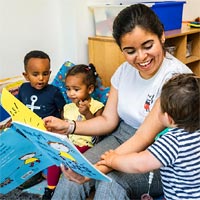 Reading and writing are crucial elements within every child’s education. Without these skills, learning about other topics would become much more difficult. Literacy is therefore a key area of focus within the EYFS learning and development framework. Like other nurseries, pre-schools and childcare settings that adhere to the EYFS approach, Little Cedars Nursery will therefore endeavour to encourage a love of reading within every child. Reading teaches children to comprehend language, vocabulary, grammar and spelling as well as learning more about the underlying topics themselves.
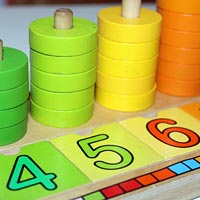 Nurseries, pre-schools, kindergartens and other childcare settings also recognise the importance of mathematics within children’s learning and development. The EYFS curriculum caters well for this, encouraging early years professionals to help children master counting first to 10 and later to 20 and beyond. Children will learn the patterns around numbers, including recognition of odd and even numbers, along with skills like simple addition and subtraction, and the ability to recognise low quantities without having to count. They will also learn to recognise when one quantity is more than, less than or equal to another. In so doing, children will also learn the vocabulary around mathematics in readiness for school once they leave their early years setting.
 A good early years education is nothing unless children understand the world around them. The EYFS framework used by early years nurseries like Little Cedars builds in programmes to help children learn more about the world. This includes helping them to learn how to observe, recognise, describe and even draw what’s immediately around them as well as exposing them to environments like the natural world, local parks and museums. It even teaches them to recognise similarities and differences between other cultures, religions and communities in the UK and lives being lived abroad. They will get to know more about people’s roles in society too, for example through visits from police officers, firefighters and nurses. A broad range of written material (both fiction and non-fiction) will inform them further. Topics explored will touch on culture, technology, ecology, religion, community, nature and much, much more. This will enrich their knowledge and understanding of the world they live within, giving context to what they see, hear and read about as they grow older.
 Expressive arts and design are also integral elements within the EYFS curriculum. Early years childcare settings like Little Cedars ensure that children are given a wide range of opportunities to be creative and to free their imaginations. A huge variety of media, materials, tools and activities can be used by children to express themselves and communicate both visually and audibly. Colour, texture, form and function are explored along with opportunities for role play, story-telling, poetry, singing, performance and even dancing when appropriate.
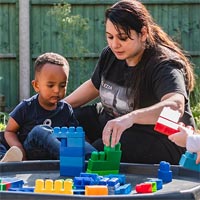 Little Cedars Nursery (Streatham) uses the EYFS framework to shape the educational activities and programmes that babies and children experience at the nursery. Part of this includes the setting of learning goals that each child needs to work towards as they gradually approach the age of 5, when they will move on to school. These are individual goals, tailored to the unique needs, interests, abilities – and any disabilities – of each individual child. A continuous regime of assessment will be undertaken by staff to monitor each child’s progress during their time with the nursery, with the learning programme adjusted, as necessary, along the way. A ‘Key Person’, allocated to each child, facilitates that assessment proactively. Additionally, staff will regularly engage with parents or carers/guardians to ensure that progress towards the learning and development goals is continued at home, wherever possible. Progress is communicated and a learning journal retained and available to parents at any time. In this way, each child achieves personal bests in all areas and everyone is kept up-to-date with the child’s progress.
 In April last year, we published a compelling article about
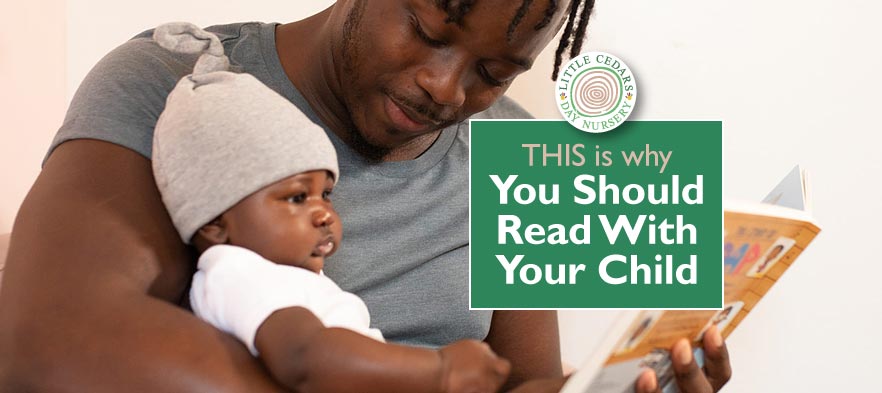
  Reading with children also makes the task less daunting, particularly for the youngest children. Reading together also makes it more interesting and more fun. When it’s more interesting and more fun, the child is going to enjoy it more and naturally want to read more often — eventually independently — and all of that is priceless as part of their education and general knowledge going forwards. Reading can also bring parent and child closer through the time spent together. It can be great fun for the adult too, particularly when the child gets older and adults are exposed to classic children’s books that perhaps they were not, themselves, exposed to when they were young.
 The Nuffield Foundation’s mission is to advance social wellbeing and educational opportunity. In a partnership with the University of Newcastle, the foundation funded a deep study
 It will come as no surprise, therefore, to learn that we put all of the above into practice at Little Cedars Nursery in Streatham. Getting closely involved in children’s reading, using a huge variety of reading material in an interactive way, gives our nursery children the very best start in life. Indeed, our childcare professionals prepare them thoroughly for school by the time they leave us. They take with them reading, writing, literacy, language, vocabulary and self-expression skills in the process — and all this accomplished at least in part through guided reading.