

Today’s post is an urgent reminder: if you want your child to benefit from free, government-funded childcare hours from January, you must apply for the funding no later than 31 December. That’s the case whether you’re a new applicant or an existing one for the types of childcare support that require a code. If you miss the 31 December deadline, you’ll have no code to give your provider — meaning they won’t be able to provide free childcare hours to your child for the whole of that term. So — time is of the essence! Today, we bring you more detailed information and a reminder of how and where to apply, so you’re not out of pocket or without childcare from the term starting this January.
“If you do not apply on or before the deadline, you will not be able to take up your entitlements in that term.” ∞
Which Childcare Funding Schemes Require a Code?
There are several ways the UK Government supports eligible children with childcare funding. Of those, the most popular childcare funding schemes in England that require a code are:
- 30 hours of free childcare per week for eligible working families with children aged from 9 months to 4 years inclusive. That’s 1140 free childcare hours per year. (Learn more).
- 15 hours of free childcare per week for disadvantaged children, aged 2, from households that receive some additional Government support — e.g., benefits like Universal Credit, JSA, Disability Living Allowance, and others. The 15 hours per week, for 38 weeks of the year, represent 570 hours of free childcare per annum. (Learn more).
Another popular scheme, which provides 15 hours of free childcare per week (570 per year) to all children aged 3 and 4 living in England, is known as the Universal Entitlement. However, this scheme does not require a code.
There are also additional schemes, for example, Tax-Free Childcare and support for student parents.
Confused About Which Childcare Support Your Child is Entitled To?
It can be confusing trying to work out which, if any, childcare funding/support schemes your child may be entitled to. However, the UK Government has a useful online tool that allows you to quickly and easily check what childcare support your child is entitled to. Click the bold blue link and answer a few simple questions. Within just a few moments, the options that apply to you will be confirmed.
“We recommend parents speak with their chosen provider about when they will be able to offer them a place.” — BestStartinLife.gov.uk
Check if a Childcare Place is Available
You will, of course, need to check whether a funded childcare place is actually available locally for your child. After researching local providers, check with your preferred childcare provider first — or with an alternative if your first choice has no availability for your child. Bear in mind that some providers also have waiting lists, so don’t leave it too late.
“If your chosen provider doesn’t have a place available, we advise that you explore other providers in your local area.” — BestStartinLife.gov.uk
Apply for Childcare Funding & Your All-Important Code
When you’re confident you know which type of childcare support you are entitled to, and have lined up a provider, you’ll need to apply for the funding and all-important code, where applicable.
- For childcare support for working parents, apply online on the Gov.uk website in order to obtain your code.
- For childcare support for disadvantaged 2-year-olds who receive some additional form of support, apply via your local council to get your code.
- For the Universal Entitlement scheme for all 3 and 4-year-olds living in England, contact your preferred childcare provider directly. No code is required, but you’ll need to provide your child’s birth certificate and sign a form.
You will need to reconfirm eligibility every 3 months, via your Childcare Account, to continue receiving the childcare funding/support. Emailed reminders will be sent to you 2 and 4 weeks before the deadlines for reconfirmation.
The Application Deadline
The deadline for applying for childcare codes is the last day of the month that precedes the start of the term. So:
- For the January term, apply for your code no later than 31 December.
- For the April term, apply for your code no later than 31 March.
- For the September term, apply for your code no later than 31 August.
That said, we urge families to apply ideally at least 6 weeks earlier than the deadline, not least because some childcare providers ask for codes earlier than the deadlines specified above. Applying early will also allow time to iron out any unexpected issues that may arise.
After Applying
After applying, most families find out whether their application is successful right away — and receive their code immediately if so. However, sometimes it takes longer, which is another reason not to leave applications until the last minute.
NOTE: Failure to successfully apply by the deadline will mean that your child is unlikely to be able to receive funding for that entire term.
DON’T FORGET: You will need to reconfirm your eligibility every 3 months.
Good luck with your application!
Nursery Places at Little Cedars Nursery, Streatham

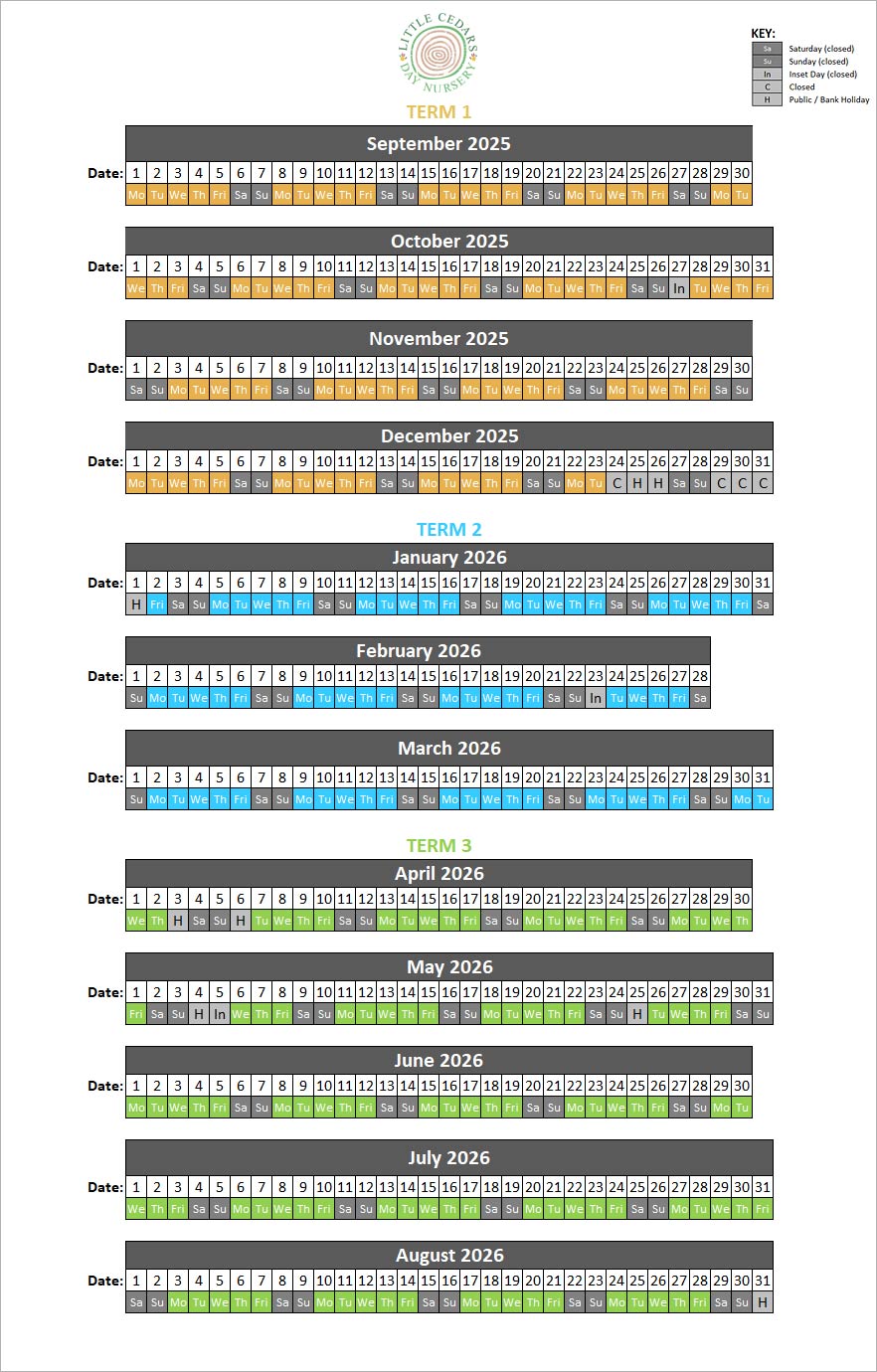
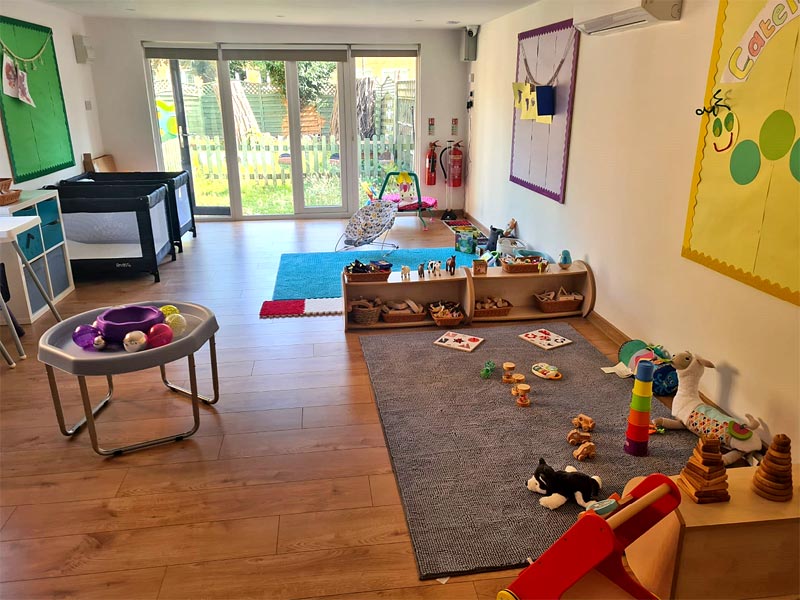
 Are you looking for a childcare place in Streatham? If you have a baby, toddler, or child under five and live nearby, consider Little Cedars Day Nursery in Streatham for your weekday childcare. We are rated as a Good Provider by Ofsted, offer a home-from-home and nurturing environment for your child, and support various childcare funding schemes for eligible families. We also offer a stretched (51-week) provision that spreads free childcare hours over the whole year. As well as providing a childcare service to families in Streatham, we may also suit those living nearby in places like Tooting, Furzedown, Balham, Norbury, and Colliers Wood. Choose an option to get in touch today:

 Work at least 16 hours or more per week at the National Minimum Wage

 Last year,
  As well as helping families financially, the scheme expansion should help children begin their early years education even earlier, for many, which has been shown to be hugely beneficial to them. The free childcare provision will also help many more women back into the workforce. Children, families and the economy should all benefit.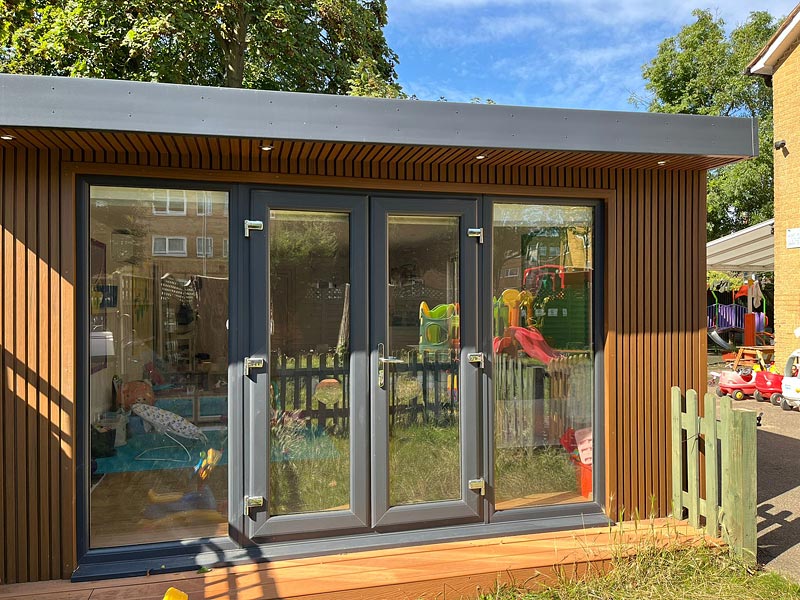
 Identification of a special educational need or disability is, of course, the first step in being able to properly support a child with SEND. For this reason, good early years providers like Little Cedars Nursery will, as a matter of course, watch out for signs of things that might be challenging for children. As prescribed by
  Support plans for suspected or confirmed special needs or disabilities are then discussed and custom-designed for the child. Such plans will be agreed between the child’s parents/caregivers, staff at the early years setting itself and any external specialists or professionals involved in the child’s care. Such programmes will be customised to suit the individual child’s specific needs and may include tailored activities, strategies, resources and so on. Formalisation of the support programme will allow all parties to pull in the same direction, working cooperatively for the benefit of the child.
 In parallel to the SENCo at the child’s early years setting, local authorities also have their own Special Educational Needs Coordinator, known as the Area SENCo. They will also be integral to a child’s SEND support plan, helping with coordination between the local authority, the various parties involved in supporting the child, and in relation to any special funding requirements. If approved, special funding might be required, for example, for an additional member of staff tasked with giving one-to-one support to the child, or to fund extra learning resources and activities for them.
 All 3- and 4-year-olds living in England are eligible for a minimum of 570 hours of free childcare per annum, irrespective of whether or not they have SEND. This is known as Universal Free Childcare or their Free entitlement and is typically taken as 15 hours of childcare each week over 38 weeks of the year, but how it is taken can differ.
 With Universal Free Childcare, children aged 3 or 4 can receive up to 570 hours of free childcare over the course of the year.
 With Extended Free Childcare, eligible 3- and 4-year-olds can receive up to 1140 hours of free childcare per year instead of only 570.
 Some disadvantaged children aged 2 can also receive up to 570 hours of free childcare over the course of the year.
 For those that are eligible, up to £2,000 in free childcare is available each year to children aged 11 or under* through the Tax-Free Childcare scheme.
 You can sacrifice up to £55 per week of your earnings, which will be free of National Insurance and Income Tax, to fund Childcare Vouchers.
 Following the Spring Budget 2023, childcare funding through Universal Credit is to be improved with nearly 50% more generous funding becoming available from July 2023.
 Those already claiming for childcare costs via Working Tax Credits may be able to obtain up to £122.50 for one or £210.00 for more than one child each week.
 2-year-olds may be eligible for the ’15 Hours’ scheme from April 2024.
 Up to 85% of childcare costs incurred by students may be claimed, up to a maximum of £188.90 per week for 1 child or £323.85 for 2 or more (correct for academic year 2023-2024).
 Up to £160 per child is available each week for those living outside London.
 While it’s not designed to fund childcare, it can be used to do so in some circumstances.
 March 15th 2023 saw the Chancellor of the Exchequer’s Spring Budget announcement, which included news of extra funding to cover costs for childcare. Crucially, the new funding will support childcare for infants as young as 9 months old for the first time, as well as including other positive changes. Although it’ll be introduced in stages, the free funding should be welcome news for those parents who will be eligible. Let’s take a look today at the proposed childcare changes, including which age groups will benefit, what extra funding is promised to support families and when the new help will become available. First, though, we’ll look at the main aims of the new funding.
 The ‘main event’ in the Spring Budget from the perspective of childcare provision is the significant expansion of the ‘free hours’ schemes. Previously, only
  Some struggling parents in receipt of Universal Credit childcare support, who would like to move into work or increase existing working hours, will have subsidised childcare costs paid in advance under the new proposals. This is in contrast to the existing approach where all parents had to pay for the childcare upfront and then reclaim the costs retrospectively. Funding the childcare costs in advance will make the subsidised childcare costs much easier for the lowest-income families to afford from a practical, cash-flow point of view. It will also hopefully improve the situation whereby, currently, only 13% of eligible low-income families actually claim the childcare element of Universal Credit.
 Although this website and our childcare service are geared to the early years age groups, it would be remiss of us not to include a brief overview of the enhancements that are being introduced for children of school age. These are coming in via proposed changes to what is known as ‘Wraparound Care’ as we’ll explain.
 Improving Education for Disadvantaged 3- & 4-Year-Olds
 To be eligible for the EYPP funding, a child must meet certain criteria:
 After checking eligibility, interested families or guardians can either