Your Toddler Needs to Go to Nursery. Here’s Why.
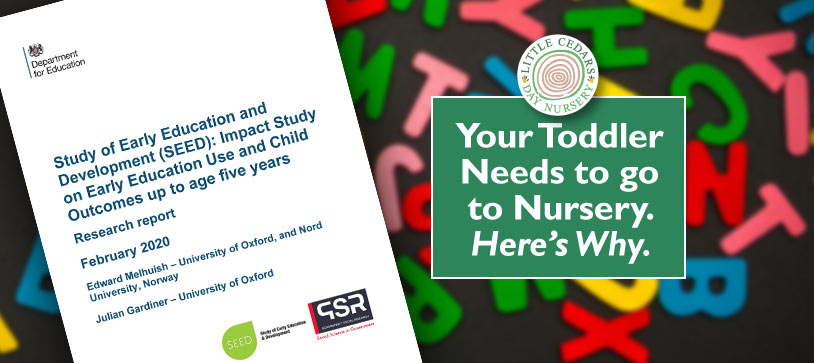
 There are compelling reasons why under-fives should attend early years education and childcare settings like nurseries or pre-schools, or their equivalent — before starting school. Missing this crucial stage in their early years education and development may disadvantage the child — a fact that’s backed up by various studies.
Results of a Department for Education (DfE) study released in February 2020 highlight the benefits of attending early childhood education and care, all in incredible detail. We took a look at their 145 page report and picked out some of the key findings.
Benefits of attending Early Childhood Education & Care (ECEC)
- Note: the term ‘Early Childhood Education & Care’ (ECEC for short) refers to non-parental childcare and early education that occurs before school. There are several different types, including nursery settings, pre-schools, registered childminders and so on, so the Organisation for Economic Co-operation & Development (OECD) and the European Commission have adopted this term to encompass them all.
According to the DfE study, early childhood education and care has both short- and long-term positive effects on the educational, cognitive, behavioural and social outcomes of children. That’s no mean feat. A good educational grounding for under-fives is also shown to result in more positive social behaviour, better behavioural self-regulation, lower instances of emotional issues and less peer problems.
“Research … indicated that the benefits of high quality early education exist from as young as two years of age.” (Sammons et al., 2002)
Some of these benefits are even more pronounced for disadvantaged children who start to attend formal ECEC sessions no later than the age of two. The DfE impact study shows that 2-year-olds benefit most if they …


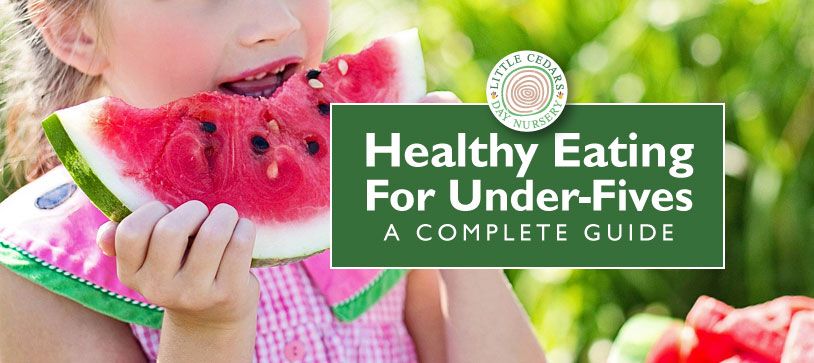
 With families living busy lives these days, it’s not always easy to provide the very best nutritious meals for children. This is compounded by an abundance of ready meals and convenience food available in shops and advertised everywhere. However, healthy, balanced diets are incredibly important for children in their early years. Adopting a healthy diet early on can mean that some diseases associated with later life can be avoided. Healthy food also has other beneficial effects on growing children including sustained energy levels, improved cognitive activity, the evening out of a child’s moods, help with mental wellbeing and maintaining a healthy weight.
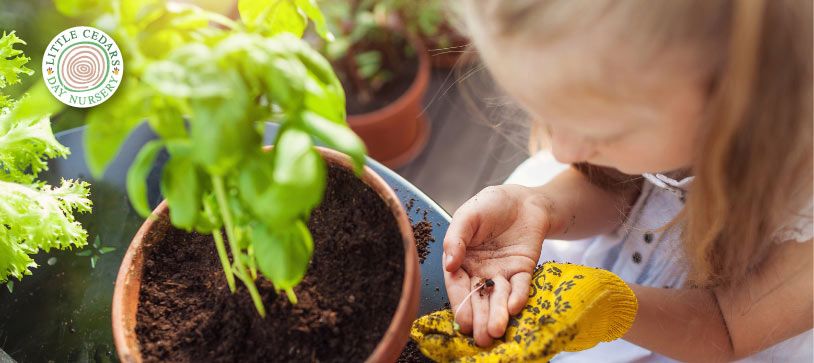
 It may surprise some to learn that you can buy some vegetables and herbs just once and never have to buy them again. The secret is knowing which, and how to re-grow them. It turns out that it’s pretty easy, so we encourage parents to help youngsters get started. Once they see growing shoots or roots and, later, vegetables or herbs that the family can actually eat, they’ll be so pleased that they made this little miracle possible. What’s more, it will have taught them something about where food comes from, how to grow it sustainably and how to look after the living plants. If you’re really lucky, it may even encourage them to take things a step further and get involved in food preparation and cooking later on. It’s amazing, actually, where such a simple, fun, activity can lead!
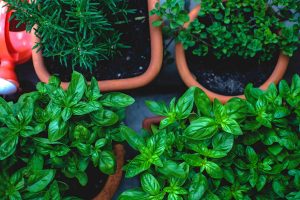 It’s possible, and indeed fairly easy, to grow your own produce even without a garden. So long as you look after your plants and give them water, soil and light as a bare minimum, they will grow. If you don’t have a garden, perhaps you have a small courtyard or patio where you can grow in containers. If you don’t have any outside areas at all, you can grow in flower pots and other containers on window sills, balconies, under skylights and so on. This makes growing produce possible almost anywhere, including in urban London in high-rise flats. After all, it’s in a plant’s nature to want to grow.