Tag Archive for: Streatham Common

A New Approach to Ofsted Ratings: A Guide for Parents

A new approach to Ofsted ratings officially launched in November 2025, as part of a new Education Inspection Framework. Parents of children attending early years settings, schools, and further education, will therefore soon begin to see the new-style Ofsted ‘Report Cards’ that will be published following inspections. These are designed to replace — and improve upon — the previous one-word Ofsted rating system, which had become controversial. Gone will be what became known as the “single word judgements” on settings (previously a choice between Outstanding, Good, Requires Improvement, or Inadequate). Instead, parents will see a much more detailed ‘Report Card’ that combines at-a-glance headline information with multiple sub-section details. The idea is to give parents a more comprehensive view of how schools and settings measure up across a broad range of performance metrics, as well as providing important context. In essence, parents will be able to easily and quickly identify areas of strength, as well as those that require development. In today’s post, we take a look at Ofsted’s new Report Card and explain how it works.

The New Performance Metrics

The single ‘Overall Effectiveness’ grade has now been retired. Instead, Ofsted will assess settings across a range of key areas and confirm their evaluation of each one separately on the new Report Card. For each, they will use a 5-point scale, with the exception of Safeguarding, which we’ll come to separately in a moment.

The 5-Point Assessment Scale

Example of the new Ofsted report card.Except for Safeguarding, the new Report Card will show Ofsted’s evaluation of each of the assessment areas as one of the following:


  • Exceptional — the highest quality provision (indicated in blue);
  • Strong standard (indicated in dark green);
  • Expected standard (indicated in bright green);
  • Needs attention (indicated in orange); or
  • Urgent improvement (indicated in red).

The Report Card will use colour-coding, as indicated above in brackets.

Key Areas of Assessment

For Early Years Settings

For early years settings, Ofsted will evaluate the following areas of provision:

  • Safeguarding,
  • Inclusion,
  • Curriculum and teaching,
  • Achievement,
  • Behaviour, attitudes and establishing routines,
  • Children’s welfare and well-being, and
  • Leadership and governance.

For Schools

For schools* inspected by Ofsted, they will evaluate a slightly different list of key areas:

  • Safeguarding,
  • Inclusion,
  • Curriculum and teaching,
  • Achievement,
  • Attendance and behaviour,
  • Personal development and well-being, and
  • Leadership and governance.

* Early years and/or sixth form education will also be assessed if schools provide them. In parallel to the above, independent schools will also continue to be assessed against the ‘independent schools standards’.

For Further Education & Skills Providers

The list of key areas of assessment for further education settings and skills providers is longer still. As today’s guide pertains to younger children, however, such a list can be viewed separately here.

Safeguarding

Because the safety and welfare of children is paramount, Ofsted’s assessment of a setting’s Safeguarding features separately in the new Ofsted Report Card. That’s for all types of settings, whether they’re early years providers, schools, further education, or skills providers.

How will that look? The new Report Card will show the result for the assessment of Safeguarding clearly as either Met (with a green tick) or Not Met. More detail will be available by opening a drop-down ‘show/hide’ selector and sub-link (shown below).

Ofsted's assessment of Safeguarding features separately in the new Ofsted Report Card.

More Details on the Ofsted Report Cards

As well as assigning a finding of either Met or Not Met to the Safeguarding element and rating each of the other key areas using the 5-point scale, Ofsted will provide extra narrative to explain each of the findings in more detail. In tandem with this, additional commentary will provide contextual information, such as any relevant SEND, demographic, or other factors that may explain the story behind the grades. Additional narrative providing an overview of what it’s like to attend the setting will also be included. These expandable narrative sections will be displayed below the more prominent colour-coded assessment grid and Safeguarding section.

Ofsted will provide extra narrative, via expandable sub-sections, to explain each of the findings in more detail.

Final Thoughts

The new Ofsted report cards intend to give families both an at-a-glance snapshot and more comprehensive details that outline strengths — and any areas that require development — for educational settings like nurseries, schools, colleges, etc. By showing their evaluation of a whole raft of key areas in this way, Ofsted is aiming to give parents a clearer picture of each setting. That’s in stark contrast to the historical “single word judgements” that we’ve been used to – until now. It does make sense — after all, no single word can ever tell the whole story or sum up a unique and complex service.

Not everyone is convinced the changes go far enough. However, Sir Martyn Oliver, His Majesty’s Chief Inspector for Education, Children’s Services and Skills, has said that the new system should be fairer and better for parents, while also providing tangible and financial support to any settings in difficulty. The government expects the new system to raise standards for children, which is incredibly important — and what it’s all about at the end of the day. Learn about the new education inspection framework in more detail here.

Little Cedars Nursery – a Good Provider

Looking for a High-Quality Nursery/Preschool in Streatham?

Ofsted rates Little Cedars Day Nursery as a Good ProviderLittle Cedars is a nursery & preschool offering high-quality childcare in Streatham, near Tooting, Tooting Bec, Tooting Common, Tooting Broadway, Furzedown, Balham, Norbury, and Colliers Wood.We haven’t yet been graded using the new Ofsted rating system, so we don’t yet have one of the new-style ‘report cards’. However, Ofsted rated us as a Good Provider in their most recent report, so you know your little one is in safe hands if you send them to Little Cedars Nursery, Streatham. If you’d like to explore a possible nursery or preschool place for your child at this wonderful setting close to Streatham Common, Streatham Hill, Streatham Park, Tooting, Furzedown, Balham, Norbury, and Colliers Wood, get in touch — or start your application today. We’d love to show you and your child around and answer any questions. We also support funded childcare places for eligible families.

— Experiences They’ll Remember Forever

Creating Magical Moments in Childhood — Experiences They’ll Remember Forever

Out-of-the-ordinary experiences help children feel part of something special, cherished, and deeply seen.Childhood passes so quickly — a blur of breakfast times, nursery drop-offs, and bedtime stories. Yet every so often, something extraordinary happens: a moment that will light up a child’s eyes and linger in their memory for years to come. These are the magical moments that they never forget. They’re also moments that help shape how children see the world, their place within it — and sometimes even themselves.

The moments children remember most aren’t the everyday routines, but events and activities that feel truly magical — experiences that step outside the ordinary and leave a lasting mark on their hearts and imaginations. It might be an unexpected adventure, a quiet night under a starlit sky, or a small moment of wonder that makes them gasp in delight. Such out-of-the-ordinary experiences help children feel part of something special, cherished, and deeply seen. They create memories filled with pure joy, beauty, and sometimes even awe, as well as connections that often last for years.

Today, we explore how some of children’s most treasured memories come from moments of wonder, surprise, beauty, and unexpected connection. We’ll discover simple yet powerful ways to create magical experiences that will make little ones feel seen, loved, and sometimes even awestruck at the wonder of life. This is about how to create lasting memories for little ones that they will cherish for a lifetime.

Why Magical Moments Matter

When parents create a moment that makes a child’s heart race or eyes widen with wonder, they’re giving them a fun memory as well as emotional security that lasts into adulthood.Psychologists tell us that children build their sense of self through experiences that stir strong, positive emotions — especially awe, wonder, joy, and belonging. These feelings act as emotional anchors, shaping how safe, capable, and loved a child feels. When parents or caregivers create a moment that makes a child’s heart race or eyes widen with joy or wonder, they’re not just giving them a fun memory — they’re helping to build emotional security that lasts well into adulthood.

Moments of awe also nurture curiosity and imagination. Whether it’s taking the time to look up and watch a night sky glittering with stars, or exploring a particularly magical woodland brimming with lichen and moss during ‘golden hour’, awe reminds children that the world is big, beautiful and full of possibility. In a time when daily life can feel rushed or routine, sprinkling in a little magic helps a child stay open, hopeful, and connected.

Magical Moments Don’t Need to Cost Money

Magical childhood memories need not cost money — the magic lies in the moment itself, not the money spent.Magical childhood memories do not require grand holidays or costly toys. They’re far more likely to spring from connection, surprise, wonder, and imagination.

A child remembers how they felt — the warmth of being cuddled under a blanket to watch the stars, the thrill of being let in on a secret plan, or the joy of a parent saying, “Let’s go on an adventure today.”

The magic lies in the moment itself, not the money spent. Breaking the routine, seeing the familiar in a new light, or simply doing something unexpected can be enough to make an ordinary day unforgettable.

Ideas for Creating Magical Moments

Here are some simple yet truly memorable ways to fill your child’s early years with wonder:

Stargazing Together

On a clear night, gently wake your child and wrap them in a blanket to watch a meteor shower or count shooting stars.On a clear night, gently wake your child and wrap them in a blanket to watch a meteor shower or count shooting stars. Tell them about the Northern Lights, how they can wish on a star, how astronauts are planning to travel vast distances to Mars, and give them inspiration for their dreams. The quiet awe of the night sky will stay with them forever.

A Surprise Family Adventure

Plan a “mystery adventure” and keep the destination secret until you’re on your way. Whether it’s a picnic in a particularly beautiful spot, a ride on a real steam train, or a dawn trip to look for treasure on a beach, the sense of adventure and excitement will make the day feel magical to a child. Make it out-of-the-ordinary and special.

Messages from the Fairies

Leave tiny notes or drawings from the “garden fairies” or “forest pixies”, or encourage your child to create mossy beds and miniature houses for them.Leave a tiny note or drawing from the “garden fairies” or “forest pixies” thanking your child for something kind they’ve done — perhaps watering houseplants or helping a friend or sibling. It’s a simple act that blends imagination with a message of kindness and care. Perhaps take it a step further and encourage little ones to make mossy beds for the fairies, and a little home-made miniature shelter for them to sleep in. Take photos of them as a memento for your child.

A Garden Camp-Out

Set up a tent or a blanket fort outdoors. Tell stories by torchlight or LED candlelight, listen for owls, or simply lie together looking at the stars. Even just one night spent “camping” close to home can feel like a grand adventure to a child.

Seasonal Traditions

Children will love putting out biscuits and carrots for Santa's reindeer — show them how the carrots have been nibbled on Christmas morning!Create small rituals that return every year — picking flowers in springtime to display around the home, having a “summer-solstice supper” in the garden, or putting out biscuits and carrots on Christmas Eve for Santa’s reindeer — be sure to show your little one how the carrots have been nibbled on Christmas morning! Such traditions will give children a comforting rhythm and a sense that life’s changes can be filled with fun and joy.

The Power of Yes

Every so often, say yes to your child for something delightfully unexpected: jumping in puddles while still in pyjamas, taking breakfast out in the park, or painting a tree trunk with brightly-coloured poster paints (take a photo of your child’s creations if you do!). A small moment of freedom and shared laughter can be pure magic.

Simple Acts of Wonder

Special childhood moments teach children that magic is woven into the everyday world — they just have to stop a while and notice it sometimes.Pause for half an hour to watch the sunrise or sunset together, make wishes while blowing dandelion seeds into the breeze, or follow a butterfly in the park to see where it leads. These small acts teach children that magic is woven through the everyday world — they just have to stop a while and notice it sometimes.

Magical experiences like these will form lasting memories. They will also stimulate emotions around awe, belonging, beauty, and joy. They will remind children that life is incredible, as well as being full of surprises worth paying attention to.

How Magical Moments Shape Who They Become

When children experience magic through loving connection, they internalise a powerful message: I matter. I’m loved. The world is a good place.
Such memories strengthen self-esteem, nurture creativity, build resilience, and encourage children to always remain curious about the world around them. They remind children that they are part of something bigger — a family, a community, a world rich with wonder.

“I matter. I’m loved. The world is a good place.”

Magical childhood moments often become emotional landmarks that help shape optimism and emotional well-being long after childhood ends.As adults, those memories often become emotional landmarks: the glow of torchlight in a tent, the spectacle of a meteor streaking across the sky, the distinctive smell of campfire food being carried on the wind, and telling stories beneath a blanket. Such recollections help shape optimism and emotional well-being long after childhood ends. They are also the moments that, years later, children will recall fondly and still talk about.


That said, you don’t need to fill every day with spectacle. Just make space, every so often, to pause, to play, and to do something adventurous and out of the ordinary. Those magical moments of shared joy and wonder will make your little one feel seen, loved, and awed — forming memories they’ll carry with them for a lifetime.

We’re Little Cedars Nursery in Streatham

Ofsted rates Little Cedars Day Nursery as a Good ProviderLittle Cedars is a nursery & preschool offering high-quality childcare in Streatham, near Tooting, Tooting Bec, Tooting Common, Tooting Broadway, Furzedown, Balham, Norbury, and Colliers Wood.If you enjoyed today’s blog post and it’s given you some ideas, be sure to check out our other blog posts, articles, activity ideas, and guides. We’re Little Cedars Nursery in Streatham, a high-quality childcare provider near Streatham Common, Streatham Hill, Streatham Park, Tooting, Furzedown, Balham, Norbury, and Colliers Wood. Ofsted rates the setting as a good provider, and we support free childcare places for eligible children aged from just 9 months.

Why not bring your baby, toddler, or preschooler along for a free guided tour? Or, if you like the look of the nursery and would like a place for your child, get started on your application today:

Apply for a Place Arrange a Visit or Message Us 020 8677 9675

Sleep Consultants for Babies and Toddlers — A Parent’s Guide

When bedtime has become a battle, a sleep consultant can offer support.Sleepless nights are something most parents expect when a new baby arrives. But sometimes those broken nights can stretch on for months, through into toddlerhood, or even beyond. For affected families, bedtime can become a battle every night, and soon the exhaustion can build up and take its toll. High-quality sleep is important for little ones too, of course, so solving sleep problems will benefit the entire household. For parents who have perhaps tried everything without success, a sleep consultant can step in to offer support and professional guidance.

At Little Cedars Nursery, we often hear parents sharing stories of early morning wake-ups, tricky nap times, or little ones who seem determined to party at midnight. It’s important to know that these challenges are common, and they don’t mean you’re doing anything wrong. Sometimes, though, an extra helping hand can make all the difference. So, with that in mind, welcome to today’s guide to sleep consultants.

What Exactly is a Sleep Consultant?

A sleep consultant is someone who works alongside parents to help babies and young children develop healthier sleep patterns.

Some consultants have backgrounds in health visiting, nursing, or childcare, while others have trained through specialist sleep programmes. Because there isn’t formal regulation for the specialism in the UK, approaches can vary. In view of this, it’s advisable to ask about their experience and methods, and seek any recommendations from friends and family, before choosing your child’s sleep consultant.

What Does a Sleep Consultant Do?

A sleep consultant works with families to understand a child’s sleep patterns and suggest gentle, practical ways to improve things.A sleep consultant works with families to understand a child’s sleep patterns and suggest gentle, practical ways to improve things. They spend time learning about a child’s routine, feeding habits, daily schedule, and sleep environment before creating an improvement plan that feels realistic for the child’s family. The idea isn’t about handing parents a rigid set of rules, but about working together to find an approach that feels the most suitable and fits in with the family’s values.

When Might a Family Consider Using One?

Every child has ups and downs with sleep, and many phases resolve themselves. But if night waking is relentless, naps are a constant struggle, or early mornings begin long before dawn, it can start to impact the whole household. Parents sometimes seek help when they feel they’ve tried everything themselves — advice from books, friends, or online forums — but nothing seems to have worked. A consultant offers not just ideas, but reassurance and encouragement, which can be just as valuable as the plan itself.

What to Expect

Working with a sleep consultant often begins with a thorough conversation about your child’s routine.Working with a sleep consultant often begins with a thorough conversation about your child’s routine — what time they go to bed, how they fall asleep, how they feed, and what happens during the night. From there, the consultant will create a personalised plan that involves tailored changes. These might be small adjustments, such as introducing a calmer wind-down before bed, or they could involve gradually teaching your child to settle with less help. It may also include strategies for how you respond when your child wakes in the night.

Putting the plan into practice takes consistency and patience, which is why many consultants often stay in touch for several weeks, checking in by phone, video call, or messages. That ongoing support can make the process feel less daunting and also help keep families on track.

Different Approaches to Sleep

Not every consultant works in the same way. Some focus on gentle, responsive methods where parents stay close, offering comfort and reassurance as children learn to settle more independently. Others place more emphasis on the rhythm of the day, with carefully timed naps, bedtime routines, and adjustments to the sleep environment. A few use more structured behavioural strategies, for example, where parents slowly reduce how much they intervene at bedtime.

Most UK-based consultants tend to favour family-friendly, gentle approaches rather than anything that involves leaving babies to cry alone for long stretches of time. Still, it’s important for parents to ask about this in advance and choose someone whose philosophy feels like the right fit.

Practical Considerations

A one-off initial consultation can often be an affordable option that will allow families to explore the possibilities.Costs for hiring a sleep consultant vary. Depending on the consultant contacted, a one-off initial consultation can often be an affordable first step — and one that will allow families to explore the potential of proceeding with a full plan. However, a full package with several weeks of guidance can often be several hundred pounds. In-home, overnight support is potentially at an even higher end of the scale — but, again, it varies from consultant to consultant. Many families find that online or phone-based support from a sleep consultant is more affordable, and sometimes just as effective.

There are also free options to explore, of course. Health visitors sometimes run sleep workshops or offer individual guidance, and charities such as the Lullaby Trust provide excellent advice including important resources on safe sleep. Many parents also find comfort via parenting groups, where they can share experiences and discover new ideas.

Our Perspective

Struggles with sleep are common.At Little Cedars Nursery, we understand that sleep — or the lack of it — has a huge impact on family life. Sleep consultants may not be a quick fix, but for families who are reaching their limit, they can offer a real lifeline. Success usually comes from finding someone whose approach aligns with your parenting style, sticking with the plan for long enough to see improvements, and feeling supported along the way.


Sleep challenges can feel overwhelming, but whether you decide to invest in professional help or draw on free resources and community support, the most important thing is remembering that you’re not alone. With time, consistency, and sometimes a little outside help, things really can get better. And remember: struggles with sleep are common and don’t make you any less of a wonderful parent. And, who knows, perhaps in a year or two when you’ve come out the other side, people may come to you for advice!

Little Cedars Nursery, Streatham

Ofsted rates Little Cedars Day Nursery as a Good ProviderLittle Cedars is a nursery & preschool offering high-quality childcare in Streatham, near Tooting, Tooting Bec, Tooting Common, Tooting Broadway, Furzedown, Balham, Norbury, and Colliers Wood.Little Cedars is a high-quality nursery in Streatham, near Tooting, Furzedown, Balham, Norbury, and Colliers Wood. Graded as a good provider by Ofsted, we ensure that babies and children under five have the very best start in life in a warm, caring, home-from-home environment. We also support free childcare schemes for eligible children aged from 9 months to 4 years — great for working parents!

If you would like to learn more about Little Cedars Nursery or visit in person for a guided tour, please get in touch. You can also ask any questions or start the process of enrolling your child using the options below:

Apply for a Place Arrange a Visit or Message Us 020 8677 9675

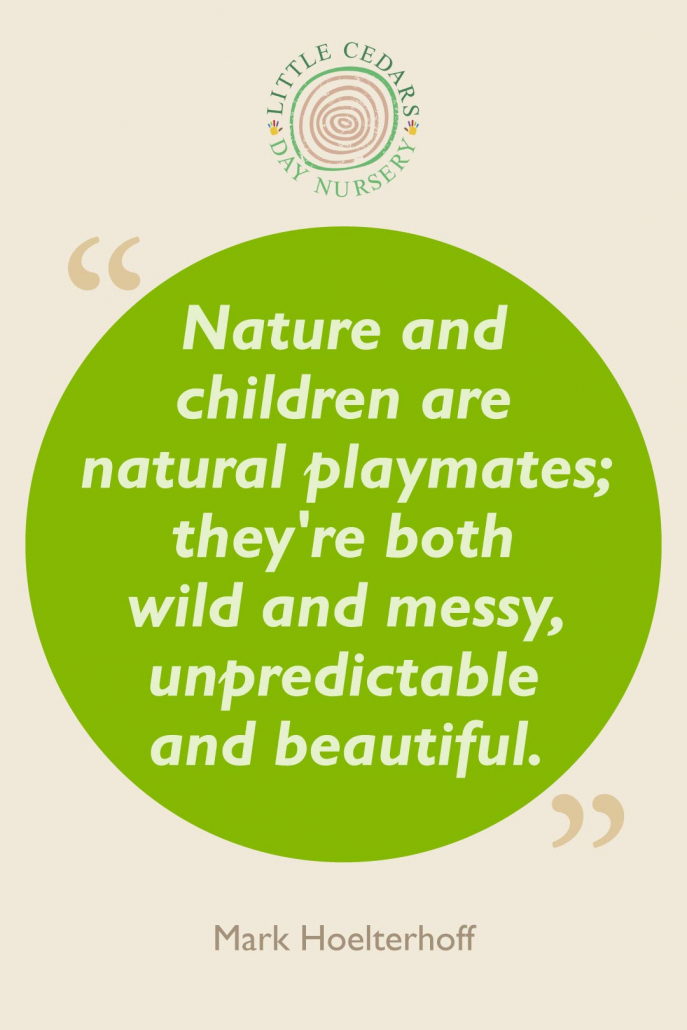
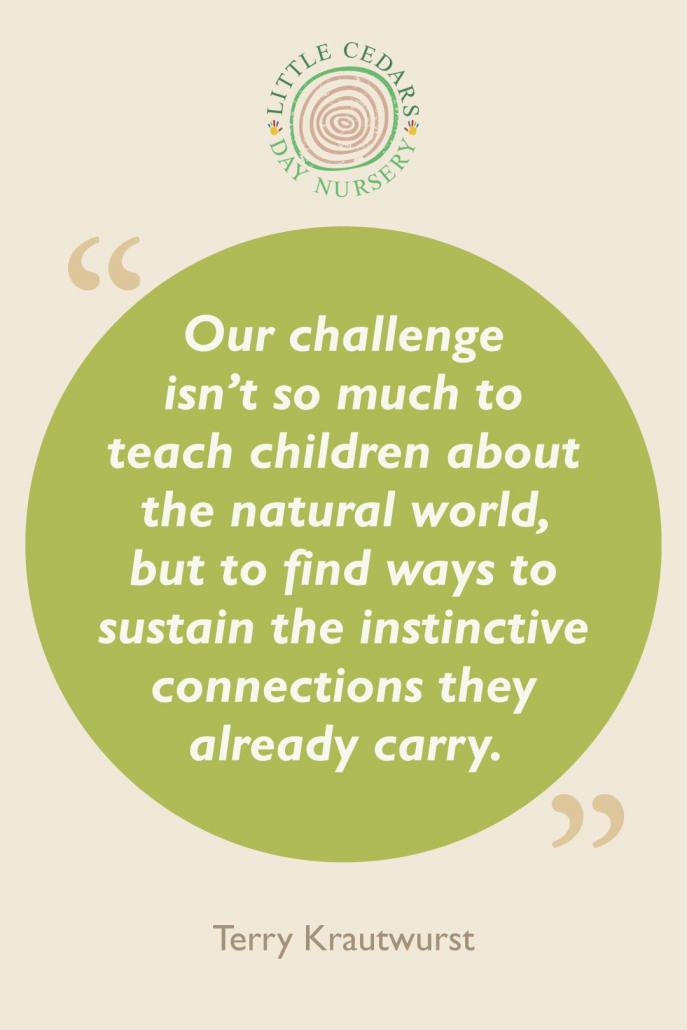
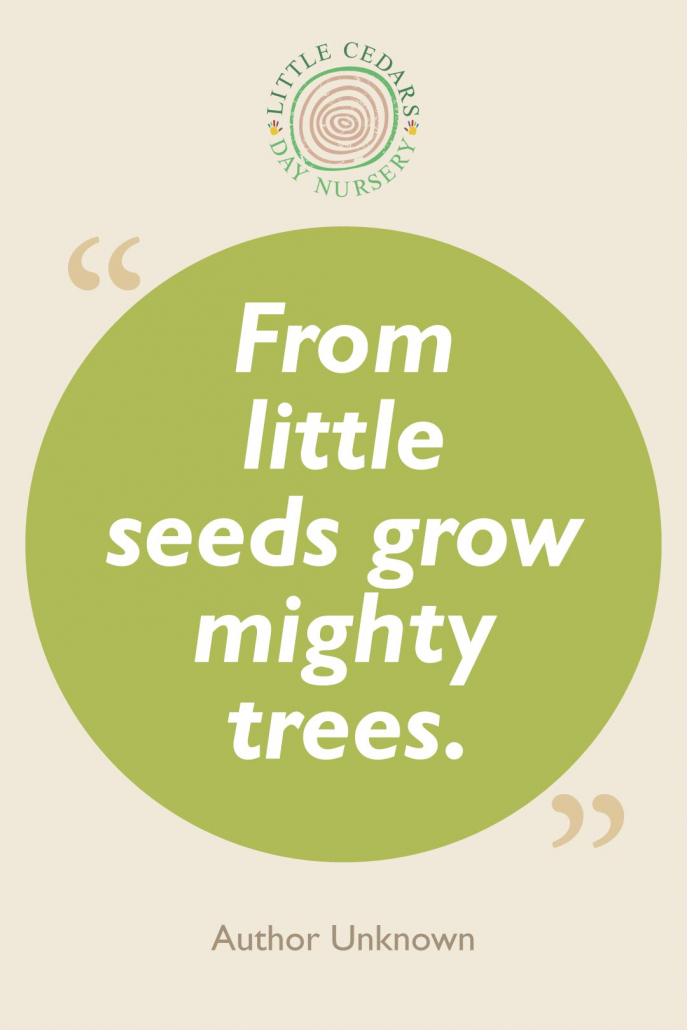
Why Children Belong in Nature — Inspiring Quotations Every Parent Should Read

There’s something magical about seeing a child run through long grass, gather conkers in autumn, or pause wide-eyed at the sight of a beautiful butterfly on a flower. At Little Cedars Nursery, we know how valuable these moments are — nature has always been the greatest playground, the richest classroom, and the most inspiring storybook. Indeed, research consistently shows that children who spend time in nature benefit in countless ways, from improved concentration and physical health to emotional wellbeing and creativity. In fact, we’ve written a whole article about nature’s benefits to children, here.

But beyond the evidence, there’s also inspiration. Generations of writers, educators, and parents have tried to capture in words what nature gives to children. With that in mind, we’ve gathered together some of our favourite quotations, each one a reminder of why the great outdoors is such a vital part of childhood — take a look.

A Gallery of Inspiring Words

Below you’ll find a curated collection of quotes that celebrate children, nature, and the adventures that happen when the two come together. They’re perfect for reflecting on, sharing with friends, or printing out as a little reminder to pause and head outside with your child. Click for a larger view.

Quotations That Inspire

Feel free to download, print out, and keep your favourites from the quotations featured today. Pop them on your fridge, frame one for your child’s room, or share them with family and friends who love the outdoors too. Sometimes all it takes is a small reminder to make space for big adventures.

Nature doesn’t have to mean a faraway forest or a long car journey. For little ones, it can be as simple as listening for birdsong on the walk to nursery, picking daisies at the park, or watching raindrops race down a window. However you enjoy it, the important thing is that children have the chance to connect with the world around them — to feel the earth beneath their feet, the wind in their hair, and the joy of discovery. For children in their early years, time outdoors sparks curiosity, builds resilience, and nurtures a sense of wonder that will stay with them for life.

We hope these words inspire you to make time for those moments. Because every adventure, no matter how small, helps a child grow into someone curious, confident, and ready to take on the world.

Exploring Nature at Little Cedars Nursery, Streatham

Ofsted rates Little Cedars Day Nursery as a Good ProviderLittle Cedars is a nursery & preschool offering high-quality childcare in Streatham, near Tooting, Tooting Bec, Tooting Common, Tooting Broadway, Furzedown, Balham, Norbury and Colliers Wood.Little Cedars Day Nursery, Streatham, encourages children to get closer to nature — we know how profoundly beneficial it is to them. As well as being close to local natural spaces like Tooting Common, children at Little Cedars are also able to grow seedlings, vegetables, and plants in the nursery’s very own planting area. Growing their own gives them a whole raft of new skills, teaches them about nature, the world, and the circle of life. It is also a wonderfully hands-on way to show little ones where food comes from — and that they can grow their own with some care, responsibility and nurturing. Nature is a wonderful teacher!

If you have a baby or child under five and live in or around the Streatham area, consider Little Cedars Nursery for your weekday childcare provision. It’s a high-quality nursery and preschool in Streatham, near Streatham Hill and Streatham Common and is also suitable for families living nearby in Tooting, Furzedown, Balham, Norbury and Colliers Wood. Ofsted rates Little Cedars Nursery a Good Provider, so you know your child will be in safe hands. We also support free childcare funding for eligible families. If all of this sounds like something you’d like for your child, please get in touch:

Apply for a Place Arrange a Visit or Message Us 020 8677 9675

Safety Outdoors

Children, especially the very young, should always be supervised and accompanied by a responsible adult when playing and exploring outdoors — there are many dangers out there! Also check out our tips for child safety outdoors for a few pointers.

How to Handle Toddler Tantrums — A Parent’s Guide

Tantrums are a common part of life with toddlers and under-fives.Tantrums are a common part of life with toddlers and under-fives, but when they happen, they can be very challenging! Whether it’s a meltdown at dinner time or a dramatic on-the-floor outburst in the middle of the supermarket aisle, they can test even the most patient of parents and carers. However, it’s important to understand that tantrums aren’t a sign that something is wrong — they’re actually a normal, healthy stage of child development.

Today’s guide aims to offer practical, reassuring advice on how to understand and respond to tantrums, without resorting to shouting or feeling like you’re failing as a parent.

Why Toddlers Have Tantrums

Young children can be overwhelmed by big emotions because their brains are still developing, but they haven’t yet mastered language, impulse control, and emotional regulation.In their early years, children are still learning how to manage big emotions. There’s a mismatch, though; their brains are developing rapidly, but they haven’t yet mastered language, impulse control, or emotional regulation. So, when they’re tired, hungry, overstimulated, or frustrated, it can all become too much for them. That’s when the crying, kicking, shouting, or collapsing to the floor can occur and, considering they’re such small people, it can be quite something!

Tantrums aren’t usually “naughty” behaviour. They’re expressions of overwhelming emotion. A toddler might not be able to say “I’m frustrated because I wanted the red toy, not the blue one,” but they can certainly show it.

What to Do in the Moment

Stay Calm & Composed

When a tantrum starts, staying calm is key.When a tantrum starts, staying calm yourself is key. Your child will take emotional cues from you, their trusted adult. If you can remain steady, even if you’re feeling flustered inside, you send the message that you’re in control—and that they’re safe.

Acknowledge Your Child’s Feelings

Try getting down to your child’s level and speaking softly. In the scenario quoted above in green, you could say, “I can see you’re really upset,” or “You’re feeling angry because you wanted something else.” Validating and labelling their emotions lets them know you understand, even if they still can’t get what they want. It also helps them understand and name what they’re feeling.

Make Allowances When They’re Overwhelmed

Make allowances when little ones are overwhelmed by big emotions.Avoid reasoning or explaining too much during a tantrum. When a child is overwhelmed, they’re unlikely to take much in. It’s often best to wait it out and stay close so they know they’re not alone. For some children, a gentle touch or hug might be helpful. Others may need a bit of space before they’re ready for comfort.

Focus on Your Child — Not Onlookers

If you’re in public and feel pressure from onlookers, try to block it out. What matters most is your child’s emotional development — not what strangers might think.

After the Storm

Once the tantrum has passed, your child might need a cuddle, a drink, or just a few quiet moments. Talk gently with them about what happened. This isn’t a time for lectures, but a moment to reconnect and help them feel secure again.

Perhaps say something like, “That was upsetting for you. Next time, let’s try using words to tell me how you feel.” Over time, this builds emotional awareness, communication skills, and trust.

Preventing Tantrums (When You Can)

While it’s impossible to prevent every tantrum, there are ways to reduce how often they happen.

  • While it’s impossible to prevent every tantrum, there are ways to reduce how often they happen.Offering limited choices — like “Would you like to wear the red jumper or the blue one?” — can also give them a sense of control without overwhelming them.
  • Being aware of your child’s triggers, such as tiredness or hunger — and planning accordingly — can make outings smoother and transitions easier.
  • Routine helps young children feel secure, so sticking to regular mealtimes and bedtimes can also make a big difference.

The Bigger Picture

It’s easy to feel judged, tired, or helpless when dealing with tantrums, especially during a long day or out in public. But every time you respond with calm, connection, and consistency, you’re helping your child build the tools they’ll need to manage emotions as they grow. Tantrums may not disappear overnight, but with understanding, patience, and time, they’ll become less frequent — and far more manageable.

Little Cedars Day Nursery in Streatham

Ofsted rates Little Cedars Day Nursery as a Good ProviderLittle Cedars is a nursery & preschool offering high-quality childcare in Streatham, near Tooting, Tooting Bec, Tooting Common, Tooting Broadway, Furzedown, Balham, Norbury, and Colliers Wood.We hope today’s post was useful to parents and carers of children under five. Little Cedars is a childcare nursery in Streatham, near Streatham Hill and Streatham Common and close to Tooting, Furzedown, Balham, Norbury, and Colliers Wood. We provide little ones with a fabulous start to their early years learning and development, and a warm, caring, nurturing environment that brings out the best in them. We’re recognised by Ofsted as a good provider and support free childcare hours for eligible children aged from 9 months to 4 years, including stretched provision over 51 weeks of the year — great for working parents.

If you would like to apply for a nursery place for your child at Little Cedars Day Nursery in Streatham, please click the ‘Apply for a Place’ button below to get started. Alternatively, select one of the other options to get in touch or arrange a guided tour:

Apply for a Place Arrange a Visit or Message Us 020 8677 9675

The Benefits of a Digital Detox & Why Families Should Try It

Unplugging electronic devices can offer meaningful benefits for little ones and their families.In today’s world, electronic screens are everywhere — from TVs  and smartphones to tablets and games consoles. Even our youngest children are growing up in increasingly digital environments. While technology brings many conveniences, intentionally unplugging can offer profound benefits for little ones and their families. Whether it’s for a day, a weekend, a holiday, or even longer, the value gained from a ‘digital detox’ may surprise even the most dubious amongst us. Today’s post investigates.

What Science Tells Us

Pausing the use of electronic screens can even help reset our perception of time, making days feel longer, fuller, and more engaged.Research consistently shows the positive effects of stepping away from our screens. Studies report that a digital detox can lead to decreased stress and anxiety, improved mood and well-being, and even better physical health through healthier, less sedentary, lifestyles. Pausing the use of electronic screens can even help reset our perception of time, making days feel longer, fuller, and more engaged.

For children, excessive screen use, especially before bedtime, can disrupt sleep. This is caused by electronic screens interfering with natural melatonin production, leading to delayed sleep onset and poor quality rest. It can also slow language development and impair attention, particularly for children under five, whose brains are undergoing rapid early development. In one study, toddlers watching three hours of TV a day were three times more likely to experience language delays and weaker school readiness skills.

The results from combined studies indicate that children who reduce screen time show fewer emotional difficulties, improved social behaviour, and greater prosocial tendencies including kindness and cooperation. In another real-world experiment, teens who took a 48-hour smartphone break noticed better sleep, more outdoor activity and stronger family interactions.

Learn more about the science of ‘green time vs. screen time’ here.

Why It Matters for Families

Parents who've tried time away from electronic screens report a renewed sense of connection and deeper engagement with their children.When families go screen-free, the benefits extend well beyond the individual. Removing screens often rekindles face-to-face interactions and facilitates more laughter and unfiltered conversations within the family. Parents who’ve tried it report a renewed sense of connection and deeper engagement with their children. Even short periods of unplugging can turn into lasting changes—more shared stories, more creative play, and more real presence.

Outdoor time plays a huge role too. Whether it’s a neighbourhood walk, a garden adventure, or imaginative forest-based play, nature helps cultivate curiosity, resilience and emotional regulation. Studies suggest that just 20 minutes spent in nature can make children significantly happier and help them learn to cooperate and handle challenges — all skills rarely honed by flicking through a screen. Similarly, nature-rich breaks support mental health and reduce the pull of addictive screen use. Studies found that even a view of a natural green space can enhance academic focus and grades — incredible! Learn more about how spending time closer to nature benefits children here.

Children’s emotional intelligence also deepens with the absence of screens as it encourages them to observe and interpret others’ feelings. For example, in a five-day unplugged camp, participants improved significantly in their ability to recognise emotional expressions, unlike peers who continued using devices.

Benefits Families Are Likely to Notice

After just one screen-free day, many families may notice:

  • During time away from electronic screens, families will notice enhanced awareness of each other’s company and children becoming more attentive to parents and siblings.Better sleep for everyone with children tending to drop off more easily and adults feeling more rested.
  • Evenings that are likely to feel longer and more relaxed.
  • Greater spontaneity and creativity as children talk, play, read, draw, and excitedly ask “What shall we do next?”
  • Enhanced awareness of each other’s company, with siblings rediscovering play together and children becoming more attentive to parents.
  • A pleasant atmosphere overall and a likely boost to everyone’s mood.

Possible Challenges & Their Solutions

Of course, removing electronic screens may not always be easy, especially at first. Families trying a digital detox may face some potential challenges. If so, there are gentle ways to manage them.

If children are resistant to the idea or complain that it’s going to be boring without electronic screens, try re-framing the break as an adventure rather than a restriction. Invite children to suggest activities — let them decide during the detox. Try presenting it as a shared family challenge rather than a rule.

Adults may worry about missing their devices too. However, parents modelling the detox by putting their own phones away will help children accept it too.

There is also the potential fear of missing out (FOMO) without access to electronic devices and social connections — particularly for older children. However, explaining that it’s just for a short time will help achieve acceptance of the idea. Acknowledge the temporary interference and encourage children to choose family connection and creativity first — it will help families stay on track.

There is the potential of failure if preparations have not been made before starting. So, in readiness, it’s advisable to prepare a list of screen-free ideas so the family can hit the ground running when they begin their digital detox (see suggestion #3 below).

How to Introduce a Detox Gently & Keep It Fun

Here are some tips to help ease families into a digital detox and set them up for success:

  1. Plan some entertaining and engrossing alternatives together.Begin by designating screen-free boundaries, such as bedrooms or mealtimes, and/or set a daily screen-free hour in the evening.
  2. Get children to buy into the idea by inviting them to help set the rules. Ask them “When are screens off?” and “What happens then?” They can be nudged in the right direction through discussion and helpful suggestions if they’re unsure.
  3. Plan those entertaining and engrossing alternatives together. Screen-free ideas could include reading together, making simple crafts, telling stories, going outdoors, cooking, playing music, dancing and fitness sessions, baking together, garden safaris, yoga sessions, board games — and so on.
  4. Celebrate small wins! For example, point out how much deeper and more restful sleep is, or how much more chatter there is at the breakfast table.
  5. Once screen-free moments become familiar, try graduating your family to a screen-free weekend or even a full holiday. Many families describe these as revelatory with any initial frustrations soon giving way to something deeper and more rewarding.

Final Thoughts

Without screens, children are likely to spend more time outdoors and benefit from everything nature and outdoor play have to offer.The evidence clearly shows: families who have periods free of electronic screens will benefit. A digital detox enriches and elongates days. It enhances sleep quality for children and adults by facilitating their natural rhythms. Days feel more spacious and calm without digital distractions and imaginative play soon steps in and thrives. In the absence of screens, children are also likely to get outdoors more often — and benefit from everything nature and outdoor play have to offer. Mental health and even academic grades are also likely to improve when this happens.

A digital detox isn’t about rejecting technology, though, as it has its place; it’s more about creating balance and discovering what’s been hidden. For example, deeper conversations, creative play, richer bonds, and nourishing rest. Whether it’s a screen-free Sunday, a tech-free teatime, or a weekend getaway without devices, these breaks can evolve into high-quality, cherished family time. Although at its heart a digital detox is the most simple of concepts, it’s likely to enhance family life in profound ways, whether for an afternoon or longer term.

With all that in mind, why not invite your child(ren) to get started by trying a screen-free afternoon this weekend? It could be the first step towards more fun, enhanced well-being, greater fulfilment and more genuine togetherness.

A Nursery Place for Your Child in Streatham

Ofsted rates Little Cedars Day Nursery as a Good ProviderLittle Cedars is a nursery & preschool offering high-quality childcare in Streatham, near Tooting, Tooting Bec, Tooting Common, Tooting Broadway, Furzedown, Balham, Norbury and Colliers Wood.Today’s post was brought to you by Little Cedars Nursery, a highly-popular childcare provider in Streatham, close to Streatham Hill and Streatham Common. Catering for babies, toddlers, and preschoolers under five, it offers high-quality weekday childcare virtually all year round and has a great Ofsted rating. We also support funded childcare places for eligible children as young as just 9 months of age. Families living in Tooting, Furzedown, Balham, Norbury and Colliers Wood may also find Little Cedars Nursery convenient.

Start your exploration of a Little Cedars nursery place for your baby, toddler, or preschooler today. Please choose a button to get started:

Apply for a Place Arrange a Visit or Message Us 020 8677 9675

Why Re-reading the Same Book is So Good for Young Children

If you’ve ever found yourself reading The Very Hungry Caterpillar or The Gruffalo for the fifteenth time in a week, you’re not alone. Many parents and carers will notice that young children latch onto a particular story and insist on hearing it again and again, often word for word, and with little patience for alternatives. It’s a scenario that plays out in homes and nurseries everywhere — a favourite book that’s already been read countless times, yet you hear another heartfelt plea of “Again!”

A child's desire for repetition when reading books is not only entirely normal, but it’s actually a sign of healthy development.At first glance, this devotion to a single story might seem puzzling. As adults, we crave novelty and variation, and it’s tempting to encourage children to explore new titles or gently steer them towards something ‘different’. But this desire for repetition is not only entirely normal for infants, toddlers and preschoolers — it’s actually a sign of healthy development. In fact, there’s a great deal happening beneath the surface every time your child requests a beloved book for the umpteenth time.

In today’s post, we’ll explore why children are drawn to repeated readings, what they gain from the experience, and how supporting this instinct — both at home and in the nursery setting — can help lay the foundation for a lifelong love of language, stories and learning.

Why Repetition Feels Good to Young Children

For very young children, the world is a busy and often unpredictable place. Every day brings something new to see, hear, taste or try. Although that can be exciting, it can also overwhelm little ones. In contrast to all this change, repetition provides a welcome sense of familiarity and control. When a child chooses to hear the same story again and again, they are engaging with something known and reassuring — something where they already understand the pattern, remember the characters, and can predict what happens next. That sense of mastery is deeply comforting to them.

“Repetition provides a welcome sense of familiarity and control.”

From a developmental perspective, repetition plays an important role in helping children make sense of their surroundings. The human brain in the early years is working at an astonishing pace, constantly building connections and absorbing information. Repeated experiences help strengthen those neural pathways. Hearing the same sentences or phrases in a book over and over helps the brain to recognise patterns, anticipate outcomes, and form more lasting memories.

“Hearing the same sentences or phrases in a book over and over helps the brain to recognise patterns, anticipate outcomes, and begin to form more lasting memories.”

Repetition is a powerful tool that children instinctively use to deepen their understanding of language, narrative, and the world around them.There is also an emotional component to repeated reading. When a child hears a favourite story in the voice of a parent or trusted adult, it creates a strong sense of connection. The warmth, tone and rhythm of familiar words spoken by someone they love reinforce a feeling of safety and belonging. For many children, this shared experience becomes part of their routine, and returning to a much-loved story can offer comfort in moments of transition, tiredness or uncertainty.

Ultimately, repetition isn’t a sign of boredom or a lack of imagination — it’s a powerful tool that children instinctively use to deepen their understanding of language, narrative, and the world around them. While it may test an adult’s patience from time to time, for a young child, there’s real joy in knowing what comes next — and in getting to experience that joy all over again.

“There’s real joy in knowing what comes next — and in getting to experience that joy all over again.”

What Children Are Learning When They Hear the Same Book Over and Over

Although it may seem as though nothing new is happening when a child asks for the same book yet again, each repeated reading is building something important beneath the surface. Young children learn through repetition, and stories are one of the richest and most enjoyable ways to support that process.

A familiar book is a powerful learning tool, offering children the chance to build language, understanding, and confidence each time it’s opened.One of the clearest benefits of repeated reading is vocabulary development. Hearing the same words and phrases over time helps children internalise them. This is especially important when books introduce new or more complex language than a child might hear in everyday conversation. By encountering those words again and again in a familiar context, children begin to understand them more deeply and even start to use them in their own speech. The rhythm and rhyme found in many favourite books further support this by making the language more memorable and easier to imitate.

Repetition also supports children’s comprehension skills. Each time a story is heard, a child can focus on different aspects of it. On one occasion, they might be captivated by the pictures; on another, they might notice how a character is feeling, or how the story builds to its conclusion. With each reading, their understanding becomes more layered and nuanced, and their ability to retell or discuss the story improves too. This not only lays the groundwork for future reading comprehension, but also builds important narrative skills that will support them across all areas of communication and learning.

Another key area of development supported by re-reading is, of course, memory. As children hear a story repeatedly, they begin to anticipate what happens next, often joining in with familiar lines or reciting whole sections by heart. This ability to recall and predict is a sign that they are developing strong cognitive skills, including sequencing, attention, and auditory memory. These are all crucial foundations for later literacy.

Stories also offer a window into emotions, relationships, and the wider world. Through characters and plots, children are introduced to a range of feelings and situations, many of which may mirror their own experiences. When a child asks for the same book repeatedly, it may be because the story has resonated with them on a personal level. The more times they hear it, the more opportunities they have to explore those feelings and make sense of them in a safe and supportive way.

In essence, that familiar book on the shelf isn’t just a favourite — it’s a powerful learning tool, offering children the chance to build language, understanding, and confidence each time it’s opened.

“A familiar book is a powerful learning tool, offering children the chance to build language, understanding, and confidence each time it’s opened.”

Supporting This at Home

If your child keeps choosing the same book, that’s a good thing — it means they’re connecting with it.At home, parents or carers can support this by continuing to follow a child’s lead. If your child keeps choosing the same book, that’s a good thing — it means they’re connecting with it. You can enhance the experience by reading with enthusiasm, pausing to let your child fill in familiar lines, or asking gentle questions like “What happens next?” or “How do you think they feel here?” If your child wants to tell you the story instead, even better — this kind of role reversal strengthens memory, language, and storytelling abilities.

It’s also important to enjoy the shared experience. Reading the same book again isn’t a task to be ticked off — it’s an opportunity to connect, communicate, and learn together. And, by honouring children’s desire for repetition, we’re showing them that their interests matter to us. We’re also showing that we’re there for them to help nurture their developing minds.

Repetition Is a Sign of Growth

It’s easy to assume that when a child insists on reading the same book for the fifth time in a row, they’re simply stuck in a habit. But in truth, this kind of repetition is often a clear sign of growth. Rather than being a sign that they aren’t moving forward, it shows that they are consolidating what they’ve already learned — laying the groundwork for more complex thinking, communication, and understanding.

“Repetition shows that children are consolidating what they’ve already learned — laying the groundwork for more complex thinking, communication, and understanding.”

Children instinctively return to what feels manageable and rewarding. A book they already know offers them a chance to succeed, to feel confident in their understanding, and to enjoy the predictability of a story they can follow with ease. Each time they hear the same words, they’re not just passively listening — they’re actively building familiarity with language patterns, story structures, and emotional cues.

“A book they already know offers them a chance to succeed, to feel confident in their understanding, and to enjoy the predictability of a story they can follow with ease.”

Repeated reading is doing far more than meets the eye!Eventually, children do move on. When they’ve had their fill of a particular book, they’re often ready to explore new stories with a richer set of skills in place. The comfort and confidence gained from repeated readings help them approach unfamiliar books with greater interest and less frustration. So rather than seeing repetition as a rut, it’s helpful to view it as a bridge — a way for children to move steadily from the familiar to the new.

So the next time your child runs up to you with that well-worn favourite, eager to hear it “just one more time,” you’ll know it’s a good thing. Repeated reading is doing far more than meets the eye! It’s helping to build language, memory, emotional understanding and connection — all wrapped up within the safe and familiar story they love.

Little Cedars Nursery

Ofsted rates Little Cedars Day Nursery as a Good ProviderLittle Cedars is a nursery & preschool offering high-quality childcare in Streatham, near Tooting, Tooting Bec, Tooting Common, Tooting Broadway, Furzedown, Balham, Norbury and Colliers Wood.At our childcare nursery in Streatham, we understand how important repeated reading is for young children’s development, embracing it as a valuable part of our daily routine. Story time is a cherished activity, and we know that when a child asks for a favourite book again, it’s because they’re engaging deeply with it. Whether it’s the comforting rhythm of a well-loved picture book or the excitement of anticipating a favourite character’s next adventure, we follow the children’s interests and support their choices — however many times they may request them. After all, we know that every repeated story is a step forward in a child’s learning journey.

By using expressive voices, gestures, and encouraging children to join in with key words or sounds, our nursery practitioners help bring the story to life every time.Our practitioners are skilled at making repeated reading feel fresh and interactive, even when the story is already very familiar. By using expressive voices, gestures, and encouraging children to join in with key words or sounds, we help bring the story to life each time. Children are often invited to take on the role of storyteller themselves, turning pages, pointing to pictures, and even “reading” aloud from memory. These small but powerful moments help build confidence and strengthen communication skills in a way that feels natural and joyful.

At Little Cedars Nursery, we also make space for quiet, independent reading. Our book areas are set up with inviting, accessible book choices so that children can freely revisit the stories they love. It’s not uncommon to see a toddler carefully turning the pages of a book they know well, reciting parts of it to themselves or sharing it with a friend! These self-initiated moments show just how much children internalise and treasure the books that matter to them.

Why not explore the possibility of sending your baby, toddler, or preschooler to Little Cedars Nursery in Streatham? We’re rated as a Good Provider by Ofsted and support many Government-funded childcare schemes and vouchers. These include the ’30 Hours’ extension to free childcare for children aged from just 9 months (for eligible working families) that begins in September 2025. Contact us today!

Apply for a Place Arrange a Visit or Message Us 020 8677 9675

Little Cedars Nursery provides a first-class childcare service to families in Streatham and may also be convenient for families in and around Tooting, Furzedown, Balham, Norbury and Colliers Wood.

51 Week 'Stretched' Childcare Provision for 2025-26 Funded Places at Little Cedars Nursery

At Little Cedars Nursery in Streatham, government-funded childcare hours for eligible children will be ‘stretched’ over 51 weeks of the year, starting from the 1st of September 2025. It means that, if your child is eligible for government-funded childcare hours at Little Cedars Nursery, they will be able to use them over virtually every week of the academic year starting in September 2025. In practice, that’s childcare provision every week, apart from the Christmas/New Year week, bank holidays, and three inset days. That aligns funded childcare provision with the standard working weeks that Little Cedars Nursery operates. It will provide more consistent childcare to families over virtually the entire year. This will alleviate the stresses associated with accessing funded childcare, especially during school holidays, which are not usually funded in the more standard 38-week model. Read on to learn more.

Our 51-Week Working Calendar

For 2025-26 Childcare Provision at Little Cedars Nursery

The coloured areas of the calendar below indicate days when Little Cedars Day Nursery will be open during the academic year 2025-26, with the new 51-week ‘stretched’ provision aligning with those weeks. Take a look:

51 week working calendar for Little Cedars Nursery childcare (Academic year 2025-26).

Background to ‘Stretched’ Funded Childcare Provision

When people refer to a “30 Hours” childcare funding scheme, it’s known as such because it’s based on 30 weekly childcare hours taken over just 38 weeks of the year (total: 1140 annual hours). It’s similar for ’15-hours’ childcare funding schemes, which are usually taken as 15 hours per week over 38 weeks of the year (total: 570 annual hours). As we all know, however, there are 52 weeks in every year. That leaves a substantial 14 weeks of the year where families would not usually be able to access funded childcare hours. That could cause many issues and potential expense as parents try to find alternative childcare provision, or have to reduce working hours. Both would effectively cost households money. With this in mind, Little Cedars Nursery will implement a new 51-week ‘stretched’ provision for the academic year 2025-26. As the name suggests, this stretches the funded hours over more weeks of the year. This is achieved by reducing the number of funded hours used each week.

How Many Funded Hours Eligible Children Can Get Each Week

With Our ‘51 Week’ Stretched Provision

By stretching the free hours over more weeks of the year, it results in a different number of funded hours in any given week:

  • Children on a ‘15-hour’ scheme (570 funded hours per annum) will instead take just over 11 hours per week, over the 51 weeks of the year.
  • Children on a ‘30-hour’ scheme (1140 funded hours per annum) will instead take approximately 22 funded hours per week, over the 51 weeks of the year.

Please contact the nursery for more details.

Nursery Places at Little Cedars Nursery, Streatham

Little Cedars is a nursery & preschool offering high-quality childcare in Streatham, near Tooting, Tooting Bec, Tooting Common, Tooting Broadway, Furzedown, Balham, Norbury and Colliers Wood.Ofsted rates Little Cedars Day Nursery as a Good ProviderIf you would like to explore the possibility of sending your baby, toddler or preschooler to Little Cedars Day Nursery in Streatham, please get in touch. We provide a high-quality weekday childcare service to families in Streatham as well as Tooting, Furzedown, Balham, Norbury and Colliers Wood. The nursery is rated as a Good Provider by Ofsted and supports several Government-led childcare funding schemes for eligible families. Indeed, from September 2025, children as young as 9 months of age will be able to access the 30-Week scheme for eligible working families. But don’t miss the application deadline if you’re thinking of applying for the scheme. Choose an option to get in touch today:

Apply for a Place Arrange a Visit or Message Us 020 8677 9675

Summer Nature Hunt Activity for Children – with Free Reference Poster!

The season of summer brings with it many amazing things for children and families to look out for in the natural world.Summer is in full swing from late June until late September*. It’s a wonderful season that brings with it many amazing things for children and families to look out for in nature. Indeed, that’s what today’s suggested activity is all about. We’ve created a free-to-download poster that highlights 20 things from nature that children, including under-fives, can look out for when they’re outdoors. Whether it’s in gardens, on walks with family members, at the park, or out in the countryside, summer’s natural wonders are incredibly abundant when you take time to look.

How many of the wonderful flora and fauna can your child spot? Some, like bees and butterflies, will be super-easy to spot. Others, like sunbathing birds and — for the very lucky few — slow worms, may be a little harder to discover. Searching is part of the fun, though, and this nature-based activity is a great way to get little ones to open their eyes to the natural world around them whilst also enjoying exercise and fresh air. It’s a great opportunity to encourage little ones to spend time outdoors, close to nature — which is so incredibly good for them! Why not download the free Summer Nature Hunt activity poster today and see what you and your little one can spot?

* When Exactly is Summer?

According to the astronomical calendar, for 2025 summer starts in the UK on Saturday 21st June, which is the Summer Solstice — the longest day of the year. It continues until Monday 22nd September 2025, which is the Autumnal Equinox. That’s the time in the year when day and night are of virtually equal length because the sun is right above the equator. Dates vary a little from year to year, however, because the solstice and equinox will fall on slightly different days.

In contrast, summer always spans the calendar months from the 1st of July, through August, until the 30th of September according to the meteorological calendar. This calendar is used more for things like weather forecasting.

Download Your Free ‘Summer Nature Hunt’ Reference Poster

Click the preview image below to view or download the free Summer Nature Hunt reference poster (2MB, Acrobat PDF format). Print it out at any size up to A3 in high resolution. Use your printer’s best paper and settings for the best results.

Preview of your free ‘Summer Nature Hunt’ reference poster - left/right-click to view/download (PDF format, 2MB).

There are many species of some of the creatures shown, so your child does not need to find one that’s absolutely identical. There are 51 species of mayflies, for example, each of which will look a little different. Similarly, there are over 40 different ladybirds and 59 species of butterflies in the U.K. — the variety of nature is incredible!

“Look Don’t Touch!”

Remember that children should look but not touch; the idea is to spot natural things, not to try to collect them or to interfere with living creatures who are going about their business. That’s a safety and well-being issue as much as anything — for both the child and nature’s flora and fauna. The idea is for children to simply see how many they can see when out and about. Then, when spotted, they can perhaps tick them off using the little tick boxes provided on the poster.

Have Fun Little Explorers — Nature is Good for You!

We hope today’s free poster and the activity idea give children and families some educational fun outdoors this summer. Spending time outdoors in the fresh air, close to nature, is incredibly important to children and adults alike. It benefits them in an amazing variety of ways, from greater motor skills and improved problem-solving to enhanced well-being and reduced stress just for starters. And did you know that even academic grades are improved when children spend time closer to nature? That’s just one of the many benefits of nature that you can learn more about here.

Other Nature-Themed Posters for Children

Today’s Summer Nature Hunt poster is just one in a whole series of nature-based activity posters that families can download free of charge. Other posters in the series include a Spring Nature Hunt, a Winter Nature Hunt, an Autumn Nature Hunt, a Leaves Nature Hunt, Discover British Butterflies, British Bird Spotting, Wild Mammal Spotting, and a Minibeast hunt. Visit our blog area regularly for more free stuff for kids! Click the bold blue links for more information.

Free nature activity posters for children to download.

Opportunities to be Close to Nature at Little Cedars Nursery, Streatham

Ofsted rates Little Cedars Day Nursery as a Good ProviderLittle Cedars is a nursery & preschool offering high-quality childcare in Streatham, near Tooting, Tooting Bec, Tooting Common, Tooting Broadway, Furzedown, Balham, Norbury and Colliers Wood.Children get to enjoy nature at Little Cedars Nursery in Streatham too! We know how important spending time in and around nature is to children. So, we’re lucky to be close to natural open spaces like Tooting Common and to have our own planting area. Here, children can nurture seedlings, grow flowering plants that attract pollinators, and harvest their own vegetables. They love it! It teaches them so much about the world, where food comes from, the importance of taking responsibility for another living thing, and all the time teaching them new skills. 

Little Cedars is a fabulous nursery located in Streatham near Streatham Hill and Streatham Common, conveniently close to those in Tooting, Furzedown, Balham, Norbury and Colliers Wood. Rated as a Good Provider by Ofsted, you know your child will be well looked after and nurtured at Little Cedars. It’s a warm, welcoming, home-from-home environment where children feel safe, well cared-for, and valued. If you’d like your baby, toddler, or preschooler to have the best start in life in readiness for school, consider Little Cedars Day Nursery for your weekday childcare needs. We would love to show you and your little one around, so you can see for yourself the wonderful environment for under-fives.

Get in touch today to register for a place, request a tour, or ask a question — we’re here to help!

Apply for a Place Arrange a Visit or Message Us 020 8677 9675

Outdoor Safety

It goes almost without saying that children, especially the youngest, should only explore outdoors under appropriate and close adult supervision. Read our tips for child safety outdoors for more safety inspiration.

Number & Counting Games for Preschoolers: Ideas for Under-5s
Early parental help can significantly boost children's understanding of numbers, counting, and maths terminology.Concepts involving numbers and counting can sometimes be tricky for some preschoolers to grasp. Making sense of such concepts is important, though, because many aspects of children’s day-to-day lives will require an increasing understanding of numbers as time passes. Whether it’s knowing if a quantity of something is more or less than something else, how much of an ingredient is required in a mixture, or what change to expect from a purchase, children will need to grasp number-based concepts — and understand their real-world applications. What’s more, they’ll need to do this sooner rather than later if they’re to thrive, not least when they leave early years settings to begin school.

Early parental help can significantly boost children’s understanding of numbers, counting, and maths terminology. One of the key ways to help preschoolers is through number and counting games. What’s more, by using games and playful challenges, learning number and counting concepts will be fun! That fun element will be a key to both success and enjoyment. Indeed, learning through play is, as we know, the very best way for young children to learn. With that said, let’s take a look at some examples of games and fun challenges that under-fives can take part in. With supervision and guidance from adults, these are a great way to boost comprehension of number-based concepts in little ones — and support the EYFS curriculum.

First Create Some Number Cards

Making ‘number cards’ with your child will be a fun and useful first step.Making ‘number cards’ with your child will be a fun and useful first step. These could be as simple as small pieces of paper or card, each having a single large number written clearly on them. Alternatively, your child could take the opportunity to get more creative. For example, you and your child could make the numbers bright and colourful, have patterned in-fills, or even be made to look like animals or number ‘characters’ that have eyes. For the very young, start with numbers up to 5, or go to 10 or even 20 for older and more advanced children. Size-wise, perhaps aim for cards sized at about A6 (a quarter of an A4 sheet) or even A7 (A4 divided into 8).

Number Order Games

Once you have a set of numbered cards, first ensure your child recognises the numbers and can say their names. Then, get your child to jumble them up. They should then place each card on the table or other flat surface and try to move them back into the correct numerical order. The idea is to end up with the lowest number on the left, going in order until they have correctly placed the highest number on the right. Ask them to count them out loud, from left to right, once complete. Praising and congratulating them when they do well will encourage them but, of course, help them if they struggle at first.

Once they’ve mastered the first game, make it more challenging by asking them to reverse the numbers and, when complete, count the numbers backwards.

Getting More Advanced

When your child becomes more advanced, perhaps shake things up a bit by hiding a number and seeing if they can tell you which one is missing. Later still, you could even miss out all the odd numbers, so they have to play the game with only even numbers, then do it the other way around. Learning to count all the odd or even numbers will be another useful and practical skill as they get older.

Number ‘Dot’ Cards

Number 'dot' cards give children a practical example of the number's meaning and help them better understand quantities.A more advanced form of the number cards could depict the correct number of dots (or other drawn objects) instead of — or as well as — the actual written number. So, for example, the ‘3’ card could show a column or row of 3 round dots or squares or even something like 3 drawn strawberries — whatever your child likes! In a way, it’s a bit like traditional playing cards where each has both a number and the right amount of hearts, diamonds, clubs or spades on it, to match the number.

The benefit of this, more advanced type of card is that children will be able to see (and count), for example, two ‘dots’ on a ‘2’ card, four on a ‘4’ card, and so on. By using this approach, children will have a visual clue and practical example of the number’s meaning and, crucially, it will allow them to recognise and better understand quantities.

Introduce Simple Addition & Subtraction

When your child is more advanced using their number cards, a gradual introduction to simple addition and subtraction concepts will come easier — particularly if they use the cards with the numbers depicted with the dots/symbols. So, when you ask them what happens when they add a 2 and a 3 together, they will be able to count (or, with practice, recognise) the quantity of symbols on both cards. Before long, they’ll grasp the underlying concepts and be able to do it in reverse (subtraction). You could also consider adding mathematical ‘symbol’ cards into the pack, for example, ‘plus’ and ‘minus’ symbol cards.

TIP:

Ensure you give your child a round of applause when they get things right in any of these games — it will give them encouragement to keep going and also give them a sense of progress and achievement. Consider awarding them a prize or sticker to celebrate their achievements.

Number Matching Games

Dominoes are a great way for children to learn about number matching.This next game will require a set of dominoes or, if you don’t have a set, they’re also easy enough to make in a similar way to the number cards. As you may know, each half of every domino has a number of dots, most commonly from 1 to 6. So, for example, there might be two dots on one end and five on the other, with the dot formations being rather like those you’d see on dice.

Whether using real dominoes or a homemade paper alternative, this game is traditionally played with 2 people. However, for the purpose of today’s game, it can be played just as well by a solo child, although under-fives will benefit most if they have some adult supervision and feedback. The idea of the game is to lay down one domino. Then, the next domino will need to be laid alongside one end of it so that the touching numbers match. So, for example, if the first domino has a 2 at one end and a 5 at the other, the second domino will need to have at least one number that matches and that should be placed so the two matching numbers touch. This is repeated so more and more dominoes are added, each time with a matching number connecting to an existing domino. Although traditionally there is a winner and a loser in dominoes, if playing solo, the idea here is simply for children to learn to easily recognise the number of dots. It’s a great way for children to be able to instinctively know whether they are looking at 1, 2, 3, 4, 5 or 6 dots — recognising the quantity and associated number will become instinctive if they practise.

Quantity Estimating Games

Counters can be used by children to learn maths vocabulary like more, less, taller, shorter, etc.Understanding whether a quantity of something is more or less than something else is an important concept for children to grasp. Similarly, being able to estimate a quantity is a useful and practical skill for little ones to master. Such concepts can easily be highlighted, and the skills mastered, using simple estimating games. Some examples follow.

With the help of your child, build two stacks of one kind of object (e.g. draughts counters, biscuits, drinks coasters, etc.) and ask your child to confirm which stack they think has more than the other — without actually counting. Take some away or add some and repeat the process. They’ll soon be able to confirm the answers more accurately and grasp concepts like more, less, taller, shorter, and so on. This is a simple but practical game that will exercise children’s estimating skills and improve maths vocabulary.

Once they’ve mastered simple stacks of identical components one directly on top of another, you could make the game more challenging. There are a few ways to approach this.

  • It can be achieved by making the stacks more complex, for example, in layers of different quantities — a pyramid format would be a good example.
  • Or, instead of using a stack of near-identical components, try using small piles of irregular items, e.g. vegetables or fruit. Due to the different sizes and shapes, these will be more of a challenge and will get children thinking and concentrating harder.Counting and estimating irregular-shaped items like tomatoes and fruit will be a more advanced challenge for preschoolers.

As before, perhaps take away or add more objects to one or more of the groups and ask them to estimate which has more and which has less. Also, ask them to estimate, using logic, how many components each group has. You could even take it a step further by adding piles of objects to scales. Ask your child which they think is going to be heaviest, which is lightest, and so on.

Such games and challenges are a great workout for children’s young brains and great ways to introduce new number- and quantity-based concepts to children’s worlds, all in a fun way. They will also help little ones introduce new maths terminology into their vocabulary.

The Shop Game

Playing shops is a great way to make counting, numbers, and even money fun!Pretending to be a shopkeeper or a shopper buying from one is a great next step for children. What’s more, they’ll naturally love playing shops having, no doubt, accompanied parents to real shops. This is where they can put all the things they’ve learned from the games above into practice. They can check they have the right quantities, weights or volumes or products, check they’re giving the shopkeeper the right amount of money, ensure that any change is correct — and so on! Playing shops is such a great way to master numbers, counting, estimating, weighing, addition, subtraction and more!

Numeracy Skills Boost Children’s Long-Term Outcomes!

We hope that today’s activity ideas, in the form of games, help your child to grasp maths terminology and number-based concepts like counting, subtracting, adding, comparing, and estimating. Learning through play is by far the best way for little ones to learn. And, by learning about the application of number concepts through games and activities, they will be able to experience real-life applications of them. It will naturally make more sense and make learning about numbers and counting child’s play!

What’s more, an early boost to numeracy skills has been proven to enhance outcomes for children even in the longer term. Studies show that the benefits of number mastery include a propensity to stay in education longer, better job prospects, and improved earning potential as adults. That’s the power of understanding numbers!

Little Cedars Nursery, Streatham

Ofsted rates Little Cedars Day Nursery as a Good ProviderLittle Cedars is a nursery & preschool offering high-quality childcare in Streatham, near Tooting, Tooting Bec, Tooting Common, Tooting Broadway, Furzedown, Balham, Norbury and Colliers Wood.At Little Cedars Nursery in Streatham, we also take every opportunity to help children learn about numbers, how they work, their significance to everyday life, and the maths vocabulary that surrounds them. It’s all an important part of the EYFS curriculum and something they’ll benefit from profoundly as they grow older – crucially too in readiness for school. If you would like to explore the possibility of your child attending this wonderful nursery and preschool in London SW16, please get in touch or simply apply for a place (see the options below). Little Cedars Nursery is officially a Good Provider and supports eligible children through various government-funded childcare schemes, including those for eligible babies from just 9 months.

Apply for a Place Arrange a Visit or Message Us 020 8677 9675

As well as being perfectly located for families looking for nurseries in Streatham, Streatham Common, Streatham Park and Streatham Hill, we may also suit those seeking high-quality childcare near Tooting, Furzedown, Balham, Norbury and Colliers Wood.