
Tag Archive for: pre-school

Get Ready for Children’s Mental Health Week This February

Each year, February marks the date for Children’s Mental Health Week. It is the perfect opportunity to reflect on how we can all contribute to improving children’s mental wellbeing. Often overlooked in favour of a focus on ‘physical’ health, good mental health for children is, of course, profoundly important. This special week occurs every year during February and has done so for over a decade. Let’s take a closer look today and see how the initiative can both inspire and empower parents and families to help children’s mental health thrive.

“Around 50% of mental health conditions are established before age 14.” — Place2Be (Children’s Mental Health Charity).

What & When is Children’s Mental Health Week?

Children’s Mental Health Week is designed to bring greater awareness around the mental health of children. It aims to give children a voice, empower them, and give them the tools to thrive. It is a UK initiative originally launched in 2015 by Place2Be, a charity that focuses on children’s mental health.

In 2026, Children’s Mental Health Week will be from Monday the 9th to Sunday the 15th of February inclusive.

The Theme for 2026

Children's Mental Health Week 2026 - official video.Each year, the event has a theme. The theme for 2026 is ‘This is My Place’. It brings a focus to the need, by every child, to feel they belong. Whether it’s to a friendship group, peers at their nursery or school, their family, a club, or a team of some kind, it’s incredibly important for every child to feel they belong. Hence, the theme ‘This is My Place’ for 2026. Click the thumbnail image or this link to launch the official video.

“To know our place and really feel part of our environment is a basic human need. It can have powerful and long-lasting impacts in lots of areas of our lives, including our physical and mental health, education, employment and relationships. When we feel that we belong, it empowers us to contribute to the world and make a real difference.” — Place2Be.

By feeling they belong, children will feel that they are connected, accepted, and valued for who they are. That’s important for children of any age and, in turn, will help them feel happy and safe. It will also teach them to be more inclusive and kind towards others, so no child feels alone or an outsider.

“As parents and carers, you play an important role in your child’s wellbeing.” — Place2Be.

Resources for Families of Children — Including Under 5s

Although the charity that founded Children’s Mental Health Week is primarily involved in supporting children in schools, the overall theme applies equally well to pre-school children under five. Indeed, the Place2Be charity has support and resources that fit perfectly with helping good mental health in children in their early years. Families can download free resources here, and useful information for parents and carers here.

How Can Families Help Children?

To facilitate children’s good mental health, parents and carers have a number of ways to help children, including under-fives, to feel that they fit in and are valued. A few examples include:

  • Enrolling them in environments like clubs, nurseries, and sports teams, and nurturing their participation in friendship groups.
  • Taking an avid interest in the child’s interests — getting involved, asking them questions about what they’re passionate about, and encouraging them in associated activities.
  • Taking the time to be present with your child, engaging with them proactively during activities they’re interested in, and avoiding other distractions whilst doing so.
  • Encouraging activities that clearly make them happy and feel safe.
  • Allowing them to choose and steer activities, while also allowing them to explore other pastimes that may be new to them.
  • Listening, allowing them to speak, encouraging and reassuring them at every step.
  • Ensuring they have a warm, comfortable space of their own where they can play while feeling safe and nurtured.
  • Providing consistency so that bonds with siblings, friends, and peers can grow and flourish.
  • Encouraging those relationships that look to be the most healthy for your child, while withdrawing them from toxic environments that don’t look healthy.
  • Being your child’s biggest cheerleader — applauding their achievements and boosting their self-worth and confidence.
  • Talking with children to explore their feelings around belonging, being included, being important, being liked by peers, being loved by family, and being enormously valued.

“1 in 5 children currently has a probable mental health disorder.” — Place2Be.

With it being likely that 1 in 5 children has a mental health disorder and around half of such disorders being established before the age of 14, it’s never been more important to address the issue. As parents and carers, we need to be conscious of the issues, aware of the possible signs, and equipped with the tools to support our children. Learn more about Children’s Mental Health Week and some of the support available here. A non-profit called MindForward Alliance also has an excellent toolkit for parents whose children are experiencing mental health difficulties. Download the toolkit here.

Little Cedars Nursery, Streatham

A High-Quality Childcare Service for Southwest London

Ofsted rates Little Cedars Day Nursery as a Good ProviderLittle Cedars is a nursery & preschool offering high-quality childcare in Streatham, near Tooting, Tooting Bec, Tooting Common, Tooting Broadway, Furzedown, Balham, Norbury, and Colliers Wood.Do you have a child under five and live in Streatham or close by? Little Cedars Nursery provides high-quality childcare in Streatham, and we’re conveniently close to families in Streatham Common, Streatham Hill, Streatham Park, Tooting, Furzedown, Balham, Norbury, and Colliers Wood. Rated ‘Good’ in all categories by Ofsted, we also support free childcare hours for eligible children from the age of 9 months to 5 years.

Start your childcare application today or contact us to learn more:


Apply by 31 December for Funded Childcare in January!

Today’s post is an urgent reminder: if you want your child to benefit from free, government-funded childcare hours from January, you must apply for the funding no later than 31 December. That’s the case whether you’re a new applicant or an existing one for the types of childcare support that require a code. If you miss the 31 December deadline, you’ll have no code to give your provider — meaning they won’t be able to provide free childcare hours to your child for the whole of that term. So — time is of the essence! Today, we bring you more detailed information and a reminder of how and where to apply, so you’re not out of pocket or without childcare from the term starting this January.

“If you do not apply on or before the deadline, you will not be able to take up your entitlements in that term.”

Which Childcare Funding Schemes Require a Code?

There are several ways the UK Government supports eligible children with childcare funding. Of those, the most popular childcare funding schemes in England that require a code are:

  1. 30 hours of free childcare per week for eligible working families with children aged from 9 months to 4 years inclusive. That’s 1140 free childcare hours per year. (Learn more).
  2. 15 hours of free childcare per week for disadvantaged children, aged 2, from households that receive some additional Government support — e.g., benefits like Universal Credit, JSA, Disability Living Allowance, and others. The 15 hours per week, for 38 weeks of the year, represent 570 hours of free childcare per annum. (Learn more).

Another popular scheme, which provides 15 hours of free childcare per week (570 per year) to all children aged 3 and 4 living in England, is known as the Universal Entitlement. However, this scheme does not require a code.

There are also additional schemes, for example, Tax-Free Childcare and support for student parents.

Confused About Which Childcare Support Your Child is Entitled To?

It can be confusing trying to work out which, if any, childcare funding/support schemes your child may be entitled to. However, the UK Government has a useful online tool that allows you to quickly and easily check what childcare support your child is entitled to. Click the bold blue link and answer a few simple questions. Within just a few moments, the options that apply to you will be confirmed.

“We recommend parents speak with their chosen provider about when they will be able to offer them a place.”  — BestStartinLife.gov.uk

Check if a Childcare Place is Available

You will, of course, need to check whether a funded childcare place is actually available locally for your child. After researching local providers, check with your preferred childcare provider first — or with an alternative if your first choice has no availability for your child. Bear in mind that some providers also have waiting lists, so don’t leave it too late.

“If your chosen provider doesn’t have a place available, we advise that you explore other providers in your local area.”  — BestStartinLife.gov.uk

Apply for Childcare Funding & Your All-Important Code

When you’re confident you know which type of childcare support you are entitled to, and have lined up a provider, you’ll need to apply for the funding and all-important code, where applicable.

  • For childcare support for working parents, apply online on the Gov.uk website in order to obtain your code.
  • For childcare support for disadvantaged 2-year-olds who receive some additional form of support, apply via your local council to get your code.
  • For the Universal Entitlement scheme for all 3 and 4-year-olds living in England, contact your preferred childcare provider directly. No code is required, but you’ll need to provide your child’s birth certificate and sign a form.

You will need to reconfirm eligibility every 3 months, via your Childcare Account, to continue receiving the childcare funding/support. Emailed reminders will be sent to you 2 and 4 weeks before the deadlines for reconfirmation.

The Application Deadline

The deadline for applying for childcare codes is the last day of the month that precedes the start of the term. So:

  • For the January term, apply for your code no later than 31 December.
  • For the April term, apply for your code no later than 31 March.
  • For the September term, apply for your code no later than 31 August.

That said, we urge families to apply ideally at least 6 weeks earlier than the deadline, not least because some childcare providers ask for codes earlier than the deadlines specified above. Applying early will also allow time to iron out any unexpected issues that may arise.

After Applying

After applying, most families find out whether their application is successful right away — and receive their code immediately if so. However, sometimes it takes longer, which is another reason not to leave applications until the last minute.

NOTE: Failure to successfully apply by the deadline will mean that your child is unlikely to be able to receive funding for that entire term.

DON’T FORGET: You will need to reconfirm your eligibility every 3 months.

Good luck with your application!

Nursery Places at Little Cedars Nursery, Streatham

Little Cedars is a nursery & preschool offering high-quality childcare in Streatham, near Tooting, Tooting Bec, Tooting Common, Tooting Broadway, Furzedown, Balham, Norbury and Colliers Wood.Ofsted rates Little Cedars Day Nursery as a Good ProviderAre you looking for a childcare place in Streatham? If you have a baby, toddler, or child under five and live nearby, consider Little Cedars Day Nursery in Streatham for your weekday childcare. We are rated as a Good Provider by Ofsted, offer a home-from-home and nurturing environment for your child, and support various childcare funding schemes for eligible families. We also offer a stretched (51-week) provision that spreads free childcare hours over the whole year.  As well as providing a childcare service to families in Streatham, we may also suit those living nearby in places like Tooting, Furzedown, Balham, Norbury, and Colliers Wood. Choose an option to get in touch today:

A New Approach to Ofsted Ratings: A Guide for Parents

A new approach to Ofsted ratings officially launched in November 2025, as part of a new Education Inspection Framework. Parents of children attending early years settings, schools, and further education, will therefore soon begin to see the new-style Ofsted ‘Report Cards’ that will be published following inspections. These are designed to replace — and improve upon — the previous one-word Ofsted rating system, which had become controversial. Gone will be what became known as the “single word judgements” on settings (previously a choice between Outstanding, Good, Requires Improvement, or Inadequate). Instead, parents will see a much more detailed ‘Report Card’ that combines at-a-glance headline information with multiple sub-section details. The idea is to give parents a more comprehensive view of how schools and settings measure up across a broad range of performance metrics, as well as providing important context. In essence, parents will be able to easily and quickly identify areas of strength, as well as those that require development. In today’s post, we take a look at Ofsted’s new Report Card and explain how it works.

The New Performance Metrics

The single ‘Overall Effectiveness’ grade has now been retired. Instead, Ofsted will assess settings across a range of key areas and confirm their evaluation of each one separately on the new Report Card. For each, they will use a 5-point scale, with the exception of Safeguarding, which we’ll come to separately in a moment.

The 5-Point Assessment Scale

Example of the new Ofsted report card.Except for Safeguarding, the new Report Card will show Ofsted’s evaluation of each of the assessment areas as one of the following:

  • Exceptional — the highest quality provision (indicated in blue);
  • Strong standard (indicated in dark green);
  • Expected standard (indicated in bright green);
  • Needs attention (indicated in orange); or
  • Urgent improvement (indicated in red).

The Report Card will use colour-coding, as indicated above in brackets.

Key Areas of Assessment

For Early Years Settings

For early years settings, Ofsted will evaluate the following areas of provision:

  • Safeguarding,
  • Inclusion,
  • Curriculum and teaching,
  • Achievement,
  • Behaviour, attitudes and establishing routines,
  • Children’s welfare and well-being, and
  • Leadership and governance.

For Schools

For schools* inspected by Ofsted, they will evaluate a slightly different list of key areas:

  • Safeguarding,
  • Inclusion,
  • Curriculum and teaching,
  • Achievement,
  • Attendance and behaviour,
  • Personal development and well-being, and
  • Leadership and governance.

* Early years and/or sixth form education will also be assessed if schools provide them. In parallel to the above, independent schools will also continue to be assessed against the ‘independent schools standards’.

For Further Education & Skills Providers

The list of key areas of assessment for further education settings and skills providers is longer still. As today’s guide pertains to younger children, however, such a list can be viewed separately here.

Safeguarding

Because the safety and welfare of children is paramount, Ofsted’s assessment of a setting’s Safeguarding features separately in the new Ofsted Report Card. That’s for all types of settings, whether they’re early years providers, schools, further education, or skills providers.

How will that look? The new Report Card will show the result for the assessment of Safeguarding clearly as either Met (with a green tick) or Not Met. More detail will be available by opening a drop-down ‘show/hide’ selector and sub-link (shown below).

Ofsted's assessment of Safeguarding features separately in the new Ofsted Report Card.

More Details on the Ofsted Report Cards

As well as assigning a finding of either Met or Not Met to the Safeguarding element and rating each of the other key areas using the 5-point scale, Ofsted will provide extra narrative to explain each of the findings in more detail. In tandem with this, additional commentary will provide contextual information, such as any relevant SEND, demographic, or other factors that may explain the story behind the grades. Additional narrative providing an overview of what it’s like to attend the setting will also be included. These expandable narrative sections will be displayed below the more prominent colour-coded assessment grid and Safeguarding section.

Ofsted will provide extra narrative, via expandable sub-sections, to explain each of the findings in more detail.

Final Thoughts

The new Ofsted report cards intend to give families both an at-a-glance snapshot and more comprehensive details that outline strengths — and any areas that require development — for educational settings like nurseries, schools, colleges, etc. By showing their evaluation of a whole raft of key areas in this way, Ofsted is aiming to give parents a clearer picture of each setting. That’s in stark contrast to the historical “single word judgements” that we’ve been used to – until now. It does make sense — after all, no single word can ever tell the whole story or sum up a unique and complex service.

Not everyone is convinced the changes go far enough. However, Sir Martyn Oliver, His Majesty’s Chief Inspector for Education, Children’s Services and Skills, has said that the new system should be fairer and better for parents, while also providing tangible and financial support to any settings in difficulty. The government expects the new system to raise standards for children, which is incredibly important — and what it’s all about at the end of the day. Learn about the new education inspection framework in more detail here.

Little Cedars Nursery – a Good Provider

Looking for a High-Quality Nursery/Preschool in Streatham?

Ofsted rates Little Cedars Day Nursery as a Good ProviderLittle Cedars is a nursery & preschool offering high-quality childcare in Streatham, near Tooting, Tooting Bec, Tooting Common, Tooting Broadway, Furzedown, Balham, Norbury, and Colliers Wood.We haven’t yet been graded using the new Ofsted rating system, so we don’t yet have one of the new-style ‘report cards’. However, Ofsted rated us as a Good Provider in their most recent report, so you know your little one is in safe hands if you send them to Little Cedars Nursery, Streatham. If you’d like to explore a possible nursery or preschool place for your child at this wonderful setting close to Streatham Common, Streatham Hill, Streatham Park, Tooting, Furzedown, Balham, Norbury, and Colliers Wood, get in touch — or start your application today. We’d love to show you and your child around and answer any questions. We also support funded childcare places for eligible families.

Apply for a Place Arrange a Visit or Message Us 020 8677 9675

Transform Children's Drawings in Minutes with Artificial Intelligence

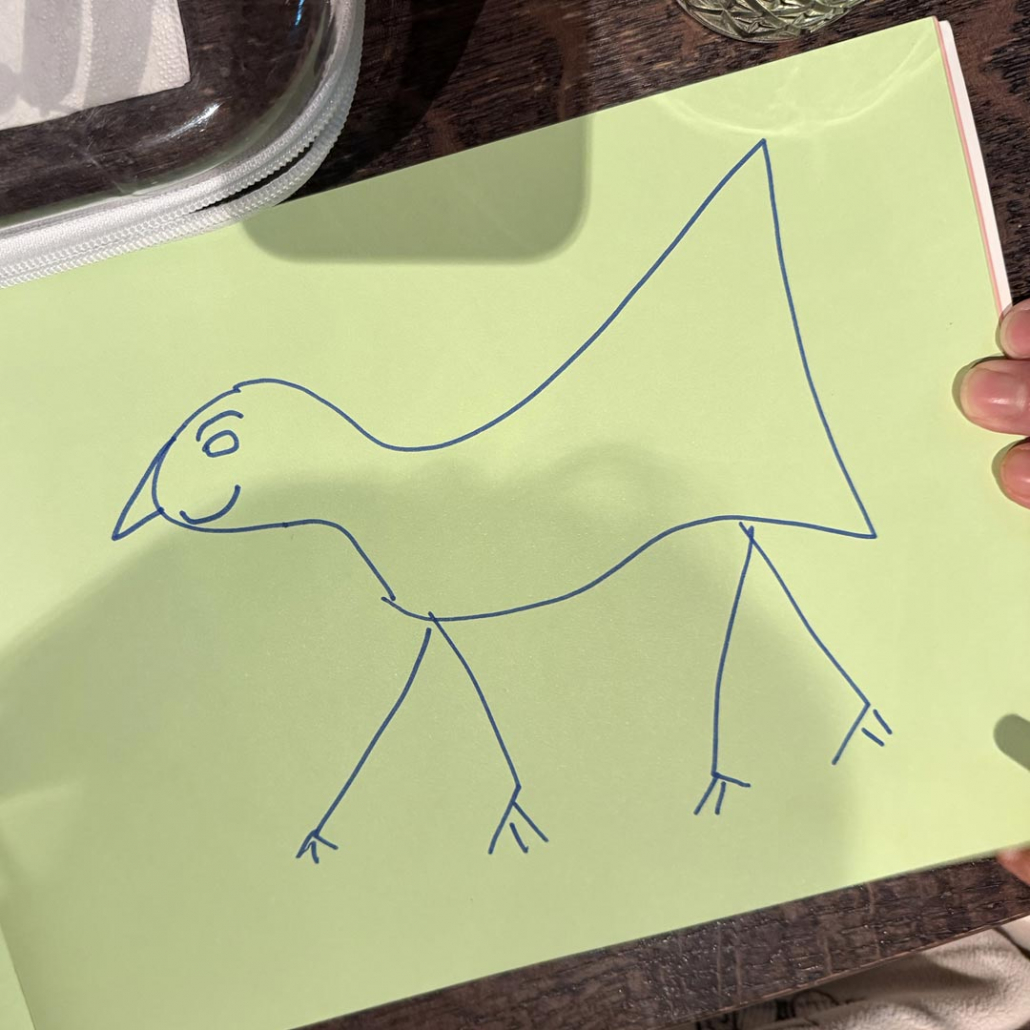
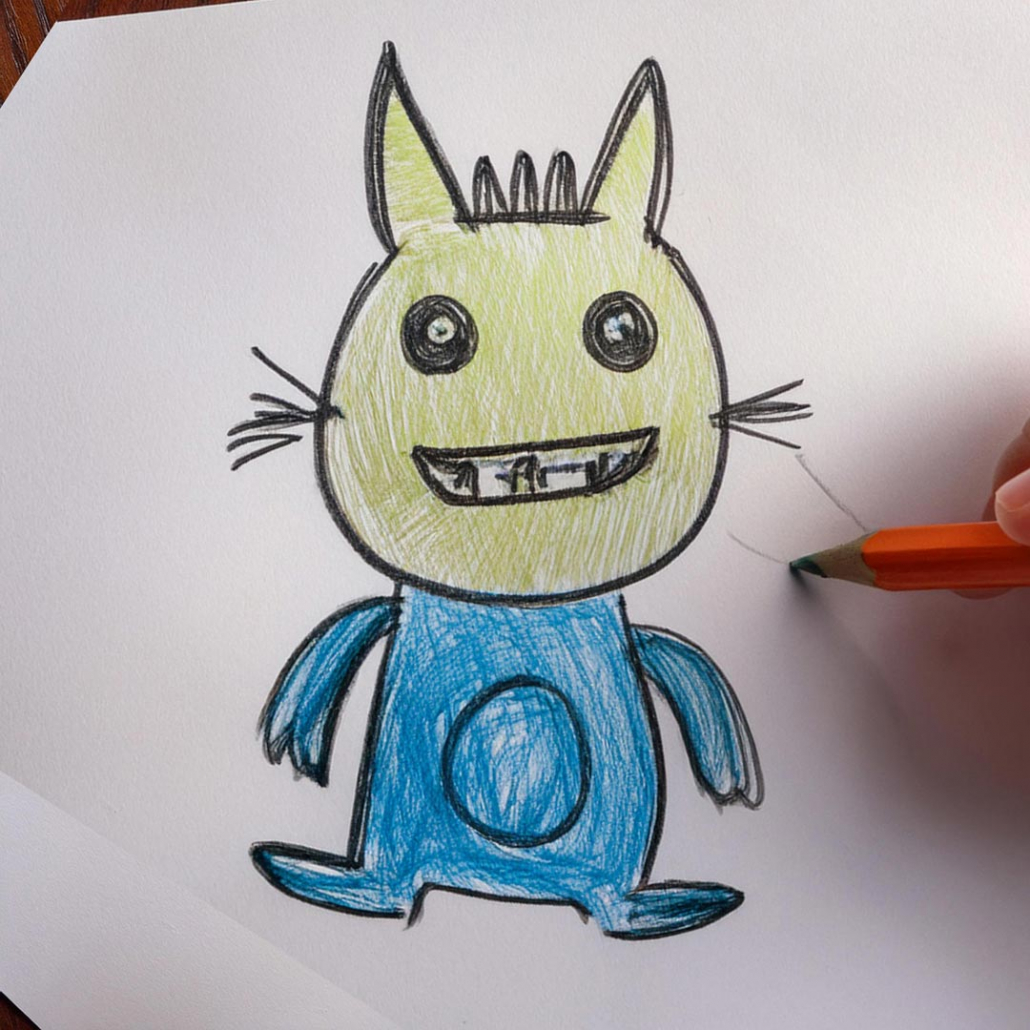
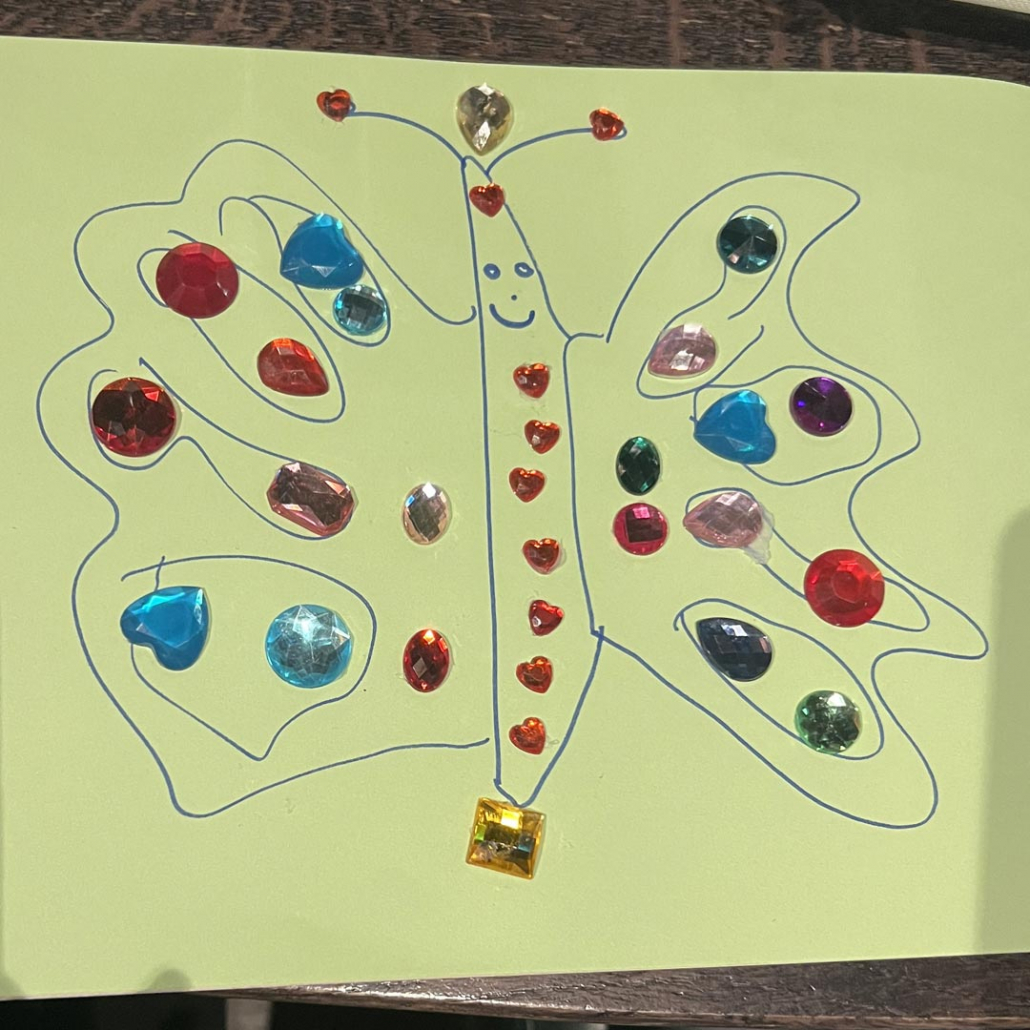
Today’s activity is one that’s fabulous fun for children and parents alike. It’s all about showing children how quick and easy it is to transform their drawings, paintings, and art using Artificial Intelligence (‘A.I.’). With help from a parent, magical results take just minutes to accomplish, and each transformation is often incredible. It’s also clear that the finished results truly honour children’s creations, while simultaneously elevating them to new, highly professional digital art imagery. What’s more, the tools that achieve this are freely available to families via desktop computers and smartphone apps.

Let’s dive in, then, to see how children and parents can take children’s art to magical new heights — easily, and in just minutes. We’ve also included some ‘before’ and ‘after’ images to exemplify what’s possible using the right approach. Parental or adult supervision is, of course, essential, particularly for the youngest children.

Why Introduce A.I. Digital Art Transformations to Children

This activity will encourage children’s art, communication and creative skills, and boost their understanding of today’s world. While some may be nervous about introducing youngsters to A.I., it’s a technology that’s ubiquitous — embedded all around us on computers, smartphones, and countless other devices. Indeed, today’s children are likely to grow up with it being a normal part of their lives. Many will grow up using A.I. daily at home and in the workplace, and some may even end up in a career that involves it. So, what better way to introduce artificial intelligence to little ones than via a responsible parent who has their best interests at heart? Such a parent can closely supervise them and ensure they use A.I. safely and responsibly. With that in mind, today’s A.I. art activity is a simple but fun way to help them see the technology’s potential, and to generate digital art that they can call their own and be proud of. Bringing their art to life in this way will also demonstrate that their imaginations, ideas and creations have enormous potential, are valued, and therefore matter.

Bringing children’s art to life will demonstrate that their imaginations, ideas and creations have enormous potential, are valued, and therefore matter.

Here’s a clickable gallery showing what’s possible when you ask an A.I. tool to transform a child’s art:

Steps to Incredible A.I. Transformations

Step 1: Make a Drawing or Painting

Step 1 is for children to do what they often do best: draw or paint something on a sheet of paper. If they need some ideas, an image of one or more people, animals, monsters, robots or what they might imagine to be aliens would be a good place to start. They can include anything they like around the main character or focus of the piece, be it a background of a home, forest, mountain scene, alien landscape, or indeed nothing at all — because asking the A.I. tool to insert some kind of background is also something they can do (see Step 4).

Step 2: Photograph or Scan Your Child’s Art

Once the child is happy with their drawing or painting, the parent should scan or take a smartphone photo of the image from above and save it, noting where it’s been saved. Try to avoid casting any shadows across the art when you photograph it, and ensure the results are clear before moving to Step 3.

Step 3: Upload it to the A.I. Tool

The next step is to upload the saved photo to the A.I. tool. For most A.I. tools, this is usually done simply by clicking the + symbol in the chat window of your chosen A.I. tool (more about those below) and selecting the appropriate instruction (upload, or add photos/files, as appropriate). Then, ideally, include your instructions for the A.I. tool within the same prompt or, failing that, immediately after it in your next prompt. See Step 4 below for our recommendations.

Which A.I. Tool?

There are many different A.I. image-generating tools available to families, including powerful ones that are free to use, within certain limits. ChatGPT is perhaps the most well-known and has a fabulous image-generating tool, directly available from the chat prompt via the paperclip symbol (whether via its website or its smartphone app). However, ChatGPT has fairly stringent limitations on the number of image transformations it will produce per hour or day, particularly when the system is busy, and transformations may be a little slower than with some other A.I. tools (paid upgrades are available to reduce some of those limitations).

A good alternative for families to start off with is an A.I. tool that’s less stringent yet more accessible. ‘Copilot’ would be an excellent choice on Windows 11 PCs because it’s embedded into that operating system. Another good alternative would be Google Gemini, which is accessible directly via any web browser by clicking our bold, blue link.

Either way, an image can be uploaded from the A.I. chat prompt by clicking the + symbol, subsequently choosing ‘Upload’ for Copilot, ‘Add photos & files’ for ChatGPT, or ‘Upload files’ for Gemini.

Other A.I. tools are available, but the suggestions above are a good starting place. Parents will need to do their own research around functionality, any image generation limits, possible fees if they want to upgrade, privacy, image ownership, etc.

Step 4: Give the A.I. Instructions

Once your image has finished uploading to the A.I. chat prompt, the next step is to write your instructions, ideally in the same prompt window or, failing that, in the very next prompt that you make. Such instructions tell the A.I. tool what you want it to do with the image you have uploaded. You can give it some simple instructions, which will allow it flexibility to make many of its own decisions, or feed it highly detailed instructions that give you much more control on the final output. Your child can be involved in such instructions, of course, and this can all be a part of the creative fun! Such an option may work best once they’ve learnt what the A.I. tool is capable of doing, having perhaps transformed their first few pieces of art.

What Can You/Your Child Ask the A.I. For?

What you can ask the A.I. tool to do with your child’s drawing or painting is only limited by your (or their) imagination! For example:

  • You could ask them to transform it into a cartoon style if you want to keep it simple (for example, in the style of SpongeBob SquarePants or The Simpsons).
  • You could ask the A.I. to transform a scribble of a robot into a high-definition one that takes the same form but looks every bit like it’s made of painted metal and resides in a futuristic city.
  • You could request a transformation in the style of a Pixar movie. For example, with the main character(s) having shaggy fur, bright colours, all set in the interior of an imaginary spacecraft with illuminated buttons and futuristic furniture.
  • Another option would be to request the output to be in the style of clay characters of the kind you’d see in a Wallace & Gromit animated movie.
  • Or ask for the final image to be in the style of a wooden puppet, a fabric soft toy like you’d see in a child’s nursery, or indeed something that looks like it is from Toy Story.
  • You could perhaps ask for something that looks like your child’s drawn character comes from Sesame Street or The Muppets.
  • Be aware that you can also specify the type of lighting (soft, hard, backlit, etc.), what the background should be, what the location is, what style of image it should be, and even whether any elements of the child’s original drawing should be ignored, adapted, or substituted. If you/your child has something in mind, simply tell the A.I. tool.

Step 5: Wait for the Amazing Results!

Once your child’s drawing or painting has been submitted along with the appropriate instructions, it’s a case of waiting a minute or two for the results. Be prepared for a “WOW!” from both yourself and your child when the generated image appears, because the results are usually incredibly impressive. The A.I. tool will have taken the essence of your child’s creation and elevated it to incredible new heights.

Here are a few more examples, which are clickable for a larger view:

We had the most fun creating today’s post! And, if it’s fun for adults, just imagine how enjoyable children will find the activity. With the help of a parent or carer, they’ll see their creations come to life in incredible ways. They’ll be able to see how simple drawings can be absolutely transformed into high-resolution, highly detailed, professional-looking imagery that would not look out of place in an art gallery, on TV, or in a cinematic movie. What’s more, they can let their imaginations strive for new heights by suggesting exactly how their images should be enhanced. Would they like their drawing to look like a character from The Smeds & The Smoos, something from a Minions movie, more akin to a cartoon character like Peppa Pig, or something that would look at home in a soft toy shop? With today’s A.I., they can let their imaginations run riot, wield truly powerful tools, and reach for the stars to transform their art into truly magical results. It takes just minutes — and can be achieved totally free of charge. After printing out the results or saving the images digitally, children will end up with something they can be proud of. More importantly, though, they will come to understand what magic is possible from something they have imagined and created.

A High-Quality Childcare Service in Streatham

Little Cedars Nursery — Weekday Childcare for Under-5s

Ofsted rates Little Cedars Day Nursery as a Good ProviderLittle Cedars is a nursery & preschool offering high-quality childcare in Streatham, near Tooting, Tooting Bec, Tooting Common, Tooting Broadway, Furzedown, Balham, Norbury, and Colliers Wood.Little Cedars Nursery is a wonderful childcare service in Streatham. The setting may also suit those searching for a good nursery/preschool near Streatham Common, Streatham Hill, Streatham Park, Tooting, Furzedown, Balham, Norbury, or Colliers Wood. Little Cedars Nursery is rated as a good provider by Ofsted, so you know your child will be in good hands.  The nursery is warm and welcoming, with a home-from-home environment where children and babies feel safe, nurtured, loved, and valued. We have wonderful, caring staff and all the facilities, equipment, and resources that will ensure under-fives get the best start in life. By doing so, they’ll become the best versions of themselves and will be ready to thrive! Little Cedars Nursery supports free/funded childcare schemes for eligible children and babies.

Contact Little Cedars Nursery today to learn more, register for a place, or book a guided tour:

Nurturing Kindness, Confidence, & Children’s Rights

World Children’s Day: 20 November — Nurturing Kindness, Confidence and Children’s Rights
World Children's Day promotes children’s rights everywhere: the right to play and learn, the right to be cared for, and the right to express their thoughts and feelings.Each year on 20 November, families, nurseries, and schools around the world mark World Children’s Day — a global celebration of children and a reminder that every child deserves to be safe, loved, and heard.

First established by the United Nations in 1954, the day promotes children’s rights everywhere: the right to play and learn, the right to be cared for, and the right to express their thoughts and feelings. For us as early years practitioners, these ideas are not just something we recognise once a year — they’re at the heart of everything we do.

Celebrating Children’s Rights in the Early Years

At Little Cedars Nursery, we believe childhood should be filled with discovery, laughter, and a sense of belonging.At Little Cedars Nursery, we believe childhood should be filled with discovery, laughter, and a sense of belonging. Each day presents countless opportunities for children to explore their world, build friendships and develop confidence in who they are.

World Children’s Day gives us a lovely opportunity to pause and reflect on how our daily routines and play experiences support children’s rights. Whether it’s giving every child time to share their ideas, encouraging them to choose their own activities, or helping them feel proud of their achievements, we’re constantly reinforcing the message that their voices matter.

We also help children learn about fairness, kindness, and inclusion in simple, age-appropriate ways — talking about taking turns, recognising feelings, and celebrating the things that make us all different and special.

“World Children’s Day is UNICEF’s global day of action for children, by children, marking the adoption of the Convention on the Rights of the Child.”  — UNICEF.

Nurturing Kindness & Confidence

When children feel valued and respected, they learn to value and respect others.The values behind World Children’s Day are deeply woven into the early years. When children feel valued and respected, they learn to value and respect others. Through play, they develop empathy — comforting a friend who feels sad, or cheering when someone else achieves something new.

We encourage kindness in small, everyday ways: helping a friend tidy up, inviting someone to join in, or saying something kind about another’s work. These moments might seem small, but they help children build the emotional skills that form the foundation of strong, healthy relationships.

Confidence, too, grows through gentle encouragement and trust. When practitioners celebrate a child’s efforts rather than focusing on perfection, that child learns the joy of persistence and self-belief. World Children’s Day is a reminder that nurturing these qualities early on helps children become thoughtful, resilient individuals who believe in their own potential.

Listening to Children’s Voices

Children have ideas, preferences, and opinions — and part of our role is to listen carefully to them.Even the youngest children have ideas, preferences, and opinions — and part of our role is to listen carefully to them. That might mean noticing a baby’s cues and interests, or responding when a toddler points out something new they’ve discovered.

By recognising and respecting these early expressions, we show children that their thoughts are valued. This builds trust and confidence, helping them feel secure enough to explore and express themselves freely. Listening to children, even before they can fully speak, is one of the most powerful ways we can support their right to be heard.

Ways Families Can Join the Celebration

World Children’s Day can be a lovely opportunity to celebrate at home, too. Here are a few simple ideas families might enjoy:

Wear Blue

Blue is UNICEF’s colour for World Children’s Day — a symbol of solidarity with children everywhere. Whether it’s a blue T-shirt, hat, or pair of socks, wearing blue on the day is a simple but cheerful way to show support.

Share a Story about Kindness or Friendship

Invite your little one to choose a favourite picture book that celebrates kindness, fairness, or helping others. Afterwards, talk about what the characters did to make the world a little brighter.

Kindness Jar

As a family, fill a jar with ideas for small acts of kindness — like helping to set the table, sharing toys, or making someone smile. Pick one each day and celebrate the difference it makes.

Create a “Children’s Rights” Tree

Draw or craft a tree together and add leaves labelled with things every child deserves: to play, to feel safe, to learn, to be listened to. It’s a simple visual reminder that these rights belong to every child, everywhere.

Learn more about World Children’s Day and how you can get involved here.

Every Day Is Children’s Day

Each time a child is encouraged to speak up, to show kindness, or to follow their curiosity, they’re practising the values that shape a fair and caring world.While World Children’s Day falls just once a year, its spirit is something we celebrate every day. Each time a child is encouraged to speak up, to show kindness, or to follow their curiosity, they’re practising the values that shape a fair and caring world.


At Little Cedars Nursery, we’re proud to nurture those values — helping children grow into confident, compassionate learners who know their voices matter. Because for us, every day is truly Children’s Day.

Little Cedars Nursery

A High-Quality Childcare Setting in Streatham

Ofsted rates Little Cedars Day Nursery as a Good ProviderLittle Cedars is a nursery & preschool offering high-quality childcare in Streatham, near Tooting, Tooting Bec, Tooting Common, Tooting Broadway, Furzedown, Balham, Norbury, and Colliers Wood.If you’d like your baby, toddler, or preschooler to get the very best start in life, consider Little Cedars for your weekday childcare. Little Cedars is a high-quality nursery in Streatham, close to Streatham Common, Streatham Hill, Streatham Park, Tooting, Furzedown, Balham, Norbury, and Colliers Wood. Ofsted rates us as a good provider in all categories, and we support funded childcare places for eligible babies (9m+) and children under five.

Get in touch or start your child’s application today:

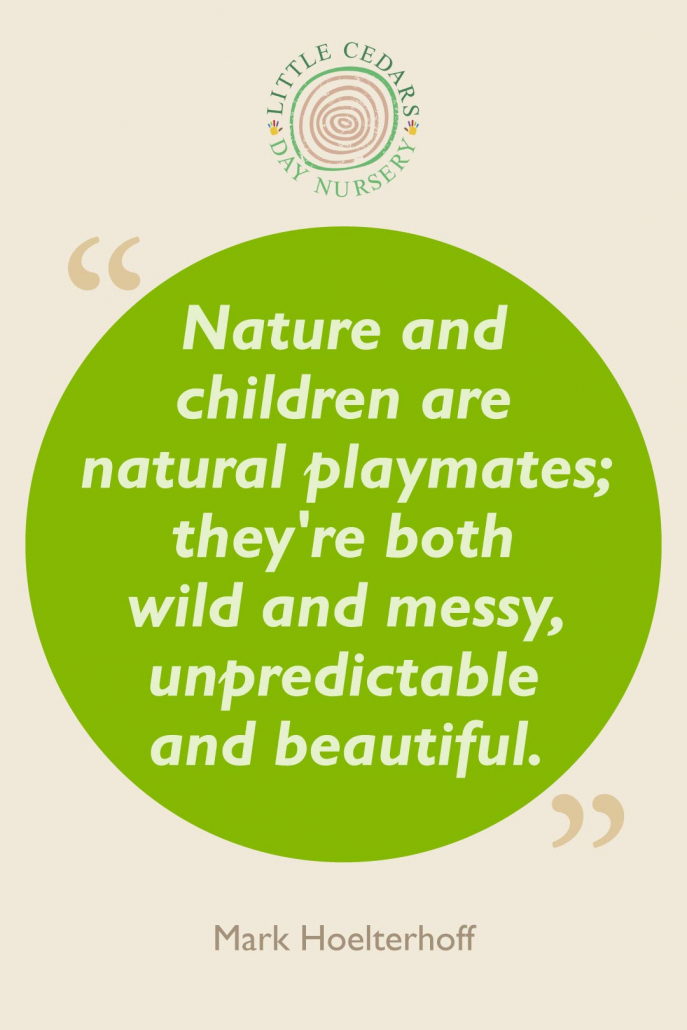
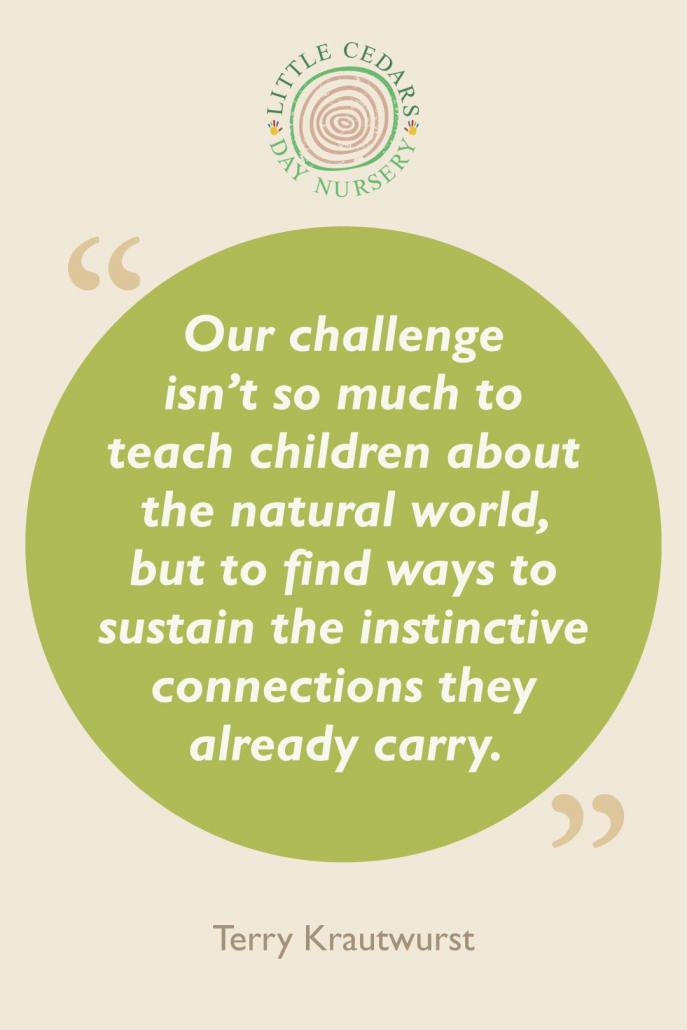
Why Children Belong in Nature — Inspiring Quotations Every Parent Should Read

There’s something magical about seeing a child run through long grass, gather conkers in autumn, or pause wide-eyed at the sight of a beautiful butterfly on a flower. At Little Cedars Nursery, we know how valuable these moments are — nature has always been the greatest playground, the richest classroom, and the most inspiring storybook. Indeed, research consistently shows that children who spend time in nature benefit in countless ways, from improved concentration and physical health to emotional wellbeing and creativity. In fact, we’ve written a whole article about nature’s benefits to children, here.

But beyond the evidence, there’s also inspiration. Generations of writers, educators, and parents have tried to capture in words what nature gives to children. With that in mind, we’ve gathered together some of our favourite quotations, each one a reminder of why the great outdoors is such a vital part of childhood — take a look.

A Gallery of Inspiring Words

Below you’ll find a curated collection of quotes that celebrate children, nature, and the adventures that happen when the two come together. They’re perfect for reflecting on, sharing with friends, or printing out as a little reminder to pause and head outside with your child. Click for a larger view.

Quotations That Inspire

Feel free to download, print out, and keep your favourites from the quotations featured today. Pop them on your fridge, frame one for your child’s room, or share them with family and friends who love the outdoors too. Sometimes all it takes is a small reminder to make space for big adventures.

Nature doesn’t have to mean a faraway forest or a long car journey. For little ones, it can be as simple as listening for birdsong on the walk to nursery, picking daisies at the park, or watching raindrops race down a window. However you enjoy it, the important thing is that children have the chance to connect with the world around them — to feel the earth beneath their feet, the wind in their hair, and the joy of discovery. For children in their early years, time outdoors sparks curiosity, builds resilience, and nurtures a sense of wonder that will stay with them for life.

We hope these words inspire you to make time for those moments. Because every adventure, no matter how small, helps a child grow into someone curious, confident, and ready to take on the world.

Exploring Nature at Little Cedars Nursery, Streatham

Ofsted rates Little Cedars Day Nursery as a Good ProviderLittle Cedars is a nursery & preschool offering high-quality childcare in Streatham, near Tooting, Tooting Bec, Tooting Common, Tooting Broadway, Furzedown, Balham, Norbury and Colliers Wood.Little Cedars Day Nursery, Streatham, encourages children to get closer to nature — we know how profoundly beneficial it is to them. As well as being close to local natural spaces like Tooting Common, children at Little Cedars are also able to grow seedlings, vegetables, and plants in the nursery’s very own planting area. Growing their own gives them a whole raft of new skills, teaches them about nature, the world, and the circle of life. It is also a wonderfully hands-on way to show little ones where food comes from — and that they can grow their own with some care, responsibility and nurturing. Nature is a wonderful teacher!

If you have a baby or child under five and live in or around the Streatham area, consider Little Cedars Nursery for your weekday childcare provision. It’s a high-quality nursery and preschool in Streatham, near Streatham Hill and Streatham Common and is also suitable for families living nearby in Tooting, Furzedown, Balham, Norbury and Colliers Wood. Ofsted rates Little Cedars Nursery a Good Provider, so you know your child will be in safe hands. We also support free childcare funding for eligible families. If all of this sounds like something you’d like for your child, please get in touch:

Safety Outdoors

Children, especially the very young, should always be supervised and accompanied by a responsible adult when playing and exploring outdoors — there are many dangers out there! Also check out our tips for child safety outdoors for a few pointers.

How to Handle Toddler Tantrums — A Parent’s Guide

Tantrums are a common part of life with toddlers and under-fives.Tantrums are a common part of life with toddlers and under-fives, but when they happen, they can be very challenging! Whether it’s a meltdown at dinner time or a dramatic on-the-floor outburst in the middle of the supermarket aisle, they can test even the most patient of parents and carers. However, it’s important to understand that tantrums aren’t a sign that something is wrong — they’re actually a normal, healthy stage of child development.

Today’s guide aims to offer practical, reassuring advice on how to understand and respond to tantrums, without resorting to shouting or feeling like you’re failing as a parent.

Why Toddlers Have Tantrums

Young children can be overwhelmed by big emotions because their brains are still developing, but they haven’t yet mastered language, impulse control, and emotional regulation.In their early years, children are still learning how to manage big emotions. There’s a mismatch, though; their brains are developing rapidly, but they haven’t yet mastered language, impulse control, or emotional regulation. So, when they’re tired, hungry, overstimulated, or frustrated, it can all become too much for them. That’s when the crying, kicking, shouting, or collapsing to the floor can occur and, considering they’re such small people, it can be quite something!

Tantrums aren’t usually “naughty” behaviour. They’re expressions of overwhelming emotion. A toddler might not be able to say “I’m frustrated because I wanted the red toy, not the blue one,” but they can certainly show it.

What to Do in the Moment

Stay Calm & Composed

When a tantrum starts, staying calm is key.When a tantrum starts, staying calm yourself is key. Your child will take emotional cues from you, their trusted adult. If you can remain steady, even if you’re feeling flustered inside, you send the message that you’re in control—and that they’re safe.

Acknowledge Your Child’s Feelings

Try getting down to your child’s level and speaking softly. In the scenario quoted above in green, you could say, “I can see you’re really upset,” or “You’re feeling angry because you wanted something else.” Validating and labelling their emotions lets them know you understand, even if they still can’t get what they want. It also helps them understand and name what they’re feeling.

Make Allowances When They’re Overwhelmed

Make allowances when little ones are overwhelmed by big emotions.Avoid reasoning or explaining too much during a tantrum. When a child is overwhelmed, they’re unlikely to take much in. It’s often best to wait it out and stay close so they know they’re not alone. For some children, a gentle touch or hug might be helpful. Others may need a bit of space before they’re ready for comfort.

Focus on Your Child — Not Onlookers

If you’re in public and feel pressure from onlookers, try to block it out. What matters most is your child’s emotional development — not what strangers might think.

After the Storm

Once the tantrum has passed, your child might need a cuddle, a drink, or just a few quiet moments. Talk gently with them about what happened. This isn’t a time for lectures, but a moment to reconnect and help them feel secure again.

Perhaps say something like, “That was upsetting for you. Next time, let’s try using words to tell me how you feel.” Over time, this builds emotional awareness, communication skills, and trust.

Preventing Tantrums (When You Can)

While it’s impossible to prevent every tantrum, there are ways to reduce how often they happen.

  • While it’s impossible to prevent every tantrum, there are ways to reduce how often they happen.Offering limited choices — like “Would you like to wear the red jumper or the blue one?” — can also give them a sense of control without overwhelming them.

  • Being aware of your child’s triggers, such as tiredness or hunger — and planning accordingly — can make outings smoother and transitions easier.
  • Routine helps young children feel secure, so sticking to regular mealtimes and bedtimes can also make a big difference.

The Bigger Picture

It’s easy to feel judged, tired, or helpless when dealing with tantrums, especially during a long day or out in public. But every time you respond with calm, connection, and consistency, you’re helping your child build the tools they’ll need to manage emotions as they grow. Tantrums may not disappear overnight, but with understanding, patience, and time, they’ll become less frequent — and far more manageable.

Little Cedars Day Nursery in Streatham

Ofsted rates Little Cedars Day Nursery as a Good ProviderLittle Cedars is a nursery & preschool offering high-quality childcare in Streatham, near Tooting, Tooting Bec, Tooting Common, Tooting Broadway, Furzedown, Balham, Norbury, and Colliers Wood.We hope today’s post was useful to parents and carers of children under five. Little Cedars is a childcare nursery in Streatham, near Streatham Hill and Streatham Common and close to Tooting, Furzedown, Balham, Norbury, and Colliers Wood. We provide little ones with a fabulous start to their early years learning and development, and a warm, caring, nurturing environment that brings out the best in them. We’re recognised by Ofsted as a good provider and support free childcare hours for eligible children aged from 9 months to 4 years, including stretched provision over 51 weeks of the year — great for working parents.

If you would like to apply for a nursery place for your child at Little Cedars Day Nursery in Streatham, please click the ‘Apply for a Place’ button below to get started. Alternatively, select one of the other options to get in touch or arrange a guided tour:

The Benefits of a Digital Detox & Why Families Should Try It

Unplugging electronic devices can offer meaningful benefits for little ones and their families.In today’s world, electronic screens are everywhere — from TVs  and smartphones to tablets and games consoles. Even our youngest children are growing up in increasingly digital environments. While technology brings many conveniences, intentionally unplugging can offer profound benefits for little ones and their families. Whether it’s for a day, a weekend, a holiday, or even longer, the value gained from a ‘digital detox’ may surprise even the most dubious amongst us. Today’s post investigates.

What Science Tells Us

Pausing the use of electronic screens can even help reset our perception of time, making days feel longer, fuller, and more engaged.Research consistently shows the positive effects of stepping away from our screens. Studies report that a digital detox can lead to decreased stress and anxiety, improved mood and well-being, and even better physical health through healthier, less sedentary, lifestyles. Pausing the use of electronic screens can even help reset our perception of time, making days feel longer, fuller, and more engaged.

For children, excessive screen use, especially before bedtime, can disrupt sleep. This is caused by electronic screens interfering with natural melatonin production, leading to delayed sleep onset and poor quality rest. It can also slow language development and impair attention, particularly for children under five, whose brains are undergoing rapid early development. In one study, toddlers watching three hours of TV a day were three times more likely to experience language delays and weaker school readiness skills.

The results from combined studies indicate that children who reduce screen time show fewer emotional difficulties, improved social behaviour, and greater prosocial tendencies including kindness and cooperation. In another real-world experiment, teens who took a 48-hour smartphone break noticed better sleep, more outdoor activity and stronger family interactions.

Learn more about the science of ‘green time vs. screen time’ here.

Why It Matters for Families

Parents who've tried time away from electronic screens report a renewed sense of connection and deeper engagement with their children.When families go screen-free, the benefits extend well beyond the individual. Removing screens often rekindles face-to-face interactions and facilitates more laughter and unfiltered conversations within the family. Parents who’ve tried it report a renewed sense of connection and deeper engagement with their children. Even short periods of unplugging can turn into lasting changes—more shared stories, more creative play, and more real presence.

Outdoor time plays a huge role too. Whether it’s a neighbourhood walk, a garden adventure, or imaginative forest-based play, nature helps cultivate curiosity, resilience and emotional regulation. Studies suggest that just 20 minutes spent in nature can make children significantly happier and help them learn to cooperate and handle challenges — all skills rarely honed by flicking through a screen. Similarly, nature-rich breaks support mental health and reduce the pull of addictive screen use. Studies found that even a view of a natural green space can enhance academic focus and grades — incredible! Learn more about how spending time closer to nature benefits children here.

Children’s emotional intelligence also deepens with the absence of screens as it encourages them to observe and interpret others’ feelings. For example, in a five-day unplugged camp, participants improved significantly in their ability to recognise emotional expressions, unlike peers who continued using devices.

Benefits Families Are Likely to Notice

After just one screen-free day, many families may notice:

  • During time away from electronic screens, families will notice enhanced awareness of each other’s company and children becoming more attentive to parents and siblings.Better sleep for everyone with children tending to drop off more easily and adults feeling more rested.
  • Evenings that are likely to feel longer and more relaxed.
  • Greater spontaneity and creativity as children talk, play, read, draw, and excitedly ask “What shall we do next?”
  • Enhanced awareness of each other’s company, with siblings rediscovering play together and children becoming more attentive to parents.
  • A pleasant atmosphere overall and a likely boost to everyone’s mood.

Possible Challenges & Their Solutions

Of course, removing electronic screens may not always be easy, especially at first. Families trying a digital detox may face some potential challenges. If so, there are gentle ways to manage them.

If children are resistant to the idea or complain that it’s going to be boring without electronic screens, try re-framing the break as an adventure rather than a restriction. Invite children to suggest activities — let them decide during the detox. Try presenting it as a shared family challenge rather than a rule.

Adults may worry about missing their devices too. However, parents modelling the detox by putting their own phones away will help children accept it too.

There is also the potential fear of missing out (FOMO) without access to electronic devices and social connections — particularly for older children. However, explaining that it’s just for a short time will help achieve acceptance of the idea. Acknowledge the temporary interference and encourage children to choose family connection and creativity first — it will help families stay on track.

There is the potential of failure if preparations have not been made before starting. So, in readiness, it’s advisable to prepare a list of screen-free ideas so the family can hit the ground running when they begin their digital detox (see suggestion #3 below).

How to Introduce a Detox Gently & Keep It Fun

Here are some tips to help ease families into a digital detox and set them up for success:

  1. Plan some entertaining and engrossing alternatives together.Begin by designating screen-free boundaries, such as bedrooms or mealtimes, and/or set a daily screen-free hour in the evening.
  2. Get children to buy into the idea by inviting them to help set the rules. Ask them “When are screens off?” and “What happens then?” They can be nudged in the right direction through discussion and helpful suggestions if they’re unsure.
  3. Plan those entertaining and engrossing alternatives together. Screen-free ideas could include reading together, making simple crafts, telling stories, going outdoors, cooking, playing music, dancing and fitness sessions, baking together, garden safaris, yoga sessions, board games — and so on.
  4. Celebrate small wins! For example, point out how much deeper and more restful sleep is, or how much more chatter there is at the breakfast table.
  5. Once screen-free moments become familiar, try graduating your family to a screen-free weekend or even a full holiday. Many families describe these as revelatory with any initial frustrations soon giving way to something deeper and more rewarding.

Final Thoughts

Without screens, children are likely to spend more time outdoors and benefit from everything nature and outdoor play have to offer.The evidence clearly shows: families who have periods free of electronic screens will benefit. A digital detox enriches and elongates days. It enhances sleep quality for children and adults by facilitating their natural rhythms. Days feel more spacious and calm without digital distractions and imaginative play soon steps in and thrives. In the absence of screens, children are also likely to get outdoors more often — and benefit from everything nature and outdoor play have to offer. Mental health and even academic grades are also likely to improve when this happens.

A digital detox isn’t about rejecting technology, though, as it has its place; it’s more about creating balance and discovering what’s been hidden. For example, deeper conversations, creative play, richer bonds, and nourishing rest. Whether it’s a screen-free Sunday, a tech-free teatime, or a weekend getaway without devices, these breaks can evolve into high-quality, cherished family time. Although at its heart a digital detox is the most simple of concepts, it’s likely to enhance family life in profound ways, whether for an afternoon or longer term.

With all that in mind, why not invite your child(ren) to get started by trying a screen-free afternoon this weekend? It could be the first step towards more fun, enhanced well-being, greater fulfilment and more genuine togetherness.

A Nursery Place for Your Child in Streatham

Ofsted rates Little Cedars Day Nursery as a Good ProviderLittle Cedars is a nursery & preschool offering high-quality childcare in Streatham, near Tooting, Tooting Bec, Tooting Common, Tooting Broadway, Furzedown, Balham, Norbury and Colliers Wood.Today’s post was brought to you by Little Cedars Nursery, a highly-popular childcare provider in Streatham, close to Streatham Hill and Streatham Common. Catering for babies, toddlers, and preschoolers under five, it offers high-quality weekday childcare virtually all year round and has a great Ofsted rating. We also support funded childcare places for eligible children as young as just 9 months of age. Families living in Tooting, Furzedown, Balham, Norbury and Colliers Wood may also find Little Cedars Nursery convenient.

Start your exploration of a Little Cedars nursery place for your baby, toddler, or preschooler today. Please choose a button to get started:

Why Re-reading the Same Book is So Good for Young Children

If you’ve ever found yourself reading The Very Hungry Caterpillar or The Gruffalo for the fifteenth time in a week, you’re not alone. Many parents and carers will notice that young children latch onto a particular story and insist on hearing it again and again, often word for word, and with little patience for alternatives. It’s a scenario that plays out in homes and nurseries everywhere — a favourite book that’s already been read countless times, yet you hear another heartfelt plea of “Again!”

A child's desire for repetition when reading books is not only entirely normal, but it’s actually a sign of healthy development.At first glance, this devotion to a single story might seem puzzling. As adults, we crave novelty and variation, and it’s tempting to encourage children to explore new titles or gently steer them towards something ‘different’. But this desire for repetition is not only entirely normal for infants, toddlers and preschoolers — it’s actually a sign of healthy development. In fact, there’s a great deal happening beneath the surface every time your child requests a beloved book for the umpteenth time.

In today’s post, we’ll explore why children are drawn to repeated readings, what they gain from the experience, and how supporting this instinct — both at home and in the nursery setting — can help lay the foundation for a lifelong love of language, stories and learning.

Why Repetition Feels Good to Young Children

For very young children, the world is a busy and often unpredictable place. Every day brings something new to see, hear, taste or try. Although that can be exciting, it can also overwhelm little ones. In contrast to all this change, repetition provides a welcome sense of familiarity and control. When a child chooses to hear the same story again and again, they are engaging with something known and reassuring — something where they already understand the pattern, remember the characters, and can predict what happens next. That sense of mastery is deeply comforting to them.

“Repetition provides a welcome sense of familiarity and control.”

From a developmental perspective, repetition plays an important role in helping children make sense of their surroundings. The human brain in the early years is working at an astonishing pace, constantly building connections and absorbing information. Repeated experiences help strengthen those neural pathways. Hearing the same sentences or phrases in a book over and over helps the brain to recognise patterns, anticipate outcomes, and form more lasting memories.

“Hearing the same sentences or phrases in a book over and over helps the brain to recognise patterns, anticipate outcomes, and begin to form more lasting memories.”

Repetition is a powerful tool that children instinctively use to deepen their understanding of language, narrative, and the world around them.There is also an emotional component to repeated reading. When a child hears a favourite story in the voice of a parent or trusted adult, it creates a strong sense of connection. The warmth, tone and rhythm of familiar words spoken by someone they love reinforce a feeling of safety and belonging. For many children, this shared experience becomes part of their routine, and returning to a much-loved story can offer comfort in moments of transition, tiredness or uncertainty.

Ultimately, repetition isn’t a sign of boredom or a lack of imagination — it’s a powerful tool that children instinctively use to deepen their understanding of language, narrative, and the world around them. While it may test an adult’s patience from time to time, for a young child, there’s real joy in knowing what comes next — and in getting to experience that joy all over again.

“There’s real joy in knowing what comes next — and in getting to experience that joy all over again.”

What Children Are Learning When They Hear the Same Book Over and Over

Although it may seem as though nothing new is happening when a child asks for the same book yet again, each repeated reading is building something important beneath the surface. Young children learn through repetition, and stories are one of the richest and most enjoyable ways to support that process.

A familiar book is a powerful learning tool, offering children the chance to build language, understanding, and confidence each time it’s opened.One of the clearest benefits of repeated reading is vocabulary development. Hearing the same words and phrases over time helps children internalise them. This is especially important when books introduce new or more complex language than a child might hear in everyday conversation. By encountering those words again and again in a familiar context, children begin to understand them more deeply and even start to use them in their own speech. The rhythm and rhyme found in many favourite books further support this by making the language more memorable and easier to imitate.

Repetition also supports children’s comprehension skills. Each time a story is heard, a child can focus on different aspects of it. On one occasion, they might be captivated by the pictures; on another, they might notice how a character is feeling, or how the story builds to its conclusion. With each reading, their understanding becomes more layered and nuanced, and their ability to retell or discuss the story improves too. This not only lays the groundwork for future reading comprehension, but also builds important narrative skills that will support them across all areas of communication and learning.

Another key area of development supported by re-reading is, of course, memory. As children hear a story repeatedly, they begin to anticipate what happens next, often joining in with familiar lines or reciting whole sections by heart. This ability to recall and predict is a sign that they are developing strong cognitive skills, including sequencing, attention, and auditory memory. These are all crucial foundations for later literacy.

Stories also offer a window into emotions, relationships, and the wider world. Through characters and plots, children are introduced to a range of feelings and situations, many of which may mirror their own experiences. When a child asks for the same book repeatedly, it may be because the story has resonated with them on a personal level. The more times they hear it, the more opportunities they have to explore those feelings and make sense of them in a safe and supportive way.

In essence, that familiar book on the shelf isn’t just a favourite — it’s a powerful learning tool, offering children the chance to build language, understanding, and confidence each time it’s opened.

“A familiar book is a powerful learning tool, offering children the chance to build language, understanding, and confidence each time it’s opened.”

Supporting This at Home

If your child keeps choosing the same book, that’s a good thing — it means they’re connecting with it.At home, parents or carers can support this by continuing to follow a child’s lead. If your child keeps choosing the same book, that’s a good thing — it means they’re connecting with it. You can enhance the experience by reading with enthusiasm, pausing to let your child fill in familiar lines, or asking gentle questions like “What happens next?” or “How do you think they feel here?” If your child wants to tell you the story instead, even better — this kind of role reversal strengthens memory, language, and storytelling abilities.

It’s also important to enjoy the shared experience. Reading the same book again isn’t a task to be ticked off — it’s an opportunity to connect, communicate, and learn together. And, by honouring children’s desire for repetition, we’re showing them that their interests matter to us. We’re also showing that we’re there for them to help nurture their developing minds.

Repetition Is a Sign of Growth

It’s easy to assume that when a child insists on reading the same book for the fifth time in a row, they’re simply stuck in a habit. But in truth, this kind of repetition is often a clear sign of growth. Rather than being a sign that they aren’t moving forward, it shows that they are consolidating what they’ve already learned — laying the groundwork for more complex thinking, communication, and understanding.

“Repetition shows that children are consolidating what they’ve already learned — laying the groundwork for more complex thinking, communication, and understanding.”

Children instinctively return to what feels manageable and rewarding. A book they already know offers them a chance to succeed, to feel confident in their understanding, and to enjoy the predictability of a story they can follow with ease. Each time they hear the same words, they’re not just passively listening — they’re actively building familiarity with language patterns, story structures, and emotional cues.

“A book they already know offers them a chance to succeed, to feel confident in their understanding, and to enjoy the predictability of a story they can follow with ease.”

Repeated reading is doing far more than meets the eye!Eventually, children do move on. When they’ve had their fill of a particular book, they’re often ready to explore new stories with a richer set of skills in place. The comfort and confidence gained from repeated readings help them approach unfamiliar books with greater interest and less frustration. So rather than seeing repetition as a rut, it’s helpful to view it as a bridge — a way for children to move steadily from the familiar to the new.

So the next time your child runs up to you with that well-worn favourite, eager to hear it “just one more time,” you’ll know it’s a good thing. Repeated reading is doing far more than meets the eye! It’s helping to build language, memory, emotional understanding and connection — all wrapped up within the safe and familiar story they love.

Little Cedars Nursery

Ofsted rates Little Cedars Day Nursery as a Good ProviderLittle Cedars is a nursery & preschool offering high-quality childcare in Streatham, near Tooting, Tooting Bec, Tooting Common, Tooting Broadway, Furzedown, Balham, Norbury and Colliers Wood.At our childcare nursery in Streatham, we understand how important repeated reading is for young children’s development, embracing it as a valuable part of our daily routine. Story time is a cherished activity, and we know that when a child asks for a favourite book again, it’s because they’re engaging deeply with it. Whether it’s the comforting rhythm of a well-loved picture book or the excitement of anticipating a favourite character’s next adventure, we follow the children’s interests and support their choices — however many times they may request them. After all, we know that every repeated story is a step forward in a child’s learning journey.

By using expressive voices, gestures, and encouraging children to join in with key words or sounds, our nursery practitioners help bring the story to life every time.Our practitioners are skilled at making repeated reading feel fresh and interactive, even when the story is already very familiar. By using expressive voices, gestures, and encouraging children to join in with key words or sounds, we help bring the story to life each time. Children are often invited to take on the role of storyteller themselves, turning pages, pointing to pictures, and even “reading” aloud from memory. These small but powerful moments help build confidence and strengthen communication skills in a way that feels natural and joyful.

At Little Cedars Nursery, we also make space for quiet, independent reading. Our book areas are set up with inviting, accessible book choices so that children can freely revisit the stories they love. It’s not uncommon to see a toddler carefully turning the pages of a book they know well, reciting parts of it to themselves or sharing it with a friend! These self-initiated moments show just how much children internalise and treasure the books that matter to them.

Why not explore the possibility of sending your baby, toddler, or preschooler to Little Cedars Nursery in Streatham? We’re rated as a Good Provider by Ofsted and support many Government-funded childcare schemes and vouchers. These include the ’30 Hours’ extension to free childcare for children aged from just 9 months (for eligible working families) that begins in September 2025. Contact us today!

Little Cedars Nursery provides a first-class childcare service to families in Streatham and may also be convenient for families in and around Tooting, Furzedown, Balham, Norbury and Colliers Wood.

51 Week 'Stretched' Childcare Provision for 2025-26 Funded Places at Little Cedars Nursery

At Little Cedars Nursery in Streatham, government-funded childcare hours for eligible children will be ‘stretched’ over 51 weeks of the year, starting from the 1st of September 2025. It means that, if your child is eligible for government-funded childcare hours at Little Cedars Nursery, they will be able to use them over virtually every week of the academic year starting in September 2025. In practice, that’s childcare provision every week, apart from the Christmas/New Year week, bank holidays, and three inset days. That aligns funded childcare provision with the standard working weeks that Little Cedars Nursery operates. It will provide more consistent childcare to families over virtually the entire year. This will alleviate the stresses associated with accessing funded childcare, especially during school holidays, which are not usually funded in the more standard 38-week model. Read on to learn more.

Our 51-Week Working Calendar

For 2025-26 Childcare Provision at Little Cedars Nursery

The coloured areas of the calendar below indicate days when Little Cedars Day Nursery will be open during the academic year 2025-26, with the new 51-week ‘stretched’ provision aligning with those weeks. Take a look:

51 week working calendar for Little Cedars Nursery childcare (Academic year 2025-26).

Background to ‘Stretched’ Funded Childcare Provision

When people refer to a “30 Hours” childcare funding scheme, it’s known as such because it’s based on 30 weekly childcare hours taken over just 38 weeks of the year (total: 1140 annual hours). It’s similar for ’15-hours’ childcare funding schemes, which are usually taken as 15 hours per week over 38 weeks of the year (total: 570 annual hours). As we all know, however, there are 52 weeks in every year. That leaves a substantial 14 weeks of the year where families would not usually be able to access funded childcare hours. That could cause many issues and potential expense as parents try to find alternative childcare provision, or have to reduce working hours. Both would effectively cost households money. With this in mind, Little Cedars Nursery will implement a new 51-week ‘stretched’ provision for the academic year 2025-26. As the name suggests, this stretches the funded hours over more weeks of the year. This is achieved by reducing the number of funded hours used each week.

How Many Funded Hours Eligible Children Can Get Each Week

With Our ‘51 Week’ Stretched Provision

By stretching the free hours over more weeks of the year, it results in a different number of funded hours in any given week:

  • Children on a ‘15-hour’ scheme (570 funded hours per annum) will instead take just over 11 hours per week, over the 51 weeks of the year.
  • Children on a ‘30-hour’ scheme (1140 funded hours per annum) will instead take approximately 22 funded hours per week, over the 51 weeks of the year.

Please contact the nursery for more details.

Nursery Places at Little Cedars Nursery, Streatham

Little Cedars is a nursery & preschool offering high-quality childcare in Streatham, near Tooting, Tooting Bec, Tooting Common, Tooting Broadway, Furzedown, Balham, Norbury and Colliers Wood.Ofsted rates Little Cedars Day Nursery as a Good ProviderIf you would like to explore the possibility of sending your baby, toddler or preschooler to Little Cedars Day Nursery in Streatham, please get in touch. We provide a high-quality weekday childcare service to families in Streatham as well as Tooting, Furzedown, Balham, Norbury and Colliers Wood. The nursery is rated as a Good Provider by Ofsted and supports several Government-led childcare funding schemes for eligible families. Indeed, from September 2025, children as young as 9 months of age will be able to access the 30-Week scheme for eligible working families. But don’t miss the application deadline if you’re thinking of applying for the scheme. Choose an option to get in touch today: