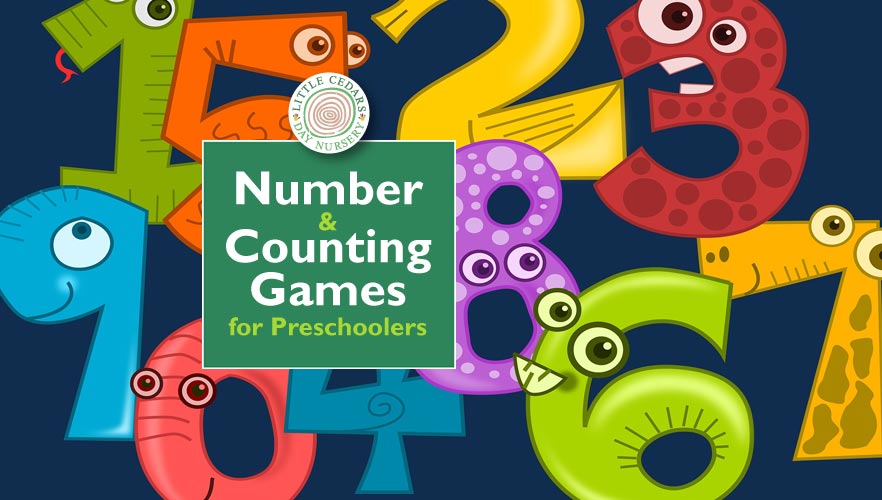
Concepts involving numbers and counting can sometimes be tricky for some preschoolers to grasp. Making sense of such concepts is important, though, because many aspects of children’s day-to-day lives will require an increasing understanding of numbers as time passes. Whether it’s knowing if a quantity of something is more or less than something else, how much of an ingredient is required in a mixture, or what change to expect from a purchase, children will need to grasp number-based concepts — and understand their real-world applications. What’s more, they’ll need to do this sooner rather than later if they’re to thrive, not least when they leave early years settings to begin school.
Early parental help can significantly boost children’s understanding of numbers, counting, and maths terminology. One of the key ways to help preschoolers is through number and counting games. What’s more, by using games and playful challenges, learning number and counting concepts will be fun! That fun element will be a key to both success and enjoyment. Indeed, learning through play is, as we know, the very best way for young children to learn. With that said, let’s take a look at some examples of games and fun challenges that under-fives can take part in. With supervision and guidance from adults, these are a great way to boost comprehension of number-based concepts in little ones — and support the EYFS curriculum.
First Create Some Number Cards
 Making ‘number cards’ with your child will be a fun and useful first step. These could be as simple as small pieces of paper or card, each having a single large number written clearly on them. Alternatively, your child could take the opportunity to get more creative. For example, you and your child could make the numbers bright and colourful, have patterned in-fills, or even be made to look like animals or number ‘characters’ that have eyes. For the very young, start with numbers up to 5, or go to 10 or even 20 for older and more advanced children. Size-wise, perhaps aim for cards sized at about A6 (a quarter of an A4 sheet) or even A7 (A4 divided into 8).
Number Order Games
Once you have a set of numbered cards, first ensure your child recognises the numbers and can say their names. Then, get your child to jumble them up. They should then place each card on the table or other flat surface and try to move them back into the correct numerical order. The idea is to end up with the lowest number on the left, going in order until they have correctly placed the highest number on the right. Ask them to count them out loud, from left to right, once complete. Praising and congratulating them when they do well will encourage them but, of course, help them if they struggle at first.
Once they’ve mastered the first game, make it more challenging by asking them to reverse the numbers and, when complete, count the numbers backwards.
Getting More Advanced
When your child becomes more advanced, perhaps shake things up a bit by hiding a number and seeing if they can tell you which one is missing. Later still, you could even miss out all the odd numbers, so they have to play the game with only even numbers, then do it the other way around. Learning to count all the odd or even numbers will be another useful and practical skill as they get older.
Number ‘Dot’ Cards
 A more advanced form of the number cards could depict the correct number of dots (or other drawn objects) instead of — or as well as — the actual written number. So, for example, the ‘3’ card could show a column or row of 3 round dots or squares or even something like 3 drawn strawberries — whatever your child likes! In a way, it’s a bit like traditional playing cards where each has both a number and the right amount of hearts, diamonds, clubs or spades on it, to match the number.
The benefit of this, more advanced type of card is that children will be able to see (and count), for example, two ‘dots’ on a ‘2’ card, four on a ‘4’ card, and so on. By using this approach, children will have a visual clue and practical example of the number’s meaning and, crucially, it will allow them to recognise and better understand quantities.
Introduce Simple Addition & Subtraction
When your child is more advanced using their number cards, a gradual introduction to simple addition and subtraction concepts will come easier — particularly if they use the cards with the numbers depicted with the dots/symbols. So, when you ask them what happens when they add a 2 and a 3 together, they will be able to count (or, with practice, recognise) the quantity of symbols on both cards. Before long, they’ll grasp the underlying concepts and be able to do it in reverse (subtraction). You could also consider adding mathematical ‘symbol’ cards into the pack, for example, ‘plus’ and ‘minus’ symbol cards.
TIP:
Ensure you give your child a round of applause when they get things right in any of these games — it will give them encouragement to keep going and also give them a sense of progress and achievement. Consider awarding them a prize or sticker to celebrate their achievements.
Number Matching Games
This next game will require a set of dominoes or, if you don’t have a set, they’re also easy enough to make in a similar way to the number cards. As you may know, each half of every domino has a number of dots, most commonly from 1 to 6. So, for example, there might be two dots on one end and five on the other, with the dot formations being rather like those you’d see on dice.
Whether using real dominoes or a homemade paper alternative, this game is traditionally played with 2 people. However, for the purpose of today’s game, it can be played just as well by a solo child, although under-fives will benefit most if they have some adult supervision and feedback. The idea of the game is to lay down one domino. Then, the next domino will need to be laid alongside one end of it so that the touching numbers match. So, for example, if the first domino has a 2 at one end and a 5 at the other, the second domino will need to have at least one number that matches and that should be placed so the two matching numbers touch. This is repeated so more and more dominoes are added, each time with a matching number connecting to an existing domino. Although traditionally there is a winner and a loser in dominoes, if playing solo, the idea here is simply for children to learn to easily recognise the number of dots. It’s a great way for children to be able to instinctively know whether they are looking at 1, 2, 3, 4, 5 or 6 dots — recognising the quantity and associated number will become instinctive if they practise.
Quantity Estimating Games
Understanding whether a quantity of something is more or less than something else is an important concept for children to grasp. Similarly, being able to estimate a quantity is a useful and practical skill for little ones to master. Such concepts can easily be highlighted, and the skills mastered, using simple estimating games. Some examples follow.
With the help of your child, build two stacks of one kind of object (e.g. draughts counters, biscuits, drinks coasters, etc.) and ask your child to confirm which stack they think has more than the other — without actually counting. Take some away or add some and repeat the process. They’ll soon be able to confirm the answers more accurately and grasp concepts like more, less, taller, shorter, and so on. This is a simple but practical game that will exercise children’s estimating skills and improve maths vocabulary.
Once they’ve mastered simple stacks of identical components one directly on top of another, you could make the game more challenging. There are a few ways to approach this.
- It can be achieved by making the stacks more complex, for example, in layers of different quantities — a pyramid format would be a good example.
- Or, instead of using a stack of near-identical components, try using small piles of irregular items, e.g. vegetables or fruit. Due to the different sizes and shapes, these will be more of a challenge and will get children thinking and concentrating harder.
As before, perhaps take away or add more objects to one or more of the groups and ask them to estimate which has more and which has less. Also, ask them to estimate, using logic, how many components each group has. You could even take it a step further by adding piles of objects to scales. Ask your child which they think is going to be heaviest, which is lightest, and so on.
Such games and challenges are a great workout for children’s young brains and great ways to introduce new number- and quantity-based concepts to children’s worlds, all in a fun way. They will also help little ones introduce new maths terminology into their vocabulary.
The Shop Game
Pretending to be a shopkeeper or a shopper buying from one is a great next step for children. What’s more, they’ll naturally love playing shops having, no doubt, accompanied parents to real shops. This is where they can put all the things they’ve learned from the games above into practice. They can check they have the right quantities, weights or volumes or products, check they’re giving the shopkeeper the right amount of money, ensure that any change is correct — and so on! Playing shops is such a great way to master numbers, counting, estimating, weighing, addition, subtraction and more!
Numeracy Skills Boost Children’s Long-Term Outcomes!
We hope that today’s activity ideas, in the form of games, help your child to grasp maths terminology and number-based concepts like counting, subtracting, adding, comparing, and estimating. Learning through play is by far the best way for little ones to learn. And, by learning about the application of number concepts through games and activities, they will be able to experience real-life applications of them. It will naturally make more sense and make learning about numbers and counting child’s play!
What’s more, an early boost to numeracy skills has been proven to enhance outcomes for children even in the longer term. Studies show that the benefits of number mastery include a propensity to stay in education longer, better job prospects, and improved earning potential as adults. That’s the power of understanding numbers!
Little Cedars Nursery, Streatham

 At Little Cedars Nursery in Streatham, we also take every opportunity to help children learn about numbers, how they work, their significance to everyday life, and the maths vocabulary that surrounds them. It’s all an important part of the EYFS curriculum and something they’ll benefit from profoundly as they grow older – crucially too in readiness for school. If you would like to explore the possibility of your child attending this wonderful nursery and preschool in London SW16, please get in touch or simply apply for a place (see the options below). Little Cedars Nursery is officially a Good Provider and supports eligible children through various government-funded childcare schemes, including those for eligible babies from just 9 months.
As well as being perfectly located for families looking for nurseries in Streatham, Streatham Common, Streatham Park and Streatham Hill, we may also suit those seeking high-quality childcare near Tooting, Furzedown, Balham, Norbury and Colliers Wood.



 Little Cedars Nursery is a high-quality childcare provider in Streatham, providing excellent weekday childcare to families in Streatham, Streatham Common, Streatham Hill, and Streatham Park as well as those nearby in Tooting, Furzedown, Balham, Norbury, and Colliers Wood. The nursery has a good Ofsted rating and is happy to support government-funded childcare for eligible families with children as young as 9 months of age.

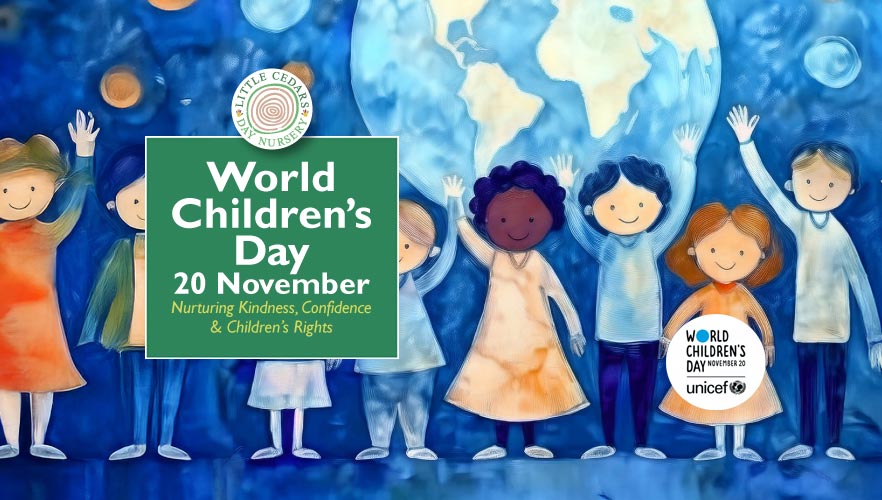
 Each year on 20 November, families, nurseries, and schools around the world mark World Children’s Day — a global celebration of children and a reminder that every child deserves to be safe, loved, and heard.
 At Little Cedars Nursery, we believe childhood should be filled with discovery, laughter, and a sense of belonging. Each day presents countless opportunities for children to explore their world, build friendships and develop confidence in who they are.
 The values behind World Children’s Day are deeply woven into the early years. When children feel valued and respected, they learn to value and respect others. Through play, they develop empathy — comforting a friend who feels sad, or cheering when someone else achieves something new.
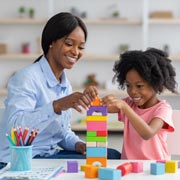 Even the youngest children have ideas, preferences, and opinions — and part of our role is to listen carefully to them. That might mean noticing a baby’s cues and interests, or responding when a toddler points out something new they’ve discovered.
 While World Children’s Day falls just once a year, its spirit is something we celebrate every day. Each time a child is encouraged to speak up, to show kindness, or to follow their curiosity, they’re practising the values that shape a fair and caring world.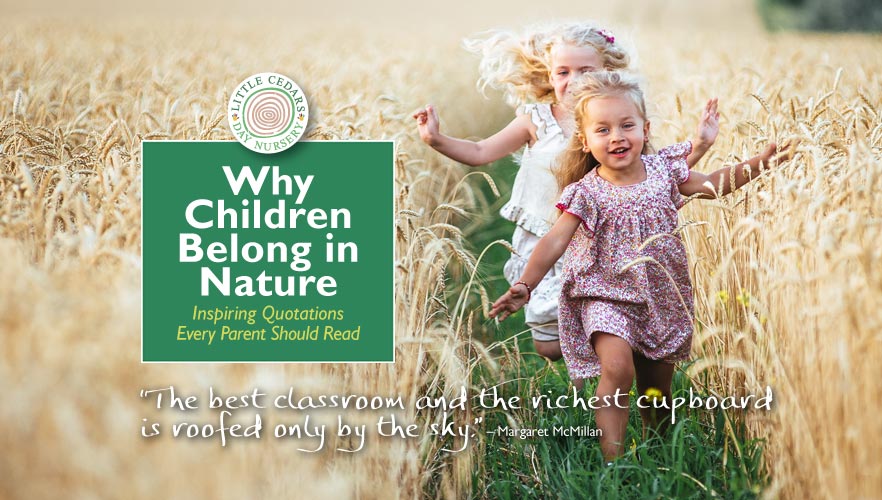
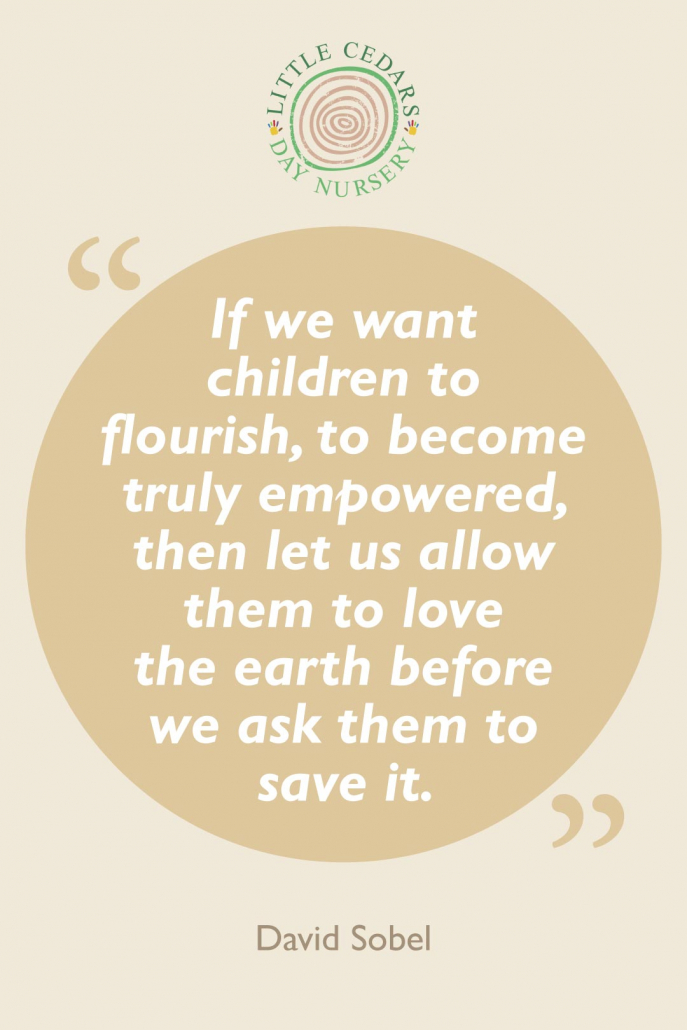
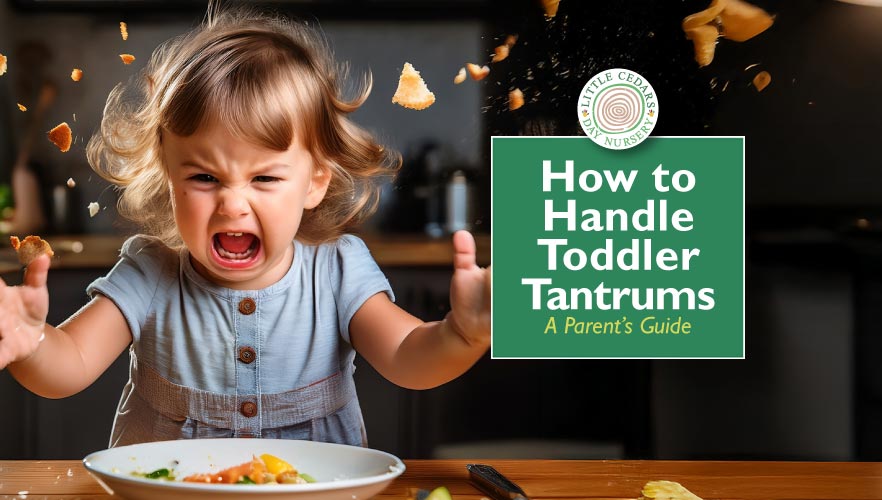
 Tantrums are a common part of life with toddlers and under-fives, but when they happen, they can be very challenging! Whether it’s a meltdown at dinner time or a dramatic on-the-floor outburst in the middle of the supermarket aisle, they can test even the most patient of parents and carers. However, it’s important to understand that tantrums aren’t a sign that something is wrong — they’re actually a normal, healthy stage of child development.
 In their early years, children are still learning how to manage big emotions. There’s a mismatch, though; their brains are developing rapidly, but they haven’t yet mastered language, impulse control, or emotional regulation. So, when they’re tired, hungry, overstimulated, or frustrated, it can all become too much for them.
  When a tantrum starts, staying calm yourself is key. Your child will take emotional cues from you, their trusted adult. If you can remain steady, even if you’re feeling flustered inside, you send the message that you’re in control—and that they’re safe.
 Avoid reasoning or explaining too much during a tantrum. When a child is overwhelmed, they’re unlikely to take much in. It’s often best to wait it out and stay close so they know they’re not alone. For some children, a gentle touch or hug might be helpful. Others may need a bit of space before they’re ready for comfort.
 Offering limited choices — like “Would you like to wear the red jumper or the blue one?” — can also give them a sense of control without overwhelming them.
 Concepts involving numbers and counting can sometimes be tricky for some preschoolers to grasp. Making sense of such concepts is important, though, because many aspects of children’s day-to-day lives will require an increasing understanding of numbers as time passes. Whether it’s knowing if a quantity of something is more or less than something else, how much of an ingredient is required in a mixture, or what change to expect from a purchase, children will need to grasp number-based concepts — and understand their real-world applications. What’s more, they’ll need to do this sooner rather than later if they’re to thrive, not least when they leave early years settings to begin school.
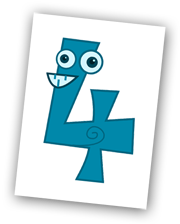 Making ‘number cards’ with your child will be a fun and useful first step. These could be as simple as small pieces of paper or card, each having a single large number written clearly on them. Alternatively, your child could take the opportunity to get more creative. For example, you and your child could make the numbers bright and colourful, have patterned in-fills, or even be made to look like animals or number ‘characters’ that have eyes. For the very young, start with numbers up to 5, or go to 10 or even 20 for older and more advanced children. Size-wise, perhaps aim for cards sized at about A6 (a quarter of an A4 sheet) or even A7 (A4 divided into 8).
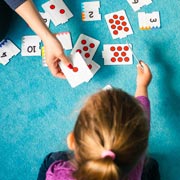 A more advanced form of the number cards could depict the correct number of dots (or other drawn objects) instead of — or as well as — the actual written number. So, for example, the ‘3’ card could show a column or row of 3 round dots or squares or even something like 3 drawn strawberries — whatever your child likes! In a way, it’s a bit like traditional playing cards where each has both a number and the right amount of hearts, diamonds, clubs or spades on it, to match the number.
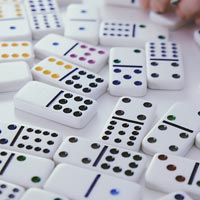 This next game will require a set of dominoes or, if you don’t have a set, they’re also easy enough to make in a similar way to the number cards. As you may know, each half of every domino has a number of dots, most commonly from 1 to 6. So, for example, there might be two dots on one end and five on the other, with the dot formations being rather like those you’d see on dice.
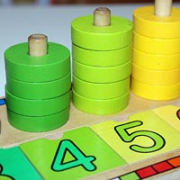 Understanding whether a quantity of something is more or less than something else is an important concept for children to grasp. Similarly, being able to estimate a quantity is a useful and practical skill for little ones to master. Such concepts can easily be highlighted, and the skills mastered, using simple estimating games. Some examples follow.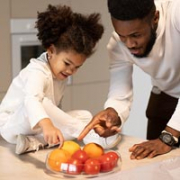
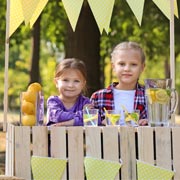 Pretending to be a shopkeeper or a shopper buying from one is a great next step for children. What’s more, they’ll naturally love playing shops having, no doubt, accompanied parents to real shops. This is where they can put all the things they’ve learned from the games above into practice. They can check they have the right quantities, weights or volumes or products, check they’re giving the shopkeeper the right amount of money, ensure that any change is correct — and so on! Playing shops is such a great way to master numbers, counting, estimating, weighing, addition, subtraction and more!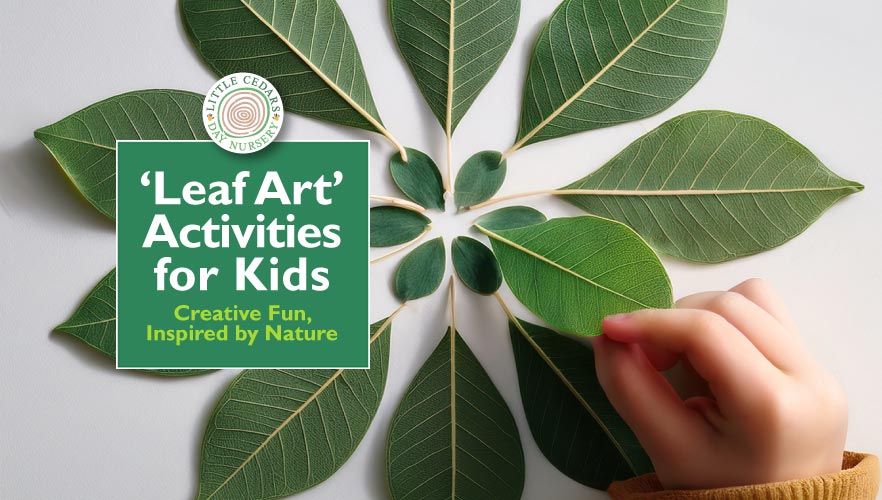
 With warmer weather and plants and trees flourishing wherever we look, it got us thinking about some creative children’s activities, inspired by nature. One simple starting point is the humble leaf, which can lend itself to a surprisingly wide range of creative activities for children to enjoy. Such activities will not only draw children’s attention to
  The first thing children will need is, of course, a selection of suitable leaves. To give them enough scope for a wide range of creative activities, we suggest families forage a variety of different sizes and shapes. We suggest focusing primarily on tree leaves as these are likely to be fairly robust, come in lots of different forms, and often have well-defined ‘vein’ structures. Oak leaves, sycamore, beech, hawthorn, horse chestnut, lime, sweet chestnut and silver birch would represent a nicely varied selection, for example. Download our
 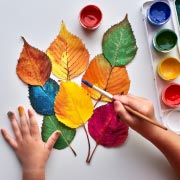 One of the most straightforward activities using leaves is for children to simply paint them. The youngest will love painting one side of each leaf in a different colour — or even adorn them with patterns like spots, zigzags, hearts, and stripes. Once the paint is dry, the leaves can be used in a variety of different ways. For example, they could be glued into an attractive design on a sheet of paper/card and displayed in a frame, made into a garland for the wall, bunched together to form an attractive hand-held fan, glued to a circle of paper or card to form an attractive crown, or glued to an upturned stick or tree sprig to represent a colourful tree. These are just a few ways they can be used once painted and, indeed, coming up with ideas is all part of the fun and creativity for children!
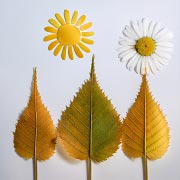 Collages made from leaves can also be very easy for children to accomplish; they just need a base card or paper, child-safe glue, some leaves and perhaps some flowers too. Ideally, leaves should be flat and, even better, dried. This can be achieved through pressing, which is explained later. For added beauty, add fresh or pressed flowers of different colours too — perhaps even other items like stars and glitter. Children can then gradually build up an attractive design (rather like organic wallpaper) or a simple picture like our example. It will result in a fascinating piece of leaf and flower art that can be displayed in the home — something for children to be proud of!
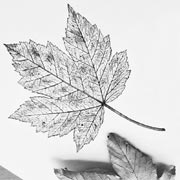 A freshly painted leaf can also be used to make leaf prints. When the paint is still very wet, children should simply turn their leaves over and press all areas of them against a sheet of paper or card. Doing this by hand is OK but if you have a roller, even better! In this way, the paint is transferred to the sheet and will typically show the leaf shape and all the structural veins of the donor leaf. And, by repeating the process with one or more leaves and colours, a design or picture can be gradually built up on the sheet. This might be as simple as a repeat pattern or as complex as a pictorial scene. By adding other media like painted or drawn lines, leaf prints could, for example, represent a forest on a hillside. Add little figures of people and perhaps little dogs underneath each ‘tree’ and it’ll start to come to life!
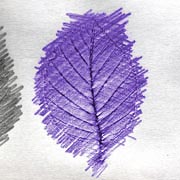 A leaf-rubbing activity is also fun and intriguing for little ones. Find a flat surface like a table or rigid sketch pad and place a thin sheet of paper over one or more leaves. By rubbing a thick wax crayon, charcoal stick, or soft-leaded pencil repeatedly over the sheet where there is an underlying leaf, the leaf’s form will gradually reveal itself. Children will be able to see the structural veins that form the leaf, along with leaf edges as they scribble. Children can experiment with different media, colours, and types of leaves to get different creative results.
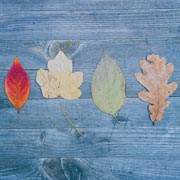 eaves and small, non-bulky flowers can be dried and flattened through the process of pressing. All that’s needed is the leaves and flowers and a thick book of paper sheets — a large sketch pad is perfect or, alternatively, sheets of unprinted newsprint or blotting paper. Manually place single flowers and leaves between the leaves of the paper and then place something large, flat, and heavy over the entire thing and leave it for anything from a couple of days to a couple of weeks. How long will depend on the type of leaves and flowers involved (and how dry and flat they were to begin with). Once ready, the flowers and leaves will be thin and dry, ready to use. They could, for example, be used individually as mementoes or bookmarks, or assembled with glue into ‘pictures’ via a collage, as explained earlier.
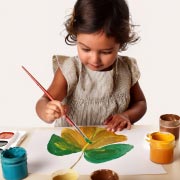 Another creative activity involving leaves is simply to represent them in pencil, paint, or other media of a child’s choice. Encourage them to look carefully at the leaf’s shape and detail, so they can try to mimic them in drawn or painted form. Drawing and painting are highly useful skills for children to develop and mastering such skills will prove useful throughout their educational years. If you, as a parent, are good at drawing or painting, perhaps join in the activity too. By doing so, you can show your child what is possible with some close attention to detail and carefully placed lines and strokes. As you build up your own picture, perhaps explain how you are achieving the results, so they can learn from your approach. And — who knows — perhaps you’ll discover that you have a budding artist in the family!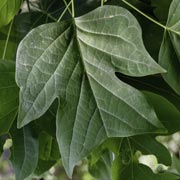
 Whether dried, painted, or simply picked as they are, leaves can also be made into other objects, characters, and so on. Some leaves can look like other items, for example, a particular type of tree (the Tulip Tree a.k.a. Yellow-Poplar) has individual leaves shaped rather like t-shirts! Children could look out for these and perhaps paint them in their favourite football team’s colours, draw in legs, arms and a head to make people and — hey presto — they’ve created a person! Similarly, there are several leaves shaped like hearts which, once painted in a suitable colour, can be useful when making greetings cards for birthdays or Valentine’s Day.
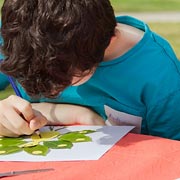 Another example of how leaves can represent other things can be illustrated by simple leaves like beech leaves. Each of these looks rather like the shape of a classic flower petal. So, perhaps a child can be encouraged to fan several around in a circle, almost tip to tip, to look like a big flower head. Children can paint the circle in the middle or glue a circle of coloured paper or wool there to represent the centre of the flower. And, if they start with a paper large enough, they could create several of these and make a picture of multiple flowers made of leaves. Use thin twigs, wool, or drawn crayon lines for stems and perhaps longer, thinner leaves to make the flowers’ leaves.
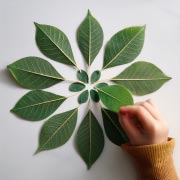 The activity ideas above are just a starting point and there are plenty more that are possible with leaves. Whether it’s dried leaves painted, glued and varnished onto pebbles to form paperweights, dried leaves gently sprayed with perfume to form pot-pourri, or suspended leaves that form a mobile, the possibilities for leaf art are almost endless! We hope our ideas today inspire children to use their imaginations and make some beautiful creations — all with simple, humble leaves.
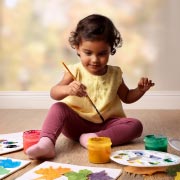 In addition to being fun and creative, these activities all support the Early Years Foundation Stage curriculum for under-fives. EYFS areas supported by the activities include: