 Today’s post will appeal to families who are finding the current financial climate particularly challenging. With energy costs and inflation so high, the following may represent a welcome piece of good news. Today we highlight the many Baby Banks that are popping up all around the UK and explain how they can help struggling families, all for free.
Baby Banks are a fabulous resource for families. In recent years, they have become very popular with families experiencing harder times, especially since the outbreak of Covid and the subsequent cost-of-living crisis. With such things putting a real squeeze of family finances, Baby Banks are really coming into their own to help families, their babies and children.
What’s a Baby Bank?
 A Baby bank is a similar concept to a food bank. However, instead of food and drink, it provides second-hand clothing, toys and equipment for babies, under-fives and often even for children up to the age of 16 in some cases. Baby Banks can also be compared to a charity shop, however, with baby banks, everything is free.
What Can Families Get at Baby Banks?
Exactly what families can get depends on the particular Baby Bank itself and, of course, stock levels at any given time. Some things are more in demand than others too and exactly what items are stocked also varies between different Baby Banks. Here are some examples, however, of the typical kinds of things available to families from Baby Banks, all for free:
| Clothes for babies, toddlers and children. | Toys and other types of play equipment. |
| Towels, blankets and bedding. | Nappies and wet wipes. |
| Cots, Moses baskets, cribs. | Bottles and sterilising equipment. |
| Baby carriers. | Baby foods and formula milk. |
| Prams, pushchairs and strollers. | Toiletries. |
| High chairs, table-top feeding chairs, floor seats etc. | Baby baths, including for newborns and older babies. |
| Baby bouncing chairs and baby rockers. | Even car seats in some cases. |
Example
Little Village’s video is well worth watching and really brings home how excellent and crucial Baby Banks are.
How Can Families Access Items from Baby Banks?
 Baby Banks are run by all sorts of different people and organisations and therefore the rules around actually getting ones hands on the free items vary from Baby Bank to Baby Bank. Some accept requests for items directly from families themselves. Others only deal via a referral from some kind of professional. Examples include social workers, family support agencies, teachers, family centres, health visitors, medical professionals, food banks and women’s refuges. So, once you have located your nearest Baby Bank, you will need to check whether they will deal with you directly or only through such a referral. Either way, you will usually need to agree a time and date for collection of your item with the Baby Bank (you can’t usually just turn up, although there are exceptions). Not all Baby Banks are open all week and that’s another reason to check with Baby Banks or their websites first.
Can Families Donate Used Items to Baby Banks?
 Absolutely! Baby Banks rely on the generous donations from families that no long require their baby clothes or equipment. Perhaps the child has grown out of them and the items are still in good condition, or perhaps they were an unwanted gift. Donating items is also a great way to declutter and to make space in the home, as well as helping others. However, before donating to a Baby Bank, always check with them to see if all your proposed items are required and, as before, ensure you know whether an appointment is needed or whether you can just turn up with your items. Certain rules may also apply around the condition and type of items (this varies depending upon which Baby Bank you are dealing with). Baby car seats and electronic items may also have special rules due to the extra safety considerations.
 Where Can I Find My Nearest Baby Bank?
There’s a great resource that maps the location and information for over 200 Baby Banks throughout the UK. While this may not include absolutely every Baby Bank, it’s a great place to start looking for your nearest one. Access the interactive map by clicking the map image. You can zoom in or out and click individual map ‘pins’ to pop up contact details for each.
Baby Banks Near Streatham
Our nursery is in Streatham, so we thought we’d check what’s available near us. After all, it may help our nursery’s many families. According to the interactive map, the three Baby Banks closest to Streatham are Little Village Baby Bank in Wandsworth, Growbaby Baby Bank in Merton and Sutton Vineyard Lighthouse Baby Bank in Sutton. Their products appear to be free regardless of family income, faith or circumstance. Each provides used but good quality clothing and equipment for babies and children. According to their websites, Little Village is the only one of the three that requires a referral. Here are their details:
| Little Village, Wandsworth | Growbaby, Merton | Sutton Vineyard Lighthouse |
| SW17 7AP | Website | Email | CR4 2HA | Website | Email | SM1 1PR | Website | Email |
Free Childcare Options for Streatham Families at Little Cedars Nursery

 Little Cedars Nursery supports Government-funded childcare schemes for eligible families and this is another way they can save significant money. We support schemes for 15 hours per week of free childcare for eligible 2-year-olds, 15 hours of free childcare per week for 3 & 4-year-olds living in England and up to 30 hours per week for them if eligible for the top-up. We also support students requiring childcare through Student Childcare Grants & Schemes, families accessing Tax-Free Childcare, Free Childcare through Universal Credit, Childcare Vouchers and so on.
We are a high quality childcare nursery and pre-school in Streatham, also being close and convenient to those in Tooting, Balham, Norbury, Colliers Wood, West Norwood, Wandsworth, Clapham and Brixton. Please get in touch if you’d like to discuss childcare funding options or a place for your child at the nursery. We’ll be happy to help. Please choose a button below to get started:
 Are you a student as well as a parent? If so, there are several Government schemes that offer help with childcare costs, some of which will save student parents substantial amounts of money. By doing so, they also make the prospect of juggling parenthood with being a student much more manageable. Today we examine the key childcare funding options, including how the type of course and the age of the parent affect eligibility.
 The very generous Student Childcare Grant is available for eligible students who who are studying full-time on a higher education course and have dependent children aged 14 or under (16 or under if they have special needs).
 If you are aged 20 or over, are a parent studying in further education for a qualification on a Level 3 course or below and are facing financial hardship, you may be eligible for childcare funding under the Learner Support scheme. This funding could help you with childcare and other study-related costs if you fit the right eligibility criteria.
 If you are a parent as well as a student aged under 20 when you begin one of a range of publicly-funded courses in England, you may be eligible for childcare funding through the Care to Learn bursary scheme. If eligible, you could claim as much as £175 in childcare per week, per child if you live in London, reducing to £160 per week, per child, outside London.
 Are you pregnant, or a parent with a child under four? If so, your family may be eligible for free healthy food, milk and vitamin supplements. In England, some of these free items are available under the ‘Healthy Start’ scheme, which we’ll explain in this quick-start guide.
 Eligible individuals can get the following, absolutely free:
 The infant formula milk:
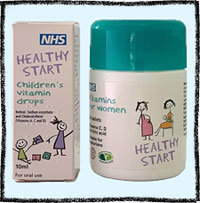 These free vitamin supplements are important for pregnant women, breastfeeding mums, babies and young children because many are deficient in them at this stage in their lives.
 In order to be eligible for Healthy Start vouchers, you need:
 Welcome to our guide to free childcare available specifically via Universal Credit. This builds upon our previous childcare funding guides, giving parents yet another potential way to get financial help towards childcare costs. Which scheme suits you best rather depends upon your individual situation as each has its own rules for eligibility. If one scheme doesn’t fit with your situation, another may. You may even find that you can apply for multiple schemes in certain circumstances, and we’ll also touch upon that in this guide. (To view our previous guides on other funding schemes, see our
  To be potentially eligible for childcare help through Universal credit, you must live in the UK, be on a low income or out of work and be aged 18 or over (although there are some exceptions for 16 and 17 year olds). You and your partner, if you have one, must also be under State Pension age and have no more than £16,000 in savings/investments between you.
 If you have been offered new employment, you can ask for childcare costs for the month preceding the start of your new job. If you are coming to the end of your employment, you must inform the Department for Work and Pensions (‘DWP’) immediately. Help with childcare costs can be claimed at least a month after your employment ends to help you maintain childcare as you switch jobs.
 You can have more than one childcare provider. However, to apply for Government help with childcare you must use a registered/approved childcare provider. This generally means that the childcare provider is registered with Ofsted for England, The Care Inspectorate for Scotland or the
 The Tax-Free Childcare Scheme could save you thousands
 The Tax-Free Childcare Scheme is available to parents of children up to the age of 11 inclusive, or 16 inclusive if they’re disabled.
 Along with helping to fund nursery places at places like
  TIP: If you want the Government’s contribution to go into your account faster, your payment needs to be paid by Bank Transfer (rather than, say, via a debit card or standing order, although those still work fine if you don’t mind waiting a while longer for the Government’s corresponding contribution).