Entries by Mark

, , , , , , , , , , ,

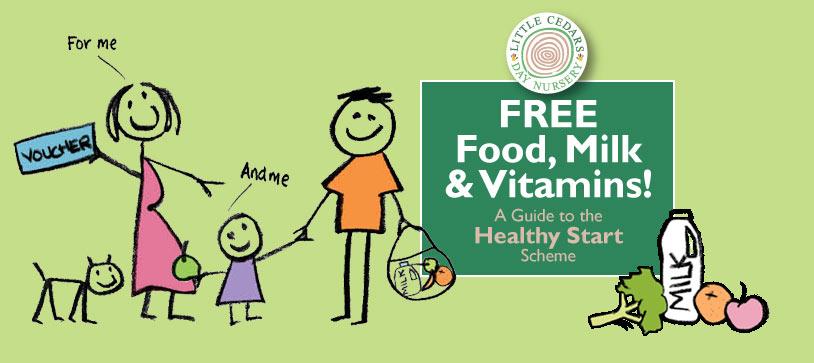
FREE Food, Milk & Vitamins! A Guide to the Healthy Start Scheme

FREE Food, Milk & Vitamins! A Guide to the Healthy Start Scheme

Healthy eating is also yummy!Are you pregnant, or a parent with a child under four? If so, your family may be eligible for free healthy food, milk and vitamin supplements. In England, some of these free items are available under the ‘Healthy Start’ scheme, which we’ll explain in this quick-start guide.
At time of writing, the free items are available through vouchers that can be redeemed in any of the 21,000 or so physical shops, supermarkets and pharmacies that have signed up to accept them. Each voucher is currently worth £3.10 and you can get 1 every week if you are pregnant or have a child aged between 1 and 4 years of age, or 2 vouchers per week if your child is under 1.

LATEST UPDATE: the NHS has also begun testing a new alternative where money is paid into your account instead of supplying vouchers. This beta test is running right now, on an invitation-only basis via a letter from the NHS. Hopefully it’ll be rolled out country-wide if successful. If so, it could cure the current issue whereby vouchers cannot be used to pay for food, vitamins and milk online. Clearly, that’s a significant issue in view of the pandemic and the move to shopping more online.

So, what free stuff can you get?

Vouchers are redeemable in thousands of shops, supermarkets & pharmaciesEligible individuals can get the following, absolutely free:

  • Cow’s milk;
  • Infant formula milk;
  • Fruit;
  • Vegetables;
  • Pulses;
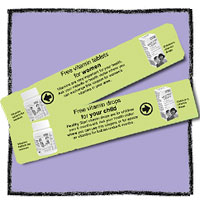
  • Free vitamin supplements for breastfeeding mums;
  • Free vitamin drops for young children (6 months to 4 years) …
, , , , , , , , , , , ,

The Importance of Sleep for Babies & Toddlers

The importance of sleep for babies and toddlers

A baby sleeping with older brotherWe all know how detrimental a bad night’s sleep can can be to our general wellbeing. At the very least, it can make the following day a real struggle, perhaps make us feel irritable and certainly leave us underperforming. With this in mind, we thought we’d take a look at how sleep affects babies, toddlers and under-fives. It will be no surprise to hear that a good night’s sleep is even more important for the early years age group.

What are the benefits of a good night’s sleep to children?

Sleep has enormous benefits to the young and old and it has been the subject of many studies. Young children who get a decent night’s sleep are shown to:

  • be happier, have better moods and be more resilient;
  • have better attention spans;
  • be more alert;
  • have improved learning capacity and cognitive performance;
  • have better memory skills (e.g. improved vocabulary acquisition);
  • have improved development of motor skills;
  • have improved mental and physical health;
  • be less likely to be withdrawn, stressed or anxious;
  • have a reduced likelihood of developing high blood pressure, obesity, diabetes and depression.
  • What’s more, children’s growth hormone is produced when the child is asleep. This is essential for healthy growth and function of the child’s body, particularly during early infancy.
  • Other hormone levels change when you sleep and this can help with anything from skin repair to muscle mass and even changes to body weight.

A very sleepy toddlerThese are significant benefits, so high quality sleep — and the right amount — is incredibly important.

“A quarter of children under the age of 5 don’t get adequate sleep” (National Library of Medicine, Biotech Information)

How much sleep should young children and babies get?

Studies suggest the following recommendations when it comes to the number of hours of sleep that children should regularly receive during their early years …

Recommended sleep time
  • 4-12 months old: 12-16 hours of sleep (per 24 hours, including naps)
  • 1-2 years old: 11-14 hours of sleep (per 24 hours, including naps)
  • 3-5 years old: 10-13 hours of sleep (per 24 hours, including naps)

Source: Great Ormond Street Hospital (GOSH) / The American Academy of Sleep Medicine (AASM)¹

Sleep Hygiene

Sleep Hygiene‘ is a term that refers to the whole routine around bedtime and sleeping, including important preparation measures during the run-up to bedtime A good sleep hygiene regime will help children get to sleep and to sleep soundly.

Parents can help to optimise children’s sleep quality in a number of ways: …

, , , , , , , ,

Your Toddler Needs to Go to Nursery. Here’s Why.

Your Toddler Needs to Go to Nursery. Here’s Why.

Reasons your toddler needs to go to nursery or pre-schoolThere are compelling reasons why under-fives should attend early years education and childcare settings like nurseries or pre-schools, or their equivalent — before starting school. Missing this crucial stage in their early years education and development may disadvantage the child — a fact that’s backed up by various studies.
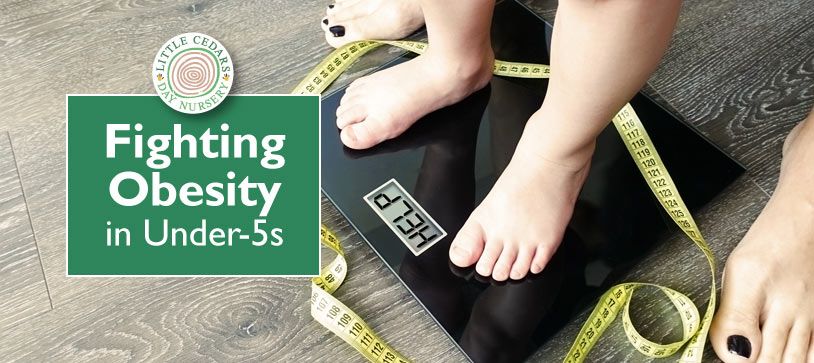

Results of a Department for Education (DfE) study released in February 2020 highlight the benefits of attending early childhood education and care, all in incredible detail. We took a look at their 145 page report and picked out some of the key findings.

Benefits of attending Early Childhood Education & Care (ECEC)

  • Note: the term ‘Early Childhood Education & Care’ (ECEC for short) refers to non-parental childcare and early education that occurs before school. There are several different types, including nursery settings, pre-schools, registered childminders and so on, so the Organisation for Economic Co-operation & Development (OECD) and the European Commission have adopted this term to encompass them all.

According to the DfE study, early childhood education and care has both short- and long-term positive effects on the educational, cognitive, behavioural and social outcomes of children. That’s no mean feat. A good educational grounding for under-fives is also shown to result in more positive social behaviour, better behavioural self-regulation, lower instances of emotional issues and less peer problems.

“Research … indicated that the benefits of high quality early education exist from as young as two years of age.” (Sammons et al., 2002)

Some of these benefits are even more pronounced for disadvantaged children who start to attend formal ECEC sessions no later than the age of two. The DfE impact study shows that 2-year-olds benefit most if they …

, , , , , , , ,

Fighting Obesity in Under-5s

Fighting Obesity in Under-5s

Sugar is one of the main causes of childhood obesityFollowing on from our post last month about healthy eating for under-fives, we thought we’d take a look at what can be done when eating has got a bit out of control in that age group. Childhood obesity has become a hot topic in recent times. Even the UK Government has weighed in with various initiatives being launched in the fight against it.

The shocking statistics

Childhood obesity is important to address because the National statistics are quite shocking:

  • Almost a third of children aged between 2 and 15 are either overweight or obese;
  • Children are becoming obese at ever-younger ages;
  • Once obese, children are remaining so for longer;
  • Obesity doubles the risk of premature death;
  • Once adulthood is reached, the chance of obese people developing Type 2 Diabetes is SEVEN times greater.
  • Obese people suffer more from heart disease and depression.

The link between background and obesity

Statistics from studies show that children living in deprived areas are most at risk from developing weight problems. Low-income families are affected the worst and in fact the risk of obesity in five year olds in low-income families is twice that of their more affluent counterparts. By the time they reach the age of eleven, the risk increases to three times for the children from poorer backgrounds.

What can parents do to help?

The positive impact of exercise on childrenLast month we published an excellent article about healthy eating for under-fives. There is lots of useful information there about children eating the right food types, correct portion sizes and much more — take a look. However, remaining at a healthy weight is not only about eating a healthy diet.

Parents can also help by ensuring that their children get regular exercise. This can be done through lifestyle choices that can be instilled into children from a very early age. For example, playing sports, gym exercise, walking, hiking and other physical activities. Indeed, research shows that building an active lifestyle that also involves healthy eating choices is one that can stick with the children even into adulthood.

The positive impact of exercise

Ensuring children get enough exercise is incredibly important in the fight against childhood, and indeed adult, obesity. After all, usually at the heart of obesity is a mismatch between the energy taken in as food/drink and the energy expended via physical activity.

However, regular exercise has many other potential benefits aside from the management of physical weight and body mass. These include:

, , , , , , , , ,

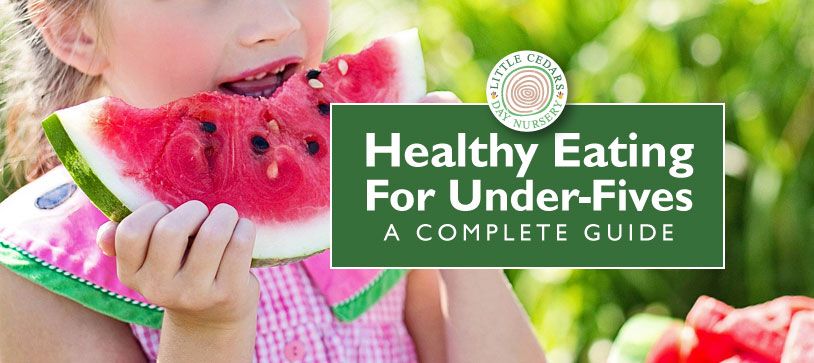
Healthy Eating for Under-Fives — A Complete Guide

Healthy Eating for Under-Fives — A Complete Guide

Healthy eating for under fives - a complete guideWith families living busy lives these days, it’s not always easy to provide the very best nutritious meals for children. This is compounded by an abundance of ready meals and convenience food available in shops and advertised everywhere. However, healthy, balanced diets are incredibly important for children in their early years. Adopting a healthy diet early on can mean that some diseases associated with later life can be avoided. Healthy food also has other beneficial effects on growing children including sustained energy levels, improved cognitive activity, the evening out of a child’s moods, help with mental wellbeing and maintaining a healthy weight.
What should children be eating as part of a healthy lifestyle?

As a rough guide, toddlers need three meals per day plus two or three snacks. They also need to drink six to eight drinks per day.

“Experience of a variety of different foods at an early age increases acceptance of new foods, and provides a more diverse diet with the range of nutrients, vitamins and minerals needed for health.” (Public Health England)

Young children need a balanced diet, i.e. one that gives them all the elements that they need to remain healthy and thrive. There are four main food groups that form a good basis of healthy living. A rough guide is to try and include something from each food group in every meal, or within their snacks. The four core food groups are:

  • STARCH, which is found in bread, potato, rice cereal and pasta. Starch provides the energy children need as well as Vitamin B and calcium. You can choose wholegrain versions of these food types if you wish to introduce more fibre and nutrients, but this should only be introduced gradually.
  • FRUITS & VEGETABLES. These will provide a source of Vitamin C as well as many other nutrients. A rough guide is about 5 hand-sized portions of fruit and vegetables per day. Fresh is great, but it can also be canned, dried or frozen.
  • DAIRY, which can include cheese, yogurt and milk. Full fat versions are best for toddlers but semi-skimmed options can be given from the age of 2. A rough guide is about 3 portions a day.
  • PROTEIN, which is typically found in meat, fish, nuts, pulses and eggs. You can also use pulses like tofu and soya. These foods provide iron and zinc. Also try and give children an oily fish now and then, like salmon or fresh tuna. Try to include roughly two portions a day of the foods in the protein group.

How big is a portion?

Make sure you give the correctly sized food portions. As a rule of thumb, one portion is generally about the size of

, , , , , , , , ,

Free Childcare via Universal Credit: A Complete Guide

Free Childcare via Universal Credit: A Complete Guide

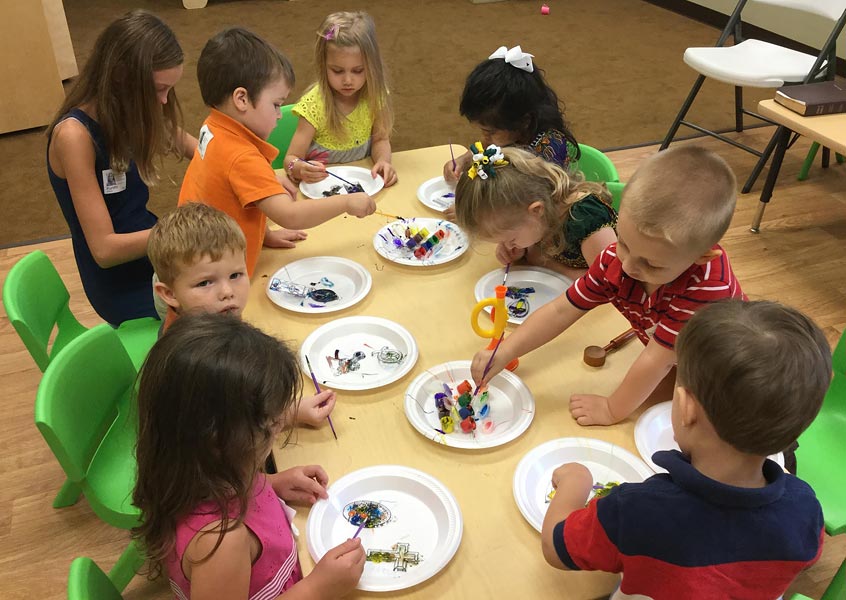
Education through creative play at nurseryWelcome to our guide to free childcare available specifically via Universal Credit. This builds upon our previous childcare funding guides, giving parents yet another potential way to get financial help towards childcare costs. Which scheme suits you best rather depends upon your individual situation as each has its own rules for eligibility. If one scheme doesn’t fit with your situation, another may. You may even find that you can apply for multiple schemes in certain circumstances, and we’ll also touch upon that in this guide.

Firstly, what is Universal Credit?

Universal Credit is a Government funding system that was introduced in 2013 to simplify the welfare payment system. In essence, it helps people with their living costs, for example if they’re on low incomes or are not working. It also potentially includes funding for childcare, to help parents with the costs of looking after dependent children (more about that later). The scheme’s aim is to eventually replace 6 existing benefits** into a single, unified payment scheme. Payments are made monthly in England (sometimes twice a month in Scotland).

How much can you get towards childcare with Universal Credit?

If you are eligible, you may be able to reclaim up to 85% of childcare costs through Universal Credit. The most you can reclaim each month is usually £646 for one child or £1,108 for two children unless there are exceptional circumstances. You may also be able to claim for additional children under the scheme, but only if they were born before 6th April 2017. If eligible, you can claim for dependent children up to the 31st of August following their 16th birthday.

Your payments for childcare costs under the scheme are usually paid in arrears. This means you will need to pay the costs yourself and then claim the money back through your Universal Credit claim.

The amount you are paid in your job, if you have one, can affect how much your Universal Credit payments will be. If your earnings are more than usual in an “assessment” period, this can reduce your

, , , , , , , , ,

The Tax-Free Childcare Scheme – A Complete Guide

The Tax-Free Childcare scheme: a complete guide for parents

Back in February, we published our ‘Rough Guide to Free Childcare Funding in England‘. This proved very useful to eligible parents and guardians who wanted to understand more about the free childcare funding that was available from the Government. For any parent or guardian, totally free childcare is a no-brainer and is usually the best source of childcare funding to consider first. However, for those who are not eligible, there’s another scheme to consider, called the Tax-Free Childcare scheme. While you do have to pay for the childcare yourself, a kind of tax ‘rebate’ (of sorts) helps to cushion you from having to pay for the entire cost.

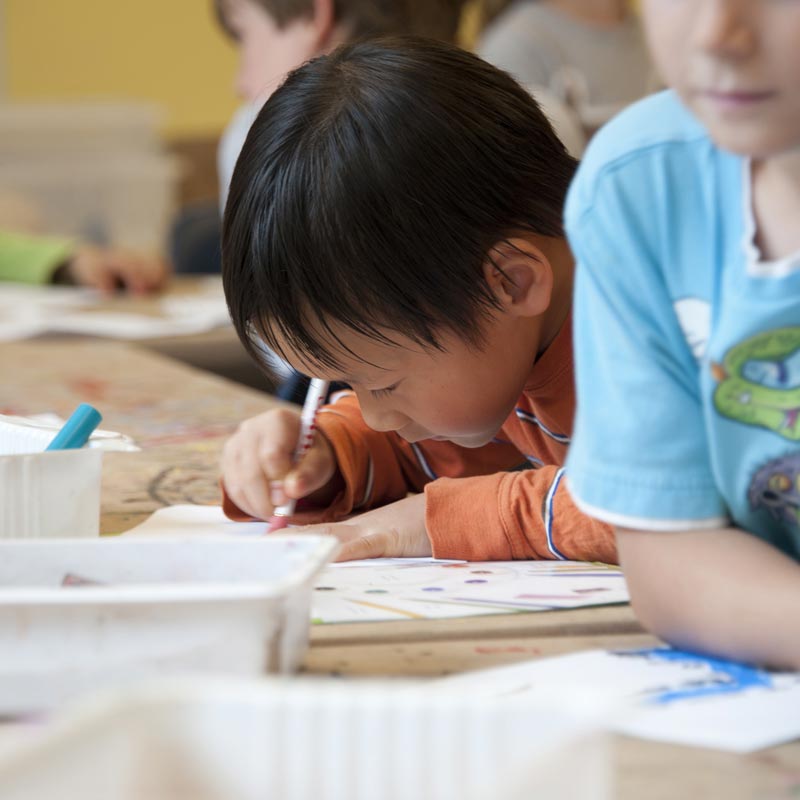
Young boy drawing at pre-schoolThe Tax-Free Childcare Scheme could save you thousands

The Tax-Free Childcare Scheme

Under the Government’s Tax-Free Childcare Scheme, the Government effectively offers up to £2,000 of help per child, per year, for childcare, or up to £4,000 per year if they are disabled. It’s rather like crediting you back some income tax on the (tax-paid) money you’re going to be spending on childcare, which is why the scheme is called the Tax-Free Childcare Scheme.

How it works

If you are eligible, you simply open a Tax-Free Childcare Account on the Government website. For every 80p you pay in, the Government will put in an additional 20p (this is the part that’s akin to getting the Income Tax back on the money you’re going to spend on childcare). Using this approach, you can save up to £10,000 for childcare, per child, in your Tax-Free Childcare account. As mentioned above, you get even more back from the Government if the child in question is …

, , , , , , , , ,

Our Anti-COVID Measures as we Re-open the Nursery

Our Anti-COVID Measures as we Re-open the Nursery
On June 1st, we re-opened Little Cedars Nursery at its Aldrington Road setting in Streatham, London SW16 1TU. Our thanks go to staff at our sister nursery, Beechcroft Nursery, for joining forces with us during the lock-down, to look after children of key workers alongside us. It’s wonderful to be back, though, as we can welcome old faces and new to our Streatham nursery and pre-school.

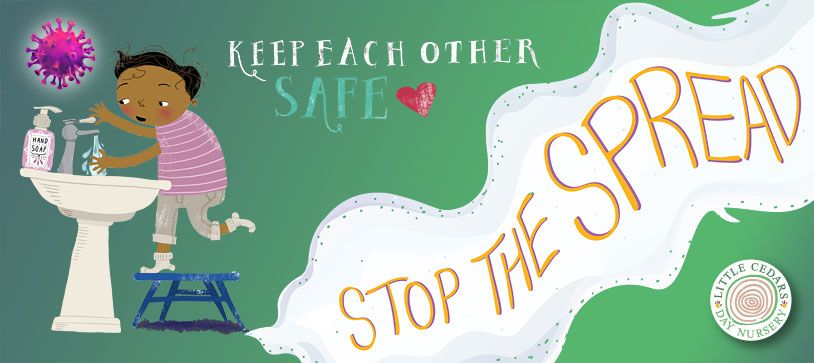
In view of the Government only recently easing the lock-down restrictions and with coronavirus still potentially at large, we have implemented stringent new health and safety measures at the nursery. These are being implemented to safeguard the health and wellbeing of babies, children, parents and staff.

“Everyone’s health is our topmost priority.”

Health & safety measures to keep you & your child safe from COVID-19

Here, we’ll outline what we are doing to keep you, you child and everyone at the nursery safe and well. These measures go well beyond Government guidelines and may be of comfort to those parents who are, understandably, a little nervous of sending their little ones back to nursery or pre-school so soon after lock-down.

Social distancing & extensive use of outdoor spaces

Moving much of the curriculum to our large outdoor areas will significantly reduce the risks that would otherwise be associated with more confined, indoor spaces. Outside, children are naturally going to have more room to themselves and the air they breathe will be cleaner – and will disperse to the atmosphere naturally. And, of course, we are ensuring everyone maintains good social distancing generally. Outside, we have made sure that there are sufficient covered areas outside to protect children and staff from the weather.

Small ‘bubble’ groups

We are also keeping babies and children within small ‘bubble’ groups. This will ensure that they are mixing with only a tiny number of individuals on a day-to-day basis. This vastly reduces the risks of catching contagions from one another. The bubble groups will be a size of 3, 4 or 6 children, depending upon the age group they fall into.

Limited numbers

Another excellent safeguarding measure is to limit the number of people attending the setting. For this reason, we will not take the nursery to full capacity while coronavirus is still at large. Again, this

, , , , , ,

The Benefits of Teaching Children to Grow Food

The Benefits of Teaching Children to Grow Food

Keeping children busy, entertained and learning is essential, including during the lock-down, whether or not they’re attending nursery or pre-school. It can be amazing fun too, if activities are carefully chosen. One really cool activity to tick all the boxes is to encourage children to grow food at home. Growing vegetables and herbs is a great place to start — and it’s relatively easy. One of the best things about the activity is that children don’t need a seed or seedling to get started. Essentially they can grow produce for free by ‘re-growing‘ offcuts from shop-bought vegetables and herbs. The resulting food could save the family money as well as teaching the children a huge amount, on many different levels.

“Why try to explain miracles to your kids when you can just have them plant a garden.” (Robert Brault)

Children love growing vegetables and herbs

Home-grown herbs and vegetables make great saladsIt may surprise some to learn that you can buy some vegetables and herbs just once and never have to buy them again. The secret is knowing which, and how to re-grow them. It turns out that it’s pretty easy, so we encourage parents to help youngsters get started. Once they see growing shoots or roots and, later, vegetables or herbs that the family can actually eat, they’ll be so pleased that they made this little miracle possible. What’s more, it will have taught them something about where food comes from, how to grow it sustainably and how to look after the living plants. If you’re really lucky, it may even encourage them to take things a step further and get involved in food preparation and cooking later on. It’s amazing, actually, where such a simple, fun, activity can lead!

“In every gardener is a child who loves to play in the dirt. In every child is a gardener ready to grow.” (LeAura Alderson)

No garden? No problem!

Container planting is great when outdoor space is limitedIt’s possible, and indeed fairly easy, to grow your own produce even without a garden. So long as you look after your plants and give them water, soil and light as a bare minimum, they will grow. If you don’t have a garden, perhaps you have a small courtyard or patio where you can grow in containers. If you don’t have any outside areas at all, you can grow in flower pots and other containers on window sills, balconies, under skylights and so on. This makes growing produce possible almost anywhere, including in urban London in high-rise flats. After all, it’s in a plant’s nature to want to grow.

Vegetables & herbs kids can grow for free

Once you and your children have tried this, you may totally re-think how you deal with vegetable and herb ‘waste’. We hope so. The secret to re-growing free herbs and vegetables is to

, , , , , , , ,

The Importance of Parental Involvement in Education

The importance of parental involvement in education

It has long been accepted that the involvement of parents in a child’s education and development is incredibly important, with many benefits for the child. It’s even more beneficial when involvement begins in the child’s early years. Helping children right from nursery means that they’re more likely to get their education foundations set up well. For example, a good foundation in reading and writing will help improve just about every other topic of learning going forwards. That’s why, at Little Cedars Nursery in Streatham, we encourage parents to involve themselves in their children’s learning, right from the start.

Parental involvement in education is shown to lead to a more rounded education and better grades overall. An improved comprehension of topics in turn leads to improved outcomes for the children involved. For example, the pupil may end up with a wider choice when it comes to choosing a university. It’s the same for their career path too, like a domino effect, increasing chances of a more successful career. The importance of parental involvement in a child’s education can therefore not be overstated.

“Parental effort is consistently associated with higher levels of achievement, and the magnitude of the effect of parental effort is substantial.” (Conway & Houtenville study, 2008)

“Students with […] parents operating in supportive roles are 52% more likely to enjoy school and get straight A’s than students whose parents are disengaged with what’s going on at school. This is especially the case during the earliest years of schooling, […] when students with active parents are almost twice as likely to succeed.” (Pinantoan, 2013)

Benefits of Parental involvement in education

The benefits of parental involvement in education include: