
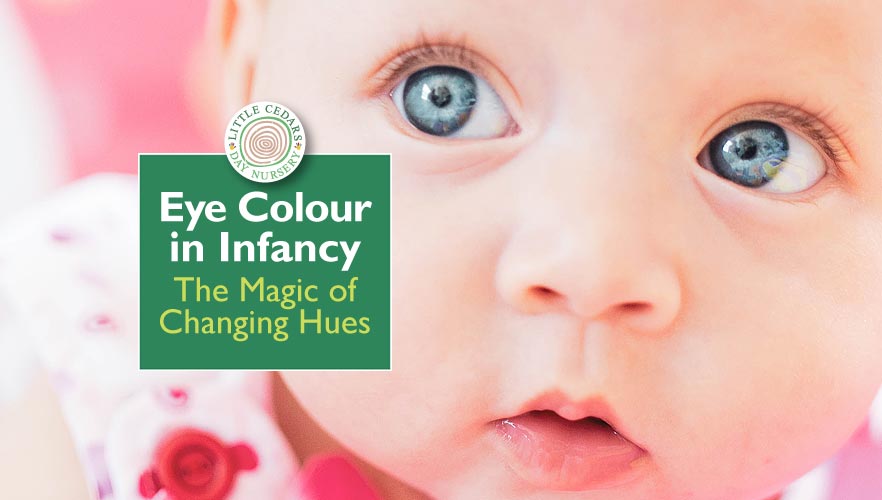
 Have you ever noticed that some babies are born with blue or grey eyes that later change to brown, green or hazel? It’s a magical metamorphosis that sometimes occurs in growing infants and it can be quite intriguing. Parents may indeed wonder whether their newborn child’s eyes are going to change or remain the same as they were at birth. The answer comes down to a combination of time, location, genetics and something called Melanin and today’s article explores this captivating phenomenon.
Eye Colour, the Iris, & Scattering of Light
 When we talk about eye colour we are, of course, talking primarily about the colour of the irises of a human’s eyes. The iris is the circular muscle around the centre pupil and it is this muscle that governs how much light can pass into the eye by making the pupil larger or smaller. When there is lots of light around, the iris constricts the size of the pupil and, in contrast, makes it big when light levels are low.
It is on the surface of the iris muscle that you find the colour pigmentation that most affects eye colour. However, in some cases, the exact hue that an onlooker perceives is also affected by the way light wavelengths are scattered from the surface of the iris and out through the lens. Effects including the ‘Tyndall’ effect and ‘Rayleigh Scattering’ are potentially a part of this and each may be responsible for altering the colour we see when we look at a person’s eyes. In a similar way, the white light coming from the sun is scattered in such a way that makes the sky look blue. However, when it comes to the eyes, this scattering of light wavelengths only really shows when there is very little Melanin in the eyes.
Melanin
 Melanin is a protein that’s secreted by special skin cells called melanocyte cells, which form colouration pigmentation in our bodies, including in the eyes, hair and skin. When it comes to the eyes, a lot of melanin pigment means the eye colour is more likely to be dark, for example brown. In contrast, those without much melanin eye pigmentation will have lighter eyes, for example, grey or blue. It is also those lighter colours that are most affected by the Rayleigh Scattering and Tyndall effects that we discussed in the last section.
Eye Colour & Location
 Melanin is a protective protein and, by having more melanin pigmentation, an eye has greater protection against harmful ultraviolet (UV) sun rays. That’s one of the reasons that populations from hot, sunnier countries are more likely to have brown or darker eyes — because those are better protected from the sun’s UV rays. Indeed, brown eyes are the most common eye colour in infancy, despite some common misconceptions. It is true, however, that blue or grey eyes are common in infancy in Northern Europe, where the sunlight is less strong.
Changing Eye Colour in Infancy
Interestingly, many babies born with grey or blue eyes end up with eyes of a different colour. This is because the protective melanin pigmentation can take time to build up in the irises and it’s this that accounts for many babies starting off with grey or blue eyes and ending up with green, hazel or brown eyes. The metamorphosis may take between 6 and 9 months to begin showing dramatically, with the changes mostly complete by the age of 3 years. That said, subtle eye colour changes can continue right into early adulthood in some cases.
Eye Colour & Genetics
 Genetics also play a part in the colour of the eyes and can be helpful when attempting to predict a newborn’s eye colouring. However, correctly predicting the colour of a baby’s eyes based solely on that of parents is not guaranteed. That’s because any inherited colouration may skip one or more generations. And, with a mix of different chromosomes and genes being passed down from parents, grandparents and beyond, skipping generations can sometimes result in completely unexpected eye colouring in infants. Genes will also control how much melanin will initially be present in a newborn’s eyes as well as affecting further production as the child ages and the eyes adjust to conditions.
What About Heterochromia?
 Heterochromia is a condition that affects less than 1% of the world’s population. Those affected may have two different coloured eyes or perhaps two colours present in one eye. The causes of heterochromia include physical injury, disease, genetics or sometimes the use of specific medications.
The singer David Bowie famously had eyes that appeared to be two different colours. This was the result of a condition called anisocoria, allegedly caused through a scuffle during an argument over a girl. In Bowie’s case, the injury caused one iris to become paralysed and remain permanently larger than the other. It is this difference that makes one eye appear to be darker.
Baby eye colour is a fascinating topic and, as we have seen above, predicting the colour of your newborn baby’s eyes may not be as simple as it may seem. Witnessing a baby’s eyes gradually turn from grey or blue to green, hazel or brown is also quite a magical milestone and we hope today’s guide has gone some way to explaining why such an incredible metamorphosis can sometimes occur.
Your Childcare Nursery in Streatham
Little Cedars provides high-quality childcare for babies, toddlers & preschoolers in Streatham, SW16


Do you have a baby, toddler or preschooler who requires reliable weekday childcare and a high-quality early years education? If you’re living in or around Streatham, Little Cedars Day Nursery may be just what you’re looking for. Our warm, welcoming, home-from-home environment and well-trained staff offer loving care from Monday to Friday and bring out the very best in every child. We are officially a good childcare provider too, and equip little ones with everything they need to thrive. To explore the possibility of a childcare place for your child at Little Cedars Day Nursery in Streatham, please choose an option below and we’ll be delighted to help.
It may help nearby families to know that our Streatham childcare nursery is also close to Streatham Hill, Streatham Common, Streatham Park, Furzedown, Tooting, Balham, Norbury, Colliers Wood, West Norwood, Wandsworth, Clapham and Brixton.
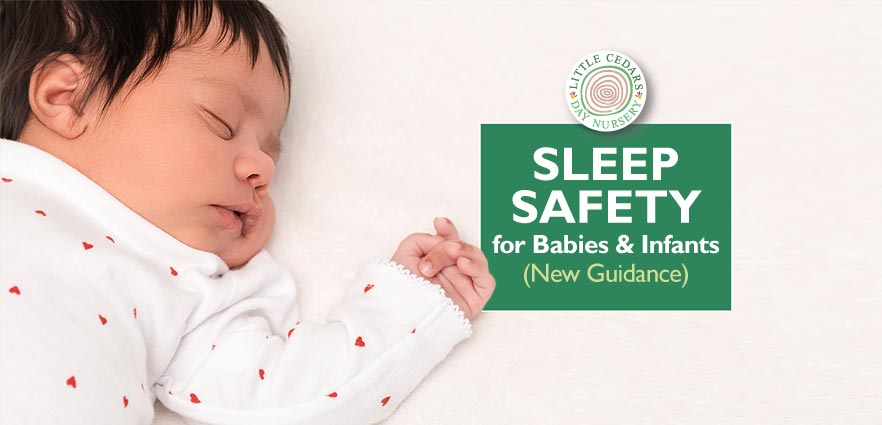
 June 2022 has seen the release of a new set of recommendations that outline ways to reduce the likelihood of sleep-related deaths amongst babies and infants up to the age of 1. This includes, but is not limited to, deaths related to Sudden Infant Death Syndrome (SIDS). Sadly, SIDS and other sleep-related issues are responsible for nearly 200 infant deaths in the UK each year and up to a staggering 3,500 every year in the United States. Perhaps even more surprisingly, that last number has not reduced at all in the last 30 or so years. This new set of recommendations from experts in the U.S. aims to change that and is something that all parents need to take a look at if they have a baby or infant. Let’s take a look at the new guidance …
 PLEASE NOTE: we have summarised key points from the new guidance in good faith but advise parents/carers of babies and infants to do their own research.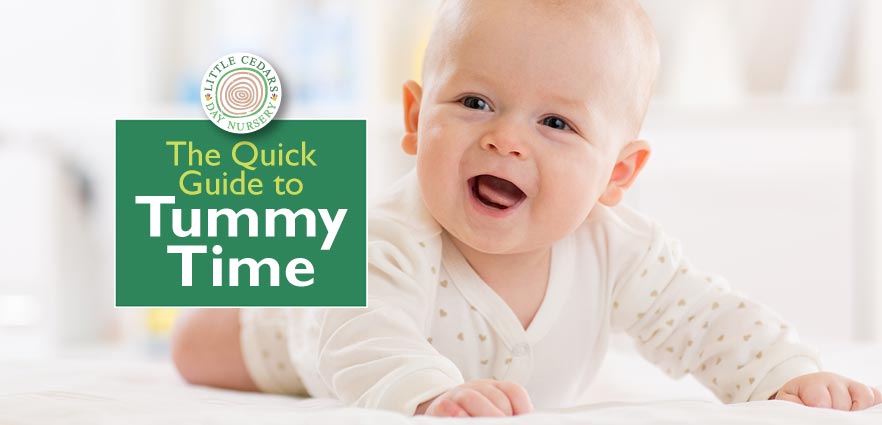
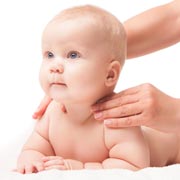 Welcome to our quick guide to Tummy Time. One of the most important things for babies during their earliest development is to build strength, muscles, motor skills and coordination. In particular, learning to lift and safely move their heads is one of the most crucial skills at this young age. Strength and muscle coordination in their neck is therefore very important. That’s not easy when they’re newborns in their first few weeks because their head is comparatively large and heavy compared with their little bodies at that age. Building upper body strength in arms, shoulders, core and back will also greatly help them in their physical development and mobility, essentially helping them to perform and survive safely as humans. Tummy Time is a key tool in learning to accomplish all of these goals — and many more.
 What is Tummy Time?
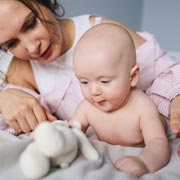 It helps to stop the development of deformations in the skull. ‘Positional plagiocephaly’ (or ‘Flat Head Syndrome’) might otherwise occur if the baby is only positioned in a limited number of positions, i.e. mostly on its back. Bear in mind, of course, that at this young age the baby’s skull bones are far more flexible than those of an adult, so such deformations are more likely if the baby’s head is always lying in the same position.
 Making sense of sensory stimuli is also aided by the positive results of Tummy Time, as babies can better explore and gain improved sensory perception of everything in their immediate vicinity.
 Try putting the baby in a prone position (i.e. on their tummy) on, say, a clean blanket or rug. Lie down on your tummy too and face them, encouraging them to stay on their tummies by use of a game like peek-a-boo. If you can, try to get them to raise themselves onto their arms or, eventually, hands. Move yourself around a little, so they move too and strengthen their muscles. If they’re finding it too difficult initially, a rolled-up blanket underneath their chest may help to start them off. Don’t worry if at first they can only push themselves up on their arms or hands only for fleeting moments; they will gradually improve as they try more and more.
 After 6 months, they should start to be able to support their weight on their arms in a raised, kind of ‘press-up’ position. This can be encouraged with some support (and play) from you and they’ll get the hang of it with practise. Soon enough, they’ll also be able to roll sideways in either direction and get themselves back into the prone position when they want to. They’ll soon master the art of passing a toy from one hand to another at around this time. They’ll also be able to get themselves into a sitting position before they’re 9 months old, or thereabouts.
 Today, we’ll take a look at how much time and money mothers are entitled to under Statutory Maternity Leave and what the eligibility requirements are. We’ll concentrate purely on the rules for mothers who are employees in this post. However, we will follow up to cover paternity leave, shared leave and support for self-employed mothers separately, in future guides.
 The good news is that, to be eligible for Statutory Maternity Leave in the UK, just two main rules apply. You need to:
 Statutory Maternity Pay (‘SMP’) is available to mothers who:
 There’s a great online tool that you can use to check whether you are eligible to claim maternity/paternity leave and pay (as well as Maternity Allowance, which may help self-employed mums). It’ll also calculate how much you could receive. Head over to
  Are you looking for
 Are you pregnant, or a parent with a child under four? If so, your family may be eligible for free healthy food, milk and vitamin supplements. In England, some of these free items are available under the ‘Healthy Start’ scheme, which we’ll explain in this quick-start guide.
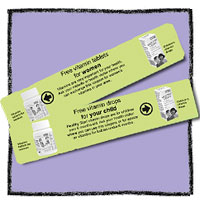 Eligible individuals can get the following, absolutely free:
 The infant formula milk:
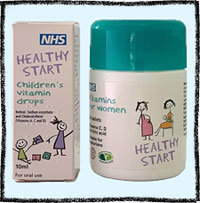 These free vitamin supplements are important for pregnant women, breastfeeding mums, babies and young children because many are deficient in them at this stage in their lives.
 In order to be eligible for Healthy Start vouchers, you need: