Tag Archive for: SW17

Free Online Antenatal Course!

It’s not often in life that we get something free that’s also high quality and incredibly useful. Today, however, is an exception! Aimed at parents-to-be, those due to give birth imminently, and those who have recently had a child, the Complete Antenatal Course is currently available for zero cost. That’s despite it having an RRP of £175 and containing 8 hours of fabulously informative content. Access to the entire course is attainable quickly, without needing to add any kind of payment method. Other than there being some brief commercial interludes from the course’s sponsor, there are genuinely no strings attached. So, if you’re interested in learning about everything on the journey from pregnancy, through labour, to breastfeeding, infant care and first aid, this is for you. What’s more, the video format allows you to dip in and out at times to suit you. Read on to learn how to gain easy access to the Complete Antenatal Course today.

How to Get Free Course Access

To get access to the Complete Antenatal Course, visit this link and sign up free. We managed it in just moments and did not have to enter any payment details whatsoever. In no time at all, we had full access to the course. Easy!

Free? Is There a Catch?

There is no catch other than there being a couple of unobtrusive commercial clips from the course provider’s commercial sponsor (Joie) — but that’s really it!

About the Course Provider

The free antenatal course is provided online by NowBaby, who provide online courses and in-person antenatal education to expectant parents in the UK. NowBaby works in partnership with the NHS antenatal clinics too, and has done so for over two decades. Their website states that courses are provided by experienced midwives and healthcare professionals, however parents are urged to do their own due diligence as we cannot make guarantees about third parties. That said, we’ve looked through the modules in the 8 hour course and were thoroughly impressed. The course is easy to access and is available free — assuming, of course, that no premium upgrades are chosen when applying. If required, though, parents can choose to upgrade so they have access to speak with midwives or take part in Q&A sessions during the course.

Course Content

Presented by experienced midwives and healthcare professionals, the course is provided in convenient video modules that you can peruse at your own leisure. You’ll have received a login during the sign-up process, so will be able to log in and out at will. We also found the course remembered where we’d got to in the previous session, thereby making it easy to continue where we left off.

The course has 10 modules, which are each divided into convenient sub-sections — it’s all very convenient and user-friendly. The modules and sub-sections covered include:

Pregnancy

  • Choosing your care provider
  • The antenatal appointment schedule
  • Diet in pregnancy
  • Self care in pregnancy
  • Possible pregnancy complications
  • Informed choice and consent

Preparing the Mind & Body for Birth

  • What affects the birth experience
  • Birth place choices
  • What to pack in your birth/hospital bag
  • Birth preferences (birth plan)
  • Hormones and labour
  • The birth zone
  • Perineal massage

Labour & Birth

  • Optimal foetal position
  • Signs leading up to labour
  • Am I in labour?
  • The first, second, and third stages of labour
  • Transitional labour
  • Optimal cord clamping
  • Skin to skin
  • Birth partners
  • Assisted births

Pain Management

  • Hypnobirthing
  • Water
  • TENS machines
  • Entonox (gas and air)
  • Opiods
  • Epidurals

Induction of Labour

  • What is an induction of labour?
  • Induction – decision making
  • Methods of induction
  • Starting the process
  • Pain relief

Caesareans

  • Possible reasons for a caesarean
  • Giving birth
  • Going home after a caesarean

Postnatal Recovery

  • Blood loss
  • Breast changes
  • Perineal tears
  • Emotional and mental health
  • Common postpartum concerns

Newborn Care

  • The Golden Hour
  • Newborn checks
  • Dressing your baby
  • Swaddling
  • Top and tail cleaning
  • Bathing your baby
  • Newborn sleep
  • Nappy changing preparation
  • How to change a nappy
  • Jaundice
  • Baby poo

Breastfeeding

  • Breastfeeding introduction
  • Anatomy and physiology of breastfeeding
  • The benefits of breastfeeding
  • Establishing breastfeeding
  • Responsive feeding
  • Expressing/pumping
  • Cluster feeding
  • Breastfeeding problems
  • Final words on breastfeeding

Infant First Aid & Medical Conditions

  • Introduction
  • Breathing
  • Colds & snuffles
  • Coughing & wheezing
  • Choking
  • Periodic breathing
  • Basic life support
  • Vomiting, reflux & constipation
  • Dehydration
  • Poo colour
  • Newborn screening introduction
  • NIPE examination
  • Growth and centiles
  • Newborn blood spot test (heel prick)
  • Baby hearing test
  • Taking a temperature
  • Fever after vaccination
  • Fever medication
  • Plagiocephaly or Head Shape Syndrome

That’s some scope, isn’t it? We thought it was fabulous and packed with high-quality content, hence sharing it with you today. If you give it a try, we’re sure you’ll feel better informed and equipped for your parenting journey. We hope that it empowers you during every stage of pregnancy, through birth, and well into parenthood. Our very best wishes to you and your little one.

Little Cedars: High Quality Childcare in Streatham

A Weekday Childcare Nursery for Babies & Children Up to Five

Ofsted rates Little Cedars Day Nursery as a Good ProviderLittle Cedars is a nursery & preschool offering high-quality childcare in Streatham, near Tooting, Tooting Bec, Tooting Common, Tooting Broadway, Furzedown, Balham, Norbury, and Colliers Wood.Little Cedars Nursery is a high-quality childcare provider in Streatham, providing excellent weekday childcare to families in Streatham, Streatham Common, Streatham Hill, and Streatham Park as well as those nearby in Tooting, Furzedown, Balham, Norbury, and Colliers Wood. The nursery has a good Ofsted rating and is happy to support government-funded childcare for eligible families with children as young as 9 months of age.

Get in touch today to find out more about a nursery place for your baby or child at Little Cedars Nursery:

A Complete Guide to Gentle Parenting

In a follow-up to our Rough Guide to Parenting Styles and subsequent Complete Guide to Authoritative Parenting, we now take a deeper dive into Gentle Parenting. There has been much discussion and debate around this style of parenting in recent times, particularly on social media platforms. The style has experienced great popularity among many parents, but has also drawn criticism from others. There has also been some confusion about where it sits in comparison to other similar styles. Is it the same, or different? Well, one could argue that gentle parenting is somewhere between permissive parenting and ‘pure’ authoritative parenting. It has similarities to both, particularly authoritative parenting, and could be described as a softer version, or even a sub-category, of it. Part of today’s guide will touch on such similarities as well as clear differences between the three styles. We’ll also take a look at any benefits or challenges associated with the gentle parenting style. With all that in mind, welcome to today’s Complete Guide to Gentle Parenting.

What is Gentle Parenting?

At the heart of Gentle Parenting is empathy, kindness, respect, and a close bond between a parent and child.At the heart of Gentle Parenting is empathy, kindness, respect, and a close bond between a parent and child. Such connections are given priority over control and obedience, and there are no punishments as such. Instead, gentle parenting uses a type of “positive discipline” where children’s behaviour is guided softly, in a measured way, without fear, threat, or punishment. ‘Gentle’ parents work with children to solve a problem collaboratively while, of course, acting to keep them and everyone else safe.

Don’t make the mistake of thinking that gentle parenting gives children no discipline and no boundaries. It gives them both, but they are applied in gentle, empathetic, reasoned, and collaborative ways.

That said, it’s important to understand that gentle parenting is not the same as permissive parenting, where it could be argued that anything goes so long as children are happy. In contrast, with gentle parenting, rules and boundaries are imposed — albeit through empathy, explanation, and sympathetic guidance. Respectful communication, the acknowledgement of children’s feelings — even when behaviours are challenging — and an understanding of young children’s developmental limitations are all part of this. After all, under-fives have ‘big’ emotions and don’t always understand why their feelings are as they are, nor why their emotions sometimes reach a tipping point.

“Every single behaviour communicates some sort of unmet need or underdeveloped skill.” — Kelly Medina Enos, Parenting Coach.

So, with gentle parenting, parents very much tune into children’s emotions and listen carefully to their opinions, needs, and perspectives. They then gently reason with children not so much to tell them what they can’t do, but more to explain what they can do. So, for example, rather than saying ‘No!’ to a toddler trying to climb onto a coffee table, they may instead tell them it’s better to keep their feet on the ground so they don’t fall off and hurt themselves. It works many times because young children often switch off to too many negative commands like ‘Stop that!’ and ‘No’. That said, there are, of course, times when such exclamations cannot be avoided, for example, during times of imminent danger when urgency is paramount so as to keep a child from harm.

Info-circled Info-circled

Key Traits of Gentle Parenting

Gentle parenting typically has the following traits:

  • It has a high level of emotional warmth towards the child.
  • Its discipline style is very soft and empathetic.
  • Rules and boundaries exist, but have a high degree of flexibility.
  • Consequences (i.e. threats or imposition of punishments) are usually avoided.
  • There is a high level of connection between the parent and the child.
  • Parents work with the child through collaboration.

How Does Gentle Parenting Differ From Authoritative Parenting?

Gentle parenting shares most of authoritative parenting’s values — kindness, respect, emotional warmth and deep connections between parent and child — and could even be described as a sub-category or variant of that model. However, there are some subtle traits of gentle parenting that separate it a little from the ‘pure’ authoritative parenting model. With gentle parenting, power struggles and conflict are avoided and therefore parents rarely threaten or apply ‘consequences’. In contrast, the authoritative parenting approach to discipline could be described as more clearly structured and firm, although also remaining empathetic. And, while both styles require parents to listen carefully to children and guide rather than forcefully controlling them, gentle parenting allows comparatively more flexibility in the application of the rules, structure, and boundaries. As the name implies, gentle parenting is exactly that — more gentle in its approach — and treats children in the way that we might perhaps have appreciated ourselves when we were children. It should not, however, be confused with permissive parenting, which we’ll compare below.

How Does Gentle Parenting Compare to Permissive Parenting?

While gentle parenting uses a softer approach to the pure version of authoritative parenting, it is by no means as soft as permissive parenting. While all three value kindness, respect, emotional warmth and deep connections, permissive parenting goes further by reducing boundaries and structure almost completely. Happiness is prioritised at the expense of structure and consistency. Indeed, one could argue that, with permissive parenting, anything goes. That is not the case with gentle parenting, which applies structure, rules, and boundaries, albeit in a softly-softly, collaborative way.

“Gentle parenting does not equate to permissiveness. It involves setting clear and consistent boundaries while offering children age-appropriate choices within those boundaries. This fosters a sense of autonomy and helps children learn to make responsible decisions” — PositivePsychology.com

The Benefits of Gentle Parenting

Because so much focus is given to understanding and validating a child’s perspective and emotions, a child raised through gentle parenting will feel more ‘heard’ than with many other parenting styles. They will also be dealing with a parent who is calm, kind, and respectful to them. That is good role-modelling and, as such, is an approach that a child is more likely to adopt.

Gentle parenting usually also results in deep, loving and healthy connections between parent and child — long-term bonds that form a strong and important backbone to family life.

As with ‘pure’ authoritative parenting, children raised via the gentle parenting variant tend to have healthy levels of resilience, self-esteem, confidence, and emotional intelligence. They will feel heard, respected, and understood by parents, with whom they have secure and trusting bonds. Interestingly, they also tend to become higher academic achievers than those brought up with contrasting parenting models.

Challenges Associated With Gentle Parenting

While gentle parenting has become very popular amongst young families in recent years, being a comparatively new term also means that not much academic research exists about it. So, it’s tricky to scientifically compare it to other parenting styles that may have more evidence attached to them — for example, ‘pure’ authoritative parenting, which has been studied for years and is often cited as the ‘gold standard’ of parenting models.

There is also a danger that, if applied too softly, gentle parenting could drift more towards permissive parenting, an indulgent model where anything goes, and happiness is given priority over the learning of rules, self-discipline, self-control, responsibility, and perhaps even accountability.

Another potential challenge for parents switching for the first time to gentle parenting is the possible need for them to adapt their use of language. Initially, for example, it can be tricky to consistently avoid negative commands (‘No!’, ‘Don’t do that!’, ‘Stop!’, etc.) in favour of explaining what a child can do instead. Likewise, it may be difficult, at first, to remember to listen proactively to the child’s perspective and only then show or explain logically what an appropriate behaviour or action might be. Such things are opportunities for teachable moments, though, and are therefore potentially much more powerful than barking orders without explanation or empathy.

Key Takeaways — Which Parenting Style is Best?

Is there a ‘best’ parenting style? Well, each has its own benefits and challenges, and parents may, by necessity, sometimes need to switch between models depending on the situation. Some, however, are clearly better for children than others. Indeed, as we’ve said before, authoritative parenting has, for some years, been seen as the gold standard of parenting styles. And gentle parenting is often cited as simply a softer version of it. By definition, therefore, gentle parenting has significant and proven merits. It’s therefore not surprising that it’s so popular on parent forums and social media. (That is except, of course, when it’s mistaken for permissive parenting, which it is not).

Weighing up all the pros and cons of the various parenting styles, one could easily argue that the sweet spot is close to authoritative and properly executed gentle parenting — there is little doubt that outcomes are very good with each. However, how styles are best chosen or blended by parents will depend on several things. Factors will include the specific situation, the child’s age, their temperament, and, to an extent, how much time a parent has available in that moment. The best styles take time — but are hugely beneficial to the child. There will be a few times, however, when they just won’t cut it, like when a child is about to do something extremely dangerous — an abrupt and authoritarian ‘Stop!’ will always have its place in such urgent situations. There is no doubt that parenting is hard. It is okay, therefore, that it’s most likely to be a balancing act between styles as situations present themselves. That said, parents could do much worse than choosing gentle or authoritative parenting as their core style.

“There’s no one-size-fits-all, and you don’t have to commit to a label. The best parenting style is the one that helps you build a strong, respectful relationship with your child—while guiding them to thrive in the real world.” — WholeMindPsychology.com

Little Cedars Nursery

Your High-Quality Childcare Service in Streatham

Ofsted rates Little Cedars Day Nursery as a Good ProviderLittle Cedars is a nursery & preschool offering high-quality childcare in Streatham, near Tooting, Tooting Bec, Tooting Common, Tooting Broadway, Furzedown, Balham, Norbury, and Colliers Wood.Little Cedars Nursery provides a high-quality childcare service in Streatham, has a ‘Good’ Ofsted rating, and supports free childcare hours for eligible families. We’re located in Streatham, close to Streatham Common, Streatham Hill, and Streatham Park and also represent a convenient choice for families around Tooting, Furzedown, Balham, Norbury, and Colliers Wood.

Click an option below to get started on your child’s nursery journey today — we look forward to hearing from you!

Complete Guide to Authoritative Parenting: Its Benefits and Positive Outcomes

Our preceding article explained, in brief, the key differences between commonly discussed parenting styles. Today, we look at one of them, Authoritative Parenting, in much more detail. It’s a style that’s generally well thought of amongst researchers and developmental psychologists, as well as many parents who’ve used the approach. Indeed it is a style that’s often recommended because of the way it balances empathetic nurturing with the application of rules. While it’s important to remember that there is no single ‘best’ parenting style for every situation, authoritative parenting does seem to result in very good outcomes and is thought by many to be the ‘gold standard’ for children and teens. Let’s take a deeper dive.

Alert Alert

It’s important not to confuse authoritative parenting with authoritarian parenting. Despite the similar names, the two styles could not be more different. See our Rough Guide to Parenting Styles for a quick overview of the differences.

The Origins of Authoritative Parenting

The Authoritative Parenting model was originally developed at the University of California in 1966 by Diana Baumrind. That said, it has evolved over the decades since, with backing from developmental research. It’s a style that seems to work well for children of all ages as well as teenagers.

Exactly What is Authoritative Parenting?

The authoritative parenting style uses an age-appropriate — and finely-tuned — balance between responsiveness (towards children) and demandingness (from children).

The Responsiveness Element

The responsiveness element of authoritative parenting refers to the high levels of warmth, empathy, love, and understanding shown to the child by the parent. Authoritative parents are deeply attuned to their children’s feelings, needs, abilities, and perspectives. They gauge such things and weigh up the balance at any given time. Only then do they respond, in a way they feel is most appropriate, having borne the bigger picture in mind.

The Demandingness Element

The demandingness element of authoritative parenting refers to the level of control over and desired expectation from their child. Standards and boundaries are enforced but in a very measured, kind, and thoughtful way. Authoritative parents use a two-way communication approach to makes clear what’s expected from their children. They will discuss and explain things, often in advance. In this way, the child not only knows what to expect, but also understands why it is expected. That’s in stark contrast to some of the other parenting models that expect blind obedience without explanation.

What About Discipline?

Strong assertions of parental power and harsh discipline are seldom, if ever, used with the authoritative parenting style. If they are used, it would tend to be only as a last resort and most likely only in a ‘danger’ scenario. An example would be shouting at a child to stop them running out into a busy road.

Achievements Are Celebrated

As well as thoughtful guiding of children, their achievements, however small or large, are celebrated. In this way, positive outcomes are used to further encourage children to continue using a good approach and appropriate behaviour.

Key Elements of Authoritative Parenting:

  • Warmth and empathy towards the child
  • A firm but fair and nurturing approach
  • The child’s feelings are always considered
  • High levels of involvement by parents
  • The setting of age-appropriate standards
  • A clear structure with well-defined rules
  • Reframing mistakes as learning opportunities

  • Praise and rewards in favour of punishments
  • Where discipline is used, parents explain why
  • Children having some input into goal setting
  • Clear communication from parent to child
  • Encouraging communication from the child
  • The celebrating of the child’s achievements
  • Positive relationships between parent and child

Likely Outcomes for Children Raised Through Authoritative Parenting

Compared to children raised via other parenting styles, children and adolescents raised through an authoritative parenting approach have very favourable outcomes. This has been backed up by many studies. For starters, they usually perform better academically and are well-motivated to succeed. They are often creative, take the initiative, and are highly curious intellectually. They’re self-reliant and independent, with good self-control and a good awareness of appropriate boundaries. Risk assessment is good. They also tend to be happy, have better mental health, and good emotional regulation. They also have good social skills, are respectful to others, and have a healthy level of self-esteem. They have a healthy level of connection to both friends and parents. Studies also find that children raised by authoritative parents are less likely to go on to misuse drugs or alcohol. It’s a comprehensive suite of benefits.

Are There Any Pitfalls of Authoritative Parenting?

There are few, if any, pitfalls to well-executed authoritative parenting. Perhaps the only consideration relates to the amount of focus, effort, and consistency required on the part of the parents. While such a balance is totally feasible in the most part, perhaps on extra-busy, tiring, or stressful days, one could be forgiven for letting things slip a little.

Final Thoughts

Any parenting style(s) may, of course, require continual adjustment because life seldom travels in a straight, predictable line. For example, when it comes to authoritative parenting, sometimes the balance between warmth and expectations may need to tilt more in one direction than the other. This could be because of a specific scenario. One that involves an urgent safety concern would be a classic example. At other times, however, the balance between the two may tilt back the other way because the situation has changed. In essence, it all comes back to the balance between ‘responsiveness’ and ‘demandingness’ that we discussed earlier. Indeed, it is a fine balance, and it’s not always possible to get it 100% right; parenting is challenging and, at the end of the day, we can only do our best in the circumstances that life throws at us.

Little Cedars: Your Childcare Nursery in Streatham

Ofsted rates Little Cedars Day Nursery as a Good ProviderLittle Cedars is a nursery & preschool offering high-quality childcare in Streatham, near Tooting, Tooting Bec, Tooting Common, Tooting Broadway, Furzedown, Balham, Norbury, and Colliers Wood.Little Cedars is a weekday childcare nursery in Streatham that’s ‘rated ‘Good’ by Ofsted. In our wonderful home-from-home setting, we provide high-quality childcare for babies and children under five. We’re located in Streatham, near Streatham Common, Streatham Hill, and Streatham Park and may also suit those living nearby in Tooting, Furzedown, Balham, Norbury, and Colliers Wood. Free childcare hours are supported for eligible children aged 9 months to 4 years.

Explore a possible nursery place for your child at Little Cedars Day Nursery today. Simple choose one of the following options to get started:

Rough Guide to Parenting Styles

Parenting can feel overwhelming at times, especially in the early years when babies, toddlers and preschoolers are growing and changing rapidly. So, it’s natural for parents to self-reflect and ask themselves whether their particular parenting approach is the most appropriate for their child. Are they getting it right? Do they intervene too much, are boundaries too vague, is discipline too lenient, or are they too strict? It’s often difficult to know what’s best. Moreover, what exactly are the differences between gentle parenting, permissive parenting, authoritative parenting and the many other parenting styles? It can be confusing!

In light of such conundrums, today’s guide helps to briefly explain many of the different parenting styles that you may have heard of or read about. These are broad parenting styles that have, over time, been identified by researchers, early years professionals, social media, and the press. They aren’t labels to judge parents by, but helpful ways of understanding how adults can balance warmth, boundaries, involvement and independence to varying degrees. Each combination will affect a child — and outcomes — in different ways. What’s more, your family situation, the child’s age, the stage of their development, and other factors may all play a part in deciding which could be the best fit. Take a look and see which style(s) may be the most appropriate for you and your child.

Authoritative parenting

Authoritative parenting is often seen as a strong foundation for early childhood.Authoritative parenting is often seen as a strong, nurturing foundation for early childhood. It’s balanced somewhere between permissive parenting and authoritarian parenting.

With the authoritative parenting style, parents set age-appropriate rules, while children are encouraged to express their feelings and opinions. Parents remain calm, confident leaders and reason with their children. Such an approach can be particularly reassuring for toddlers and preschoolers, who need adults to set safe limits while they learn to better understand the world around them.

Benefits: Children raised with this approach often develop strong self-esteem, emotional regulation, and resilience. They tend to feel secure, understood, and confident in exploring the world. Evidence also suggests that they are higher academic achievers.

Challenges: This style requires time, emotional energy and consistency on the part of the parent, which can sometimes be difficult, for example, during periods of stress or exhaustion.

Learn much more about authoritative parenting here.

It’s important not to confuse Authoritative parenting with Authoritarian parenting, which we’ll come to next.

Authoritarian parenting

Authoritarian parenting is a style that's highly structured, but low in emotional flexibility.Authoritarian parenting is a style that’s highly structured, but low in emotional flexibility. With this parenting style, parents expect blind obedience without question, don’t often explain the reasons for rules, and are highly controlling.

Benefits: Children may learn discipline and clear rules quickly.

Challenges: This approach can limit emotional expression, independence and confidence. Some children may comply outwardly while struggling internally, for example, with anxiety and low self-esteem.

Gentle parenting

Gentle parenting uses a relationship-led approach that's rooted in empathy.Gentle parenting is rather like a softer variant of authoritative parenting and uses a relationship-led approach that’s rooted in empathy.

Boundaries still exist, but they are maintained calmly and without punishment. Rather than constantly saying ‘No!’ and ‘Don’t do that!’ parents collaborate with children and agree what they can instead do. This can be especially helpful in the early years, when babies and toddlers are learning to understand big emotions that they can’t yet understand or control.

Benefits: Gentle parenting supports emotional intelligence, secure attachment and trust. With this approach, children learn that their feelings are valid, respected, and manageable, whilst being offered age-appropriate choices within clear boundaries set by parents.

Challenges: If boundaries are allowed to become unclear or inconsistently maintained, gentle parenting can be confusing to the child, or unintentionally drift towards permissive parenting.

Learn more about gentle parenting here.

Permissive parenting

Permissive parenting prioritises happiness, but structure and consistency are limited.Permissive parenting (sometimes also known as ‘indulgent parenting’) utilises a loving and warm approach towards children, but is often under-structured due to a reluctance to enforce rules.

The intention is usually to protect the relationship and prioritise happiness, especially during emotionally intense toddler or preschool years. However, this comes at the expense of both structure and consistency, which are limited.

Benefits: Children may feel emotionally supported, have high self-esteem, and feel free to express themselves. They are often also quite resourceful.

Challenges: A lack of clear boundaries can make it harder for children to develop self-regulation. They can therefore become less responsible and lack self-discipline. Limits would otherwise help children feel safe and better understand expectations. Studies have even shown a correlation between a permissive upbringing and sleep problems, as well as somewhat lower levels of academic performance.

Helicopter parenting

Helicopter parenting means that parents are very involved — sometimes too involved.Helicopter parenting means that parents are very involved — sometimes too involved — often micromanaging the child’s every move.

Over-intervention (or ‘over-parenting’) can limit opportunities for problem-solving, independence and resilience in children. In early years settings, children benefit from trying things for themselves and learning through trial and error — with a trusted adult close by to offer guidance if needed, rather than stepping in immediately.

Benefits: Children may feel well-supported and protected.

Challenges: Over-involvement can reduce resilience, independence, problem-solving abilities, and confidence, having reduced opportunities for the child to learn from mistakes. It has also been linked to a feeling of entitlement when children are older, anxiety, depression, and more.

Velcro parenting

Velcro parenting denotes a strong level of closeness, and slow level of separation.Velcro parenting denotes a strong level of closeness and a slow level of separation — a kind of hyper-involvement.

With velcro parenting, the parent seems closely attached to the child in every way — physically, emotionally, socially, and so on.  They will shadow their child’s activities and experiences, getting closely involved at every step.

Benefits: Children may feel deeply connected, nurtured, understood, and emotionally secure in their parents’ presence.

Challenges: This style can unintentionally increase separation anxiety and make transitions harder, particularly when babies grow into toddlers and begin nursery or preschool. Independence and resilience may develop more slowly. Parents may also be adversely affected by this parenting style, particularly if the child has, in turn, become a ‘velcro child’ or baby, leading to separation anxiety.

Uninvolved parenting

Uninvolved parenting is evidenced by low engagement and limited support for the child.Uninvolved parenting (also sometimes known as ‘neglectful parenting’) is evidenced by low engagement, a low level of warmth, and limited support for the child.

This parenting style is sometimes linked to external pressures, stress, or a lack of support. It’s important to note that families that it applies to may need understanding and help, rather than judgement.

Benefits: It seems counterintuitive, as a parent, to think of any benefits of uninvolved parenting for a child. That said, children affected may develop independence, self-reliance and problem-solving skills — purely out of necessity.

Challenges: Children may struggle with emotional security, attachment, behaviour and self-worth due to a lack of parental warmth, support, and consistent boundaries.

Is there a ‘best’ parenting style for young children?

Research consistently suggests that approaches combining warmth, responsiveness and clear boundaries — such as authoritative and well-applied gentle parenting — best support children’s emotional wellbeing and long-term development, particularly in the crucial early years from birth to five.

At Little Cedars Day Nursery, we work in partnership with families, recognising that parenting — especially in the baby, toddler and preschool years — is a journey. By understanding these different styles, parents can make informed, confident choices that support their child’s growth, both at home and in early years settings. We may publish more comprehensive information about each individual style in future blog posts, so do come back to our blog area regularly — new articles are added at least twice every month.

Weekday Childcare at Little Cedars Day Nursery, Streatham

Ofsted rates Little Cedars Day Nursery as a Good ProviderLittle Cedars is a nursery & preschool offering high-quality childcare in Streatham, near Tooting, Tooting Bec, Tooting Common, Tooting Broadway, Furzedown, Balham, Norbury, and Colliers Wood.Little Cedars is a wonderful Streatham nursery that provides first-class weekday childcare to families with children under five. Perfectly located for those in Streatham, Streatham Common, Streatham Hill, and Streatham Park, we are also conveniently close to those nearby in Tooting, Furzedown, Balham, Norbury, and Colliers Wood. We support free childcare schemes for eligible children aged from just 9 months and have a  ‘Good’ Ofsted rating in all categories.

Get started on your application today, arrange a tour, or get in touch with any questions — we’re here to help!


 

Get Ready for Children’s Mental Health Week This February

Each year, February marks the date for Children’s Mental Health Week. It is the perfect opportunity to reflect on how we can all contribute to improving children’s mental wellbeing. Often overlooked in favour of a focus on ‘physical’ health, good mental health for children is, of course, profoundly important. This special week occurs every year during February and has done so for over a decade. Let’s take a closer look today and see how the initiative can both inspire and empower parents and families to help children’s mental health thrive.

“Around 50% of mental health conditions are established before age 14.” — Place2Be (Children’s Mental Health Charity).

What & When is Children’s Mental Health Week?

Children’s Mental Health Week is designed to bring greater awareness around the mental health of children. It aims to give children a voice, empower them, and give them the tools to thrive. It is a UK initiative originally launched in 2015 by Place2Be, a charity that focuses on children’s mental health.

In 2026, Children’s Mental Health Week will be from Monday the 9th to Sunday the 15th of February inclusive.

The Theme for 2026

Children's Mental Health Week 2026 - official video.Each year, the event has a theme. The theme for 2026 is ‘This is My Place’. It brings a focus to the need, by every child, to feel they belong. Whether it’s to a friendship group, peers at their nursery or school, their family, a club, or a team of some kind, it’s incredibly important for every child to feel they belong. Hence, the theme ‘This is My Place’ for 2026. Click the thumbnail image or this link to launch the official video.

“To know our place and really feel part of our environment is a basic human need. It can have powerful and long-lasting impacts in lots of areas of our lives, including our physical and mental health, education, employment and relationships. When we feel that we belong, it empowers us to contribute to the world and make a real difference.” — Place2Be.

By feeling they belong, children will feel that they are connected, accepted, and valued for who they are. That’s important for children of any age and, in turn, will help them feel happy and safe. It will also teach them to be more inclusive and kind towards others, so no child feels alone or an outsider.

“As parents and carers, you play an important role in your child’s wellbeing.” — Place2Be.

Resources for Families of Children — Including Under 5s

Although the charity that founded Children’s Mental Health Week is primarily involved in supporting children in schools, the overall theme applies equally well to pre-school children under five. Indeed, the Place2Be charity has support and resources that fit perfectly with helping good mental health in children in their early years. Families can download free resources here, and useful information for parents and carers here.

How Can Families Help Children?

To facilitate children’s good mental health, parents and carers have a number of ways to help children, including under-fives, to feel that they fit in and are valued. A few examples include:

  • Enrolling them in environments like clubs, nurseries, and sports teams, and nurturing their participation in friendship groups.
  • Taking an avid interest in the child’s interests — getting involved, asking them questions about what they’re passionate about, and encouraging them in associated activities.
  • Taking the time to be present with your child, engaging with them proactively during activities they’re interested in, and avoiding other distractions whilst doing so.
  • Encouraging activities that clearly make them happy and feel safe.
  • Allowing them to choose and steer activities, while also allowing them to explore other pastimes that may be new to them.
  • Listening, allowing them to speak, encouraging and reassuring them at every step.
  • Ensuring they have a warm, comfortable space of their own where they can play while feeling safe and nurtured.
  • Providing consistency so that bonds with siblings, friends, and peers can grow and flourish.
  • Encouraging those relationships that look to be the most healthy for your child, while withdrawing them from toxic environments that don’t look healthy.
  • Being your child’s biggest cheerleader — applauding their achievements and boosting their self-worth and confidence.
  • Talking with children to explore their feelings around belonging, being included, being important, being liked by peers, being loved by family, and being enormously valued.

“1 in 5 children currently has a probable mental health disorder.” — Place2Be.

With it being likely that 1 in 5 children has a mental health disorder and around half of such disorders being established before the age of 14, it’s never been more important to address the issue. As parents and carers, we need to be conscious of the issues, aware of the possible signs, and equipped with the tools to support our children. Learn more about Children’s Mental Health Week and some of the support available here. A non-profit called MindForward Alliance also has an excellent toolkit for parents whose children are experiencing mental health difficulties. Download the toolkit here.

Little Cedars Nursery, Streatham

A High-Quality Childcare Service for Southwest London

Ofsted rates Little Cedars Day Nursery as a Good ProviderLittle Cedars is a nursery & preschool offering high-quality childcare in Streatham, near Tooting, Tooting Bec, Tooting Common, Tooting Broadway, Furzedown, Balham, Norbury, and Colliers Wood.Do you have a child under five and live in Streatham or close by? Little Cedars Nursery provides high-quality childcare in Streatham, and we’re conveniently close to families in Streatham Common, Streatham Hill, Streatham Park, Tooting, Furzedown, Balham, Norbury, and Colliers Wood. Rated ‘Good’ in all categories by Ofsted, we also support free childcare hours for eligible children from the age of 9 months to 5 years.

Start your childcare application today or contact us to learn more:


Apply by 31 December for Funded Childcare in January!

Today’s post is an urgent reminder: if you want your child to benefit from free, government-funded childcare hours from January, you must apply for the funding no later than 31 December. That’s the case whether you’re a new applicant or an existing one for the types of childcare support that require a code. If you miss the 31 December deadline, you’ll have no code to give your provider — meaning they won’t be able to provide free childcare hours to your child for the whole of that term. So — time is of the essence! Today, we bring you more detailed information and a reminder of how and where to apply, so you’re not out of pocket or without childcare from the term starting this January.

“If you do not apply on or before the deadline, you will not be able to take up your entitlements in that term.”

Which Childcare Funding Schemes Require a Code?

There are several ways the UK Government supports eligible children with childcare funding. Of those, the most popular childcare funding schemes in England that require a code are:

  1. 30 hours of free childcare per week for eligible working families with children aged from 9 months to 4 years inclusive. That’s 1140 free childcare hours per year. (Learn more).
  2. 15 hours of free childcare per week for disadvantaged children, aged 2, from households that receive some additional Government support — e.g., benefits like Universal Credit, JSA, Disability Living Allowance, and others. The 15 hours per week, for 38 weeks of the year, represent 570 hours of free childcare per annum. (Learn more).

Another popular scheme, which provides 15 hours of free childcare per week (570 per year) to all children aged 3 and 4 living in England, is known as the Universal Entitlement. However, this scheme does not require a code.

There are also additional schemes, for example, Tax-Free Childcare and support for student parents.

Confused About Which Childcare Support Your Child is Entitled To?

It can be confusing trying to work out which, if any, childcare funding/support schemes your child may be entitled to. However, the UK Government has a useful online tool that allows you to quickly and easily check what childcare support your child is entitled to. Click the bold blue link and answer a few simple questions. Within just a few moments, the options that apply to you will be confirmed.

“We recommend parents speak with their chosen provider about when they will be able to offer them a place.”  — BestStartinLife.gov.uk

Check if a Childcare Place is Available

You will, of course, need to check whether a funded childcare place is actually available locally for your child. After researching local providers, check with your preferred childcare provider first — or with an alternative if your first choice has no availability for your child. Bear in mind that some providers also have waiting lists, so don’t leave it too late.

“If your chosen provider doesn’t have a place available, we advise that you explore other providers in your local area.”  — BestStartinLife.gov.uk

Apply for Childcare Funding & Your All-Important Code

When you’re confident you know which type of childcare support you are entitled to, and have lined up a provider, you’ll need to apply for the funding and all-important code, where applicable.

  • For childcare support for working parents, apply online on the Gov.uk website in order to obtain your code.
  • For childcare support for disadvantaged 2-year-olds who receive some additional form of support, apply via your local council to get your code.
  • For the Universal Entitlement scheme for all 3 and 4-year-olds living in England, contact your preferred childcare provider directly. No code is required, but you’ll need to provide your child’s birth certificate and sign a form.

You will need to reconfirm eligibility every 3 months, via your Childcare Account, to continue receiving the childcare funding/support. Emailed reminders will be sent to you 2 and 4 weeks before the deadlines for reconfirmation.

The Application Deadline

The deadline for applying for childcare codes is the last day of the month that precedes the start of the term. So:

  • For the January term, apply for your code no later than 31 December.
  • For the April term, apply for your code no later than 31 March.
  • For the September term, apply for your code no later than 31 August.

That said, we urge families to apply ideally at least 6 weeks earlier than the deadline, not least because some childcare providers ask for codes earlier than the deadlines specified above. Applying early will also allow time to iron out any unexpected issues that may arise.

After Applying

After applying, most families find out whether their application is successful right away — and receive their code immediately if so. However, sometimes it takes longer, which is another reason not to leave applications until the last minute.

NOTE: Failure to successfully apply by the deadline will mean that your child is unlikely to be able to receive funding for that entire term.

DON’T FORGET: You will need to reconfirm your eligibility every 3 months.

Good luck with your application!

Nursery Places at Little Cedars Nursery, Streatham

Little Cedars is a nursery & preschool offering high-quality childcare in Streatham, near Tooting, Tooting Bec, Tooting Common, Tooting Broadway, Furzedown, Balham, Norbury and Colliers Wood.Ofsted rates Little Cedars Day Nursery as a Good ProviderAre you looking for a childcare place in Streatham? If you have a baby, toddler, or child under five and live nearby, consider Little Cedars Day Nursery in Streatham for your weekday childcare. We are rated as a Good Provider by Ofsted, offer a home-from-home and nurturing environment for your child, and support various childcare funding schemes for eligible families. We also offer a stretched (51-week) provision that spreads free childcare hours over the whole year.  As well as providing a childcare service to families in Streatham, we may also suit those living nearby in places like Tooting, Furzedown, Balham, Norbury, and Colliers Wood. Choose an option to get in touch today:

Transform Children's Drawings in Minutes with Artificial Intelligence

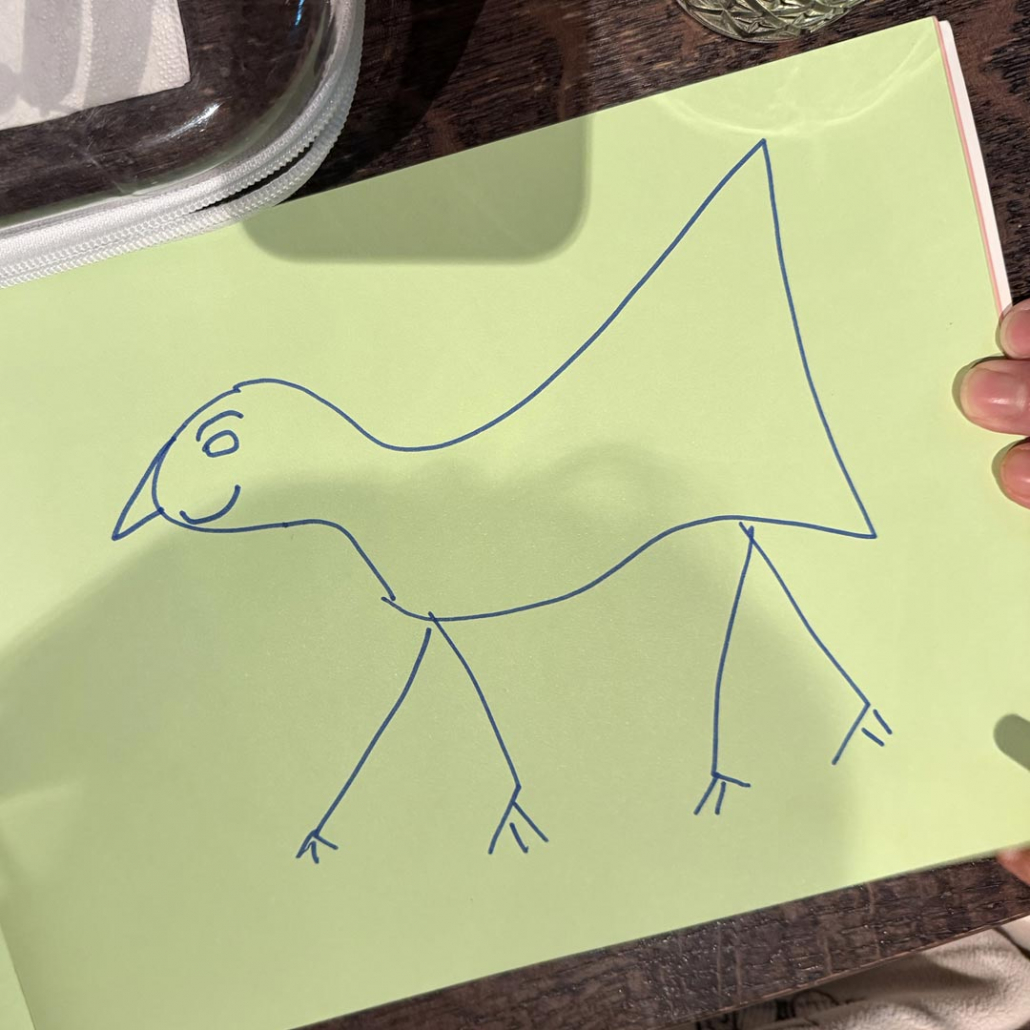
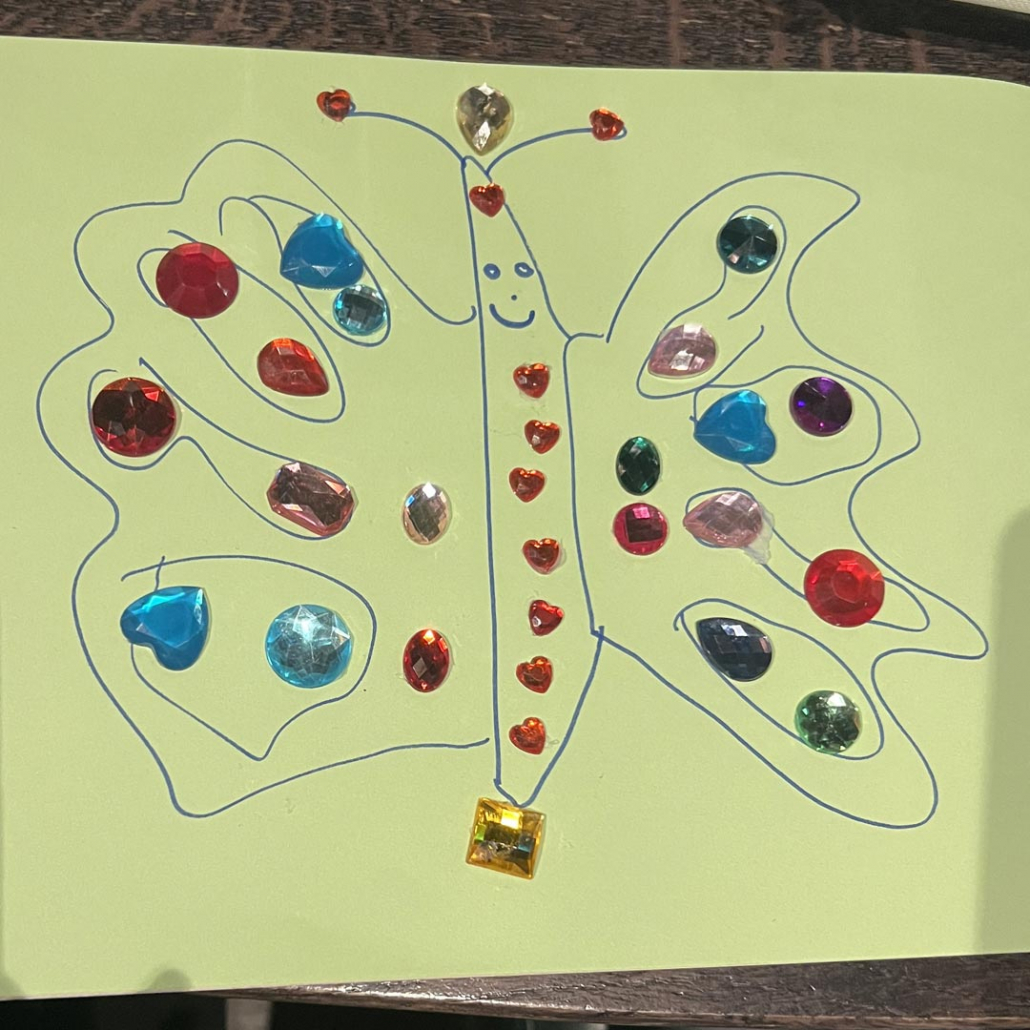
Today’s activity is one that’s fabulous fun for children and parents alike. It’s all about showing children how quick and easy it is to transform their drawings, paintings, and art using Artificial Intelligence (‘A.I.’). With help from a parent, magical results take just minutes to accomplish, and each transformation is often incredible. It’s also clear that the finished results truly honour children’s creations, while simultaneously elevating them to new, highly professional digital art imagery. What’s more, the tools that achieve this are freely available to families via desktop computers and smartphone apps.

Let’s dive in, then, to see how children and parents can take children’s art to magical new heights — easily, and in just minutes. We’ve also included some ‘before’ and ‘after’ images to exemplify what’s possible using the right approach. Parental or adult supervision is, of course, essential, particularly for the youngest children.

Why Introduce A.I. Digital Art Transformations to Children

This activity will encourage children’s art, communication and creative skills, and boost their understanding of today’s world. While some may be nervous about introducing youngsters to A.I., it’s a technology that’s ubiquitous — embedded all around us on computers, smartphones, and countless other devices. Indeed, today’s children are likely to grow up with it being a normal part of their lives. Many will grow up using A.I. daily at home and in the workplace, and some may even end up in a career that involves it. So, what better way to introduce artificial intelligence to little ones than via a responsible parent who has their best interests at heart? Such a parent can closely supervise them and ensure they use A.I. safely and responsibly. With that in mind, today’s A.I. art activity is a simple but fun way to help them see the technology’s potential, and to generate digital art that they can call their own and be proud of. Bringing their art to life in this way will also demonstrate that their imaginations, ideas and creations have enormous potential, are valued, and therefore matter.

Bringing children’s art to life will demonstrate that their imaginations, ideas and creations have enormous potential, are valued, and therefore matter.

Here’s a clickable gallery showing what’s possible when you ask an A.I. tool to transform a child’s art:

Steps to Incredible A.I. Transformations

Step 1: Make a Drawing or Painting

Step 1 is for children to do what they often do best: draw or paint something on a sheet of paper. If they need some ideas, an image of one or more people, animals, monsters, robots or what they might imagine to be aliens would be a good place to start. They can include anything they like around the main character or focus of the piece, be it a background of a home, forest, mountain scene, alien landscape, or indeed nothing at all — because asking the A.I. tool to insert some kind of background is also something they can do (see Step 4).

Step 2: Photograph or Scan Your Child’s Art

Once the child is happy with their drawing or painting, the parent should scan or take a smartphone photo of the image from above and save it, noting where it’s been saved. Try to avoid casting any shadows across the art when you photograph it, and ensure the results are clear before moving to Step 3.

Step 3: Upload it to the A.I. Tool

The next step is to upload the saved photo to the A.I. tool. For most A.I. tools, this is usually done simply by clicking the + symbol in the chat window of your chosen A.I. tool (more about those below) and selecting the appropriate instruction (upload, or add photos/files, as appropriate). Then, ideally, include your instructions for the A.I. tool within the same prompt or, failing that, immediately after it in your next prompt. See Step 4 below for our recommendations.

Which A.I. Tool?

There are many different A.I. image-generating tools available to families, including powerful ones that are free to use, within certain limits. ChatGPT is perhaps the most well-known and has a fabulous image-generating tool, directly available from the chat prompt via the paperclip symbol (whether via its website or its smartphone app). However, ChatGPT has fairly stringent limitations on the number of image transformations it will produce per hour or day, particularly when the system is busy, and transformations may be a little slower than with some other A.I. tools (paid upgrades are available to reduce some of those limitations).

A good alternative for families to start off with is an A.I. tool that’s less stringent yet more accessible. ‘Copilot’ would be an excellent choice on Windows 11 PCs because it’s embedded into that operating system. Another good alternative would be Google Gemini, which is accessible directly via any web browser by clicking our bold, blue link.

Either way, an image can be uploaded from the A.I. chat prompt by clicking the + symbol, subsequently choosing ‘Upload’ for Copilot, ‘Add photos & files’ for ChatGPT, or ‘Upload files’ for Gemini.

Other A.I. tools are available, but the suggestions above are a good starting place. Parents will need to do their own research around functionality, any image generation limits, possible fees if they want to upgrade, privacy, image ownership, etc.

Step 4: Give the A.I. Instructions

Once your image has finished uploading to the A.I. chat prompt, the next step is to write your instructions, ideally in the same prompt window or, failing that, in the very next prompt that you make. Such instructions tell the A.I. tool what you want it to do with the image you have uploaded. You can give it some simple instructions, which will allow it flexibility to make many of its own decisions, or feed it highly detailed instructions that give you much more control on the final output. Your child can be involved in such instructions, of course, and this can all be a part of the creative fun! Such an option may work best once they’ve learnt what the A.I. tool is capable of doing, having perhaps transformed their first few pieces of art.

What Can You/Your Child Ask the A.I. For?

What you can ask the A.I. tool to do with your child’s drawing or painting is only limited by your (or their) imagination! For example:

  • You could ask them to transform it into a cartoon style if you want to keep it simple (for example, in the style of SpongeBob SquarePants or The Simpsons).
  • You could ask the A.I. to transform a scribble of a robot into a high-definition one that takes the same form but looks every bit like it’s made of painted metal and resides in a futuristic city.
  • You could request a transformation in the style of a Pixar movie. For example, with the main character(s) having shaggy fur, bright colours, all set in the interior of an imaginary spacecraft with illuminated buttons and futuristic furniture.
  • Another option would be to request the output to be in the style of clay characters of the kind you’d see in a Wallace & Gromit animated movie.
  • Or ask for the final image to be in the style of a wooden puppet, a fabric soft toy like you’d see in a child’s nursery, or indeed something that looks like it is from Toy Story.
  • You could perhaps ask for something that looks like your child’s drawn character comes from Sesame Street or The Muppets.
  • Be aware that you can also specify the type of lighting (soft, hard, backlit, etc.), what the background should be, what the location is, what style of image it should be, and even whether any elements of the child’s original drawing should be ignored, adapted, or substituted. If you/your child has something in mind, simply tell the A.I. tool.

Step 5: Wait for the Amazing Results!

Once your child’s drawing or painting has been submitted along with the appropriate instructions, it’s a case of waiting a minute or two for the results. Be prepared for a “WOW!” from both yourself and your child when the generated image appears, because the results are usually incredibly impressive. The A.I. tool will have taken the essence of your child’s creation and elevated it to incredible new heights.

Here are a few more examples, which are clickable for a larger view:

We had the most fun creating today’s post! And, if it’s fun for adults, just imagine how enjoyable children will find the activity. With the help of a parent or carer, they’ll see their creations come to life in incredible ways. They’ll be able to see how simple drawings can be absolutely transformed into high-resolution, highly detailed, professional-looking imagery that would not look out of place in an art gallery, on TV, or in a cinematic movie. What’s more, they can let their imaginations strive for new heights by suggesting exactly how their images should be enhanced. Would they like their drawing to look like a character from The Smeds & The Smoos, something from a Minions movie, more akin to a cartoon character like Peppa Pig, or something that would look at home in a soft toy shop? With today’s A.I., they can let their imaginations run riot, wield truly powerful tools, and reach for the stars to transform their art into truly magical results. It takes just minutes — and can be achieved totally free of charge. After printing out the results or saving the images digitally, children will end up with something they can be proud of. More importantly, though, they will come to understand what magic is possible from something they have imagined and created.

A High-Quality Childcare Service in Streatham

Little Cedars Nursery — Weekday Childcare for Under-5s

Ofsted rates Little Cedars Day Nursery as a Good ProviderLittle Cedars is a nursery & preschool offering high-quality childcare in Streatham, near Tooting, Tooting Bec, Tooting Common, Tooting Broadway, Furzedown, Balham, Norbury, and Colliers Wood.Little Cedars Nursery is a wonderful childcare service in Streatham. The setting may also suit those searching for a good nursery/preschool near Streatham Common, Streatham Hill, Streatham Park, Tooting, Furzedown, Balham, Norbury, or Colliers Wood. Little Cedars Nursery is rated as a good provider by Ofsted, so you know your child will be in good hands.  The nursery is warm and welcoming, with a home-from-home environment where children and babies feel safe, nurtured, loved, and valued. We have wonderful, caring staff and all the facilities, equipment, and resources that will ensure under-fives get the best start in life. By doing so, they’ll become the best versions of themselves and will be ready to thrive! Little Cedars Nursery supports free/funded childcare schemes for eligible children and babies.

Contact Little Cedars Nursery today to learn more, register for a place, or book a guided tour:

Nurturing Kindness, Confidence, & Children’s Rights

World Children’s Day: 20 November — Nurturing Kindness, Confidence and Children’s Rights
World Children's Day promotes children’s rights everywhere: the right to play and learn, the right to be cared for, and the right to express their thoughts and feelings.Each year on 20 November, families, nurseries, and schools around the world mark World Children’s Day — a global celebration of children and a reminder that every child deserves to be safe, loved, and heard.

First established by the United Nations in 1954, the day promotes children’s rights everywhere: the right to play and learn, the right to be cared for, and the right to express their thoughts and feelings. For us as early years practitioners, these ideas are not just something we recognise once a year — they’re at the heart of everything we do.

Celebrating Children’s Rights in the Early Years

At Little Cedars Nursery, we believe childhood should be filled with discovery, laughter, and a sense of belonging.At Little Cedars Nursery, we believe childhood should be filled with discovery, laughter, and a sense of belonging. Each day presents countless opportunities for children to explore their world, build friendships and develop confidence in who they are.

World Children’s Day gives us a lovely opportunity to pause and reflect on how our daily routines and play experiences support children’s rights. Whether it’s giving every child time to share their ideas, encouraging them to choose their own activities, or helping them feel proud of their achievements, we’re constantly reinforcing the message that their voices matter.

We also help children learn about fairness, kindness, and inclusion in simple, age-appropriate ways — talking about taking turns, recognising feelings, and celebrating the things that make us all different and special.

“World Children’s Day is UNICEF’s global day of action for children, by children, marking the adoption of the Convention on the Rights of the Child.”  — UNICEF.

Nurturing Kindness & Confidence

When children feel valued and respected, they learn to value and respect others.The values behind World Children’s Day are deeply woven into the early years. When children feel valued and respected, they learn to value and respect others. Through play, they develop empathy — comforting a friend who feels sad, or cheering when someone else achieves something new.

We encourage kindness in small, everyday ways: helping a friend tidy up, inviting someone to join in, or saying something kind about another’s work. These moments might seem small, but they help children build the emotional skills that form the foundation of strong, healthy relationships.

Confidence, too, grows through gentle encouragement and trust. When practitioners celebrate a child’s efforts rather than focusing on perfection, that child learns the joy of persistence and self-belief. World Children’s Day is a reminder that nurturing these qualities early on helps children become thoughtful, resilient individuals who believe in their own potential.

Listening to Children’s Voices

Children have ideas, preferences, and opinions — and part of our role is to listen carefully to them.Even the youngest children have ideas, preferences, and opinions — and part of our role is to listen carefully to them. That might mean noticing a baby’s cues and interests, or responding when a toddler points out something new they’ve discovered.

By recognising and respecting these early expressions, we show children that their thoughts are valued. This builds trust and confidence, helping them feel secure enough to explore and express themselves freely. Listening to children, even before they can fully speak, is one of the most powerful ways we can support their right to be heard.

Ways Families Can Join the Celebration

World Children’s Day can be a lovely opportunity to celebrate at home, too. Here are a few simple ideas families might enjoy:

Wear Blue

Blue is UNICEF’s colour for World Children’s Day — a symbol of solidarity with children everywhere. Whether it’s a blue T-shirt, hat, or pair of socks, wearing blue on the day is a simple but cheerful way to show support.

Share a Story about Kindness or Friendship

Invite your little one to choose a favourite picture book that celebrates kindness, fairness, or helping others. Afterwards, talk about what the characters did to make the world a little brighter.

Kindness Jar

As a family, fill a jar with ideas for small acts of kindness — like helping to set the table, sharing toys, or making someone smile. Pick one each day and celebrate the difference it makes.

Create a “Children’s Rights” Tree

Draw or craft a tree together and add leaves labelled with things every child deserves: to play, to feel safe, to learn, to be listened to. It’s a simple visual reminder that these rights belong to every child, everywhere.

Learn more about World Children’s Day and how you can get involved here.

Every Day Is Children’s Day

Each time a child is encouraged to speak up, to show kindness, or to follow their curiosity, they’re practising the values that shape a fair and caring world.While World Children’s Day falls just once a year, its spirit is something we celebrate every day. Each time a child is encouraged to speak up, to show kindness, or to follow their curiosity, they’re practising the values that shape a fair and caring world.


At Little Cedars Nursery, we’re proud to nurture those values — helping children grow into confident, compassionate learners who know their voices matter. Because for us, every day is truly Children’s Day.

Little Cedars Nursery

A High-Quality Childcare Setting in Streatham

Ofsted rates Little Cedars Day Nursery as a Good ProviderLittle Cedars is a nursery & preschool offering high-quality childcare in Streatham, near Tooting, Tooting Bec, Tooting Common, Tooting Broadway, Furzedown, Balham, Norbury, and Colliers Wood.If you’d like your baby, toddler, or preschooler to get the very best start in life, consider Little Cedars for your weekday childcare. Little Cedars is a high-quality nursery in Streatham, close to Streatham Common, Streatham Hill, Streatham Park, Tooting, Furzedown, Balham, Norbury, and Colliers Wood. Ofsted rates us as a good provider in all categories, and we support funded childcare places for eligible babies (9m+) and children under five.

Get in touch or start your child’s application today:

— Experiences They’ll Remember Forever

Creating Magical Moments in Childhood — Experiences They’ll Remember Forever

Out-of-the-ordinary experiences help children feel part of something special, cherished, and deeply seen.Childhood passes so quickly — a blur of breakfast times, nursery drop-offs, and bedtime stories. Yet every so often, something extraordinary happens: a moment that will light up a child’s eyes and linger in their memory for years to come. These are the magical moments that they never forget. They’re also moments that help shape how children see the world, their place within it — and sometimes even themselves.

The moments children remember most aren’t the everyday routines, but events and activities that feel truly magical — experiences that step outside the ordinary and leave a lasting mark on their hearts and imaginations. It might be an unexpected adventure, a quiet night under a starlit sky, or a small moment of wonder that makes them gasp in delight. Such out-of-the-ordinary experiences help children feel part of something special, cherished, and deeply seen. They create memories filled with pure joy, beauty, and sometimes even awe, as well as connections that often last for years.

Today, we explore how some of children’s most treasured memories come from moments of wonder, surprise, beauty, and unexpected connection. We’ll discover simple yet powerful ways to create magical experiences that will make little ones feel seen, loved, and sometimes even awestruck at the wonder of life. This is about how to create lasting memories for little ones that they will cherish for a lifetime.

Why Magical Moments Matter

When parents create a moment that makes a child’s heart race or eyes widen with wonder, they’re giving them a fun memory as well as emotional security that lasts into adulthood.Psychologists tell us that children build their sense of self through experiences that stir strong, positive emotions — especially awe, wonder, joy, and belonging. These feelings act as emotional anchors, shaping how safe, capable, and loved a child feels. When parents or caregivers create a moment that makes a child’s heart race or eyes widen with joy or wonder, they’re not just giving them a fun memory — they’re helping to build emotional security that lasts well into adulthood.

Moments of awe also nurture curiosity and imagination. Whether it’s taking the time to look up and watch a night sky glittering with stars, or exploring a particularly magical woodland brimming with lichen and moss during ‘golden hour’, awe reminds children that the world is big, beautiful and full of possibility. In a time when daily life can feel rushed or routine, sprinkling in a little magic helps a child stay open, hopeful, and connected.

Magical Moments Don’t Need to Cost Money

Magical childhood memories need not cost money — the magic lies in the moment itself, not the money spent.Magical childhood memories do not require grand holidays or costly toys. They’re far more likely to spring from connection, surprise, wonder, and imagination.

A child remembers how they felt — the warmth of being cuddled under a blanket to watch the stars, the thrill of being let in on a secret plan, or the joy of a parent saying, “Let’s go on an adventure today.”

The magic lies in the moment itself, not the money spent. Breaking the routine, seeing the familiar in a new light, or simply doing something unexpected can be enough to make an ordinary day unforgettable.

Ideas for Creating Magical Moments

Here are some simple yet truly memorable ways to fill your child’s early years with wonder:

Stargazing Together

On a clear night, gently wake your child and wrap them in a blanket to watch a meteor shower or count shooting stars.On a clear night, gently wake your child and wrap them in a blanket to watch a meteor shower or count shooting stars. Tell them about the Northern Lights, how they can wish on a star, how astronauts are planning to travel vast distances to Mars, and give them inspiration for their dreams. The quiet awe of the night sky will stay with them forever.

A Surprise Family Adventure

Plan a “mystery adventure” and keep the destination secret until you’re on your way. Whether it’s a picnic in a particularly beautiful spot, a ride on a real steam train, or a dawn trip to look for treasure on a beach, the sense of adventure and excitement will make the day feel magical to a child. Make it out-of-the-ordinary and special.

Messages from the Fairies

Leave tiny notes or drawings from the “garden fairies” or “forest pixies”, or encourage your child to create mossy beds and miniature houses for them.Leave a tiny note or drawing from the “garden fairies” or “forest pixies” thanking your child for something kind they’ve done — perhaps watering houseplants or helping a friend or sibling. It’s a simple act that blends imagination with a message of kindness and care. Perhaps take it a step further and encourage little ones to make mossy beds for the fairies, and a little home-made miniature shelter for them to sleep in. Take photos of them as a memento for your child.

A Garden Camp-Out

Set up a tent or a blanket fort outdoors. Tell stories by torchlight or LED candlelight, listen for owls, or simply lie together looking at the stars. Even just one night spent “camping” close to home can feel like a grand adventure to a child.

Seasonal Traditions

Children will love putting out biscuits and carrots for Santa's reindeer — show them how the carrots have been nibbled on Christmas morning!Create small rituals that return every year — picking flowers in springtime to display around the home, having a “summer-solstice supper” in the garden, or putting out biscuits and carrots on Christmas Eve for Santa’s reindeer — be sure to show your little one how the carrots have been nibbled on Christmas morning! Such traditions will give children a comforting rhythm and a sense that life’s changes can be filled with fun and joy.

The Power of Yes

Every so often, say yes to your child for something delightfully unexpected: jumping in puddles while still in pyjamas, taking breakfast out in the park, or painting a tree trunk with brightly-coloured poster paints (take a photo of your child’s creations if you do!). A small moment of freedom and shared laughter can be pure magic.

Simple Acts of Wonder

Special childhood moments teach children that magic is woven into the everyday world — they just have to stop a while and notice it sometimes.Pause for half an hour to watch the sunrise or sunset together, make wishes while blowing dandelion seeds into the breeze, or follow a butterfly in the park to see where it leads. These small acts teach children that magic is woven through the everyday world — they just have to stop a while and notice it sometimes.

Magical experiences like these will form lasting memories. They will also stimulate emotions around awe, belonging, beauty, and joy. They will remind children that life is incredible, as well as being full of surprises worth paying attention to.

How Magical Moments Shape Who They Become

When children experience magic through loving connection, they internalise a powerful message: I matter. I’m loved. The world is a good place.
Such memories strengthen self-esteem, nurture creativity, build resilience, and encourage children to always remain curious about the world around them. They remind children that they are part of something bigger — a family, a community, a world rich with wonder.

“I matter. I’m loved. The world is a good place.”

Magical childhood moments often become emotional landmarks that help shape optimism and emotional well-being long after childhood ends.As adults, those memories often become emotional landmarks: the glow of torchlight in a tent, the spectacle of a meteor streaking across the sky, the distinctive smell of campfire food being carried on the wind, and telling stories beneath a blanket. Such recollections help shape optimism and emotional well-being long after childhood ends. They are also the moments that, years later, children will recall fondly and still talk about.


That said, you don’t need to fill every day with spectacle. Just make space, every so often, to pause, to play, and to do something adventurous and out of the ordinary. Those magical moments of shared joy and wonder will make your little one feel seen, loved, and awed — forming memories they’ll carry with them for a lifetime.

We’re Little Cedars Nursery in Streatham

Ofsted rates Little Cedars Day Nursery as a Good ProviderLittle Cedars is a nursery & preschool offering high-quality childcare in Streatham, near Tooting, Tooting Bec, Tooting Common, Tooting Broadway, Furzedown, Balham, Norbury, and Colliers Wood.If you enjoyed today’s blog post and it’s given you some ideas, be sure to check out our other blog posts, articles, activity ideas, and guides. We’re Little Cedars Nursery in Streatham, a high-quality childcare provider near Streatham Common, Streatham Hill, Streatham Park, Tooting, Furzedown, Balham, Norbury, and Colliers Wood. Ofsted rates the setting as a good provider, and we support free childcare places for eligible children aged from just 9 months.

Why not bring your baby, toddler, or preschooler along for a free guided tour? Or, if you like the look of the nursery and would like a place for your child, get started on your application today:

Sleep Consultants for Babies and Toddlers — A Parent’s Guide

When bedtime has become a battle, a sleep consultant can offer support.Sleepless nights are something most parents expect when a new baby arrives. But sometimes those broken nights can stretch on for months, through into toddlerhood, or even beyond. For affected families, bedtime can become a battle every night, and soon the exhaustion can build up and take its toll. High-quality sleep is important for little ones too, of course, so solving sleep problems will benefit the entire household. For parents who have perhaps tried everything without success, a sleep consultant can step in to offer support and professional guidance.

At Little Cedars Nursery, we often hear parents sharing stories of early morning wake-ups, tricky nap times, or little ones who seem determined to party at midnight. It’s important to know that these challenges are common, and they don’t mean you’re doing anything wrong. Sometimes, though, an extra helping hand can make all the difference. So, with that in mind, welcome to today’s guide to sleep consultants.

What Exactly is a Sleep Consultant?

A sleep consultant is someone who works alongside parents to help babies and young children develop healthier sleep patterns.

Some consultants have backgrounds in health visiting, nursing, or childcare, while others have trained through specialist sleep programmes. Because there isn’t formal regulation for the specialism in the UK, approaches can vary. In view of this, it’s advisable to ask about their experience and methods, and seek any recommendations from friends and family, before choosing your child’s sleep consultant.

What Does a Sleep Consultant Do?

A sleep consultant works with families to understand a child’s sleep patterns and suggest gentle, practical ways to improve things.A sleep consultant works with families to understand a child’s sleep patterns and suggest gentle, practical ways to improve things. They spend time learning about a child’s routine, feeding habits, daily schedule, and sleep environment before creating an improvement plan that feels realistic for the child’s family. The idea isn’t about handing parents a rigid set of rules, but about working together to find an approach that feels the most suitable and fits in with the family’s values.

When Might a Family Consider Using One?

Every child has ups and downs with sleep, and many phases resolve themselves. But if night waking is relentless, naps are a constant struggle, or early mornings begin long before dawn, it can start to impact the whole household. Parents sometimes seek help when they feel they’ve tried everything themselves — advice from books, friends, or online forums — but nothing seems to have worked. A consultant offers not just ideas, but reassurance and encouragement, which can be just as valuable as the plan itself.

What to Expect

Working with a sleep consultant often begins with a thorough conversation about your child’s routine.Working with a sleep consultant often begins with a thorough conversation about your child’s routine — what time they go to bed, how they fall asleep, how they feed, and what happens during the night. From there, the consultant will create a personalised plan that involves tailored changes. These might be small adjustments, such as introducing a calmer wind-down before bed, or they could involve gradually teaching your child to settle with less help. It may also include strategies for how you respond when your child wakes in the night.

Putting the plan into practice takes consistency and patience, which is why many consultants often stay in touch for several weeks, checking in by phone, video call, or messages. That ongoing support can make the process feel less daunting and also help keep families on track.

Different Approaches to Sleep

Not every consultant works in the same way. Some focus on gentle, responsive methods where parents stay close, offering comfort and reassurance as children learn to settle more independently. Others place more emphasis on the rhythm of the day, with carefully timed naps, bedtime routines, and adjustments to the sleep environment. A few use more structured behavioural strategies, for example, where parents slowly reduce how much they intervene at bedtime.

Most UK-based consultants tend to favour family-friendly, gentle approaches rather than anything that involves leaving babies to cry alone for long stretches of time. Still, it’s important for parents to ask about this in advance and choose someone whose philosophy feels like the right fit.

Practical Considerations

A one-off initial consultation can often be an affordable option that will allow families to explore the possibilities.Costs for hiring a sleep consultant vary. Depending on the consultant contacted, a one-off initial consultation can often be an affordable first step — and one that will allow families to explore the potential of proceeding with a full plan. However, a full package with several weeks of guidance can often be several hundred pounds. In-home, overnight support is potentially at an even higher end of the scale — but, again, it varies from consultant to consultant. Many families find that online or phone-based support from a sleep consultant is more affordable, and sometimes just as effective.

There are also free options to explore, of course. Health visitors sometimes run sleep workshops or offer individual guidance, and charities such as the Lullaby Trust provide excellent advice including important resources on safe sleep. Many parents also find comfort via parenting groups, where they can share experiences and discover new ideas.

Our Perspective

Struggles with sleep are common.At Little Cedars Nursery, we understand that sleep — or the lack of it — has a huge impact on family life. Sleep consultants may not be a quick fix, but for families who are reaching their limit, they can offer a real lifeline. Success usually comes from finding someone whose approach aligns with your parenting style, sticking with the plan for long enough to see improvements, and feeling supported along the way.

Sleep challenges can feel overwhelming, but whether you decide to invest in professional help or draw on free resources and community support, the most important thing is remembering that you’re not alone. With time, consistency, and sometimes a little outside help, things really can get better. And remember: struggles with sleep are common and don’t make you any less of a wonderful parent. And, who knows, perhaps in a year or two when you’ve come out the other side, people may come to you for advice!

Little Cedars Nursery, Streatham

Ofsted rates Little Cedars Day Nursery as a Good ProviderLittle Cedars is a nursery & preschool offering high-quality childcare in Streatham, near Tooting, Tooting Bec, Tooting Common, Tooting Broadway, Furzedown, Balham, Norbury, and Colliers Wood.Little Cedars is a high-quality nursery in Streatham, near Tooting, Furzedown, Balham, Norbury, and Colliers Wood. Graded as a good provider by Ofsted, we ensure that babies and children under five have the very best start in life in a warm, caring, home-from-home environment. We also support free childcare schemes for eligible children aged from 9 months to 4 years — great for working parents!

If you would like to learn more about Little Cedars Nursery or visit in person for a guided tour, please get in touch. You can also ask any questions or start the process of enrolling your child using the options below: